When does an AGV battery degradation rate become a cost issue?
Publication Date
author
For finance approvers, the agv battery degradation rate becomes a real cost issue the moment it starts inflating replacement budgets, reducing fleet uptime, and distorting total cost of ownership projections. In high-throughput operations, even small performance losses can cascade into missed productivity targets, higher maintenance spend, and weaker ROI. Understanding where degradation shifts from a technical metric to a financial risk is essential for disciplined capital decisions.
Why the agv battery degradation rate needs a checklist-based decision method
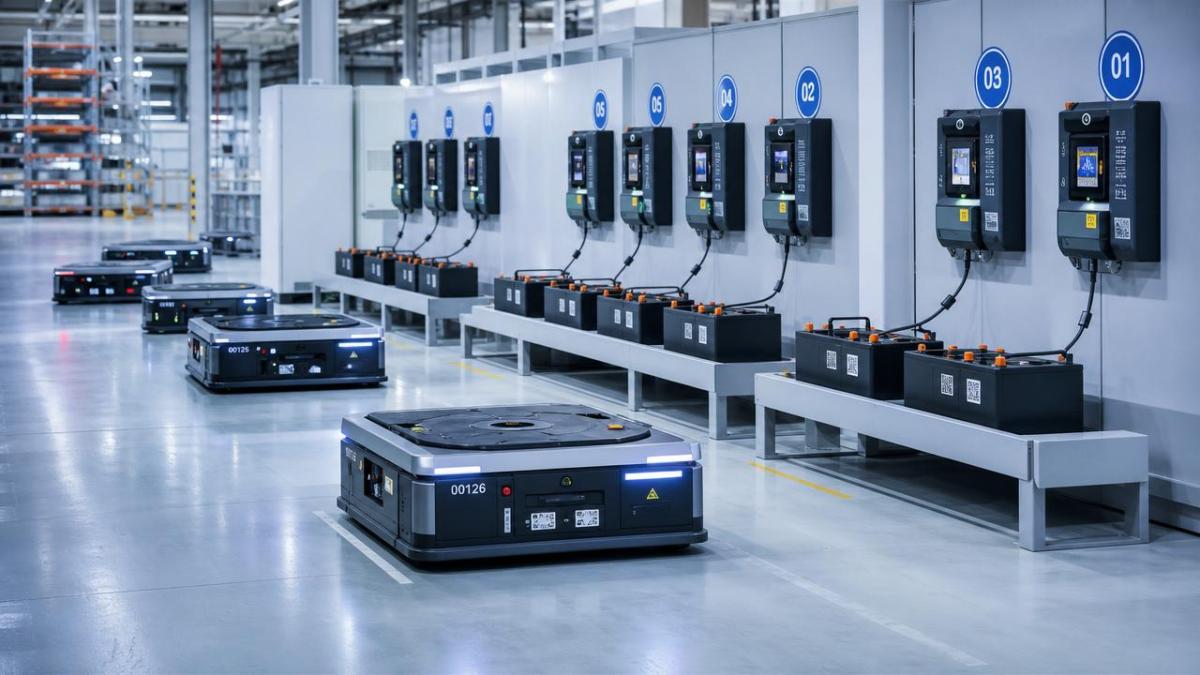
Battery aging is rarely a single engineering problem. It affects runtime, charging windows, labor scheduling, spare fleet sizing, and replacement timing at the same time.
That is why the agv battery degradation rate should not be judged only by capacity loss. The real question is when degradation starts changing cost behavior.
A checklist approach helps convert scattered technical symptoms into financial thresholds. It also supports evidence-based discussions around lifecycle cost, uptime risk, and capital planning.
Core checklist: when does an agv battery degradation rate become a cost issue?
Use the following checks to determine whether the agv battery degradation rate has crossed from manageable wear into an operational cost problem.
- Measure usable runtime against planned shift duration, and flag degradation once charging interruptions force route changes, idle waiting, or unscheduled task handoffs.
- Compare actual energy throughput per cycle with baseline commissioning data, and treat a persistent decline as an early warning for hidden productivity losses.
- Track charge acceptance time, because slower charging often increases queue pressure and reduces fleet availability before batteries reach total failure.
- Calculate replacement spending as a share of annual AGV operating cost, and escalate once battery renewals materially alter total cost of ownership assumptions.
- Check whether degradation forces acquisition of extra vehicles, because spare fleet expansion is often the clearest signal of a battery-driven cost issue.
- Review thermal events, voltage sag, and power instability during peak loads, since degraded batteries can trigger navigation faults and mechanical stress.
- Audit maintenance labor hours linked to battery balancing, diagnostics, swapping, and charger troubleshooting, then compare them with the original maintenance model.
- Assess missed throughput targets, especially in dense automation cells, where a small drop in battery performance can create large downstream scheduling penalties.
- Benchmark degradation by application intensity, because cold storage, multi-stop transport, and high-acceleration duty cycles age batteries at very different rates.
- Trigger a cost review once battery health uncertainty starts weakening budget confidence, supplier negotiations, or long-term depreciation planning.
Practical thresholds that indicate the agv battery degradation rate is no longer harmless
There is no universal failure percentage for every fleet. However, several threshold patterns consistently indicate that the agv battery degradation rate has become a cost issue.
1. Runtime drops below operational buffer
If an AGV originally completed a full shift with a 15% to 20% energy reserve, that buffer absorbs normal variability. Once degradation erodes the reserve, operations lose resilience.
At that point, one delayed charge or one heavier route can create service interruption. Financially, that means higher supervision, more contingency planning, and reduced asset utilization.
2. Charging infrastructure becomes a bottleneck
A worsening agv battery degradation rate often appears first as charger congestion. Vehicles need charging more often, stay plugged in longer, or miss ideal charging windows.
The result is not just battery replacement cost. It may also require more chargers, software rescheduling, or extra floor space, which changes the economics of the automation system.
3. Battery replacement timing disrupts capital planning
If battery life falls short of the planned refresh cycle, cost models break. A fleet expected to need replacement in year five may need major battery spend in year three.
This timing mismatch matters because it compresses cash flow, complicates forecasting, and can make the original AGV investment case appear overstated.
How application scenarios change the cost point
High-throughput manufacturing lines
In synchronized production environments, battery decline turns expensive quickly. Even a moderate agv battery degradation rate can disrupt takt-sensitive material flow.
The cost point appears earlier because downtime multiplies across connected stations. Here, degradation should be reviewed against throughput stability, not battery health alone.
Warehousing and distribution centers
Warehouse fleets usually have more routing flexibility, but battery degradation still becomes costly when peak periods expose weak charge endurance.
The warning signs include more incomplete missions, longer charging queues, and extra reliance on manual intervention during seasonal volume spikes.
Cold-chain and temperature-sensitive operations
Cold environments accelerate visible performance loss and reduce effective capacity. In these cases, the agv battery degradation rate becomes a cost issue much sooner.
Ignoring thermal derating often leads to under-budgeted replacements and unrealistic uptime assumptions. Scenario-specific baselines are essential for accurate cost judgment.
Commonly ignored cost drivers behind battery degradation
Direct battery replacement is only one layer of the problem. Several hidden cost channels tend to be underestimated.
Underestimating partial productivity loss
A fleet does not need to stop completely to become more expensive. Reduced acceleration, lower duty endurance, and frequent charging already erode economic performance.
Using average battery health instead of worst-case units
Fleet averages hide operational weak points. A few poor-performing batteries can create disproportionate downtime and distort the true impact of the agv battery degradation rate.
Ignoring charger and software interactions
Battery aging interacts with charge strategy, dispatch logic, and mission allocation. Poor charging policy can make normal aging look like premature battery failure.
Missing resale and residual value effects
When battery condition is uncertain, used AGV value can fall. That hidden depreciation can materially change full-lifecycle economics, especially in larger fleets.
Execution steps for a disciplined cost review
- Establish a baseline using original runtime, charge time, cycle count, and throughput assumptions from commissioning records.
- Segment batteries by route intensity, ambient temperature, payload profile, and charge pattern instead of reviewing the fleet as one group.
- Map degradation to financial outcomes, including spare vehicle demand, labor time, charger expansion, and delayed mission costs.
- Define trigger points, such as reserve runtime loss, replacement budget overrun, or charger utilization above an acceptable threshold.
- Recalculate TCO quarterly so the agv battery degradation rate is reflected before annual planning locks in unrealistic assumptions.
For data-driven organizations, this review should sit beside uptime, MTBF, and asset utilization metrics. Battery degradation is not a side metric. It is a capital efficiency variable.
Conclusion: treat the agv battery degradation rate as a financial threshold, not just a technical trend
The agv battery degradation rate becomes a cost issue when it starts changing operating behavior, replacement timing, or confidence in the automation business case. That point often arrives earlier than a simple end-of-life definition suggests.
The next step is practical: audit runtime reserve, charger congestion, replacement timing, and hidden labor costs over the last operating quarter. Then convert those findings into explicit intervention thresholds. Once degradation is tied to TCO, action becomes clearer, faster, and financially defensible.
Search News
Hot Articles
- Carbon Fiber StructuresHow to Specify Aerospace Carbon Fiber Assemblies for Lightweight, Load-Bearing PartsJul 11, 2026
- Machine VisionXiaomi, Alibaba DAMO Academy Drive Open-Source Robotics Model Ecosystem, Lowering Algorithm Development Barriers for Overseas SMEs Adopting Chinese Robotics SolutionsMar 30, 2026
- Cobots & ArmsShanxi 'AI+' Conference Showcases Embodied Intelligence with Multinational Buyer Engagement: Key Industry ImplicationsMar 30, 2026
Popular Tags
Recommended News
 Jul 11, 2026How to Specify Aerospace Carbon Fiber Assemblies for Lightweight, Load-Bearing PartsAerospace carbon fiber assemblies: learn how to specify laminate design, load data, joining methods, and inspection controls for lighter, reliable load-bearing aerospace parts.Elena Rostova (UAV Systems Researcher)
 Mar 30, 2026Xiaomi, Alibaba DAMO Academy Drive Open-Source Robotics Model Ecosystem, Lowering Algorithm Development Barriers for Overseas SMEs Adopting Chinese Robotics SolutionsXiaomi & Alibaba DAMO Academy's open-source robotics models lower algorithm barriers for global SMEs. Boost efficiency in manufacturing, logistics & smart retail with ROS 2 compatible solutions.TSV Data Lab
 Mar 30, 2026Shanxi 'AI+' Conference Showcases Embodied Intelligence with Multinational Buyer Engagement: Key Industry ImplicationsShanxi 'AI+' Conference highlights embodied intelligence with Tesla, Ubtech & Jiantao showcasing multimodal robotics. 40+ global buyers validated tech on-site, creating new B2B channels for industrial automation & AI solutions.Chen Wei (Automation Lead Engineer)
 Mar 30, 2026Zhongguancun Unveils 6G Integrated Sensing-Computing-Intelligence Platform to Empower Embodied Robots for Global Industrial ApplicationsZhongguancun's new 6G platform revolutionizes industrial robotics with <10ms latency, empowering global automotive, logistics & port automation. Discover how this tech boosts China's smart manufacturing exports.TSV Data Lab
 Mar 30, 2026Mech-Mind Tianjin Embodied Intelligence R&D and Production Base Goes Live, Cutting Delivery Time by 20%–30% for Global Customized AMR+Vision SolutionsMech-Mind's Tianjin AMR+Vision production base cuts delivery time by 20%-30% for欧美 & Latin American markets. Discover how this PLd-certified facility accelerates customized robotics solutions for smart manufacturing and logistics.Chen Wei (Automation Lead Engineer)
 Mar 30, 2026Boao Forum Reveals 'Co-evolution of Big and Small Brains' Trend in Humanoid Robots, China's Embodied Intelligence Accelerates Adaptation to Overseas Manufacturing Service ScenariosDiscover how China's humanoid robots, featuring 'Co-evolution of Big and Small Brains,' are revolutionizing global manufacturing. Learn about Embodied Tian Gong 3.0's ISO compliance and overseas deployment at Boao Forum 2026.Chen Wei (Automation Lead Engineer)
 Mar 30, 2026China Railway Industrial Secures Patent for Embodied Robotics in Material Handling, Boosting High-Precision Delivery Capabilities for Overseas Infrastructure and Manufacturing ProjectsChina Railway Industrial's new patent for embodied robotics in material handling boosts high-precision delivery for global infrastructure & manufacturing. Discover how this innovation enhances logistics accuracy in automotive, rail transit & EPC projects.Chen Wei (Automation Lead Engineer)
 Oct 03, 2026Selecting Automotive Radar Sensor Modules for ADAS Range, Resolution, and IntegrationAutomotive radar sensor module selection guide for ADAS: compare range, resolution, field of view, latency, and integration to build safer, reliable vehicle systems.TSV Data Lab
 Oct 02, 2026How to Qualify Machined Parts Suppliers for Hard Tech ProgramsHard tech supply chain machined parts demand rigorous supplier qualification. Learn how to assess capability, traceability, quality controls, and delivery resilience.Dr. Marcus Vance
 Oct 01, 2026How to Select an Outdoor Security Radar Sensor for Perimeter Detection?Outdoor security radar sensor selection guide: compare range, accuracy, false-alarm control, integration, and field testing for reliable perimeter detection.TSV Data Lab
 Sep 30, 2026How to Evaluate Solid-State LiDAR Hardware for Outdoor Autonomous VehiclesSolid state LiDAR hardware evaluation guide for outdoor autonomous vehicles—compare range, point-cloud quality, environmental resilience, integration, and safety.TSV Data Lab
 Sep 29, 2026ISO 9283 Repeatability: How to Evaluate Cobot Positioning PerformanceISO 9283 cobot repeatability explained: learn how payload, reach, approach direction, and test conditions affect positioning performance and cell capability.Chen Wei (Automation Lead Engineer)
 Oct 03, 2026Is Edge Computing Necessary for Real-Time Quality Inspection?Is industrial edge computing necessary for real-time quality inspection? Explore how latency, data volume, reliability, and control integration shape the right architecture.TSV Data Lab
 Oct 02, 2026What Documents Prove a Precision Machining Supplier Can Hold Tolerance?What documents prove a precision machining supplier can hold tolerance? Explore certificates, FAI reports, calibration, SPC, and traceability evidence to qualify suppliers with confidence.Dr. Marcus Vance
 Oct 01, 2026Can a Machining Supplier Meet Aerospace Fatigue Testing Requirements?Can a machining supplier meet aerospace fatigue testing requirements? Learn the traceability, process control, and test evidence needed for reliable aerospace parts.Dr. Marcus Vance
 Sep 30, 2026Which Industrial Robot Specifications Matter for High-Precision Assembly?Which industrial robot specifications matter most for high-precision assembly? Explore repeatability, accuracy, stiffness, vibration, calibration, and force control for reliable yields.Chen Wei (Automation Lead Engineer)
 Sep 29, 2026How Do You Verify Servo Motor Torque Under Continuous Load?How do I verify servo motor torque under continuous load? Learn RMS torque checks, torque-speed limits, thermal derating, and real-machine testing.Chen Wei (Automation Lead Engineer)
 Oct 02, 2026ZD330 Software Configuration: Verifying Cut-List Import Before PurchaseZD330 software and machine configuration: verify cut-list imports, data mapping, labels, and workflow before purchase to reduce errors and choose with confidence.Victor Lin (Chief Software Architect)
 Sep 28, 2026Spindle Runout Measurement in Germany: DIN Standards, Methods, and Acceptance LimitsSpindle runout measurement Germany: explore DIN standards, proven methods, acceptance limits, and audit-ready practices for reliable machining quality.Dr. Marcus Vance
 Sep 27, 2026How to Select Wall-Mount Edge Devices for Space-Constrained Factory NetworksWall mount edge devices for space-constrained factories: evaluate workload, thermal design, power resilience, cable access, and network reliability for smarter deployments.TSV Data Lab
 Sep 26, 2026Machining Tolerance Analysis: How to Set Limits That Meet Function and Cost TargetsMachining tolerance analysis: learn how to set functional limits, control tolerance stacks, reduce inspection risk, and balance precision with production cost.Dr. Marcus Vance
 Sep 25, 2026How to Evaluate an Industrial Infrastructure Data Platform for Multi-Site OperationsIndustrial infrastructure data platform evaluation guide for multi-site operations: compare data quality, edge resilience, interoperability, governance, and scalable proof-of-value criteria.Victor Lin (Chief Software Architect)
 Sep 24, 2026How to Select Machine Vision Optics for Accurate Inspection at Different Working DistancesMachine vision optics selection guide for accurate inspection at every working distance. Compare FOV, pixel scale, DOF, distortion, lighting, and telecentric options.TSV Data Lab
 Sep 23, 2026How to Evaluate a Machine Vision System Integrator for High-Speed Inspection LinesChoose a machine vision system integrator with proven expertise in high-speed inspection, reliable reject timing, robust optics, and measurable acceptance criteria.TSV Data Lab