Can an automated guided vehicle for heavy load cut labor risk?
Publication Date
author
For enterprise decision-makers under pressure to improve safety, throughput, and cost control, an automated guided vehicle for heavy load is no longer just an automation upgrade—it is a risk-management asset. When material handling involves massive payloads, labor exposure, accident probability, and workflow inconsistency all rise. This article examines whether heavy-load AGVs can realistically reduce labor risk through measurable gains in navigation reliability, load stability, and operational standardization.
Can an automated guided vehicle for heavy load really reduce labor risk?
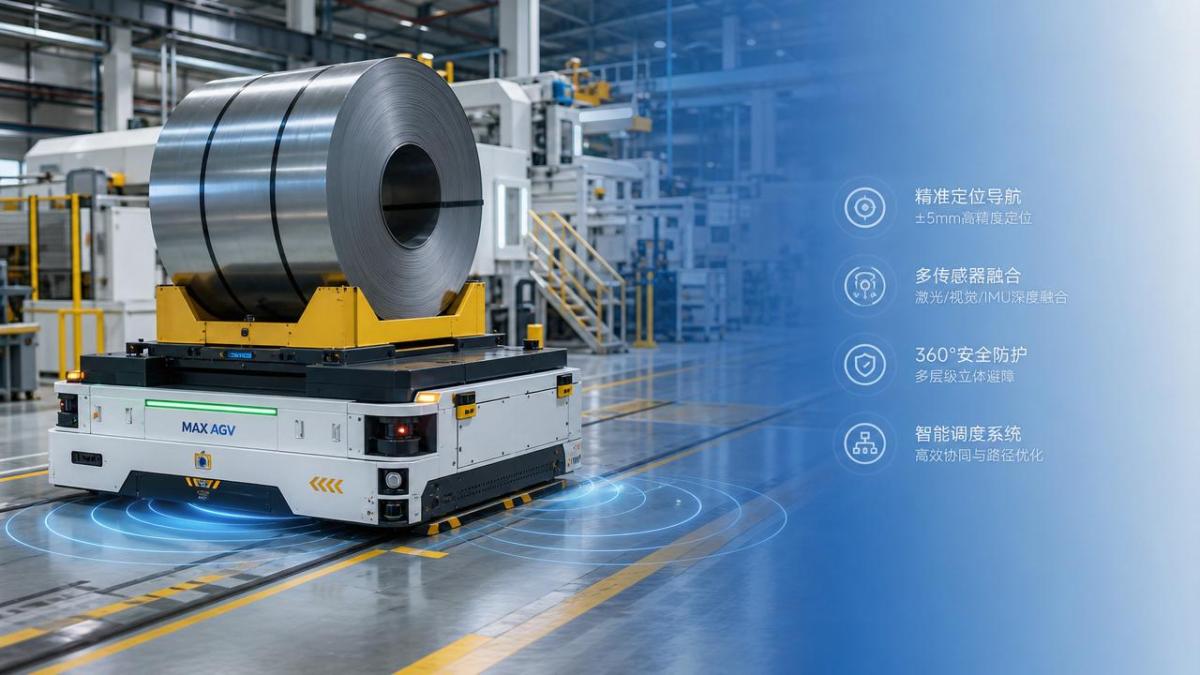
Yes—in many industrial environments, the answer is clearly yes, but only when the system is matched to payload, route complexity, floor conditions, and process discipline.
For decision-makers, the real question is not whether automation sounds safer. It is whether a heavy-load AGV can reduce manual exposure to repetitive strain, collision risk, and unstable handling.
In operations that move molds, metal coils, battery packs, engine assemblies, aerospace structures, or oversized pallets, labor risk rises with every extra kilogram and every manual touchpoint.
An automated guided vehicle for heavy load can cut that risk by removing forklift congestion, reducing direct operator contact with dangerous loads, and standardizing movement paths across shifts.
However, risk reduction is not automatic. A poorly specified vehicle, weak traffic logic, or incomplete safety integration can simply replace one class of hazard with another.
That is why the most useful evaluation lens is practical: where does labor risk exist today, and which parts of that risk can automation measurably eliminate?
Where labor risk is highest in heavy-load material handling
Before evaluating AGVs, companies should define the current risk profile of their internal transport workflows. Most labor risk in heavy-load handling appears in four predictable categories.
First is direct physical exposure. Workers may push, guide, steady, align, or reposition heavy items during loading, unloading, and transfer between production stations.
Second is vehicle interaction risk. Forklifts, tow tractors, and cranes create traffic conflicts, blind spots, and inconsistent operator behavior, especially in mixed pedestrian environments.
Third is ergonomic strain. Even when workers do not lift full payloads, repeated coupling, uncoupling, alignment correction, and emergency interventions create cumulative injury exposure.
Fourth is process variability. Manual transport often depends on operator judgment, route preference, and shift-level habits, which leads to inconsistent timing and safety performance.
For enterprise leaders, this matters because labor risk is rarely just a safety metric. It also drives downtime, claims, retraining, absenteeism, and hidden productivity loss.
In other words, the business case for a heavy-load AGV becomes stronger when labor risk is tied to repeatable transport tasks rather than occasional exceptional moves.
How a heavy-load AGV changes the risk profile
The core benefit of an automated guided vehicle for heavy load is not simply moving product automatically. It is converting unpredictable human-dependent handling into controlled system behavior.
Routes become fixed or dynamically governed. Speed zones can be predefined. Stopping distance, deceleration curves, and load transfer logic can be engineered instead of improvised.
That shift matters because many accidents happen during exceptions: tight turns, rushed moves, visibility limits, floor transitions, or last-minute manual corrections near machinery.
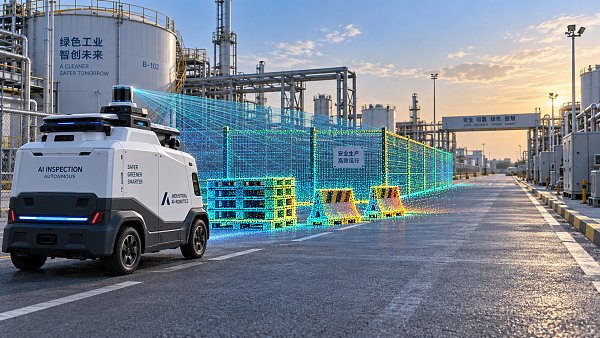
With heavy-load AGVs, those risk points can be constrained through navigation maps, obstacle detection, safety scanners, warning systems, and docking precision protocols.
Labor exposure drops because workers no longer need to escort high-mass loads through aisles, stand beside moving forklifts, or physically stabilize unstable material during travel.
In mature deployments, the AGV also improves role separation. People focus on supervision, exception handling, and value-added tasks instead of repetitive transport under hazardous conditions.
This is especially valuable in sectors where skilled labor is scarce and where injuries or near misses can interrupt production more than executives initially estimate.
What enterprise decision-makers should verify before expecting safety gains
Not every AGV project delivers meaningful labor-risk reduction. Safety outcomes depend on specification quality, integration depth, and operational governance after deployment.
Start with payload reality, not brochure capacity. If the nominal vehicle rating is too close to actual peak load, safety margins shrink during braking, cornering, and floor variation.
Decision-makers should ask for rated payload under actual operating conditions, including slope, turning radius, acceleration profile, and center-of-gravity variation.
Next, verify load stability controls. Heavy loads can shift, overhang, vibrate, or create asymmetric mass distribution. That affects safe transport far more than simple weight figures suggest.
Navigation reliability is another priority. Magnetic guidance, laser navigation, natural feature navigation, and hybrid systems each behave differently under dust, reflectivity, congestion, and layout change.
Do not evaluate navigation as a software feature alone. Evaluate fault tolerance: what happens if localization confidence drops, an aisle is blocked, or environmental conditions degrade?
Also assess safety architecture. A heavy-load AGV should be examined for scanner coverage, emergency stop logic, speed adaptation, load presence confirmation, and safe docking behavior.
Finally, ask how the system handles exceptions. If every irregular pallet requires manual rescue, labor risk may only move from routine handling to chaotic intervention.
Which environments benefit most from an automated guided vehicle for heavy load?
The strongest use cases share a common pattern: repetitive internal logistics, high payloads, measurable safety exposure, and enough transport volume to justify engineered flow control.
Examples include automotive powertrain plants, metal fabrication sites, paper and pulp operations, warehouse-to-line replenishment, battery manufacturing, and large-component assembly environments.
Facilities with long travel distances or frequent cross-zone movement often gain the most because they reduce repeated human exposure over many daily transport cycles.
Operations with strict traceability or regulated quality requirements also benefit because AGV movements can be logged, timed, and linked to production execution systems.
Another strong fit is where forklifts have become operationally necessary but strategically problematic due to accidents, insurance pressure, labor turnover, or aisle congestion.
On the other hand, highly chaotic environments with low route repeatability, unstable floor quality, or constant oversized one-off moves may need a hybrid strategy rather than full AGV replacement.
For these sites, the best path may be selective automation of the highest-risk and highest-frequency transport segments first, followed by expansion after performance validation.
How to calculate value beyond labor savings alone
Many AGV evaluations stall because the business case is framed too narrowly. Heavy-load automation should not be justified only by direct headcount reduction.
The more credible approach is to combine labor-risk reduction with avoided incident cost, improved throughput consistency, lower product damage, and better use of skilled personnel.
Decision-makers should model current-state cost across injuries, near misses, forklift traffic disruption, overtime linked to transport delays, and quality issues caused by handling variation.
Then compare those losses against the expected performance of an automated guided vehicle for heavy load, including uptime, maintenance, charging strategy, and integration costs.
Another important metric is process predictability. Standardized transport can improve line feeding accuracy, workstation utilization, and production scheduling confidence.
That consistency can create second-order gains: fewer stoppages, less buffer inventory, reduced WIP accumulation, and smoother coordination between upstream and downstream operations.
In some organizations, the strongest ROI driver is not labor elimination but risk-adjusted operational resilience—especially where a single handling incident can halt expensive production assets.
Common implementation mistakes that weaken the safety case
One common mistake is treating the AGV as a standalone vehicle purchase rather than a plant-level safety and flow redesign project.
If aisles remain poorly marked, pedestrian rules stay informal, and loading interfaces are inconsistent, the AGV cannot deliver its full risk-reduction value.
Another mistake is underestimating infrastructure readiness. Floor flatness, drainage gaps, lighting conditions, Wi-Fi coverage, and docking alignment all affect real-world reliability.
Companies also fail when they automate unstable processes. If upstream packaging, pallet quality, or load dimensions are inconsistent, the AGV inherits that variability.
Change management is equally critical. Workers need clear rules for shared-space behavior, exception response, and escalation procedures when the vehicle stops or requests intervention.
Some teams focus heavily on peak speed, but for heavy loads, controlled movement and safe repeatability usually matter more than aggressive transport velocity.
Finally, avoid choosing vendors only on upfront price. Lifecycle support, spare parts availability, software diagnostics, and on-site service response directly affect risk and continuity.
What to ask vendors before making a procurement decision
For a decision-maker, better questions produce better outcomes. Start by asking for evidence, not claims, related to heavy-load performance in comparable operating environments.
Request payload-specific case data, floor condition assumptions, braking performance, docking accuracy, and failure mode behavior under blocked paths or sensor interference.
Ask how the supplier validates load stability for your dimensions and center-of-gravity profile. A generic tonnage rating is not enough for safe implementation.
Clarify the navigation stack, scanner configuration, and standards compliance. Also ask what diagnostics are available for root-cause analysis after stops, delays, or abnormal events.
Probe integration details: warehouse systems, MES, traffic control, doors, elevators, conveyors, and machine interfaces can all influence both safety and ROI.
Demand realistic uptime assumptions and maintenance intervals under your duty cycle, not ideal lab conditions or lightly loaded demonstration scenarios.
Most importantly, ask the vendor to define what labor-risk reductions they believe are achievable and how those outcomes will be measured after commissioning.
Final assessment: when the investment makes strategic sense
An automated guided vehicle for heavy load can absolutely cut labor risk, but the result depends on engineering discipline rather than automation branding.
For enterprise decision-makers, the strongest justification appears when heavy internal transport is repetitive, hazardous, operationally important, and expensive to manage manually.
In those conditions, a heavy-load AGV can reduce direct worker exposure, lower traffic-related incidents, improve process consistency, and strengthen plant-wide risk control.
But the technology should be evaluated as part of a broader system: payload physics, route design, safety logic, floor conditions, integration quality, and exception management.
If those fundamentals are addressed, the AGV becomes more than a transport tool. It becomes a measurable control layer for safety, throughput, and operational predictability.
That is why the right procurement question is not simply, “Can it move the load?” It is, “Can it move the load more safely, more consistently, and with less exposure than our current process?”
When the answer is supported by real performance data, the investment is not just justified—it becomes strategically difficult to ignore.
Search News
Hot Articles
- Carbon Fiber StructuresHow to Specify Aerospace Carbon Fiber Assemblies for Lightweight, Load-Bearing PartsJul 11, 2026
- Machine VisionXiaomi, Alibaba DAMO Academy Drive Open-Source Robotics Model Ecosystem, Lowering Algorithm Development Barriers for Overseas SMEs Adopting Chinese Robotics SolutionsMar 30, 2026
- Cobots & ArmsShanxi 'AI+' Conference Showcases Embodied Intelligence with Multinational Buyer Engagement: Key Industry ImplicationsMar 30, 2026
Popular Tags
Recommended News
 Jul 11, 2026How to Specify Aerospace Carbon Fiber Assemblies for Lightweight, Load-Bearing PartsAerospace carbon fiber assemblies: learn how to specify laminate design, load data, joining methods, and inspection controls for lighter, reliable load-bearing aerospace parts.Elena Rostova (UAV Systems Researcher)
 Mar 30, 2026Xiaomi, Alibaba DAMO Academy Drive Open-Source Robotics Model Ecosystem, Lowering Algorithm Development Barriers for Overseas SMEs Adopting Chinese Robotics SolutionsXiaomi & Alibaba DAMO Academy's open-source robotics models lower algorithm barriers for global SMEs. Boost efficiency in manufacturing, logistics & smart retail with ROS 2 compatible solutions.TSV Data Lab
 Mar 30, 2026Shanxi 'AI+' Conference Showcases Embodied Intelligence with Multinational Buyer Engagement: Key Industry ImplicationsShanxi 'AI+' Conference highlights embodied intelligence with Tesla, Ubtech & Jiantao showcasing multimodal robotics. 40+ global buyers validated tech on-site, creating new B2B channels for industrial automation & AI solutions.Chen Wei (Automation Lead Engineer)
 Mar 30, 2026Zhongguancun Unveils 6G Integrated Sensing-Computing-Intelligence Platform to Empower Embodied Robots for Global Industrial ApplicationsZhongguancun's new 6G platform revolutionizes industrial robotics with <10ms latency, empowering global automotive, logistics & port automation. Discover how this tech boosts China's smart manufacturing exports.TSV Data Lab
 Mar 30, 2026Mech-Mind Tianjin Embodied Intelligence R&D and Production Base Goes Live, Cutting Delivery Time by 20%–30% for Global Customized AMR+Vision SolutionsMech-Mind's Tianjin AMR+Vision production base cuts delivery time by 20%-30% for欧美 & Latin American markets. Discover how this PLd-certified facility accelerates customized robotics solutions for smart manufacturing and logistics.Chen Wei (Automation Lead Engineer)
 Mar 30, 2026Boao Forum Reveals 'Co-evolution of Big and Small Brains' Trend in Humanoid Robots, China's Embodied Intelligence Accelerates Adaptation to Overseas Manufacturing Service ScenariosDiscover how China's humanoid robots, featuring 'Co-evolution of Big and Small Brains,' are revolutionizing global manufacturing. Learn about Embodied Tian Gong 3.0's ISO compliance and overseas deployment at Boao Forum 2026.Chen Wei (Automation Lead Engineer)
 Mar 30, 2026China Railway Industrial Secures Patent for Embodied Robotics in Material Handling, Boosting High-Precision Delivery Capabilities for Overseas Infrastructure and Manufacturing ProjectsChina Railway Industrial's new patent for embodied robotics in material handling boosts high-precision delivery for global infrastructure & manufacturing. Discover how this innovation enhances logistics accuracy in automotive, rail transit & EPC projects.Chen Wei (Automation Lead Engineer)
 Oct 03, 2026Selecting Automotive Radar Sensor Modules for ADAS Range, Resolution, and IntegrationAutomotive radar sensor module selection guide for ADAS: compare range, resolution, field of view, latency, and integration to build safer, reliable vehicle systems.TSV Data Lab
 Oct 02, 2026How to Qualify Machined Parts Suppliers for Hard Tech ProgramsHard tech supply chain machined parts demand rigorous supplier qualification. Learn how to assess capability, traceability, quality controls, and delivery resilience.Dr. Marcus Vance
 Oct 01, 2026How to Select an Outdoor Security Radar Sensor for Perimeter Detection?Outdoor security radar sensor selection guide: compare range, accuracy, false-alarm control, integration, and field testing for reliable perimeter detection.TSV Data Lab
 Sep 30, 2026How to Evaluate Solid-State LiDAR Hardware for Outdoor Autonomous VehiclesSolid state LiDAR hardware evaluation guide for outdoor autonomous vehicles—compare range, point-cloud quality, environmental resilience, integration, and safety.TSV Data Lab
 Sep 29, 2026ISO 9283 Repeatability: How to Evaluate Cobot Positioning PerformanceISO 9283 cobot repeatability explained: learn how payload, reach, approach direction, and test conditions affect positioning performance and cell capability.Chen Wei (Automation Lead Engineer)
 Oct 03, 2026Is Edge Computing Necessary for Real-Time Quality Inspection?Is industrial edge computing necessary for real-time quality inspection? Explore how latency, data volume, reliability, and control integration shape the right architecture.TSV Data Lab
 Oct 02, 2026What Documents Prove a Precision Machining Supplier Can Hold Tolerance?What documents prove a precision machining supplier can hold tolerance? Explore certificates, FAI reports, calibration, SPC, and traceability evidence to qualify suppliers with confidence.Dr. Marcus Vance
 Oct 01, 2026Can a Machining Supplier Meet Aerospace Fatigue Testing Requirements?Can a machining supplier meet aerospace fatigue testing requirements? Learn the traceability, process control, and test evidence needed for reliable aerospace parts.Dr. Marcus Vance
 Sep 30, 2026Which Industrial Robot Specifications Matter for High-Precision Assembly?Which industrial robot specifications matter most for high-precision assembly? Explore repeatability, accuracy, stiffness, vibration, calibration, and force control for reliable yields.Chen Wei (Automation Lead Engineer)
 Sep 29, 2026How Do You Verify Servo Motor Torque Under Continuous Load?How do I verify servo motor torque under continuous load? Learn RMS torque checks, torque-speed limits, thermal derating, and real-machine testing.Chen Wei (Automation Lead Engineer)
 Oct 02, 2026ZD330 Software Configuration: Verifying Cut-List Import Before PurchaseZD330 software and machine configuration: verify cut-list imports, data mapping, labels, and workflow before purchase to reduce errors and choose with confidence.Victor Lin (Chief Software Architect)
 Sep 28, 2026Spindle Runout Measurement in Germany: DIN Standards, Methods, and Acceptance LimitsSpindle runout measurement Germany: explore DIN standards, proven methods, acceptance limits, and audit-ready practices for reliable machining quality.Dr. Marcus Vance
 Sep 27, 2026How to Select Wall-Mount Edge Devices for Space-Constrained Factory NetworksWall mount edge devices for space-constrained factories: evaluate workload, thermal design, power resilience, cable access, and network reliability for smarter deployments.TSV Data Lab
 Sep 26, 2026Machining Tolerance Analysis: How to Set Limits That Meet Function and Cost TargetsMachining tolerance analysis: learn how to set functional limits, control tolerance stacks, reduce inspection risk, and balance precision with production cost.Dr. Marcus Vance
 Sep 25, 2026How to Evaluate an Industrial Infrastructure Data Platform for Multi-Site OperationsIndustrial infrastructure data platform evaluation guide for multi-site operations: compare data quality, edge resilience, interoperability, governance, and scalable proof-of-value criteria.Victor Lin (Chief Software Architect)
 Sep 24, 2026How to Select Machine Vision Optics for Accurate Inspection at Different Working DistancesMachine vision optics selection guide for accurate inspection at every working distance. Compare FOV, pixel scale, DOF, distortion, lighting, and telecentric options.TSV Data Lab
 Sep 23, 2026How to Evaluate a Machine Vision System Integrator for High-Speed Inspection LinesChoose a machine vision system integrator with proven expertise in high-speed inspection, reliable reject timing, robust optics, and measurable acceptance criteria.TSV Data Lab