How to Qualify Machined Parts Suppliers for Hard Tech Programs
Publication Date
author
How to Qualify Machined Parts Suppliers for Hard Tech Programs
Qualifying a machined parts supplier for a hard tech program is not a matter of collecting a few quotations, checking a certificate, and selecting the lowest unit price. That approach may work for non-critical brackets or mature commodity parts. It breaks down quickly when a component sits inside a robotic joint, an aerospace payload system, a medical-device assembly, a LiDAR housing, or a high-speed automation platform.
In these environments, the cost of a poor supplier decision is rarely limited to the part itself. A late first article can hold up a build. An undocumented material substitution can invalidate testing. A supplier that machines a tight feature once, but cannot repeat it across lots, can quietly consume months of engineering time. The real task is to determine whether a supplier can produce the required part, in the required condition, with evidence that stands up to design reviews, incoming inspection, and eventual scale-up.
That distinction matters across the hard tech supply chain. Procurement teams are often asked to move fast while engineering requirements are still evolving. The temptation is to treat supplier qualification as an administrative gate. In practice, it is a technical risk assessment. The best process separates a supplier’s marketing claims from its actual process controls, measurement discipline, material traceability, and delivery behavior.
Start With the Part’s Failure Mode, Not the Supplier’s Capability Deck
A supplier may legitimately operate modern CNC equipment and still be wrong for a specific part. Qualification should begin with the component’s function in the assembly. Ask what happens if a dimension drifts, a surface finish changes, a thread is damaged, or a heat-treated material is mixed with the wrong lot.
For example, a cosmetic enclosure may tolerate a small visual variation that would be unacceptable in a precision optical mount. A lightweight UAV bracket may look straightforward until its load path, fatigue exposure, anodizing requirements, and fastener interfaces are reviewed together. In robotics, a machined gearbox housing may require more than nominal bore diameter control; coaxiality, bearing-fit consistency, burr control, and cleanliness can all affect performance.
Before contacting suppliers, convert the drawing package into a short risk profile. It does not need to be elaborate, but it should identify:
- Critical-to-function dimensions, geometric tolerances, and datum relationships;
- Material grade, condition, approved alternatives, and traceability expectations;
- Special processes such as anodizing, passivation, plating, heat treatment, welding, or non-destructive testing;
- Inspection requirements, including first article, CMM reporting, thread gauging, surface roughness checks, or functional gauges;
- Production assumptions: prototype quantity, annual volume, release frequency, and permitted lead time.
This step prevents a common sourcing mistake: sending the same RFQ to every shop and hoping their quotations reveal who is capable. Quotations reveal commercial assumptions. They do not automatically reveal process risk.
Read a Quote for What It Does Not Say
A clean, low-price quotation can be useful, but it should trigger questions rather than end them. If one supplier is materially cheaper than the others, the difference may reflect an efficient process. It may also mean that inspection, fixturing, finishing, documentation, packaging, or scrap risk has been excluded from the price.
Look for explicit assumptions. Has the supplier quoted to the latest drawing revision? Are all dimensions understood as bilateral tolerances, or have general tolerances been assumed? Is the quoted material available in the requested form and condition? Has a finishing process been included, and is masking required on any precision surface? These details can materially change both price and lead time.
For hard tech supply chain machined parts, the most useful quote is often not the cheapest one. It is the one that exposes the manufacturing plan: likely setups, difficult features, likely inspection points, outsourced operations, and technical questions that need closure. A supplier that asks informed questions early may be reducing risk, not creating friction.
Be cautious with suppliers that accept every drawing without comment, especially when the package contains ambiguous callouts, incompatible surface requirements, unusually thin walls, deep cavities, or tolerance stacks that cannot be verified easily. Silence can mean confidence. It can also mean the drawing has not been reviewed closely.
Verify Process Capability at the Feature Level
“We can hold tight tolerances” is not qualification evidence. The practical question is whether the supplier can hold the required tolerance on the required feature, material, geometry, batch size, and process route.
A five-axis machine does not automatically guarantee five-axis capability. The machine may be used primarily for access and setup reduction, while the supplier’s inspection system, fixture design, tooling strategy, or operator practice remains the limiting factor. Likewise, a shop may be excellent at aluminum prototypes but less reliable with titanium, Inconel, hardened stainless steel, thin-wall parts, or parts requiring stable geometry after heat treatment.
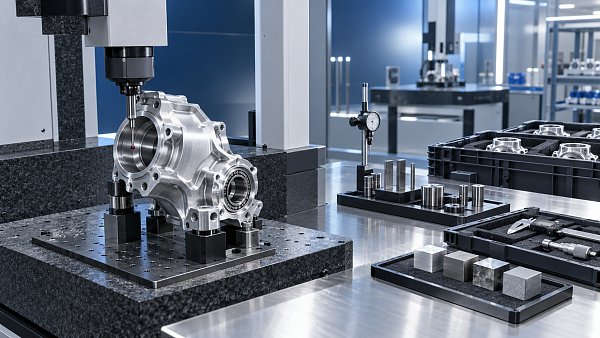
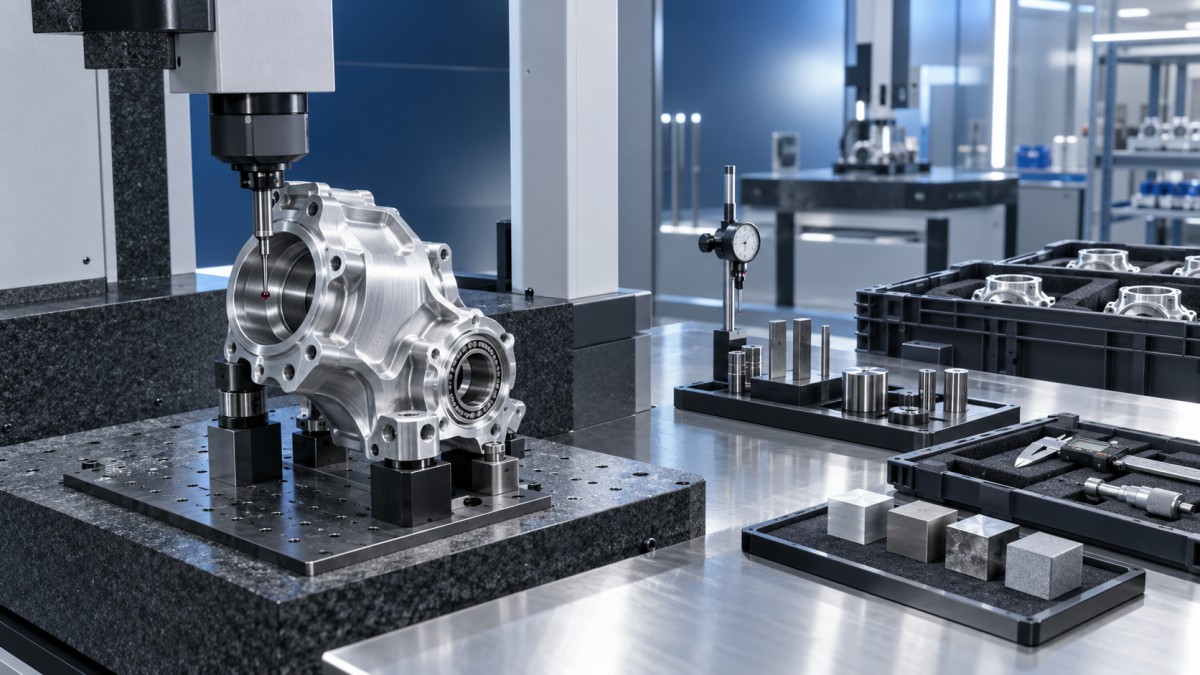
During technical review, ask how the most difficult features will be produced and measured. A credible answer should connect machining method to verification method. If a precision bore is critical, will it be finish-bored, reamed, honed, or ground? Will it be checked with a calibrated bore gauge, air gauge, CMM, or a functional plug gauge? If a profile tolerance controls a freeform surface, does the supplier have an inspection strategy that reflects the drawing datums rather than merely probing convenient points?
Process capability studies can be valuable on repeat production parts, but they should be interpreted carefully. A capability index is only meaningful when the process is stable, the measurement system is suitable, and the sampling plan reflects actual production conditions. It is not a substitute for understanding a low-volume prototype process or a one-time development build.
Inspection equipment is only part of the story
Many qualification packages list CMMs, optical comparators, height gauges, and calibrated hand tools. That inventory matters, but the more revealing questions concern use and records. Who creates inspection plans? How are gauge calibration intervals controlled? How are nonconforming parts identified and segregated? Can the supplier provide actual dimensional reports tied to part serial numbers or lot numbers where the program requires it?
For complex machined parts, inspection often becomes the bottleneck before machining does. If a supplier cannot explain how it will inspect the part, it may not yet have a reliable way to manufacture it.
Treat Material and Special-Process Traceability as a Separate Qualification Workstream
Material traceability is easy to underestimate when a part is still in prototype mode. Yet the same component may later enter an aerospace, medical, industrial automation, or regulated end-use environment where origin, chemistry, condition, and process history become essential. Retrofitting traceability after several builds is expensive and sometimes impossible.
The supplier should be able to explain how incoming material is identified, how it remains associated with work orders during machining, and how material certificates are retained and linked to shipments when required. The right documentation level depends on the program. Not every part needs the same record package, but the expectation should be specified rather than assumed.
Special processes deserve particular attention because they are frequently outsourced. Anodizing can affect dimensions and electrical contact surfaces. Heat treatment can introduce distortion. Passivation, coating, shot peening, welding, and plating may have functional implications that are not visible during a basic receiving inspection. Ask which operations are performed in-house, which are subcontracted, how approved processors are selected, and whether process certificates can accompany the delivery.
Certifications can indicate that a management system exists, but they do not prove that every process is within scope for your part. AS9100-based practices may be relevant for aerospace work, while ISO 13485 may be relevant in medical-device supply chains. In either case, verify the certificate’s current status, scope, site address, and relevance to the actual manufacturing route. A certificate should open the conversation, not close it.
Use a Pilot Build to Test More Than Part Quality
A first order is a useful technical test, but it should also be treated as a test of communication and operational discipline. The supplier’s behavior during a pilot build often tells procurement more than a polished factory presentation.
Watch how drawing questions are handled. Are deviations documented before work begins? Does the supplier notify the team when a requested dimension is impractical, or does it proceed and disclose the issue after shipment? Are revision-controlled files clearly acknowledged? Do packing labels, inspection reports, and certificates match the purchase order and part revision?
For aerospace programs, a first article inspection may be requested under the customer’s contractual requirements, sometimes using AS9102-aligned documentation. Other sectors may use a different validation package, or simply require a detailed dimensional report and material records. The point is not to impose aerospace paperwork on every part. The point is to agree, before the build, what evidence is needed for acceptance.
Pilot builds also expose hidden commercial issues. Did the supplier charge for fixtures as expected? Was outside processing quoted accurately? Did lead time begin at purchase order release, drawing clarification, material receipt, or completion of programming? These details should be captured before a program moves into recurring orders.
Assess Delivery Resilience, Not Just Stated Lead Time
A supplier’s stated lead time is a planning estimate, not a resilience measure. Hard tech programs are vulnerable to material shortages, single-source finishing operations, machine downtime, engineering changes, and fluctuating prototype demand. A shop may deliver quickly under normal conditions but have little ability to recover when one element of the route changes.
Ask practical questions: Is the critical material commonly stocked or purchased only after order release? Are there alternative qualified sources? Does the supplier rely on one programmer, one machine, or one outside processor for a critical operation? How are expedites managed without bypassing inspection? There is no universally correct supplier footprint. A small specialist may be the best choice for technically difficult parts, provided the dependency is recognized and managed.
For recurring components, consider whether the supplier can support a controlled transition from prototype to production. Prototype pricing may assume manual setups and flexible scheduling. Production economics require a different conversation about fixtures, raw-material planning, inspection frequency, lot size, and change control. The lowest prototype quote can become expensive if the process is not designed to scale.
Build the Decision Around Evidence, Not Reputation
A sensible qualification decision combines technical fit, quality controls, traceability, commercial clarity, and supply resilience. Reputation still has value, especially in specialized manufacturing networks, but it should not replace documented evidence. Nor should a supplier be rejected simply because it is not highly visible online. Some highly capable machining businesses have limited marketing presence and strong process discipline.
This is where data-driven benchmarking is more useful than broad claims. TechStat Vanguard’s approach—engineering truth through data—reflects a practical procurement principle: compare suppliers against the parameters that determine part performance, not against generic statements about quality. Tolerance control, inspection records, material traceability, process ownership, and response to technical ambiguity are all more informative than a slogan on a capability page.
The final supplier scorecard does not need to be complicated. It should make trade-offs visible. A supplier may be technically excellent but weak on documentation. Another may be operationally reliable but unsuitable for a difficult thin-wall titanium component. Those distinctions are exactly what qualification is meant to reveal.
For critical machined parts, do not wait until a production failure to discover how a supplier controls a process. Ask for the evidence before award, test the relationship with a disciplined pilot build, and keep the requirements tied to the part’s real failure modes. That is how procurement reduces cost without buying avoidable engineering risk.
Search News
Hot Articles
- Carbon Fiber StructuresHow to Specify Aerospace Carbon Fiber Assemblies for Lightweight, Load-Bearing PartsJul 11, 2026
- Machine VisionXiaomi, Alibaba DAMO Academy Drive Open-Source Robotics Model Ecosystem, Lowering Algorithm Development Barriers for Overseas SMEs Adopting Chinese Robotics SolutionsMar 30, 2026
- Cobots & ArmsShanxi 'AI+' Conference Showcases Embodied Intelligence with Multinational Buyer Engagement: Key Industry ImplicationsMar 30, 2026
Popular Tags
Recommended News
 Jul 11, 2026How to Specify Aerospace Carbon Fiber Assemblies for Lightweight, Load-Bearing PartsAerospace carbon fiber assemblies: learn how to specify laminate design, load data, joining methods, and inspection controls for lighter, reliable load-bearing aerospace parts.Elena Rostova (UAV Systems Researcher)
 Mar 30, 2026Xiaomi, Alibaba DAMO Academy Drive Open-Source Robotics Model Ecosystem, Lowering Algorithm Development Barriers for Overseas SMEs Adopting Chinese Robotics SolutionsXiaomi & Alibaba DAMO Academy's open-source robotics models lower algorithm barriers for global SMEs. Boost efficiency in manufacturing, logistics & smart retail with ROS 2 compatible solutions.TSV Data Lab
 Mar 30, 2026Shanxi 'AI+' Conference Showcases Embodied Intelligence with Multinational Buyer Engagement: Key Industry ImplicationsShanxi 'AI+' Conference highlights embodied intelligence with Tesla, Ubtech & Jiantao showcasing multimodal robotics. 40+ global buyers validated tech on-site, creating new B2B channels for industrial automation & AI solutions.Chen Wei (Automation Lead Engineer)
 Mar 30, 2026Zhongguancun Unveils 6G Integrated Sensing-Computing-Intelligence Platform to Empower Embodied Robots for Global Industrial ApplicationsZhongguancun's new 6G platform revolutionizes industrial robotics with <10ms latency, empowering global automotive, logistics & port automation. Discover how this tech boosts China's smart manufacturing exports.TSV Data Lab
 Mar 30, 2026Mech-Mind Tianjin Embodied Intelligence R&D and Production Base Goes Live, Cutting Delivery Time by 20%–30% for Global Customized AMR+Vision SolutionsMech-Mind's Tianjin AMR+Vision production base cuts delivery time by 20%-30% for欧美 & Latin American markets. Discover how this PLd-certified facility accelerates customized robotics solutions for smart manufacturing and logistics.Chen Wei (Automation Lead Engineer)
 Mar 30, 2026Boao Forum Reveals 'Co-evolution of Big and Small Brains' Trend in Humanoid Robots, China's Embodied Intelligence Accelerates Adaptation to Overseas Manufacturing Service ScenariosDiscover how China's humanoid robots, featuring 'Co-evolution of Big and Small Brains,' are revolutionizing global manufacturing. Learn about Embodied Tian Gong 3.0's ISO compliance and overseas deployment at Boao Forum 2026.Chen Wei (Automation Lead Engineer)
 Mar 30, 2026China Railway Industrial Secures Patent for Embodied Robotics in Material Handling, Boosting High-Precision Delivery Capabilities for Overseas Infrastructure and Manufacturing ProjectsChina Railway Industrial's new patent for embodied robotics in material handling boosts high-precision delivery for global infrastructure & manufacturing. Discover how this innovation enhances logistics accuracy in automotive, rail transit & EPC projects.Chen Wei (Automation Lead Engineer)
 Oct 02, 2026How to Qualify Machined Parts Suppliers for Hard Tech ProgramsHard tech supply chain machined parts demand rigorous supplier qualification. Learn how to assess capability, traceability, quality controls, and delivery resilience.Dr. Marcus Vance
 Oct 01, 2026How to Select an Outdoor Security Radar Sensor for Perimeter Detection?Outdoor security radar sensor selection guide: compare range, accuracy, false-alarm control, integration, and field testing for reliable perimeter detection.TSV Data Lab
 Sep 30, 2026How to Evaluate Solid-State LiDAR Hardware for Outdoor Autonomous VehiclesSolid state LiDAR hardware evaluation guide for outdoor autonomous vehicles—compare range, point-cloud quality, environmental resilience, integration, and safety.TSV Data Lab
 Sep 29, 2026ISO 9283 Repeatability: How to Evaluate Cobot Positioning PerformanceISO 9283 cobot repeatability explained: learn how payload, reach, approach direction, and test conditions affect positioning performance and cell capability.Chen Wei (Automation Lead Engineer)
 Oct 01, 2026Can a Machining Supplier Meet Aerospace Fatigue Testing Requirements?Can a machining supplier meet aerospace fatigue testing requirements? Learn the traceability, process control, and test evidence needed for reliable aerospace parts.Dr. Marcus Vance
 Sep 30, 2026Which Industrial Robot Specifications Matter for High-Precision Assembly?Which industrial robot specifications matter most for high-precision assembly? Explore repeatability, accuracy, stiffness, vibration, calibration, and force control for reliable yields.Chen Wei (Automation Lead Engineer)
 Sep 29, 2026How Do You Verify Servo Motor Torque Under Continuous Load?How do I verify servo motor torque under continuous load? Learn RMS torque checks, torque-speed limits, thermal derating, and real-machine testing.Chen Wei (Automation Lead Engineer)
 Oct 02, 2026ZD330 Software Configuration: Verifying Cut-List Import Before PurchaseZD330 software and machine configuration: verify cut-list imports, data mapping, labels, and workflow before purchase to reduce errors and choose with confidence.Victor Lin (Chief Software Architect)
 Sep 28, 2026Spindle Runout Measurement in Germany: DIN Standards, Methods, and Acceptance LimitsSpindle runout measurement Germany: explore DIN standards, proven methods, acceptance limits, and audit-ready practices for reliable machining quality.Dr. Marcus Vance
 Sep 27, 2026How to Select Wall-Mount Edge Devices for Space-Constrained Factory NetworksWall mount edge devices for space-constrained factories: evaluate workload, thermal design, power resilience, cable access, and network reliability for smarter deployments.TSV Data Lab
 Sep 26, 2026Machining Tolerance Analysis: How to Set Limits That Meet Function and Cost TargetsMachining tolerance analysis: learn how to set functional limits, control tolerance stacks, reduce inspection risk, and balance precision with production cost.Dr. Marcus Vance
 Sep 25, 2026How to Evaluate an Industrial Infrastructure Data Platform for Multi-Site OperationsIndustrial infrastructure data platform evaluation guide for multi-site operations: compare data quality, edge resilience, interoperability, governance, and scalable proof-of-value criteria.Victor Lin (Chief Software Architect)
 Sep 24, 2026How to Select Machine Vision Optics for Accurate Inspection at Different Working DistancesMachine vision optics selection guide for accurate inspection at every working distance. Compare FOV, pixel scale, DOF, distortion, lighting, and telecentric options.TSV Data Lab
 Sep 23, 2026How to Evaluate a Machine Vision System Integrator for High-Speed Inspection LinesChoose a machine vision system integrator with proven expertise in high-speed inspection, reliable reject timing, robust optics, and measurable acceptance criteria.TSV Data Lab
 Oct 01, 2026What is included in a robotic system integration project cost?Robotic system integration project cost explained: compare equipment, engineering, safety, testing, installation, and lifecycle factors for smarter automation investments.Chen Wei (Automation Lead Engineer)
 Sep 30, 2026How much does warehouse automation cost for a growing distribution center?How much does warehouse automation cost? Explore equipment, integration, facility upgrades, lifecycle expenses, and ROI factors for a growing distribution center.Chen Wei (Automation Lead Engineer)
 Sep 29, 2026How MES and OEE work together to identify production lossesMES and OEE work together to uncover hidden production losses, connect downtime, speed, and quality data, and drive smarter shop-floor improvements.Victor Lin (Chief Software Architect)