How to Select an Outdoor Security Radar Sensor for Perimeter Detection?
Publication Date
author
Perimeter radar is worth considering when a site needs earlier warning than cameras can reliably provide, especially across long fence lines, open yards, low-light areas, or weather-exposed approaches. But an outdoor security radar sensor should not be selected from its advertised maximum range alone. The useful question is whether it can detect the target that matters, in the part of the site that matters, while producing an alarm rate the security operation can actually manage.
A sensor that sees a vehicle at a long distance may still be poorly suited to detecting a walking person near vegetation, beside a fence, or on a sloped access road. Likewise, a radar with impressive detection coverage can create little operational value if its alarms cannot be located, verified, and acted on quickly. Selection should begin with the perimeter threat model and end with evidence from a representative field test.
Start with the alarm decision, not the coverage map
Before comparing sensor models, define what must trigger an intervention. A warehouse may need to distinguish a person crossing a sterile boundary from trucks moving on an adjacent road. A utility site may be concerned with approach routes around substations, where bushes, uneven terrain, and fencing create blind areas for cameras. A logistics yard may need detection only outside operating hours, while a critical infrastructure site may require continuous awareness with different rules for personnel, vehicles, and wildlife.
These differences determine the specification. “Detect intruders along the perimeter” is too vague for an engineering or procurement requirement. A more usable requirement identifies the target, the required detection zone, the response time, and the acceptable false-alarm burden.
- Target type: walking person, crawling person, vehicle, drone, or a defined combination.
- Target behavior: approaching, crossing, loitering, moving parallel to the fence, or entering through a gate.
- Detection area: a corridor outside the fence, an internal buffer zone, a gate approach, or a broad open field.
- Detection outcome: notify an operator, steer a PTZ camera, activate lighting, initiate recording, or send an event to a command platform.
- Operational limit: how many nuisance alarms per shift can be handled without operators losing confidence in the system.
That last point is often under-specified. A perimeter system with a high nominal detection rate can still fail as a security measure if wind-blown branches, moving tarpaulins, small animals, road traffic, or rain-driven clutter generate repeated alerts. Alarm fatigue changes operator behavior: events are acknowledged late, camera verification is skipped, and zones may eventually be disabled. The selection process should therefore treat false-alarm resistance as a primary performance requirement, not an optional software feature.
Read range claims in the context of target size and geometry
Range figures are commonly presented as a single, easy-to-compare number. They are useful only when the test target and conditions are clear. Radar detection distance varies with target radar cross section, aspect angle, movement, terrain, antenna placement, and clutter. A vehicle is a much stronger radar target than a person. A person walking directly toward the sensor may present different motion characteristics from one moving across its field of view. A target partially screened by fence structures, parked equipment, or terrain cannot be treated as an unobstructed target at the same distance.
For perimeter detection, ask suppliers to separate their claimed performance by target class and operational condition. The evaluation should distinguish between maximum instrumented range, practical detection range, and the range at which the system can reliably support the intended alarm decision. Those are different measurements.
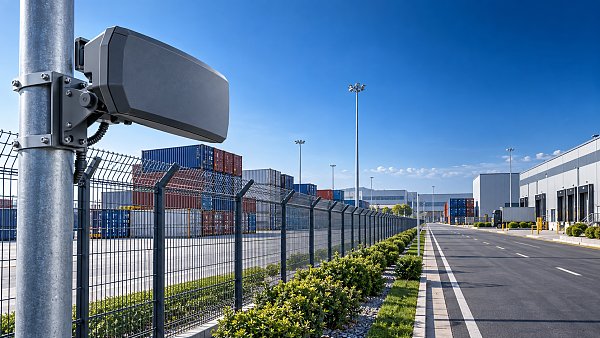
A radar placed high on a building may have a broad view of an open approach, but its ability to define a narrow fence-adjacent corridor can be limited by angle and ground geometry. A lower mounting position may provide better local coverage but introduce masking from fence posts, vegetation, stored materials, or terrain undulations. Long-range coverage also does not automatically replace multiple shorter-range sensors. On a complex boundary, overlapping zones can be more valuable than a single broad field of view because they reduce dead-ground risk and improve location confidence.
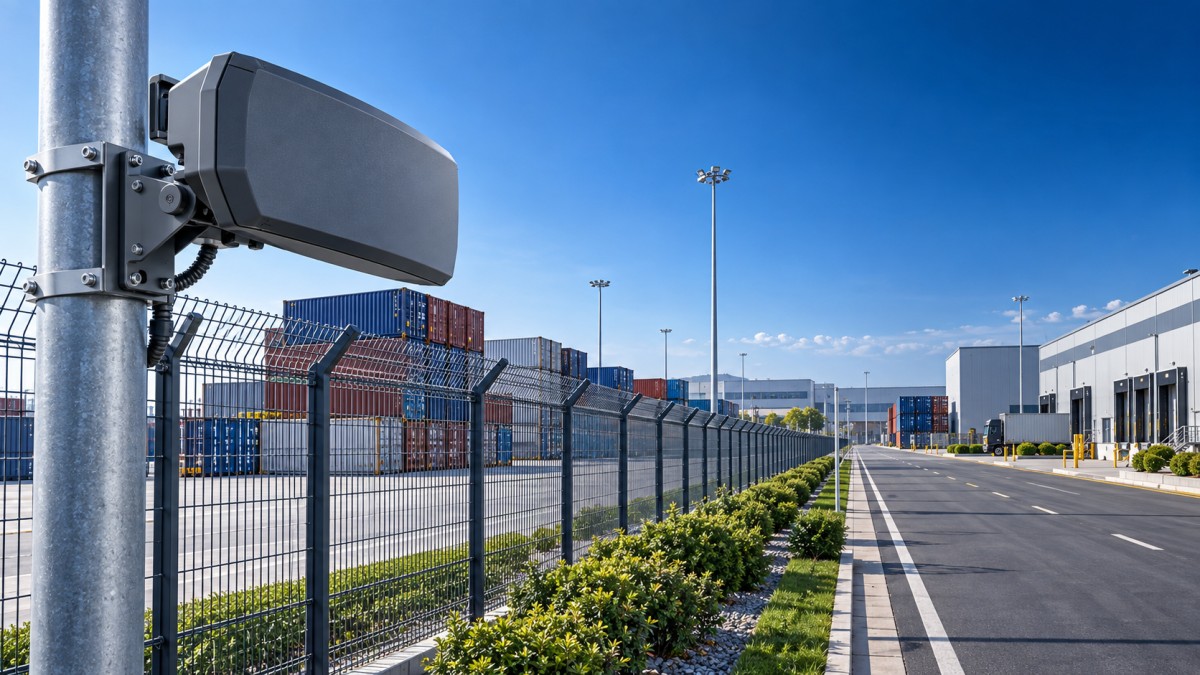
Ask for a site layout that shows detection sectors, overlap areas, intended alarm zones, exclusion zones, mounting heights, and known obstructions. A circular or fan-shaped coverage diagram is insufficient if it does not account for real terrain. The design should also show what happens immediately beyond the protected boundary. If public roads, pedestrian routes, water surfaces, rail lines, or adjacent work areas are within the radar field, the sensor may need carefully configured exclusion areas or tighter spatial filtering.
Resolution determines whether coverage becomes usable information
Radar can detect motion over areas where optical imaging is unreliable, but detection alone does not tell an operator where to look. Angular resolution and range resolution affect how accurately the system can locate targets and separate them from nearby activity. This matters most when radar is used to cue cameras, correlate with fence sensors, or assign alarms to specific perimeter sectors.
Consider a camera verification workflow. If a radar alarm identifies only a broad area, a PTZ camera may need to search a large scene before an intruder leaves view. If it can provide a stable location and track direction, the video system can point to a much smaller area. The difference affects response time more than the raw radar detection distance does.
Technical evaluators should examine four related behaviors:
- Position accuracy: how close the reported target location remains to the target’s actual location across the protected zone.
- Target separation: whether two nearby moving objects are reported separately or merged into one track.
- Track continuity: whether a person moving through clutter, near a fence, or across sector boundaries retains a coherent track.
- Update rate and latency: how quickly a motion event reaches the video system, VMS, PSIM, or other security platform after detection.
For camera cueing, end-to-end latency matters more than the radar scan cycle in isolation. The signal path includes radar processing, network transport, event handling, VMS logic, PTZ command processing, camera movement, and video availability. A fast sensor paired with slow event integration may still deliver late verification. Request a demonstration of the complete sequence: target movement, radar event, camera handoff, and usable operator video.
Classification should be treated with similar caution. Some radar platforms can use motion features, track characteristics, and software rules to classify objects such as people or vehicles. Such functions can reduce unwanted alarms, but they are conditional rather than absolute. Classification quality may degrade when targets are close together, when the target moves slowly, when terrain causes intermittent visibility, or when weather and environmental clutter rise. Procurement language should define the actions allowed by each classification result. A classification may be suitable for prioritizing video verification, while a high-consequence response may require corroboration from video, access control, thermal imaging, or another independent sensor.
Assess environmental performance as a system problem
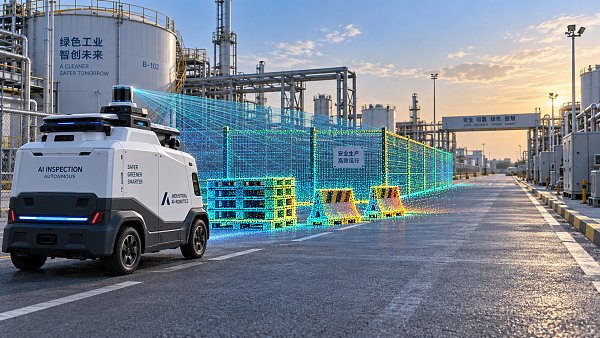
Radar is often chosen because it can operate in darkness and can remain effective in conditions that degrade visible-light cameras. That advantage is real, but it should not be converted into an assumption that outdoor radar is unaffected by the environment. Rain, snow, wind-driven foliage, reflective surfaces, terrain, nearby moving machinery, and multipath reflections can all affect the scene seen by the sensor.
The important engineering question is not whether the enclosure is rated for outdoor installation. It is whether the sensing performance remains stable in the site’s actual clutter environment. A coastal location, a dusty industrial yard, a heavily vegetated fence line, and an airport-adjacent facility create different evaluation challenges.
Review the installation environment in layers. First, inspect the immediate radar field: trees, shrubs, tall grass, signs, fencing, gates, containers, and parked vehicles. Then inspect moving activity beyond the intended detection zone, including roads, loading bays, rail movements, and neighboring facilities. Finally, consider seasonal change. An installation that performs well after vegetation clearance may behave differently when foliage grows back or when snow banks alter the ground profile.
A common mistake is relying on software masking to compensate for poor sensor placement. Exclusion zones are useful for removing known activity, but broad masks can create practical gaps near an approach route or reduce the value of tracking. Physical design remains the first control: choose a mounting position with clear lines of sight, limit nearby moving clutter, manage vegetation, and keep the field of view away from avoidable traffic.
Environmental tolerance also includes electrical and mechanical details. The design should account for surge protection, grounding, cable routing, network resilience, mounting rigidity, and access for maintenance. A radar mounted on a structure subject to vibration may produce unstable pointing or inconsistent scene behavior. A well-specified device can still become an unreliable sensor if its installation hardware, power path, or network connection is treated as an afterthought.
Integrate radar into an operator workflow
An outdoor security radar sensor rarely operates as a stand-alone security control. Its value normally comes from integration: it extends awareness beyond the camera image, directs verification assets, records location and track data, and provides an event source for a broader security system. The selection decision should therefore include the integration architecture from the beginning.
Confirm which interfaces are available and what data they expose. A simple relay output may be sufficient for activating lights or a local alarm, but it provides limited contextual information. Network integration can support alarm zones, tracks, target coordinates, classification data, health status, and camera cueing, subject to the capabilities of both systems. Compatibility statements should be tested against the exact VMS, PSIM, camera, and access-control versions planned for deployment.
There is also a design choice between local intelligence and centralized rules. Local processing can reduce network load and enable immediate alerts. Central platforms can apply site-wide correlation, unify operator displays, and preserve a common audit trail. The appropriate split depends on the response requirement, network topology, cybersecurity rules, and the number of sensors. What matters is that the ownership of alarm logic is explicit. Teams should know where zones are configured, where alarm suppression occurs, how software updates affect behavior, and how configuration changes are controlled.
Health monitoring deserves the same attention as alarm data. A perimeter radar that fails silently can create a false sense of protection. Evaluate how the system reports loss of power, network interruption, sensor fault, degraded communications, configuration changes, and loss of integration with the management platform. A clear fault state should be distinguishable from a quiet perimeter.
Use a field acceptance test that reflects the deployment decision
The strongest selection method is a controlled field evaluation at the intended site or at a test environment that reproduces its critical conditions. A showroom demonstration can confirm basic functions; it cannot establish whether the radar will maintain reliable coverage along a cluttered, weather-exposed boundary.
The test plan should be agreed before the demonstration, with defined routes, target behaviors, alarm zones, exclusion zones, camera cueing expectations, and event logging. Include normal site activity where practical. A system tested only against an isolated walking target in an empty field provides incomplete evidence for a working facility.
- Walk, run, and move parallel to the boundary through the zones that require protection.
- Test vehicle approaches separately from personnel movement.
- Assess entry near gates, fence corners, vegetation, stored equipment, and terrain changes.
- Verify whether adjacent traffic or authorized activity generates alarms.
- Measure the complete verification sequence, including camera pointing and operator display.
- Confirm that alarm logs preserve enough location and timing information for post-event review.
Acceptance criteria should focus on observed outcomes: detection in the required zone, correct alarm assignment, successful camera handoff, manageable nuisance activity, and clear fault reporting. It is reasonable to retain some uncertainty around rare weather conditions during a short evaluation, but that uncertainty should shape the deployment design. It may justify additional sensor overlap, different mounting positions, vegetation controls, or a period of monitored tuning after installation.
The best perimeter radar selection is therefore not the device with the longest quoted range or the broadest feature list. It is the sensor and system design that produces dependable, actionable alarms for a defined boundary under the site’s real geometry, clutter, and response workflow. A precise requirement, a terrain-aware layout, and a measured acceptance test will reveal far more than a headline specification sheet.
Search News
Hot Articles
- Carbon Fiber StructuresHow to Specify Aerospace Carbon Fiber Assemblies for Lightweight, Load-Bearing PartsJul 11, 2026
- Machine VisionXiaomi, Alibaba DAMO Academy Drive Open-Source Robotics Model Ecosystem, Lowering Algorithm Development Barriers for Overseas SMEs Adopting Chinese Robotics SolutionsMar 30, 2026
- Cobots & ArmsShanxi 'AI+' Conference Showcases Embodied Intelligence with Multinational Buyer Engagement: Key Industry ImplicationsMar 30, 2026
Popular Tags
Recommended News
 Jul 11, 2026How to Specify Aerospace Carbon Fiber Assemblies for Lightweight, Load-Bearing PartsAerospace carbon fiber assemblies: learn how to specify laminate design, load data, joining methods, and inspection controls for lighter, reliable load-bearing aerospace parts.Elena Rostova (UAV Systems Researcher)
 Mar 30, 2026Xiaomi, Alibaba DAMO Academy Drive Open-Source Robotics Model Ecosystem, Lowering Algorithm Development Barriers for Overseas SMEs Adopting Chinese Robotics SolutionsXiaomi & Alibaba DAMO Academy's open-source robotics models lower algorithm barriers for global SMEs. Boost efficiency in manufacturing, logistics & smart retail with ROS 2 compatible solutions.TSV Data Lab
 Mar 30, 2026Shanxi 'AI+' Conference Showcases Embodied Intelligence with Multinational Buyer Engagement: Key Industry ImplicationsShanxi 'AI+' Conference highlights embodied intelligence with Tesla, Ubtech & Jiantao showcasing multimodal robotics. 40+ global buyers validated tech on-site, creating new B2B channels for industrial automation & AI solutions.Chen Wei (Automation Lead Engineer)
 Mar 30, 2026Zhongguancun Unveils 6G Integrated Sensing-Computing-Intelligence Platform to Empower Embodied Robots for Global Industrial ApplicationsZhongguancun's new 6G platform revolutionizes industrial robotics with <10ms latency, empowering global automotive, logistics & port automation. Discover how this tech boosts China's smart manufacturing exports.TSV Data Lab
 Mar 30, 2026Mech-Mind Tianjin Embodied Intelligence R&D and Production Base Goes Live, Cutting Delivery Time by 20%–30% for Global Customized AMR+Vision SolutionsMech-Mind's Tianjin AMR+Vision production base cuts delivery time by 20%-30% for欧美 & Latin American markets. Discover how this PLd-certified facility accelerates customized robotics solutions for smart manufacturing and logistics.Chen Wei (Automation Lead Engineer)
 Mar 30, 2026Boao Forum Reveals 'Co-evolution of Big and Small Brains' Trend in Humanoid Robots, China's Embodied Intelligence Accelerates Adaptation to Overseas Manufacturing Service ScenariosDiscover how China's humanoid robots, featuring 'Co-evolution of Big and Small Brains,' are revolutionizing global manufacturing. Learn about Embodied Tian Gong 3.0's ISO compliance and overseas deployment at Boao Forum 2026.Chen Wei (Automation Lead Engineer)
 Mar 30, 2026China Railway Industrial Secures Patent for Embodied Robotics in Material Handling, Boosting High-Precision Delivery Capabilities for Overseas Infrastructure and Manufacturing ProjectsChina Railway Industrial's new patent for embodied robotics in material handling boosts high-precision delivery for global infrastructure & manufacturing. Discover how this innovation enhances logistics accuracy in automotive, rail transit & EPC projects.Chen Wei (Automation Lead Engineer)
 Oct 02, 2026How to Qualify Machined Parts Suppliers for Hard Tech ProgramsHard tech supply chain machined parts demand rigorous supplier qualification. Learn how to assess capability, traceability, quality controls, and delivery resilience.Dr. Marcus Vance
 Oct 01, 2026How to Select an Outdoor Security Radar Sensor for Perimeter Detection?Outdoor security radar sensor selection guide: compare range, accuracy, false-alarm control, integration, and field testing for reliable perimeter detection.TSV Data Lab
 Sep 30, 2026How to Evaluate Solid-State LiDAR Hardware for Outdoor Autonomous VehiclesSolid state LiDAR hardware evaluation guide for outdoor autonomous vehicles—compare range, point-cloud quality, environmental resilience, integration, and safety.TSV Data Lab
 Sep 29, 2026ISO 9283 Repeatability: How to Evaluate Cobot Positioning PerformanceISO 9283 cobot repeatability explained: learn how payload, reach, approach direction, and test conditions affect positioning performance and cell capability.Chen Wei (Automation Lead Engineer)
 Oct 01, 2026Can a Machining Supplier Meet Aerospace Fatigue Testing Requirements?Can a machining supplier meet aerospace fatigue testing requirements? Learn the traceability, process control, and test evidence needed for reliable aerospace parts.Dr. Marcus Vance
 Sep 30, 2026Which Industrial Robot Specifications Matter for High-Precision Assembly?Which industrial robot specifications matter most for high-precision assembly? Explore repeatability, accuracy, stiffness, vibration, calibration, and force control for reliable yields.Chen Wei (Automation Lead Engineer)
 Sep 29, 2026How Do You Verify Servo Motor Torque Under Continuous Load?How do I verify servo motor torque under continuous load? Learn RMS torque checks, torque-speed limits, thermal derating, and real-machine testing.Chen Wei (Automation Lead Engineer)
 Oct 02, 2026ZD330 Software Configuration: Verifying Cut-List Import Before PurchaseZD330 software and machine configuration: verify cut-list imports, data mapping, labels, and workflow before purchase to reduce errors and choose with confidence.Victor Lin (Chief Software Architect)
 Sep 28, 2026Spindle Runout Measurement in Germany: DIN Standards, Methods, and Acceptance LimitsSpindle runout measurement Germany: explore DIN standards, proven methods, acceptance limits, and audit-ready practices for reliable machining quality.Dr. Marcus Vance
 Sep 27, 2026How to Select Wall-Mount Edge Devices for Space-Constrained Factory NetworksWall mount edge devices for space-constrained factories: evaluate workload, thermal design, power resilience, cable access, and network reliability for smarter deployments.TSV Data Lab
 Sep 26, 2026Machining Tolerance Analysis: How to Set Limits That Meet Function and Cost TargetsMachining tolerance analysis: learn how to set functional limits, control tolerance stacks, reduce inspection risk, and balance precision with production cost.Dr. Marcus Vance
 Sep 25, 2026How to Evaluate an Industrial Infrastructure Data Platform for Multi-Site OperationsIndustrial infrastructure data platform evaluation guide for multi-site operations: compare data quality, edge resilience, interoperability, governance, and scalable proof-of-value criteria.Victor Lin (Chief Software Architect)
 Sep 24, 2026How to Select Machine Vision Optics for Accurate Inspection at Different Working DistancesMachine vision optics selection guide for accurate inspection at every working distance. Compare FOV, pixel scale, DOF, distortion, lighting, and telecentric options.TSV Data Lab
 Sep 23, 2026How to Evaluate a Machine Vision System Integrator for High-Speed Inspection LinesChoose a machine vision system integrator with proven expertise in high-speed inspection, reliable reject timing, robust optics, and measurable acceptance criteria.TSV Data Lab
 Oct 01, 2026What is included in a robotic system integration project cost?Robotic system integration project cost explained: compare equipment, engineering, safety, testing, installation, and lifecycle factors for smarter automation investments.Chen Wei (Automation Lead Engineer)
 Sep 30, 2026How much does warehouse automation cost for a growing distribution center?How much does warehouse automation cost? Explore equipment, integration, facility upgrades, lifecycle expenses, and ROI factors for a growing distribution center.Chen Wei (Automation Lead Engineer)
 Sep 29, 2026How MES and OEE work together to identify production lossesMES and OEE work together to uncover hidden production losses, connect downtime, speed, and quality data, and drive smarter shop-floor improvements.Victor Lin (Chief Software Architect)