Is CNC milling for automotive engine blocks worth the cost?
Publication Date
author
For financial approvers, the real question is not just whether cnc milling for automotive engine blocks delivers precision, but whether that precision justifies the capital outlay, cycle time, and supplier costs. In high-stakes manufacturing, machining decisions directly affect scrap rates, engine reliability, compliance risk, and long-term ROI—making cost evaluation a strategic issue, not a line-item comparison.
The short answer is yes—cnc milling for automotive engine blocks is often worth the cost when the program requires tight tolerances, stable quality, repeatable throughput, and lower downstream failure risk. It is less compelling when production volumes are low, tolerance demands are modest, or alternative processes already meet performance targets at lower total cost.
For finance teams, the decision should not be framed as “machining cost per part.” It should be evaluated as total manufacturing economics: yield, warranty exposure, tooling life, production uptime, supplier reliability, and the cost of non-conformance across the engine program lifecycle.
What financial approvers actually need to know before approving CNC milling spend
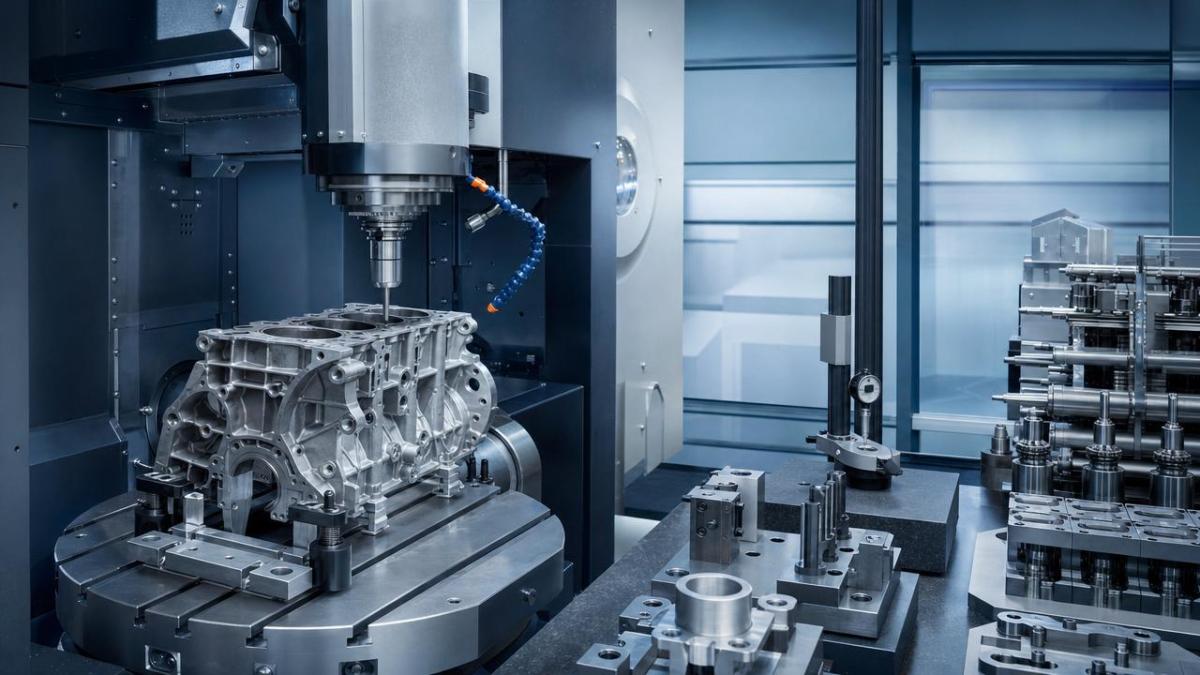
When buyers search whether cnc milling for automotive engine blocks is worth the cost, their intent is usually commercial, not academic. They want a defensible investment view that connects machining cost to measurable business outcomes.
That means answering five questions quickly. What does CNC milling improve? Where does it reduce hidden cost? When does it become over-specification? How should suppliers be compared? And what metrics prove the investment is justified?
For a finance-led audience, the most useful lens is risk-adjusted return. Precision matters, but only because it influences scrap, rework, assembly fit, thermal performance, field reliability, and the probability of expensive recalls.
Engine blocks are not forgiving components. They contain complex surfaces, critical bore relationships, deck flatness requirements, coolant passages, and mounting interfaces that must align under thermal and mechanical stress.
If those features drift outside tolerance, the business impact compounds fast. Costs can appear in leak failures, machining bottlenecks, poor head-gasket sealing, increased vibration, shortened engine life, and warranty claims that dwarf the original machining premium.
Why engine block machining costs more than many procurement models assume
Automotive engine blocks are large, feature-dense parts that demand stable fixturing, multi-axis tool access, reliable chip evacuation, and process control across several critical surfaces. That complexity makes cost modeling more nuanced than simple machine-hour calculations.
The direct cost base usually includes machine depreciation, tooling, fixturing, programming, labor, inspection, coolant, maintenance, and setup time. But for engine blocks, indirect costs are often just as important.
These indirect costs include dimensional instability from heat, tool wear variation across long runs, metrology requirements, scheduling losses from machine downtime, and the supplier’s capability to maintain consistency over tens of thousands of parts.
Material type also changes the equation. Cast iron and aluminum engine blocks machine differently, with different cutting speeds, tool wear profiles, thermal behavior, and surface finish challenges. A quote that looks competitive may not hold under production realities.
In other words, the apparent expense of CNC milling often reflects the cost of controlling variability. Financially, that control may be highly rational if the alternative is more scrap, more inspection failures, or weaker long-run process capability.
Where CNC milling creates measurable financial value
The strongest case for cnc milling for automotive engine blocks is not that it looks advanced. It is that it can improve process capability in features that directly affect engine performance and assembly success.
Accurate deck surfaces help maintain head-gasket sealing. Precision bore alignment supports combustion efficiency and wear behavior. Reliable machined interfaces improve assembly consistency for crankshafts, cylinder heads, oil pans, and transmission connections.
Each of these outcomes can reduce hidden costs. Better geometry lowers the need for rework. More stable tolerances reduce assembly variation. Improved surface finish can support sealing and performance requirements without excessive secondary processing.
From a finance perspective, those improvements should be translated into three categories: higher first-pass yield, lower cost of poor quality, and lower field failure exposure. This is where machining investments either prove themselves or fail.
If a supplier can show that tighter process control cuts scrap by two points, reduces rework hours, and lowers warranty risk, then a higher piece price may still deliver a better total margin outcome.
Another benefit is predictability. In automotive programs, planning confidence has value. A machining process that consistently hits target dimensions helps stabilize scheduling, inventory flow, and downstream assembly utilization.
When the cost is not justified
CNC milling is not automatically the best answer in every scenario. Financial approvers should be cautious when suppliers frame premium machining as universally necessary without linking it to actual engineering or program requirements.
If the engine platform has modest tolerance demands, short production runs, or non-critical applications, the return on high-end milling may be weaker. The same applies when existing machining processes already meet yield and reliability targets.
It may also be unjustified if the supplier’s process capability is unproven. Paying for advanced equipment does not guarantee advanced output. Weak fixturing, poor toolpath strategy, inadequate inspection discipline, or unstable operator practices can erase the expected value.
Another red flag is over-specification. Some buyers approve expensive precision levels that exceed what the design function actually requires. That increases cycle time and inspection cost without adding meaningful engine performance or risk reduction.
For this reason, finance teams should ask a simple question: what failure mode, quality loss, or lifecycle cost is this extra machining precision preventing? If the answer is vague, the premium may not be justified.
How to evaluate ROI beyond piece price
The most common error in evaluating cnc milling for automotive engine blocks is comparing suppliers only on quoted unit cost. Piece price is visible, but it rarely captures the full economic impact of machining quality.
A better framework is total cost of ownership. Start with the quoted part cost, then add expected scrap, rework, inspection overhead, tooling consumption, maintenance-driven delays, late delivery risk, and quality incident exposure.
Then estimate the cost of downstream consequences. How expensive is a failed block at assembly? What is the cost of engine tear-down, replacement, shipping disruption, or a field warranty event tied to dimensional error?
Even small shifts in process capability can matter. For high-volume automotive production, a modest reduction in scrap or rework can offset a significant machining premium over the life of the contract.
Finance teams should request evidence in operational terms: Cp and Cpk on critical features, first-pass yield, historical scrap percentages, tool life data, gauge repeatability, on-time delivery performance, and non-conformance history.
Suppliers that cannot produce this data are asking buyers to fund uncertainty. TSV’s view is simple: parameters do not lie, and machining economics should be approved on data, not sales language.
Supplier comparison: what separates a cost-effective CNC milling partner from an expensive one
Two suppliers may both offer CNC milling, but their economic value can differ sharply. The difference usually comes down to process discipline, not brochure claims.
A strong supplier can explain how it holds bore position, manages thermal variation, qualifies fixtures, controls tool wear, and verifies critical dimensions during production. A weak supplier talks only about machine brand and price.
Look for evidence of repeatability at scale. Can the supplier maintain tolerances over long production runs, not just sample parts? Can it document corrective action speed when drift appears? Can it support PPAP, traceability, and automotive audit requirements?
Another practical factor is change responsiveness. Engine programs evolve, and machining partners must adapt tooling, programs, and inspection plans without destabilizing cost or lead time. Flexibility has real financial value.
It is also worth examining how the supplier handles capacity planning. Bottlenecks, overtime dependence, and weak maintenance routines can create hidden cost through delivery risk, expedited freight, and production interruptions.
Questions financial approvers should ask before signing off
First, what are the truly critical-to-function surfaces and tolerances on the engine block? Approvals should be tied to functional necessity, not generic precision claims.
Second, what process capability has the supplier demonstrated on comparable production programs? One-off samples are not enough. The approval case should include repeatable production evidence.
Third, what is the expected impact on scrap, rework, assembly fit, and warranty risk relative to lower-cost alternatives? This is the heart of the business case.
Fourth, what assumptions are embedded in the quoted cost? Ask about tooling replacement rates, setup frequency, inspection time, fixture amortization, and planned cycle times.
Fifth, what happens when performance drifts? A credible supplier should have containment plans, in-process checks, escalation protocols, and recovery timelines that reduce financial exposure.
These questions help finance teams move from passive approval to active risk management. That shift usually produces better sourcing outcomes than negotiating unit price alone.
A practical decision rule for approving CNC milling on engine block programs
Approve the investment when at least three conditions are true. The component has tight functional tolerances. Production volume is high enough for quality gains to compound. And the supplier can prove repeatable capability with production-grade data.
Be more cautious when volumes are limited, feature tolerances are not business-critical, or the process premium is justified mainly by marketing language rather than measurable performance improvement.
In large-scale automotive manufacturing, the economics often favor precision when failure costs are high. A few dollars saved on machining can be erased quickly by one quality escape, one delayed launch, or one warranty spike.
But approval should still be disciplined. The right question is not whether CNC milling is expensive. It is whether lower process variation is cheaper than the consequences of not buying it.
Conclusion: is CNC milling for automotive engine blocks worth the cost?
In many automotive programs, yes. CNC milling for automotive engine blocks is worth the cost when it materially improves dimensional consistency, lowers cost of poor quality, protects engine reliability, and supports stable high-volume production.
For financial approvers, the winning decision is rarely the lowest quote. It is the option that delivers the best total economic outcome across yield, throughput, compliance, and lifecycle risk.
If a supplier can demonstrate strong process capability, transparent cost drivers, and measurable reductions in scrap or warranty exposure, the investment is usually justified. If those proofs are missing, skepticism is not only reasonable—it is financially responsible.
In a market full of broad claims, the safest approval standard is simple: buy precision when the data shows it prevents larger losses. That is how machining cost becomes strategic value.
Search News
Hot Articles
- Carbon Fiber StructuresHow to Specify Aerospace Carbon Fiber Assemblies for Lightweight, Load-Bearing PartsJul 11, 2026
- Machine VisionXiaomi, Alibaba DAMO Academy Drive Open-Source Robotics Model Ecosystem, Lowering Algorithm Development Barriers for Overseas SMEs Adopting Chinese Robotics SolutionsMar 30, 2026
- Cobots & ArmsShanxi 'AI+' Conference Showcases Embodied Intelligence with Multinational Buyer Engagement: Key Industry ImplicationsMar 30, 2026
Popular Tags
Recommended News
 Jul 11, 2026How to Specify Aerospace Carbon Fiber Assemblies for Lightweight, Load-Bearing PartsAerospace carbon fiber assemblies: learn how to specify laminate design, load data, joining methods, and inspection controls for lighter, reliable load-bearing aerospace parts.Elena Rostova (UAV Systems Researcher)
 Mar 30, 2026Xiaomi, Alibaba DAMO Academy Drive Open-Source Robotics Model Ecosystem, Lowering Algorithm Development Barriers for Overseas SMEs Adopting Chinese Robotics SolutionsXiaomi & Alibaba DAMO Academy's open-source robotics models lower algorithm barriers for global SMEs. Boost efficiency in manufacturing, logistics & smart retail with ROS 2 compatible solutions.TSV Data Lab
 Mar 30, 2026Shanxi 'AI+' Conference Showcases Embodied Intelligence with Multinational Buyer Engagement: Key Industry ImplicationsShanxi 'AI+' Conference highlights embodied intelligence with Tesla, Ubtech & Jiantao showcasing multimodal robotics. 40+ global buyers validated tech on-site, creating new B2B channels for industrial automation & AI solutions.Chen Wei (Automation Lead Engineer)
 Mar 30, 2026Zhongguancun Unveils 6G Integrated Sensing-Computing-Intelligence Platform to Empower Embodied Robots for Global Industrial ApplicationsZhongguancun's new 6G platform revolutionizes industrial robotics with <10ms latency, empowering global automotive, logistics & port automation. Discover how this tech boosts China's smart manufacturing exports.TSV Data Lab
 Mar 30, 2026Mech-Mind Tianjin Embodied Intelligence R&D and Production Base Goes Live, Cutting Delivery Time by 20%–30% for Global Customized AMR+Vision SolutionsMech-Mind's Tianjin AMR+Vision production base cuts delivery time by 20%-30% for欧美 & Latin American markets. Discover how this PLd-certified facility accelerates customized robotics solutions for smart manufacturing and logistics.Chen Wei (Automation Lead Engineer)
 Mar 30, 2026Boao Forum Reveals 'Co-evolution of Big and Small Brains' Trend in Humanoid Robots, China's Embodied Intelligence Accelerates Adaptation to Overseas Manufacturing Service ScenariosDiscover how China's humanoid robots, featuring 'Co-evolution of Big and Small Brains,' are revolutionizing global manufacturing. Learn about Embodied Tian Gong 3.0's ISO compliance and overseas deployment at Boao Forum 2026.Chen Wei (Automation Lead Engineer)
 Mar 30, 2026China Railway Industrial Secures Patent for Embodied Robotics in Material Handling, Boosting High-Precision Delivery Capabilities for Overseas Infrastructure and Manufacturing ProjectsChina Railway Industrial's new patent for embodied robotics in material handling boosts high-precision delivery for global infrastructure & manufacturing. Discover how this innovation enhances logistics accuracy in automotive, rail transit & EPC projects.Chen Wei (Automation Lead Engineer)
 Oct 06, 2026Navigation Fault Tolerance Standards for AMRs: What Safety Teams Must VerifyNavigation fault tolerance standards: learn what AMR safety teams must verify, from localization loss and sensor faults to stopping distance, safe restart, and site-specific validation.Chen Wei (Automation Lead Engineer)
 Oct 05, 2026Calculating Edge Computing Total Cost of Ownership Across Distributed SitesEdge computing ownership cost explained: calculate deployment, energy, connectivity, security, remote support, and refresh costs across distributed sites.TSV Data Lab
 Oct 04, 2026CAD/CAM Benchmarking in the GCC: What Manufacturers Should Ask a ConsultantCAD CAM benchmark consultant GCC guide: learn the key questions manufacturers should ask to validate post-processors, workflows, machine performance, and production risk.Victor Lin (Chief Software Architect)
 Oct 03, 2026Selecting Automotive Radar Sensor Modules for ADAS Range, Resolution, and IntegrationAutomotive radar sensor module selection guide for ADAS: compare range, resolution, field of view, latency, and integration to build safer, reliable vehicle systems.TSV Data Lab
 Oct 02, 2026How to Qualify Machined Parts Suppliers for Hard Tech ProgramsHard tech supply chain machined parts demand rigorous supplier qualification. Learn how to assess capability, traceability, quality controls, and delivery resilience.Dr. Marcus Vance
 Oct 01, 2026How to Select an Outdoor Security Radar Sensor for Perimeter Detection?Outdoor security radar sensor selection guide: compare range, accuracy, false-alarm control, integration, and field testing for reliable perimeter detection.TSV Data Lab
 Sep 30, 2026How to Evaluate Solid-State LiDAR Hardware for Outdoor Autonomous VehiclesSolid state LiDAR hardware evaluation guide for outdoor autonomous vehicles—compare range, point-cloud quality, environmental resilience, integration, and safety.TSV Data Lab
 Sep 29, 2026ISO 9283 Repeatability: How to Evaluate Cobot Positioning PerformanceISO 9283 cobot repeatability explained: learn how payload, reach, approach direction, and test conditions affect positioning performance and cell capability.Chen Wei (Automation Lead Engineer)
 Oct 06, 2026Are Collaborative Robots Safe Enough to Operate Without Fencing?Are collaborative robots safe enough to work without fencing? Explore risk assessment, safeguarding options, and practical guidance for safer, productive cobot cells.Chen Wei (Automation Lead Engineer)
 Oct 05, 2026What Causes Machine Vision Systems to Miss Small Defects?What causes machine vision systems to miss small defects? Discover how lighting, optics, motion, and AI thresholds affect detection—and prevent costly escapes.TSV Data Lab
 Oct 04, 2026How Should You Compare 5-Axis CNC Machine Accuracy Claims?How do I compare 5-axis CNC machine accuracy claims? Learn how to assess standards, thermal stability, TCP accuracy, and real-world test evidence.Dr. Marcus Vance
 Oct 03, 2026Is Edge Computing Necessary for Real-Time Quality Inspection?Is industrial edge computing necessary for real-time quality inspection? Explore how latency, data volume, reliability, and control integration shape the right architecture.TSV Data Lab
 Oct 02, 2026What Documents Prove a Precision Machining Supplier Can Hold Tolerance?What documents prove a precision machining supplier can hold tolerance? Explore certificates, FAI reports, calibration, SPC, and traceability evidence to qualify suppliers with confidence.Dr. Marcus Vance
 Oct 01, 2026Can a Machining Supplier Meet Aerospace Fatigue Testing Requirements?Can a machining supplier meet aerospace fatigue testing requirements? Learn the traceability, process control, and test evidence needed for reliable aerospace parts.Dr. Marcus Vance
 Sep 30, 2026Which Industrial Robot Specifications Matter for High-Precision Assembly?Which industrial robot specifications matter most for high-precision assembly? Explore repeatability, accuracy, stiffness, vibration, calibration, and force control for reliable yields.Chen Wei (Automation Lead Engineer)
 Sep 29, 2026How Do You Verify Servo Motor Torque Under Continuous Load?How do I verify servo motor torque under continuous load? Learn RMS torque checks, torque-speed limits, thermal derating, and real-machine testing.Chen Wei (Automation Lead Engineer)
 Oct 02, 2026ZD330 Software Configuration: Verifying Cut-List Import Before PurchaseZD330 software and machine configuration: verify cut-list imports, data mapping, labels, and workflow before purchase to reduce errors and choose with confidence.Victor Lin (Chief Software Architect)