Calculating Edge Computing Total Cost of Ownership Across Distributed Sites
Publication Date
author
The purchase price of an edge server is rarely the number that determines whether a distributed deployment stays within budget. A low-cost device can become the more expensive option when it requires site upgrades, frequent truck rolls, separate security tools, or early replacement. A higher-priced platform may reduce the edge computing ownership cost if it can be managed remotely, tolerates local conditions, and remains useful through the planned application lifecycle.
The practical goal is not to find the cheapest edge appliance. It is to calculate the full cost of delivering reliable local compute capacity across every site, then compare options on the same operational basis. That requires separating one-time deployment costs from recurring operating costs and treating site variation as a measurable input rather than an exception.
Start with the unit of comparison
Before evaluating vendors, define what one “edge site” means in commercial terms. It may be a production cell, retail branch, warehouse, transport hub, utility cabinet, or remote inspection location. The definition matters because a site with a conditioned equipment room has little in common with a cabinet near machinery, a vehicle-mounted enclosure, or an unattended outdoor facility.
A defensible model normally uses three linked units:
- Per-site cost: the total cost to deploy and operate one location.
- Per-workload cost: the cost assigned to a machine-vision line, local analytics service, autonomous system, or other business function.
- Portfolio cost: the central platform, shared operations team, spares pool, connectivity agreements, and program management costs that are spread across all sites.
Do not compare a vendor’s hardware quote against an internal estimate that includes installation and support. Either compare hardware-only alternatives, or include the complete operating environment for every option. Mixed scopes are one of the most common reasons an apparently attractive proposal receives approval and then exceeds its business case.
Build the cost model around the deployment lifecycle
Edge total cost of ownership is best calculated over a stated planning period aligned with the expected use of the workload. The calculation should cover costs before commissioning, costs during normal operations, and costs that occur when a site fails, changes, or is retired.
A simple structure is:
Total ownership cost = initial deployment cost + recurring operating cost + expected exception cost + end-of-life cost.
This is not a sophisticated financial formula on its own. Its value comes from forcing each assumption into a visible cost category. A supplier can then be asked to validate the assumptions it controls, while internal teams can own the assumptions related to facilities, networking, field service, and applications.
Site readiness can outweigh the server price
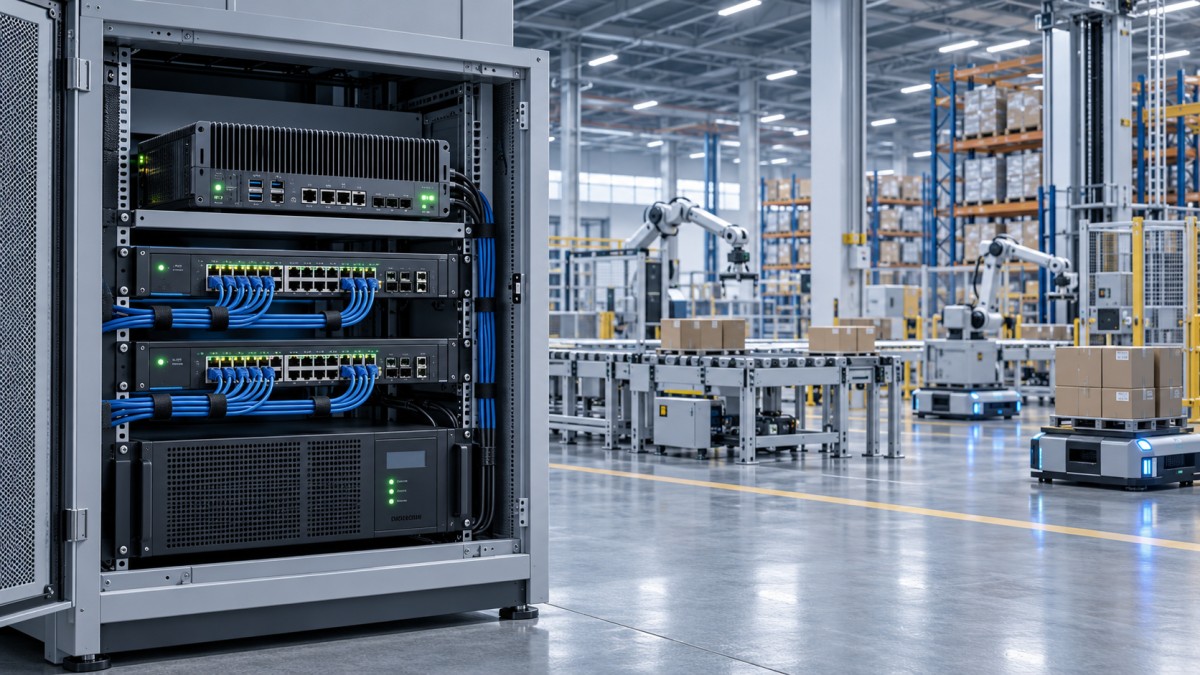
Distributed infrastructure inherits the conditions of each location. Power quality, cooling, dust, vibration, physical access, cable routes, and available network service all change the delivered cost. A standard rack appliance may be economical in a clean, staffed facility but require added enclosure, environmental control, or protection at a factory floor or remote hub.
For each site class, record the physical work required before equipment can be installed. Include electrical circuits, uninterruptible power capability, grounding, mounting, rack space, cabinets, cooling, network drops, and secure access. This record should distinguish between work included in the supplier scope and work owned by facilities or local contractors.
Site surveys are especially important when the program covers locations with different ages, countries, building standards, or operating environments. Using one average installation estimate can be acceptable for an early business case, but approval should be conditional on a sample-based survey that identifies the costly outliers. A portfolio with many “non-standard” sites can invalidate a model built around a nominal location.
Calculate energy and connectivity from the whole local stack
Power cost is more than the rated consumption of the compute device. The local stack may include networking equipment, storage, power conditioning, cooling, cameras or sensors, and an enclosure. The actual operating profile also matters. A system that processes intermittent events will not draw power in the same pattern as a vision platform running continuously, and an accelerator can materially alter load under active inference.
Use expected operating modes rather than a single maximum-power figure: idle, normal processing, peak processing, and recovery or update windows. Multiply estimated consumption by the expected duration of each mode, then apply the local electricity tariff used in internal planning. This produces a more credible operating estimate without pretending that every workload behaves identically.
Connectivity needs the same treatment. Edge computing may reduce the amount of raw data sent upstream, but it does not eliminate network cost. Remote monitoring, software updates, log collection, backup, remote support, and event uploads all use bandwidth. Resilient designs may require a secondary path or cellular fallback. That expense may be justified where a local outage interrupts production or safety-relevant operations, but it should be valued against the consequence of downtime rather than described as a default technical feature.
Remote management is a labor-cost decision
The most important difference between two technically similar edge platforms may be the number of physical visits each creates. At a central data center, replacing a component or applying a repair can be routine. Across dozens or hundreds of sites, the same task introduces travel, scheduling, local access coordination, safety procedures, lost operating time, and uncertain resolution time.
Estimate maintenance labor from expected activities, not a generic annual support percentage. List the actions likely to occur during the planning period: initial provisioning, software patching, certificate renewal, storage replacement, device recovery, hardware swap, application rollback, and decommissioning. For each action, identify whether it can be completed centrally, requires local hands, or requires a trained field technician.
A platform with centralized fleet visibility, remote configuration, secure access controls, automated updates, and recoverable system images may carry a higher initial software or service cost. Its economic value is strongest when sites are geographically dispersed, lightly staffed, or difficult to access. In contrast, a simple appliance with limited remote capability may remain reasonable for a small number of nearby sites with competent local support.
Do not count remote management twice
Remote operations tools are sometimes included in a vendor subscription while internal IT also budgets for a separate monitoring platform and support process. Clarify which functions are actually provided: health monitoring, alerting, patch orchestration, inventory, audit logs, remote console access, backup coordination, and incident workflow. The cost model should include the operational capability once, with clear ownership, rather than assume overlapping tools automatically create resilience.
Security and resilience belong in the ownership model
Security is frequently treated as a compliance line item outside procurement, yet its cost is inseparable from a distributed deployment. Each edge node can become a physical and network access point. Secure boot, identity management, encryption, patch management, segmented networking, logging, and controlled remote access affect both the purchase specification and recurring operating effort.
The financial question is not whether every site needs the same level of protection. It is whether the chosen controls match the impact of compromise, data exposure, service interruption, or unsafe operation at that specific site class. A non-critical local cache and an edge system controlling real-time industrial decisions should not be costed under the same risk assumption.
Resilience has similar tradeoffs. Redundant storage, spare devices, replacement agreements, backup connectivity, and local failover add cost. They are warranted when downtime has a meaningful operational consequence or when recovery time is constrained. They are harder to justify for workloads that can pause safely, reconstruct data centrally, or tolerate delayed processing. Approval documents should state the required recovery behavior in plain terms: what must continue locally, what may degrade, and how quickly the site must return to service.
Refresh cycles should follow workload viability, not depreciation alone
Edge hardware is often approved with an assumed replacement date, but the practical refresh trigger may arrive sooner. Storage endurance, processor headroom, accelerator compatibility, operating system support, application dependencies, and vendor service availability can all limit useful life. Conversely, replacing every site on a fixed calendar can waste assets where workloads remain stable and supportable.
Model at least two refresh paths. The first assumes a planned replacement at the end of the chosen lifecycle. The second assumes selective refresh, where high-load, high-risk, or capacity-constrained sites are upgraded earlier while stable sites remain in service. The second approach needs a disciplined asset register and configuration control, but it may align spending better with operational need.
Include migration labor in either path. Reimaging devices, moving applications, validating interfaces with local equipment, and retaining rollback capability all consume time. A procurement specification that requires documented configuration export, reproducible deployment images, and compatibility information can reduce this later cost without committing the organization to a particular supplier.
Use scenario ranges instead of a single confident forecast
Distributed programs contain uncertainty: a local contractor may discover inadequate power, a network design may change, an application may need more storage, or a remote site may require more visits than expected. A single total therefore gives a false impression of precision.
Create a base case using validated assumptions, then test a small number of decision-sensitive changes. Useful scenarios include a higher share of difficult sites, increased connectivity needs, more field interventions, accelerated storage replacement, or a shortened refresh cycle. The purpose is not to predict every problem. It is to identify which assumption has enough financial effect to require stronger evidence before the purchase order is released.
For example, if the model changes only slightly when energy consumption increases, detailed energy measurement may not be the first priority. If a modest increase in on-site intervention changes the overall result substantially, remote serviceability, spare strategy, and local support coverage deserve more procurement attention.
Convert the model into procurement requirements
A total-cost model is useful only when it changes the buying process. Ask every shortlisted supplier to respond to the same site profiles, workload assumptions, support boundaries, software terms, warranty conditions, and lifecycle expectations. Request an itemized bill of materials and identify which services are mandatory, optional, recurring, or excluded.
Technical claims should be traceable to conditions. For industrial edge deployments, that may mean asking how the equipment behaves under the actual environmental, connectivity, and workload constraints rather than accepting broad descriptions such as “rugged,” “AI-ready,” or “enterprise managed.” This engineering-first approach reflects the principle behind TechStat Vanguard: parameters are useful only when their test conditions and operational implications are clear.
Before approval, the project team should be able to answer a short set of commercial questions:
- What is included in the per-site installed cost, and which party pays for readiness work?
- Which recurring licenses, connectivity services, and support commitments are required for normal operation?
- How are failed units diagnosed, replaced, and securely restored at an unattended location?
- What assumptions define the refresh plan, and what would trigger earlier replacement?
- Which cost drivers vary materially by site, and how many sites have been assessed against those conditions?
The strongest approval case does not claim that edge infrastructure will be inexpensive. It demonstrates that the organization understands where the cost sits, which technical choices control it, and which assumptions have been tested at representative sites. That is the difference between buying edge devices and funding a distributed operating model that can be sustained after deployment.
Search News
Hot Articles
- Carbon Fiber StructuresHow to Specify Aerospace Carbon Fiber Assemblies for Lightweight, Load-Bearing PartsJul 11, 2026
- Machine VisionXiaomi, Alibaba DAMO Academy Drive Open-Source Robotics Model Ecosystem, Lowering Algorithm Development Barriers for Overseas SMEs Adopting Chinese Robotics SolutionsMar 30, 2026
- Cobots & ArmsShanxi 'AI+' Conference Showcases Embodied Intelligence with Multinational Buyer Engagement: Key Industry ImplicationsMar 30, 2026
Popular Tags
Recommended News
 Jul 11, 2026How to Specify Aerospace Carbon Fiber Assemblies for Lightweight, Load-Bearing PartsAerospace carbon fiber assemblies: learn how to specify laminate design, load data, joining methods, and inspection controls for lighter, reliable load-bearing aerospace parts.Elena Rostova (UAV Systems Researcher)
 Mar 30, 2026Xiaomi, Alibaba DAMO Academy Drive Open-Source Robotics Model Ecosystem, Lowering Algorithm Development Barriers for Overseas SMEs Adopting Chinese Robotics SolutionsXiaomi & Alibaba DAMO Academy's open-source robotics models lower algorithm barriers for global SMEs. Boost efficiency in manufacturing, logistics & smart retail with ROS 2 compatible solutions.TSV Data Lab
 Mar 30, 2026Shanxi 'AI+' Conference Showcases Embodied Intelligence with Multinational Buyer Engagement: Key Industry ImplicationsShanxi 'AI+' Conference highlights embodied intelligence with Tesla, Ubtech & Jiantao showcasing multimodal robotics. 40+ global buyers validated tech on-site, creating new B2B channels for industrial automation & AI solutions.Chen Wei (Automation Lead Engineer)
 Mar 30, 2026Zhongguancun Unveils 6G Integrated Sensing-Computing-Intelligence Platform to Empower Embodied Robots for Global Industrial ApplicationsZhongguancun's new 6G platform revolutionizes industrial robotics with <10ms latency, empowering global automotive, logistics & port automation. Discover how this tech boosts China's smart manufacturing exports.TSV Data Lab
 Mar 30, 2026Mech-Mind Tianjin Embodied Intelligence R&D and Production Base Goes Live, Cutting Delivery Time by 20%–30% for Global Customized AMR+Vision SolutionsMech-Mind's Tianjin AMR+Vision production base cuts delivery time by 20%-30% for欧美 & Latin American markets. Discover how this PLd-certified facility accelerates customized robotics solutions for smart manufacturing and logistics.Chen Wei (Automation Lead Engineer)
 Mar 30, 2026Boao Forum Reveals 'Co-evolution of Big and Small Brains' Trend in Humanoid Robots, China's Embodied Intelligence Accelerates Adaptation to Overseas Manufacturing Service ScenariosDiscover how China's humanoid robots, featuring 'Co-evolution of Big and Small Brains,' are revolutionizing global manufacturing. Learn about Embodied Tian Gong 3.0's ISO compliance and overseas deployment at Boao Forum 2026.Chen Wei (Automation Lead Engineer)
 Mar 30, 2026China Railway Industrial Secures Patent for Embodied Robotics in Material Handling, Boosting High-Precision Delivery Capabilities for Overseas Infrastructure and Manufacturing ProjectsChina Railway Industrial's new patent for embodied robotics in material handling boosts high-precision delivery for global infrastructure & manufacturing. Discover how this innovation enhances logistics accuracy in automotive, rail transit & EPC projects.Chen Wei (Automation Lead Engineer)
 Oct 05, 2026Calculating Edge Computing Total Cost of Ownership Across Distributed SitesEdge computing ownership cost explained: calculate deployment, energy, connectivity, security, remote support, and refresh costs across distributed sites.TSV Data Lab
 Oct 04, 2026CAD/CAM Benchmarking in the GCC: What Manufacturers Should Ask a ConsultantCAD CAM benchmark consultant GCC guide: learn the key questions manufacturers should ask to validate post-processors, workflows, machine performance, and production risk.Victor Lin (Chief Software Architect)
 Oct 03, 2026Selecting Automotive Radar Sensor Modules for ADAS Range, Resolution, and IntegrationAutomotive radar sensor module selection guide for ADAS: compare range, resolution, field of view, latency, and integration to build safer, reliable vehicle systems.TSV Data Lab
 Oct 02, 2026How to Qualify Machined Parts Suppliers for Hard Tech ProgramsHard tech supply chain machined parts demand rigorous supplier qualification. Learn how to assess capability, traceability, quality controls, and delivery resilience.Dr. Marcus Vance
 Oct 01, 2026How to Select an Outdoor Security Radar Sensor for Perimeter Detection?Outdoor security radar sensor selection guide: compare range, accuracy, false-alarm control, integration, and field testing for reliable perimeter detection.TSV Data Lab
 Sep 30, 2026How to Evaluate Solid-State LiDAR Hardware for Outdoor Autonomous VehiclesSolid state LiDAR hardware evaluation guide for outdoor autonomous vehicles—compare range, point-cloud quality, environmental resilience, integration, and safety.TSV Data Lab
 Sep 29, 2026ISO 9283 Repeatability: How to Evaluate Cobot Positioning PerformanceISO 9283 cobot repeatability explained: learn how payload, reach, approach direction, and test conditions affect positioning performance and cell capability.Chen Wei (Automation Lead Engineer)
 Oct 04, 2026How Should You Compare 5-Axis CNC Machine Accuracy Claims?How do I compare 5-axis CNC machine accuracy claims? Learn how to assess standards, thermal stability, TCP accuracy, and real-world test evidence.Dr. Marcus Vance
 Oct 03, 2026Is Edge Computing Necessary for Real-Time Quality Inspection?Is industrial edge computing necessary for real-time quality inspection? Explore how latency, data volume, reliability, and control integration shape the right architecture.TSV Data Lab
 Oct 02, 2026What Documents Prove a Precision Machining Supplier Can Hold Tolerance?What documents prove a precision machining supplier can hold tolerance? Explore certificates, FAI reports, calibration, SPC, and traceability evidence to qualify suppliers with confidence.Dr. Marcus Vance
 Oct 01, 2026Can a Machining Supplier Meet Aerospace Fatigue Testing Requirements?Can a machining supplier meet aerospace fatigue testing requirements? Learn the traceability, process control, and test evidence needed for reliable aerospace parts.Dr. Marcus Vance
 Sep 30, 2026Which Industrial Robot Specifications Matter for High-Precision Assembly?Which industrial robot specifications matter most for high-precision assembly? Explore repeatability, accuracy, stiffness, vibration, calibration, and force control for reliable yields.Chen Wei (Automation Lead Engineer)
 Sep 29, 2026How Do You Verify Servo Motor Torque Under Continuous Load?How do I verify servo motor torque under continuous load? Learn RMS torque checks, torque-speed limits, thermal derating, and real-machine testing.Chen Wei (Automation Lead Engineer)
 Oct 02, 2026ZD330 Software Configuration: Verifying Cut-List Import Before PurchaseZD330 software and machine configuration: verify cut-list imports, data mapping, labels, and workflow before purchase to reduce errors and choose with confidence.Victor Lin (Chief Software Architect)
 Sep 28, 2026Spindle Runout Measurement in Germany: DIN Standards, Methods, and Acceptance LimitsSpindle runout measurement Germany: explore DIN standards, proven methods, acceptance limits, and audit-ready practices for reliable machining quality.Dr. Marcus Vance
 Sep 27, 2026How to Select Wall-Mount Edge Devices for Space-Constrained Factory NetworksWall mount edge devices for space-constrained factories: evaluate workload, thermal design, power resilience, cable access, and network reliability for smarter deployments.TSV Data Lab
 Sep 26, 2026Machining Tolerance Analysis: How to Set Limits That Meet Function and Cost TargetsMachining tolerance analysis: learn how to set functional limits, control tolerance stacks, reduce inspection risk, and balance precision with production cost.Dr. Marcus Vance