Which 5-axis CNC machining center specs matter most?
Publication Date
author
When evaluating a 5-axis CNC machining center, procurement teams cannot rely on generic claims alone. The 5-axis CNC machining center specifications that matter most directly affect part accuracy, cycle time, material capability, long-term stability, and total cost of ownership.
This guide explains which metrics deserve close comparison, how they influence real machining results, and where hidden risk often appears during supplier selection.
Which 5-axis CNC machining center specifications define machining accuracy first?
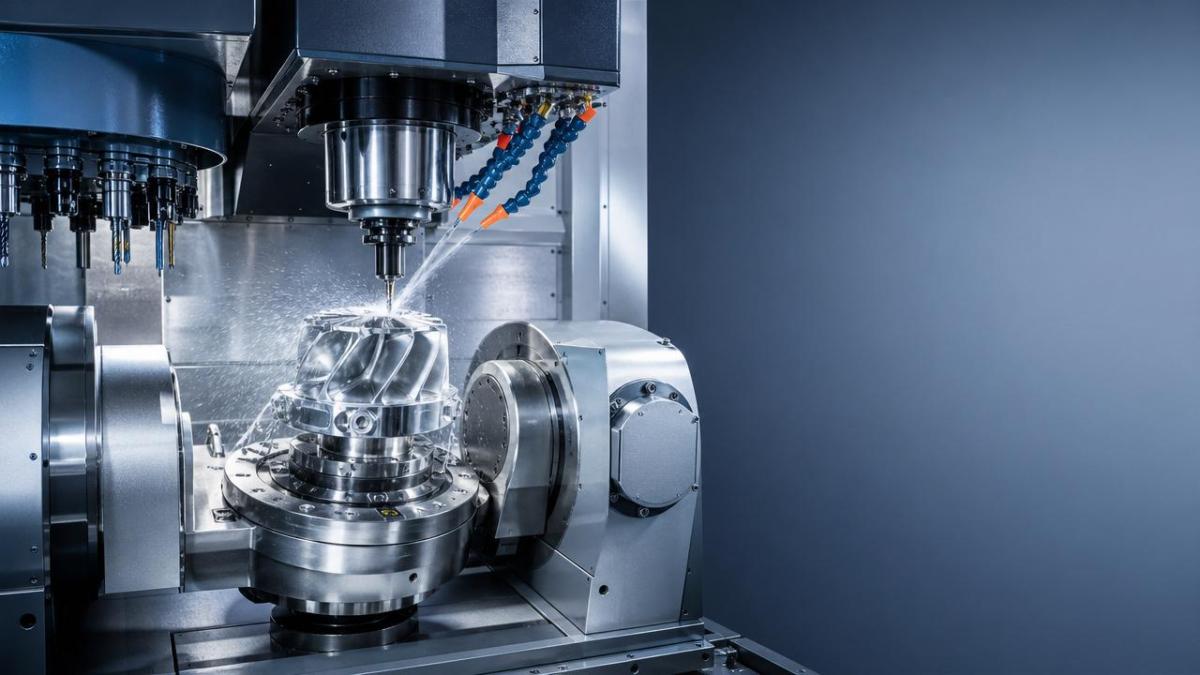
The first priority is not spindle speed or brochure appearance. It is geometric accuracy, positioning accuracy, and repeatability under load.
For critical parts, the most important 5-axis CNC machining center specifications usually include linear axis positioning, rotary axis accuracy, and volumetric compensation capability.
What should be checked in the accuracy data?
- Linear axis positioning accuracy, often expressed in microns.
- Repeatability across X, Y, and Z travel.
- A-axis and C-axis angular positioning error.
- Volumetric accuracy after calibration.
- Thermal drift over long cycles.
A machine may show strong static accuracy but lose precision during multi-hour aerospace or medical runs. That is where thermal behavior matters.
Ask whether the machine uses spindle cooling, ballscrew cooling, bed temperature sensing, and real-time thermal compensation.
In TSV-style technical benchmarking, parameters only matter when linked to test conditions. Always confirm standards, payload, ambient temperature, and test artifacts.
How do spindle and axis dynamics affect real production performance?
Many buyers focus only on maximum spindle rpm. That number alone does not describe productivity or surface quality.
Useful 5-axis CNC machining center specifications include spindle power curve, torque at low speed, rapid traverse, acceleration, jerk control, and interpolation smoothness.
Why is the spindle power curve more important than peak rpm?
Titanium, Inconel, stainless steel, and hardened alloys often require stable torque rather than extreme rpm. Weak low-speed torque increases chatter and tool wear.
For aluminum structural parts, high rpm and high acceleration may matter more. Material mix should guide the specification review.
Which motion metrics deserve comparison?
- Rapid traverse rate for linear axes.
- Acceleration and deceleration behavior.
- Rotary axis speed and clamp stability.
- Look-ahead block processing in the CNC control.
- Simultaneous 5-axis contouring accuracy.
High dynamic performance shortens non-cutting time and improves complex surface machining. However, aggressive motion without structural rigidity can reduce finish quality.
That is why spindle and axis performance should never be reviewed separately from machine structure.
Which structural and kinematic specs matter for stability and part access?
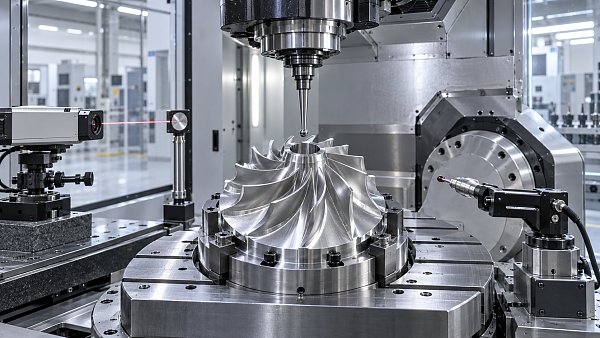
Not all 5-axis architectures behave the same. Trunnion, swivel head, gantry, and head-table designs each create different limits in rigidity, collision risk, and work envelope.
The right 5-axis CNC machining center specifications must match part size, fixture strategy, and tool reach requirements.
What structural metrics should be reviewed?
- Machine layout and kinematic configuration.
- Work envelope in simultaneous 5-axis motion.
- Maximum table load and load distribution limits.
- Spindle nose to table distance.
- Rotary axis torque and clamping force.
- Machine base material and damping design.
A large advertised travel range can be misleading. Full simultaneous movement may reduce usable space when fixtures, long tools, and part rotation are considered.
Request interference maps, real envelope simulations, and sample programs using representative parts.
For high-mix environments, accessibility for automation, probing, and tool change recovery also deserves attention.
How should control system, probing, and automation readiness be judged?
A 5-axis platform is only as capable as its control ecosystem. CNC hardware, software functions, and metrology integration influence both uptime and process security.
In modern sourcing, 5-axis CNC machining center specifications must include digital capability, not just mechanical data.
What digital and process-control features matter most?
- Controller type and processing speed.
- RTCP support and 5-axis kinematic compensation.
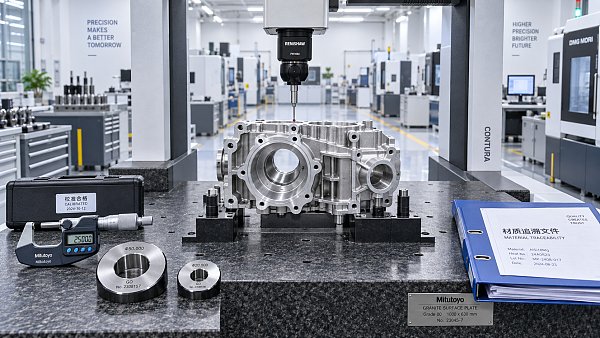
- On-machine probing for work offset and inspection.
- Tool measurement and breakage detection.
- Data connectivity for MES, ERP, or edge monitoring.
- Alarm history, remote diagnostics, and predictive maintenance functions.
Probing reduces setup variation and supports closed-loop correction. That becomes essential for aerospace brackets, impellers, molds, and medical components.
Automation readiness also matters. Pallet systems, robotic loading interfaces, and standardized communication can significantly improve machine utilization.
If future lights-out production is likely, verify coolant management, chip evacuation, tool life monitoring, and recovery logic after interruption.
What hidden risks distort comparison of 5-axis CNC machining center specifications?
The biggest risk is comparing numbers without context. Published values may come from unloaded tests, limited axis positions, or ideal thermal conditions.
Another risk is overvaluing one headline metric while ignoring machine balance. The best 5-axis CNC machining center specifications work together as a system.
Common evaluation mistakes
- Using peak spindle rpm as a proxy for all materials.
- Ignoring rotary axis backlash and clamping behavior.
- Failing to check thermal growth compensation.
- Comparing travel size instead of true usable envelope.
- Skipping test cuts on real materials and part geometry.
- Underestimating service response and spare part lead time.
Service support is a technical specification in practice. Downtime exposure, field calibration ability, and software update support affect lifecycle economics.
This is where data-driven evaluation creates value. Engineering truth comes from documented tests, traceable standards, and realistic operating assumptions.
How can buyers compare 5-axis CNC machining center specifications quickly and objectively?
A structured comparison table makes shortlisting faster and exposes weak areas before commercial negotiation begins.
Practical shortlist checklist
- Request test cuts on your actual alloy and geometry.
- Match spindle torque to your dominant material family.
- Check real 5-axis envelope with fixtures and tooling.
- Review thermal compensation and calibration routines.
- Confirm probing, tool monitoring, and automation interfaces.
- Score lifecycle support, not only purchase price.
The most useful 5-axis CNC machining center specifications are measurable, application-linked, and verified under realistic conditions.
If the goal is lower qualification risk, compare data in the language of tolerances, thermal drift, torque, dynamics, and serviceability.
A disciplined review of 5-axis CNC machining center specifications helps reduce trial-and-error costs, shorten validation cycles, and improve long-term manufacturing confidence.
Build the next evaluation around documented benchmarks, representative machining trials, and traceable engineering evidence. That approach turns specification sheets into reliable sourcing decisions.
Search News
Hot Articles
- Carbon Fiber StructuresHow to Specify Aerospace Carbon Fiber Assemblies for Lightweight, Load-Bearing PartsJul 11, 2026
- Machine VisionXiaomi, Alibaba DAMO Academy Drive Open-Source Robotics Model Ecosystem, Lowering Algorithm Development Barriers for Overseas SMEs Adopting Chinese Robotics SolutionsMar 30, 2026
- Cobots & ArmsShanxi 'AI+' Conference Showcases Embodied Intelligence with Multinational Buyer Engagement: Key Industry ImplicationsMar 30, 2026
Popular Tags
Recommended News
 Jul 11, 2026How to Specify Aerospace Carbon Fiber Assemblies for Lightweight, Load-Bearing PartsAerospace carbon fiber assemblies: learn how to specify laminate design, load data, joining methods, and inspection controls for lighter, reliable load-bearing aerospace parts.Elena Rostova (UAV Systems Researcher)
 Mar 30, 2026Xiaomi, Alibaba DAMO Academy Drive Open-Source Robotics Model Ecosystem, Lowering Algorithm Development Barriers for Overseas SMEs Adopting Chinese Robotics SolutionsXiaomi & Alibaba DAMO Academy's open-source robotics models lower algorithm barriers for global SMEs. Boost efficiency in manufacturing, logistics & smart retail with ROS 2 compatible solutions.TSV Data Lab
 Mar 30, 2026Shanxi 'AI+' Conference Showcases Embodied Intelligence with Multinational Buyer Engagement: Key Industry ImplicationsShanxi 'AI+' Conference highlights embodied intelligence with Tesla, Ubtech & Jiantao showcasing multimodal robotics. 40+ global buyers validated tech on-site, creating new B2B channels for industrial automation & AI solutions.Chen Wei (Automation Lead Engineer)
 Mar 30, 2026Zhongguancun Unveils 6G Integrated Sensing-Computing-Intelligence Platform to Empower Embodied Robots for Global Industrial ApplicationsZhongguancun's new 6G platform revolutionizes industrial robotics with <10ms latency, empowering global automotive, logistics & port automation. Discover how this tech boosts China's smart manufacturing exports.TSV Data Lab
 Mar 30, 2026Mech-Mind Tianjin Embodied Intelligence R&D and Production Base Goes Live, Cutting Delivery Time by 20%–30% for Global Customized AMR+Vision SolutionsMech-Mind's Tianjin AMR+Vision production base cuts delivery time by 20%-30% for欧美 & Latin American markets. Discover how this PLd-certified facility accelerates customized robotics solutions for smart manufacturing and logistics.Chen Wei (Automation Lead Engineer)
 Mar 30, 2026Boao Forum Reveals 'Co-evolution of Big and Small Brains' Trend in Humanoid Robots, China's Embodied Intelligence Accelerates Adaptation to Overseas Manufacturing Service ScenariosDiscover how China's humanoid robots, featuring 'Co-evolution of Big and Small Brains,' are revolutionizing global manufacturing. Learn about Embodied Tian Gong 3.0's ISO compliance and overseas deployment at Boao Forum 2026.Chen Wei (Automation Lead Engineer)
 Mar 30, 2026China Railway Industrial Secures Patent for Embodied Robotics in Material Handling, Boosting High-Precision Delivery Capabilities for Overseas Infrastructure and Manufacturing ProjectsChina Railway Industrial's new patent for embodied robotics in material handling boosts high-precision delivery for global infrastructure & manufacturing. Discover how this innovation enhances logistics accuracy in automotive, rail transit & EPC projects.Chen Wei (Automation Lead Engineer)
 Oct 07, 2026How to Evaluate an HMI Panel Distributor for Industrial Automation ProjectsHMI panel distributor evaluation guide: verify technical compatibility, traceability, supply reliability, lifecycle support, and total cost for automation projects.Victor Lin (Chief Software Architect)
 Oct 06, 2026Navigation Fault Tolerance Standards for AMRs: What Safety Teams Must VerifyNavigation fault tolerance standards: learn what AMR safety teams must verify, from localization loss and sensor faults to stopping distance, safe restart, and site-specific validation.Chen Wei (Automation Lead Engineer)
 Oct 05, 2026Calculating Edge Computing Total Cost of Ownership Across Distributed SitesEdge computing ownership cost explained: calculate deployment, energy, connectivity, security, remote support, and refresh costs across distributed sites.TSV Data Lab
 Oct 04, 2026CAD/CAM Benchmarking in the GCC: What Manufacturers Should Ask a ConsultantCAD CAM benchmark consultant GCC guide: learn the key questions manufacturers should ask to validate post-processors, workflows, machine performance, and production risk.Victor Lin (Chief Software Architect)
 Oct 03, 2026Selecting Automotive Radar Sensor Modules for ADAS Range, Resolution, and IntegrationAutomotive radar sensor module selection guide for ADAS: compare range, resolution, field of view, latency, and integration to build safer, reliable vehicle systems.TSV Data Lab
 Oct 02, 2026How to Qualify Machined Parts Suppliers for Hard Tech ProgramsHard tech supply chain machined parts demand rigorous supplier qualification. Learn how to assess capability, traceability, quality controls, and delivery resilience.Dr. Marcus Vance
 Oct 01, 2026How to Select an Outdoor Security Radar Sensor for Perimeter Detection?Outdoor security radar sensor selection guide: compare range, accuracy, false-alarm control, integration, and field testing for reliable perimeter detection.TSV Data Lab
 Sep 30, 2026How to Evaluate Solid-State LiDAR Hardware for Outdoor Autonomous VehiclesSolid state LiDAR hardware evaluation guide for outdoor autonomous vehicles—compare range, point-cloud quality, environmental resilience, integration, and safety.TSV Data Lab
 Sep 29, 2026ISO 9283 Repeatability: How to Evaluate Cobot Positioning PerformanceISO 9283 cobot repeatability explained: learn how payload, reach, approach direction, and test conditions affect positioning performance and cell capability.Chen Wei (Automation Lead Engineer)
 Oct 06, 2026Are Collaborative Robots Safe Enough to Operate Without Fencing?Are collaborative robots safe enough to work without fencing? Explore risk assessment, safeguarding options, and practical guidance for safer, productive cobot cells.Chen Wei (Automation Lead Engineer)
 Oct 05, 2026What Causes Machine Vision Systems to Miss Small Defects?What causes machine vision systems to miss small defects? Discover how lighting, optics, motion, and AI thresholds affect detection—and prevent costly escapes.TSV Data Lab
 Oct 04, 2026How Should You Compare 5-Axis CNC Machine Accuracy Claims?How do I compare 5-axis CNC machine accuracy claims? Learn how to assess standards, thermal stability, TCP accuracy, and real-world test evidence.Dr. Marcus Vance
 Oct 03, 2026Is Edge Computing Necessary for Real-Time Quality Inspection?Is industrial edge computing necessary for real-time quality inspection? Explore how latency, data volume, reliability, and control integration shape the right architecture.TSV Data Lab
 Oct 02, 2026What Documents Prove a Precision Machining Supplier Can Hold Tolerance?What documents prove a precision machining supplier can hold tolerance? Explore certificates, FAI reports, calibration, SPC, and traceability evidence to qualify suppliers with confidence.Dr. Marcus Vance
 Oct 01, 2026Can a Machining Supplier Meet Aerospace Fatigue Testing Requirements?Can a machining supplier meet aerospace fatigue testing requirements? Learn the traceability, process control, and test evidence needed for reliable aerospace parts.Dr. Marcus Vance
 Sep 30, 2026Which Industrial Robot Specifications Matter for High-Precision Assembly?Which industrial robot specifications matter most for high-precision assembly? Explore repeatability, accuracy, stiffness, vibration, calibration, and force control for reliable yields.Chen Wei (Automation Lead Engineer)
 Sep 29, 2026How Do You Verify Servo Motor Torque Under Continuous Load?How do I verify servo motor torque under continuous load? Learn RMS torque checks, torque-speed limits, thermal derating, and real-machine testing.Chen Wei (Automation Lead Engineer)