Is an agricultural drone for crop spraying worth the cost
Publication Date
author
For enterprise buyers evaluating modern farm operations, the real question is not whether an agricultural drone for crop spraying is innovative, but whether it delivers measurable returns in efficiency, labor savings, chemical precision, and long-term scalability. This article examines the cost-to-value equation through an engineering and procurement lens, helping decision-makers separate market hype from operational reality.
What does an agricultural drone for crop spraying actually replace?
An agricultural drone for crop spraying does not simply replace manual spraying.
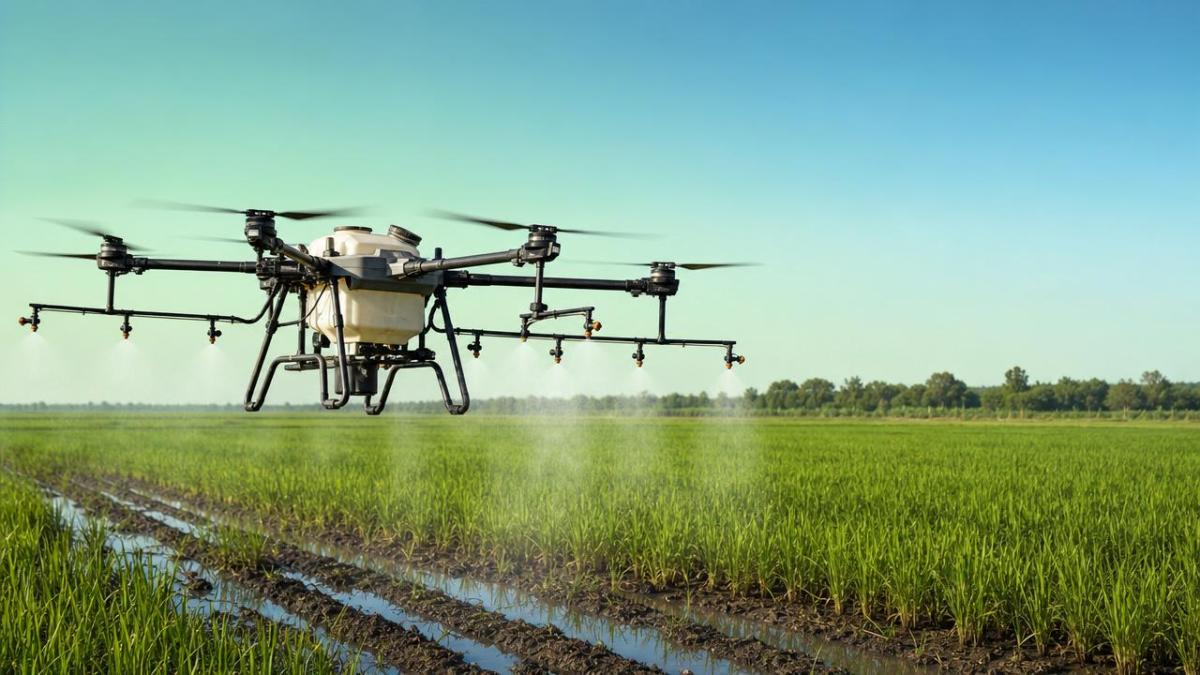
It can replace parts of tractor spraying, backpack application, and outsourced aerial service, depending on field size and crop type.
Its real value comes from controlled low-volume application, route automation, and access to difficult terrain.
In steep orchards, muddy plots, fragmented fields, and waterlogged areas, ground rigs lose efficiency quickly.
That is where an agricultural drone for crop spraying begins to justify its price.
Compared with tractors, drones reduce soil compaction and crop damage from wheel tracks.
Compared with manual teams, they improve consistency and reduce direct chemical exposure.
Compared with outsourced aircraft, they offer tighter scheduling and better local control.
The main question is not replacement in absolute terms.
The question is which cost center the drone reduces most effectively.
Typical tasks an agricultural drone for crop spraying can handle
- Fungicide and pesticide application on row crops
- Spot spraying for localized infestations
- Foliar feeding in high-value crops
- Application in orchards, vineyards, and terraced fields
- Rapid post-rain treatment windows
Is an agricultural drone for crop spraying worth the upfront investment?
The short answer is yes, but only under clear operating conditions.
The purchase price alone never tells the full story.
A proper cost review should include platform price, batteries, chargers, nozzles, software, training, maintenance, and compliance costs.
It should also include hidden savings.
Those savings usually come from lower labor dependence, reduced chemical waste, fewer missed spray windows, and less crop damage.
For operations with labor shortages, the return can be fast.
For operations with small sprayed acreage, the return may be slower.
Where the cost equation usually improves
- High-value crops where spray timing affects quality
- Fields with difficult machine access
- Operations paying high seasonal labor rates
- Regions with narrow weather application windows
- Sites needing precise, repeatable treatment records
For low-margin bulk crops in flat, easily accessible land, a conventional boom sprayer may still be cheaper per hectare.
That does not mean the drone lacks value.
It means the value depends on operating model, not technology appeal.
How should cost and ROI be evaluated beyond the sticker price?
A serious ROI review for an agricultural drone for crop spraying should use measurable variables.
Avoid vague claims such as “higher efficiency” unless they are tied to field data.
Useful evaluation points include hectares covered per hour, liters applied per hectare, refill cycle time, and battery turnaround time.
Also examine drift control, droplet consistency, and route repeatability.
TSV’s engineering mindset is simple: parameters matter more than slogans.
Core ROI variables to compare
The best buying decision comes from comparing total seasonal cost against total seasonal output.
That is more reliable than comparing unit prices between brands.
Which applications make an agricultural drone for crop spraying most valuable?
Not every crop system benefits equally from drone spraying.
The strongest use cases combine urgency, terrain complexity, and treatment precision.
An agricultural drone for crop spraying performs especially well where access is difficult or treatment timing is narrow.
High-fit scenarios
- Rice fields with waterlogged conditions
- Orchards with uneven spacing or slopes
- Vineyards requiring canopy-focused coverage
- Seed production plots needing strict treatment control
- Trial fields where application data must be documented
Lower-fit scenarios
- Very large flat acreage with efficient ground boom coverage
- Sites lacking charging infrastructure
- Operations with no trained pilot support
- Low-value crops where precision brings limited margin gain
This is why a drone should be matched to a specific agronomic workflow, not bought as a universal substitute.
What risks or misconceptions can make the investment fail?
The biggest mistake is assuming every agricultural drone for crop spraying delivers equal field performance.
Payload size alone does not guarantee productivity.
A larger tank may increase weight, battery draw, refill burden, and handling complexity.
Another common mistake is ignoring local regulation.
Flight permissions, pilot certification, chemical application rules, and recordkeeping requirements can affect deployment speed.
Some buyers also underestimate maintenance exposure.
Spraying systems operate in corrosive environments.
Pumps, seals, hoses, filters, and nozzles need regular inspection and replacement.
Red flags before purchase
- No verified spray uniformity data
- No clear spare parts lead time
- No battery lifecycle estimate under spraying load
- No training or compliance support package
- Marketing claims without field benchmark conditions
These issues matter because downtime during a disease outbreak can erase expected savings quickly.
How can buyers decide if an agricultural drone for crop spraying is truly worth the cost?
A practical decision starts with a simple benchmark framework.
Do not ask whether the drone is advanced.
Ask whether it improves output, timing, safety, and input efficiency in a measurable way.
An agricultural drone for crop spraying is worth the cost when it solves a real operational bottleneck.
It is less compelling when purchased mainly for trend alignment.
The most defensible procurement path is a pilot trial with measured field KPIs.
Track coverage rate, refill downtime, dosage consistency, battery aging, maintenance events, and total treated area per day.
That converts a marketing conversation into an engineering decision.
For organizations aligned with TSV’s data-first approach, the answer is clear.
An agricultural drone for crop spraying becomes worth the cost only when performance data, operating context, and ownership economics all support the same conclusion.
The next step is straightforward: define your spray workload, map your terrain constraints, request benchmark parameters, and validate them in a controlled field trial before scaling.
Search News
Hot Articles
- Carbon Fiber StructuresHow to Specify Aerospace Carbon Fiber Assemblies for Lightweight, Load-Bearing PartsJul 11, 2026
- Machine VisionXiaomi, Alibaba DAMO Academy Drive Open-Source Robotics Model Ecosystem, Lowering Algorithm Development Barriers for Overseas SMEs Adopting Chinese Robotics SolutionsMar 30, 2026
- Cobots & ArmsShanxi 'AI+' Conference Showcases Embodied Intelligence with Multinational Buyer Engagement: Key Industry ImplicationsMar 30, 2026
Popular Tags
Recommended News
 Jul 11, 2026How to Specify Aerospace Carbon Fiber Assemblies for Lightweight, Load-Bearing PartsAerospace carbon fiber assemblies: learn how to specify laminate design, load data, joining methods, and inspection controls for lighter, reliable load-bearing aerospace parts.Elena Rostova (UAV Systems Researcher)
 Mar 30, 2026Xiaomi, Alibaba DAMO Academy Drive Open-Source Robotics Model Ecosystem, Lowering Algorithm Development Barriers for Overseas SMEs Adopting Chinese Robotics SolutionsXiaomi & Alibaba DAMO Academy's open-source robotics models lower algorithm barriers for global SMEs. Boost efficiency in manufacturing, logistics & smart retail with ROS 2 compatible solutions.TSV Data Lab
 Mar 30, 2026Shanxi 'AI+' Conference Showcases Embodied Intelligence with Multinational Buyer Engagement: Key Industry ImplicationsShanxi 'AI+' Conference highlights embodied intelligence with Tesla, Ubtech & Jiantao showcasing multimodal robotics. 40+ global buyers validated tech on-site, creating new B2B channels for industrial automation & AI solutions.Chen Wei (Automation Lead Engineer)
 Mar 30, 2026Zhongguancun Unveils 6G Integrated Sensing-Computing-Intelligence Platform to Empower Embodied Robots for Global Industrial ApplicationsZhongguancun's new 6G platform revolutionizes industrial robotics with <10ms latency, empowering global automotive, logistics & port automation. Discover how this tech boosts China's smart manufacturing exports.TSV Data Lab
 Mar 30, 2026Mech-Mind Tianjin Embodied Intelligence R&D and Production Base Goes Live, Cutting Delivery Time by 20%–30% for Global Customized AMR+Vision SolutionsMech-Mind's Tianjin AMR+Vision production base cuts delivery time by 20%-30% for欧美 & Latin American markets. Discover how this PLd-certified facility accelerates customized robotics solutions for smart manufacturing and logistics.Chen Wei (Automation Lead Engineer)
 Mar 30, 2026Boao Forum Reveals 'Co-evolution of Big and Small Brains' Trend in Humanoid Robots, China's Embodied Intelligence Accelerates Adaptation to Overseas Manufacturing Service ScenariosDiscover how China's humanoid robots, featuring 'Co-evolution of Big and Small Brains,' are revolutionizing global manufacturing. Learn about Embodied Tian Gong 3.0's ISO compliance and overseas deployment at Boao Forum 2026.Chen Wei (Automation Lead Engineer)
 Mar 30, 2026China Railway Industrial Secures Patent for Embodied Robotics in Material Handling, Boosting High-Precision Delivery Capabilities for Overseas Infrastructure and Manufacturing ProjectsChina Railway Industrial's new patent for embodied robotics in material handling boosts high-precision delivery for global infrastructure & manufacturing. Discover how this innovation enhances logistics accuracy in automotive, rail transit & EPC projects.Chen Wei (Automation Lead Engineer)
 Oct 03, 2026Selecting Automotive Radar Sensor Modules for ADAS Range, Resolution, and IntegrationAutomotive radar sensor module selection guide for ADAS: compare range, resolution, field of view, latency, and integration to build safer, reliable vehicle systems.TSV Data Lab
 Oct 02, 2026How to Qualify Machined Parts Suppliers for Hard Tech ProgramsHard tech supply chain machined parts demand rigorous supplier qualification. Learn how to assess capability, traceability, quality controls, and delivery resilience.Dr. Marcus Vance
 Oct 01, 2026How to Select an Outdoor Security Radar Sensor for Perimeter Detection?Outdoor security radar sensor selection guide: compare range, accuracy, false-alarm control, integration, and field testing for reliable perimeter detection.TSV Data Lab
 Sep 30, 2026How to Evaluate Solid-State LiDAR Hardware for Outdoor Autonomous VehiclesSolid state LiDAR hardware evaluation guide for outdoor autonomous vehicles—compare range, point-cloud quality, environmental resilience, integration, and safety.TSV Data Lab
 Sep 29, 2026ISO 9283 Repeatability: How to Evaluate Cobot Positioning PerformanceISO 9283 cobot repeatability explained: learn how payload, reach, approach direction, and test conditions affect positioning performance and cell capability.Chen Wei (Automation Lead Engineer)
 Oct 03, 2026Is Edge Computing Necessary for Real-Time Quality Inspection?Is industrial edge computing necessary for real-time quality inspection? Explore how latency, data volume, reliability, and control integration shape the right architecture.TSV Data Lab
 Oct 02, 2026What Documents Prove a Precision Machining Supplier Can Hold Tolerance?What documents prove a precision machining supplier can hold tolerance? Explore certificates, FAI reports, calibration, SPC, and traceability evidence to qualify suppliers with confidence.Dr. Marcus Vance
 Oct 01, 2026Can a Machining Supplier Meet Aerospace Fatigue Testing Requirements?Can a machining supplier meet aerospace fatigue testing requirements? Learn the traceability, process control, and test evidence needed for reliable aerospace parts.Dr. Marcus Vance
 Sep 30, 2026Which Industrial Robot Specifications Matter for High-Precision Assembly?Which industrial robot specifications matter most for high-precision assembly? Explore repeatability, accuracy, stiffness, vibration, calibration, and force control for reliable yields.Chen Wei (Automation Lead Engineer)
 Sep 29, 2026How Do You Verify Servo Motor Torque Under Continuous Load?How do I verify servo motor torque under continuous load? Learn RMS torque checks, torque-speed limits, thermal derating, and real-machine testing.Chen Wei (Automation Lead Engineer)
 Oct 02, 2026ZD330 Software Configuration: Verifying Cut-List Import Before PurchaseZD330 software and machine configuration: verify cut-list imports, data mapping, labels, and workflow before purchase to reduce errors and choose with confidence.Victor Lin (Chief Software Architect)
 Sep 28, 2026Spindle Runout Measurement in Germany: DIN Standards, Methods, and Acceptance LimitsSpindle runout measurement Germany: explore DIN standards, proven methods, acceptance limits, and audit-ready practices for reliable machining quality.Dr. Marcus Vance
 Sep 27, 2026How to Select Wall-Mount Edge Devices for Space-Constrained Factory NetworksWall mount edge devices for space-constrained factories: evaluate workload, thermal design, power resilience, cable access, and network reliability for smarter deployments.TSV Data Lab
 Sep 26, 2026Machining Tolerance Analysis: How to Set Limits That Meet Function and Cost TargetsMachining tolerance analysis: learn how to set functional limits, control tolerance stacks, reduce inspection risk, and balance precision with production cost.Dr. Marcus Vance
 Sep 25, 2026How to Evaluate an Industrial Infrastructure Data Platform for Multi-Site OperationsIndustrial infrastructure data platform evaluation guide for multi-site operations: compare data quality, edge resilience, interoperability, governance, and scalable proof-of-value criteria.Victor Lin (Chief Software Architect)
 Sep 24, 2026How to Select Machine Vision Optics for Accurate Inspection at Different Working DistancesMachine vision optics selection guide for accurate inspection at every working distance. Compare FOV, pixel scale, DOF, distortion, lighting, and telecentric options.TSV Data Lab
 Sep 23, 2026How to Evaluate a Machine Vision System Integrator for High-Speed Inspection LinesChoose a machine vision system integrator with proven expertise in high-speed inspection, reliable reject timing, robust optics, and measurable acceptance criteria.TSV Data Lab