Warehouse Automation Systems Integrator vs OEM: Which Buying Route Fits Your Project?
Publication Date
author
Why does the buying route matter so much in warehouse automation?
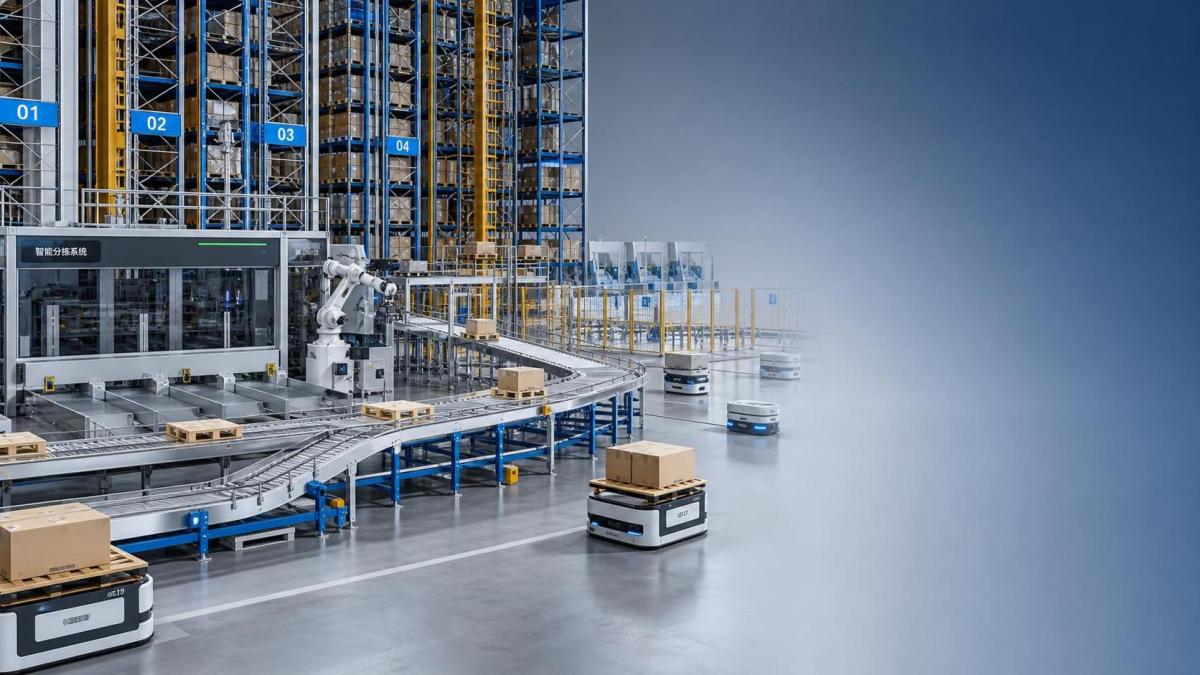
A warehouse automation project is rarely just about buying equipment. It usually involves controls, software, material flow logic, safety design, commissioning, and long-term support.
That is why the choice between a warehouse automation systems integrator and an OEM affects more than price. It changes responsibility boundaries, schedule risk, and future expansion options.
In practical sourcing, the problem is information noise. Brochures often emphasize speed, throughput, or innovation, yet leave out interface ownership, fault recovery logic, and service response conditions.
A more reliable evaluation starts with engineering truth. That means asking for measurable performance, documented assumptions, and clear integration scope, which aligns with the hard-data approach often promoted by TSV.
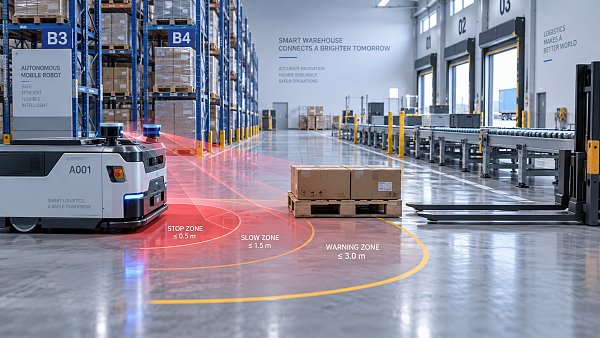
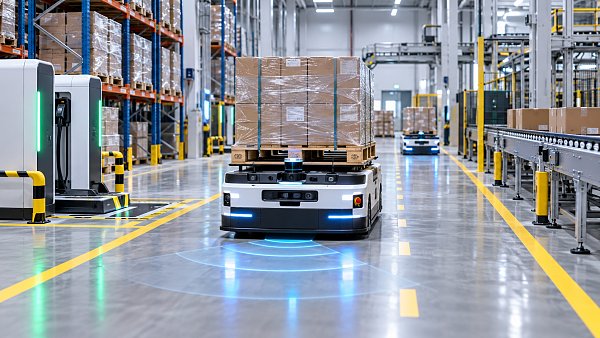
If the site has conveyors, AS/RS, AMRs, vision stations, WMS links, and safety zones, the buying route becomes a project architecture decision. It is not a simple vendor preference.
What is the real difference between a warehouse automation systems integrator and an OEM?
A warehouse automation systems integrator typically assembles multiple technologies into one operating system. The focus is end-to-end performance across mechanical, electrical, controls, and software layers.
An OEM usually designs and manufactures specific equipment. That may include shuttles, sorters, palletizers, conveyors, robotic cells, or storage modules with known design rules and tested configurations.
Simple projects can work well with direct OEM buying. That is common when one equipment family dominates the scope and interface complexity remains low.
The warehouse automation systems integrator becomes more valuable when several subsystems must behave as one line. In those cases, the challenge is not equipment selection alone. It is orchestration.
A quick comparison helps separate the two paths more clearly.
The key point is accountability. When uptime drops or throughput misses target, who owns root-cause analysis, corrective action, and validation testing? The answer often differs sharply between the two routes.
When does an OEM route make more sense?
Going direct to an OEM can be the stronger route when the project is technically narrow and operationally stable. That usually means the process is known, site constraints are manageable, and upstream software does not need major rewriting.
For example, adding a standardized pallet conveyor loop or a pre-engineered robotic palletizer may not require a warehouse automation systems integrator with full program ownership.
The OEM route can also help when internal engineering teams already manage controls standards, FAT protocols, and site acceptance criteria. In that case, direct buying may reduce commercial layers.
Still, lower quoted price does not always mean lower project cost. Interface engineering, local code compliance, software mapping, and installation coordination can shift hidden work back to the buyer.
A direct OEM route tends to work best under these conditions:
- One equipment family defines most of the throughput result.
- Mechanical and controls interfaces are already standardized.
- Software integration is light or already validated internally.
- Expansion plans are limited over the next two to three years.
At what point does a warehouse automation systems integrator become the safer option?
The warehouse automation systems integrator becomes valuable when complexity starts multiplying across vendors, process zones, and data layers. That is usually where direct sourcing becomes harder to control.
If the project includes WMS, WCS, AMRs, pick stations, barcode verification, carton flow, and ERP messaging, small interface failures can create large operational losses.
A capable warehouse automation systems integrator should define handshakes, exception states, buffer logic, safety zoning, and performance acceptance criteria before equipment ships.
This route also matters when the project is phased. Many facilities start with one zone, then add storage density, robotic picking, or sortation later. Integrator-led architecture often protects scalability better.
In TSV-style evaluation terms, the question is not who sounds more innovative. The question is whose documentation best proves repeatability, fault tolerance, MTBF assumptions, and recoverability under abnormal conditions.
A warehouse automation systems integrator is often the safer route when you need:
- One party to own cross-system performance.
- Phased rollout without redesigning the core control structure.
- Integration between legacy systems and new automation assets.
- Stronger commissioning coordination and post-launch troubleshooting.
How should cost, schedule, and risk actually be compared?
This is where many sourcing decisions drift off course. Comparing only purchase price hides the real economics of a warehouse automation systems integrator versus OEM decision.
A better method is to compare total project burden across four cost buckets: equipment, integration engineering, commissioning risk, and lifecycle service.
Use the table below as a practical screening tool during RFQ review.
Schedule should be tested the same way. A fast equipment lead time is irrelevant if controls integration, software testing, or site readiness become the critical path.
Risk should also be scored by ownership clarity. If three suppliers can each claim that a failure originated elsewhere, the low-price route can become the expensive one.
What mistakes show up most often during vendor selection?
One common mistake is assuming that a strong OEM automatically behaves like a strong warehouse automation systems integrator. Product excellence and integration excellence are related, but they are not identical capabilities.
Another mistake is accepting vague language around performance. Words such as optimized, flexible, or intelligent have little value without test conditions, exception rules, and measurable acceptance thresholds.
It is also risky to ignore lifecycle data. Spare parts availability, firmware update policy, remote access rules, and local service capacity often matter more after go-live than during bidding.
More careful evaluations usually include these checks:
- Request interface matrices, not just layout drawings.
- Review fault recovery logic for jams, no-reads, and communication loss.
- Ask for reference projects with similar SKU volatility and peak profiles.
- Confirm what is standard code and what is custom development.
- Separate guaranteed performance from estimated performance.
This is where data-driven review matters. The strongest proposals usually explain limitations as clearly as capabilities. That level of specificity is more useful than polished sales language.
So which route fits your project best?
If the project is modular, standardized, and supported by strong internal engineering governance, an OEM route may offer better commercial efficiency.
If the project depends on multiple technologies working as one operating environment, a warehouse automation systems integrator is often the more resilient choice.
The most useful next step is to build a decision sheet before final pricing review. List required throughput, interface count, software dependencies, validation needs, expansion plans, and service expectations.
Then compare each proposal against engineering evidence, not branding language. Ask where tolerances sit, how failures are isolated, what assumptions drive output, and who owns system recovery.
That approach reflects the same principle TSV keeps emphasizing across advanced manufacturing: parameters do not lie, and clear technical accountability usually predicts better sourcing outcomes.
A final choice should not be based on whether a warehouse automation systems integrator or OEM sounds more impressive. It should be based on which route gives your project the cleaner path to stable performance, controlled risk, and scalable operation.
Search News
Hot Articles
- Carbon Fiber StructuresHow to Specify Aerospace Carbon Fiber Assemblies for Lightweight, Load-Bearing PartsJul 11, 2026
- Machine VisionXiaomi, Alibaba DAMO Academy Drive Open-Source Robotics Model Ecosystem, Lowering Algorithm Development Barriers for Overseas SMEs Adopting Chinese Robotics SolutionsMar 30, 2026
- Cobots & ArmsShanxi 'AI+' Conference Showcases Embodied Intelligence with Multinational Buyer Engagement: Key Industry ImplicationsMar 30, 2026
Popular Tags
Recommended News
 Jul 11, 2026How to Specify Aerospace Carbon Fiber Assemblies for Lightweight, Load-Bearing PartsAerospace carbon fiber assemblies: learn how to specify laminate design, load data, joining methods, and inspection controls for lighter, reliable load-bearing aerospace parts.Elena Rostova (UAV Systems Researcher)
 Mar 30, 2026Xiaomi, Alibaba DAMO Academy Drive Open-Source Robotics Model Ecosystem, Lowering Algorithm Development Barriers for Overseas SMEs Adopting Chinese Robotics SolutionsXiaomi & Alibaba DAMO Academy's open-source robotics models lower algorithm barriers for global SMEs. Boost efficiency in manufacturing, logistics & smart retail with ROS 2 compatible solutions.TSV Data Lab
 Mar 30, 2026Shanxi 'AI+' Conference Showcases Embodied Intelligence with Multinational Buyer Engagement: Key Industry ImplicationsShanxi 'AI+' Conference highlights embodied intelligence with Tesla, Ubtech & Jiantao showcasing multimodal robotics. 40+ global buyers validated tech on-site, creating new B2B channels for industrial automation & AI solutions.Chen Wei (Automation Lead Engineer)
 Mar 30, 2026Zhongguancun Unveils 6G Integrated Sensing-Computing-Intelligence Platform to Empower Embodied Robots for Global Industrial ApplicationsZhongguancun's new 6G platform revolutionizes industrial robotics with <10ms latency, empowering global automotive, logistics & port automation. Discover how this tech boosts China's smart manufacturing exports.TSV Data Lab
 Mar 30, 2026Mech-Mind Tianjin Embodied Intelligence R&D and Production Base Goes Live, Cutting Delivery Time by 20%–30% for Global Customized AMR+Vision SolutionsMech-Mind's Tianjin AMR+Vision production base cuts delivery time by 20%-30% for欧美 & Latin American markets. Discover how this PLd-certified facility accelerates customized robotics solutions for smart manufacturing and logistics.Chen Wei (Automation Lead Engineer)
 Mar 30, 2026Boao Forum Reveals 'Co-evolution of Big and Small Brains' Trend in Humanoid Robots, China's Embodied Intelligence Accelerates Adaptation to Overseas Manufacturing Service ScenariosDiscover how China's humanoid robots, featuring 'Co-evolution of Big and Small Brains,' are revolutionizing global manufacturing. Learn about Embodied Tian Gong 3.0's ISO compliance and overseas deployment at Boao Forum 2026.Chen Wei (Automation Lead Engineer)
 Mar 30, 2026China Railway Industrial Secures Patent for Embodied Robotics in Material Handling, Boosting High-Precision Delivery Capabilities for Overseas Infrastructure and Manufacturing ProjectsChina Railway Industrial's new patent for embodied robotics in material handling boosts high-precision delivery for global infrastructure & manufacturing. Discover how this innovation enhances logistics accuracy in automotive, rail transit & EPC projects.Chen Wei (Automation Lead Engineer)
 Oct 07, 2026How to Evaluate an HMI Panel Distributor for Industrial Automation ProjectsHMI panel distributor evaluation guide: verify technical compatibility, traceability, supply reliability, lifecycle support, and total cost for automation projects.Victor Lin (Chief Software Architect)
 Oct 06, 2026Navigation Fault Tolerance Standards for AMRs: What Safety Teams Must VerifyNavigation fault tolerance standards: learn what AMR safety teams must verify, from localization loss and sensor faults to stopping distance, safe restart, and site-specific validation.Chen Wei (Automation Lead Engineer)
 Oct 05, 2026Calculating Edge Computing Total Cost of Ownership Across Distributed SitesEdge computing ownership cost explained: calculate deployment, energy, connectivity, security, remote support, and refresh costs across distributed sites.TSV Data Lab
 Oct 04, 2026CAD/CAM Benchmarking in the GCC: What Manufacturers Should Ask a ConsultantCAD CAM benchmark consultant GCC guide: learn the key questions manufacturers should ask to validate post-processors, workflows, machine performance, and production risk.Victor Lin (Chief Software Architect)
 Oct 03, 2026Selecting Automotive Radar Sensor Modules for ADAS Range, Resolution, and IntegrationAutomotive radar sensor module selection guide for ADAS: compare range, resolution, field of view, latency, and integration to build safer, reliable vehicle systems.TSV Data Lab
 Oct 02, 2026How to Qualify Machined Parts Suppliers for Hard Tech ProgramsHard tech supply chain machined parts demand rigorous supplier qualification. Learn how to assess capability, traceability, quality controls, and delivery resilience.Dr. Marcus Vance
 Oct 01, 2026How to Select an Outdoor Security Radar Sensor for Perimeter Detection?Outdoor security radar sensor selection guide: compare range, accuracy, false-alarm control, integration, and field testing for reliable perimeter detection.TSV Data Lab
 Sep 30, 2026How to Evaluate Solid-State LiDAR Hardware for Outdoor Autonomous VehiclesSolid state LiDAR hardware evaluation guide for outdoor autonomous vehicles—compare range, point-cloud quality, environmental resilience, integration, and safety.TSV Data Lab
 Sep 29, 2026ISO 9283 Repeatability: How to Evaluate Cobot Positioning PerformanceISO 9283 cobot repeatability explained: learn how payload, reach, approach direction, and test conditions affect positioning performance and cell capability.Chen Wei (Automation Lead Engineer)
 Oct 07, 2026How Much Does an Automated Guided Vehicle Cost in 2026?How much does an automated guided vehicle cost in 2026? Explore AGV price ranges, hidden deployment costs, and smart buying factors for stronger ROI.Chen Wei (Automation Lead Engineer)
 Oct 06, 2026Are Collaborative Robots Safe Enough to Operate Without Fencing?Are collaborative robots safe enough to work without fencing? Explore risk assessment, safeguarding options, and practical guidance for safer, productive cobot cells.Chen Wei (Automation Lead Engineer)
 Oct 05, 2026What Causes Machine Vision Systems to Miss Small Defects?What causes machine vision systems to miss small defects? Discover how lighting, optics, motion, and AI thresholds affect detection—and prevent costly escapes.TSV Data Lab
 Oct 04, 2026How Should You Compare 5-Axis CNC Machine Accuracy Claims?How do I compare 5-axis CNC machine accuracy claims? Learn how to assess standards, thermal stability, TCP accuracy, and real-world test evidence.Dr. Marcus Vance
 Oct 03, 2026Is Edge Computing Necessary for Real-Time Quality Inspection?Is industrial edge computing necessary for real-time quality inspection? Explore how latency, data volume, reliability, and control integration shape the right architecture.TSV Data Lab
 Oct 02, 2026What Documents Prove a Precision Machining Supplier Can Hold Tolerance?What documents prove a precision machining supplier can hold tolerance? Explore certificates, FAI reports, calibration, SPC, and traceability evidence to qualify suppliers with confidence.Dr. Marcus Vance
 Oct 01, 2026Can a Machining Supplier Meet Aerospace Fatigue Testing Requirements?Can a machining supplier meet aerospace fatigue testing requirements? Learn the traceability, process control, and test evidence needed for reliable aerospace parts.Dr. Marcus Vance
 Sep 30, 2026Which Industrial Robot Specifications Matter for High-Precision Assembly?Which industrial robot specifications matter most for high-precision assembly? Explore repeatability, accuracy, stiffness, vibration, calibration, and force control for reliable yields.Chen Wei (Automation Lead Engineer)