What Services Should a Warehouse Automation Systems Integrator Provide After Go-Live?
Publication Date
author
What Services Should a Warehouse Automation Systems Integrator Provide After Go-Live?
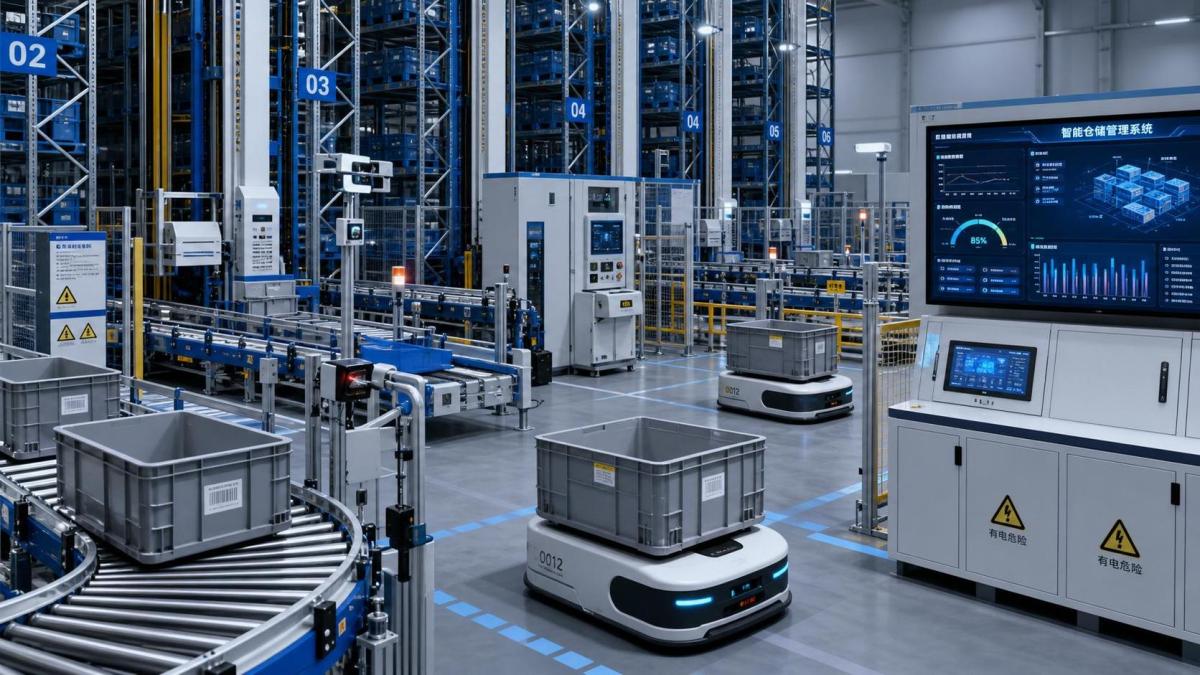
After go-live, the real test begins. A warehouse rarely behaves exactly like the acceptance script predicted.
Traffic patterns shift. Order profiles change. Operators improvise. Small faults turn into repeat delays if nobody owns them.
That is why a warehouse automation systems integrator cannot disappear after commissioning. Post-launch support is part of the system itself.
In practical terms, the integrator should provide technical support, performance tracking, software care, training, spare parts planning, and improvement work.
For maintenance teams, this matters because uptime is not protected by hardware alone. It depends on response speed, root-cause discipline, and clean change control.
A strong warehouse automation systems integrator helps keep conveyors, AS/RS, AMRs, sorters, WCS, and interfaces stable under daily pressure.
1. Structured Technical Support Must Start on Day One
The first requirement is a clear support model. If support is vague, downtime becomes expensive very quickly.
A warehouse automation systems integrator should define service levels before problems occur, not after escalation starts.
- Named support contacts for controls, software, mechanical, and network issues.
- Remote support availability with response times by severity level.
- Escalation paths for critical production stoppages.
- A ticketing process that records symptoms, actions, and closure evidence.
This sounds basic, but many sites fail here. Teams end up chasing vendors separately because no one is coordinating the full automation stack.
The integrator should stay accountable across subsystems, especially where PLC logic, WMS messages, scanners, and motion equipment intersect.
2. Performance Monitoring Should Go Beyond Alarms
A good warehouse automation systems integrator does not only react to faults. It watches performance drift before a fault becomes visible.
That means tracking live operational data and translating it into maintenance decisions.
- Throughput by zone, lane, shift, and order type.
- Jam frequency, recovery time, and repeat failure locations.
- Sensor health, motor overload patterns, and communication drops.
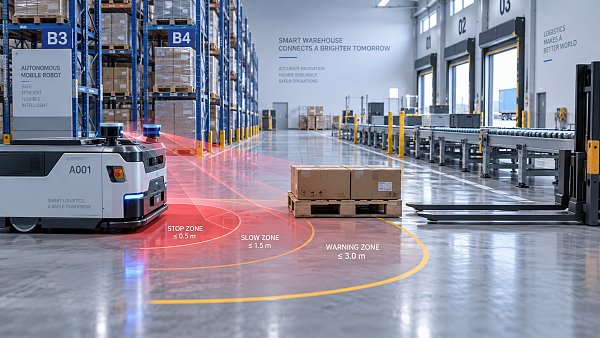
- AMR mission delays, queue congestion, and charging imbalance.
- WCS latency and interface exceptions with ERP or WMS.
From a maintenance perspective, trend data is more useful than isolated alarms. It shows whether the issue is random, seasonal, or caused by process change.
This is where TSV’s engineering mindset is relevant. Parameters matter because hidden instability usually appears first in measurable deviations.
3. Troubleshooting Must Include Root-Cause Analysis, Not Quick Resets
Many systems can be restarted. That does not mean the problem is solved.
A warehouse automation systems integrator should investigate recurring failures with discipline, then document permanent corrective actions.
In real operations, recurring faults often come from timing conflicts, poor exception handling, worn components, or process assumptions that broke after launch.
- Capture logs, event history, operator observations, and video evidence.
- Reproduce the condition where possible.
- Separate symptom from failure source.
- Implement and validate a lasting fix.
- Update work instructions and support records.
Without this loop, the site keeps paying the same downtime cost. Quick resets hide weak engineering.
4. Software Maintenance Is a Core Post-Go-Live Service
Automation systems age through software as much as through mechanics. Rules change. Interfaces evolve. Security exposure increases over time.
A warehouse automation systems integrator should provide controlled software maintenance across PLCs, HMIs, WCS, databases, and middleware.
- Patch planning and release notes.
- Backup verification and version control.
- Cybersecurity review for remote access and user permissions.
- Regression testing before deployment.
- Rollback procedures for failed changes.
This is especially important when the warehouse operates around the clock. A badly managed update can create a larger outage than the original issue.
Change windows, test scripts, and approval steps should be formal. Informal edits inside live code are a long-term reliability risk.
5. Training Should Cover Real Scenarios, Not Just System Features
Training is often treated as a one-time handover. That is rarely enough once order volumes and staffing patterns begin to fluctuate.
A capable warehouse automation systems integrator should provide ongoing training for maintenance and operations with scenario-based refreshers.
Useful post-go-live training usually includes fault recovery, manual override boundaries, lockout procedures, and how to read system diagnostics correctly.
- How to isolate a failed zone safely.
- How to restart equipment in the correct sequence.
- How to recognize upstream versus downstream faults.
- When to intervene locally and when to escalate.
This reduces avoidable damage and shortens recovery time. It also helps standardize responses across shifts.
6. Spare Parts and Obsolescence Planning Need Integrator Support
After go-live, parts strategy becomes operational strategy. One unavailable drive or scanner can stop an entire flow path.
A warehouse automation systems integrator should help classify critical spares based on failure rate, lead time, and operational impact.
This becomes more important as automation fleets age. Component discontinuation can quietly create serious service risk.
7. Continuous Optimization Should Be Part of the Service Scope
A warehouse automation systems integrator should not treat go-live throughput as the final benchmark. Warehouses evolve, and the control strategy should evolve too.
Continuous optimization may involve routing logic, wave release timing, slotting impacts, robot task priorities, or exception queue handling.
Even small software changes can remove chronic bottlenecks if they are guided by data rather than assumptions.
- Monthly performance reviews with agreed KPIs.
- Bottleneck analysis by order profile and peak periods.
- Improvement backlog ranked by downtime and business value.
- Post-change validation using measurable results.
This is where a serious integrator stands apart. It keeps the system aligned with operational reality instead of frozen at launch conditions.
8. Reporting and Governance Keep Support Measurable
Post-go-live service should be visible. If the support effort cannot be measured, it becomes difficult to improve or justify.
A warehouse automation systems integrator should provide regular reporting that combines technical detail with practical action items.
- Incident summary and repeat fault trends.
- Response and resolution time against SLA.
- Open risks, pending changes, and aging issues.
- Recommended maintenance actions for the next period.
Governance meetings should stay practical. The goal is to reduce recurrence, clarify ownership, and protect system stability.
What Good Post-Go-Live Support Really Looks Like
The best warehouse automation systems integrator provides more than emergency help. It provides an operating framework for reliability.
That framework includes support coverage, data monitoring, disciplined troubleshooting, controlled software maintenance, recurring training, and optimization planning.
When these services are in place, maintenance teams spend less time reacting blindly and more time preventing repeat failures.
For any site evaluating service quality, the key question is simple: does the warehouse automation systems integrator help the system perform better every month?
If the answer is unclear, the support model is incomplete. After go-live, measurable engineering support is not optional. It is the real deliverable.
Search News
Hot Articles
- Carbon Fiber StructuresHow to Specify Aerospace Carbon Fiber Assemblies for Lightweight, Load-Bearing PartsJul 11, 2026
- Machine VisionXiaomi, Alibaba DAMO Academy Drive Open-Source Robotics Model Ecosystem, Lowering Algorithm Development Barriers for Overseas SMEs Adopting Chinese Robotics SolutionsMar 30, 2026
- Cobots & ArmsShanxi 'AI+' Conference Showcases Embodied Intelligence with Multinational Buyer Engagement: Key Industry ImplicationsMar 30, 2026
Popular Tags
Recommended News
 Jul 11, 2026How to Specify Aerospace Carbon Fiber Assemblies for Lightweight, Load-Bearing PartsAerospace carbon fiber assemblies: learn how to specify laminate design, load data, joining methods, and inspection controls for lighter, reliable load-bearing aerospace parts.Elena Rostova (UAV Systems Researcher)
 Mar 30, 2026Xiaomi, Alibaba DAMO Academy Drive Open-Source Robotics Model Ecosystem, Lowering Algorithm Development Barriers for Overseas SMEs Adopting Chinese Robotics SolutionsXiaomi & Alibaba DAMO Academy's open-source robotics models lower algorithm barriers for global SMEs. Boost efficiency in manufacturing, logistics & smart retail with ROS 2 compatible solutions.TSV Data Lab
 Mar 30, 2026Shanxi 'AI+' Conference Showcases Embodied Intelligence with Multinational Buyer Engagement: Key Industry ImplicationsShanxi 'AI+' Conference highlights embodied intelligence with Tesla, Ubtech & Jiantao showcasing multimodal robotics. 40+ global buyers validated tech on-site, creating new B2B channels for industrial automation & AI solutions.Chen Wei (Automation Lead Engineer)
 Mar 30, 2026Zhongguancun Unveils 6G Integrated Sensing-Computing-Intelligence Platform to Empower Embodied Robots for Global Industrial ApplicationsZhongguancun's new 6G platform revolutionizes industrial robotics with <10ms latency, empowering global automotive, logistics & port automation. Discover how this tech boosts China's smart manufacturing exports.TSV Data Lab
 Mar 30, 2026Mech-Mind Tianjin Embodied Intelligence R&D and Production Base Goes Live, Cutting Delivery Time by 20%–30% for Global Customized AMR+Vision SolutionsMech-Mind's Tianjin AMR+Vision production base cuts delivery time by 20%-30% for欧美 & Latin American markets. Discover how this PLd-certified facility accelerates customized robotics solutions for smart manufacturing and logistics.Chen Wei (Automation Lead Engineer)
 Mar 30, 2026Boao Forum Reveals 'Co-evolution of Big and Small Brains' Trend in Humanoid Robots, China's Embodied Intelligence Accelerates Adaptation to Overseas Manufacturing Service ScenariosDiscover how China's humanoid robots, featuring 'Co-evolution of Big and Small Brains,' are revolutionizing global manufacturing. Learn about Embodied Tian Gong 3.0's ISO compliance and overseas deployment at Boao Forum 2026.Chen Wei (Automation Lead Engineer)
 Mar 30, 2026China Railway Industrial Secures Patent for Embodied Robotics in Material Handling, Boosting High-Precision Delivery Capabilities for Overseas Infrastructure and Manufacturing ProjectsChina Railway Industrial's new patent for embodied robotics in material handling boosts high-precision delivery for global infrastructure & manufacturing. Discover how this innovation enhances logistics accuracy in automotive, rail transit & EPC projects.Chen Wei (Automation Lead Engineer)
 Oct 07, 2026How to Evaluate an HMI Panel Distributor for Industrial Automation ProjectsHMI panel distributor evaluation guide: verify technical compatibility, traceability, supply reliability, lifecycle support, and total cost for automation projects.Victor Lin (Chief Software Architect)
 Oct 06, 2026Navigation Fault Tolerance Standards for AMRs: What Safety Teams Must VerifyNavigation fault tolerance standards: learn what AMR safety teams must verify, from localization loss and sensor faults to stopping distance, safe restart, and site-specific validation.Chen Wei (Automation Lead Engineer)
 Oct 05, 2026Calculating Edge Computing Total Cost of Ownership Across Distributed SitesEdge computing ownership cost explained: calculate deployment, energy, connectivity, security, remote support, and refresh costs across distributed sites.TSV Data Lab
 Oct 04, 2026CAD/CAM Benchmarking in the GCC: What Manufacturers Should Ask a ConsultantCAD CAM benchmark consultant GCC guide: learn the key questions manufacturers should ask to validate post-processors, workflows, machine performance, and production risk.Victor Lin (Chief Software Architect)
 Oct 03, 2026Selecting Automotive Radar Sensor Modules for ADAS Range, Resolution, and IntegrationAutomotive radar sensor module selection guide for ADAS: compare range, resolution, field of view, latency, and integration to build safer, reliable vehicle systems.TSV Data Lab
 Oct 02, 2026How to Qualify Machined Parts Suppliers for Hard Tech ProgramsHard tech supply chain machined parts demand rigorous supplier qualification. Learn how to assess capability, traceability, quality controls, and delivery resilience.Dr. Marcus Vance
 Oct 01, 2026How to Select an Outdoor Security Radar Sensor for Perimeter Detection?Outdoor security radar sensor selection guide: compare range, accuracy, false-alarm control, integration, and field testing for reliable perimeter detection.TSV Data Lab
 Sep 30, 2026How to Evaluate Solid-State LiDAR Hardware for Outdoor Autonomous VehiclesSolid state LiDAR hardware evaluation guide for outdoor autonomous vehicles—compare range, point-cloud quality, environmental resilience, integration, and safety.TSV Data Lab
 Sep 29, 2026ISO 9283 Repeatability: How to Evaluate Cobot Positioning PerformanceISO 9283 cobot repeatability explained: learn how payload, reach, approach direction, and test conditions affect positioning performance and cell capability.Chen Wei (Automation Lead Engineer)
 Oct 07, 2026How Much Does an Automated Guided Vehicle Cost in 2026?How much does an automated guided vehicle cost in 2026? Explore AGV price ranges, hidden deployment costs, and smart buying factors for stronger ROI.Chen Wei (Automation Lead Engineer)
 Oct 06, 2026Are Collaborative Robots Safe Enough to Operate Without Fencing?Are collaborative robots safe enough to work without fencing? Explore risk assessment, safeguarding options, and practical guidance for safer, productive cobot cells.Chen Wei (Automation Lead Engineer)
 Oct 05, 2026What Causes Machine Vision Systems to Miss Small Defects?What causes machine vision systems to miss small defects? Discover how lighting, optics, motion, and AI thresholds affect detection—and prevent costly escapes.TSV Data Lab
 Oct 04, 2026How Should You Compare 5-Axis CNC Machine Accuracy Claims?How do I compare 5-axis CNC machine accuracy claims? Learn how to assess standards, thermal stability, TCP accuracy, and real-world test evidence.Dr. Marcus Vance
 Oct 03, 2026Is Edge Computing Necessary for Real-Time Quality Inspection?Is industrial edge computing necessary for real-time quality inspection? Explore how latency, data volume, reliability, and control integration shape the right architecture.TSV Data Lab
 Oct 02, 2026What Documents Prove a Precision Machining Supplier Can Hold Tolerance?What documents prove a precision machining supplier can hold tolerance? Explore certificates, FAI reports, calibration, SPC, and traceability evidence to qualify suppliers with confidence.Dr. Marcus Vance
 Oct 01, 2026Can a Machining Supplier Meet Aerospace Fatigue Testing Requirements?Can a machining supplier meet aerospace fatigue testing requirements? Learn the traceability, process control, and test evidence needed for reliable aerospace parts.Dr. Marcus Vance
 Sep 30, 2026Which Industrial Robot Specifications Matter for High-Precision Assembly?Which industrial robot specifications matter most for high-precision assembly? Explore repeatability, accuracy, stiffness, vibration, calibration, and force control for reliable yields.Chen Wei (Automation Lead Engineer)