How Much Does an Automated Guided Vehicle Cost in 2026?
Publication Date
author
How Much Does an Automated Guided Vehicle Cost in 2026?
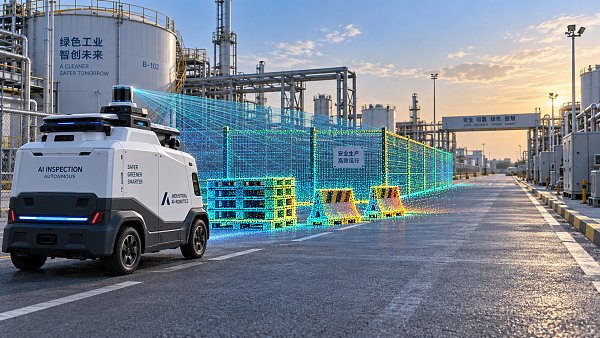
How much does an automated guided vehicle cost in 2026? A realistic answer is rarely a single number. A basic tugger or low-payload cart mover may begin in the tens of thousands of dollars, while a heavy-duty vehicle with custom load handling, fleet orchestration, safety sensing, and plant-system integration can move well into six figures per unit. Then there is the part that quotation headlines often understate: deployment engineering, infrastructure work, software licensing, commissioning, and long-term support.
For a procurement team, the useful question is not simply “What does the vehicle cost?” It is “What will it cost to move this material reliably, safely, and measurably over the next five to seven years?” The difference matters. A vehicle that looks inexpensive in a brochure can become the costly option if it requires floor modifications, frequent manual recovery, or a dedicated technician to keep routes running.
In 2026, AGV pricing is shaped by a mature but increasingly fragmented automation market. Buyers can choose conventional guided vehicles using magnetic tape, QR codes, wires, or reflectors; more flexible laser-guided AGVs; and AMRs that navigate with simultaneous localization and mapping (SLAM), LiDAR, cameras, and onboard computing. These categories overlap commercially, but their engineering assumptions—and their cost profiles—are not identical.
Indicative AGV price ranges: vehicle price is only the starting point
The ranges below are planning estimates rather than a substitute for a supplier quotation. Actual pricing varies by region, quantities, battery chemistry, payload, safety package, local service coverage, and the degree of customization required. A quoted “base price” should always be checked for what is excluded.
These figures should not be read as a market price list. They are a way to frame early capital planning. A two-ton pallet mover working on a clean, repetitive loop is fundamentally different from an autonomous forklift placing loads at height in a mixed-traffic warehouse. Calling both “AGVs” can hide the complexity that determines cost.
A small fleet also does not always scale linearly. The second and third vehicle may share fleet-management software, maps, charging infrastructure, integration work, and safety validation. Conversely, a one-vehicle pilot can look disproportionately expensive because it carries much of the project’s fixed engineering cost.
The seven cost layers that belong in the budget
The vehicle chassis is only one layer. A credible budget separates the physical machine from the system required to make it useful.
- Base vehicle and load-handling equipment. This includes the drive platform, controller, battery, sensors, emergency-stop hardware, and any forks, conveyor deck, lift table, hooks, racks, or towing couplers. A custom top module can cost more than the mobile base when the load needs careful clamping, orientation, or transfer.
- Navigation and localization. Magnetic or coded guidance may reduce onboard sensor requirements but adds route infrastructure and makes later changes more disruptive. Laser navigation, LiDAR-based SLAM, or hybrid systems generally cost more upfront, yet may be justified where routes change, aisles are shared, or temporary obstructions are normal.
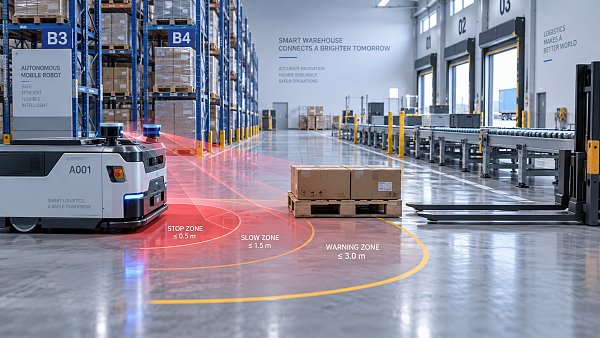
- Safety architecture. Safety laser scanners, bumpers, warning devices, reduced-speed zones, and risk-assessment work are not decorative extras. The system must suit the operational environment, including pedestrians, forklifts, blind corners, doorways, and crossing traffic. The right design depends on the site and applicable local requirements.
- Fleet management software. One vehicle can run with a simple dispatch model. Multiple vehicles need traffic control, task allocation, battery management, deadlock handling, alarms, and access control. Software may be quoted as a perpetual license, annual subscription, or bundled package; those models should not be compared casually.
- Integration. The interface to a WMS, MES, ERP, PLC, elevator, automatic door, fire alarm system, or conveyor line is where many projects become expensive. A supplier saying that its platform “integrates easily” is not enough. Ask which protocol, what data objects, who owns the interface, and how exceptions are handled.
- Site preparation and commissioning. Floor repairs, Wi-Fi coverage, network segmentation, charging locations, rack changes, route markers, and protective barriers may sit outside the vehicle quote. So can operator training, site acceptance testing, and documentation.
- Lifecycle service. Spare parts, remote support, preventive maintenance, software upgrades, batteries, sensor replacement, and response-time commitments all belong in total cost of ownership. A low initial price is less attractive if the local service model is vague.

Why payload alone does not explain the price
Payload is visible, so it is often overemphasized. Yes, a vehicle rated for several tonnes requires stronger frames, motors, gearboxes, brakes, wheels, and battery capacity. But the more revealing specification is often the whole mission: load center, center-of-gravity variation, travel speed, gradient, turning radius, floor joints, docking repeatability, and operating hours per day.
Consider two 1,000 kg applications. One moves standardized pallets over a smooth, level route at modest speed. The other transports irregular metal fixtures with changing centers of gravity through a machining area with coolant residue, narrow turns, and frequent human crossings. The payload rating may match; the engineering effort certainly does not.
Docking tolerance is another quiet cost multiplier. If an AGV merely stops beside a workstation, a few centimeters may be acceptable. If it must transfer a pallet to an automated conveyor, engage a fixture, or align with a robotic cell, the required positioning accuracy and repeatability must be stated in the specification. “High precision” is not a specification. A measurable docking tolerance, under defined load and floor conditions, is.
AGV versus AMR: do not pay for flexibility you cannot use
The terms AGV and AMR are routinely blurred. In practical purchasing, the distinction is less about branding than operational logic. A guided vehicle is often an efficient choice for stable, high-repeatability flows: line-side replenishment, point-to-point transport, predictable milk runs, or dedicated routes. Its route discipline can be an advantage in a tightly controlled factory.
An AMR is usually more compelling when routes are expected to change, when the layout is evolving, or when obstacles are part of ordinary operations. But flexible navigation does not make an operation magically flexible. It still needs well-defined pickup and drop-off conditions, clear responsibility for blocked routes, suitable wireless coverage, and a recovery process when localization is lost or a load is misaligned.
The expensive mistake is buying advanced navigation to compensate for an undefined process. Before comparing LiDAR count, camera specifications, or map-building claims, map the material flow. Measure travel distance, dispatch frequency, queue time, manual handoffs, and the physical condition of every pickup point. A conventional AGV may be the better economic choice if the route is fixed. An AMR may avoid repeated reconfiguration costs if the factory is regularly rearranged. Neither answer is universal.
What to ask suppliers before accepting an AGV quote
A useful request for quotation forces comparable answers. It should describe more than payload and travel path. Include the number of missions per shift, load dimensions, allowable load overhang, route width, floor condition, slopes, temperature, dust or moisture exposure, shift pattern, charging philosophy, and interfaces with existing equipment.
Then ask suppliers to identify exclusions explicitly. Is the price inclusive of fleet control, map creation, commissioning, safety studies, training, integration testing, and acceptance criteria? Is a charging station included per vehicle, shared across the fleet, or priced separately? Does remote support require an annual agreement? What hardware is considered consumable? If the vehicle loses communication, sees an obstacle for several minutes, or cannot complete a pickup, what exactly happens?
Reliability questions deserve the same attention as purchase price. Request the operating conditions behind any availability or MTBF statement. A number without duty cycle, payload, route complexity, maintenance assumptions, and test method is difficult to compare. The same is true for navigation claims: ask how the system behaves around reflective surfaces, changing inventory, strong ambient light, dust, or crowded intersections. Engineering evidence is more useful than promotional adjectives.
A practical way to calculate total cost of ownership
For a five-year planning model, start with the complete project cost: vehicles, load modules, charging, software, integration, site works, training, and commissioning. Add recurring expenses such as service agreements, replacement batteries where applicable, spare parts, software fees, connectivity, and internal support labor. Finally, include the cost of operational disruption: a blocked route, an unavailable vehicle, manual fallback transport, or a delayed production feed can matter more than a small difference in capital cost.
On the benefit side, avoid claiming labor savings before checking the actual process. An AGV does not always remove a full operator position. Sometimes it removes walking but not loading; sometimes it shifts labor from transport to exception handling; sometimes it improves material traceability more than labor utilization. These can still justify automation, but they should be measured honestly.
A sound business case compares at least three alternatives: keep the current manual process, deploy a minimal fixed-route system, and deploy the more flexible option. The least expensive vehicle is not automatically the lowest-risk choice, but the most autonomous platform is not automatically the best investment either.
The 2026 buying judgment: specify the mission, not the buzzwords
For teams asking how much an automated guided vehicle costs in 2026, a defensible answer begins with a defined mission and ends with a lifecycle model. Expect a broad spectrum—from tens of thousands of dollars for simple transport tasks to several hundred thousand dollars for specialized, integrated systems—but treat the vehicle price as only one component of the decision.
The most reliable procurement documents describe observable conditions: payload, route, docking tolerance, obstacle environment, system interfaces, uptime expectations, and recovery procedures. This is the discipline behind TechStat Vanguard’s engineering-first view of automation: parameters do not lie, and tolerances often decide whether an AGV project runs quietly in the background or becomes a daily source of manual intervention. Before selecting a supplier, make the operating truth measurable.
Search News
Hot Articles
- Carbon Fiber StructuresHow to Specify Aerospace Carbon Fiber Assemblies for Lightweight, Load-Bearing PartsJul 11, 2026
- Machine VisionXiaomi, Alibaba DAMO Academy Drive Open-Source Robotics Model Ecosystem, Lowering Algorithm Development Barriers for Overseas SMEs Adopting Chinese Robotics SolutionsMar 30, 2026
- Cobots & ArmsShanxi 'AI+' Conference Showcases Embodied Intelligence with Multinational Buyer Engagement: Key Industry ImplicationsMar 30, 2026
Popular Tags
Recommended News
 Jul 11, 2026How to Specify Aerospace Carbon Fiber Assemblies for Lightweight, Load-Bearing PartsAerospace carbon fiber assemblies: learn how to specify laminate design, load data, joining methods, and inspection controls for lighter, reliable load-bearing aerospace parts.Elena Rostova (UAV Systems Researcher)
 Mar 30, 2026Xiaomi, Alibaba DAMO Academy Drive Open-Source Robotics Model Ecosystem, Lowering Algorithm Development Barriers for Overseas SMEs Adopting Chinese Robotics SolutionsXiaomi & Alibaba DAMO Academy's open-source robotics models lower algorithm barriers for global SMEs. Boost efficiency in manufacturing, logistics & smart retail with ROS 2 compatible solutions.TSV Data Lab
 Mar 30, 2026Shanxi 'AI+' Conference Showcases Embodied Intelligence with Multinational Buyer Engagement: Key Industry ImplicationsShanxi 'AI+' Conference highlights embodied intelligence with Tesla, Ubtech & Jiantao showcasing multimodal robotics. 40+ global buyers validated tech on-site, creating new B2B channels for industrial automation & AI solutions.Chen Wei (Automation Lead Engineer)
 Mar 30, 2026Zhongguancun Unveils 6G Integrated Sensing-Computing-Intelligence Platform to Empower Embodied Robots for Global Industrial ApplicationsZhongguancun's new 6G platform revolutionizes industrial robotics with <10ms latency, empowering global automotive, logistics & port automation. Discover how this tech boosts China's smart manufacturing exports.TSV Data Lab
 Mar 30, 2026Mech-Mind Tianjin Embodied Intelligence R&D and Production Base Goes Live, Cutting Delivery Time by 20%–30% for Global Customized AMR+Vision SolutionsMech-Mind's Tianjin AMR+Vision production base cuts delivery time by 20%-30% for欧美 & Latin American markets. Discover how this PLd-certified facility accelerates customized robotics solutions for smart manufacturing and logistics.Chen Wei (Automation Lead Engineer)
 Mar 30, 2026Boao Forum Reveals 'Co-evolution of Big and Small Brains' Trend in Humanoid Robots, China's Embodied Intelligence Accelerates Adaptation to Overseas Manufacturing Service ScenariosDiscover how China's humanoid robots, featuring 'Co-evolution of Big and Small Brains,' are revolutionizing global manufacturing. Learn about Embodied Tian Gong 3.0's ISO compliance and overseas deployment at Boao Forum 2026.Chen Wei (Automation Lead Engineer)
 Mar 30, 2026China Railway Industrial Secures Patent for Embodied Robotics in Material Handling, Boosting High-Precision Delivery Capabilities for Overseas Infrastructure and Manufacturing ProjectsChina Railway Industrial's new patent for embodied robotics in material handling boosts high-precision delivery for global infrastructure & manufacturing. Discover how this innovation enhances logistics accuracy in automotive, rail transit & EPC projects.Chen Wei (Automation Lead Engineer)
 Oct 07, 2026How to Evaluate an HMI Panel Distributor for Industrial Automation ProjectsHMI panel distributor evaluation guide: verify technical compatibility, traceability, supply reliability, lifecycle support, and total cost for automation projects.Victor Lin (Chief Software Architect)
 Oct 06, 2026Navigation Fault Tolerance Standards for AMRs: What Safety Teams Must VerifyNavigation fault tolerance standards: learn what AMR safety teams must verify, from localization loss and sensor faults to stopping distance, safe restart, and site-specific validation.Chen Wei (Automation Lead Engineer)
 Oct 05, 2026Calculating Edge Computing Total Cost of Ownership Across Distributed SitesEdge computing ownership cost explained: calculate deployment, energy, connectivity, security, remote support, and refresh costs across distributed sites.TSV Data Lab
 Oct 04, 2026CAD/CAM Benchmarking in the GCC: What Manufacturers Should Ask a ConsultantCAD CAM benchmark consultant GCC guide: learn the key questions manufacturers should ask to validate post-processors, workflows, machine performance, and production risk.Victor Lin (Chief Software Architect)
 Oct 03, 2026Selecting Automotive Radar Sensor Modules for ADAS Range, Resolution, and IntegrationAutomotive radar sensor module selection guide for ADAS: compare range, resolution, field of view, latency, and integration to build safer, reliable vehicle systems.TSV Data Lab
 Oct 02, 2026How to Qualify Machined Parts Suppliers for Hard Tech ProgramsHard tech supply chain machined parts demand rigorous supplier qualification. Learn how to assess capability, traceability, quality controls, and delivery resilience.Dr. Marcus Vance
 Oct 01, 2026How to Select an Outdoor Security Radar Sensor for Perimeter Detection?Outdoor security radar sensor selection guide: compare range, accuracy, false-alarm control, integration, and field testing for reliable perimeter detection.TSV Data Lab
 Sep 30, 2026How to Evaluate Solid-State LiDAR Hardware for Outdoor Autonomous VehiclesSolid state LiDAR hardware evaluation guide for outdoor autonomous vehicles—compare range, point-cloud quality, environmental resilience, integration, and safety.TSV Data Lab
 Sep 29, 2026ISO 9283 Repeatability: How to Evaluate Cobot Positioning PerformanceISO 9283 cobot repeatability explained: learn how payload, reach, approach direction, and test conditions affect positioning performance and cell capability.Chen Wei (Automation Lead Engineer)
 Oct 07, 2026How Much Does an Automated Guided Vehicle Cost in 2026?How much does an automated guided vehicle cost in 2026? Explore AGV price ranges, hidden deployment costs, and smart buying factors for stronger ROI.Chen Wei (Automation Lead Engineer)
 Oct 06, 2026Are Collaborative Robots Safe Enough to Operate Without Fencing?Are collaborative robots safe enough to work without fencing? Explore risk assessment, safeguarding options, and practical guidance for safer, productive cobot cells.Chen Wei (Automation Lead Engineer)
 Oct 05, 2026What Causes Machine Vision Systems to Miss Small Defects?What causes machine vision systems to miss small defects? Discover how lighting, optics, motion, and AI thresholds affect detection—and prevent costly escapes.TSV Data Lab
 Oct 04, 2026How Should You Compare 5-Axis CNC Machine Accuracy Claims?How do I compare 5-axis CNC machine accuracy claims? Learn how to assess standards, thermal stability, TCP accuracy, and real-world test evidence.Dr. Marcus Vance
 Oct 03, 2026Is Edge Computing Necessary for Real-Time Quality Inspection?Is industrial edge computing necessary for real-time quality inspection? Explore how latency, data volume, reliability, and control integration shape the right architecture.TSV Data Lab
 Oct 02, 2026What Documents Prove a Precision Machining Supplier Can Hold Tolerance?What documents prove a precision machining supplier can hold tolerance? Explore certificates, FAI reports, calibration, SPC, and traceability evidence to qualify suppliers with confidence.Dr. Marcus Vance
 Oct 01, 2026Can a Machining Supplier Meet Aerospace Fatigue Testing Requirements?Can a machining supplier meet aerospace fatigue testing requirements? Learn the traceability, process control, and test evidence needed for reliable aerospace parts.Dr. Marcus Vance
 Sep 30, 2026Which Industrial Robot Specifications Matter for High-Precision Assembly?Which industrial robot specifications matter most for high-precision assembly? Explore repeatability, accuracy, stiffness, vibration, calibration, and force control for reliable yields.Chen Wei (Automation Lead Engineer)