Top Questions to Ask Industry 4.0 Vendors Before Starting a Factory Digitalization Project
Publication Date
author
Why do so many Industry 4.0 vendor pitches sound convincing but still leave major risk?

Factory digitalization decisions often fail before installation starts. The problem is rarely vision. It is usually unclear technical fit, vague scope, and weak verification.
Many Industry 4.0 vendors present attractive dashboards, AI claims, and fast ROI estimates. In practice, the harder questions sit underneath the demo.
Can the platform connect to older PLCs? What happens when sensor data is incomplete? How much custom engineering is needed? Which metrics are actually guaranteed?
That is why experienced teams increasingly evaluate suppliers with an engineering mindset. TechStat Vanguard has built its voice around this discipline: parameters matter more than adjectives.
A useful starting point is simple. Treat every conversation with Industry 4.0 vendors as a fact-finding exercise, not a branding exercise.
What problem is the vendor really solving in your factory?
This sounds basic, but it is where many digitalization projects drift. A vendor may sell a broad architecture when the actual need is narrow and urgent.
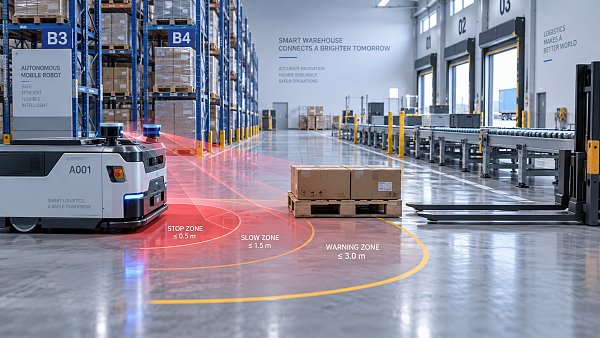
In one plant, the bottleneck may be machine downtime visibility. In another, it may be traceability for regulated machining, edge data latency, or unstable AGV routing.
Ask the vendor to define the operational problem in measurable terms. If the answer stays abstract, the project will likely stay abstract too.
Useful questions include:
- Which production loss does the solution target first?
- What baseline data is required before deployment?
- Which KPI will improve within the first 90 to 180 days?
- What is outside the current project scope?
Strong Industry 4.0 vendors can describe a phased path. Weak ones describe a digital future without defining the first controlled use case.
A practical comparison method is to request one-page problem statements from each supplier. That exposes who understands manufacturing constraints and who only understands presentation logic.
How do you test whether interoperability is real, not just promised?
Interoperability is where factory digitalization becomes expensive. Most plants run mixed environments, not clean-sheet architectures.
A credible vendor should explain how its system works with legacy CNC equipment, robotics cells, MES layers, SCADA platforms, ERP systems, and third-party sensors.
Do not stop at protocol names. OPC UA, MQTT, Modbus, Profinet, or REST API support tells only part of the story.
The deeper questions are about data mapping, timestamp consistency, edge buffering, and exception handling when devices behave unpredictably.
In actual deployment, these points matter more than brochure architecture:
This is also where independent benchmarking becomes valuable. TSV often frames supplier evaluation around verifiable operating thresholds, not generic compatibility claims.
What should you ask about data quality, cybersecurity, and model trust?
Many Industry 4.0 vendors focus on analytics outputs. Fewer are equally transparent about data inputs and trust boundaries.
If your project relies on predictive maintenance, machine vision inspection, edge AI, or digital traceability, the quality of the source data defines the value of the result.
Ask how data is cleaned, labeled, synchronized, and retained. Ask what happens when calibration drifts or operators override workflows.
Cybersecurity belongs in the same conversation. Factory systems now bridge operational technology and enterprise networks, which changes the threat surface.
Good questions include:
- What data validation rules are built in by default?
- Can users trace each KPI back to raw signals and calculation logic?
- How are user roles, audit logs, and remote access controlled?
- Which standards or assessment frameworks guide your security design?
- How often are models retrained, and who approves changes?
In sectors like aerospace components, regulated machining, or advanced robotics, model trust is not optional. A black-box recommendation engine may create more operational risk than value.
The better Industry 4.0 vendors can show decision lineage. They can explain why an alert fired, why a classification changed, and what threshold triggered action.
How do you separate realistic ROI from optimistic sales math?
ROI discussions often become too broad. The vendor talks about transformation. The plant needs payback logic tied to a specific operational baseline.
Ask for a benefits model that connects directly to measurable plant events. Unplanned downtime hours, scrap rate, rework loops, tool wear, inspection cycle time, and energy spikes are stronger anchors.
You should also ask where the ROI assumptions came from. Are they based on installations with similar product mix, machine age, shift structure, and operator workflow?
More importantly, ask what the vendor excludes. Subscription fees are visible. Integration engineering, training time, data cleanup, and internal process redesign are often underestimated.
A grounded ROI review usually checks four areas:
- Baseline quality: are current losses measured or guessed?
- Attribution: which savings come from software, and which from process discipline?
- Time to value: when does the first stable improvement appear?
- Sustainability: do gains survive after the pilot team leaves?
This is where the TSV mindset is useful again. Engineering truth starts with measurable inputs. If a supplier cannot define its assumptions, its ROI model is not decision-grade.
What usually delays implementation even after the vendor is selected?
Selection is only the midpoint. Many Industry 4.0 vendors can start fast in theory, but factory conditions slow the real program.
Common delays come from unclear ownership, incomplete tag dictionaries, unstable network zones, poor data historians, and unplanned machine downtime during installation windows.
Another frequent issue is overexpansion. A pilot intended for one line quickly absorbs quality, maintenance, warehouse, and ERP goals. The schedule stretches, and success becomes hard to define.
Before contract signature, ask the vendor for a deployment map that covers:
- Site survey requirements and technical prerequisites
- Data collection and validation milestones
- Acceptance criteria for each phase
- Roles needed from internal engineering, IT, and operations
- Rollback or contingency procedures
The best Industry 4.0 vendors are candid about what can break. That honesty is often a stronger buying signal than polished certainty.
Which final questions help compare Industry 4.0 vendors side by side?
Near the end of evaluation, it helps to standardize the last round of questions. That creates a cleaner basis for comparison across different technical approaches.
A concise shortlist might include the following:
- What exact production decisions will your system improve first?
- Which plant data sources are mandatory on day one?
- What latency, uptime, and support response levels are documented?
- How much custom code will this deployment require?
- What evidence shows performance in similar environments?
- How do you manage upgrades without disrupting production?
- What must be true internally for your solution to succeed?
These questions do more than challenge suppliers. They also sharpen internal alignment on scope, readiness, and acceptable risk.
A disciplined selection process does not need more hype. It needs cleaner evidence, tighter definitions, and a willingness to test every claim against plant reality.
Before moving forward, build a comparison sheet, define technical acceptance criteria, and request proof tied to your operating conditions. That is usually where better digitalization decisions begin.
Search News
Hot Articles
- Carbon Fiber StructuresHow to Specify Aerospace Carbon Fiber Assemblies for Lightweight, Load-Bearing PartsJul 11, 2026
- Machine VisionXiaomi, Alibaba DAMO Academy Drive Open-Source Robotics Model Ecosystem, Lowering Algorithm Development Barriers for Overseas SMEs Adopting Chinese Robotics SolutionsMar 30, 2026
- Cobots & ArmsShanxi 'AI+' Conference Showcases Embodied Intelligence with Multinational Buyer Engagement: Key Industry ImplicationsMar 30, 2026
Popular Tags
Recommended News
 Jul 11, 2026How to Specify Aerospace Carbon Fiber Assemblies for Lightweight, Load-Bearing PartsAerospace carbon fiber assemblies: learn how to specify laminate design, load data, joining methods, and inspection controls for lighter, reliable load-bearing aerospace parts.Elena Rostova (UAV Systems Researcher)
 Mar 30, 2026Xiaomi, Alibaba DAMO Academy Drive Open-Source Robotics Model Ecosystem, Lowering Algorithm Development Barriers for Overseas SMEs Adopting Chinese Robotics SolutionsXiaomi & Alibaba DAMO Academy's open-source robotics models lower algorithm barriers for global SMEs. Boost efficiency in manufacturing, logistics & smart retail with ROS 2 compatible solutions.TSV Data Lab
 Mar 30, 2026Shanxi 'AI+' Conference Showcases Embodied Intelligence with Multinational Buyer Engagement: Key Industry ImplicationsShanxi 'AI+' Conference highlights embodied intelligence with Tesla, Ubtech & Jiantao showcasing multimodal robotics. 40+ global buyers validated tech on-site, creating new B2B channels for industrial automation & AI solutions.Chen Wei (Automation Lead Engineer)
 Mar 30, 2026Zhongguancun Unveils 6G Integrated Sensing-Computing-Intelligence Platform to Empower Embodied Robots for Global Industrial ApplicationsZhongguancun's new 6G platform revolutionizes industrial robotics with <10ms latency, empowering global automotive, logistics & port automation. Discover how this tech boosts China's smart manufacturing exports.TSV Data Lab
 Mar 30, 2026Mech-Mind Tianjin Embodied Intelligence R&D and Production Base Goes Live, Cutting Delivery Time by 20%–30% for Global Customized AMR+Vision SolutionsMech-Mind's Tianjin AMR+Vision production base cuts delivery time by 20%-30% for欧美 & Latin American markets. Discover how this PLd-certified facility accelerates customized robotics solutions for smart manufacturing and logistics.Chen Wei (Automation Lead Engineer)
 Mar 30, 2026Boao Forum Reveals 'Co-evolution of Big and Small Brains' Trend in Humanoid Robots, China's Embodied Intelligence Accelerates Adaptation to Overseas Manufacturing Service ScenariosDiscover how China's humanoid robots, featuring 'Co-evolution of Big and Small Brains,' are revolutionizing global manufacturing. Learn about Embodied Tian Gong 3.0's ISO compliance and overseas deployment at Boao Forum 2026.Chen Wei (Automation Lead Engineer)
 Mar 30, 2026China Railway Industrial Secures Patent for Embodied Robotics in Material Handling, Boosting High-Precision Delivery Capabilities for Overseas Infrastructure and Manufacturing ProjectsChina Railway Industrial's new patent for embodied robotics in material handling boosts high-precision delivery for global infrastructure & manufacturing. Discover how this innovation enhances logistics accuracy in automotive, rail transit & EPC projects.Chen Wei (Automation Lead Engineer)
 Oct 07, 2026How to Evaluate an HMI Panel Distributor for Industrial Automation ProjectsHMI panel distributor evaluation guide: verify technical compatibility, traceability, supply reliability, lifecycle support, and total cost for automation projects.Victor Lin (Chief Software Architect)
 Oct 06, 2026Navigation Fault Tolerance Standards for AMRs: What Safety Teams Must VerifyNavigation fault tolerance standards: learn what AMR safety teams must verify, from localization loss and sensor faults to stopping distance, safe restart, and site-specific validation.Chen Wei (Automation Lead Engineer)
 Oct 05, 2026Calculating Edge Computing Total Cost of Ownership Across Distributed SitesEdge computing ownership cost explained: calculate deployment, energy, connectivity, security, remote support, and refresh costs across distributed sites.TSV Data Lab
 Oct 04, 2026CAD/CAM Benchmarking in the GCC: What Manufacturers Should Ask a ConsultantCAD CAM benchmark consultant GCC guide: learn the key questions manufacturers should ask to validate post-processors, workflows, machine performance, and production risk.Victor Lin (Chief Software Architect)
 Oct 03, 2026Selecting Automotive Radar Sensor Modules for ADAS Range, Resolution, and IntegrationAutomotive radar sensor module selection guide for ADAS: compare range, resolution, field of view, latency, and integration to build safer, reliable vehicle systems.TSV Data Lab
 Oct 02, 2026How to Qualify Machined Parts Suppliers for Hard Tech ProgramsHard tech supply chain machined parts demand rigorous supplier qualification. Learn how to assess capability, traceability, quality controls, and delivery resilience.Dr. Marcus Vance
 Oct 01, 2026How to Select an Outdoor Security Radar Sensor for Perimeter Detection?Outdoor security radar sensor selection guide: compare range, accuracy, false-alarm control, integration, and field testing for reliable perimeter detection.TSV Data Lab
 Sep 30, 2026How to Evaluate Solid-State LiDAR Hardware for Outdoor Autonomous VehiclesSolid state LiDAR hardware evaluation guide for outdoor autonomous vehicles—compare range, point-cloud quality, environmental resilience, integration, and safety.TSV Data Lab
 Sep 29, 2026ISO 9283 Repeatability: How to Evaluate Cobot Positioning PerformanceISO 9283 cobot repeatability explained: learn how payload, reach, approach direction, and test conditions affect positioning performance and cell capability.Chen Wei (Automation Lead Engineer)
 Oct 07, 2026How Much Does an Automated Guided Vehicle Cost in 2026?How much does an automated guided vehicle cost in 2026? Explore AGV price ranges, hidden deployment costs, and smart buying factors for stronger ROI.Chen Wei (Automation Lead Engineer)
 Oct 06, 2026Are Collaborative Robots Safe Enough to Operate Without Fencing?Are collaborative robots safe enough to work without fencing? Explore risk assessment, safeguarding options, and practical guidance for safer, productive cobot cells.Chen Wei (Automation Lead Engineer)
 Oct 05, 2026What Causes Machine Vision Systems to Miss Small Defects?What causes machine vision systems to miss small defects? Discover how lighting, optics, motion, and AI thresholds affect detection—and prevent costly escapes.TSV Data Lab
 Oct 04, 2026How Should You Compare 5-Axis CNC Machine Accuracy Claims?How do I compare 5-axis CNC machine accuracy claims? Learn how to assess standards, thermal stability, TCP accuracy, and real-world test evidence.Dr. Marcus Vance
 Oct 03, 2026Is Edge Computing Necessary for Real-Time Quality Inspection?Is industrial edge computing necessary for real-time quality inspection? Explore how latency, data volume, reliability, and control integration shape the right architecture.TSV Data Lab
 Oct 02, 2026What Documents Prove a Precision Machining Supplier Can Hold Tolerance?What documents prove a precision machining supplier can hold tolerance? Explore certificates, FAI reports, calibration, SPC, and traceability evidence to qualify suppliers with confidence.Dr. Marcus Vance
 Oct 01, 2026Can a Machining Supplier Meet Aerospace Fatigue Testing Requirements?Can a machining supplier meet aerospace fatigue testing requirements? Learn the traceability, process control, and test evidence needed for reliable aerospace parts.Dr. Marcus Vance
 Sep 30, 2026Which Industrial Robot Specifications Matter for High-Precision Assembly?Which industrial robot specifications matter most for high-precision assembly? Explore repeatability, accuracy, stiffness, vibration, calibration, and force control for reliable yields.Chen Wei (Automation Lead Engineer)