When a heavy duty CNC supplier becomes a cost risk
Publication Date
author
When a heavy duty CNC machining supplier looks affordable, the true cost may appear later in scrap, delays, warranty exposure, and unstable process control. Price alone rarely reflects total financial impact. In complex industrial sourcing, a heavy duty CNC machining supplier should be evaluated as a long-term cost variable, not a one-time purchase decision.
This matters across the broader industrial economy, where parts often support automation frames, energy equipment, transport systems, aerospace structures, and custom capital machinery. A weak supplier can quietly increase risk through tolerance drift, missed schedules, undocumented process changes, and poor material traceability.
For a data-driven organization such as TechStat Vanguard, supplier assessment starts with engineering truth. Parameters, capability evidence, and process discipline reveal whether a heavy duty CNC machining supplier protects cash flow or becomes a hidden liability.
When price advantage hides risk in the first sourcing scenario
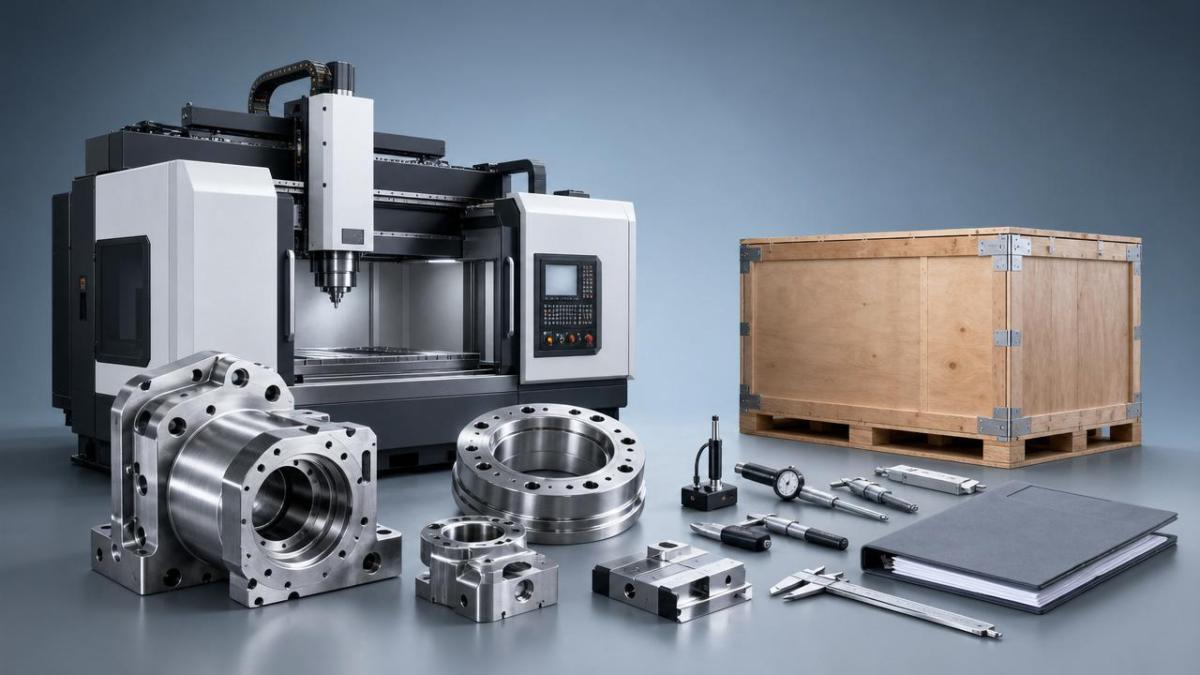
The first scenario appears during initial RFQ comparisons. One heavy duty CNC machining supplier may quote 12% lower than competitors. That discount seems attractive. Yet the quote may exclude inspection depth, fixture validation, tooling renewal, or packaging controls.
In this scenario, cost risk usually comes from assumptions. If the supplier prices to nominal dimensions without planning for geometric stability, the final output can vary between batches. The savings disappear once incoming inspection rejects parts or assembly teams add manual correction.
Core judgment points in early quotation review
- Whether tolerances are priced with real process capability data
- Whether material certifications are included by heat or batch
- Whether fixture design and probing methods are documented
- Whether surface treatment and secondary operations are controlled
- Whether packaging prevents transit deformation on heavy parts
A reliable heavy duty CNC machining supplier does not simply promise quality. It shows Cp, Cpk, inspection sampling logic, machine envelope suitability, and realistic lead time assumptions. Data reduces ambiguity before cost overruns begin.
When production scaling turns a capable shop into a cost risk
The second scenario emerges after pilot success. A heavy duty CNC machining supplier may produce five prototype parts correctly, then struggle at fifty or five hundred. Scaling exposes spindle utilization pressure, fixture wear, operator inconsistency, and scheduling conflicts.
This is common in mixed-industry manufacturing. A shop serving mining equipment, defense frames, and industrial automation may overcommit machine hours. Once large jobs stack up, the supplier protects throughput first. Precision, responsiveness, and documentation quality can decline.
Signals that scaling risk is developing
- Lead times extend without engineering justification
- First-pass yield drops between batches
- Corrective action reports become vague or delayed
- Dimensional reports omit critical datums
- Subcontracted operations increase without notice
A heavy duty CNC machining supplier becomes financially dangerous when batch consistency is weaker than prototype quality. Rework, line stoppage, and field replacement costs can exceed the original part value by several multiples.
When high-spec industries demand traceability, not only machining capacity
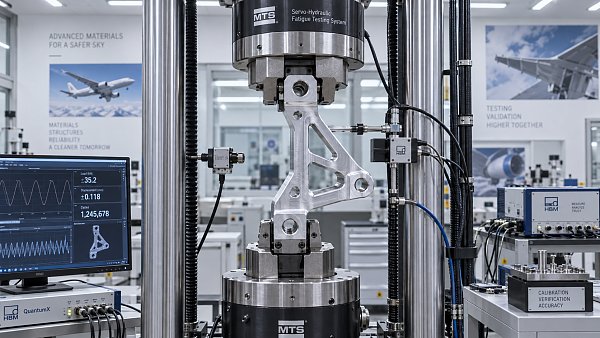
The third scenario involves regulated or mission-critical applications. Aerospace brackets, medical equipment housings, energy system flanges, and autonomous equipment structures all require more than machining skill. They require documented traceability across the full process chain.
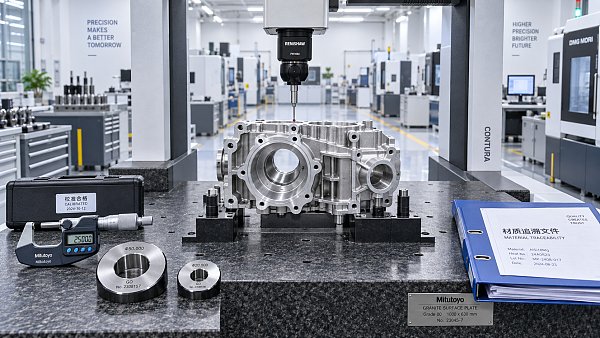
In these cases, a heavy duty CNC machining supplier with large machines but weak records can create severe exposure. Missing calibration logs, undocumented program revisions, or incomplete material traceability may trigger qualification failure or customer rejection.
What must be verified in high-consequence scenarios
- Raw material certificates linked to each finished component
- Inspection equipment calibration status and intervals
- Revision-controlled machining programs and work instructions
- Nonconformance handling with root-cause evidence
- Operator qualification records for critical processes
A capable heavy duty CNC machining supplier should support traceability as a standard operating discipline. Without that foundation, low pricing often masks future compliance costs, approval delays, and expensive supplier replacement cycles.
How application scenarios change supplier requirements
Not every project needs the same supplier profile. Different industrial scenarios create different risk patterns. The best heavy duty CNC machining supplier for oversized weldment bases may not be ideal for tight-tolerance rotary assemblies or fatigue-sensitive aerospace frames.
This comparison shows why selecting a heavy duty CNC machining supplier by unit price alone is unreliable. Scenario fit determines whether a quote is efficient or deceptively cheap.
Practical supplier-fit checks before hidden costs appear
A preventive evaluation should connect engineering capability with cost exposure. The goal is not to eliminate all risk. The goal is to identify where a heavy duty CNC machining supplier could create avoidable financial leakage.
Recommended assessment actions
- Request sample dimensional reports from three different production dates
- Review how the heavy duty CNC machining supplier manages fixture maintenance
- Confirm whether critical operations are kept in-house
- Audit handling rules for nonconforming parts and rework segregation
- Verify machine capacity against part size, material, and tolerance stack-up
- Compare promised lead time with historical on-time delivery evidence
Where possible, evaluate total landed cost instead of quoted part price. Include inspection labor, schedule buffer, line downtime probability, freight damage risk, and engineering revalidation costs after process changes.
Common misjudgments that turn a supplier into a liability
Several errors repeatedly distort supplier decisions. The first is treating machine size as proof of capability. A shop with large gantry equipment may still have weak metrology, poor fixture planning, or inconsistent process control.
The second error is trusting one successful urgent order. Expedite performance does not prove routine stability. A heavy duty CNC machining supplier may prioritize an early project, then fail once normal volume and competing orders return.
The third error is ignoring communication quality. Slow engineering replies, unclear revision handling, and incomplete reports usually signal future cost problems. Administrative weakness often becomes manufacturing weakness under pressure.
The fourth error is underestimating material and process substitutions. Even small undocumented changes in cutters, inserts, heat treatment routes, or subcontract finishing can alter dimensional behavior and service life.
A data-based next step for lower supplier risk
A sound next step is to build a scenario-based supplier scorecard. Rate each heavy duty CNC machining supplier across tolerance capability, traceability, delivery stability, corrective action quality, and cost transparency. Weight each factor by application risk.
For critical programs, start with a controlled validation package. Use a pilot batch, full inspection points, material trace records, and a documented change-control agreement. This approach exposes hidden weaknesses before annual spend grows.
In the end, a heavy duty CNC machining supplier becomes a cost risk when engineering evidence is weaker than commercial promises. The strongest sourcing decisions come from measurable capability, stable process discipline, and transparent performance data.
That is the standard aligned with TechStat Vanguard’s view of industrial truth: not adjectives, but verified parameters. In a market full of claims, the right heavy duty CNC machining supplier is the one whose data protects both performance and capital.
Search News
Hot Articles
- Carbon Fiber StructuresHow to Specify Aerospace Carbon Fiber Assemblies for Lightweight, Load-Bearing PartsJul 11, 2026
- Machine VisionXiaomi, Alibaba DAMO Academy Drive Open-Source Robotics Model Ecosystem, Lowering Algorithm Development Barriers for Overseas SMEs Adopting Chinese Robotics SolutionsMar 30, 2026
- Cobots & ArmsShanxi 'AI+' Conference Showcases Embodied Intelligence with Multinational Buyer Engagement: Key Industry ImplicationsMar 30, 2026
Popular Tags
Recommended News
 Jul 11, 2026How to Specify Aerospace Carbon Fiber Assemblies for Lightweight, Load-Bearing PartsAerospace carbon fiber assemblies: learn how to specify laminate design, load data, joining methods, and inspection controls for lighter, reliable load-bearing aerospace parts.Elena Rostova (UAV Systems Researcher)
 Mar 30, 2026Xiaomi, Alibaba DAMO Academy Drive Open-Source Robotics Model Ecosystem, Lowering Algorithm Development Barriers for Overseas SMEs Adopting Chinese Robotics SolutionsXiaomi & Alibaba DAMO Academy's open-source robotics models lower algorithm barriers for global SMEs. Boost efficiency in manufacturing, logistics & smart retail with ROS 2 compatible solutions.TSV Data Lab
 Mar 30, 2026Shanxi 'AI+' Conference Showcases Embodied Intelligence with Multinational Buyer Engagement: Key Industry ImplicationsShanxi 'AI+' Conference highlights embodied intelligence with Tesla, Ubtech & Jiantao showcasing multimodal robotics. 40+ global buyers validated tech on-site, creating new B2B channels for industrial automation & AI solutions.Chen Wei (Automation Lead Engineer)
 Mar 30, 2026Zhongguancun Unveils 6G Integrated Sensing-Computing-Intelligence Platform to Empower Embodied Robots for Global Industrial ApplicationsZhongguancun's new 6G platform revolutionizes industrial robotics with <10ms latency, empowering global automotive, logistics & port automation. Discover how this tech boosts China's smart manufacturing exports.TSV Data Lab
 Mar 30, 2026Mech-Mind Tianjin Embodied Intelligence R&D and Production Base Goes Live, Cutting Delivery Time by 20%–30% for Global Customized AMR+Vision SolutionsMech-Mind's Tianjin AMR+Vision production base cuts delivery time by 20%-30% for欧美 & Latin American markets. Discover how this PLd-certified facility accelerates customized robotics solutions for smart manufacturing and logistics.Chen Wei (Automation Lead Engineer)
 Mar 30, 2026Boao Forum Reveals 'Co-evolution of Big and Small Brains' Trend in Humanoid Robots, China's Embodied Intelligence Accelerates Adaptation to Overseas Manufacturing Service ScenariosDiscover how China's humanoid robots, featuring 'Co-evolution of Big and Small Brains,' are revolutionizing global manufacturing. Learn about Embodied Tian Gong 3.0's ISO compliance and overseas deployment at Boao Forum 2026.Chen Wei (Automation Lead Engineer)
 Mar 30, 2026China Railway Industrial Secures Patent for Embodied Robotics in Material Handling, Boosting High-Precision Delivery Capabilities for Overseas Infrastructure and Manufacturing ProjectsChina Railway Industrial's new patent for embodied robotics in material handling boosts high-precision delivery for global infrastructure & manufacturing. Discover how this innovation enhances logistics accuracy in automotive, rail transit & EPC projects.Chen Wei (Automation Lead Engineer)
 Oct 04, 2026CAD/CAM Benchmarking in the GCC: What Manufacturers Should Ask a ConsultantCAD CAM benchmark consultant GCC guide: learn the key questions manufacturers should ask to validate post-processors, workflows, machine performance, and production risk.Victor Lin (Chief Software Architect)
 Oct 03, 2026Selecting Automotive Radar Sensor Modules for ADAS Range, Resolution, and IntegrationAutomotive radar sensor module selection guide for ADAS: compare range, resolution, field of view, latency, and integration to build safer, reliable vehicle systems.TSV Data Lab
 Oct 02, 2026How to Qualify Machined Parts Suppliers for Hard Tech ProgramsHard tech supply chain machined parts demand rigorous supplier qualification. Learn how to assess capability, traceability, quality controls, and delivery resilience.Dr. Marcus Vance
 Oct 01, 2026How to Select an Outdoor Security Radar Sensor for Perimeter Detection?Outdoor security radar sensor selection guide: compare range, accuracy, false-alarm control, integration, and field testing for reliable perimeter detection.TSV Data Lab
 Sep 30, 2026How to Evaluate Solid-State LiDAR Hardware for Outdoor Autonomous VehiclesSolid state LiDAR hardware evaluation guide for outdoor autonomous vehicles—compare range, point-cloud quality, environmental resilience, integration, and safety.TSV Data Lab
 Sep 29, 2026ISO 9283 Repeatability: How to Evaluate Cobot Positioning PerformanceISO 9283 cobot repeatability explained: learn how payload, reach, approach direction, and test conditions affect positioning performance and cell capability.Chen Wei (Automation Lead Engineer)
 Oct 04, 2026How Should You Compare 5-Axis CNC Machine Accuracy Claims?How do I compare 5-axis CNC machine accuracy claims? Learn how to assess standards, thermal stability, TCP accuracy, and real-world test evidence.Dr. Marcus Vance
 Oct 03, 2026Is Edge Computing Necessary for Real-Time Quality Inspection?Is industrial edge computing necessary for real-time quality inspection? Explore how latency, data volume, reliability, and control integration shape the right architecture.TSV Data Lab
 Oct 02, 2026What Documents Prove a Precision Machining Supplier Can Hold Tolerance?What documents prove a precision machining supplier can hold tolerance? Explore certificates, FAI reports, calibration, SPC, and traceability evidence to qualify suppliers with confidence.Dr. Marcus Vance
 Oct 01, 2026Can a Machining Supplier Meet Aerospace Fatigue Testing Requirements?Can a machining supplier meet aerospace fatigue testing requirements? Learn the traceability, process control, and test evidence needed for reliable aerospace parts.Dr. Marcus Vance
 Sep 30, 2026Which Industrial Robot Specifications Matter for High-Precision Assembly?Which industrial robot specifications matter most for high-precision assembly? Explore repeatability, accuracy, stiffness, vibration, calibration, and force control for reliable yields.Chen Wei (Automation Lead Engineer)
 Sep 29, 2026How Do You Verify Servo Motor Torque Under Continuous Load?How do I verify servo motor torque under continuous load? Learn RMS torque checks, torque-speed limits, thermal derating, and real-machine testing.Chen Wei (Automation Lead Engineer)
 Oct 02, 2026ZD330 Software Configuration: Verifying Cut-List Import Before PurchaseZD330 software and machine configuration: verify cut-list imports, data mapping, labels, and workflow before purchase to reduce errors and choose with confidence.Victor Lin (Chief Software Architect)
 Sep 28, 2026Spindle Runout Measurement in Germany: DIN Standards, Methods, and Acceptance LimitsSpindle runout measurement Germany: explore DIN standards, proven methods, acceptance limits, and audit-ready practices for reliable machining quality.Dr. Marcus Vance
 Sep 27, 2026How to Select Wall-Mount Edge Devices for Space-Constrained Factory NetworksWall mount edge devices for space-constrained factories: evaluate workload, thermal design, power resilience, cable access, and network reliability for smarter deployments.TSV Data Lab
 Sep 26, 2026Machining Tolerance Analysis: How to Set Limits That Meet Function and Cost TargetsMachining tolerance analysis: learn how to set functional limits, control tolerance stacks, reduce inspection risk, and balance precision with production cost.Dr. Marcus Vance
 Sep 25, 2026How to Evaluate an Industrial Infrastructure Data Platform for Multi-Site OperationsIndustrial infrastructure data platform evaluation guide for multi-site operations: compare data quality, edge resilience, interoperability, governance, and scalable proof-of-value criteria.Victor Lin (Chief Software Architect)