Smart Factory Solutions Cost Breakdown: Hardware, Software, and Integration Factors
Publication Date
author
Why is smart factory solutions cost harder to estimate than most teams expect?

Smart factory solutions cost rarely starts and ends with the equipment quote. The visible number is usually only the first layer.
In practice, the investment spans hardware, software, data architecture, cybersecurity, integration labor, validation, and change management.
That is why two projects with similar automation goals can produce very different budgets and timelines.
A packaging line upgrade may focus on sensors, PLCs, and SCADA expansion. An aerospace machining cell may need stricter traceability, tolerance monitoring, and compliance evidence.
The result is a wider cost range than many early business cases assume.
A more reliable way to read smart factory solutions cost is to separate capital expense from long-tail implementation expense.
This matters in hard-tech environments, where vague marketing claims can hide expensive engineering gaps.
That is also why data-led evaluation has become more valuable. Organizations following engineering-first benchmarks, such as the approach promoted by TSV, usually ask deeper cost questions earlier.
They look beyond promises and ask for repeatability, latency, uptime, tolerance drift, and maintenance burden.
What usually drives the biggest share of smart factory solutions cost?
Hardware still takes a major share, but not always the largest one over the project lifecycle.
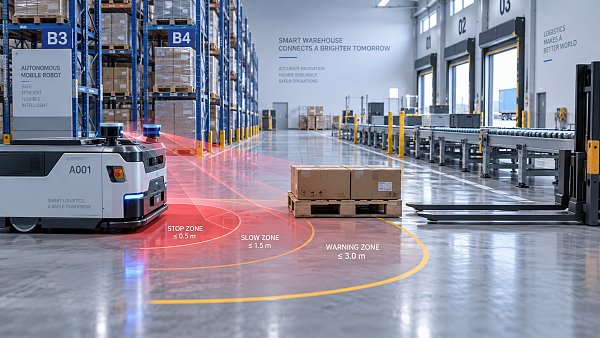
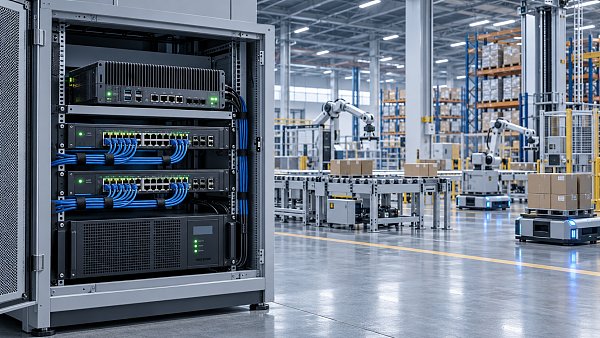
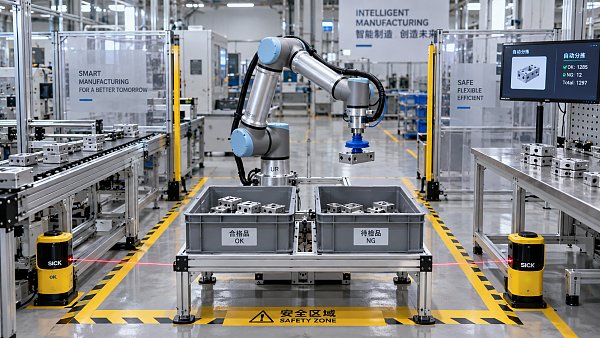
The main hardware buckets often include industrial robots, cobots, AGV or AMR fleets, machine vision, LiDAR, edge gateways, controllers, and upgraded network infrastructure.
Then come enclosure changes, safety systems, cabling, power conditioning, and environmental controls. These items are easy to underestimate.
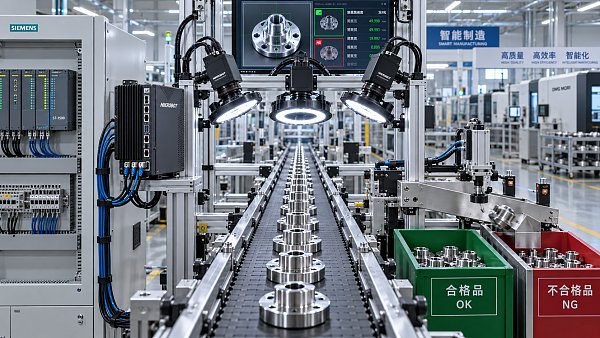
For example, a vision-guided robotic cell may require more than the robot itself.
- High-resolution cameras with stable optics
- Industrial lighting and shielding
- Edge compute for inference at low latency
- Safety fencing or collaborative safety validation
- Fixture redesign to keep repeatability within spec
In sensor-heavy factories, the cost signal shifts again. A dense IIoT rollout can look inexpensive at device level, then grow quickly through gateways, network segmentation, and storage.
Precision environments push this further.
If a plant supports aerospace parts, medical machining, or electronics assembly, measurement integrity becomes part of the cost structure.
That means calibration routines, environmental compensation, and better-quality components, not just more components.
Is software a smaller cost item, or does it become the hidden budget multiplier?
Software is often the hidden multiplier in smart factory solutions cost, especially after the pilot phase.
Licensing can include MES, SCADA, historian platforms, digital twin tools, analytics dashboards, AI inference software, device management, and cybersecurity monitoring.
Some platforms charge by device count. Others charge by user, data volume, site, or feature tier.
That pricing model changes the long-term economics.
A low-cost pilot can become expensive when scaled across multiple lines or plants.
Software cost also depends on how open the architecture is.
When systems support standard protocols and structured APIs, integration is usually cleaner. When they rely on proprietary connectors, future expansion gets more expensive.
The practical question is not whether software is cheaper than hardware. It is whether the software stack reduces data friction or locks the plant into recurring complexity.
That is where engineering evidence matters.
A platform with lower latency, cleaner audit trails, and better edge synchronization may cost more upfront, yet save significant troubleshooting hours later.
A quick decision table for early budget screening
Before comparing vendors, it helps to map cost pressure to the real deployment condition.
Where do integration costs usually go off plan?
Integration is where smart factory solutions cost often moves from estimate to surprise.
The problem is rarely one dramatic issue. More often, it is a chain of smaller realities.
Legacy PLCs may use mixed protocols. Data tags may be inconsistent. Machine builders may expose limited documentation. ERP structures may not match plant-floor events.
Every mismatch creates engineering hours.
Commissioning windows can add another cost layer. If upgrades must happen during shutdowns, weekends, or low-yield production periods, labor pricing changes.
Validation also matters more than many project plans admit.
A dashboard that displays data is not the same as a trusted production record. For regulated or precision operations, data lineage and alarm behavior need formal testing.
This is where a benchmark mindset helps.
Teams using a TSV-style evaluation lens tend to ask integration questions in measurable terms: actual gateway throughput, tolerated packet loss, synchronization drift, recovery time after interruption, and edge-to-cloud latency.
Those details reduce planning error better than broad promises about seamless connectivity.
- Confirm every machine interface before budget approval
- Define who owns middleware, testing, and documentation
- Separate pilot integration from scale-out integration
- Reserve budget for rework, not just first-pass setup
How should smart factory solutions cost be compared across different factory scenarios?
The fairest comparison starts with production context, not vendor category.
A high-mix, low-volume operation has different economics from a stable, repetitive line. So does a greenfield site versus a brownfield retrofit.
In a brownfield factory, integration complexity and downtime risk usually dominate smart factory solutions cost.
In a greenfield build, architecture choices and future scalability matter more.
For advanced manufacturing sectors, the cost comparison should also include quality economics.
If an automation stack improves defect detection by a small percentage but prevents expensive scrap, warranty exposure, or qualification delays, that value is material.
A useful screening method is to compare four dimensions together.
- Capital cost at deployment
- Annual software and support burden
- Implementation risk, including downtime and revalidation
- Operational gain tied to measurable plant metrics
When these dimensions are separated, vendor proposals become easier to compare without relying on broad efficiency claims.
What are the most common mistakes when budgeting smart factory solutions cost?
The first mistake is treating the quote as the budget.
The second is assuming pilot success guarantees scale economics.
Another common error is focusing only on automation gains while ignoring data maintenance, operator workflow changes, and supplier dependency.
Some projects also overpay for capability they will not use.
That happens when requirements stay abstract. A plant may buy advanced AI analytics without clean baseline data, or premium robot precision for an application that does not need it.
The opposite mistake exists too.
Low initial pricing can hide weak service coverage, short lifecycle support, or poor documentation. Over time, that raises the true smart factory solutions cost.
A disciplined budget should include these checkpoints.
- What exact plant problem is being solved
- Which parameters define success
- What recurring fees appear after year one
- What happens if one vendor exits or changes terms
- How downtime, retraining, and validation are funded
What is the smartest next step before requesting formal proposals?
Start with a parameter-driven requirement sheet, not a vendor wishlist.
Define throughput targets, acceptable latency, tolerance thresholds, traceability depth, uptime expectations, and cybersecurity constraints.
Then map those requirements to a phased cost model.
This model should separate pilot scope, plant-wide rollout, annual support, and revalidation cost.
It should also record assumptions clearly, especially around legacy integration and software expansion.
That approach produces a much more realistic view of smart factory solutions cost.
It also aligns with the broader engineering principle that TSV emphasizes: parameters do not lie, and procurement quality improves when evidence is stronger than marketing language.
The most practical next move is to compare options using measurable thresholds, not only package price.
Review hardware specifications, software licensing logic, integration boundaries, and lifecycle support together. That is usually where better budgeting decisions begin.
Search News
Hot Articles
- Carbon Fiber StructuresHow to Specify Aerospace Carbon Fiber Assemblies for Lightweight, Load-Bearing PartsJul 11, 2026
- Machine VisionXiaomi, Alibaba DAMO Academy Drive Open-Source Robotics Model Ecosystem, Lowering Algorithm Development Barriers for Overseas SMEs Adopting Chinese Robotics SolutionsMar 30, 2026
- Cobots & ArmsShanxi 'AI+' Conference Showcases Embodied Intelligence with Multinational Buyer Engagement: Key Industry ImplicationsMar 30, 2026
Popular Tags
Recommended News
 Jul 11, 2026How to Specify Aerospace Carbon Fiber Assemblies for Lightweight, Load-Bearing PartsAerospace carbon fiber assemblies: learn how to specify laminate design, load data, joining methods, and inspection controls for lighter, reliable load-bearing aerospace parts.Elena Rostova (UAV Systems Researcher)
 Mar 30, 2026Xiaomi, Alibaba DAMO Academy Drive Open-Source Robotics Model Ecosystem, Lowering Algorithm Development Barriers for Overseas SMEs Adopting Chinese Robotics SolutionsXiaomi & Alibaba DAMO Academy's open-source robotics models lower algorithm barriers for global SMEs. Boost efficiency in manufacturing, logistics & smart retail with ROS 2 compatible solutions.TSV Data Lab
 Mar 30, 2026Shanxi 'AI+' Conference Showcases Embodied Intelligence with Multinational Buyer Engagement: Key Industry ImplicationsShanxi 'AI+' Conference highlights embodied intelligence with Tesla, Ubtech & Jiantao showcasing multimodal robotics. 40+ global buyers validated tech on-site, creating new B2B channels for industrial automation & AI solutions.Chen Wei (Automation Lead Engineer)
 Mar 30, 2026Zhongguancun Unveils 6G Integrated Sensing-Computing-Intelligence Platform to Empower Embodied Robots for Global Industrial ApplicationsZhongguancun's new 6G platform revolutionizes industrial robotics with <10ms latency, empowering global automotive, logistics & port automation. Discover how this tech boosts China's smart manufacturing exports.TSV Data Lab
 Mar 30, 2026Mech-Mind Tianjin Embodied Intelligence R&D and Production Base Goes Live, Cutting Delivery Time by 20%–30% for Global Customized AMR+Vision SolutionsMech-Mind's Tianjin AMR+Vision production base cuts delivery time by 20%-30% for欧美 & Latin American markets. Discover how this PLd-certified facility accelerates customized robotics solutions for smart manufacturing and logistics.Chen Wei (Automation Lead Engineer)
 Mar 30, 2026Boao Forum Reveals 'Co-evolution of Big and Small Brains' Trend in Humanoid Robots, China's Embodied Intelligence Accelerates Adaptation to Overseas Manufacturing Service ScenariosDiscover how China's humanoid robots, featuring 'Co-evolution of Big and Small Brains,' are revolutionizing global manufacturing. Learn about Embodied Tian Gong 3.0's ISO compliance and overseas deployment at Boao Forum 2026.Chen Wei (Automation Lead Engineer)
 Mar 30, 2026China Railway Industrial Secures Patent for Embodied Robotics in Material Handling, Boosting High-Precision Delivery Capabilities for Overseas Infrastructure and Manufacturing ProjectsChina Railway Industrial's new patent for embodied robotics in material handling boosts high-precision delivery for global infrastructure & manufacturing. Discover how this innovation enhances logistics accuracy in automotive, rail transit & EPC projects.Chen Wei (Automation Lead Engineer)
 Oct 06, 2026Navigation Fault Tolerance Standards for AMRs: What Safety Teams Must VerifyNavigation fault tolerance standards: learn what AMR safety teams must verify, from localization loss and sensor faults to stopping distance, safe restart, and site-specific validation.Chen Wei (Automation Lead Engineer)
 Oct 05, 2026Calculating Edge Computing Total Cost of Ownership Across Distributed SitesEdge computing ownership cost explained: calculate deployment, energy, connectivity, security, remote support, and refresh costs across distributed sites.TSV Data Lab
 Oct 04, 2026CAD/CAM Benchmarking in the GCC: What Manufacturers Should Ask a ConsultantCAD CAM benchmark consultant GCC guide: learn the key questions manufacturers should ask to validate post-processors, workflows, machine performance, and production risk.Victor Lin (Chief Software Architect)
 Oct 03, 2026Selecting Automotive Radar Sensor Modules for ADAS Range, Resolution, and IntegrationAutomotive radar sensor module selection guide for ADAS: compare range, resolution, field of view, latency, and integration to build safer, reliable vehicle systems.TSV Data Lab
 Oct 02, 2026How to Qualify Machined Parts Suppliers for Hard Tech ProgramsHard tech supply chain machined parts demand rigorous supplier qualification. Learn how to assess capability, traceability, quality controls, and delivery resilience.Dr. Marcus Vance
 Oct 01, 2026How to Select an Outdoor Security Radar Sensor for Perimeter Detection?Outdoor security radar sensor selection guide: compare range, accuracy, false-alarm control, integration, and field testing for reliable perimeter detection.TSV Data Lab
 Sep 30, 2026How to Evaluate Solid-State LiDAR Hardware for Outdoor Autonomous VehiclesSolid state LiDAR hardware evaluation guide for outdoor autonomous vehicles—compare range, point-cloud quality, environmental resilience, integration, and safety.TSV Data Lab
 Sep 29, 2026ISO 9283 Repeatability: How to Evaluate Cobot Positioning PerformanceISO 9283 cobot repeatability explained: learn how payload, reach, approach direction, and test conditions affect positioning performance and cell capability.Chen Wei (Automation Lead Engineer)
 Oct 06, 2026Are Collaborative Robots Safe Enough to Operate Without Fencing?Are collaborative robots safe enough to work without fencing? Explore risk assessment, safeguarding options, and practical guidance for safer, productive cobot cells.Chen Wei (Automation Lead Engineer)
 Oct 05, 2026What Causes Machine Vision Systems to Miss Small Defects?What causes machine vision systems to miss small defects? Discover how lighting, optics, motion, and AI thresholds affect detection—and prevent costly escapes.TSV Data Lab
 Oct 04, 2026How Should You Compare 5-Axis CNC Machine Accuracy Claims?How do I compare 5-axis CNC machine accuracy claims? Learn how to assess standards, thermal stability, TCP accuracy, and real-world test evidence.Dr. Marcus Vance
 Oct 03, 2026Is Edge Computing Necessary for Real-Time Quality Inspection?Is industrial edge computing necessary for real-time quality inspection? Explore how latency, data volume, reliability, and control integration shape the right architecture.TSV Data Lab
 Oct 02, 2026What Documents Prove a Precision Machining Supplier Can Hold Tolerance?What documents prove a precision machining supplier can hold tolerance? Explore certificates, FAI reports, calibration, SPC, and traceability evidence to qualify suppliers with confidence.Dr. Marcus Vance
 Oct 01, 2026Can a Machining Supplier Meet Aerospace Fatigue Testing Requirements?Can a machining supplier meet aerospace fatigue testing requirements? Learn the traceability, process control, and test evidence needed for reliable aerospace parts.Dr. Marcus Vance
 Sep 30, 2026Which Industrial Robot Specifications Matter for High-Precision Assembly?Which industrial robot specifications matter most for high-precision assembly? Explore repeatability, accuracy, stiffness, vibration, calibration, and force control for reliable yields.Chen Wei (Automation Lead Engineer)
 Sep 29, 2026How Do You Verify Servo Motor Torque Under Continuous Load?How do I verify servo motor torque under continuous load? Learn RMS torque checks, torque-speed limits, thermal derating, and real-machine testing.Chen Wei (Automation Lead Engineer)
 Oct 02, 2026ZD330 Software Configuration: Verifying Cut-List Import Before PurchaseZD330 software and machine configuration: verify cut-list imports, data mapping, labels, and workflow before purchase to reduce errors and choose with confidence.Victor Lin (Chief Software Architect)