FDA Updates AI Medical Device Guidance: Industrial Vision Systems Require ISO/IEC 81001-5-1 Clinical Validation
Publication Date
author
U.S. FDA’s latest regulatory update marks a pivotal shift in the oversight of AI-enabled medical imaging tools—extending formal clinical validation requirements to industrial vision systems used across surgical, diagnostic, and quality assurance applications. Announced on May 13, 2026, the revision introduces binding obligations for manufacturers exporting such systems to the U.S., with immediate implications for global supply chains, particularly those originating in China.
Event Overview
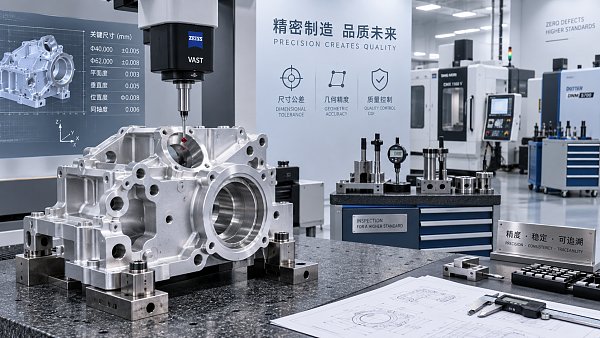
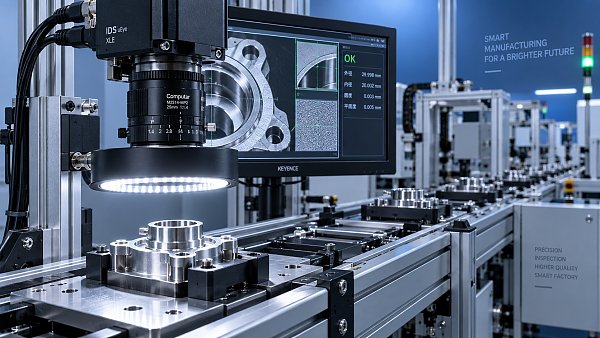
The U.S. Food and Drug Administration (FDA) released AI/ML-Based SaMD Clinical Validation Guidance v2.1 on May 13, 2026. For the first time, industrial vision systems—including machine vision modules deployed in surgical navigation, digital pathology slide analysis, and sterile environment monitoring—are explicitly classified as Software as a Medical Device (SaMD). The guidance mandates that their clinical validation must comply with ISO/IEC 81001-5-1:2025, a newly published international standard specifying evidence requirements for clinical performance of health software. As a result, Chinese exporters of medical-grade visual inspection modules must now submit expanded clinical datasets and real-world performance reports; average FDA premarket review timelines have extended to 22–26 weeks.
Industries Affected
Direct Trade Enterprises: Exporters engaged in cross-border sales of medical vision hardware or embedded AI modules face heightened documentation burdens. Impact manifests not only in longer certification cycles but also in increased costs related to clinical data curation, third-party audit coordination, and potential re-engineering of labeling and user documentation to reflect validated clinical claims.
Raw Material Procurement Enterprises: Suppliers of optical components (e.g., CMOS sensors, precision lenses), FPGA/ASIC substrates, and certified calibration standards are indirectly affected. Demand is shifting toward traceable, biocompatibility-tested, and metrologically characterized materials—especially those pre-qualified under ISO 13485 or aligned with IEC 62304 lifecycle expectations. Procurement teams must now verify supplier compliance with clinical-grade material documentation—not just mechanical or electrical specs.
Manufacturing Enterprises: OEMs and contract manufacturers producing vision-based medical devices must revise design history files (DHFs) to integrate clinical validation planning from the earliest architecture phase. This includes defining clinical use cases, selecting representative patient/population cohorts for algorithm testing, and embedding version-controlled data lineage into production firmware. Manufacturing process validation may now require alignment with clinical risk classification (e.g., SaMD Class II vs. III).
Supply Chain Service Providers: Regulatory consultants, clinical validation labs, and notified body affiliates specializing in AI/ML medical software are experiencing rising demand for ISO/IEC 81001-5-1–aligned services—including test protocol development, dataset annotation governance, and real-world evidence (RWE) reporting frameworks. However, capacity constraints exist: few labs currently hold full accreditation for this specific standard, creating bottlenecks in the validation pipeline.
Key Considerations and Recommended Actions
Review existing product classifications against SaMD definitions
Enterprises should conduct internal SaMD determinations using FDA’s Framework for Regulatory Oversight of AI/ML-Based SaMD (2023) and WHO’s Guidance on AI Regulation in Health (2025). Vision systems previously marketed as ‘industrial’ or ‘research-use-only’ may now fall under FDA jurisdiction if clinical decision support or automated interpretation is implied—even without direct patient contact.
Build clinical data infrastructure—not just algorithms
Algorithm development teams must now co-develop clinical data management plans alongside engineering roadmaps. This includes establishing secure, auditable pipelines for de-identified image acquisition, annotation traceability, bias assessment per demographic subgroups, and longitudinal performance tracking. Relying solely on synthetic or retrospective datasets is no longer sufficient under ISO/IEC 81001-5-1:2025.
Engage early with notified bodies familiar with ISO/IEC 81001-5-1
Given limited global expertise in this emerging standard, companies should initiate pre-submission consultations with regulatory partners who have participated in its development or piloted its application. Early alignment helps avoid rejection due to misaligned validation scope—for example, conflating technical verification (e.g., detection accuracy) with clinical validation (e.g., impact on diagnostic sensitivity or procedural outcomes).
Editorial Perspective / Industry Observation
Observably, this guidance does not represent a sudden expansion of FDA authority—but rather a formalization of enforcement trends already visible since 2024, when several vision-based wound assessment tools received FDA non-conformance letters citing insufficient clinical linkage. Analysis shows the inclusion of industrial vision systems reflects growing recognition that clinical validity hinges less on deployment context (e.g., hospital vs. cleanroom) and more on functional impact: any system that informs diagnosis, guides intervention, or verifies sterility status carries clinical consequence. From an industry perspective, the emphasis on real-world performance reporting signals a strategic pivot toward post-market surveillance as a core validation pillar—not merely a compliance checkpoint.
Conclusion
This update underscores a broader regulatory evolution: AI-enabled hardware is no longer assessed in isolation, but as part of an integrated clinical evidence ecosystem. For medical vision suppliers, success will depend less on pixel-level optimization and more on demonstrable clinical accountability—from sensor selection through to outcome correlation. A rational conclusion is that regulatory readiness is becoming indistinguishable from clinical credibility.
Sources and Ongoing Monitoring
Primary source: U.S. FDA, AI/ML-Based SaMD Clinical Validation Guidance v2.1, issued May 13, 2026 (FDA-2026-D-XXXXX); referenced standard: ISO/IEC 81001-5-1:2025 — Health software and health IT systems safety, effectiveness and security — Part 5-1: Clinical validation of health software.
Ongoing items to monitor: (1) FDA’s forthcoming draft on real-world evidence submission templates for SaMD; (2) EU MDR Annex XVI alignment activities following this update; (3) NMPA’s anticipated response in China’s AI Medical Device Registration Guidelines (Draft Revision 2026).
Search News
Hot Articles
- Carbon Fiber StructuresHow to Specify Aerospace Carbon Fiber Assemblies for Lightweight, Load-Bearing PartsJul 11, 2026
- Machine VisionXiaomi, Alibaba DAMO Academy Drive Open-Source Robotics Model Ecosystem, Lowering Algorithm Development Barriers for Overseas SMEs Adopting Chinese Robotics SolutionsMar 30, 2026
- Cobots & ArmsShanxi 'AI+' Conference Showcases Embodied Intelligence with Multinational Buyer Engagement: Key Industry ImplicationsMar 30, 2026
Popular Tags
Recommended News
 Jul 11, 2026How to Specify Aerospace Carbon Fiber Assemblies for Lightweight, Load-Bearing PartsAerospace carbon fiber assemblies: learn how to specify laminate design, load data, joining methods, and inspection controls for lighter, reliable load-bearing aerospace parts.Elena Rostova (UAV Systems Researcher)
 Mar 30, 2026Xiaomi, Alibaba DAMO Academy Drive Open-Source Robotics Model Ecosystem, Lowering Algorithm Development Barriers for Overseas SMEs Adopting Chinese Robotics SolutionsXiaomi & Alibaba DAMO Academy's open-source robotics models lower algorithm barriers for global SMEs. Boost efficiency in manufacturing, logistics & smart retail with ROS 2 compatible solutions.TSV Data Lab
 Mar 30, 2026Shanxi 'AI+' Conference Showcases Embodied Intelligence with Multinational Buyer Engagement: Key Industry ImplicationsShanxi 'AI+' Conference highlights embodied intelligence with Tesla, Ubtech & Jiantao showcasing multimodal robotics. 40+ global buyers validated tech on-site, creating new B2B channels for industrial automation & AI solutions.Chen Wei (Automation Lead Engineer)
 Mar 30, 2026Zhongguancun Unveils 6G Integrated Sensing-Computing-Intelligence Platform to Empower Embodied Robots for Global Industrial ApplicationsZhongguancun's new 6G platform revolutionizes industrial robotics with <10ms latency, empowering global automotive, logistics & port automation. Discover how this tech boosts China's smart manufacturing exports.TSV Data Lab
 Mar 30, 2026Mech-Mind Tianjin Embodied Intelligence R&D and Production Base Goes Live, Cutting Delivery Time by 20%–30% for Global Customized AMR+Vision SolutionsMech-Mind's Tianjin AMR+Vision production base cuts delivery time by 20%-30% for欧美 & Latin American markets. Discover how this PLd-certified facility accelerates customized robotics solutions for smart manufacturing and logistics.Chen Wei (Automation Lead Engineer)
 Mar 30, 2026Boao Forum Reveals 'Co-evolution of Big and Small Brains' Trend in Humanoid Robots, China's Embodied Intelligence Accelerates Adaptation to Overseas Manufacturing Service ScenariosDiscover how China's humanoid robots, featuring 'Co-evolution of Big and Small Brains,' are revolutionizing global manufacturing. Learn about Embodied Tian Gong 3.0's ISO compliance and overseas deployment at Boao Forum 2026.Chen Wei (Automation Lead Engineer)
 Mar 30, 2026China Railway Industrial Secures Patent for Embodied Robotics in Material Handling, Boosting High-Precision Delivery Capabilities for Overseas Infrastructure and Manufacturing ProjectsChina Railway Industrial's new patent for embodied robotics in material handling boosts high-precision delivery for global infrastructure & manufacturing. Discover how this innovation enhances logistics accuracy in automotive, rail transit & EPC projects.Chen Wei (Automation Lead Engineer)
 Oct 03, 2026Selecting Automotive Radar Sensor Modules for ADAS Range, Resolution, and IntegrationAutomotive radar sensor module selection guide for ADAS: compare range, resolution, field of view, latency, and integration to build safer, reliable vehicle systems.TSV Data Lab
 Oct 02, 2026How to Qualify Machined Parts Suppliers for Hard Tech ProgramsHard tech supply chain machined parts demand rigorous supplier qualification. Learn how to assess capability, traceability, quality controls, and delivery resilience.Dr. Marcus Vance
 Oct 01, 2026How to Select an Outdoor Security Radar Sensor for Perimeter Detection?Outdoor security radar sensor selection guide: compare range, accuracy, false-alarm control, integration, and field testing for reliable perimeter detection.TSV Data Lab
 Sep 30, 2026How to Evaluate Solid-State LiDAR Hardware for Outdoor Autonomous VehiclesSolid state LiDAR hardware evaluation guide for outdoor autonomous vehicles—compare range, point-cloud quality, environmental resilience, integration, and safety.TSV Data Lab
 Sep 29, 2026ISO 9283 Repeatability: How to Evaluate Cobot Positioning PerformanceISO 9283 cobot repeatability explained: learn how payload, reach, approach direction, and test conditions affect positioning performance and cell capability.Chen Wei (Automation Lead Engineer)
 Oct 03, 2026Is Edge Computing Necessary for Real-Time Quality Inspection?Is industrial edge computing necessary for real-time quality inspection? Explore how latency, data volume, reliability, and control integration shape the right architecture.TSV Data Lab
 Oct 02, 2026What Documents Prove a Precision Machining Supplier Can Hold Tolerance?What documents prove a precision machining supplier can hold tolerance? Explore certificates, FAI reports, calibration, SPC, and traceability evidence to qualify suppliers with confidence.Dr. Marcus Vance
 Oct 01, 2026Can a Machining Supplier Meet Aerospace Fatigue Testing Requirements?Can a machining supplier meet aerospace fatigue testing requirements? Learn the traceability, process control, and test evidence needed for reliable aerospace parts.Dr. Marcus Vance
 Sep 30, 2026Which Industrial Robot Specifications Matter for High-Precision Assembly?Which industrial robot specifications matter most for high-precision assembly? Explore repeatability, accuracy, stiffness, vibration, calibration, and force control for reliable yields.Chen Wei (Automation Lead Engineer)
 Sep 29, 2026How Do You Verify Servo Motor Torque Under Continuous Load?How do I verify servo motor torque under continuous load? Learn RMS torque checks, torque-speed limits, thermal derating, and real-machine testing.Chen Wei (Automation Lead Engineer)
 Oct 02, 2026ZD330 Software Configuration: Verifying Cut-List Import Before PurchaseZD330 software and machine configuration: verify cut-list imports, data mapping, labels, and workflow before purchase to reduce errors and choose with confidence.Victor Lin (Chief Software Architect)
 Sep 28, 2026Spindle Runout Measurement in Germany: DIN Standards, Methods, and Acceptance LimitsSpindle runout measurement Germany: explore DIN standards, proven methods, acceptance limits, and audit-ready practices for reliable machining quality.Dr. Marcus Vance
 Sep 27, 2026How to Select Wall-Mount Edge Devices for Space-Constrained Factory NetworksWall mount edge devices for space-constrained factories: evaluate workload, thermal design, power resilience, cable access, and network reliability for smarter deployments.TSV Data Lab
 Sep 26, 2026Machining Tolerance Analysis: How to Set Limits That Meet Function and Cost TargetsMachining tolerance analysis: learn how to set functional limits, control tolerance stacks, reduce inspection risk, and balance precision with production cost.Dr. Marcus Vance
 Sep 25, 2026How to Evaluate an Industrial Infrastructure Data Platform for Multi-Site OperationsIndustrial infrastructure data platform evaluation guide for multi-site operations: compare data quality, edge resilience, interoperability, governance, and scalable proof-of-value criteria.Victor Lin (Chief Software Architect)
 Sep 24, 2026How to Select Machine Vision Optics for Accurate Inspection at Different Working DistancesMachine vision optics selection guide for accurate inspection at every working distance. Compare FOV, pixel scale, DOF, distortion, lighting, and telecentric options.TSV Data Lab
 Sep 23, 2026How to Evaluate a Machine Vision System Integrator for High-Speed Inspection LinesChoose a machine vision system integrator with proven expertise in high-speed inspection, reliable reject timing, robust optics, and measurable acceptance criteria.TSV Data Lab