Robot Motion Testing Methods: How to Verify Repeatability, Path Accuracy, and Cycle Stability
Publication Date
author
Robot Motion Testing Methods: How to Verify Repeatability, Path Accuracy, and Cycle Stability
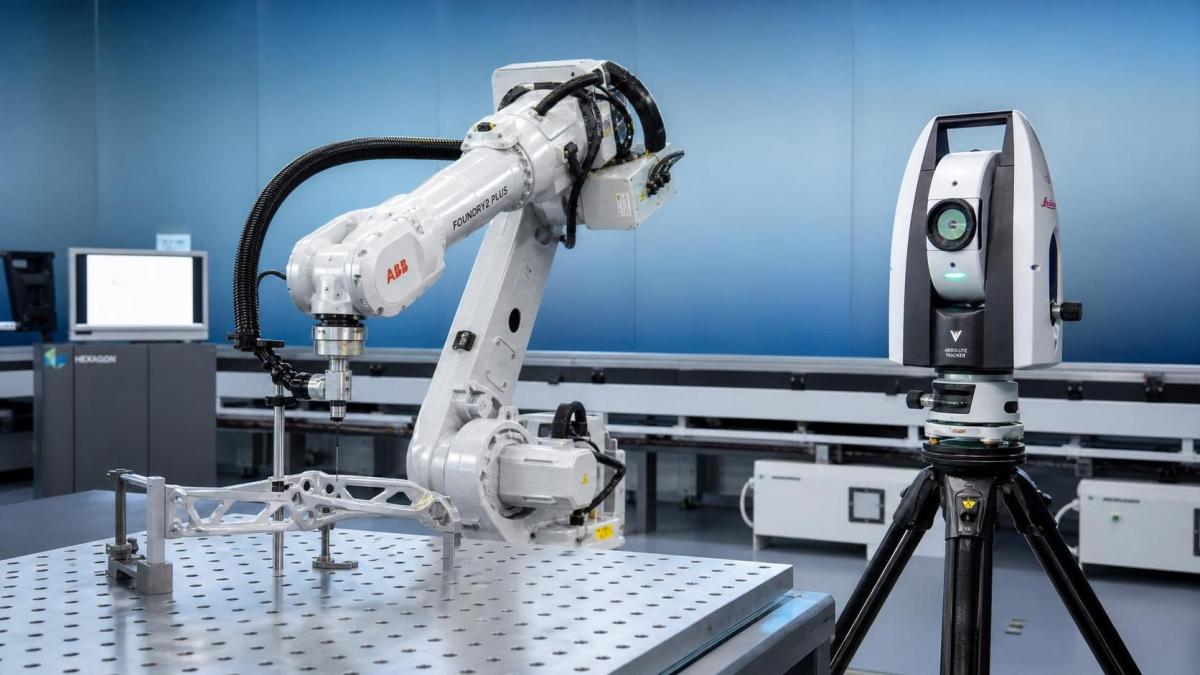
Robot motion testing is the foundation for proving whether a robot can deliver repeatability, path accuracy, and cycle stability in real production.
When motion quality slips, the first signs are usually small. A pick point drifts. A weld bead wanders. A cycle time starts to vary between shifts.
That is why robot motion testing matters beyond acceptance reports. It connects published specifications to what the machine actually does on the floor.
In practice, good robot motion testing is not one test. It is a structured set of checks for position repeatability, trajectory behavior, and long-run consistency.
This also fits the TSV view of engineering truth. Marketing language does not stabilize a process. Measured data does.
What Robot Motion Testing Should Prove
A useful robot motion testing plan should answer three direct questions. Can the robot return to the same point. Can it follow the same path. Can it hold the same cycle.
Repeatability
Repeatability checks whether the robot reaches the same programmed position across repeated attempts. This is critical for assembly, dispensing, screwdriving, and pick-and-place work.
Path Accuracy
Path accuracy shows how closely the real motion matches the intended trajectory. It matters more than point accuracy in welding, gluing, cutting, polishing, and inspection scanning.
Cycle Stability
Cycle stability measures timing consistency over longer runs. A robot may pass a short demo, yet still drift under heat, payload change, or continuous acceleration.
Seen together, these metrics provide a practical baseline for robot motion testing. Without all three, process risk stays hidden.
Set Up the Test Before Measuring
Bad setup creates bad conclusions. Before starting robot motion testing, lock down the test conditions so results can be trusted and repeated later.
- Confirm payload, center of gravity, and tooling mass.
- Warm up the robot to normal operating temperature.
- Secure the base and fixture to remove external movement.
- Use the same speed, acceleration, and approach logic for every run.
- Record ambient temperature, floor vibration, and supply conditions.
This step is often skipped during rush commissioning. Later, when robot motion testing results change, nobody can tell whether the robot moved or the environment changed.
From a production view, that uncertainty is expensive. It stretches troubleshooting time and slows supplier qualification.
How to Test Repeatability in Real Conditions
Repeatability testing should use actual process poses, not only easy center-of-workspace points. Corners, overhead reaches, and fully extended positions reveal more meaningful behavior.
- Program one target point and one consistent approach path.
- Run at least 30 to 50 cycles from the same start condition.
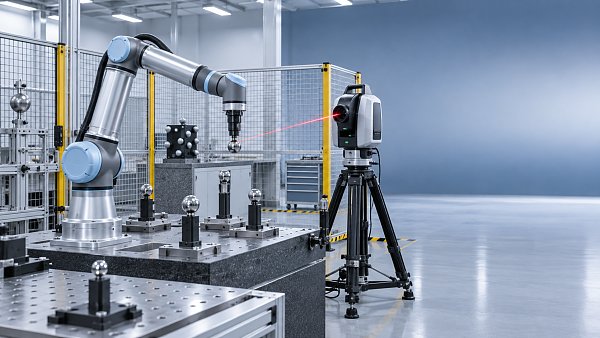
- Measure actual endpoint deviation with a laser tracker, dial indicator, or vision metrology system.
- Calculate spread in X, Y, Z, and if needed, tool orientation.
For robot motion testing, the useful question is not only average error. The wider concern is the full variation band across all repetitions.
If repeatability changes between speeds, test multiple profiles. Some robots stay tight at moderate speed, then open up when acceleration rises.
Also compare empty-tool and full-payload conditions. A system that looks stable without payload may fail once the end effector carries real mass.
How to Verify Path Accuracy Without Guesswork
Path accuracy is where robot motion testing becomes more revealing. Many robots can hit a point. Fewer can maintain a clean path between points under production speed.
Choose a path shape that matches the application. Straight lines work for dispensing. Curves and corners work better for welding or trimming validation.
- Track the tool center point continuously.
- Compare the measured path against the programmed path.
- Measure maximum deviation, average deviation, and corner overshoot.
- Review velocity consistency along the path.
A path can fail in several ways. It may cut corners. It may oscillate after direction change. It may slow unpredictably near singularities or joint limits.
This is why robot motion testing should include the worst-case path segments, not just nominal motion. The difficult segment usually exposes control tuning limits first.
How to Check Cycle Stability Over Time
Cycle stability is often underestimated because it takes longer to test. Yet in production, it is usually the metric that affects output planning the most.
A sensible robot motion testing routine runs the same sequence for hundreds or thousands of cycles, depending on the process risk.
- Record cycle time for every run.
- Monitor motor temperature and controller alarms.
- Check endpoint drift at fixed intervals.
- Note recovery behavior after pauses or restarts.
More revealing signals appear after the first hour. Heat buildup, lubrication changes, and cable drag can slowly alter timing and final position.
For robot motion testing, a stable average cycle is not enough. The spread and trend line matter just as much.
Recommended Tools and What They Actually Show
Different tools answer different questions. Choosing the wrong metrology method can make robot motion testing look cleaner than it really is.
In most facilities, a layered approach works best. Use simple tools for frequent checks and high-end measurement for baseline robot motion testing and root-cause analysis.
Common Failure Patterns Found in Robot Motion Testing
The numbers only help if they lead to diagnosis. In actual robot motion testing, a few patterns appear again and again.
- Growing endpoint spread often points to backlash, loose mounting, or payload mismatch.
- Corner overshoot can suggest aggressive tuning or excessive speed through direction changes.
- Path waviness may indicate vibration, cable interference, or compliance in the tooling stack.
- Cycle drift over time may relate to thermal effects, lubrication condition, or controller throttling.
More importantly, these symptoms should be trended. One failed run is an event. Repeated failure under the same condition is an engineering signal.
A Practical Acceptance Standard for Daily Use
A practical robot motion testing standard should be clear enough for day-to-day use, yet strict enough to catch real degradation.
Keep the acceptance sheet simple:
- Define target positions and path segments tied to the real process.
- Set repeatability limits by application tolerance, not brochure claims.
- Set path deviation limits for straight runs, curves, and corners.
- Set cycle stability limits with acceptable variance bands.
- Document test conditions so later comparisons stay valid.
That approach keeps robot motion testing grounded in production reality. It also supports supplier reviews, maintenance planning, and process change approval.
Final Takeaway
Robot motion testing should do one thing well. It should replace assumptions with evidence.
When repeatability, path accuracy, and cycle stability are verified together, motion quality becomes measurable, actionable, and easier to improve.
That is the real value of robot motion testing. It cuts through generic claims and shows whether a robot can hold engineering truth under actual operating conditions.
Start with the critical path, measure the hard points, track the drift, and let the data set the standard.
Search News
Hot Articles
- Carbon Fiber StructuresHow to Specify Aerospace Carbon Fiber Assemblies for Lightweight, Load-Bearing PartsJul 11, 2026
- Machine VisionXiaomi, Alibaba DAMO Academy Drive Open-Source Robotics Model Ecosystem, Lowering Algorithm Development Barriers for Overseas SMEs Adopting Chinese Robotics SolutionsMar 30, 2026
- Cobots & ArmsShanxi 'AI+' Conference Showcases Embodied Intelligence with Multinational Buyer Engagement: Key Industry ImplicationsMar 30, 2026
Popular Tags
Recommended News
 Jul 11, 2026How to Specify Aerospace Carbon Fiber Assemblies for Lightweight, Load-Bearing PartsAerospace carbon fiber assemblies: learn how to specify laminate design, load data, joining methods, and inspection controls for lighter, reliable load-bearing aerospace parts.Elena Rostova (UAV Systems Researcher)
 Mar 30, 2026Xiaomi, Alibaba DAMO Academy Drive Open-Source Robotics Model Ecosystem, Lowering Algorithm Development Barriers for Overseas SMEs Adopting Chinese Robotics SolutionsXiaomi & Alibaba DAMO Academy's open-source robotics models lower algorithm barriers for global SMEs. Boost efficiency in manufacturing, logistics & smart retail with ROS 2 compatible solutions.TSV Data Lab
 Mar 30, 2026Shanxi 'AI+' Conference Showcases Embodied Intelligence with Multinational Buyer Engagement: Key Industry ImplicationsShanxi 'AI+' Conference highlights embodied intelligence with Tesla, Ubtech & Jiantao showcasing multimodal robotics. 40+ global buyers validated tech on-site, creating new B2B channels for industrial automation & AI solutions.Chen Wei (Automation Lead Engineer)
 Mar 30, 2026Zhongguancun Unveils 6G Integrated Sensing-Computing-Intelligence Platform to Empower Embodied Robots for Global Industrial ApplicationsZhongguancun's new 6G platform revolutionizes industrial robotics with <10ms latency, empowering global automotive, logistics & port automation. Discover how this tech boosts China's smart manufacturing exports.TSV Data Lab
 Mar 30, 2026Mech-Mind Tianjin Embodied Intelligence R&D and Production Base Goes Live, Cutting Delivery Time by 20%–30% for Global Customized AMR+Vision SolutionsMech-Mind's Tianjin AMR+Vision production base cuts delivery time by 20%-30% for欧美 & Latin American markets. Discover how this PLd-certified facility accelerates customized robotics solutions for smart manufacturing and logistics.Chen Wei (Automation Lead Engineer)
 Mar 30, 2026Boao Forum Reveals 'Co-evolution of Big and Small Brains' Trend in Humanoid Robots, China's Embodied Intelligence Accelerates Adaptation to Overseas Manufacturing Service ScenariosDiscover how China's humanoid robots, featuring 'Co-evolution of Big and Small Brains,' are revolutionizing global manufacturing. Learn about Embodied Tian Gong 3.0's ISO compliance and overseas deployment at Boao Forum 2026.Chen Wei (Automation Lead Engineer)
 Mar 30, 2026China Railway Industrial Secures Patent for Embodied Robotics in Material Handling, Boosting High-Precision Delivery Capabilities for Overseas Infrastructure and Manufacturing ProjectsChina Railway Industrial's new patent for embodied robotics in material handling boosts high-precision delivery for global infrastructure & manufacturing. Discover how this innovation enhances logistics accuracy in automotive, rail transit & EPC projects.Chen Wei (Automation Lead Engineer)
 Oct 08, 2026How to Machine Inconel 625 Blades Without Heat Cracks or Edge ChippingInconel 625 blade machining guide: prevent heat cracks, edge chipping, chatter, and work hardening with proven tooling, cooling, fixturing, and inspection strategies.Dr. Marcus Vance
 Oct 07, 2026How to Evaluate an HMI Panel Distributor for Industrial Automation ProjectsHMI panel distributor evaluation guide: verify technical compatibility, traceability, supply reliability, lifecycle support, and total cost for automation projects.Victor Lin (Chief Software Architect)
 Oct 06, 2026Navigation Fault Tolerance Standards for AMRs: What Safety Teams Must VerifyNavigation fault tolerance standards: learn what AMR safety teams must verify, from localization loss and sensor faults to stopping distance, safe restart, and site-specific validation.Chen Wei (Automation Lead Engineer)
 Oct 05, 2026Calculating Edge Computing Total Cost of Ownership Across Distributed SitesEdge computing ownership cost explained: calculate deployment, energy, connectivity, security, remote support, and refresh costs across distributed sites.TSV Data Lab
 Oct 04, 2026CAD/CAM Benchmarking in the GCC: What Manufacturers Should Ask a ConsultantCAD CAM benchmark consultant GCC guide: learn the key questions manufacturers should ask to validate post-processors, workflows, machine performance, and production risk.Victor Lin (Chief Software Architect)
 Oct 03, 2026Selecting Automotive Radar Sensor Modules for ADAS Range, Resolution, and IntegrationAutomotive radar sensor module selection guide for ADAS: compare range, resolution, field of view, latency, and integration to build safer, reliable vehicle systems.TSV Data Lab
 Oct 02, 2026How to Qualify Machined Parts Suppliers for Hard Tech ProgramsHard tech supply chain machined parts demand rigorous supplier qualification. Learn how to assess capability, traceability, quality controls, and delivery resilience.Dr. Marcus Vance
 Oct 01, 2026How to Select an Outdoor Security Radar Sensor for Perimeter Detection?Outdoor security radar sensor selection guide: compare range, accuracy, false-alarm control, integration, and field testing for reliable perimeter detection.TSV Data Lab
 Sep 30, 2026How to Evaluate Solid-State LiDAR Hardware for Outdoor Autonomous VehiclesSolid state LiDAR hardware evaluation guide for outdoor autonomous vehicles—compare range, point-cloud quality, environmental resilience, integration, and safety.TSV Data Lab
 Sep 29, 2026ISO 9283 Repeatability: How to Evaluate Cobot Positioning PerformanceISO 9283 cobot repeatability explained: learn how payload, reach, approach direction, and test conditions affect positioning performance and cell capability.Chen Wei (Automation Lead Engineer)
 Oct 09, 2026What does a manufacturing robot really cost beyond the purchase price?Manufacturing robot cost goes far beyond the purchase price. Explore integration, tooling, safety, uptime, and total ownership factors for smarter automation investments.Chen Wei (Automation Lead Engineer)
 Oct 08, 2026AGV vs. AMR: Which Is Better for Frequently Changing Routes?Which is better for changing routes? Compare AGVs and AMRs for flexible navigation, docking precision, traffic control, and faster facility reconfiguration.Chen Wei (Automation Lead Engineer)
 Oct 07, 2026How Much Does an Automated Guided Vehicle Cost in 2026?How much does an automated guided vehicle cost in 2026? Explore AGV price ranges, hidden deployment costs, and smart buying factors for stronger ROI.Chen Wei (Automation Lead Engineer)
 Oct 06, 2026Are Collaborative Robots Safe Enough to Operate Without Fencing?Are collaborative robots safe enough to work without fencing? Explore risk assessment, safeguarding options, and practical guidance for safer, productive cobot cells.Chen Wei (Automation Lead Engineer)
 Oct 05, 2026What Causes Machine Vision Systems to Miss Small Defects?What causes machine vision systems to miss small defects? Discover how lighting, optics, motion, and AI thresholds affect detection—and prevent costly escapes.TSV Data Lab
 Oct 04, 2026How Should You Compare 5-Axis CNC Machine Accuracy Claims?How do I compare 5-axis CNC machine accuracy claims? Learn how to assess standards, thermal stability, TCP accuracy, and real-world test evidence.Dr. Marcus Vance
 Oct 03, 2026Is Edge Computing Necessary for Real-Time Quality Inspection?Is industrial edge computing necessary for real-time quality inspection? Explore how latency, data volume, reliability, and control integration shape the right architecture.TSV Data Lab