AGV vs. AMR: Which Is Better for Frequently Changing Routes?
Publication Date
author
For frequently changing routes, an AMR is usually the stronger fit because it can reroute through a mapped environment without requiring physical guide-path changes. That advantage is real, but it is not automatic. A vehicle that navigates freely can still perform poorly when maps are poorly maintained, traffic rules are vague, wireless coverage is unstable, or pickup and drop-off locations lack repeatable geometry.
An AGV remains a better choice when the route changes are limited to known variants inside a controlled process. Fixed or semi-fixed guidance can produce highly repeatable travel behavior, predictable stopping positions, and simpler validation around conveyors, lifts, work cells, or other tightly engineered interfaces. The practical question is therefore not whether autonomy is more advanced. It is whether the facility's rate and type of change justify the operational overhead of flexible navigation.
Route Change Means Different Things
“Frequently changing routes” can describe several very different conditions. A warehouse may move staging lanes every week. A factory may alter travel priorities every shift while the physical aisles stay unchanged. A production line may introduce a temporary detour during maintenance. Another site may rebuild racks, safety barriers, workstations, and charging locations every few months.
These situations should not be treated as equivalent. Changing a dispatch rule is much easier than changing a physical travel corridor. An AGV fleet can often accept new task sequences, station assignments, or time windows without changing its guidance infrastructure. The difficulty starts when a route itself must move, split, cross a new pedestrian area, or bypass a newly installed machine.
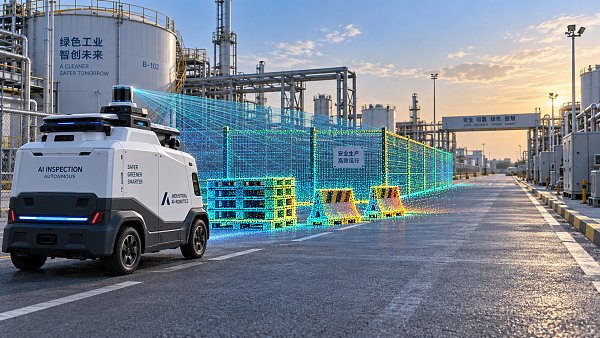
AMRs are designed to absorb many of those changes through digital maps, localization, obstacle sensing, and fleet-level route planning. Yet they still need stable reference features and clearly defined operating zones. A highly reflective floor, repeated visual patterns, pallet overhangs, temporary curtains, or large moving equipment can affect localization and perception in ways that are not visible on a layout drawing.
How the Navigation Architectures Differ
The table can make the distinction appear absolute, but AGV and AMR are broad categories. Some AGVs use laser-based navigation and can be reconfigured without embedded wire or tape. Some AMRs use tightly constrained virtual lanes near critical equipment. The useful comparison is not the label on the vehicle; it is the extent to which navigation relies on a fixed path, how it recovers from deviation, and how much validation is required after a layout change.
Measure Reconfiguration Time From Request to Release
A route change should be measured as a controlled engineering task, not as the time required to draw a new line in fleet software. The relevant clock begins when a new route, station, or obstacle is requested and ends only when the altered operation is released for normal use.
For a guided AGV system, that work may include relocating tape or reflectors, adjusting path intersections, changing route tables, confirming sensor trigger positions, and proving that stopping distances remain valid. A short detour can become disruptive when it crosses a door threshold, conveyor transfer, fire separation, or shared pedestrian zone. Physical changes also create an installation issue: damaged tape, floor contamination, uneven joints, and vehicle wheel wear can reduce the consistency of a guide path over time.
For an AMR, the work generally shifts toward map capture or editing, geofencing, speed-zone configuration, virtual traffic rules, destination validation, and route simulation or supervised trials. A map update is fast only when the environment still resembles the map closely enough for dependable localization. If a facility has changed its rack geometry, covered reflective surfaces, added partition walls, or introduced long visually uniform corridors, the map may require a structured resurvey rather than a minor edit.
Track the full change record: requested route, physical layout status, software configuration, test missions, exceptions observed, and release conditions. This exposes a common mistake: comparing an AGV's physical modification time with an AMR's map-editing time while ignoring testing and operational approval on both sides.
Obstacle Handling Is Not the Same as Route Adaptability
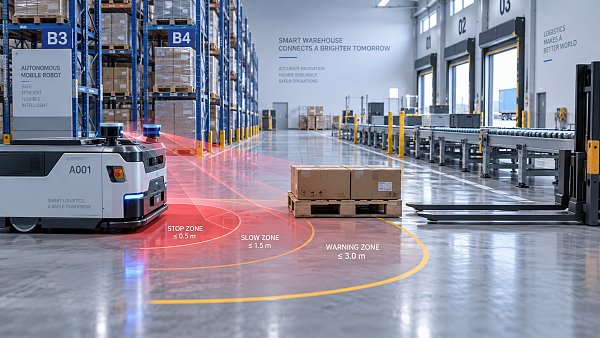
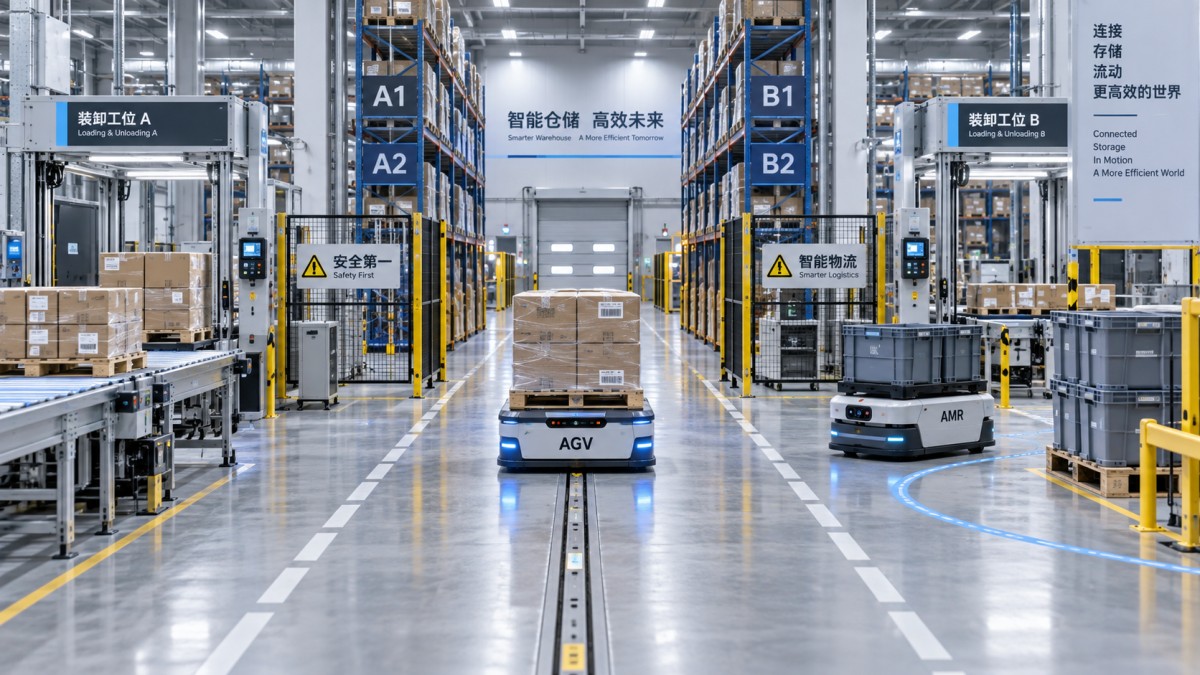
An AMR's ability to detect an obstacle does not mean that it will always find a useful alternate route. A blocked aisle may leave insufficient width for a loaded vehicle to turn. A detour may conflict with one-way traffic rules, crossing limits, or reserved zones near automated equipment. A vehicle may also stop because its safety field is triggered repeatedly, even though the fleet manager has identified another theoretical path.
AGVs have a more explicit behavior in many installations: stop at an obstruction and resume when the path clears. This can be appropriate where the interruption is rare and a predictable stop is safer than a spontaneous reroute. The limitation becomes expensive when temporary obstructions are routine, such as replenishment pallets placed near travel lanes, rolling carts at workstations, or temporary maintenance barriers.
Evaluate obstruction behavior using the actual load envelope, not the unloaded chassis dimensions. Forks, carts, pallet overhang, tow trains, and elevated loads alter turning clearance and sensor visibility. The vehicle must also retain adequate braking distance on the real floor surface. Dust, moisture, wheel compound, floor sealant, and gradient transitions influence deceleration more than route-planning demonstrations often reveal.
Docking Precision Can Reverse the Apparent Advantage
Route flexibility has limited value when each delivery ends at a mechanically unforgiving handoff. A conveyor transfer, robotic cell, lift, automated storage interface, or battery exchange point may require a narrow positional and angular tolerance. An AGV following a deterministic approach path can be easier to validate at such stations because its final motion is constrained by the route design.
An AMR can achieve reliable docking, but the docking method needs to match the interface. Broad-tolerance carts may only require a repeatable stop area. Precise load transfer may need fiducial markers, laser reflectors, mechanical guides, contact sensing, or a final low-speed alignment routine. Treat this as part of the station design, not a problem to solve later in vehicle software.
Route changes that relocate destinations should trigger a docking review. Moving a drop point a few meters can change approach angle, line of sight to reference targets, turning radius, floor flatness, wireless signal quality, and clearance for people or material. A map may accept the new point while the physical handoff remains unreliable.
Traffic Management Matters Once Routes Become Fluid
Flexible routing introduces a traffic-control problem. When several AMRs share open space, each vehicle needs a consistent understanding of prohibited areas, priorities, intersections, charging access, and recovery behavior. Without explicit rules, local avoidance can create repeated delays, face-to-face waiting, looping paths, or congestion near high-demand stations.
A useful design separates three layers:
- Permanent constraints: walls, rack rows, guarded machinery, emergency exits, and zones that must never be entered.
- Operational constraints: speed reductions near work areas, one-way aisles, crossing rules, staging limits, and vehicle-specific access restrictions.
- Temporary constraints: maintenance work, spill response, construction partitions, blocked docks, or short-term storage overflow.
AMR systems gain much of their value from being able to alter the second and third layers without rebuilding the first. However, temporary restrictions should have clear ownership and expiry. An old virtual exclusion zone left in the map can quietly remove capacity from an area long after the physical obstruction has gone.
For AGVs, traffic control is usually more deterministic because the available paths are fewer. That simplicity reduces route flexibility but can make throughput behavior easier to model where movement patterns are repetitive. The tradeoff becomes favorable when routes are stable and material flow must synchronize closely with fixed equipment cycles.
Use Change Frequency and Change Radius Together
A facility does not need an AMR simply because something changes often. The scale of each change matters. Reassigning an existing destination, revising task priority, or switching between established loops often falls within a well-configured AGV system. Moving travel lanes, adding new stations, converting aisles, or supporting seasonal layouts creates a stronger case for AMR navigation.
Consider the change radius: does the adjustment affect one endpoint, one aisle, an entire zone, or the whole material-flow logic? Then consider persistence: is the new route a two-day workaround or a permanent change? Short-lived changes are especially revealing. Installing and later removing physical guidance for a temporary condition can consume more effort than the condition itself. Conversely, repeatedly editing a map for poorly controlled temporary clutter may hide an underlying layout-discipline problem that neither vehicle type will solve.
A Practical Selection Method
Start with a route-change log rather than a technology preference. Review recent layout revisions, blocked-path events, station relocations, process changes, and detours. Separate planned changes from unplanned obstructions. A system designed around scheduled layout revisions faces a different problem from one working around unpredictable congestion.
- Map the current material moves, including load dimensions, pickup and drop tolerances, travel direction, and interfaces with doors, lifts, conveyors, or machinery.
- Identify which routes must remain fixed for safety, precision, or process synchronization, even if the rest of the facility changes.
- Define the maximum acceptable disruption for changing a corridor, destination, or traffic rule. Include physical work, software edits, testing, and return to production.
- Run representative missions under normal load and with realistic obstructions. Observe recovery behavior rather than only successful travel time.
- Test the altered route at the station interface. A successful navigation run is incomplete if docking, load transfer, or clearance fails.
The resulting decision is often mixed rather than absolute. Fixed, high-precision transfers can justify AGVs on constrained lanes, while AMRs handle variable replenishment, point-to-point delivery, or evolving staging areas. Where one fleet type is preferred, the decision should still be anchored in measurable route-change effort, recovery behavior, docking repeatability, and the quality of the operating environment.
For routes that genuinely move often and must remain productive during those changes, AMRs generally offer the better architecture. For stable paths where repeatability at fixed interfaces outweighs the need for free rerouting, AGVs retain a clear engineering advantage.
Search News
Hot Articles
- Carbon Fiber StructuresHow to Specify Aerospace Carbon Fiber Assemblies for Lightweight, Load-Bearing PartsJul 11, 2026
- Machine VisionXiaomi, Alibaba DAMO Academy Drive Open-Source Robotics Model Ecosystem, Lowering Algorithm Development Barriers for Overseas SMEs Adopting Chinese Robotics SolutionsMar 30, 2026
- Cobots & ArmsShanxi 'AI+' Conference Showcases Embodied Intelligence with Multinational Buyer Engagement: Key Industry ImplicationsMar 30, 2026
Popular Tags
Recommended News
 Jul 11, 2026How to Specify Aerospace Carbon Fiber Assemblies for Lightweight, Load-Bearing PartsAerospace carbon fiber assemblies: learn how to specify laminate design, load data, joining methods, and inspection controls for lighter, reliable load-bearing aerospace parts.Elena Rostova (UAV Systems Researcher)
 Mar 30, 2026Xiaomi, Alibaba DAMO Academy Drive Open-Source Robotics Model Ecosystem, Lowering Algorithm Development Barriers for Overseas SMEs Adopting Chinese Robotics SolutionsXiaomi & Alibaba DAMO Academy's open-source robotics models lower algorithm barriers for global SMEs. Boost efficiency in manufacturing, logistics & smart retail with ROS 2 compatible solutions.TSV Data Lab
 Mar 30, 2026Shanxi 'AI+' Conference Showcases Embodied Intelligence with Multinational Buyer Engagement: Key Industry ImplicationsShanxi 'AI+' Conference highlights embodied intelligence with Tesla, Ubtech & Jiantao showcasing multimodal robotics. 40+ global buyers validated tech on-site, creating new B2B channels for industrial automation & AI solutions.Chen Wei (Automation Lead Engineer)
 Mar 30, 2026Zhongguancun Unveils 6G Integrated Sensing-Computing-Intelligence Platform to Empower Embodied Robots for Global Industrial ApplicationsZhongguancun's new 6G platform revolutionizes industrial robotics with <10ms latency, empowering global automotive, logistics & port automation. Discover how this tech boosts China's smart manufacturing exports.TSV Data Lab
 Mar 30, 2026Mech-Mind Tianjin Embodied Intelligence R&D and Production Base Goes Live, Cutting Delivery Time by 20%–30% for Global Customized AMR+Vision SolutionsMech-Mind's Tianjin AMR+Vision production base cuts delivery time by 20%-30% for欧美 & Latin American markets. Discover how this PLd-certified facility accelerates customized robotics solutions for smart manufacturing and logistics.Chen Wei (Automation Lead Engineer)
 Mar 30, 2026Boao Forum Reveals 'Co-evolution of Big and Small Brains' Trend in Humanoid Robots, China's Embodied Intelligence Accelerates Adaptation to Overseas Manufacturing Service ScenariosDiscover how China's humanoid robots, featuring 'Co-evolution of Big and Small Brains,' are revolutionizing global manufacturing. Learn about Embodied Tian Gong 3.0's ISO compliance and overseas deployment at Boao Forum 2026.Chen Wei (Automation Lead Engineer)
 Mar 30, 2026China Railway Industrial Secures Patent for Embodied Robotics in Material Handling, Boosting High-Precision Delivery Capabilities for Overseas Infrastructure and Manufacturing ProjectsChina Railway Industrial's new patent for embodied robotics in material handling boosts high-precision delivery for global infrastructure & manufacturing. Discover how this innovation enhances logistics accuracy in automotive, rail transit & EPC projects.Chen Wei (Automation Lead Engineer)
 Oct 08, 2026How to Machine Inconel 625 Blades Without Heat Cracks or Edge ChippingInconel 625 blade machining guide: prevent heat cracks, edge chipping, chatter, and work hardening with proven tooling, cooling, fixturing, and inspection strategies.Dr. Marcus Vance
 Oct 07, 2026How to Evaluate an HMI Panel Distributor for Industrial Automation ProjectsHMI panel distributor evaluation guide: verify technical compatibility, traceability, supply reliability, lifecycle support, and total cost for automation projects.Victor Lin (Chief Software Architect)
 Oct 06, 2026Navigation Fault Tolerance Standards for AMRs: What Safety Teams Must VerifyNavigation fault tolerance standards: learn what AMR safety teams must verify, from localization loss and sensor faults to stopping distance, safe restart, and site-specific validation.Chen Wei (Automation Lead Engineer)
 Oct 05, 2026Calculating Edge Computing Total Cost of Ownership Across Distributed SitesEdge computing ownership cost explained: calculate deployment, energy, connectivity, security, remote support, and refresh costs across distributed sites.TSV Data Lab
 Oct 04, 2026CAD/CAM Benchmarking in the GCC: What Manufacturers Should Ask a ConsultantCAD CAM benchmark consultant GCC guide: learn the key questions manufacturers should ask to validate post-processors, workflows, machine performance, and production risk.Victor Lin (Chief Software Architect)
 Oct 03, 2026Selecting Automotive Radar Sensor Modules for ADAS Range, Resolution, and IntegrationAutomotive radar sensor module selection guide for ADAS: compare range, resolution, field of view, latency, and integration to build safer, reliable vehicle systems.TSV Data Lab
 Oct 02, 2026How to Qualify Machined Parts Suppliers for Hard Tech ProgramsHard tech supply chain machined parts demand rigorous supplier qualification. Learn how to assess capability, traceability, quality controls, and delivery resilience.Dr. Marcus Vance
 Oct 01, 2026How to Select an Outdoor Security Radar Sensor for Perimeter Detection?Outdoor security radar sensor selection guide: compare range, accuracy, false-alarm control, integration, and field testing for reliable perimeter detection.TSV Data Lab
 Sep 30, 2026How to Evaluate Solid-State LiDAR Hardware for Outdoor Autonomous VehiclesSolid state LiDAR hardware evaluation guide for outdoor autonomous vehicles—compare range, point-cloud quality, environmental resilience, integration, and safety.TSV Data Lab
 Sep 29, 2026ISO 9283 Repeatability: How to Evaluate Cobot Positioning PerformanceISO 9283 cobot repeatability explained: learn how payload, reach, approach direction, and test conditions affect positioning performance and cell capability.Chen Wei (Automation Lead Engineer)
 Oct 07, 2026How Much Does an Automated Guided Vehicle Cost in 2026?How much does an automated guided vehicle cost in 2026? Explore AGV price ranges, hidden deployment costs, and smart buying factors for stronger ROI.Chen Wei (Automation Lead Engineer)
 Oct 06, 2026Are Collaborative Robots Safe Enough to Operate Without Fencing?Are collaborative robots safe enough to work without fencing? Explore risk assessment, safeguarding options, and practical guidance for safer, productive cobot cells.Chen Wei (Automation Lead Engineer)
 Oct 05, 2026What Causes Machine Vision Systems to Miss Small Defects?What causes machine vision systems to miss small defects? Discover how lighting, optics, motion, and AI thresholds affect detection—and prevent costly escapes.TSV Data Lab
 Oct 04, 2026How Should You Compare 5-Axis CNC Machine Accuracy Claims?How do I compare 5-axis CNC machine accuracy claims? Learn how to assess standards, thermal stability, TCP accuracy, and real-world test evidence.Dr. Marcus Vance
 Oct 03, 2026Is Edge Computing Necessary for Real-Time Quality Inspection?Is industrial edge computing necessary for real-time quality inspection? Explore how latency, data volume, reliability, and control integration shape the right architecture.TSV Data Lab
 Oct 02, 2026What Documents Prove a Precision Machining Supplier Can Hold Tolerance?What documents prove a precision machining supplier can hold tolerance? Explore certificates, FAI reports, calibration, SPC, and traceability evidence to qualify suppliers with confidence.Dr. Marcus Vance
 Oct 01, 2026Can a Machining Supplier Meet Aerospace Fatigue Testing Requirements?Can a machining supplier meet aerospace fatigue testing requirements? Learn the traceability, process control, and test evidence needed for reliable aerospace parts.Dr. Marcus Vance