Technical Due Diligence Template for Industrial Projects: What Buyers Should Review First
Publication Date
author
Why does a technical due diligence template matter before any industrial deal discussion?
A strong technical due diligence template is less about paperwork and more about decision quality.
In industrial projects, valuation can look attractive while the engineering base is weak.
That gap creates expensive surprises after signing.
The first review should not start with sales decks, pipeline forecasts, or broad productivity claims.
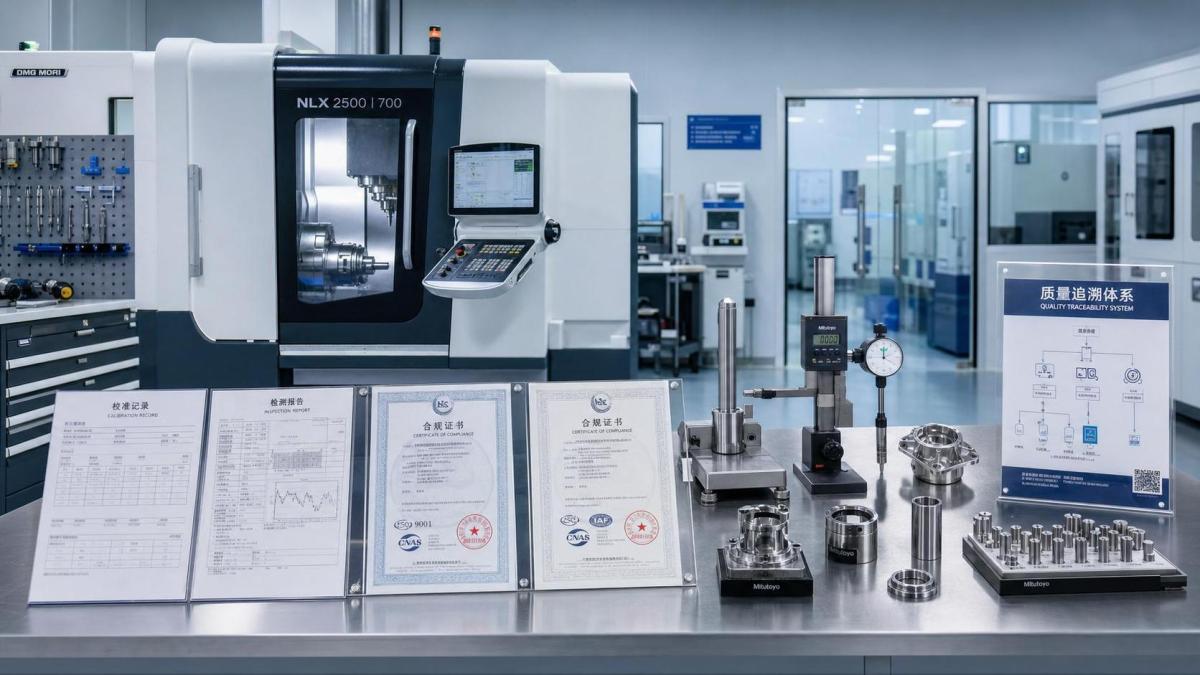
It should start where performance is proven: tolerances, uptime records, maintenance history, scrap rates, traceability, and compliance evidence.
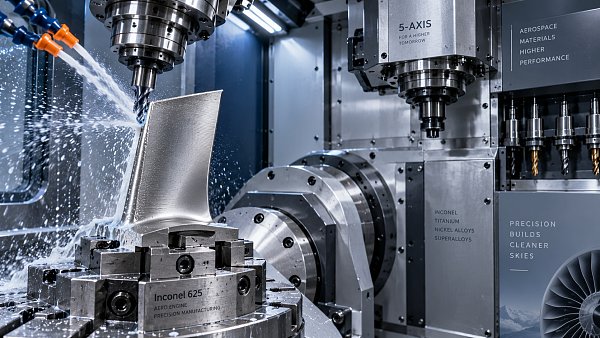
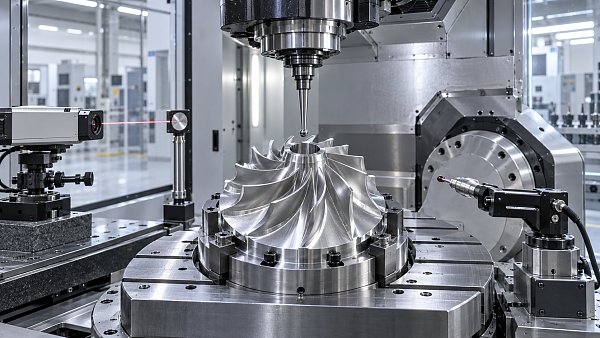
This is especially true across robotics, aerospace components, industrial sensors, edge AI hardware, and precision machining.
These sectors are crowded with technical language, but not all technical language is useful.
A practical technical due diligence template helps separate validated engineering facts from polished positioning.
That approach aligns with the TSV view of the market.
Engineering truth comes from data, not adjectives.
When buyers review industrial targets or suppliers, the earliest questions should focus on what can be measured, repeated, and audited.
What should buyers review first in a technical due diligence template?
The first layer should test whether the operation can reliably produce what it claims.
A technical due diligence template usually works best when it starts with five engineering checkpoints.
- Process capability: Cp, Cpk, yield stability, and variation under normal production load.
- Equipment condition: age, calibration status, unplanned downtime, spare parts exposure, and maintenance discipline.
- Quality systems: CAPA closure quality, nonconformance handling, audit history, and operator control plans.
- Data traceability: lot genealogy, revision control, test records, and digital access to historical production data.
- Compliance exposure: certifications, customer-specific requirements, export controls, and environmental obligations.
In real transactions, these items reveal risk faster than broad statements about innovation.
For example, a machine shop may advertise aerospace readiness.
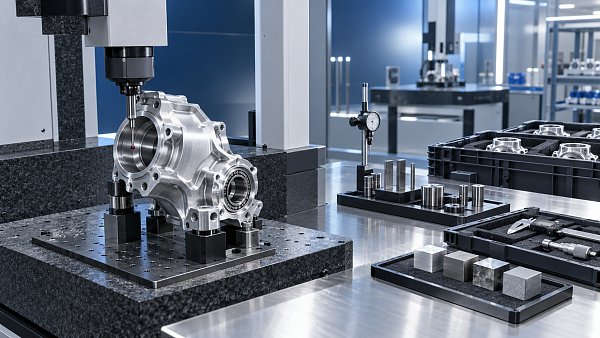
The technical due diligence template should then ask for AS9100 scope, first article records, special process controls, and tolerance drift history.
A sensor supplier may highlight AI integration.
The better question is whether latency, interference resistance, and field failure data support the claim.
What matters first is not how advanced a system sounds.
It is whether the system performs predictably under commercial conditions.
A quick review table can keep the first pass disciplined
The table below helps turn a technical due diligence template into an actionable screening tool.
How do you tell whether technical claims are real or just polished supplier language?
This is where many reviews lose discipline.
A technical due diligence template should force every major claim into evidence-based checks.
If a supplier says repeatability is excellent, ask for measured repeatability across multiple shifts.
If fatigue life is a selling point, ask for test setup, sample size, failure mode, and acceptance criteria.
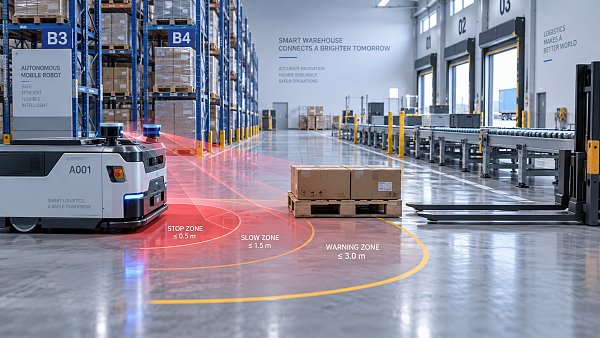
If an AGV platform claims high navigation tolerance, request error rates in cluttered environments, not demo videos.
The same logic applies to LiDAR, machine vision, flight controllers, CNC fixtures, and industrial gateways.
The better technical due diligence template does not ask whether a product is advanced.
It asks whether the claimed parameter was measured, under what conditions, and how often results were reproduced.
TSV’s broader market philosophy is useful here.
In noisy hard-tech markets, trust belongs to benchmark data, tolerance discipline, and traceable test methods.
A review team should treat unsupported superlatives as missing data, not as soft positives.
Where do cost and timeline risks usually hide during technical due diligence?
They usually hide in engineering details that look operational rather than financial.
A technical due diligence template should connect technical findings directly to cost and schedule exposure.
One common issue is process instability.
A line can meet target output in a controlled visit, yet fail in routine production.
That drives scrap, rework, inspection load, and delayed shipment.
Another issue is deferred maintenance.
Older assets may still run, but controller obsolescence, spindle wear, or unavailable spare parts can create hidden capital needs.
Software and firmware dependencies also deserve attention.
In edge AI and sensor-heavy systems, updates can break compatibility with existing interfaces or customer validation files.
More subtle risks appear in quality documentation.
A weak CAPA system often means recurring defects will continue after closing.
That is not an administrative issue.
It is a future cost issue with direct margin impact.
The most useful technical due diligence template ties each technical gap to one of three outcomes: extra capital, slower ramp, or higher compliance burden.
A short checklist for hidden cost exposure
- Check whether quoted cycle times come from pilot runs or sustained production.
- Review how much output depends on one engineer, one programmer, or one machine.
- Confirm if test equipment is certified and available at the intended scale.
- Ask whether customer returns are coded by root cause or buried in general quality costs.
- Look for process steps outsourced without equivalent traceability or audit visibility.
Is one technical due diligence template enough for every industrial project?
Not really.
The base structure can stay consistent, but the evidence threshold should change by sector and failure consequence.
A technical due diligence template for general fabrication may focus on machine utilization, drawing control, and supplier concentration.
For aerospace parts, the same template must go deeper into material pedigree, special process validation, and fracture-critical records.
For robotics and automation, software version control and field service response can matter as much as mechanical design.
For sensors and edge AI, electromagnetic robustness, throughput limits, and data integrity become central.
This is where benchmark-driven thinking helps.
A technical due diligence template should include a shared core, then add sector-specific modules.
That keeps reviews comparable without flattening real technical differences.
In practice, the best template is not the longest one.
It is the one that asks for the fewest documents needed to confirm the most important engineering truths.
What does a useful next step look like after the initial review?
Once the first pass is complete, the technical due diligence template should support prioritization, not just documentation.
Some gaps deserve immediate escalation.
Others can be priced into the deal or managed through integration planning.
A practical next step is to rank findings by operational severity and evidence strength.
For example, missing calibration data on critical metrology is very different from delayed formatting updates in work instructions.
One threatens product acceptance.
The other is mainly administrative.
At this stage, it helps to build a decision sheet around four questions.
- Which findings can change valuation or total acquisition cost?
- Which findings can delay qualification, transfer, or production ramp?
- Which findings require specialist testing before final commitment?
- Which findings suggest the original technical due diligence template needs a deeper second round?
That is the point of the process.
A technical due diligence template should not end as an archive of questions answered.
It should become a sharper basis for pricing, timing, transition planning, and supplier confidence.
In industrial markets shaped by information noise, disciplined technical review remains one of the clearest ways to protect value.
Start by defining the non-negotiable engineering parameters, gather verifiable records, compare sector benchmarks, and challenge every unsupported claim.
That is usually where better decisions begin.
Search News
Hot Articles
- Carbon Fiber StructuresHow to Specify Aerospace Carbon Fiber Assemblies for Lightweight, Load-Bearing PartsJul 11, 2026
- Machine VisionXiaomi, Alibaba DAMO Academy Drive Open-Source Robotics Model Ecosystem, Lowering Algorithm Development Barriers for Overseas SMEs Adopting Chinese Robotics SolutionsMar 30, 2026
- Cobots & ArmsShanxi 'AI+' Conference Showcases Embodied Intelligence with Multinational Buyer Engagement: Key Industry ImplicationsMar 30, 2026
Popular Tags
Recommended News
 Jul 11, 2026How to Specify Aerospace Carbon Fiber Assemblies for Lightweight, Load-Bearing PartsAerospace carbon fiber assemblies: learn how to specify laminate design, load data, joining methods, and inspection controls for lighter, reliable load-bearing aerospace parts.Elena Rostova (UAV Systems Researcher)
 Mar 30, 2026Xiaomi, Alibaba DAMO Academy Drive Open-Source Robotics Model Ecosystem, Lowering Algorithm Development Barriers for Overseas SMEs Adopting Chinese Robotics SolutionsXiaomi & Alibaba DAMO Academy's open-source robotics models lower algorithm barriers for global SMEs. Boost efficiency in manufacturing, logistics & smart retail with ROS 2 compatible solutions.TSV Data Lab
 Mar 30, 2026Shanxi 'AI+' Conference Showcases Embodied Intelligence with Multinational Buyer Engagement: Key Industry ImplicationsShanxi 'AI+' Conference highlights embodied intelligence with Tesla, Ubtech & Jiantao showcasing multimodal robotics. 40+ global buyers validated tech on-site, creating new B2B channels for industrial automation & AI solutions.Chen Wei (Automation Lead Engineer)
 Mar 30, 2026Zhongguancun Unveils 6G Integrated Sensing-Computing-Intelligence Platform to Empower Embodied Robots for Global Industrial ApplicationsZhongguancun's new 6G platform revolutionizes industrial robotics with <10ms latency, empowering global automotive, logistics & port automation. Discover how this tech boosts China's smart manufacturing exports.TSV Data Lab
 Mar 30, 2026Mech-Mind Tianjin Embodied Intelligence R&D and Production Base Goes Live, Cutting Delivery Time by 20%–30% for Global Customized AMR+Vision SolutionsMech-Mind's Tianjin AMR+Vision production base cuts delivery time by 20%-30% for欧美 & Latin American markets. Discover how this PLd-certified facility accelerates customized robotics solutions for smart manufacturing and logistics.Chen Wei (Automation Lead Engineer)
 Mar 30, 2026Boao Forum Reveals 'Co-evolution of Big and Small Brains' Trend in Humanoid Robots, China's Embodied Intelligence Accelerates Adaptation to Overseas Manufacturing Service ScenariosDiscover how China's humanoid robots, featuring 'Co-evolution of Big and Small Brains,' are revolutionizing global manufacturing. Learn about Embodied Tian Gong 3.0's ISO compliance and overseas deployment at Boao Forum 2026.Chen Wei (Automation Lead Engineer)
 Mar 30, 2026China Railway Industrial Secures Patent for Embodied Robotics in Material Handling, Boosting High-Precision Delivery Capabilities for Overseas Infrastructure and Manufacturing ProjectsChina Railway Industrial's new patent for embodied robotics in material handling boosts high-precision delivery for global infrastructure & manufacturing. Discover how this innovation enhances logistics accuracy in automotive, rail transit & EPC projects.Chen Wei (Automation Lead Engineer)
 Oct 08, 2026How to Machine Inconel 625 Blades Without Heat Cracks or Edge ChippingInconel 625 blade machining guide: prevent heat cracks, edge chipping, chatter, and work hardening with proven tooling, cooling, fixturing, and inspection strategies.Dr. Marcus Vance
 Oct 07, 2026How to Evaluate an HMI Panel Distributor for Industrial Automation ProjectsHMI panel distributor evaluation guide: verify technical compatibility, traceability, supply reliability, lifecycle support, and total cost for automation projects.Victor Lin (Chief Software Architect)
 Oct 06, 2026Navigation Fault Tolerance Standards for AMRs: What Safety Teams Must VerifyNavigation fault tolerance standards: learn what AMR safety teams must verify, from localization loss and sensor faults to stopping distance, safe restart, and site-specific validation.Chen Wei (Automation Lead Engineer)
 Oct 05, 2026Calculating Edge Computing Total Cost of Ownership Across Distributed SitesEdge computing ownership cost explained: calculate deployment, energy, connectivity, security, remote support, and refresh costs across distributed sites.TSV Data Lab
 Oct 04, 2026CAD/CAM Benchmarking in the GCC: What Manufacturers Should Ask a ConsultantCAD CAM benchmark consultant GCC guide: learn the key questions manufacturers should ask to validate post-processors, workflows, machine performance, and production risk.Victor Lin (Chief Software Architect)
 Oct 03, 2026Selecting Automotive Radar Sensor Modules for ADAS Range, Resolution, and IntegrationAutomotive radar sensor module selection guide for ADAS: compare range, resolution, field of view, latency, and integration to build safer, reliable vehicle systems.TSV Data Lab
 Oct 02, 2026How to Qualify Machined Parts Suppliers for Hard Tech ProgramsHard tech supply chain machined parts demand rigorous supplier qualification. Learn how to assess capability, traceability, quality controls, and delivery resilience.Dr. Marcus Vance
 Oct 01, 2026How to Select an Outdoor Security Radar Sensor for Perimeter Detection?Outdoor security radar sensor selection guide: compare range, accuracy, false-alarm control, integration, and field testing for reliable perimeter detection.TSV Data Lab
 Sep 30, 2026How to Evaluate Solid-State LiDAR Hardware for Outdoor Autonomous VehiclesSolid state LiDAR hardware evaluation guide for outdoor autonomous vehicles—compare range, point-cloud quality, environmental resilience, integration, and safety.TSV Data Lab
 Sep 29, 2026ISO 9283 Repeatability: How to Evaluate Cobot Positioning PerformanceISO 9283 cobot repeatability explained: learn how payload, reach, approach direction, and test conditions affect positioning performance and cell capability.Chen Wei (Automation Lead Engineer)
 Oct 08, 2026AGV vs. AMR: Which Is Better for Frequently Changing Routes?Which is better for changing routes? Compare AGVs and AMRs for flexible navigation, docking precision, traffic control, and faster facility reconfiguration.Chen Wei (Automation Lead Engineer)
 Oct 07, 2026How Much Does an Automated Guided Vehicle Cost in 2026?How much does an automated guided vehicle cost in 2026? Explore AGV price ranges, hidden deployment costs, and smart buying factors for stronger ROI.Chen Wei (Automation Lead Engineer)
 Oct 06, 2026Are Collaborative Robots Safe Enough to Operate Without Fencing?Are collaborative robots safe enough to work without fencing? Explore risk assessment, safeguarding options, and practical guidance for safer, productive cobot cells.Chen Wei (Automation Lead Engineer)
 Oct 05, 2026What Causes Machine Vision Systems to Miss Small Defects?What causes machine vision systems to miss small defects? Discover how lighting, optics, motion, and AI thresholds affect detection—and prevent costly escapes.TSV Data Lab
 Oct 04, 2026How Should You Compare 5-Axis CNC Machine Accuracy Claims?How do I compare 5-axis CNC machine accuracy claims? Learn how to assess standards, thermal stability, TCP accuracy, and real-world test evidence.Dr. Marcus Vance
 Oct 03, 2026Is Edge Computing Necessary for Real-Time Quality Inspection?Is industrial edge computing necessary for real-time quality inspection? Explore how latency, data volume, reliability, and control integration shape the right architecture.TSV Data Lab
 Oct 02, 2026What Documents Prove a Precision Machining Supplier Can Hold Tolerance?What documents prove a precision machining supplier can hold tolerance? Explore certificates, FAI reports, calibration, SPC, and traceability evidence to qualify suppliers with confidence.Dr. Marcus Vance