Japan Enforces Tighter JIS T 0601 Tolerance Rule
Publication Date
author
On July 7, 2026, Japan’s Ministry of Economy, Trade and Industry announced the full enforcement of JIS T 0601-2026, tightening the profile tolerance for 5-axis CNC-machined orthopedic titanium alloy implants to plus or minus 1.5 micrometers from the previous plus or minus 3.0 micrometers, while also requiring a full-parameter surface texture report under ASME B46.1-2025. For manufacturers, exporters, buyers, and quality teams involved in medical component trade with Japan, this is worth close attention because it raises both the technical threshold and the inspection burden tied to market access.
What the New Standard Now Requires
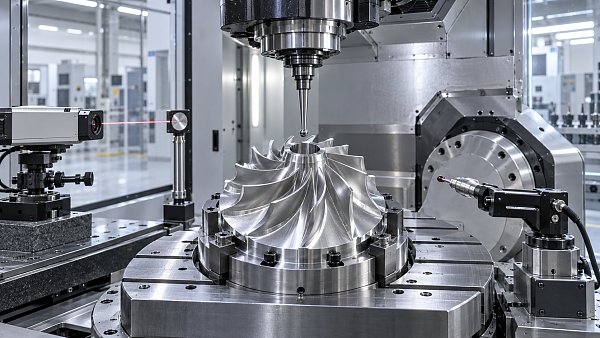
The confirmed change is that JIS T 0601-2026 has formally taken effect in Japan as of July 7, 2026. According to the information provided, the standard now applies a tighter surface profile tolerance of plus or minus 1.5 micrometers to 5-axis CNC precision-machined orthopedic implants made from titanium alloy, compared with the earlier plus or minus 3.0 micrometers requirement. The same update also requires submission of a full-parameter surface texture report in line with ASME B46.1-2025.
The information provided further indicates that this change is expected to materially raise the technical barrier and testing cost for Chinese CNC suppliers exporting medical components to Japan.
Where the Pressure Is Likely to Appear First
Export-oriented CNC manufacturers face a narrower process window
From an industry perspective, suppliers machining orthopedic titanium alloy implant parts for the Japanese market are the most directly exposed group. The impact is likely to show up first in machining control, process stability, and final verification, because a tighter profile tolerance leaves less room for variation in 5-axis CNC output. What deserves closer attention is whether existing production routes, inspection routines, and release criteria can still support compliant delivery under the new requirement.
Quality and metrology teams will carry a heavier documentation load
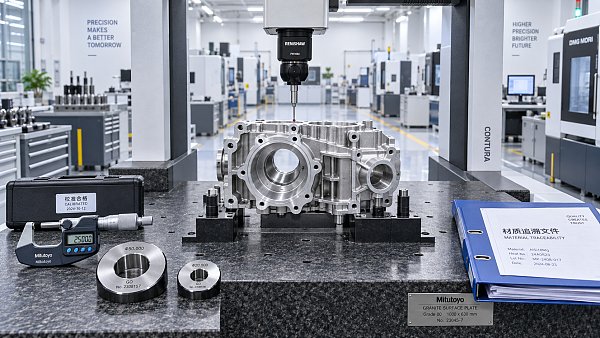
Analysis shows that the added requirement for a full-parameter ASME B46.1-2025 surface texture report is not only a measurement issue but also a documentation issue. Quality assurance personnel, laboratory teams, and third-party testing service providers may see higher demands in parameter capture, report completeness, and customer-facing evidence preparation. In practice, the pressure is likely to fall on how consistently companies can translate measurement output into acceptable compliance documentation.
Japanese buyers and procurement functions may tighten supplier screening
Observably, buyers sourcing medical components for Japan may need to review supplier capability more closely once the revised standard is in force. The effect may extend beyond pricing to supplier qualification, pre-shipment verification, technical communication, and documentation review. What matters here is not only whether a part can be machined, but whether the supplier can prove conformity in the format and depth expected by the customer.
Supply chain service providers may see longer coordination cycles
For companies involved in cross-border delivery, sourcing coordination, or export support, the change may affect lead-time planning and handoff risk. Analysis shows that when tolerance and reporting requirements both become stricter, communication gaps between machining, inspection, documentation, and shipment can have a larger effect on delivery performance. That makes requirement alignment earlier in the order cycle more important.
What Companies Should Watch in Daily Operations
Separate the confirmed rule from internal assumptions
What deserves closer attention is the distinction between the confirmed facts and any additional internal interpretation. The confirmed facts here are the tighter plus or minus 1.5 micrometers profile tolerance, the full enforcement date of July 7, 2026, and the requirement for an ASME B46.1-2025 full-parameter surface texture report. Companies should avoid building customer commitments on assumptions that are not stated in the provided information.
Review which product lines are exposed to the new requirement
For suppliers serving multiple medical and non-medical programs, a practical priority is identifying which exported orthopedic titanium alloy implant components fall within the affected scope described in the provided information. This matters because the operational impact is unlikely to be uniform across all CNC business, and compliance preparation may need to be prioritized around Japan-bound medical parts first.
Check whether reporting capability matches customer expectations
Analysis shows that compliance risk may come from reporting readiness as much as from machining capability. Companies should pay attention to whether internal or outsourced inspection arrangements can produce the full-parameter surface texture documentation required by ASME B46.1-2025, and whether those records can be delivered in time for customer review, shipment release, or audit support.
Prepare for more detailed customer communication on cost and delivery
Because the provided information indicates higher technical and testing costs for Chinese CNC suppliers exporting medical components to Japan, commercial and program teams should be ready for customer discussions around quotation assumptions, verification scope, and delivery timing. Observably, the operational issue is not only compliance itself, but how compliance changes are communicated before they affect orders already in planning or execution.
How This Should Be Read at This Stage
Analysis shows that this development is more than a routine standards update for companies active in Japan-bound medical machining. The combination of a tighter profile tolerance and a mandatory full-parameter surface texture report points to a stricter compliance expectation around both manufacturing precision and verifiable surface characterization. At the same time, it is more appropriate to understand this as a concrete regulatory and technical signal rather than as a complete picture of downstream market outcomes, because the provided information does not establish how buyers, suppliers, or service providers will adjust in each case.
Observably, the immediate meaning is clearest for exporters and quality-led manufacturing operations: proving capability may become more demanding, not just achieving it. The broader commercial consequences still require continued observation.
Why the Update Matters Beyond the Headline
This update is best understood as an actionable compliance change with broader supply chain implications for orthopedic titanium alloy implant manufacturing tied to Japan. The confirmed rule change is already in effect, so the short-term issue is operational readiness. The larger industry meaning, however, is still emerging and should be interpreted carefully. It is more appropriate to view this as both an immediate technical requirement and a longer-term signal that evidence-based quality expectations in medical component trade may be becoming more stringent.
Basis of This Article and What Still Needs Verification
This article is based on the user-provided news title, event date, and event summary. The analysis above relies only on the confirmed information that Japan fully enforced JIS T 0601-2026 on July 7, 2026, tightened the profile tolerance for 5-axis CNC-machined orthopedic titanium alloy implants to plus or minus 1.5 micrometers from plus or minus 3.0 micrometers, and required a full-parameter surface texture report under ASME B46.1-2025.
For this type of industry update, commonly relevant source categories may include official government notices, company statements, industry association updates, authoritative media reporting, and standards organization documents. A specific official source link was not provided in the input, so it still needs to be continuously verified. Follow-up attention should focus on any later official wording, implementation clarification, and how buyers and suppliers reflect the rule in actual procurement and delivery practice.
Search News
Hot Articles
- Carbon Fiber StructuresHow to Specify Aerospace Carbon Fiber Assemblies for Lightweight, Load-Bearing PartsJul 11, 2026
- Machine VisionXiaomi, Alibaba DAMO Academy Drive Open-Source Robotics Model Ecosystem, Lowering Algorithm Development Barriers for Overseas SMEs Adopting Chinese Robotics SolutionsMar 30, 2026
- Cobots & ArmsShanxi 'AI+' Conference Showcases Embodied Intelligence with Multinational Buyer Engagement: Key Industry ImplicationsMar 30, 2026
Popular Tags
Recommended News
 Jul 11, 2026How to Specify Aerospace Carbon Fiber Assemblies for Lightweight, Load-Bearing PartsAerospace carbon fiber assemblies: learn how to specify laminate design, load data, joining methods, and inspection controls for lighter, reliable load-bearing aerospace parts.Elena Rostova (UAV Systems Researcher)
 Mar 30, 2026Xiaomi, Alibaba DAMO Academy Drive Open-Source Robotics Model Ecosystem, Lowering Algorithm Development Barriers for Overseas SMEs Adopting Chinese Robotics SolutionsXiaomi & Alibaba DAMO Academy's open-source robotics models lower algorithm barriers for global SMEs. Boost efficiency in manufacturing, logistics & smart retail with ROS 2 compatible solutions.TSV Data Lab
 Mar 30, 2026Shanxi 'AI+' Conference Showcases Embodied Intelligence with Multinational Buyer Engagement: Key Industry ImplicationsShanxi 'AI+' Conference highlights embodied intelligence with Tesla, Ubtech & Jiantao showcasing multimodal robotics. 40+ global buyers validated tech on-site, creating new B2B channels for industrial automation & AI solutions.Chen Wei (Automation Lead Engineer)
 Mar 30, 2026Zhongguancun Unveils 6G Integrated Sensing-Computing-Intelligence Platform to Empower Embodied Robots for Global Industrial ApplicationsZhongguancun's new 6G platform revolutionizes industrial robotics with <10ms latency, empowering global automotive, logistics & port automation. Discover how this tech boosts China's smart manufacturing exports.TSV Data Lab
 Mar 30, 2026Mech-Mind Tianjin Embodied Intelligence R&D and Production Base Goes Live, Cutting Delivery Time by 20%–30% for Global Customized AMR+Vision SolutionsMech-Mind's Tianjin AMR+Vision production base cuts delivery time by 20%-30% for欧美 & Latin American markets. Discover how this PLd-certified facility accelerates customized robotics solutions for smart manufacturing and logistics.Chen Wei (Automation Lead Engineer)
 Mar 30, 2026Boao Forum Reveals 'Co-evolution of Big and Small Brains' Trend in Humanoid Robots, China's Embodied Intelligence Accelerates Adaptation to Overseas Manufacturing Service ScenariosDiscover how China's humanoid robots, featuring 'Co-evolution of Big and Small Brains,' are revolutionizing global manufacturing. Learn about Embodied Tian Gong 3.0's ISO compliance and overseas deployment at Boao Forum 2026.Chen Wei (Automation Lead Engineer)
 Mar 30, 2026China Railway Industrial Secures Patent for Embodied Robotics in Material Handling, Boosting High-Precision Delivery Capabilities for Overseas Infrastructure and Manufacturing ProjectsChina Railway Industrial's new patent for embodied robotics in material handling boosts high-precision delivery for global infrastructure & manufacturing. Discover how this innovation enhances logistics accuracy in automotive, rail transit & EPC projects.Chen Wei (Automation Lead Engineer)
 Oct 06, 2026Navigation Fault Tolerance Standards for AMRs: What Safety Teams Must VerifyNavigation fault tolerance standards: learn what AMR safety teams must verify, from localization loss and sensor faults to stopping distance, safe restart, and site-specific validation.Chen Wei (Automation Lead Engineer)
 Oct 05, 2026Calculating Edge Computing Total Cost of Ownership Across Distributed SitesEdge computing ownership cost explained: calculate deployment, energy, connectivity, security, remote support, and refresh costs across distributed sites.TSV Data Lab
 Oct 04, 2026CAD/CAM Benchmarking in the GCC: What Manufacturers Should Ask a ConsultantCAD CAM benchmark consultant GCC guide: learn the key questions manufacturers should ask to validate post-processors, workflows, machine performance, and production risk.Victor Lin (Chief Software Architect)
 Oct 03, 2026Selecting Automotive Radar Sensor Modules for ADAS Range, Resolution, and IntegrationAutomotive radar sensor module selection guide for ADAS: compare range, resolution, field of view, latency, and integration to build safer, reliable vehicle systems.TSV Data Lab
 Oct 02, 2026How to Qualify Machined Parts Suppliers for Hard Tech ProgramsHard tech supply chain machined parts demand rigorous supplier qualification. Learn how to assess capability, traceability, quality controls, and delivery resilience.Dr. Marcus Vance
 Oct 01, 2026How to Select an Outdoor Security Radar Sensor for Perimeter Detection?Outdoor security radar sensor selection guide: compare range, accuracy, false-alarm control, integration, and field testing for reliable perimeter detection.TSV Data Lab
 Sep 30, 2026How to Evaluate Solid-State LiDAR Hardware for Outdoor Autonomous VehiclesSolid state LiDAR hardware evaluation guide for outdoor autonomous vehicles—compare range, point-cloud quality, environmental resilience, integration, and safety.TSV Data Lab
 Sep 29, 2026ISO 9283 Repeatability: How to Evaluate Cobot Positioning PerformanceISO 9283 cobot repeatability explained: learn how payload, reach, approach direction, and test conditions affect positioning performance and cell capability.Chen Wei (Automation Lead Engineer)
 Oct 06, 2026Are Collaborative Robots Safe Enough to Operate Without Fencing?Are collaborative robots safe enough to work without fencing? Explore risk assessment, safeguarding options, and practical guidance for safer, productive cobot cells.Chen Wei (Automation Lead Engineer)
 Oct 05, 2026What Causes Machine Vision Systems to Miss Small Defects?What causes machine vision systems to miss small defects? Discover how lighting, optics, motion, and AI thresholds affect detection—and prevent costly escapes.TSV Data Lab
 Oct 04, 2026How Should You Compare 5-Axis CNC Machine Accuracy Claims?How do I compare 5-axis CNC machine accuracy claims? Learn how to assess standards, thermal stability, TCP accuracy, and real-world test evidence.Dr. Marcus Vance
 Oct 03, 2026Is Edge Computing Necessary for Real-Time Quality Inspection?Is industrial edge computing necessary for real-time quality inspection? Explore how latency, data volume, reliability, and control integration shape the right architecture.TSV Data Lab
 Oct 02, 2026What Documents Prove a Precision Machining Supplier Can Hold Tolerance?What documents prove a precision machining supplier can hold tolerance? Explore certificates, FAI reports, calibration, SPC, and traceability evidence to qualify suppliers with confidence.Dr. Marcus Vance
 Oct 01, 2026Can a Machining Supplier Meet Aerospace Fatigue Testing Requirements?Can a machining supplier meet aerospace fatigue testing requirements? Learn the traceability, process control, and test evidence needed for reliable aerospace parts.Dr. Marcus Vance
 Sep 30, 2026Which Industrial Robot Specifications Matter for High-Precision Assembly?Which industrial robot specifications matter most for high-precision assembly? Explore repeatability, accuracy, stiffness, vibration, calibration, and force control for reliable yields.Chen Wei (Automation Lead Engineer)
 Sep 29, 2026How Do You Verify Servo Motor Torque Under Continuous Load?How do I verify servo motor torque under continuous load? Learn RMS torque checks, torque-speed limits, thermal derating, and real-machine testing.Chen Wei (Automation Lead Engineer)
 Oct 02, 2026ZD330 Software Configuration: Verifying Cut-List Import Before PurchaseZD330 software and machine configuration: verify cut-list imports, data mapping, labels, and workflow before purchase to reduce errors and choose with confidence.Victor Lin (Chief Software Architect)