Vision sensor framerate vs resolution: what changes first?
Publication Date
author
In machine vision, vision sensor framerate vs resolution is often the first trade-off engineers confront, affecting machine vision sub-pixel accuracy, edge AI inference speed fps, and overall inspection stability. For R&D teams, operators, buyers, and decision-makers, understanding what changes first helps cut through spec-sheet noise and choose systems that balance throughput, image quality, and real-world deployment constraints.
Why does vision sensor framerate vs resolution become the first bottleneck?
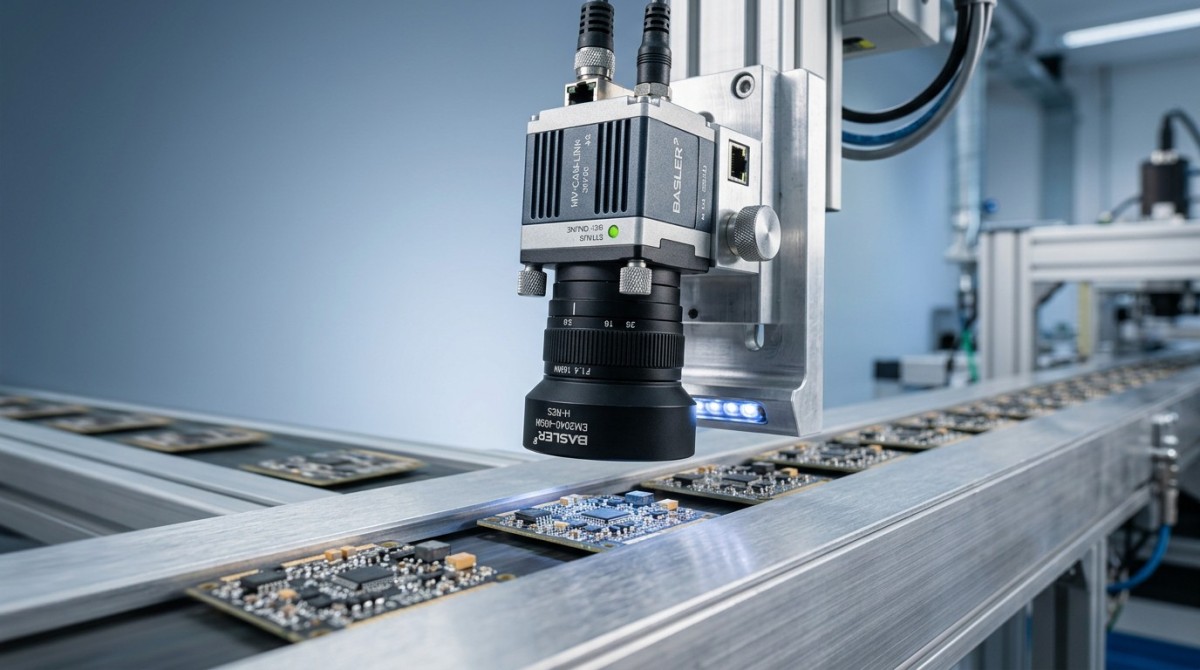
The short answer is simple: in most industrial cameras and embedded vision sensors, available bandwidth, sensor readout speed, processor throughput, and memory transfer limits are finite. When resolution rises from, for example, 1 MP to 5 MP or 12 MP, the system must move and process significantly more pixels per frame. Unless the interface, sensor architecture, and computing pipeline scale at the same time, framerate usually drops first.
That does not mean resolution is always more important than speed. In a high-speed packaging line running 120–300 parts per minute, missing frames can be more damaging than losing fine detail. In contrast, for electronics inspection, metrology, or defect detection on reflective surfaces, a higher pixel count may matter more because edge definition and machine vision sub-pixel accuracy depend on sufficient spatial information.
For procurement teams, the problem is that many data sheets list maximum resolution and maximum fps separately, often under different test conditions. A sensor may advertise 120 fps, but only at a reduced region of interest, 8-bit output, or lower resolution mode. A resolution headline such as 20 MP may also hide the fact that usable edge AI inference speed fps falls sharply once preprocessing and neural inference are enabled.
This is exactly where a data-driven evaluation matters. TechStat Vanguard focuses on engineering truth rather than brochure language: what frame rate is sustained, at what resolution, under what exposure time, bit depth, interface load, and compute condition. For R&D engineers and CTOs, that level of comparison reduces trial-and-error. For operators and buyers, it avoids costly over-specification or underperformance after deployment.
What usually changes first in real deployments?
In real systems, four things tend to change before a project team notices overall image quality loss. First, framerate drops. Second, exposure time is shortened to preserve speed, which can reduce signal quality in low light. Third, the region of interest is narrowed to restore throughput. Fourth, onboard processing is simplified, such as reducing denoising, compression quality, or neural model complexity.
- High resolution increases total pixel throughput, which pressures sensor readout, ISP, memory bus, and host transfer simultaneously.
- Higher framerate raises data volume per second, which can saturate USB3, GigE, MIPI, or internal edge AI accelerators even when single-frame quality remains acceptable.
- Longer exposure needed for dim scenes often conflicts with target fps, especially in moving-line inspections or UAV payload vision systems.
- Downstream algorithms, not just the sensor, may become the practical bottleneck when image preprocessing, detection, and tracking must finish within 10–30 ms per cycle.
Which technical parameters actually determine the trade-off?
A meaningful vision sensor framerate vs resolution discussion cannot stop at megapixels and fps. Engineers should examine pixel size, shutter type, bit depth, signal-to-noise behavior, lens resolving power, interface bandwidth, and edge compute architecture. If one link in this chain is undersized, the headline specification becomes irrelevant in production.
For example, a 5 MP sensor running 60 fps at 8-bit output generates far less data than the same sensor at 12-bit output with lossless transmission. Likewise, global shutter designs may better support motion-critical inspection, while rolling shutter solutions can be cost-effective for slower conveyor speeds or fixed-object measurement. The right choice depends on line speed, lighting, defect size, and processing latency budget.
Sub-pixel measurement adds another layer. Machine vision sub-pixel accuracy does not come from resolution alone. It depends on optics, calibration stability, contrast, distortion control, and repeatable lighting. A high-resolution sensor paired with a lens that cannot resolve the required line pairs per millimeter may add cost without improving measurement confidence.
The table below summarizes how key parameters interact in common industrial decision-making. It is not a vendor ranking. It is a practical guide for evaluating where performance changes first and why.
For operators, this means system tuning matters as much as sensor selection. For buyers, it means comparing complete pipelines rather than sensor modules in isolation. For decision-makers, it means project risk often sits in the interaction between optics, motion, lighting, and compute, not in a single catalog number.
A practical hierarchy for specification review
Start with 4 linked checks
- Field of view and smallest defect size: determine the minimum pixel density needed before discussing fps.
- Line speed or object speed: calculate whether 25 fps, 60 fps, or 120 fps is necessary for stable capture.
- Lighting and exposure window: confirm whether short exposure at target speed is physically achievable.
- Inference and transfer budget: include preprocessing, model runtime, buffering, and storage, not only acquisition.
Teams that use these 4 checks early often shorten supplier qualification cycles from several rounds of prototype exchange to a more controlled 2–4 stage comparison process. That approach aligns with TSV’s benchmark-driven method: parameters first, claims second.
How do different application scenarios shift the answer?
The answer to what changes first is highly application-dependent. In high-speed automation, framerate usually becomes the first constraint because motion blur and missed frames directly affect pass/fail reliability. In precision metrology, resolution may take priority because insufficient pixel coverage limits measurement repeatability. In edge AI deployments, the first limit may be inference throughput instead of optical capture.
This matters across TSV’s focus areas. In robotics and automation, conveyor inspection and pick-and-place tracking often need low-latency capture in the 30–120 fps range. In UAV and aerospace observation, payload power, transmission bandwidth, and vibration tolerance change the resolution-speed balance. In sensors and edge AI, end-to-end throughput from lens to inference result is the true metric. In precision machining inspection, dimensional confidence and repeatability can justify lower fps if defect localization is critical.
The table below gives a scenario-based view that buyers and engineering teams can use during specification drafting, pilot evaluation, or RFQ comparison.
A common mistake is borrowing a camera configuration from one scenario and forcing it into another. A 12 MP setup that works for static gauging may fail in a 200-parts-per-minute line. A 120 fps design optimized for simple presence detection may be unnecessarily expensive for dimensional inspection. Matching the sensor to the production objective is more valuable than chasing extreme numbers.
Scenario signals that help decide faster
Use a simple rule set. If the object is moving fast, if the line cannot tolerate missed cycles, or if trigger timing is tight within 5–20 ms windows, framerate pressure appears first. If the defect is very small relative to field of view, if measurement tolerance is narrow, or if you need stable edge extraction, resolution and optical quality become the first gate. If inference must happen on-device, edge AI inference speed fps may become the governing constraint even before raw imaging limits are reached.
For mixed-use environments such as smart factories, pilot cells, and adaptive robotics, it is often better to specify a balanced envelope instead of a single extreme. Teams may define, for example, 3 operating modes: full-resolution inspection, high-speed tracking mode, and low-bandwidth edge deployment mode. This reduces future redesign when requirements expand.
What should buyers, operators, and CTOs check before purchase?
Procurement failures in machine vision rarely come from one bad parameter. They come from incomplete verification. Buyers often compare list prices without checking whether the quoted system includes lens, lighting, enclosure, trigger accessories, SDK maturity, and thermal behavior under continuous operation. Operators may inherit a system that looks excellent in demos but becomes unstable after 8–12 hours of plant runtime.
For enterprise decision-makers, the goal is not to buy the highest resolution or the fastest sensor. The goal is to reduce false rejects, missed defects, commissioning delays, and integration risk. A data-driven procurement path should evaluate at least 5 dimensions: optical adequacy, sustained throughput, integration compatibility, environmental robustness, and support for future model or line changes.
The following checklist can be used in supplier discussions, internal reviews, and acceptance planning. It is especially useful when drafting a spec sheet or comparing multiple vendors whose brochures use different test conditions.
5-point selection checklist for vision sensor framerate vs resolution
- Define the smallest feature that must be detected or measured. Translate that into minimum pixels on target, not only megapixels on the sensor.
- Verify sustained, not peak, framerate at the intended resolution, bit depth, trigger method, and interface connection.
- Confirm lighting and exposure feasibility for actual line speed, surface reflectivity, and ambient conditions such as vibration or temperature fluctuation.
- Measure total latency from image capture to PLC or robot action, especially when edge AI inference speed fps is part of the control loop.
- Request a pilot acceptance plan with 3–6 test samples per defect type or process condition, including pass/fail criteria and runtime observation.
Common commercial questions that deserve technical answers
Ask suppliers how long a standard evaluation cycle typically takes. In many industrial projects, bench validation may take 7–15 days, while line-level pilot verification can take 2–6 weeks depending on sample variety and fixture readiness. Also ask what changes if the required field of view doubles, if throughput rises by 30%, or if the system must shift from cloud analysis to on-device inference.
For compliance-sensitive sectors, request clarity on electrical safety, interface standards, environmental ratings, and traceable documentation rather than assuming all industrial cameras are equally suitable. Even when no special certification is mandatory, documented test conditions help procurement teams compare suppliers on engineering grounds rather than marketing tone.
What are the most common misconceptions and how can teams avoid them?
One widespread misconception is that more megapixels always improve inspection. In reality, if the lens, lighting, mounting stability, and processing path are not upgraded together, higher resolution can reduce usable throughput without delivering better detection. Another misconception is that raw sensor fps equals production fps. Once image conversion, buffering, networking, and inference are included, effective cycle speed can be much lower.
A third misconception is that machine vision sub-pixel accuracy is a property of the sensor alone. It is not. Sub-pixel performance comes from a calibrated system with repeatable contrast, controlled distortion, stable mechanics, and validated algorithms. In many applications, improving optics or illumination produces more measurement gain than increasing sensor resolution.
Another trap appears in edge AI projects. Teams may select a sensor with strong imaging specifications but ignore thermal throttling, memory limits, or model optimization. As a result, edge AI inference speed fps falls after continuous operation, especially in sealed enclosures or elevated ambient temperatures. Stable 24/7 runtime matters more than short demo bursts.
FAQ for real-world search intent
How do I choose between higher resolution and higher framerate?
Start from the process objective. If the line speed is high and motion blur risk is significant, protect framerate first. If the task is dimensional inspection or tiny-defect detection, secure enough resolution and optical clarity first. Then test whether the chosen setup still meets transfer, storage, and inference limits. The best choice is the one that meets defect coverage and cycle time together.
What fps is usually enough for industrial inspection?
There is no universal number. Slow static inspection may work at 10–30 fps. Conveyor and robotic applications often target 30–120 fps. Very fast events may require higher-speed architectures or line-scan approaches. What matters is whether each object is captured with enough temporal and spatial detail for reliable pass/fail decisions.
Does edge AI always reduce usable framerate?
Often yes, but not always critically. The impact depends on model complexity, input image size, preprocessing, memory bandwidth, and whether inference runs in parallel with acquisition. That is why effective edge AI inference speed fps should be measured as end-to-end throughput, not as accelerator-only performance.
Can ROI cropping solve the trade-off?
ROI is a useful tool and often restores speed, but it is not a universal fix. Cropping helps when the inspection area is known and stable. It is less effective when objects drift, multiple features must be observed, or future product variants require larger coverage. ROI should be part of system design, not an afterthought to rescue an underspecified architecture.
Why work with a data-driven benchmarking partner before finalizing the spec?
In hard-tech procurement, ambiguity is expensive. Teams lose time when vendors use different measurement conditions, when “maximum fps” ignores inference load, or when “high precision” lacks tolerance context. TechStat Vanguard exists to reduce that noise. Our approach is built for engineering teams, senior buyers, and decision-makers who need traceable parameter interpretation rather than promotional phrasing.
For vision sensor framerate vs resolution projects, TSV helps teams compare sensor options against actual deployment constraints: field of view, defect scale, sustained throughput, machine vision sub-pixel accuracy requirements, edge AI inference speed fps, and integration boundaries across robotics, UAV payloads, and industrial inspection lines. That makes supplier conversations faster and internal approval more grounded.
If you are preparing a new line, replacing a legacy camera, or evaluating an edge vision stack, you can engage TSV around specific questions rather than broad sales claims. Typical consultation topics include 4 areas: parameter confirmation, sensor and lens selection logic, pilot validation planning, and documentation support for procurement review. Where needed, teams can also compare delivery constraints, interface compatibility, and configuration risk before sample commitment.
To move forward efficiently, contact TSV with your current resolution target, required fps range, object speed, field of view, smallest feature size, lighting condition, and whether AI inference must run on-device. We can help structure a practical evaluation path around specification drafting, sample support expectations, delivery-cycle questions, customization boundaries, certification considerations, and quote communication—so your next decision is based on engineering truth, not brochure noise.
Search News
Hot Articles
- Carbon Fiber StructuresHow to Specify Aerospace Carbon Fiber Assemblies for Lightweight, Load-Bearing PartsJul 11, 2026
- Machine VisionXiaomi, Alibaba DAMO Academy Drive Open-Source Robotics Model Ecosystem, Lowering Algorithm Development Barriers for Overseas SMEs Adopting Chinese Robotics SolutionsMar 30, 2026
- Cobots & ArmsShanxi 'AI+' Conference Showcases Embodied Intelligence with Multinational Buyer Engagement: Key Industry ImplicationsMar 30, 2026
Popular Tags
Recommended News
 Jul 11, 2026How to Specify Aerospace Carbon Fiber Assemblies for Lightweight, Load-Bearing PartsAerospace carbon fiber assemblies: learn how to specify laminate design, load data, joining methods, and inspection controls for lighter, reliable load-bearing aerospace parts.Elena Rostova (UAV Systems Researcher)
 Mar 30, 2026Xiaomi, Alibaba DAMO Academy Drive Open-Source Robotics Model Ecosystem, Lowering Algorithm Development Barriers for Overseas SMEs Adopting Chinese Robotics SolutionsXiaomi & Alibaba DAMO Academy's open-source robotics models lower algorithm barriers for global SMEs. Boost efficiency in manufacturing, logistics & smart retail with ROS 2 compatible solutions.TSV Data Lab
 Mar 30, 2026Shanxi 'AI+' Conference Showcases Embodied Intelligence with Multinational Buyer Engagement: Key Industry ImplicationsShanxi 'AI+' Conference highlights embodied intelligence with Tesla, Ubtech & Jiantao showcasing multimodal robotics. 40+ global buyers validated tech on-site, creating new B2B channels for industrial automation & AI solutions.Chen Wei (Automation Lead Engineer)
 Mar 30, 2026Zhongguancun Unveils 6G Integrated Sensing-Computing-Intelligence Platform to Empower Embodied Robots for Global Industrial ApplicationsZhongguancun's new 6G platform revolutionizes industrial robotics with <10ms latency, empowering global automotive, logistics & port automation. Discover how this tech boosts China's smart manufacturing exports.TSV Data Lab
 Mar 30, 2026Mech-Mind Tianjin Embodied Intelligence R&D and Production Base Goes Live, Cutting Delivery Time by 20%–30% for Global Customized AMR+Vision SolutionsMech-Mind's Tianjin AMR+Vision production base cuts delivery time by 20%-30% for欧美 & Latin American markets. Discover how this PLd-certified facility accelerates customized robotics solutions for smart manufacturing and logistics.Chen Wei (Automation Lead Engineer)
 Mar 30, 2026Boao Forum Reveals 'Co-evolution of Big and Small Brains' Trend in Humanoid Robots, China's Embodied Intelligence Accelerates Adaptation to Overseas Manufacturing Service ScenariosDiscover how China's humanoid robots, featuring 'Co-evolution of Big and Small Brains,' are revolutionizing global manufacturing. Learn about Embodied Tian Gong 3.0's ISO compliance and overseas deployment at Boao Forum 2026.Chen Wei (Automation Lead Engineer)
 Mar 30, 2026China Railway Industrial Secures Patent for Embodied Robotics in Material Handling, Boosting High-Precision Delivery Capabilities for Overseas Infrastructure and Manufacturing ProjectsChina Railway Industrial's new patent for embodied robotics in material handling boosts high-precision delivery for global infrastructure & manufacturing. Discover how this innovation enhances logistics accuracy in automotive, rail transit & EPC projects.Chen Wei (Automation Lead Engineer)
 Oct 21, 2026China’s Industrial Robot Exports Near RMB 10 Billion in First Nine Months of 2026China’s industrial robot exports neared RMB 10 billion in January–September 2026, with value rising faster than volume. Explore the data and what it could mean for suppliers.Chen Wei (Automation Lead Engineer)
 Oct 21, 2026Low-Latency Industrial Data Processing: Pricing and Key Cost DriversExplore industrial data latency price drivers, from edge hardware to integration and support. Learn how to compare quotes, verify performance, and avoid unnecessary costs.TSV Data Lab
 Oct 20, 2026KUKA Launches iiQKA.AI Vision to Simplify Industrial Image ProcessingKUKA iiQKA.AI Vision simplifies industrial image processing with controller-based 2D and 3D vision. Explore drag-and-drop setup for vision-guided automation.TSV Data Lab
 Oct 20, 2026Smart Industrial Edge Devices: Key Criteria for Legacy PLC IntegrationChoose smart industrial edge devices for legacy PLC integration. Discover key criteria for compatibility, data quality, security, and reliable collection without disrupting control.TSV Data Lab
 Oct 19, 2026Choosing a Radar Sensor by Application: Range, Resolution, and Field of ViewSimplify radar sensor application based product selection. Compare range, resolution, and field of view to avoid blind spots and choose with confidence. Explore the guide.TSV Data Lab
 Oct 18, 2026Comparing Material Options for Procurement: Specs, Costs, and Supply RisksExplore procurement oriented technical content on material options, specs, costs, and supply risks. Compare alternatives to cut hidden expenses and make confident sourcing decisions.Dr. Marcus Vance
 Oct 17, 20265-Axis CNC Positioning Accuracy: How to Interpret ISO 230-2 Test ResultsAssess 5 axis CNC machining positioning accuracy with ISO 230-2. Learn to interpret repeatability, reversal error, and test conditions to compare suppliers and make confident acceptance decisions.Dr. Marcus Vance
 Oct 16, 2026Choosing a Rugged Edge AI Box Supplier: Thermal Tests and Lifecycle SupportChoose a rugged edge AI box supplier with proven thermal performance and reliable lifecycle support. Discover the tests and commitments to verify before you buy.TSV Data Lab
 Oct 15, 2026R&D Cost Reduction Services: How to Evaluate Fees, Savings, and ROIEvaluate R&D cost reduction services with confidence. Compare fees, verify savings, and calculate ROI without compromising performance. Discover how to choose a provider that delivers real value.Chen Wei (Automation Lead Engineer)
 Oct 21, 2026How Should You Balance Cobot Payload Against Reach?Explore cobot payload versus reach to choose the right robot. Learn how tooling, load limits, workspace, and cycle time affect performance—and avoid costly selection mistakes.Chen Wei (Automation Lead Engineer)
 Oct 20, 2026How Do You Measure Industrial IoT Gateway Latency Under Load?Measure industrial IoT gateway latency under load with reliable timestamps, realistic traffic, and tail-latency analysis. Discover how to expose bottlenecks and choose the right gateway.TSV Data Lab
 Oct 19, 2026How Do You Verify That Precision Machined Parts Meet Tolerances?Master precision machining tolerance verification with the right tools, datum setups, and acceptance rules. Learn how to validate parts confidently and reduce costly inspection errors.Dr. Marcus Vance
 Oct 18, 2026What Should an AS9100 Machining Supplier Checklist Include?Build an AS9100 machining supplier checklist that verifies capability, traceability, inspection, and outsourced processes. Discover what to check before approving your next aerospace supplier.Dr. Marcus Vance
 Oct 17, 2026How Should You Interpret Industrial Robot Repeatability Specs?Decode industrial robot repeatability specifications, understand ISO 9283 test conditions, and avoid costly selection mistakes. Learn how to verify performance for your process.Chen Wei (Automation Lead Engineer)
 Oct 16, 2026How Can You Fairly Compare MTBF Across Industrial Servo Motors?Make a fair industrial servo motor MTBF comparison with matched operating profiles, failure criteria, and confidence bounds. Discover how to assess reliability beyond advertised numbers.Chen Wei (Automation Lead Engineer)
 Oct 15, 2026How Should You Compare TechStat Vanguard 5-Axis CNC Tolerances?TechStat Vanguard 5-axis CNC tolerance comparison: learn how to verify part accuracy, assess inspection evidence, and choose suppliers that reliably meet your drawing requirements.Dr. Marcus Vance
 Oct 14, 2026Drone Frame Composites: Carbon Fiber vs. Fiberglass for Weight and StiffnessExplore drone structural materials composites: compare carbon fiber and fiberglass for weight, stiffness, cost, and antenna compatibility. Find the right material for your drone frame.Elena Rostova (UAV Systems Researcher)