Low-Latency Industrial Data Processing: Pricing and Key Cost Drivers
Publication Date
author
Low-latency industrial data processing has no useful single price until the required response time, workload, and operating conditions are defined. A gateway that updates a production dashboard and a system that triggers an inspection reject mechanism may both promise “real-time” performance, yet require very different hardware, software, and engineering effort.
A useful industrial data latency price comparison starts with the complete path from a physical event to a usable decision. Hardware is only part of the bill. Protocol integration, software licensing, network configuration, validation, and ongoing support can materially change the total cost. The strongest quote connects each expense to a measurable requirement and provides evidence that the proposed system can meet it.
Define the response time you are actually buying
Before requesting prices, establish where latency measurement begins and ends. A supplier might measure how quickly its software processes an incoming message. Your application may need to know how long it takes for a sensor event to produce an output at a controller. Those measurements cover different work.
The complete path can include sensor sampling, device transmission, gateway collection, protocol conversion, network transport, processing, and delivery to the receiving application. When a physical action is involved, controller scanning and actuator response may add further delay. Buying faster processing cannot remove waiting time elsewhere in that chain.
Specify both the required response time and the acceptable variation, commonly called jitter. A consistently predictable response can matter more than a lower average when data must arrive before a machine reaches a particular position. For dashboards and historical analysis, occasional delays may have little operational consequence.
Also distinguish the age of the information from its transport speed. A message can travel quickly while carrying a measurement collected earlier. Timestamp handling, sampling intervals, and clock synchronization therefore belong in the specification whenever decisions depend on when an event occurred.

Separate requirements by application instead of assigning the tightest deadline to every data stream. Machine protection, inspection decisions, maintenance analytics, and reporting may share infrastructure while needing different service levels. Safety functions require their own appropriate control architecture and validation; a general-purpose analytics platform should not inherit that role simply because it is described as fast.
How system architecture changes the price
Processing location affects both response time and the cost structure. Local processing reduces dependence on external connectivity, while centralized infrastructure can simplify shared analysis and administration. Neither approach automatically provides the lowest total cost.
A hybrid design can keep urgent decisions local and send selected results upstream. This may reduce transmitted data, but it introduces responsibilities for managing software versions, buffering during outages, and reconciling records after reconnection. Any claimed saving should include those operating costs.
For existing installations, reuse deserves careful examination. A server with spare average capacity may still lack predictable resources during production peaks. Conversely, a new industrial computer may be unnecessary if the requirement is periodic reporting and existing infrastructure already meets the deadline.
What drives the cost of low-latency industrial data processing?
Predictable performance under load
Processing a message quickly on an idle system is a different task from meeting a deadline while multiple devices transmit simultaneously. Costs increase when the design needs reserved compute resources, controlled scheduling, bounded queues, or network traffic management to maintain predictable behavior.
Ask suppliers to size the system against sustained traffic, short bursts, message size, and processing complexity. Device count alone is a weak sizing measure. A small number of cameras can create a very different workload from a much larger group of sensors sending occasional scalar readings.
Performance headroom should have an explicit purpose: expected expansion, burst handling, or continued operation when a component fails. Otherwise, it is difficult to distinguish justified capacity from unnecessary oversizing.
Industrial hardware and installation conditions
Hardware pricing reflects more than processor speed. Temperature range, vibration exposure, electrical noise, power quality, mounting, enclosure requirements, and available maintenance access can influence the equipment specification. Network interfaces, local storage endurance, and accelerator requirements may also affect cost.
Match these features to the installation. A computer in a controlled server room faces different conditions from equipment mounted beside a production line. Paying for environmental capability that the site does not need adds cost; omitting a necessary feature can create replacement and downtime exposure.
Protocol integration and data meaning
A supported-protocol list does not establish integration effort. Devices can expose different data models, timestamp formats, quality indicators, and vendor-specific behavior even when they use the same protocol family.
Legacy equipment may require polling, custom drivers, or access through an existing control system. Its update interval can set a limit that faster downstream hardware cannot overcome. Integration work should cover how values are identified, scaled, timestamped, and marked invalid, as well as how they are transported.
Request a clear distinction between standard configuration and custom development. Custom connectors can create continuing costs when device firmware, operating systems, or platform versions change.
Software licensing and data handling
Software may be licensed by device, tag, gateway, server, processing capacity, or subscription tier. Cloud services can add usage charges for ingestion, computation, storage, and transfer. Compare these charging units against the same projected workload.
Clarify whether redundancy, development environments, historical storage, protocol drivers, and fleet management are included. A low entry price can become less attractive if routine expansion activates additional licenses.
Data handling policy also matters. Filtering near the source can reduce downstream traffic, but raw records may still be needed for quality investigations or process analysis. Establish what must be retained, at what resolution, and for how long before treating reduced data volume as a saving.
Compare complete costs over the same operating period
Use a common evaluation period and a shared workload forecast for every proposal. Include initial deployment, recurring charges, and foreseeable changes. Comparing one supplier’s hardware bill with another supplier’s fully managed service produces a misleading result.
A practical cost model is:
Total cost of ownership = equipment and installation + software and usage charges + integration and validation + operations and support + planned expansion and replacement.
Keep the assumptions visible. Record the number of machines, expected traffic, storage policy, support coverage, and required availability. Where future demand is uncertain, request pricing for the initial deployment and a clearly described expansion scenario.
- Initial deployment: hardware, installation, network work, configuration, connectors, commissioning, and acceptance testing.
- Recurring operation: subscriptions, cloud consumption, support, connectivity, monitoring, and maintenance labor.
- Lifecycle changes: additional machines, software upgrades, security updates, replacement devices, and migration work.
Assign responsibilities alongside costs. If a quotation excludes plant network troubleshooting or controller programming, identify who will perform that work and include the effort in the comparison. Unassigned work often becomes an unexpected project expense.
Evaluate downtime exposure separately using the site’s own production and recovery assumptions. Avoid accepting a supplier’s generic savings estimate as proof that a premium configuration will pay for itself.
Require performance evidence before accepting a premium
A latency claim becomes useful when its measurement boundary and test conditions are clear. Request results for the proposed configuration, including enabled security features, logging, storage, and the interfaces used in production.
Average latency alone can hide delayed events. Percentile measurements help show how the slower portion of responses behaves, but they are not a guaranteed upper bound. Where missed deadlines have serious consequences, define how deadline compliance will be assessed and what evidence supports any claimed bound.
The acceptance plan should address:
- Measurement: start and end points, timestamp method, clock alignment, and measurement uncertainty.
- Workload: sustained traffic, bursts, message sizes, device mix, and simultaneous processing tasks.
- Data integrity: missing, duplicated, reordered, or stale records and how each is detected.
- Disruption: connection loss, restart, reconnection, and backlog processing where relevant.
- Pass criteria: required response behavior, permitted deadline misses, and acceptable recovery behavior.
Test with representative plant data and realistic interfaces. Replaying messages directly into an application can help evaluate processing capacity, but it leaves sensor acquisition, protocol conversion, and network behavior outside the measurement.
Agree on the remedy for an acceptance failure before ordering. The contract should establish responsibility for diagnosis, configuration changes, additional equipment, and retesting.
Reduce cost by relaxing the right requirement
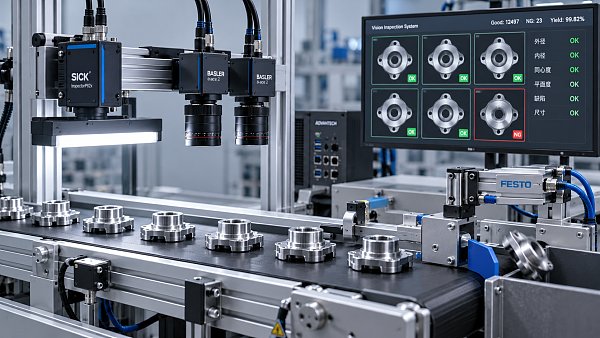
The most productive saving often comes from identifying which information genuinely needs immediate processing. Consider a vision inspection station: the reject decision may need a local response, while image archiving and production reports can follow later. Giving all three tasks the same deadline can increase compute, network, and storage requirements without improving the reject decision.
Batching illustrates the tradeoff. Combining records can improve processing efficiency, but waiting to fill a batch adds delay. It suits workloads with sufficient timing allowance. For an urgent event, that waiting period may consume the available response budget.
Similarly, redundancy is valuable when the operation requires continuity through a failure, but it does not automatically provide faster responses. Specify failover behavior, state recovery, and available capacity after failure. A second server alone does not establish that the application will continue within its deadline.
Ask for separately priced options when requirements are still being resolved. A standard configuration, a tighter timing option, and an availability option make the cost of each requirement visible without turning the quotation into an undefined custom project.
Make the final quotation explain its engineering cost
Issue a common specification covering the application deadline, measurement boundary, workload, interfaces, installation conditions, availability needs, and retention policy. Require each supplier to list assumptions, exclusions, recurring charges, and the evidence supporting its proposed capacity.
Then compare the compliant proposals. A lower price is meaningful when it covers the same operating conditions and responsibilities. A higher price is justified when it buys a required capability, such as predictable response under peak load, necessary environmental protection, or an agreed recovery behavior.
Before committing, resolve one question: which operational requirement would stop being met if this cost were removed? That question helps distinguish necessary engineering from optional features and gives each major line item a clear basis for approval.
Search News
Hot Articles
- Carbon Fiber StructuresHow to Specify Aerospace Carbon Fiber Assemblies for Lightweight, Load-Bearing PartsJul 11, 2026
- Machine VisionXiaomi, Alibaba DAMO Academy Drive Open-Source Robotics Model Ecosystem, Lowering Algorithm Development Barriers for Overseas SMEs Adopting Chinese Robotics SolutionsMar 30, 2026
- Cobots & ArmsShanxi 'AI+' Conference Showcases Embodied Intelligence with Multinational Buyer Engagement: Key Industry ImplicationsMar 30, 2026
Popular Tags
Recommended News
 Jul 11, 2026How to Specify Aerospace Carbon Fiber Assemblies for Lightweight, Load-Bearing PartsAerospace carbon fiber assemblies: learn how to specify laminate design, load data, joining methods, and inspection controls for lighter, reliable load-bearing aerospace parts.Elena Rostova (UAV Systems Researcher)
 Mar 30, 2026Xiaomi, Alibaba DAMO Academy Drive Open-Source Robotics Model Ecosystem, Lowering Algorithm Development Barriers for Overseas SMEs Adopting Chinese Robotics SolutionsXiaomi & Alibaba DAMO Academy's open-source robotics models lower algorithm barriers for global SMEs. Boost efficiency in manufacturing, logistics & smart retail with ROS 2 compatible solutions.TSV Data Lab
 Mar 30, 2026Shanxi 'AI+' Conference Showcases Embodied Intelligence with Multinational Buyer Engagement: Key Industry ImplicationsShanxi 'AI+' Conference highlights embodied intelligence with Tesla, Ubtech & Jiantao showcasing multimodal robotics. 40+ global buyers validated tech on-site, creating new B2B channels for industrial automation & AI solutions.Chen Wei (Automation Lead Engineer)
 Mar 30, 2026Zhongguancun Unveils 6G Integrated Sensing-Computing-Intelligence Platform to Empower Embodied Robots for Global Industrial ApplicationsZhongguancun's new 6G platform revolutionizes industrial robotics with <10ms latency, empowering global automotive, logistics & port automation. Discover how this tech boosts China's smart manufacturing exports.TSV Data Lab
 Mar 30, 2026Mech-Mind Tianjin Embodied Intelligence R&D and Production Base Goes Live, Cutting Delivery Time by 20%–30% for Global Customized AMR+Vision SolutionsMech-Mind's Tianjin AMR+Vision production base cuts delivery time by 20%-30% for欧美 & Latin American markets. Discover how this PLd-certified facility accelerates customized robotics solutions for smart manufacturing and logistics.Chen Wei (Automation Lead Engineer)
 Mar 30, 2026Boao Forum Reveals 'Co-evolution of Big and Small Brains' Trend in Humanoid Robots, China's Embodied Intelligence Accelerates Adaptation to Overseas Manufacturing Service ScenariosDiscover how China's humanoid robots, featuring 'Co-evolution of Big and Small Brains,' are revolutionizing global manufacturing. Learn about Embodied Tian Gong 3.0's ISO compliance and overseas deployment at Boao Forum 2026.Chen Wei (Automation Lead Engineer)
 Mar 30, 2026China Railway Industrial Secures Patent for Embodied Robotics in Material Handling, Boosting High-Precision Delivery Capabilities for Overseas Infrastructure and Manufacturing ProjectsChina Railway Industrial's new patent for embodied robotics in material handling boosts high-precision delivery for global infrastructure & manufacturing. Discover how this innovation enhances logistics accuracy in automotive, rail transit & EPC projects.Chen Wei (Automation Lead Engineer)
 Oct 21, 2026Low-Latency Industrial Data Processing: Pricing and Key Cost DriversExplore industrial data latency price drivers, from edge hardware to integration and support. Learn how to compare quotes, verify performance, and avoid unnecessary costs.TSV Data Lab
 Oct 20, 2026KUKA Launches iiQKA.AI Vision to Simplify Industrial Image ProcessingKUKA iiQKA.AI Vision simplifies industrial image processing with controller-based 2D and 3D vision. Explore drag-and-drop setup for vision-guided automation.TSV Data Lab
 Oct 20, 2026Smart Industrial Edge Devices: Key Criteria for Legacy PLC IntegrationChoose smart industrial edge devices for legacy PLC integration. Discover key criteria for compatibility, data quality, security, and reliable collection without disrupting control.TSV Data Lab
 Oct 19, 2026Choosing a Radar Sensor by Application: Range, Resolution, and Field of ViewSimplify radar sensor application based product selection. Compare range, resolution, and field of view to avoid blind spots and choose with confidence. Explore the guide.TSV Data Lab
 Oct 18, 2026Comparing Material Options for Procurement: Specs, Costs, and Supply RisksExplore procurement oriented technical content on material options, specs, costs, and supply risks. Compare alternatives to cut hidden expenses and make confident sourcing decisions.Dr. Marcus Vance
 Oct 17, 20265-Axis CNC Positioning Accuracy: How to Interpret ISO 230-2 Test ResultsAssess 5 axis CNC machining positioning accuracy with ISO 230-2. Learn to interpret repeatability, reversal error, and test conditions to compare suppliers and make confident acceptance decisions.Dr. Marcus Vance
 Oct 16, 2026Choosing a Rugged Edge AI Box Supplier: Thermal Tests and Lifecycle SupportChoose a rugged edge AI box supplier with proven thermal performance and reliable lifecycle support. Discover the tests and commitments to verify before you buy.TSV Data Lab
 Oct 15, 2026R&D Cost Reduction Services: How to Evaluate Fees, Savings, and ROIEvaluate R&D cost reduction services with confidence. Compare fees, verify savings, and calculate ROI without compromising performance. Discover how to choose a provider that delivers real value.Chen Wei (Automation Lead Engineer)
 Oct 20, 2026How Do You Measure Industrial IoT Gateway Latency Under Load?Measure industrial IoT gateway latency under load with reliable timestamps, realistic traffic, and tail-latency analysis. Discover how to expose bottlenecks and choose the right gateway.TSV Data Lab
 Oct 19, 2026How Do You Verify That Precision Machined Parts Meet Tolerances?Master precision machining tolerance verification with the right tools, datum setups, and acceptance rules. Learn how to validate parts confidently and reduce costly inspection errors.Dr. Marcus Vance
 Oct 18, 2026What Should an AS9100 Machining Supplier Checklist Include?Build an AS9100 machining supplier checklist that verifies capability, traceability, inspection, and outsourced processes. Discover what to check before approving your next aerospace supplier.Dr. Marcus Vance
 Oct 17, 2026How Should You Interpret Industrial Robot Repeatability Specs?Decode industrial robot repeatability specifications, understand ISO 9283 test conditions, and avoid costly selection mistakes. Learn how to verify performance for your process.Chen Wei (Automation Lead Engineer)
 Oct 16, 2026How Can You Fairly Compare MTBF Across Industrial Servo Motors?Make a fair industrial servo motor MTBF comparison with matched operating profiles, failure criteria, and confidence bounds. Discover how to assess reliability beyond advertised numbers.Chen Wei (Automation Lead Engineer)
 Oct 15, 2026How Should You Compare TechStat Vanguard 5-Axis CNC Tolerances?TechStat Vanguard 5-axis CNC tolerance comparison: learn how to verify part accuracy, assess inspection evidence, and choose suppliers that reliably meet your drawing requirements.Dr. Marcus Vance
 Oct 14, 2026Drone Frame Composites: Carbon Fiber vs. Fiberglass for Weight and StiffnessExplore drone structural materials composites: compare carbon fiber and fiberglass for weight, stiffness, cost, and antenna compatibility. Find the right material for your drone frame.Elena Rostova (UAV Systems Researcher)
 Oct 13, 2026Smart Cameras vs. PC-Based Machine Vision: Which Fits High-Speed Inspection?This industrial product comparison for machine vision weighs smart cameras vs. PC-based systems on latency, throughput, and cost. Discover your best fit for high-speed inspection.TSV Data Lab
 Oct 12, 2026How to Verify RoHS Compliance in Industrial Sensing Systems Before DeploymentRoHS compliant sensing systems: learn how to verify materials, supplier declarations, testing, and configuration controls before industrial deployment.TSV Data Lab