mmWave radar angular resolution gaps that specs often hide
Publication Date
author
mmWave radar angular resolution is often presented as a clean headline spec, yet real-world performance depends on array design, signal processing, and scene complexity. For engineers, buyers, and technical leaders comparing 77GHz radar detection range, lidar field of view comparison, and solid state lidar point cloud density, the hidden gaps behind published numbers can directly affect sensing reliability, procurement decisions, and system-level validation.
Why published angular resolution numbers often fail in real deployments
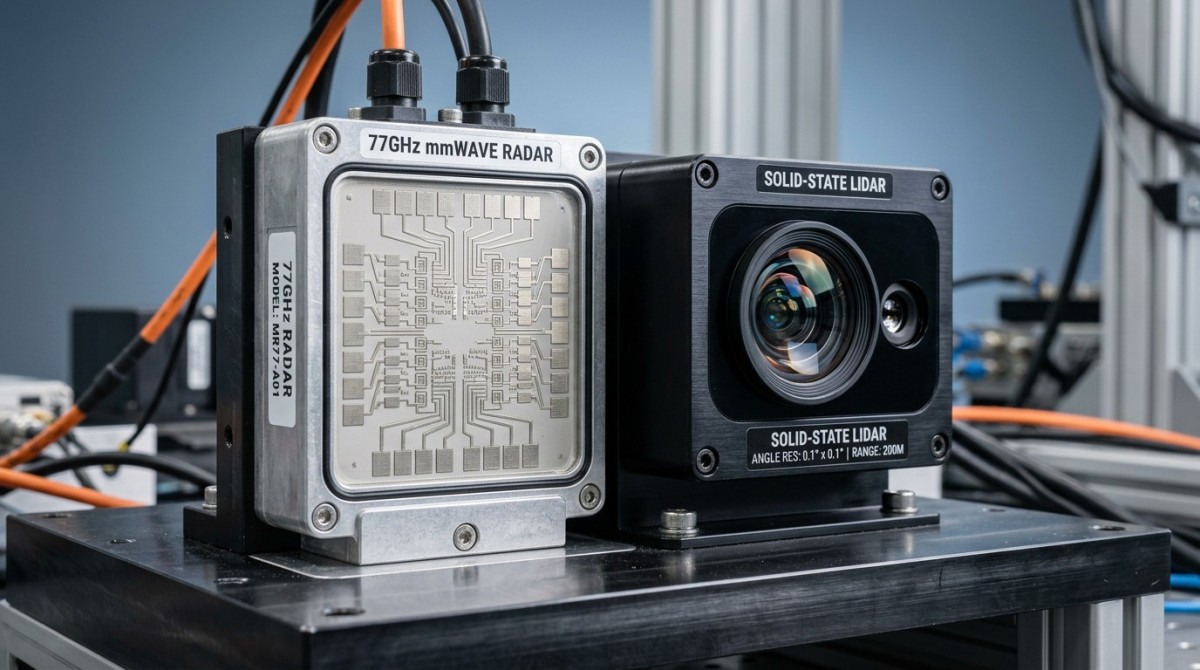
A radar datasheet may state angular resolution in degrees, but that single line rarely tells the full engineering story. In 77GHz automotive and industrial mmWave radar, angular resolution is shaped by antenna aperture, virtual channel count, waveform design, bandwidth, calibration quality, and the signal processing stack. A spec that looks competitive in a controlled chamber can degrade quickly in cluttered production halls, outdoor UAV corridors, or multi-target traffic scenes.
For information researchers and procurement teams, the main risk is simple: comparing one published number across several vendors creates a false sense of equivalence. Two sensors may both list 1.5° or 2° class angular resolution, yet one may separate targets reliably at 30–50 m while the other begins merging objects once reflectivity changes, multipath grows, or elevation angle becomes critical. The gap is not necessarily fraud; it is often a gap in disclosure.
This is exactly where a data-driven review process matters. TechStat Vanguard focuses on stripping away headline marketing and asking harder questions: Under what target separation? At what range? With which field of view? In what weather or electromagnetic background? For B2B users, these conditions matter more than isolated brochure language because validation budgets, redesign cycles, and supplier qualification windows often run only 2–6 weeks in early screening.
Operators also feel the consequences. If angular separation is overstated, downstream tracking may flicker, obstacle classification can become unstable, and fusion with LiDAR or machine vision can drift. In robotics, AGV/AMR navigation, and edge AI perception stacks, a hidden resolution shortfall can trigger 3 common failure modes: false merges, unstable tracks, and delayed object handoff between sensors.
What a single angular resolution spec usually leaves out
Most buyers should treat the published value as a starting point, not a decision endpoint. Before supplier shortlist approval, ask whether the number refers to azimuth only, whether elevation resolution is materially lower, and whether the figure is based on raw antenna physics or post-processing enhancement. Those distinctions affect whether the system can support detection, segmentation, or reliable tracking in operational use.
- Azimuth versus elevation resolution: many systems promote one strong axis while the second axis remains coarse, which matters for ramps, drone altitude separation, and dockside stacking environments.
- Nominal versus effective resolution: effective performance may vary with range bins, target radar cross section, and multi-path clutter rather than staying constant across the full field of view.
- Algorithm-assisted separation versus native array capability: software can improve interpretation, but it cannot fully replace insufficient aperture or poor calibration under dense target conditions.
A reliable review therefore needs at least 4 dimensions: geometry, signal chain, scene complexity, and integration method. If one of these is missing, the apparent 77GHz radar detection range and angular resolution advantage may not survive real commissioning.
Which technical factors create the hidden gap between brochure and bench results?
The most important hidden factor is antenna array size relative to wavelength. At mmWave frequencies, short wavelength helps compact packaging, but angular discrimination still depends on effective aperture. A small module with aggressive software claims may detect objects over a useful range, yet struggle to separate two adjacent reflectors once their spacing drops below the practical limit at 20 m, 50 m, or 100 m.
The second factor is virtual channel architecture. Many 77GHz radars use MIMO concepts to expand apparent array size, but virtual channels are not a magic equalizer. Channel coherence, calibration drift, thermal stability, and board-level tolerances can all influence the final angle estimate. For procurement teams evaluating multiple suppliers, this is why “same frequency band” and “same nominal FoV” should never be treated as proof of equal angular performance.
The third factor is processing strategy. Windowing, beamforming, CFAR settings, tracking logic, and point cloud generation all shape what the user eventually sees. In some systems, angular resolution appears sharp in sparse scenes but softens once target density rises. In others, tuning for false alarm suppression may reduce apparent separation of weak targets. This tradeoff becomes visible during 3-stage validation: lab target board testing, controlled outdoor runs, and live mixed-scene operation.
A fourth factor is scene physics. Metal walls, parked vehicles, rain, rotating machinery, and reflective warehouse racks create conditions where practical performance diverges from spec-sheet simplicity. Compared with a lidar field of view comparison or solid state lidar point cloud density review, radar needs more care in interpreting object separation because reflectivity and multipath influence target representation differently.
Parameter review checklist for engineering and sourcing teams
When comparing mmWave radar angular resolution, use a structured checklist rather than a single score. The table below highlights the parameters most likely to expose hidden performance gaps before RFQ commitment or prototype integration.
This table is especially useful when a supplier presents strong 77GHz radar detection range figures but limited context around target separation. In TSV-style benchmarking, the strongest procurement decisions are made when angle, range, latency, and output stability are reviewed together rather than in isolation.
A practical four-step validation sequence
- Start with datasheet normalization: confirm whether the quoted angle value is azimuth only, best case, or full-scene practical performance.
- Run controlled target separation tests at 3 distances such as 15 m, 35 m, and 60 m to observe effective object discrimination.
- Repeat in at least 2 clutter profiles, for example open line-of-sight and reflective industrial background, to see where tracking breaks down.
- Review sensor fusion outputs against LiDAR or vision references over 7–14 days of trial operation before final sourcing approval.
This sequence reduces the risk of approving a module that looks excellent in a sample demo but underperforms after integration. It also shortens supplier qualification by turning broad claims into measurable acceptance criteria.
How should buyers compare mmWave radar with LiDAR for spatial resolution decisions?
Many sourcing teams review mmWave radar angular resolution alongside lidar field of view comparison and solid state lidar point cloud density because the final decision is rarely sensor-only. It is usually architecture-driven. Radar offers robustness in fog, rain, dust, and some low-visibility conditions, while LiDAR typically provides richer geometric detail. The right question is not which technology is universally better, but which sensing stack fits the operational risk profile.
For example, a mobile robot operating at moderate speed in a reflective warehouse may accept coarser radar angular separation if the LiDAR handles contour definition. A perimeter security or traffic sensing system may place higher value on all-weather continuity and long-range presence detection, even if object edge detail is lower. An autonomous UAV corridor may require a more balanced tradeoff because elevation interpretation, latency, payload, and power budget all matter within a narrow integration envelope.
Procurement teams should also remember that “field of view” and “point cloud density” are not interchangeable with “angular resolution.” A wide FoV may still deliver sparse detail at distance. A dense point cloud can still suffer from weather sensitivity or cost pressure. Likewise, radar may retain detection reliability while losing object separation clarity in dense scenes. A useful sourcing review therefore compares at least 5 criteria: range, separation, weather tolerance, integration load, and lifecycle cost.
This is where independent technical benchmarking adds value. Instead of asking whether a radar replaces LiDAR, ask what minimum separation performance is required at the actual stand-off distance, whether fusion is mandatory, and how much false merge risk the control stack can tolerate over continuous operation windows of 8–24 hours.
Decision-oriented comparison table
The table below is designed for cross-functional reviews involving engineers, operators, sourcing managers, and enterprise decision-makers. It focuses on practical tradeoffs rather than headline marketing claims.
For many industrial and mobility programs, the answer is not radar or LiDAR, but radar plus LiDAR with clear division of roles. Radar contributes continuity and penetration in adverse conditions. LiDAR contributes geometry and richer environmental contour. The budget decision should follow operational risk, not vendor storytelling.
Where hidden radar resolution gaps matter most
- AGV/AMR aisle navigation, where adjacent racks and crossing traffic require stable separation at short-to-mid range.
- Roadside and smart infrastructure sensing, where multi-lane targets must remain separable over varying reflectivity and weather.
- Commercial UAV perception, where compact payload constraints can force tradeoffs between aperture size, power draw, and altitude-aware object discrimination.
In each of these scenarios, effective performance matters more than the clean brochure line. Decision-makers should budget for validation runs early rather than absorbing redesign costs later.
What should procurement teams demand before approving a supplier?
A disciplined RFQ process should convert vague angular resolution claims into acceptance language. Instead of asking only for the nominal value, specify the operational envelope: target class, separation distance, mounting height, update rate, environmental range, and interface requirements. This reduces ambiguity for both buyer and vendor and improves comparability across quotations collected over a 2–4 week sourcing cycle.
Technical buyers should also ask for evidence tied to use cases, not just polished demos. Useful material includes target separation test methods, angle estimation stability data, thermal drift handling, interference notes, and sample point cloud or object-list outputs. If a supplier cannot explain how their 77GHz radar detection range and angular resolution interact in clutter, the risk is not necessarily low quality, but low transparency.
From an operator perspective, maintenance and recalibration expectations matter too. A radar that looks cost-effective at purchase can become expensive if field alignment checks, firmware retuning, or noise management consume repeated engineering hours every quarter. Enterprise decision-makers should evaluate total deployment friction, not unit price alone.
TSV’s data-first approach is built for this gap. The goal is to shorten trial-and-error cycles by translating supplier language into engineering-checkable criteria. In complex hard-tech procurement, the most valuable question is often not “What does the sensor claim?” but “What failure mode appears first when the scene gets difficult?”
Five procurement checks that expose hidden risk
- Ask for azimuth and elevation performance separately, including where one axis materially degrades across the FoV.
- Request target separation examples at more than one range band, such as near field, mid field, and far field.
- Clarify whether the displayed object output is raw detections, clustered points, or fully tracked objects, because each stage can hide or reveal merge issues.
- Review environmental assumptions, including rain, dust, reflective surroundings, and electromagnetic interference exposure.
- Define a 6-item acceptance list before PO approval: range window, angular behavior, latency, interface compatibility, mounting constraints, and validation support.
Common misconceptions and FAQ
Does a smaller angular resolution number always mean better field performance?
Not always. A lower degree value can indicate stronger nominal separation, but only under defined test conditions. If aperture, calibration, and tracking are weak, the practical result in clutter may still be disappointing. Always ask how the number was measured and whether it remains valid over the working range you care about.
Can software alone compensate for limited antenna design?
Software can improve estimation, filtering, and tracking stability, but it cannot fully replace missing physical aperture. In moderate scenes it may look convincing, but in dense scenes with multipath and weak targets the limitations usually reappear. That is why array architecture and processing must be evaluated together.
How many validation stages are reasonable before volume purchase?
For most B2B sensing projects, 3 stages are practical: desk review, controlled proof test, and site trial. Depending on system complexity, this can take 2–8 weeks. Skipping the middle stage often saves days early but increases redesign risk later.
When should radar be paired with LiDAR instead of replacing it?
Pair them when the project needs both environmental robustness and geometric detail. This is common in autonomous mobility, outdoor robotics, and high-value infrastructure monitoring. Radar supports continuity in adverse conditions, while LiDAR can deliver clearer scene structure where point cloud density is critical.
Why choose a data-driven technical benchmark partner before final sensor selection?
In hard-tech procurement, the biggest cost often comes from the wrong assumption made too early. A sensor that appears acceptable on paper can trigger weeks of rework once object separation, field tuning, or fusion performance misses the system target. TechStat Vanguard is built for teams that need a commercial filter grounded in engineering truth rather than promotional compression.
Our value is practical: we help engineering teams, buyers, and executives frame the right questions before expensive commitment. That includes parameter confirmation, benchmark interpretation, use-case alignment, and supplier comparison logic. For radar and adjacent sensing technologies, this means looking beyond isolated specs toward integrated performance across range, angle, density, latency, and environmental resilience.
If you are comparing mmWave radar angular resolution, 77GHz radar detection range, lidar field of view comparison, or solid state lidar point cloud density, you can contact TSV for a structured review focused on your actual deployment envelope. Typical consultation topics include 4 areas: spec-sheet gap analysis, shortlist criteria design, validation matrix definition, and cross-sensor tradeoff assessment.
You can also reach out for support on parameter clarification, product selection, delivery-cycle planning, custom evaluation frameworks, interface and certification questions, sample-test planning, and quotation discussions. For global hard-tech teams trying to reduce R&D trial cost and shorten supplier qualification cycles, the most reliable path is to define the measurable truth first, then buy against it.
Search News
Hot Articles
- Carbon Fiber StructuresHow to Specify Aerospace Carbon Fiber Assemblies for Lightweight, Load-Bearing PartsJul 11, 2026
- Machine VisionXiaomi, Alibaba DAMO Academy Drive Open-Source Robotics Model Ecosystem, Lowering Algorithm Development Barriers for Overseas SMEs Adopting Chinese Robotics SolutionsMar 30, 2026
- Cobots & ArmsShanxi 'AI+' Conference Showcases Embodied Intelligence with Multinational Buyer Engagement: Key Industry ImplicationsMar 30, 2026
Popular Tags
Recommended News
 Jul 11, 2026How to Specify Aerospace Carbon Fiber Assemblies for Lightweight, Load-Bearing PartsAerospace carbon fiber assemblies: learn how to specify laminate design, load data, joining methods, and inspection controls for lighter, reliable load-bearing aerospace parts.Elena Rostova (UAV Systems Researcher)
 Mar 30, 2026Xiaomi, Alibaba DAMO Academy Drive Open-Source Robotics Model Ecosystem, Lowering Algorithm Development Barriers for Overseas SMEs Adopting Chinese Robotics SolutionsXiaomi & Alibaba DAMO Academy's open-source robotics models lower algorithm barriers for global SMEs. Boost efficiency in manufacturing, logistics & smart retail with ROS 2 compatible solutions.TSV Data Lab
 Mar 30, 2026Shanxi 'AI+' Conference Showcases Embodied Intelligence with Multinational Buyer Engagement: Key Industry ImplicationsShanxi 'AI+' Conference highlights embodied intelligence with Tesla, Ubtech & Jiantao showcasing multimodal robotics. 40+ global buyers validated tech on-site, creating new B2B channels for industrial automation & AI solutions.Chen Wei (Automation Lead Engineer)
 Mar 30, 2026Zhongguancun Unveils 6G Integrated Sensing-Computing-Intelligence Platform to Empower Embodied Robots for Global Industrial ApplicationsZhongguancun's new 6G platform revolutionizes industrial robotics with <10ms latency, empowering global automotive, logistics & port automation. Discover how this tech boosts China's smart manufacturing exports.TSV Data Lab
 Mar 30, 2026Mech-Mind Tianjin Embodied Intelligence R&D and Production Base Goes Live, Cutting Delivery Time by 20%–30% for Global Customized AMR+Vision SolutionsMech-Mind's Tianjin AMR+Vision production base cuts delivery time by 20%-30% for欧美 & Latin American markets. Discover how this PLd-certified facility accelerates customized robotics solutions for smart manufacturing and logistics.Chen Wei (Automation Lead Engineer)
 Mar 30, 2026Boao Forum Reveals 'Co-evolution of Big and Small Brains' Trend in Humanoid Robots, China's Embodied Intelligence Accelerates Adaptation to Overseas Manufacturing Service ScenariosDiscover how China's humanoid robots, featuring 'Co-evolution of Big and Small Brains,' are revolutionizing global manufacturing. Learn about Embodied Tian Gong 3.0's ISO compliance and overseas deployment at Boao Forum 2026.Chen Wei (Automation Lead Engineer)
 Mar 30, 2026China Railway Industrial Secures Patent for Embodied Robotics in Material Handling, Boosting High-Precision Delivery Capabilities for Overseas Infrastructure and Manufacturing ProjectsChina Railway Industrial's new patent for embodied robotics in material handling boosts high-precision delivery for global infrastructure & manufacturing. Discover how this innovation enhances logistics accuracy in automotive, rail transit & EPC projects.Chen Wei (Automation Lead Engineer)
 Oct 21, 2026China’s Industrial Robot Exports Near RMB 10 Billion in First Nine Months of 2026China’s industrial robot exports neared RMB 10 billion in January–September 2026, with value rising faster than volume. Explore the data and what it could mean for suppliers.Chen Wei (Automation Lead Engineer)
 Oct 21, 2026Low-Latency Industrial Data Processing: Pricing and Key Cost DriversExplore industrial data latency price drivers, from edge hardware to integration and support. Learn how to compare quotes, verify performance, and avoid unnecessary costs.TSV Data Lab
 Oct 20, 2026KUKA Launches iiQKA.AI Vision to Simplify Industrial Image ProcessingKUKA iiQKA.AI Vision simplifies industrial image processing with controller-based 2D and 3D vision. Explore drag-and-drop setup for vision-guided automation.TSV Data Lab
 Oct 20, 2026Smart Industrial Edge Devices: Key Criteria for Legacy PLC IntegrationChoose smart industrial edge devices for legacy PLC integration. Discover key criteria for compatibility, data quality, security, and reliable collection without disrupting control.TSV Data Lab
 Oct 19, 2026Choosing a Radar Sensor by Application: Range, Resolution, and Field of ViewSimplify radar sensor application based product selection. Compare range, resolution, and field of view to avoid blind spots and choose with confidence. Explore the guide.TSV Data Lab
 Oct 18, 2026Comparing Material Options for Procurement: Specs, Costs, and Supply RisksExplore procurement oriented technical content on material options, specs, costs, and supply risks. Compare alternatives to cut hidden expenses and make confident sourcing decisions.Dr. Marcus Vance
 Oct 17, 20265-Axis CNC Positioning Accuracy: How to Interpret ISO 230-2 Test ResultsAssess 5 axis CNC machining positioning accuracy with ISO 230-2. Learn to interpret repeatability, reversal error, and test conditions to compare suppliers and make confident acceptance decisions.Dr. Marcus Vance
 Oct 16, 2026Choosing a Rugged Edge AI Box Supplier: Thermal Tests and Lifecycle SupportChoose a rugged edge AI box supplier with proven thermal performance and reliable lifecycle support. Discover the tests and commitments to verify before you buy.TSV Data Lab
 Oct 15, 2026R&D Cost Reduction Services: How to Evaluate Fees, Savings, and ROIEvaluate R&D cost reduction services with confidence. Compare fees, verify savings, and calculate ROI without compromising performance. Discover how to choose a provider that delivers real value.Chen Wei (Automation Lead Engineer)
 Oct 21, 2026How Should You Balance Cobot Payload Against Reach?Explore cobot payload versus reach to choose the right robot. Learn how tooling, load limits, workspace, and cycle time affect performance—and avoid costly selection mistakes.Chen Wei (Automation Lead Engineer)
 Oct 20, 2026How Do You Measure Industrial IoT Gateway Latency Under Load?Measure industrial IoT gateway latency under load with reliable timestamps, realistic traffic, and tail-latency analysis. Discover how to expose bottlenecks and choose the right gateway.TSV Data Lab
 Oct 19, 2026How Do You Verify That Precision Machined Parts Meet Tolerances?Master precision machining tolerance verification with the right tools, datum setups, and acceptance rules. Learn how to validate parts confidently and reduce costly inspection errors.Dr. Marcus Vance
 Oct 18, 2026What Should an AS9100 Machining Supplier Checklist Include?Build an AS9100 machining supplier checklist that verifies capability, traceability, inspection, and outsourced processes. Discover what to check before approving your next aerospace supplier.Dr. Marcus Vance
 Oct 17, 2026How Should You Interpret Industrial Robot Repeatability Specs?Decode industrial robot repeatability specifications, understand ISO 9283 test conditions, and avoid costly selection mistakes. Learn how to verify performance for your process.Chen Wei (Automation Lead Engineer)
 Oct 16, 2026How Can You Fairly Compare MTBF Across Industrial Servo Motors?Make a fair industrial servo motor MTBF comparison with matched operating profiles, failure criteria, and confidence bounds. Discover how to assess reliability beyond advertised numbers.Chen Wei (Automation Lead Engineer)
 Oct 15, 2026How Should You Compare TechStat Vanguard 5-Axis CNC Tolerances?TechStat Vanguard 5-axis CNC tolerance comparison: learn how to verify part accuracy, assess inspection evidence, and choose suppliers that reliably meet your drawing requirements.Dr. Marcus Vance
 Oct 14, 2026Drone Frame Composites: Carbon Fiber vs. Fiberglass for Weight and StiffnessExplore drone structural materials composites: compare carbon fiber and fiberglass for weight, stiffness, cost, and antenna compatibility. Find the right material for your drone frame.Elena Rostova (UAV Systems Researcher)