IoT gateway throughput benchmark numbers without packet context
Publication Date
author
An iot gateway throughput benchmark means little without packet size, protocol overhead, concurrency, and industrial iot gateway latency context. For engineers, buyers, and decision-makers comparing edge computing power consumption, modbus rtu to mqtt gateway performance, or sensor-to-cloud reliability, raw numbers can mislead. This article explains how to read throughput claims with engineering rigor, so benchmark data supports real deployment decisions rather than marketing assumptions.
Why raw throughput numbers often fail in real industrial IoT decisions
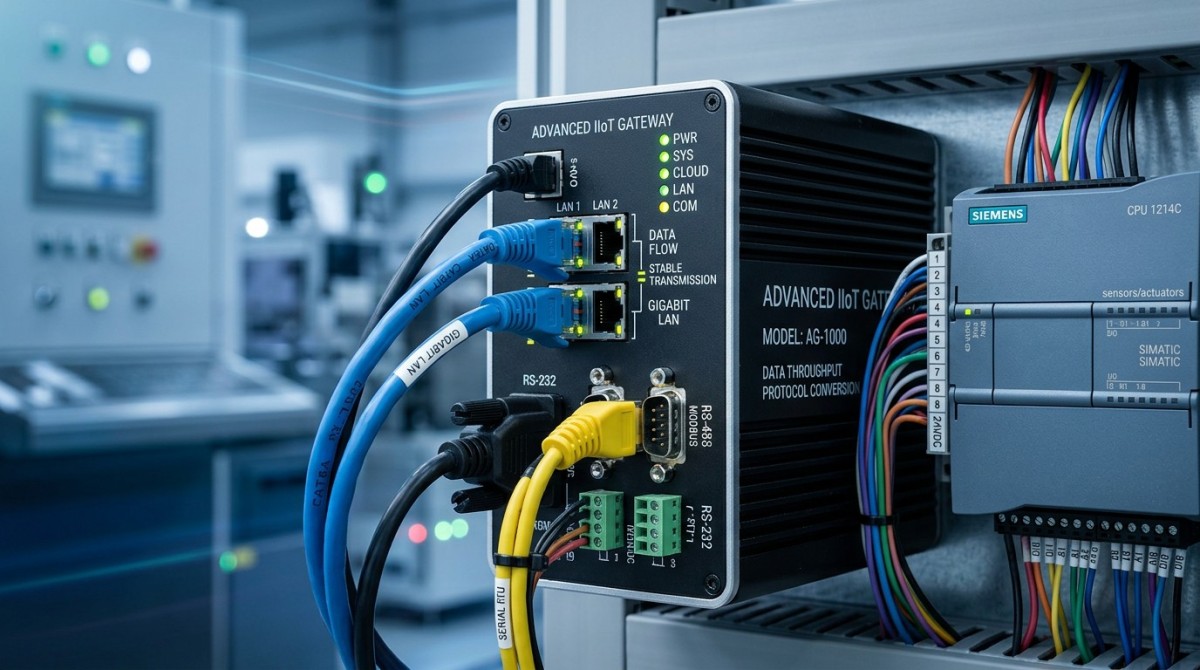
In industrial procurement, a vendor may advertise 50 Mbps, 100 Mbps, or even higher IoT gateway throughput. That number can look decisive, but without packet context it tells only a fraction of the story. A gateway forwarding small Modbus register updates behaves very differently from one handling MQTT payload bursts, OPC UA sessions, or encrypted edge-to-cloud telemetry with TLS enabled.
For operators, the practical concern is not headline bandwidth but whether the device can sustain stable traffic for 24/7 operation, tolerate peak concurrency, and keep industrial iot gateway latency within acceptable limits. For procurement teams, the risk is buying capacity that appears sufficient on paper yet underperforms when real message sizes, polling intervals, and protocol conversion are introduced.
This matters across manufacturing, utilities, logistics, smart buildings, and hybrid edge AI environments. A benchmark measured with 1500-byte packets and one protocol stack cannot be compared directly with results based on 64-byte packets, many short sessions, or gateway-side filtering. In practice, 3 variables usually distort interpretation first: payload size, session count, and security overhead.
TechStat Vanguard approaches these claims from an engineering-first perspective. Instead of accepting vague performance labels, buyers should ask what test window was used, how long the gateway maintained the result, and whether CPU utilization, memory usage, retransmissions, and thermal conditions were recorded over 30 minutes, 4 hours, or a full-duty cycle.
The first questions every benchmark should answer
- What packet sizes were used, such as 64 bytes, 256 bytes, 512 bytes, or 1500 bytes, and were payloads fixed or mixed?
- Which protocols were active: raw TCP, UDP, Modbus TCP, Modbus RTU to MQTT gateway conversion, OPC UA, HTTPS, or MQTT over TLS?
- How many concurrent device sessions or topics were simulated, and were publish and subscribe flows tested simultaneously?
- Was the benchmark run long enough to capture thermal throttling, queue buildup, packet loss, and edge computing power consumption behavior?
How to read packet context: payload, protocol overhead, and concurrency
Packet context converts a marketing number into a deployment number. Small packets generate more packets per second for the same bandwidth, which increases interrupt load, queue handling, and CPU pressure. Large packets may raise headline throughput but hide weak performance in control-heavy environments where devices send short telemetry every 100 ms, 500 ms, or 1 second.
Protocol overhead is equally important. A gateway moving data from Modbus RTU to MQTT does more than forward bytes. It polls serial buses, parses registers, maps tags, packages messages, and may encrypt them before uplink. In that chain, throughput is limited not only by Ethernet bandwidth but by serial timing, conversion logic, message batching strategy, and broker acknowledgment behavior.
Concurrency changes the benchmark again. A gateway supporting 1 high-speed stream can produce a different result from the same gateway serving 50 PLCs, 200 sensors, or 1,000 MQTT topics with mixed QoS levels. For many industrial networks, the bottleneck appears when bursts and polling cycles overlap, not during a smooth single-session lab test.
The table below shows why identical throughput claims may represent very different engineering realities. It is not a ranking of products. It is a framework for interpreting benchmark conditions when evaluating industrial IoT gateways across mixed use cases.
A useful rule is to compare benchmarks only when at least 4 items match: packet size profile, protocol stack, concurrency level, and security mode. If one vendor reports plain MQTT and another reports MQTT over TLS with certificate validation, the numbers are describing different workloads. That difference can alter both throughput and edge computing power consumption.
What engineers should request before approving a test report
Test condition checklist
- A packet distribution profile, such as 70% small payloads and 30% medium payloads, instead of only one packet size.
- A protocol map showing whether data passed through serial, Ethernet, fieldbus conversion, edge rules, and cloud transport layers.
- A runtime observation period of at least 30–60 minutes for screening and preferably 8–24 hours for production confidence.
- Associated metrics including CPU load, memory headroom, packet loss, queue depth, and industrial iot gateway latency at both average and peak moments.
Which metrics matter more than a single throughput headline?
Throughput is important, but it is rarely the sole acceptance criterion in B2B environments. Information researchers want comparable, reproducible metrics. Operators care about jitter, retries, and recovery after network disturbance. Procurement teams need evidence that a gateway will not trigger hidden integration work. Executives need a decision framework that reduces trial-and-error costs across multiple sites.
That means a useful benchmark should include at least 5 categories: sustained throughput, industrial iot gateway latency, packet loss or retransmission behavior, CPU and memory utilization, and power draw under load. In edge deployments, 2 gateways with similar Mbps figures may have very different thermal envelopes and operating costs if one spikes in power or struggles under encryption.
Latency deserves special attention. In monitoring-only applications, 200–500 ms end-to-end delay may be acceptable. In closed-loop or alarm-sensitive processes, a much tighter response window is often required. Even when throughput appears sufficient, queueing delay during polling bursts can degrade operator trust in dashboards, alarms, and historian accuracy.
The following comparison table helps teams prioritize benchmark metrics by deployment objective rather than by marketing visibility. It supports mixed audiences, from technical evaluators to procurement and management reviewers.
For serious evaluations, teams should combine 2 levels of testing: a short screening benchmark of 1–2 hours and a scenario benchmark that mirrors the actual site. This approach balances procurement efficiency with engineering caution. It also aligns with TSV’s principle that parameters should be read in operating context, not isolated from it.
A practical metric stack for multi-stakeholder review
- Use throughput to screen candidate platforms and exclude obvious under-capacity devices.
- Use latency and jitter to verify operational suitability for alarms, polling, and near-real-time visibility.
- Use conversion and concurrency tests to reveal integration limits before rollout.
- Use power and thermal data to validate remote cabinet, fanless enclosure, or edge AI installation constraints.
How different deployment scenarios change the meaning of throughput benchmarks
A smart factory line, a water treatment station, a logistics hub, and a remote energy site may all request an industrial IoT gateway, yet their benchmark priorities differ sharply. This is where a generic Mbps figure becomes dangerous. Application structure determines whether packet rate, conversion overhead, or recovery behavior matters more than nominal throughput.
In a PLC-heavy line, Modbus polling intervals of 100 ms to 1000 ms can generate regular bursts. In a building automation setting, many devices send smaller updates less frequently, but concurrency can be high. In a remote telemetry project, limited backhaul and strict power budgets make edge computing power consumption and local buffering more critical than maximum bandwidth.
Sensor-to-cloud reliability also changes interpretation. If the gateway performs store-and-forward during intermittent uplink loss, disk or memory behavior becomes part of the benchmark. If the deployment includes edge filtering or compression, the apparent throughput at the WAN side may drop while application efficiency improves. That is not poor performance; it is workload transformation.
The scenario matrix below helps readers map benchmark relevance to common industrial and cross-sector environments. It is especially useful when comparing vendor claims collected from datasheets, demos, and field pilot proposals.
The interpretation is simple: benchmark relevance is scenario-specific. A procurement team comparing three vendors should define 3–5 priority scenarios first, then request evidence tied to those scenarios. This reduces the common mistake of choosing the gateway with the largest advertised number instead of the best fit for protocol mix, environment, and life-cycle cost.
Typical mismatches between benchmark style and deployment reality
Watch for these gaps
- A lab test uses large Ethernet frames, but the field network mainly sends short telemetry packets every few hundred milliseconds.
- The benchmark excludes encryption, but the project requires VPN or TLS for every cloud connection.
- The result is measured with 1–2 sessions, but the rollout plan includes dozens of devices per cabinet and multi-site scaling.
- The gateway is tested as a pass-through bridge, while the real design expects edge rules, filtering, buffering, and protocol normalization.
Procurement guide: what buyers should ask before accepting gateway benchmark claims
For procurement personnel and enterprise decision-makers, the best protection against misleading benchmark numbers is a structured request list. Instead of asking only for datasheets, request a benchmark declaration sheet. This forces performance claims into a comparable format and shortens the supplier qualification cycle by making hidden assumptions visible early.
A practical evaluation should cover 6 areas: traffic profile, protocols, concurrency, security, operating environment, and sustain time. If any of these is missing, benchmark interpretation remains incomplete. This is especially relevant in cross-border sourcing, where translation and marketing simplification often compress technical nuance into one or two attractive figures.
Buyers should also align benchmark requests with deployment timing. For a pilot planned in 2–4 weeks, a short scenario validation may be enough. For multi-site rollout over 3–12 months, teams need a deeper qualification package including field simulation, failure recovery checks, and support expectations for firmware changes or configuration templates.
The checklist below is designed to support B2B buying decisions without relying on inflated claims. It also reflects TSV’s core method: remove descriptive hype, keep measurable engineering context, and compare what actually affects deployment success.
Buyer checklist for industrial IoT gateway benchmark review
- Request packet context explicitly, including payload range, test duration, and whether traffic was steady, bursty, or mixed.
- Ask for protocol-path disclosure: serial polling, fieldbus parsing, MQTT publish rate, cloud connector, and encryption state.
- Verify concurrency numbers such as device count, topic count, session count, and polling interval distribution.
- Check supporting metrics: latency percentile, packet loss, CPU load, memory headroom, and edge computing power consumption under load.
- Match the benchmark to your acceptance criteria, such as alarm responsiveness, historian freshness, or remote-site energy limits.
- Require a pilot or witness test when the project involves mixed protocols, regulatory constraints, or multi-site scaling risk.
FAQ and common misconceptions
Is higher throughput always better?
No. If your application sends small control packets, the more important issue may be packet rate handling, conversion efficiency, and latency stability. A gateway with a lower headline Mbps figure can still be a better operational fit if it sustains lower jitter and cleaner protocol handling over 8–24 hours.
How should I compare a Modbus RTU to MQTT gateway with an Ethernet-only gateway?
Do not compare their throughput claims directly unless the workload is normalized. Serial polling cycles, register parsing, MQTT topic design, and broker acknowledgments add measurable overhead. Ask for a scenario-specific test using your approximate register count, polling interval, and publish strategy.
What is a reasonable benchmark duration?
For preliminary screening, 30–60 minutes can reveal obvious limits. For procurement decisions, a longer 8–24 hour run is more useful because it exposes thermal behavior, queue growth, reconnection handling, and the effect of sustained edge workloads on power and latency.
Why teams use TSV to interpret gateway benchmarks before purchase
TechStat Vanguard is built for organizations that need engineering truth rather than polished ambiguity. In hard-tech supply chains, the cost of accepting an unqualified throughput claim can appear later as delayed commissioning, unstable polling, unplanned gateway replacement, or a second integration cycle. Those are not minor inconveniences; they are procurement and operations risks.
Our value is not in repeating vendor numbers. It is in helping teams translate benchmark language into decision language. For researchers, that means clarifying test context. For users and operators, it means linking performance to actual uptime and responsiveness. For buyers and executives, it means reducing supplier qualification ambiguity and improving specification discipline before contracts are signed.
If you are reviewing industrial IoT gateway claims, TSV can help you define the right benchmark framework, compare protocol-conversion scenarios, and identify whether throughput, industrial iot gateway latency, or edge computing power consumption is the true constraint in your project. This is particularly useful when you need a neutral technical lens across multiple vendors or regions.
Contact TSV when you need support with parameter confirmation, gateway selection logic, pilot benchmark design, protocol-path analysis, expected delivery evaluation, or certification-related specification review. A focused technical inquiry at the start of a sourcing cycle can save weeks of rework later and help your team buy based on measurable fit, not incomplete benchmark headlines.
Search News
Hot Articles
- Carbon Fiber StructuresHow to Specify Aerospace Carbon Fiber Assemblies for Lightweight, Load-Bearing PartsJul 11, 2026
- Machine VisionXiaomi, Alibaba DAMO Academy Drive Open-Source Robotics Model Ecosystem, Lowering Algorithm Development Barriers for Overseas SMEs Adopting Chinese Robotics SolutionsMar 30, 2026
- Cobots & ArmsShanxi 'AI+' Conference Showcases Embodied Intelligence with Multinational Buyer Engagement: Key Industry ImplicationsMar 30, 2026
Popular Tags
Recommended News
 Jul 11, 2026How to Specify Aerospace Carbon Fiber Assemblies for Lightweight, Load-Bearing PartsAerospace carbon fiber assemblies: learn how to specify laminate design, load data, joining methods, and inspection controls for lighter, reliable load-bearing aerospace parts.Elena Rostova (UAV Systems Researcher)
 Mar 30, 2026Xiaomi, Alibaba DAMO Academy Drive Open-Source Robotics Model Ecosystem, Lowering Algorithm Development Barriers for Overseas SMEs Adopting Chinese Robotics SolutionsXiaomi & Alibaba DAMO Academy's open-source robotics models lower algorithm barriers for global SMEs. Boost efficiency in manufacturing, logistics & smart retail with ROS 2 compatible solutions.TSV Data Lab
 Mar 30, 2026Shanxi 'AI+' Conference Showcases Embodied Intelligence with Multinational Buyer Engagement: Key Industry ImplicationsShanxi 'AI+' Conference highlights embodied intelligence with Tesla, Ubtech & Jiantao showcasing multimodal robotics. 40+ global buyers validated tech on-site, creating new B2B channels for industrial automation & AI solutions.Chen Wei (Automation Lead Engineer)
 Mar 30, 2026Zhongguancun Unveils 6G Integrated Sensing-Computing-Intelligence Platform to Empower Embodied Robots for Global Industrial ApplicationsZhongguancun's new 6G platform revolutionizes industrial robotics with <10ms latency, empowering global automotive, logistics & port automation. Discover how this tech boosts China's smart manufacturing exports.TSV Data Lab
 Mar 30, 2026Mech-Mind Tianjin Embodied Intelligence R&D and Production Base Goes Live, Cutting Delivery Time by 20%–30% for Global Customized AMR+Vision SolutionsMech-Mind's Tianjin AMR+Vision production base cuts delivery time by 20%-30% for欧美 & Latin American markets. Discover how this PLd-certified facility accelerates customized robotics solutions for smart manufacturing and logistics.Chen Wei (Automation Lead Engineer)
 Mar 30, 2026Boao Forum Reveals 'Co-evolution of Big and Small Brains' Trend in Humanoid Robots, China's Embodied Intelligence Accelerates Adaptation to Overseas Manufacturing Service ScenariosDiscover how China's humanoid robots, featuring 'Co-evolution of Big and Small Brains,' are revolutionizing global manufacturing. Learn about Embodied Tian Gong 3.0's ISO compliance and overseas deployment at Boao Forum 2026.Chen Wei (Automation Lead Engineer)
 Mar 30, 2026China Railway Industrial Secures Patent for Embodied Robotics in Material Handling, Boosting High-Precision Delivery Capabilities for Overseas Infrastructure and Manufacturing ProjectsChina Railway Industrial's new patent for embodied robotics in material handling boosts high-precision delivery for global infrastructure & manufacturing. Discover how this innovation enhances logistics accuracy in automotive, rail transit & EPC projects.Chen Wei (Automation Lead Engineer)
 Oct 21, 2026China’s Industrial Robot Exports Near RMB 10 Billion in First Nine Months of 2026China’s industrial robot exports neared RMB 10 billion in January–September 2026, with value rising faster than volume. Explore the data and what it could mean for suppliers.Chen Wei (Automation Lead Engineer)
 Oct 21, 2026Low-Latency Industrial Data Processing: Pricing and Key Cost DriversExplore industrial data latency price drivers, from edge hardware to integration and support. Learn how to compare quotes, verify performance, and avoid unnecessary costs.TSV Data Lab
 Oct 20, 2026KUKA Launches iiQKA.AI Vision to Simplify Industrial Image ProcessingKUKA iiQKA.AI Vision simplifies industrial image processing with controller-based 2D and 3D vision. Explore drag-and-drop setup for vision-guided automation.TSV Data Lab
 Oct 20, 2026Smart Industrial Edge Devices: Key Criteria for Legacy PLC IntegrationChoose smart industrial edge devices for legacy PLC integration. Discover key criteria for compatibility, data quality, security, and reliable collection without disrupting control.TSV Data Lab
 Oct 19, 2026Choosing a Radar Sensor by Application: Range, Resolution, and Field of ViewSimplify radar sensor application based product selection. Compare range, resolution, and field of view to avoid blind spots and choose with confidence. Explore the guide.TSV Data Lab
 Oct 18, 2026Comparing Material Options for Procurement: Specs, Costs, and Supply RisksExplore procurement oriented technical content on material options, specs, costs, and supply risks. Compare alternatives to cut hidden expenses and make confident sourcing decisions.Dr. Marcus Vance
 Oct 17, 20265-Axis CNC Positioning Accuracy: How to Interpret ISO 230-2 Test ResultsAssess 5 axis CNC machining positioning accuracy with ISO 230-2. Learn to interpret repeatability, reversal error, and test conditions to compare suppliers and make confident acceptance decisions.Dr. Marcus Vance
 Oct 16, 2026Choosing a Rugged Edge AI Box Supplier: Thermal Tests and Lifecycle SupportChoose a rugged edge AI box supplier with proven thermal performance and reliable lifecycle support. Discover the tests and commitments to verify before you buy.TSV Data Lab
 Oct 15, 2026R&D Cost Reduction Services: How to Evaluate Fees, Savings, and ROIEvaluate R&D cost reduction services with confidence. Compare fees, verify savings, and calculate ROI without compromising performance. Discover how to choose a provider that delivers real value.Chen Wei (Automation Lead Engineer)
 Oct 21, 2026How Should You Balance Cobot Payload Against Reach?Explore cobot payload versus reach to choose the right robot. Learn how tooling, load limits, workspace, and cycle time affect performance—and avoid costly selection mistakes.Chen Wei (Automation Lead Engineer)
 Oct 20, 2026How Do You Measure Industrial IoT Gateway Latency Under Load?Measure industrial IoT gateway latency under load with reliable timestamps, realistic traffic, and tail-latency analysis. Discover how to expose bottlenecks and choose the right gateway.TSV Data Lab
 Oct 19, 2026How Do You Verify That Precision Machined Parts Meet Tolerances?Master precision machining tolerance verification with the right tools, datum setups, and acceptance rules. Learn how to validate parts confidently and reduce costly inspection errors.Dr. Marcus Vance
 Oct 18, 2026What Should an AS9100 Machining Supplier Checklist Include?Build an AS9100 machining supplier checklist that verifies capability, traceability, inspection, and outsourced processes. Discover what to check before approving your next aerospace supplier.Dr. Marcus Vance
 Oct 17, 2026How Should You Interpret Industrial Robot Repeatability Specs?Decode industrial robot repeatability specifications, understand ISO 9283 test conditions, and avoid costly selection mistakes. Learn how to verify performance for your process.Chen Wei (Automation Lead Engineer)
 Oct 16, 2026How Can You Fairly Compare MTBF Across Industrial Servo Motors?Make a fair industrial servo motor MTBF comparison with matched operating profiles, failure criteria, and confidence bounds. Discover how to assess reliability beyond advertised numbers.Chen Wei (Automation Lead Engineer)
 Oct 15, 2026How Should You Compare TechStat Vanguard 5-Axis CNC Tolerances?TechStat Vanguard 5-axis CNC tolerance comparison: learn how to verify part accuracy, assess inspection evidence, and choose suppliers that reliably meet your drawing requirements.Dr. Marcus Vance
 Oct 14, 2026Drone Frame Composites: Carbon Fiber vs. Fiberglass for Weight and StiffnessExplore drone structural materials composites: compare carbon fiber and fiberglass for weight, stiffness, cost, and antenna compatibility. Find the right material for your drone frame.Elena Rostova (UAV Systems Researcher)