mmWave radar angular resolution or range: which matters more?
Publication Date
author
When evaluating 77GHz radar detection range, many engineers and buyers still ask whether mmWave radar angular resolution or sheer range matters more. The short answer is: neither is universally “more important.” In real deployments, angular resolution matters more when you need to distinguish adjacent targets, track objects in cluttered environments, or support path planning with confidence. Range matters more when early detection distance directly determines safety margin, braking time, or monitoring coverage. For most practical system selection, the right question is not “range or resolution?” but “what minimum resolution is required at what distance, under what target density, and for which decision task?”
That distinction is especially important for R&D teams, operators, procurement specialists, and enterprise decision-makers comparing mmWave radar against alternatives such as lidar field of view comparison, solid state lidar point cloud density, and machine vision sub-pixel accuracy. A sensor can advertise impressive maximum range yet still fail to separate two vehicles in adjacent lanes. Likewise, a radar with strong angular resolution but insufficient range for the stopping distance or surveillance geometry may be the wrong choice. This article breaks the trade-off down in practical engineering terms.
What matters more in practice: mmWave radar angular resolution or range?
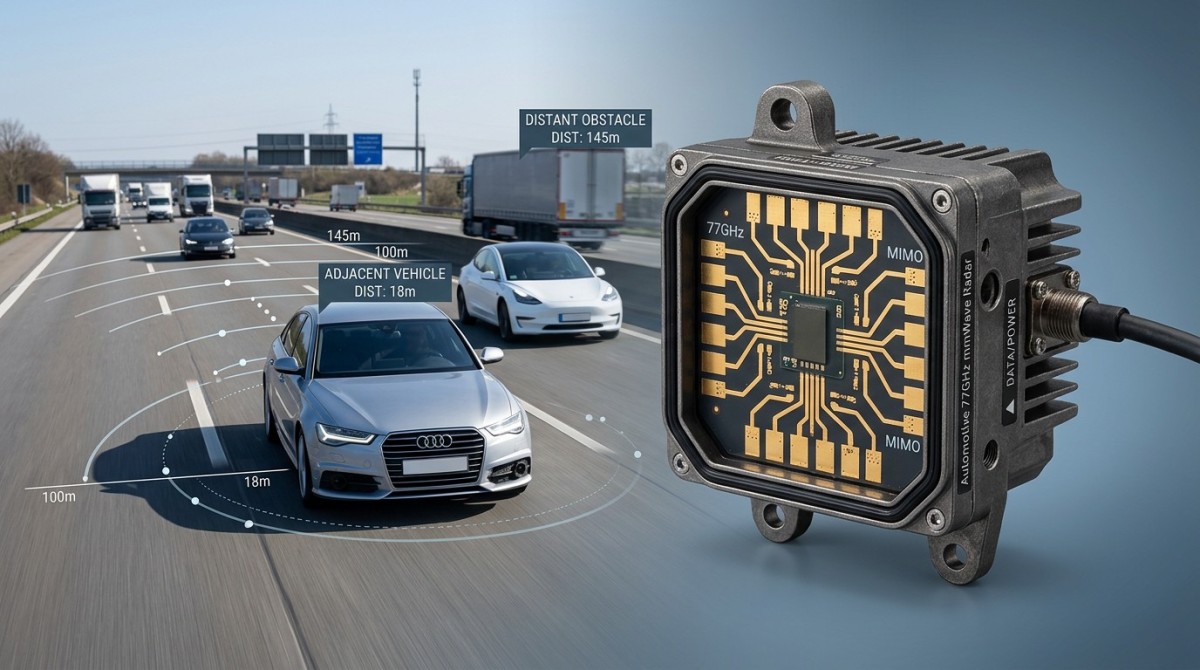
For most real-world applications, angular resolution determines whether the radar data is actionable, while range determines whether the system has enough reaction time or coverage. If forced to prioritize, many advanced applications benefit more from better angular resolution once baseline range is already adequate. That is because a long-range radar that cannot reliably separate targets often creates ambiguity rather than usable situational awareness.
Here is the practical rule:
- Prioritize angular resolution when the scene contains multiple nearby objects, lane-level discrimination, people-versus-structure separation, intersection complexity, docking, robotic navigation, perimeter monitoring with clutter, or tracking in dense traffic.
- Prioritize range when the mission requires long early-warning distance, high-speed motion planning, wide-area detection, sparse target environments, or safety systems where additional meters directly improve response time.
In other words, maximum range is valuable only if the radar can still tell what is present and where it is with enough spatial separation to support a decision.
Why buyers and engineers often overvalue maximum detection range
Maximum range is easy to market and easy to compare on a datasheet. It gives the impression of stronger performance because larger numbers look better. But in engineering deployment, published range figures are often tied to specific assumptions: target radar cross section, favorable orientation, controlled conditions, and acceptable false alarm thresholds. These assumptions may not represent your operating environment.
For example, a 77GHz radar detection range claim based on a large, highly reflective vehicle target in open space says little about performance on:
- small roadside obstacles,
- pedestrians near metal infrastructure,
- multiple vehicles at similar azimuth angles,
- low-reflectivity objects,
- industrial sites with heavy multipath clutter.
Decision-makers should ask a better set of questions:
- At what range can the radar still maintain useful separation between adjacent targets?
- How does detection degrade in clutter, rain, dust, or reflective environments?
- What is the real operating range for the target classes that matter to us?
- How stable is target tracking at that distance?
This is where angular resolution becomes decisive. If the sensor cannot resolve two close targets, long-range detection may still fail operationally because the system sees a merged blob instead of separate objects.
What angular resolution actually changes in the field
Angular resolution is not just a lab specification. It directly affects scene interpretation. Better mmWave radar angular resolution improves the system’s ability to distinguish objects that are close together in angle, which is critical in environments where targets overlap from the radar’s viewpoint.
Higher angular resolution helps with:
- Target separation: distinguishing two cars in neighboring lanes instead of reporting one broad return.
- Clutter handling: isolating relevant targets from guardrails, poles, shelving, machinery, or walls.
- Tracking stability: maintaining consistent identity for moving objects in dense scenes.
- Spatial confidence: improving downstream fusion with cameras, lidar, or control logic.
- Reduced ambiguity: lowering the chance that the operator or algorithm misinterprets the scene.
For users and operators, this often translates into fewer nuisance alerts and more trustworthy detections. For procurement teams, it means fewer expensive surprises during pilot deployment. For enterprise decision-makers, it means lower integration risk and better return on sensor investment.
When range should be the top requirement
There are many scenarios where range remains the dominant requirement. If the platform moves quickly or the system must detect hazards far in advance, insufficient range becomes a hard limitation. No amount of angular refinement compensates for not seeing the object early enough.
Range should lead the sensor specification when:
- vehicle speed or platform speed demands early hazard awareness,
- braking or maneuvering distance is long,
- the environment is relatively sparse,
- the mission is wide-area monitoring rather than dense target discrimination,
- the radar is a first-layer warning sensor in a multi-sensor stack.
Examples include long straight roadway monitoring, high-speed unmanned systems, corridor surveillance, and perimeter detection where the key requirement is “see it early.” In these cases, the better question is whether the radar can detect the required target type with enough margin under real operating conditions, not merely whether the brochure lists a long maximum range.
How to judge the trade-off by application instead of by marketing claims
The most reliable way to decide between mmWave radar angular resolution or range is to map sensor specifications to the actual task. Different use cases fail for different reasons.
1. Automotive and mobility systems
In dense traffic, lane merges, urban intersections, and vulnerable road user detection, angular resolution often becomes the limiting factor after basic range is met. On highways or long approach scenarios, range gains more weight.
2. Industrial automation and robotics
Factories, warehouses, and yards are cluttered. Forklifts, racks, pallets, people, and metal structures create difficult scenes. Here, angular resolution usually matters more because object separation and false alarm control drive usability.
3. UAV and aerospace support sensing
The answer depends on altitude, airspeed, and mission. Long-range detection may dominate for collision awareness in sparse airspace, but angular discrimination becomes crucial when terrain, structures, and multiple objects enter the picture.
4. Security and perimeter monitoring
If the goal is early detection across open ground, range is a priority. If the site has fencing, vehicles, vegetation, and infrastructure that create clutter, angular resolution rapidly becomes more important to reduce nuisance events.
5. Sensor fusion systems
In systems that also use lidar and cameras, the radar does not work alone. Its value depends on how well it complements other sensors. A long-range but spatially ambiguous radar may contribute less than a shorter-range radar with better separation, depending on the fusion architecture.
How mmWave radar compares with lidar and machine vision in this decision
Many searchers comparing mmWave radar angular resolution or range are also evaluating radar against lidar and vision. This is the right comparison, because “what matters more” depends partly on what other sensors are available.
Compared with lidar field of view comparison, radar typically offers stronger performance in adverse weather and robust velocity sensing, but lidar often provides finer spatial structure. If the application needs detailed shape and contour information, solid state lidar point cloud density can deliver more geometric richness than radar alone.
Compared with machine vision sub-pixel accuracy, cameras can provide extremely precise image-space measurement under favorable conditions, but they depend heavily on lighting, contrast, calibration, and line of sight. Radar is less sensitive to these issues and performs well as a complementary sensing layer.
The key takeaway is simple:
- If your system lacks another sensor that can provide spatial separation, mmWave radar angular resolution becomes more valuable.
- If another sensor already handles fine localization, radar range may become the more important contribution.
- If environmental robustness is critical, radar may remain indispensable even when its spatial detail is lower than lidar or vision.
What procurement teams should ask suppliers before making a decision
For procurement specialists and technical evaluators, the best protection against poor sensor selection is to replace broad claims with testable questions. Ask suppliers for operating data, not adjectives.
- What is the radar’s effective angular resolution at the distances we care about, not just under ideal conditions?
- At what distance can it separate two relevant targets with high confidence?
- What target radar cross section assumptions are used in the range specification?
- How does performance change in rain, dust, fog, metal-rich environments, or high-clutter industrial zones?
- What is the false alarm behavior at long range?
- Can the vendor provide scenario-based benchmarking rather than only peak values?
- How well does the sensor integrate with lidar, machine vision, or edge AI processing pipelines?
These questions reduce supplier qualification risk and help prevent a common failure: buying a radar for its headline range, then discovering during validation that it cannot deliver target separation where operations actually need it.
A practical decision framework: which should you prioritize?
Use this simplified framework:
- Choose angular resolution first if your environment is dense, cluttered, multi-target, lane-sensitive, or requires confident object separation.
- Choose range first if your environment is sparse, speed is high, warning time is critical, or detection coverage is the primary mission objective.
- Choose a balanced sensor if the system must both detect early and separate targets reliably, especially in mixed operational environments.
Then validate with three numbers rather than one:
- minimum required detection distance,
- minimum required target separation at that distance,
- acceptable false alarm and missed detection rate in the real environment.
This approach is far more useful than asking whether mmWave radar angular resolution or range matters more in the abstract.
Conclusion
So, mmWave radar angular resolution or range: which matters more? The engineering answer is conditional but clear. Range matters when reaction distance or coverage is the bottleneck. Angular resolution matters when scene interpretation and target separation are the bottleneck. In many modern deployments, once baseline range is sufficient, angular resolution often becomes the bigger differentiator because it determines whether the radar output is operationally useful rather than merely detectable.
For R&D teams, the right evaluation method is scenario-based benchmarking. For operators, the issue is whether the sensor reduces ambiguity in real scenes. For procurement teams, the focus should be usable performance at required distances, not brochure maximums. For decision-makers, the smartest investment is the sensor profile that best matches mission risk, environment complexity, and integration architecture.
In hard-tech procurement, bigger numbers do not automatically mean better systems. The right sensor is the one that delivers reliable decisions at the exact distance, separation, and environment your operation demands.
Search News
Hot Articles
- Carbon Fiber StructuresHow to Specify Aerospace Carbon Fiber Assemblies for Lightweight, Load-Bearing PartsJul 11, 2026
- Machine VisionXiaomi, Alibaba DAMO Academy Drive Open-Source Robotics Model Ecosystem, Lowering Algorithm Development Barriers for Overseas SMEs Adopting Chinese Robotics SolutionsMar 30, 2026
- Cobots & ArmsShanxi 'AI+' Conference Showcases Embodied Intelligence with Multinational Buyer Engagement: Key Industry ImplicationsMar 30, 2026
Popular Tags
Recommended News
 Jul 11, 2026How to Specify Aerospace Carbon Fiber Assemblies for Lightweight, Load-Bearing PartsAerospace carbon fiber assemblies: learn how to specify laminate design, load data, joining methods, and inspection controls for lighter, reliable load-bearing aerospace parts.Elena Rostova (UAV Systems Researcher)
 Mar 30, 2026Xiaomi, Alibaba DAMO Academy Drive Open-Source Robotics Model Ecosystem, Lowering Algorithm Development Barriers for Overseas SMEs Adopting Chinese Robotics SolutionsXiaomi & Alibaba DAMO Academy's open-source robotics models lower algorithm barriers for global SMEs. Boost efficiency in manufacturing, logistics & smart retail with ROS 2 compatible solutions.TSV Data Lab
 Mar 30, 2026Shanxi 'AI+' Conference Showcases Embodied Intelligence with Multinational Buyer Engagement: Key Industry ImplicationsShanxi 'AI+' Conference highlights embodied intelligence with Tesla, Ubtech & Jiantao showcasing multimodal robotics. 40+ global buyers validated tech on-site, creating new B2B channels for industrial automation & AI solutions.Chen Wei (Automation Lead Engineer)
 Mar 30, 2026Zhongguancun Unveils 6G Integrated Sensing-Computing-Intelligence Platform to Empower Embodied Robots for Global Industrial ApplicationsZhongguancun's new 6G platform revolutionizes industrial robotics with <10ms latency, empowering global automotive, logistics & port automation. Discover how this tech boosts China's smart manufacturing exports.TSV Data Lab
 Mar 30, 2026Mech-Mind Tianjin Embodied Intelligence R&D and Production Base Goes Live, Cutting Delivery Time by 20%–30% for Global Customized AMR+Vision SolutionsMech-Mind's Tianjin AMR+Vision production base cuts delivery time by 20%-30% for欧美 & Latin American markets. Discover how this PLd-certified facility accelerates customized robotics solutions for smart manufacturing and logistics.Chen Wei (Automation Lead Engineer)
 Mar 30, 2026Boao Forum Reveals 'Co-evolution of Big and Small Brains' Trend in Humanoid Robots, China's Embodied Intelligence Accelerates Adaptation to Overseas Manufacturing Service ScenariosDiscover how China's humanoid robots, featuring 'Co-evolution of Big and Small Brains,' are revolutionizing global manufacturing. Learn about Embodied Tian Gong 3.0's ISO compliance and overseas deployment at Boao Forum 2026.Chen Wei (Automation Lead Engineer)
 Mar 30, 2026China Railway Industrial Secures Patent for Embodied Robotics in Material Handling, Boosting High-Precision Delivery Capabilities for Overseas Infrastructure and Manufacturing ProjectsChina Railway Industrial's new patent for embodied robotics in material handling boosts high-precision delivery for global infrastructure & manufacturing. Discover how this innovation enhances logistics accuracy in automotive, rail transit & EPC projects.Chen Wei (Automation Lead Engineer)
 Oct 21, 2026China’s Industrial Robot Exports Near RMB 10 Billion in First Nine Months of 2026China’s industrial robot exports neared RMB 10 billion in January–September 2026, with value rising faster than volume. Explore the data and what it could mean for suppliers.Chen Wei (Automation Lead Engineer)
 Oct 21, 2026Low-Latency Industrial Data Processing: Pricing and Key Cost DriversExplore industrial data latency price drivers, from edge hardware to integration and support. Learn how to compare quotes, verify performance, and avoid unnecessary costs.TSV Data Lab
 Oct 20, 2026KUKA Launches iiQKA.AI Vision to Simplify Industrial Image ProcessingKUKA iiQKA.AI Vision simplifies industrial image processing with controller-based 2D and 3D vision. Explore drag-and-drop setup for vision-guided automation.TSV Data Lab
 Oct 20, 2026Smart Industrial Edge Devices: Key Criteria for Legacy PLC IntegrationChoose smart industrial edge devices for legacy PLC integration. Discover key criteria for compatibility, data quality, security, and reliable collection without disrupting control.TSV Data Lab
 Oct 19, 2026Choosing a Radar Sensor by Application: Range, Resolution, and Field of ViewSimplify radar sensor application based product selection. Compare range, resolution, and field of view to avoid blind spots and choose with confidence. Explore the guide.TSV Data Lab
 Oct 18, 2026Comparing Material Options for Procurement: Specs, Costs, and Supply RisksExplore procurement oriented technical content on material options, specs, costs, and supply risks. Compare alternatives to cut hidden expenses and make confident sourcing decisions.Dr. Marcus Vance
 Oct 17, 20265-Axis CNC Positioning Accuracy: How to Interpret ISO 230-2 Test ResultsAssess 5 axis CNC machining positioning accuracy with ISO 230-2. Learn to interpret repeatability, reversal error, and test conditions to compare suppliers and make confident acceptance decisions.Dr. Marcus Vance
 Oct 16, 2026Choosing a Rugged Edge AI Box Supplier: Thermal Tests and Lifecycle SupportChoose a rugged edge AI box supplier with proven thermal performance and reliable lifecycle support. Discover the tests and commitments to verify before you buy.TSV Data Lab
 Oct 15, 2026R&D Cost Reduction Services: How to Evaluate Fees, Savings, and ROIEvaluate R&D cost reduction services with confidence. Compare fees, verify savings, and calculate ROI without compromising performance. Discover how to choose a provider that delivers real value.Chen Wei (Automation Lead Engineer)
 Oct 20, 2026How Do You Measure Industrial IoT Gateway Latency Under Load?Measure industrial IoT gateway latency under load with reliable timestamps, realistic traffic, and tail-latency analysis. Discover how to expose bottlenecks and choose the right gateway.TSV Data Lab
 Oct 19, 2026How Do You Verify That Precision Machined Parts Meet Tolerances?Master precision machining tolerance verification with the right tools, datum setups, and acceptance rules. Learn how to validate parts confidently and reduce costly inspection errors.Dr. Marcus Vance
 Oct 18, 2026What Should an AS9100 Machining Supplier Checklist Include?Build an AS9100 machining supplier checklist that verifies capability, traceability, inspection, and outsourced processes. Discover what to check before approving your next aerospace supplier.Dr. Marcus Vance
 Oct 17, 2026How Should You Interpret Industrial Robot Repeatability Specs?Decode industrial robot repeatability specifications, understand ISO 9283 test conditions, and avoid costly selection mistakes. Learn how to verify performance for your process.Chen Wei (Automation Lead Engineer)
 Oct 16, 2026How Can You Fairly Compare MTBF Across Industrial Servo Motors?Make a fair industrial servo motor MTBF comparison with matched operating profiles, failure criteria, and confidence bounds. Discover how to assess reliability beyond advertised numbers.Chen Wei (Automation Lead Engineer)
 Oct 15, 2026How Should You Compare TechStat Vanguard 5-Axis CNC Tolerances?TechStat Vanguard 5-axis CNC tolerance comparison: learn how to verify part accuracy, assess inspection evidence, and choose suppliers that reliably meet your drawing requirements.Dr. Marcus Vance
 Oct 14, 2026Drone Frame Composites: Carbon Fiber vs. Fiberglass for Weight and StiffnessExplore drone structural materials composites: compare carbon fiber and fiberglass for weight, stiffness, cost, and antenna compatibility. Find the right material for your drone frame.Elena Rostova (UAV Systems Researcher)
 Oct 13, 2026Smart Cameras vs. PC-Based Machine Vision: Which Fits High-Speed Inspection?This industrial product comparison for machine vision weighs smart cameras vs. PC-based systems on latency, throughput, and cost. Discover your best fit for high-speed inspection.TSV Data Lab