Industrial temperature sensor wholesale: why low price can mislead
Publication Date
author
In industrial temperature sensor wholesale, the lowest quote can hide costly trade-offs in stability, calibration drift, and lifecycle risk. For buyers comparing an industrial pressure transmitter wholesale offer or evaluating an agv lidar sensor supplier, price alone rarely reflects engineering truth. This article explains why low-cost sourcing can mislead procurement, operations, and technical teams—and what data points actually matter before you commit.
For B2B buyers, this is not a minor sourcing detail. A temperature sensor that looks 12% to 25% cheaper on a quotation sheet can trigger a much larger cost impact after installation, especially in process automation, energy systems, food processing, chemical lines, and precision manufacturing. The real issue is not unit price alone, but whether the sensor can hold accuracy across thermal cycling, vibration, humidity, EMI exposure, and long operating hours.
This matters to multiple stakeholders. Procurement teams want cost control and supply stability. Operators need repeatable readings and fewer maintenance interruptions. Engineering teams need predictable output characteristics and calibration behavior. Business decision-makers need lower lifecycle cost, less downtime, and fewer supplier qualification surprises. In hard-tech sourcing, parameters decide outcomes more reliably than slogans.
Why the Lowest Wholesale Quote Often Distorts the Real Cost
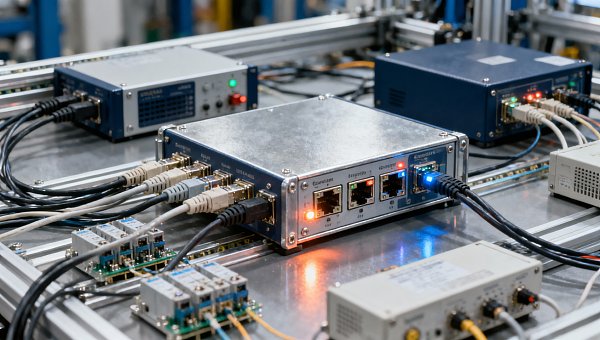
[[IMG:img_01]]In industrial temperature sensor wholesale, a low initial quote usually reflects a compromise somewhere in the chain: sensing element grade, sheath material, cable shielding, sealing method, calibration process, traceability documentation, or batch consistency. These compromises may not be visible on a simple RFQ sheet, yet they strongly influence field performance after 3 months, 6 months, or 12 months of continuous use.
A sensor used in a stable indoor cabinet at 25°C is not exposed to the same risks as a probe installed on a furnace line at 250°C, a refrigeration loop at -40°C, or an outdoor process skid facing rain, dust, and voltage noise. Low-cost offers frequently assume benign conditions, while real industrial deployment often includes temperature shock, connector stress, fluid contamination, and mechanical vibration above 10 Hz to 50 Hz.
Another problem is hidden variance between batches. One sample may pass basic bench inspection, while the next 200 units show wider tolerance spread. For procurement, this creates a false sense of savings. A 1,000-piece order with even a 3% to 5% early failure rate can consume the apparent price advantage through replacement labor, line stoppage, extra QA checks, and expedited freight.
Where low pricing usually comes from
Not every low quote is problematic, but buyers should understand what is being reduced. In many cases, the price gap comes from shorter calibration time, looser resistance matching, lower-grade stainless steel, simplified potting, thinner insulation, or limited documentation. When a supplier cannot clearly show tolerances, drift ranges, and test conditions, the low quote becomes a risk signal rather than a benefit.
- Reduced material specification, such as using less corrosion-resistant housings in humid or chemical environments.
- Fewer calibration points, for example 1-point checking instead of 2-point or 3-point verification.
- Weaker sealing design, increasing moisture ingress risk in washdown or outdoor use.
- Lower process control during batch production, leading to inconsistent response time and repeatability.
The table below shows how a lower purchase price can shift cost into later stages of operation and supplier management.
The key conclusion is simple: the cheapest unit is not always the cheapest decision. In many industrial settings, one unplanned stop can cost more than the price difference on an entire sensor batch. That is why experienced buyers compare total lifecycle impact, not quote price in isolation.
The Technical Data Points That Matter More Than Price
If buyers want to avoid misleading low-cost offers, they need to evaluate sensors through measurable technical criteria. For industrial temperature sensors, the most important parameters usually include accuracy class, repeatability, response time, drift rate, operating temperature range, ingress protection, sheath compatibility, output format, and documentation depth. These are the data points that reveal engineering truth.
For example, a sensor listed as “high accuracy” without a stated reference condition is not very useful. Buyers need numbers such as ±0.2°C, ±0.5°C, or ±0.75% of reading, along with the defined test temperature and installation assumptions. Likewise, response time should be linked to a medium and method, such as liquid immersion or air exposure, because a 2-second response in water does not equal a 2-second response in moving air.
Drift is especially important in continuous industrial service. A sensor that drifts 0.3°C every 6 months may still be acceptable in HVAC or utility monitoring, but it can become a serious problem in pharmaceutical processes, thermal chambers, food sterilization, or precision molding. This is where low-price offers often fall short: they quote nominal accuracy, but avoid discussing stability over time.
Core evaluation parameters for wholesale comparison
The table below can help procurement teams, engineers, and operators create a more reliable supplier comparison sheet before shortlisting vendors.
A disciplined comparison matrix also helps when buyers are evaluating adjacent components, such as an industrial pressure transmitter wholesale package or an agv lidar sensor supplier. Although the technologies differ, the principle is the same: defined tolerance, known environmental limits, and test-backed consistency matter more than promotional wording.
Questions buyers should ask before approving a sample
- What is the stated accuracy at the actual operating range, not only at room temperature?
- How much drift is expected after 500, 1,000, or 2,000 operating hours?
- What sealing method and cable protection are used in humid, oily, or washdown environments?
- Can the supplier provide batch-level consistency data and incoming inspection guidance?
When suppliers answer these questions with clear ranges, tolerances, and test conditions, procurement gets a much stronger basis for decision-making. When the answer is vague, the low quote should be treated carefully.
Application Risk: What Different Stakeholders Actually Lose When Sensors Underperform
The damage from low-grade temperature sensors is not limited to the maintenance department. In industrial operations, sensor performance affects process control loops, safety thresholds, product quality, compliance records, energy use, and service planning. That means a weak procurement decision can create cross-functional losses across at least 4 groups: operators, engineers, procurement teams, and executives.
For operators, the first sign is often unstable readings. A fluctuation of just 1°C to 2°C may not look dramatic on an HMI, but in thermal process control it can trigger nuisance alarms, slower ramp rates, overcorrection, or poor batch repeatability. In production settings that run 16 to 24 hours per day, these small deviations accumulate into scrap, rework, or avoidable downtime.
For engineers, the biggest problem is diagnostic ambiguity. If a machine starts drifting out of specification, they need to determine whether the root cause is the heater, controller, wiring, or sensor itself. Low-traceability components make failure analysis slower. A missing calibration history or unclear material spec can turn a 2-hour investigation into a multi-day troubleshooting cycle.
How risk appears across industrial scenarios
The following comparison shows how identical pricing logic can create very different operational consequences depending on the application environment.
For procurement managers, underperformance also creates supplier risk. Once failure rates rise above even 2% to 3%, incoming inspection usually becomes tighter, internal trust in the supplier declines, and emergency sourcing becomes more likely. That means the organization loses time twice: once during failure management and again during requalification of alternative vendors.
Common warning signs during supplier evaluation
- The quotation lists material and output type, but gives no drift range over time.
- The sample passes basic testing, but the supplier cannot explain batch control between 100 and 1,000 units.
- Lead time looks attractive at 7 days, but there is no clear quality checkpoint before shipment.
- Technical support responses focus on sales language rather than operating thresholds and installation conditions.
A data-first sourcing process reduces these risks. This is also where a broader engineering benchmarking mindset helps. Whether the product is a temperature sensor, pressure transmitter, or AGV LiDAR component, successful procurement depends on measurable thresholds, not assumptions.
A Practical Sourcing Framework for Temperature Sensor Wholesale
A better wholesale strategy starts with matching technical requirements to the application before price negotiation begins. Many sourcing mistakes happen because teams request quotes too early, using a generic specification that does not capture process medium, mounting constraints, thermal shock conditions, cable routing, output signal requirements, or maintenance intervals. As a result, suppliers quote against different assumptions, and the cheapest one appears attractive even when it is not comparable.
A reliable process usually has 5 stages: application definition, shortlist screening, sample validation, batch verification, and ongoing performance review. This does not need to slow procurement. In many industrial projects, a structured 2- to 4-week qualification cycle prevents months of downstream instability. The goal is not to buy the most expensive sensor, but to buy the right specification with known risk boundaries.
Procurement and engineering should also agree on the difference between acceptable variance and unacceptable deviation. For example, a non-critical monitoring point may tolerate ±1°C and a 12-month recalibration interval, while a process-critical zone may require tighter tolerance, stronger shielding, and shorter verification cycles. Without this distinction, teams often overbuy in some areas and underbuy in others.
Recommended 5-step supplier evaluation flow
- Define operating conditions: temperature range, media, pressure exposure, humidity, vibration, and cable length.
- Request comparable documentation: accuracy, drift, ingress level, materials, response time, and calibration process.
- Run sample validation for at least 2 to 3 application-relevant checkpoints, not only room-temperature verification.
- Confirm batch consistency with incoming inspection criteria for the first 50 to 200 units.
- Track field data for 3 to 6 months and review failure mode, drift behavior, and service feedback.
What to include in the RFQ or spec sheet
A strong RFQ can save significant time. It should state the target temperature range, installation method, sheath or housing material preference, required output signal, connector type, environmental exposure, expected service interval, and any compliance or traceability needs. If batch quantities vary from 100 units to 5,000 units per year, that volume range should also be stated, because manufacturing consistency and delivery planning can change with scale.
This approach aligns with the broader philosophy of engineering-led sourcing: remove ambiguity early. The less room there is for interpretation, the less likely a low but misleading quotation will survive the comparison process.
FAQ: Common Wholesale Questions from Procurement and Engineering Teams
How do I know if a low-price sensor is acceptable for my application?
Start by checking whether the application is process-critical or monitoring-only. If a 1°C to 2°C deviation will not affect safety, quality, or energy control, a lower-cost sensor may be acceptable. But if the sensor is tied to closed-loop control, thermal compliance, or sensitive product quality, you should verify drift, repeatability, and environmental protection before approving volume purchase.
What is a reasonable sample validation period?
For many industrial environments, 2 to 4 weeks is a practical minimum for initial testing. If the process involves thermal cycling, washdown, outdoor exposure, or heavy vibration, buyers may need a longer observation period or accelerated bench tests. The point is to test under realistic operating conditions, not only on a static bench.
Should procurement compare temperature sensors with other sensor categories using the same sourcing logic?
Yes, the sourcing logic is similar even when the sensing technology changes. Teams reviewing an industrial pressure transmitter wholesale offer or screening an agv lidar sensor supplier should still focus on stability, test conditions, environmental tolerance, documentation, and batch consistency. The measurement principle differs, but procurement discipline remains the same.
What delivery and support factors should be checked besides product data?
Look at lead time range, replacement handling, sample-to-batch consistency, response time for technical questions, and whether the supplier can support root-cause investigation if issues appear after installation. A supplier with a 10-day lead time but weak technical support may create more total risk than one with a 15-day lead time and stronger engineering communication.
Low prices in industrial temperature sensor wholesale can be appealing, but serious buyers know that the quotation sheet is only the starting point. Stability, drift, sealing, material compatibility, documentation, and batch consistency are what determine whether a sourcing decision protects uptime or creates hidden cost. The same rule applies when comparing an industrial pressure transmitter wholesale package or assessing an agv lidar sensor supplier: engineering data must lead, and price must follow context.
For information researchers, operators, purchasers, and business decision-makers, the most effective path is a structured comparison process built around measurable parameters and application-specific risk. If you want a clearer benchmark for sensor sourcing, a more defensible RFQ framework, or support evaluating technical trade-offs before volume commitment, contact us to discuss your project, request a tailored sourcing checklist, or learn more about data-driven hard-tech selection strategies.
Search News
Hot Articles
- Carbon Fiber StructuresHow to Specify Aerospace Carbon Fiber Assemblies for Lightweight, Load-Bearing PartsJul 11, 2026
- Machine VisionXiaomi, Alibaba DAMO Academy Drive Open-Source Robotics Model Ecosystem, Lowering Algorithm Development Barriers for Overseas SMEs Adopting Chinese Robotics SolutionsMar 30, 2026
- Cobots & ArmsShanxi 'AI+' Conference Showcases Embodied Intelligence with Multinational Buyer Engagement: Key Industry ImplicationsMar 30, 2026
Popular Tags
Recommended News
 Jul 11, 2026How to Specify Aerospace Carbon Fiber Assemblies for Lightweight, Load-Bearing PartsAerospace carbon fiber assemblies: learn how to specify laminate design, load data, joining methods, and inspection controls for lighter, reliable load-bearing aerospace parts.Elena Rostova (UAV Systems Researcher)
 Mar 30, 2026Xiaomi, Alibaba DAMO Academy Drive Open-Source Robotics Model Ecosystem, Lowering Algorithm Development Barriers for Overseas SMEs Adopting Chinese Robotics SolutionsXiaomi & Alibaba DAMO Academy's open-source robotics models lower algorithm barriers for global SMEs. Boost efficiency in manufacturing, logistics & smart retail with ROS 2 compatible solutions.TSV Data Lab
 Mar 30, 2026Shanxi 'AI+' Conference Showcases Embodied Intelligence with Multinational Buyer Engagement: Key Industry ImplicationsShanxi 'AI+' Conference highlights embodied intelligence with Tesla, Ubtech & Jiantao showcasing multimodal robotics. 40+ global buyers validated tech on-site, creating new B2B channels for industrial automation & AI solutions.Chen Wei (Automation Lead Engineer)
 Mar 30, 2026Zhongguancun Unveils 6G Integrated Sensing-Computing-Intelligence Platform to Empower Embodied Robots for Global Industrial ApplicationsZhongguancun's new 6G platform revolutionizes industrial robotics with <10ms latency, empowering global automotive, logistics & port automation. Discover how this tech boosts China's smart manufacturing exports.TSV Data Lab
 Mar 30, 2026Mech-Mind Tianjin Embodied Intelligence R&D and Production Base Goes Live, Cutting Delivery Time by 20%–30% for Global Customized AMR+Vision SolutionsMech-Mind's Tianjin AMR+Vision production base cuts delivery time by 20%-30% for欧美 & Latin American markets. Discover how this PLd-certified facility accelerates customized robotics solutions for smart manufacturing and logistics.Chen Wei (Automation Lead Engineer)
 Mar 30, 2026Boao Forum Reveals 'Co-evolution of Big and Small Brains' Trend in Humanoid Robots, China's Embodied Intelligence Accelerates Adaptation to Overseas Manufacturing Service ScenariosDiscover how China's humanoid robots, featuring 'Co-evolution of Big and Small Brains,' are revolutionizing global manufacturing. Learn about Embodied Tian Gong 3.0's ISO compliance and overseas deployment at Boao Forum 2026.Chen Wei (Automation Lead Engineer)
 Mar 30, 2026China Railway Industrial Secures Patent for Embodied Robotics in Material Handling, Boosting High-Precision Delivery Capabilities for Overseas Infrastructure and Manufacturing ProjectsChina Railway Industrial's new patent for embodied robotics in material handling boosts high-precision delivery for global infrastructure & manufacturing. Discover how this innovation enhances logistics accuracy in automotive, rail transit & EPC projects.Chen Wei (Automation Lead Engineer)
 Oct 21, 2026China’s Industrial Robot Exports Near RMB 10 Billion in First Nine Months of 2026China’s industrial robot exports neared RMB 10 billion in January–September 2026, with value rising faster than volume. Explore the data and what it could mean for suppliers.Chen Wei (Automation Lead Engineer)
 Oct 21, 2026Low-Latency Industrial Data Processing: Pricing and Key Cost DriversExplore industrial data latency price drivers, from edge hardware to integration and support. Learn how to compare quotes, verify performance, and avoid unnecessary costs.TSV Data Lab
 Oct 20, 2026KUKA Launches iiQKA.AI Vision to Simplify Industrial Image ProcessingKUKA iiQKA.AI Vision simplifies industrial image processing with controller-based 2D and 3D vision. Explore drag-and-drop setup for vision-guided automation.TSV Data Lab
 Oct 20, 2026Smart Industrial Edge Devices: Key Criteria for Legacy PLC IntegrationChoose smart industrial edge devices for legacy PLC integration. Discover key criteria for compatibility, data quality, security, and reliable collection without disrupting control.TSV Data Lab
 Oct 19, 2026Choosing a Radar Sensor by Application: Range, Resolution, and Field of ViewSimplify radar sensor application based product selection. Compare range, resolution, and field of view to avoid blind spots and choose with confidence. Explore the guide.TSV Data Lab
 Oct 18, 2026Comparing Material Options for Procurement: Specs, Costs, and Supply RisksExplore procurement oriented technical content on material options, specs, costs, and supply risks. Compare alternatives to cut hidden expenses and make confident sourcing decisions.Dr. Marcus Vance
 Oct 17, 20265-Axis CNC Positioning Accuracy: How to Interpret ISO 230-2 Test ResultsAssess 5 axis CNC machining positioning accuracy with ISO 230-2. Learn to interpret repeatability, reversal error, and test conditions to compare suppliers and make confident acceptance decisions.Dr. Marcus Vance
 Oct 16, 2026Choosing a Rugged Edge AI Box Supplier: Thermal Tests and Lifecycle SupportChoose a rugged edge AI box supplier with proven thermal performance and reliable lifecycle support. Discover the tests and commitments to verify before you buy.TSV Data Lab
 Oct 15, 2026R&D Cost Reduction Services: How to Evaluate Fees, Savings, and ROIEvaluate R&D cost reduction services with confidence. Compare fees, verify savings, and calculate ROI without compromising performance. Discover how to choose a provider that delivers real value.Chen Wei (Automation Lead Engineer)
 Oct 20, 2026How Do You Measure Industrial IoT Gateway Latency Under Load?Measure industrial IoT gateway latency under load with reliable timestamps, realistic traffic, and tail-latency analysis. Discover how to expose bottlenecks and choose the right gateway.TSV Data Lab
 Oct 19, 2026How Do You Verify That Precision Machined Parts Meet Tolerances?Master precision machining tolerance verification with the right tools, datum setups, and acceptance rules. Learn how to validate parts confidently and reduce costly inspection errors.Dr. Marcus Vance
 Oct 18, 2026What Should an AS9100 Machining Supplier Checklist Include?Build an AS9100 machining supplier checklist that verifies capability, traceability, inspection, and outsourced processes. Discover what to check before approving your next aerospace supplier.Dr. Marcus Vance
 Oct 17, 2026How Should You Interpret Industrial Robot Repeatability Specs?Decode industrial robot repeatability specifications, understand ISO 9283 test conditions, and avoid costly selection mistakes. Learn how to verify performance for your process.Chen Wei (Automation Lead Engineer)
 Oct 16, 2026How Can You Fairly Compare MTBF Across Industrial Servo Motors?Make a fair industrial servo motor MTBF comparison with matched operating profiles, failure criteria, and confidence bounds. Discover how to assess reliability beyond advertised numbers.Chen Wei (Automation Lead Engineer)
 Oct 15, 2026How Should You Compare TechStat Vanguard 5-Axis CNC Tolerances?TechStat Vanguard 5-axis CNC tolerance comparison: learn how to verify part accuracy, assess inspection evidence, and choose suppliers that reliably meet your drawing requirements.Dr. Marcus Vance
 Oct 14, 2026Drone Frame Composites: Carbon Fiber vs. Fiberglass for Weight and StiffnessExplore drone structural materials composites: compare carbon fiber and fiberglass for weight, stiffness, cost, and antenna compatibility. Find the right material for your drone frame.Elena Rostova (UAV Systems Researcher)
 Oct 13, 2026Smart Cameras vs. PC-Based Machine Vision: Which Fits High-Speed Inspection?This industrial product comparison for machine vision weighs smart cameras vs. PC-based systems on latency, throughput, and cost. Discover your best fit for high-speed inspection.TSV Data Lab