What separates a reliable AGV LiDAR sensor supplier from the rest
Publication Date
author
Choosing an agv lidar sensor supplier is not just about price—it is about verified performance under real industrial conditions. From lidar field of view comparison and lidar sunlight interference resistance to solid state lidar point cloud density, reliable suppliers prove their claims with measurable data. For buyers, engineers, and decision-makers, the real differentiator lies in technical transparency, consistency, and long-term deployment confidence.
Why reliability matters more than headline specifications
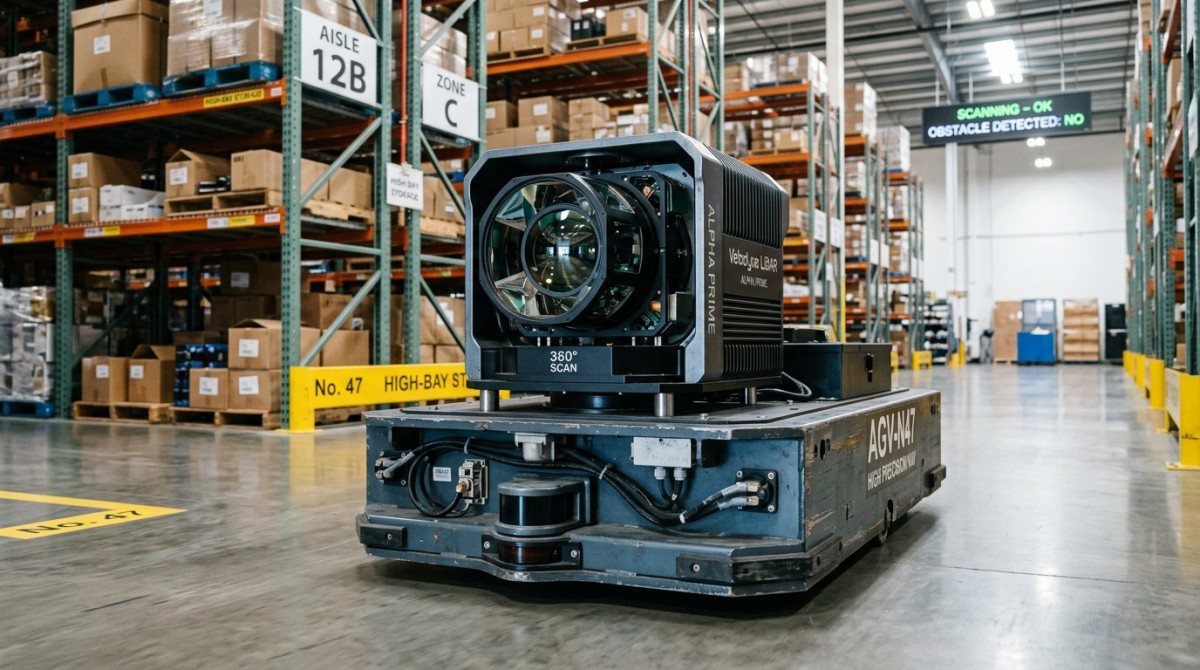
In AGV and AMR projects, a LiDAR sensor is not an isolated component. It affects navigation stability, obstacle detection, route confidence, and downtime exposure across the entire material handling workflow. A supplier may advertise long detection range or wide angle coverage, yet the real question is whether those claims remain stable across 8–16 hour shifts, reflective surfaces, dust, and mixed indoor-outdoor transitions.
This is where many sourcing teams encounter information noise. Product pages often use broad phrases, but procurement teams need numbers that can be checked: field of view in degrees, scan frequency in Hz, angular resolution, ingress protection level, operating temperature range, and data interface compatibility. A reliable AGV LiDAR sensor supplier separates itself by making these values easy to verify before the pilot phase begins.
For operators and maintenance teams, reliability also means predictable behavior. A sensor that performs well in a clean demo room but produces unstable point cloud output in backlit aisles or under skylight glare can create false stops, route drift, or unnecessary speed reduction. Even a small increase in nuisance alarms can lower throughput over a 2–4 week deployment window.
For enterprise decision-makers, supplier reliability extends beyond hardware. It includes documentation quality, sample lead time, engineering support, firmware update discipline, traceable test methods, and post-installation response speed. In practice, the strongest suppliers are not the loudest. They are the ones willing to discuss tolerance bands, known limitations, and application boundaries without hiding behind marketing language.
- Engineering teams look for measurable navigation inputs, not generic claims about “advanced sensing.”
- Procurement teams need comparable supplier data to reduce qualification cycles from months to a more manageable review stage.
- Operators need stable performance in daily use, especially in areas with dust, sunlight, pallets, and metallic racks.
- Executives need confidence that the selected vendor can support scaling from pilot units to batch deployment.
Which technical indicators actually separate one AGV LiDAR sensor supplier from another?
The first separation point is not the maximum range printed in a brochure. It is the consistency of core sensing parameters across real application conditions. In AGV navigation, three categories matter most: environmental robustness, point cloud quality, and system integration readiness. A reliable supplier can explain all three with test logic, not just product slogans.
Environmental robustness includes lidar sunlight interference resistance, reflective target handling, vibration tolerance, and operation across common industrial temperatures such as -10°C to 50°C or wider, depending on the application. Warehouses, transfer stations, and manufacturing cells often create mixed lighting conditions. If the supplier cannot explain how performance changes under strong ambient light, the buyer is taking on unnecessary deployment risk.
Core parameters buyers should request early
Point cloud density is especially important when comparing solid state lidar options with scanning LiDAR used in AGV navigation. Higher density is not automatically better; the useful question is whether the data density is sufficient for the vehicle speed, route complexity, and obstacle profile. Narrow pallet forks, low platform edges, and irregular obstacles all require different detection confidence levels.
Field of view comparison also needs context. A wide horizontal field may help in cross-traffic zones, while blind areas near the chassis may still require multi-sensor layouts. Suppliers that understand AGV applications will discuss sensor placement, overlap strategy, and refresh behavior at different driving speeds, such as low-speed docking versus mid-speed transfer routes.
The table below shows the most practical supplier evaluation parameters for AGV LiDAR sensor sourcing. These are not brand-specific thresholds, but they reflect the dimensions that engineering and procurement teams typically need to compare during shortlisting.
A strong supplier does not avoid these questions. Instead, they provide structured answers, typical operating ranges, and notes on test conditions. That transparency is often more valuable than an impressive peak number presented without any context.
Three signs of credible technical transparency
- The supplier distinguishes lab conditions from industrial conditions and explains the difference clearly.
- The supplier can discuss typical deployment ranges, not only best-case performance.
- The supplier provides integration files, electrical details, and maintenance guidance before mass rollout.
How should procurement teams compare suppliers beyond the sensor itself?
When buyers compare an AGV LiDAR sensor supplier, the hardware specification sheet is only one layer. The broader decision should include qualification process, sample support, engineering response, and documentation maturity. For procurement teams under time pressure, these soft-but-measurable factors often determine whether a project moves smoothly from sample validation to fleet deployment within 6–12 weeks.
A supplier with fast quoting but weak technical onboarding may create delays later. For example, if firmware versions change without revision control, or if protocol documentation arrives after mechanical installation is complete, internal engineering teams lose time. In contrast, a disciplined supplier provides a predictable service path: requirement review, sample recommendation, interface confirmation, validation feedback, and scale-up planning.
Supplier comparison criteria that reduce risk
The table below provides a practical procurement framework for comparing AGV LiDAR sensor suppliers. It is useful for cross-functional teams involving R&D, operations, and sourcing because it combines technical, delivery, and support criteria in one view.
Using a framework like this helps procurement avoid a common mistake: selecting a low initial unit price that later generates hidden costs in engineering hours, delayed acceptance testing, or extra sensor redesign. In B2B automation, total sourcing efficiency matters more than invoice price alone.
At TechStat Vanguard, this is exactly the gap we focus on. We look at measurable technical evidence, traceable benchmark logic, and supplier qualification factors that engineering teams can actually use. That data-driven view helps organizations move from broad supplier claims to defensible sourcing decisions.
- Start with 3 categories: sensing performance, integration burden, and supply support.
- Reduce the list to 2–3 suppliers only after technical documents and sample plans are reviewed.
- Run the same validation route, lighting condition, and obstacle set for each candidate sensor.
- Record not just pass or fail, but nuisance stops, map instability, and operator feedback over multiple shifts.
What deployment scenarios expose weak suppliers fastest?
Not all AGV environments are equally demanding. Some suppliers can support straightforward indoor navigation but struggle when the site includes sunlight spillover, glossy floors, rack reflections, or heavy particulate matter. Buyers should therefore evaluate suppliers against the actual duty profile of the project, not against a generic warehouse image.
In narrow aisle logistics, field of view comparison becomes critical because turning clearance and side obstacle visibility can determine whether the vehicle slows excessively or moves with confidence. In loading zones, sunlight interference resistance is often the deciding factor. In manufacturing areas, repeated vibration and electrical noise may expose sensors that look acceptable in a static lab setup.
Scenario-specific checks before approval
A realistic validation plan should cover at least 4 operating dimensions: lighting, obstacle variety, route speed, and maintenance accessibility. In many facilities, a 3-stage test path works well: bench validation, pilot vehicle integration, and live route observation over several production cycles. This approach reduces surprises after purchase orders are issued.
It is also wise to verify how the supplier handles edge cases. Can the sensor still provide stable data when pallet film creates partial reflections? How does it behave near glass partitions or polished steel? What maintenance interval is recommended when dust accumulation becomes noticeable? Clear answers indicate application experience; vague answers usually indicate risk.
Typical environments that should be included in a pilot
- Indoor warehouse aisles with repeated rack geometry and moving pedestrian traffic.
- Dock or transition areas where sunlight changes over the day and backlighting occurs.
- Production workshops with dust, vibration, and metallic surfaces.
- Charging or docking zones where close-range detection and low-speed precision both matter.
Weak suppliers often fail not because the sensor never works, but because they cannot define the boundary conditions of reliable use. Strong suppliers state where the product performs well, where additional shielding or sensor fusion may be needed, and what installation constraints should be respected from day one.
Common sourcing mistakes, practical FAQ, and what informed buyers should ask next
Many organizations still buy AGV LiDAR sensors as if they were interchangeable catalogue parts. That approach overlooks the real cost drivers: integration effort, route-specific behavior, service quality, and long-term revision stability. A lower entry price may be attractive, but if the sensor creates repeated validation delays or inconsistent field performance, the total cost rises quickly.
Another common mistake is evaluating only maximum range while ignoring angular behavior, blind zones, and point cloud usefulness at working distances. Most AGV systems do not operate at brochure peak conditions. They operate repeatedly, often in the same path, where consistency matters more than an isolated headline metric.
FAQ: questions buyers ask during AGV LiDAR supplier selection
How do I know whether a supplier’s point cloud data is sufficient?
Ask for output structure, scan frequency, angular resolution, and examples tied to obstacle size and vehicle speed. A useful review links data density to your actual route conditions, such as low-speed docking, aisle turning, and mixed obstacle profiles. If the supplier cannot translate point cloud density into application impact, the comparison remains incomplete.
What is a reasonable validation timeline before bulk purchase?
For many industrial projects, a 2–6 week cycle is common, depending on software integration complexity and site access. A practical sequence includes sample receipt, bench testing, vehicle integration, route trials, and issue review. Rushing this stage often shifts risk into the commissioning phase, where correction costs are higher.
Should I prioritize solid state lidar over other architectures for AGV use?
Not automatically. Solid state lidar can offer advantages in compactness and mechanical simplicity, but suitability depends on coverage pattern, integration requirements, and environmental exposure. Buyers should compare architecture choice against the navigation stack, mounting position, and required field of view rather than treating one technology label as universally superior.
What documents should a reliable supplier provide early?
At minimum, request interface documentation, environmental operating notes, mechanical drawings, electrical requirements, firmware version policy, and installation guidance. For safety-related or regulated projects, also clarify applicable standards and integration responsibilities. Early documentation quality is often a leading indicator of future project support quality.
If your team is comparing AGV LiDAR sensor suppliers and needs a cleaner path through the noise, TechStat Vanguard can support the evaluation process with a data-driven lens. We help engineering, sourcing, and management teams focus on what actually changes project outcomes: parameter confirmation, field-of-view comparison, sunlight resistance discussion, point cloud relevance, integration workload, and supplier qualification logic.
You can contact us to discuss specification drafting, supplier shortlist review, sample validation criteria, common delivery timelines, customization questions, documentation gaps, and quote-stage comparison points. If your challenge is not finding more claims but filtering them into usable engineering evidence, that is precisely where our benchmarking approach adds value.
Search News
Hot Articles
- Carbon Fiber StructuresHow to Specify Aerospace Carbon Fiber Assemblies for Lightweight, Load-Bearing PartsJul 11, 2026
- Machine VisionXiaomi, Alibaba DAMO Academy Drive Open-Source Robotics Model Ecosystem, Lowering Algorithm Development Barriers for Overseas SMEs Adopting Chinese Robotics SolutionsMar 30, 2026
- Cobots & ArmsShanxi 'AI+' Conference Showcases Embodied Intelligence with Multinational Buyer Engagement: Key Industry ImplicationsMar 30, 2026
Popular Tags
Recommended News
 Jul 11, 2026How to Specify Aerospace Carbon Fiber Assemblies for Lightweight, Load-Bearing PartsAerospace carbon fiber assemblies: learn how to specify laminate design, load data, joining methods, and inspection controls for lighter, reliable load-bearing aerospace parts.Elena Rostova (UAV Systems Researcher)
 Mar 30, 2026Xiaomi, Alibaba DAMO Academy Drive Open-Source Robotics Model Ecosystem, Lowering Algorithm Development Barriers for Overseas SMEs Adopting Chinese Robotics SolutionsXiaomi & Alibaba DAMO Academy's open-source robotics models lower algorithm barriers for global SMEs. Boost efficiency in manufacturing, logistics & smart retail with ROS 2 compatible solutions.TSV Data Lab
 Mar 30, 2026Shanxi 'AI+' Conference Showcases Embodied Intelligence with Multinational Buyer Engagement: Key Industry ImplicationsShanxi 'AI+' Conference highlights embodied intelligence with Tesla, Ubtech & Jiantao showcasing multimodal robotics. 40+ global buyers validated tech on-site, creating new B2B channels for industrial automation & AI solutions.Chen Wei (Automation Lead Engineer)
 Mar 30, 2026Zhongguancun Unveils 6G Integrated Sensing-Computing-Intelligence Platform to Empower Embodied Robots for Global Industrial ApplicationsZhongguancun's new 6G platform revolutionizes industrial robotics with <10ms latency, empowering global automotive, logistics & port automation. Discover how this tech boosts China's smart manufacturing exports.TSV Data Lab
 Mar 30, 2026Mech-Mind Tianjin Embodied Intelligence R&D and Production Base Goes Live, Cutting Delivery Time by 20%–30% for Global Customized AMR+Vision SolutionsMech-Mind's Tianjin AMR+Vision production base cuts delivery time by 20%-30% for欧美 & Latin American markets. Discover how this PLd-certified facility accelerates customized robotics solutions for smart manufacturing and logistics.Chen Wei (Automation Lead Engineer)
 Mar 30, 2026Boao Forum Reveals 'Co-evolution of Big and Small Brains' Trend in Humanoid Robots, China's Embodied Intelligence Accelerates Adaptation to Overseas Manufacturing Service ScenariosDiscover how China's humanoid robots, featuring 'Co-evolution of Big and Small Brains,' are revolutionizing global manufacturing. Learn about Embodied Tian Gong 3.0's ISO compliance and overseas deployment at Boao Forum 2026.Chen Wei (Automation Lead Engineer)
 Mar 30, 2026China Railway Industrial Secures Patent for Embodied Robotics in Material Handling, Boosting High-Precision Delivery Capabilities for Overseas Infrastructure and Manufacturing ProjectsChina Railway Industrial's new patent for embodied robotics in material handling boosts high-precision delivery for global infrastructure & manufacturing. Discover how this innovation enhances logistics accuracy in automotive, rail transit & EPC projects.Chen Wei (Automation Lead Engineer)
 Oct 21, 2026China’s Industrial Robot Exports Near RMB 10 Billion in First Nine Months of 2026China’s industrial robot exports neared RMB 10 billion in January–September 2026, with value rising faster than volume. Explore the data and what it could mean for suppliers.Chen Wei (Automation Lead Engineer)
 Oct 21, 2026Low-Latency Industrial Data Processing: Pricing and Key Cost DriversExplore industrial data latency price drivers, from edge hardware to integration and support. Learn how to compare quotes, verify performance, and avoid unnecessary costs.TSV Data Lab
 Oct 20, 2026KUKA Launches iiQKA.AI Vision to Simplify Industrial Image ProcessingKUKA iiQKA.AI Vision simplifies industrial image processing with controller-based 2D and 3D vision. Explore drag-and-drop setup for vision-guided automation.TSV Data Lab
 Oct 20, 2026Smart Industrial Edge Devices: Key Criteria for Legacy PLC IntegrationChoose smart industrial edge devices for legacy PLC integration. Discover key criteria for compatibility, data quality, security, and reliable collection without disrupting control.TSV Data Lab
 Oct 19, 2026Choosing a Radar Sensor by Application: Range, Resolution, and Field of ViewSimplify radar sensor application based product selection. Compare range, resolution, and field of view to avoid blind spots and choose with confidence. Explore the guide.TSV Data Lab
 Oct 18, 2026Comparing Material Options for Procurement: Specs, Costs, and Supply RisksExplore procurement oriented technical content on material options, specs, costs, and supply risks. Compare alternatives to cut hidden expenses and make confident sourcing decisions.Dr. Marcus Vance
 Oct 17, 20265-Axis CNC Positioning Accuracy: How to Interpret ISO 230-2 Test ResultsAssess 5 axis CNC machining positioning accuracy with ISO 230-2. Learn to interpret repeatability, reversal error, and test conditions to compare suppliers and make confident acceptance decisions.Dr. Marcus Vance
 Oct 16, 2026Choosing a Rugged Edge AI Box Supplier: Thermal Tests and Lifecycle SupportChoose a rugged edge AI box supplier with proven thermal performance and reliable lifecycle support. Discover the tests and commitments to verify before you buy.TSV Data Lab
 Oct 15, 2026R&D Cost Reduction Services: How to Evaluate Fees, Savings, and ROIEvaluate R&D cost reduction services with confidence. Compare fees, verify savings, and calculate ROI without compromising performance. Discover how to choose a provider that delivers real value.Chen Wei (Automation Lead Engineer)
 Oct 21, 2026How Should You Balance Cobot Payload Against Reach?Explore cobot payload versus reach to choose the right robot. Learn how tooling, load limits, workspace, and cycle time affect performance—and avoid costly selection mistakes.Chen Wei (Automation Lead Engineer)
 Oct 20, 2026How Do You Measure Industrial IoT Gateway Latency Under Load?Measure industrial IoT gateway latency under load with reliable timestamps, realistic traffic, and tail-latency analysis. Discover how to expose bottlenecks and choose the right gateway.TSV Data Lab
 Oct 19, 2026How Do You Verify That Precision Machined Parts Meet Tolerances?Master precision machining tolerance verification with the right tools, datum setups, and acceptance rules. Learn how to validate parts confidently and reduce costly inspection errors.Dr. Marcus Vance
 Oct 18, 2026What Should an AS9100 Machining Supplier Checklist Include?Build an AS9100 machining supplier checklist that verifies capability, traceability, inspection, and outsourced processes. Discover what to check before approving your next aerospace supplier.Dr. Marcus Vance
 Oct 17, 2026How Should You Interpret Industrial Robot Repeatability Specs?Decode industrial robot repeatability specifications, understand ISO 9283 test conditions, and avoid costly selection mistakes. Learn how to verify performance for your process.Chen Wei (Automation Lead Engineer)
 Oct 16, 2026How Can You Fairly Compare MTBF Across Industrial Servo Motors?Make a fair industrial servo motor MTBF comparison with matched operating profiles, failure criteria, and confidence bounds. Discover how to assess reliability beyond advertised numbers.Chen Wei (Automation Lead Engineer)
 Oct 15, 2026How Should You Compare TechStat Vanguard 5-Axis CNC Tolerances?TechStat Vanguard 5-axis CNC tolerance comparison: learn how to verify part accuracy, assess inspection evidence, and choose suppliers that reliably meet your drawing requirements.Dr. Marcus Vance
 Oct 14, 2026Drone Frame Composites: Carbon Fiber vs. Fiberglass for Weight and StiffnessExplore drone structural materials composites: compare carbon fiber and fiberglass for weight, stiffness, cost, and antenna compatibility. Find the right material for your drone frame.Elena Rostova (UAV Systems Researcher)