Welding Robot Integration Costs That Often Get Missed
Publication Date
author
Many teams budget for the robot cell but overlook the hidden costs that shape total ROI. For financial approvers evaluating industrial robots for welding applications, the real expense often lies in integration engineering, safety compliance, fixture redesign, software tuning, and production downtime. This article highlights the cost items that are frequently missed, helping decision-makers approve welding automation with clearer numbers, lower risk, and stronger long-term returns.
Why a checklist is the right way to evaluate welding robot integration costs
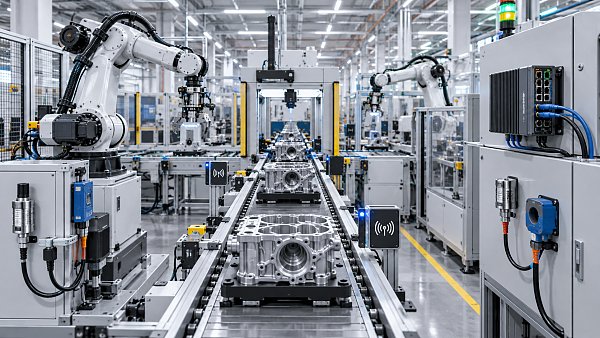
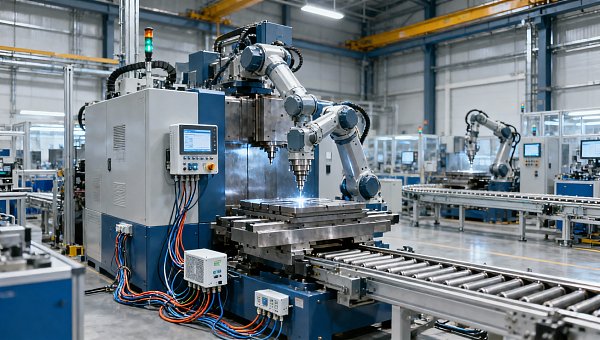
For finance teams, the biggest budgeting mistake is treating a welding automation project as a simple equipment purchase. In reality, industrial robots for welding applications are systems, not standalone machines. The robot arm, positioner, welding power source, torch cleaning station, guarding, controls, fixtures, vision devices, offline programming tools, and commissioning labor all affect the final cost. A checklist approach prevents capital approval from being distorted by supplier headline pricing alone.
This matters because missed integration costs do not arrive evenly. Some appear before installation, such as part fixturing changes. Some appear during commissioning, such as weld parameter tuning. Others surface after handover, such as operator retraining, spare torch consumables, software revisions, and quality rework during the first production ramp. A structured review gives financial approvers a better view of total project cash flow, payback timing, and operational risk.
First-pass cost checklist: what to confirm before approving capital
Before comparing quotes for industrial robots for welding applications, confirm whether the proposal includes the following items in writing. If any line is vague, budget risk is still sitting with the buyer.
- Scope of integration engineering, including mechanical design, controls integration, electrical drawings, PLC logic, HMI screens, and production handshakes.
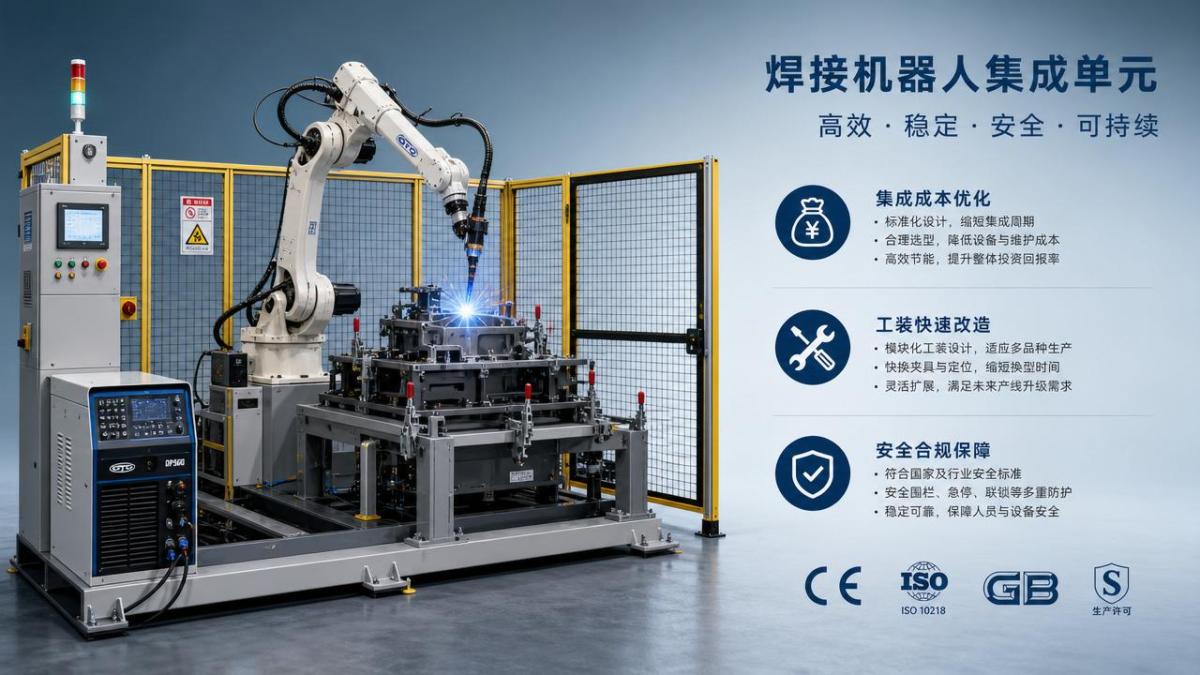
- Safety package details, including fencing, interlocks, arc flash considerations, fume extraction interfaces, emergency stops, and validation documentation.
- Fixture design or redesign costs, especially for part repeatability, clamping force, thermal distortion control, and changeover time.
- Process development labor for weld path creation, parameter tuning, sample runs, destructive testing, and quality approval.
- Utility upgrades such as power distribution, compressed air, grounding, gas supply routing, and network connectivity.
- Production downtime assumptions during installation, debug, line relocation, and startup stabilization.
- Training scope for operators, maintenance staff, welding engineers, and programmers.
- Warranty boundaries, spare parts package, consumables assumptions, and post-install service response time.
The most commonly missed cost items in industrial robots for welding applications
1. Integration engineering is often larger than expected
A robot quote may look attractive until the integration layer is separated out. Welding automation rarely plugs directly into existing production. Engineers must design cable routing, torch access, robot reach studies, collision zones, positioner synchronization, and line logic. If multiple part families are involved, engineering hours rise quickly. For finance, the key question is whether the quoted price covers a turnkey validated system or only hardware with limited setup support.
2. Safety compliance is not just a fence cost
Safety is one of the most underestimated line items in industrial robots for welding applications. The visible hardware may include guarding and light curtains, but hidden work includes risk assessment, control reliability design, lockout procedures, arc radiation shielding, fume extraction coordination, and final documentation for internal EHS approval. If a plant operates under strict customer or insurer requirements, validation effort can expand further. Cost approval should therefore include both safety hardware and safety engineering labor.
3. Fixture redesign can decide success or failure
Manual welding can tolerate more variation than robotic welding. A skilled welder may compensate for part fit-up inconsistency, but a robot depends on predictable geometry. That means older fixtures may no longer be usable. New clamps, datum strategies, part presence sensors, anti-spatter features, and heat distortion controls may be needed. If the product mix changes often, modular fixturing can add more cost upfront but reduce future engineering expense.
4. Software and tuning costs continue after installation
Many approval packages assume programming ends at factory acceptance. In practice, software refinement continues during site acceptance and early production. Weld schedules may need adjustment for real part variation, cycle times may need balancing, torch angles may require revision, and anti-collision logic may need fine tuning. If the system uses vision seam tracking or offline programming, license fees and engineering support can become recurring cost items rather than one-time expenses.
5. Downtime and ramp-up losses are real financial costs
A welding robot cell can be technically installed in a short window but still disrupt output for weeks. Production rescheduling, temporary outsourcing, overtime, scrap during startup, and delayed customer shipments should be considered in ROI models. Financial approvers should ask for a ramp curve, not just an installation date. The difference between “mechanically complete” and “stable at target OEE” can materially affect payback calculations.
A practical comparison table for budget review
Use the table below to challenge supplier proposals for industrial robots for welding applications before release of funds.
What finance teams should review by project scenario
High-mix, low-volume production
This environment can make industrial robots for welding applications harder to justify unless fixture strategy, programming method, and changeover discipline are well defined. Costs rise through more recipes, more test parts, and more operator intervention. Ask whether the system is designed for rapid product switching and whether the savings model already includes lower arc utilization.
High-volume repetitive production
The business case is usually stronger, but the risk shifts toward uptime. In repetitive production, one weak subsystem can stop the whole line. Finance should pay attention to spare parts availability, backup torch consumables, robot duty cycle, service contracts, and recovery procedures after faults. Small reliability gaps become large annual losses when takt time is tight.
Regulated or high-spec quality environments
If weld traceability, documentation, or customer certification is important, data capture and validation costs can be significant. Additional sensors, parameter logging, qualification runs, and approval cycles must be included. This is especially relevant when industrial robots for welding applications support safety-critical parts, export programs, or customer audits with strict process control expectations.
Risk reminders that frequently distort ROI calculations
- Do not count full direct labor elimination if manual touch-up will continue during the first months.
- Do not ignore consumables usage changes. Robotic welding may improve consistency but can also shift nozzle, tip, wire, and anti-spatter consumption patterns.
- Do not assume existing upstream part quality is good enough. Poor cut quality, inconsistent fit-up, and warped components increase tuning time and scrap.
- Do not overlook internal labor. Plant engineers, maintenance technicians, production supervisors, and quality staff all spend time supporting launch.
- Do not forget future modifications. New part introductions often require programming and fixture updates that should be planned into ownership cost.
Execution checklist: what to ask suppliers before final approval
A strong buying process for industrial robots for welding applications should end with a written clarification round. Financial approvers do not need to negotiate arc parameters themselves, but they should insist on precise answers to cost-sensitive questions.
- What exact deliverables are included from concept to stable production?
- Which assumptions were used for annual throughput, part mix, and operator staffing?
- What customer responsibilities remain for foundations, power, gas, extraction, and network setup?
- How many days of onsite commissioning are included, and what triggers additional charges?
- What acceptance criteria define project completion: cycle time, weld quality, uptime, or all three?
- What training is included, for whom, and how will competency be verified?
- What is the expected spare parts list for the first 12 months?
- What changes in quote validity may occur due to lead times, design revisions, or customer scope changes?
FAQ for financial approvers reviewing welding automation
Is the robot itself usually the biggest cost?
Not always. In many projects using industrial robots for welding applications, the robot is only one part of total capital. Integration, safety, fixtures, and commissioning can collectively rival or exceed the hardware cost.
What is the fastest way to reduce budget uncertainty?
Request a detailed scope matrix that separates included items, excluded items, assumptions, and customer responsibilities. Budget uncertainty usually hides in undefined scope, not in the listed robot model.
How should ROI be tested?
Run a base case, a conservative case, and a delayed-ramp case. This gives decision-makers a more realistic picture of how industrial robots for welding applications perform when startup is slower than planned.
Final decision guide: approve with clearer numbers, not lower headline pricing
The smartest capital approvals for industrial robots for welding applications are based on scope clarity, production fit, and launch realism. A low equipment quote can become an expensive project if integration engineering, fixture redesign, safety validation, software tuning, and startup losses are left outside the model. By reviewing the checklist items above, financial approvers can compare proposals on total delivered value rather than incomplete initial price.
If your team is moving toward supplier review, prepare the following information first: current weld volumes, part family count, fit-up consistency, quality requirements, available utilities, target payback window, internal engineering bandwidth, and acceptable downtime during launch. With those inputs clarified early, discussions around budget, technical fit, delivery schedule, and long-term support become far more reliable.
Search News
Hot Articles
- Carbon Fiber StructuresHow to Specify Aerospace Carbon Fiber Assemblies for Lightweight, Load-Bearing PartsJul 11, 2026
- Machine VisionXiaomi, Alibaba DAMO Academy Drive Open-Source Robotics Model Ecosystem, Lowering Algorithm Development Barriers for Overseas SMEs Adopting Chinese Robotics SolutionsMar 30, 2026
- Cobots & ArmsShanxi 'AI+' Conference Showcases Embodied Intelligence with Multinational Buyer Engagement: Key Industry ImplicationsMar 30, 2026
Popular Tags
Recommended News
 Jul 11, 2026How to Specify Aerospace Carbon Fiber Assemblies for Lightweight, Load-Bearing PartsAerospace carbon fiber assemblies: learn how to specify laminate design, load data, joining methods, and inspection controls for lighter, reliable load-bearing aerospace parts.Elena Rostova (UAV Systems Researcher)
 Mar 30, 2026Xiaomi, Alibaba DAMO Academy Drive Open-Source Robotics Model Ecosystem, Lowering Algorithm Development Barriers for Overseas SMEs Adopting Chinese Robotics SolutionsXiaomi & Alibaba DAMO Academy's open-source robotics models lower algorithm barriers for global SMEs. Boost efficiency in manufacturing, logistics & smart retail with ROS 2 compatible solutions.TSV Data Lab
 Mar 30, 2026Shanxi 'AI+' Conference Showcases Embodied Intelligence with Multinational Buyer Engagement: Key Industry ImplicationsShanxi 'AI+' Conference highlights embodied intelligence with Tesla, Ubtech & Jiantao showcasing multimodal robotics. 40+ global buyers validated tech on-site, creating new B2B channels for industrial automation & AI solutions.Chen Wei (Automation Lead Engineer)
 Mar 30, 2026Zhongguancun Unveils 6G Integrated Sensing-Computing-Intelligence Platform to Empower Embodied Robots for Global Industrial ApplicationsZhongguancun's new 6G platform revolutionizes industrial robotics with <10ms latency, empowering global automotive, logistics & port automation. Discover how this tech boosts China's smart manufacturing exports.TSV Data Lab
 Mar 30, 2026Mech-Mind Tianjin Embodied Intelligence R&D and Production Base Goes Live, Cutting Delivery Time by 20%–30% for Global Customized AMR+Vision SolutionsMech-Mind's Tianjin AMR+Vision production base cuts delivery time by 20%-30% for欧美 & Latin American markets. Discover how this PLd-certified facility accelerates customized robotics solutions for smart manufacturing and logistics.Chen Wei (Automation Lead Engineer)
 Mar 30, 2026Boao Forum Reveals 'Co-evolution of Big and Small Brains' Trend in Humanoid Robots, China's Embodied Intelligence Accelerates Adaptation to Overseas Manufacturing Service ScenariosDiscover how China's humanoid robots, featuring 'Co-evolution of Big and Small Brains,' are revolutionizing global manufacturing. Learn about Embodied Tian Gong 3.0's ISO compliance and overseas deployment at Boao Forum 2026.Chen Wei (Automation Lead Engineer)
 Mar 30, 2026China Railway Industrial Secures Patent for Embodied Robotics in Material Handling, Boosting High-Precision Delivery Capabilities for Overseas Infrastructure and Manufacturing ProjectsChina Railway Industrial's new patent for embodied robotics in material handling boosts high-precision delivery for global infrastructure & manufacturing. Discover how this innovation enhances logistics accuracy in automotive, rail transit & EPC projects.Chen Wei (Automation Lead Engineer)
 Sep 29, 2026ISO 9283 Repeatability: How to Evaluate Cobot Positioning PerformanceISO 9283 cobot repeatability explained: learn how payload, reach, approach direction, and test conditions affect positioning performance and cell capability.Chen Wei (Automation Lead Engineer)
 Sep 29, 2026How Do You Verify Servo Motor Torque Under Continuous Load?How do I verify servo motor torque under continuous load? Learn RMS torque checks, torque-speed limits, thermal derating, and real-machine testing.Chen Wei (Automation Lead Engineer)
 Sep 28, 2026Spindle Runout Measurement in Germany: DIN Standards, Methods, and Acceptance LimitsSpindle runout measurement Germany: explore DIN standards, proven methods, acceptance limits, and audit-ready practices for reliable machining quality.Dr. Marcus Vance
 Sep 27, 2026How to Select Wall-Mount Edge Devices for Space-Constrained Factory NetworksWall mount edge devices for space-constrained factories: evaluate workload, thermal design, power resilience, cable access, and network reliability for smarter deployments.TSV Data Lab
 Sep 26, 2026Machining Tolerance Analysis: How to Set Limits That Meet Function and Cost TargetsMachining tolerance analysis: learn how to set functional limits, control tolerance stacks, reduce inspection risk, and balance precision with production cost.Dr. Marcus Vance
 Sep 25, 2026How to Evaluate an Industrial Infrastructure Data Platform for Multi-Site OperationsIndustrial infrastructure data platform evaluation guide for multi-site operations: compare data quality, edge resilience, interoperability, governance, and scalable proof-of-value criteria.Victor Lin (Chief Software Architect)
 Sep 24, 2026How to Select Machine Vision Optics for Accurate Inspection at Different Working DistancesMachine vision optics selection guide for accurate inspection at every working distance. Compare FOV, pixel scale, DOF, distortion, lighting, and telecentric options.TSV Data Lab
 Sep 23, 2026How to Evaluate a Machine Vision System Integrator for High-Speed Inspection LinesChoose a machine vision system integrator with proven expertise in high-speed inspection, reliable reject timing, robust optics, and measurable acceptance criteria.TSV Data Lab
 Sep 29, 2026How MES and OEE work together to identify production lossesMES and OEE work together to uncover hidden production losses, connect downtime, speed, and quality data, and drive smarter shop-floor improvements.Victor Lin (Chief Software Architect)
 Sep 28, 2026When is a SCADA API the right choice for connecting plant systems?SCADA API guide: learn when governed plant data integration improves traceability, security, and scalability—without compromising real-time control.Victor Lin (Chief Software Architect)
 Sep 27, 2026How SCADA data integration improves traceability across production linesSCADA data integration connects production-line data to improve traceability, accelerate quality investigations, and strengthen safety decisions.Victor Lin (Chief Software Architect)
 Sep 26, 2026What to define before starting SCADA integration planningSCADA integration planning starts with clear scope, control boundaries, data models, cybersecurity, and testing. Discover the definitions that reduce risk and costly rework.Victor Lin (Chief Software Architect)
 Sep 25, 2026How a smart factory with Industrial IoT reduces production blind spotsDiscover how a smart factory with Industrial IoT turns real-time machine, quality, and workflow data into actionable insights that reduce production blind spots and delivery risks.Victor Lin (Chief Software Architect)
 Sep 24, 2026When does Industrial IoT make smart manufacturing easier to scale?Smart manufacturing Industrial IoT scales when trusted data, interoperable systems, and secure workflows turn connected assets into measurable gains.TSV Data Lab
 Sep 23, 2026What drives ultra-precision machining cost at 1-micron tolerance?Ultra precision machining cost per part at 1 micron tolerance depends on process, material, metrology, and yield. Learn how to compare quotes confidently.Dr. Marcus Vance
 Sep 22, 2026Drone Engine-T550CC Applications: Build the UAV Power System Around the MissionAn application guide for Drone Engine-T550CC integration, covering payload planning, airframe matching, cooling, fuel, vibration, test procedures, documentation, and service preparation.Elena Rostova (UAV Systems Researcher)
 Sep 22, 2026How to Evaluate Industrial Edge Computing Vendors for Factory DeploymentIndustrial edge computing vendor evaluation guide for factories: compare latency, protocol fit, reliability, security, and lifecycle support before deployment.TSV Data Lab