How to Evaluate Industrial Edge Computing Vendors for Factory Deployment
Publication Date
author
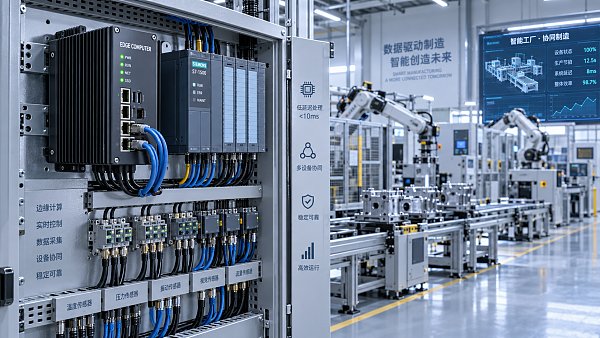
Selecting an industrial edge computing vendor for factory deployment is not a matter of choosing the device with the fastest processor or the longest feature list. The right platform must continue making useful, predictable decisions when production traffic spikes, a network segment fails, a machine is retrofitted, or the cabinet temperature rises. A system that performs well in a clean demonstration environment can still become a source of downtime, integration work, and support disputes on the factory floor.
A sound evaluation starts with the production decision the edge system must support. This may be machine-vision inspection, condition monitoring, robotic coordination, traceability, local data preprocessing, or secure connectivity between operational technology and enterprise systems. Each workload creates a different requirement for latency, compute headroom, storage behavior, connectivity, and fault recovery. Vendors should be assessed against that requirement, not against generic claims about artificial intelligence, industrial readiness, or scalability.
Start with the decision loop, not the hardware specification
Before comparing vendors, document what happens from the moment data is generated to the moment an action is taken. Identify the source: cameras, PLCs, sensors, robot controllers, barcode readers, or supervisory systems. Then define where data must be processed, which applications consume the result, and what occurs if the edge node is unavailable.
This exercise distinguishes workloads that may look similar on a project diagram but demand very different architectures. A dashboard that refreshes production metrics can tolerate a delay and may recover after a temporary interruption. A vision system that rejects defective parts or guides a robot cannot simply wait for cloud connectivity. For the latter, the edge platform needs deterministic local behavior, protected data paths, and a clearly defined fallback mode.
Ask vendors to map their proposed system to the actual decision loop. A credible response explains message paths, software components, failure behavior, and timing assumptions. A weak response skips directly to processor cores, AI acceleration, or a brochure-level architecture diagram.
Measure latency as a complete operational path
Latency is often reduced to an application benchmark or an inference time. That is rarely enough for factory deployment. The relevant measure is end-to-end delay: data acquisition, transport, decoding, preprocessing, application execution, decision output, and delivery to the destination system. Jitter also matters. A system with acceptable average delay but unpredictable peaks can create missed triggers, unstable control behavior, or difficult-to-reproduce quality failures.
An industrial edge computing vendor should be able to describe how its platform behaves under realistic load. That includes simultaneous camera streams, protocol traffic, database writes, security logging, container workloads, and remote management activity. Performance should also be considered after a restart, during software updates, and when storage is nearing capacity. These conditions are less attractive in a demonstration, but they are closer to normal plant operation.
Define the acceptable response window for each workload, then test against it. Do not impose one latency target on every use case. Local alarm aggregation, vision inspection, and machine coordination can each require a different evaluation threshold. The important point is that the vendor’s evidence matches the timing of the production process, rather than an isolated laboratory metric.
Check protocol compatibility at the operational boundary
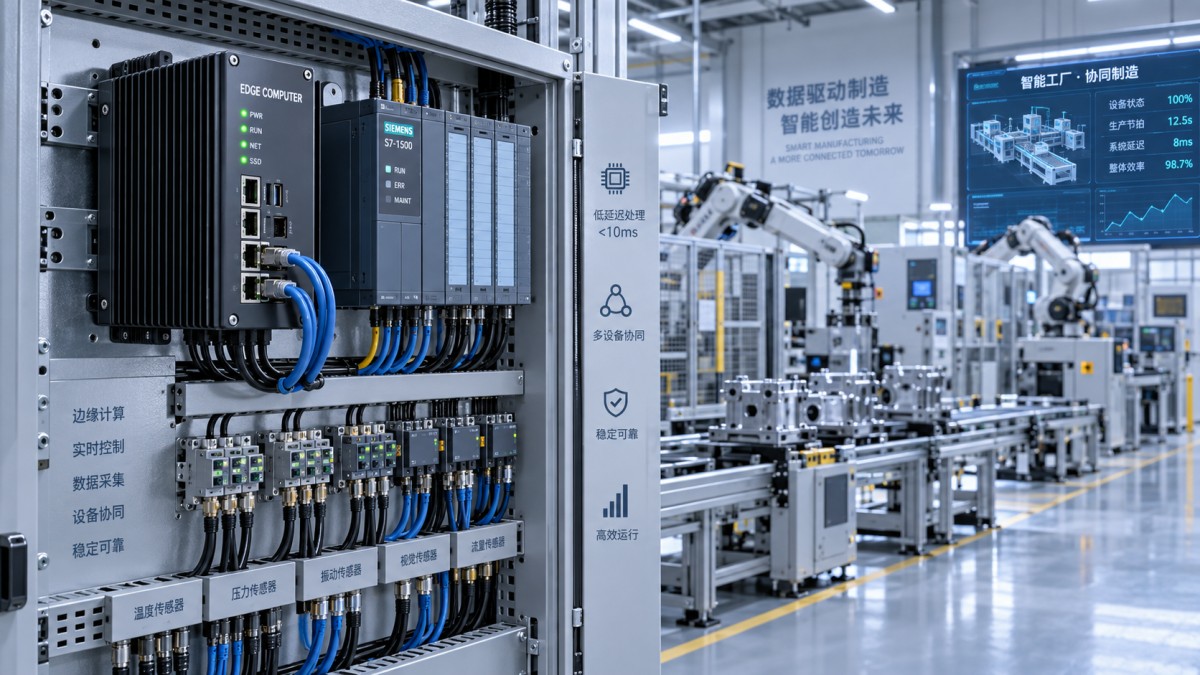
Connectivity claims can be misleading because “supports industrial protocols” may mean anything from a basic driver to a mature, managed integration. List the protocols, device families, and data models already present in the factory. Include older equipment where relevant. A platform that connects easily to a new controller but requires custom gateway work for installed machines may shift cost and risk into the integration phase.
Evaluation should cover more than whether a connection can be established. Confirm how the system handles tag discovery, data quality, timestamps, alarm conditions, buffering during outages, write permissions, certificate management, and connection recovery. If the deployment needs to exchange data between shop-floor systems and IT applications, determine where normalization occurs and who owns that mapping over time.
It is also useful to distinguish open interfaces from usable integration. APIs, software development kits, and protocol adapters have different value depending on the in-house engineering model. A team building custom applications may need documented APIs and versioning discipline. A site focused on standardized deployments may prefer prebuilt connectors, configuration tools, and support for repeatable templates. Neither preference is universally better; it should match the operating model.
Assess reliability as a system property
Rugged hardware matters, but enclosure ratings and operating-temperature ranges do not fully describe reliability. A factory edge node is a combination of hardware, operating system, middleware, applications, storage, network services, and power behavior. A failure in any layer can interrupt a production workflow.
Review how the vendor addresses power loss, restart recovery, storage wear, thermal throttling, network interruption, and component replacement. For systems placed near machinery, also consider vibration, dust, electromagnetic interference, limited cabinet space, and the availability of clean power. The best physical design depends on the installation location. A sealed, fanless unit may suit a harsh zone, while a rack-based platform may be more practical in a conditioned control room with centralized service access.
High availability should not be assumed simply because a vendor offers clustering or redundant hardware. Ask what the application does when a node fails, how quickly services resume, whether data can be replayed safely, and whether the process can continue in a degraded mode. Redundancy has value only when it protects the production decision that matters. Duplicating every component can add complexity without improving the actual failure outcome.
Evaluate cybersecurity without treating it as an add-on
Edge computing connects systems that were often separated: sensors and controllers on one side, analytics applications, remote engineering tools, and enterprise services on the other. That makes the edge layer an important security boundary. A capable vendor should show how the platform separates workloads, manages identities, limits privileges, protects data in transit and at rest where needed, and records administrative actions.
Patch management deserves particular attention. Factory systems cannot always be updated on the same schedule as office IT. The practical question is not whether updates exist, but how they are qualified, distributed, scheduled, rolled back, and documented without disrupting production. Clarify responsibilities among the vendor, system integrator, internal IT team, and plant engineering group. Security ownership becomes unreliable when every party assumes another party will manage the platform.
Remote access requires the same discipline. Determine who can connect, under what approval process, what functions they can perform, and how sessions are logged. A remote support feature can reduce diagnosis time, but unrestricted access can create an unacceptable operational dependency.
Look beyond initial deployment to lifecycle control
The edge platform selected today may need to support additional lines, new vision models, revised production recipes, and changing software dependencies. Lifecycle evaluation should therefore include hardware availability, operating system support, application compatibility, spare-unit strategy, and upgrade paths. A lower purchase price can lose its advantage if the platform requires extensive revalidation whenever a component changes.
Containerized applications can improve portability and repeatability, but containers do not remove lifecycle work. The vendor should explain how images are managed, how configurations are controlled by site and line, how secrets are stored, and how a previous working version can be restored. Where applications depend on accelerators or specialized drivers, compatibility management becomes even more important.
For multi-site operations, determine whether the deployment model is genuinely repeatable. Centralized monitoring is useful, but the more revealing questions are whether site configurations can be standardized, whether local exceptions are visible, and whether operations staff can identify a failing node before a line is affected. An edge estate becomes expensive when every site evolves into a separate technical design.
Run a pilot that is designed to disprove assumptions
A proof of concept should not merely show that data can be collected and displayed. It should test the conditions most likely to cause deployment problems: representative production data, concurrent workloads, temporary network loss, restart recovery, controlled access, and a realistic support workflow. Include the people who will install, operate, secure, and troubleshoot the system. Their questions often reveal gaps that are invisible in architecture presentations.
Agree on acceptance criteria before the pilot begins. These should address the production outcome, not only technical activity. For example, define what constitutes correct data capture, acceptable decision delay, successful recovery, usable diagnostics, and controlled deployment of an application update. Keep the pilot narrow enough to measure clearly, but realistic enough that its results can support a procurement decision.
A common error is treating the pilot unit as the final deployment blueprint. Pilot systems are frequently hand-configured by specialists, placed in convenient environments, and observed closely. Production deployment needs documented installation steps, durable configuration management, monitoring, access control, and replacement procedures. Ask the vendor to demonstrate how the pilot would be reproduced on the next line or at a different site.
Compare vendors through evidence, not scoring theater
A weighted scorecard is useful only when the criteria are tied to verified evidence. Avoid giving equal weight to every category. The consequence of failure should shape the weighting. For example, protocol compatibility and local recovery may outweigh minor differences in compute capacity when the platform serves installed machinery. In a vision-intensive inspection cell, camera ingest stability, accelerator support, model deployment, and storage throughput may deserve greater emphasis.
Separate requirements into three groups: conditions that disqualify a vendor, capabilities that create measurable operational value, and preferences that are convenient but negotiable. This prevents a polished management interface or a long optional-feature list from obscuring a missing production-critical capability.
Technical teams also benefit from separating vendor commitments from assumptions made by the project team. If a performance outcome depends on a particular network design, cabinet cooling arrangement, application configuration, or third-party connector, write that dependency into the evaluation record. It is easier to resolve an assumption during vendor selection than after an integration issue reaches the plant.
Use independent benchmark thinking when claims conflict
When vendor materials describe similar capabilities, comparison becomes difficult because test conditions are rarely identical. A useful benchmark approach begins with a shared workload definition: inputs, data rate, concurrent services, environmental conditions, recovery expectations, and the output that matters to production. The comparison should then examine the evidence behind the claim, not the adjective attached to it.
This is the same discipline behind TechStat Vanguard’s focus on engineering benchmarks in sensors, edge AI, automation, and industrial data systems: parameters become useful only when their measurement context is clear. For a factory edge evaluation, that means asking what was measured, under which load, with which software version, and what happens when normal operating conditions are no longer ideal.
The vendor selection decision should end with a platform that can be explained in operational terms. The chosen system must meet the required local decision time, connect to the equipment that matters, recover predictably, fit the plant’s security model, and remain supportable through its intended lifecycle. Those criteria may sound less dramatic than headline specifications, but they are the ones that determine whether edge computing becomes a dependable production capability or another isolated technology project.
Search News
Hot Articles
- Carbon Fiber StructuresHow to Specify Aerospace Carbon Fiber Assemblies for Lightweight, Load-Bearing PartsJul 11, 2026
- Machine VisionXiaomi, Alibaba DAMO Academy Drive Open-Source Robotics Model Ecosystem, Lowering Algorithm Development Barriers for Overseas SMEs Adopting Chinese Robotics SolutionsMar 30, 2026
- Cobots & ArmsShanxi 'AI+' Conference Showcases Embodied Intelligence with Multinational Buyer Engagement: Key Industry ImplicationsMar 30, 2026
Popular Tags
Recommended News
 Jul 11, 2026How to Specify Aerospace Carbon Fiber Assemblies for Lightweight, Load-Bearing PartsAerospace carbon fiber assemblies: learn how to specify laminate design, load data, joining methods, and inspection controls for lighter, reliable load-bearing aerospace parts.Elena Rostova (UAV Systems Researcher)
 Mar 30, 2026Xiaomi, Alibaba DAMO Academy Drive Open-Source Robotics Model Ecosystem, Lowering Algorithm Development Barriers for Overseas SMEs Adopting Chinese Robotics SolutionsXiaomi & Alibaba DAMO Academy's open-source robotics models lower algorithm barriers for global SMEs. Boost efficiency in manufacturing, logistics & smart retail with ROS 2 compatible solutions.TSV Data Lab
 Mar 30, 2026Shanxi 'AI+' Conference Showcases Embodied Intelligence with Multinational Buyer Engagement: Key Industry ImplicationsShanxi 'AI+' Conference highlights embodied intelligence with Tesla, Ubtech & Jiantao showcasing multimodal robotics. 40+ global buyers validated tech on-site, creating new B2B channels for industrial automation & AI solutions.Chen Wei (Automation Lead Engineer)
 Mar 30, 2026Zhongguancun Unveils 6G Integrated Sensing-Computing-Intelligence Platform to Empower Embodied Robots for Global Industrial ApplicationsZhongguancun's new 6G platform revolutionizes industrial robotics with <10ms latency, empowering global automotive, logistics & port automation. Discover how this tech boosts China's smart manufacturing exports.TSV Data Lab
 Mar 30, 2026Mech-Mind Tianjin Embodied Intelligence R&D and Production Base Goes Live, Cutting Delivery Time by 20%–30% for Global Customized AMR+Vision SolutionsMech-Mind's Tianjin AMR+Vision production base cuts delivery time by 20%-30% for欧美 & Latin American markets. Discover how this PLd-certified facility accelerates customized robotics solutions for smart manufacturing and logistics.Chen Wei (Automation Lead Engineer)
 Mar 30, 2026Boao Forum Reveals 'Co-evolution of Big and Small Brains' Trend in Humanoid Robots, China's Embodied Intelligence Accelerates Adaptation to Overseas Manufacturing Service ScenariosDiscover how China's humanoid robots, featuring 'Co-evolution of Big and Small Brains,' are revolutionizing global manufacturing. Learn about Embodied Tian Gong 3.0's ISO compliance and overseas deployment at Boao Forum 2026.Chen Wei (Automation Lead Engineer)
 Mar 30, 2026China Railway Industrial Secures Patent for Embodied Robotics in Material Handling, Boosting High-Precision Delivery Capabilities for Overseas Infrastructure and Manufacturing ProjectsChina Railway Industrial's new patent for embodied robotics in material handling boosts high-precision delivery for global infrastructure & manufacturing. Discover how this innovation enhances logistics accuracy in automotive, rail transit & EPC projects.Chen Wei (Automation Lead Engineer)
 Sep 22, 2026Drone Engine-T550CC Applications: Build the UAV Power System Around the MissionAn application guide for Drone Engine-T550CC integration, covering payload planning, airframe matching, cooling, fuel, vibration, test procedures, documentation, and service preparation.Elena Rostova (UAV Systems Researcher)
 Sep 22, 2026How to Evaluate Industrial Edge Computing Vendors for Factory DeploymentIndustrial edge computing vendor evaluation guide for factories: compare latency, protocol fit, reliability, security, and lifecycle support before deployment.TSV Data Lab
 Sep 21, 2026Drone Payload Integration: Matching Power, Data, and Center of Gravity for Reliable FlightsDrone payload integration made practical: balance power, data, center of gravity, and endurance to build safer, more reliable mission-ready flights.Elena Rostova (UAV Systems Researcher)
 Sep 20, 2026Autonomous Navigation Pricing: Cost Drivers and Budget Benchmarks for AMR ProjectsAutonomous navigation price explained: compare AMR cost drivers, software, sensors, integration, safety, and lifecycle budgets to build a scalable project plan.Chen Wei (Automation Lead Engineer)
 Sep 19, 2026How to Scope Automation Integration Services for Multi-System Factory ProjectsAutomation integration services: learn how to scope multi-system factory projects with clear workflows, interface contracts, safety boundaries, and acceptance criteria.Victor Lin (Chief Software Architect)
 Sep 18, 2026Selecting UAV Aerospace Structural Parts for Strength, Weight, and Fatigue LifeUAV aerospace structural parts guide: compare strength, weight, stiffness, fatigue life, joints, and traceability to select reliable flight-ready components.Elena Rostova (UAV Systems Researcher)
 Sep 17, 2026Selecting Commercial Drone Payloads for European Inspection ProjectsCommercial drone payloads Europe: learn how to select RGB, thermal and LiDAR systems for compliant, reliable inspection data and better project outcomes.Elena Rostova (UAV Systems Researcher)
 Sep 16, 2026Machining Tolerance Validation: How to Verify Critical Dimensions Before Production ReleaseMachining tolerance analysis validation: verify critical dimensions, measurement systems, process capability, and tolerance stacks before production release.Dr. Marcus Vance
 Sep 15, 2026AGV Tape Guidance vs Laser Navigation: Which Fits Your Warehouse Layout?AGV tape guidance comparison: discover how tape and laser navigation fit changing warehouse layouts, docking needs, floor conditions, maintenance, and route flexibility.Chen Wei (Automation Lead Engineer)
 Sep 14, 2026How Point Cloud Analytics Improves Asset Inspection Workflows Across GCC ProjectsPoint cloud analytics GCC helps project leaders improve asset inspections with accurate change detection, safer workflows, and faster maintenance decisions.TSV Data Lab
 Sep 13, 2026How Aerospace Manufacturers Can Build a Digital Thread From Design to Certified ProductionDigital manufacturing for aerospace: learn how to build a traceable digital thread from design through certified production, supplier control, and audit-ready compliance.Victor Lin (Chief Software Architect)
 Sep 12, 2026How to Select a Thermal Sensor for Mapping Drones in Surveying ProjectsMapping drone thermal sensor selection made simple: compare GSD, radiometric data, NETD, calibration, and workflow fit for accurate, survey-ready thermal maps.Elena Rostova (UAV Systems Researcher)
 Sep 11, 2026Integrating Photogrammetry Workflows into Digital Twin Projects Without Data BottlenecksPhotogrammetry workflow integration for digital twins: learn how to streamline capture, validation, versioning, and delivery to prevent data bottlenecks.Victor Lin (Chief Software Architect)
 Sep 10, 2026Hard-Tech Supply Chain Procurement: Qualifying Suppliers to Cut Lead-Time RiskHard-tech supply chain procurement guide: qualify suppliers with proven process, traceability, capacity, and change control to reduce lead-time risk.Chen Wei (Automation Lead Engineer)
 Sep 09, 2026Industrial Application Notes: Cost Factors That Shape Automation Project BudgetsIndustrial application notes cost factors explained: uncover the engineering, safety, integration, and commissioning variables that shape accurate automation budgets.Victor Lin (Chief Software Architect)
 Sep 08, 2026Supplier Discovery for Sourcing: How Buyers Can Verify Capability and Supply RiskSupplier discovery for sourcing: learn how to verify supplier capability, traceability, quote assumptions, and supply risk before placing production orders.TSV Data Lab
 Sep 07, 2026What Determines Process Control Systems Pricing? A Buyer’s Cost GuideProcess control systems pricing explained: compare hardware, engineering, integration, cybersecurity, validation, and lifecycle costs to choose the right-value solution.Victor Lin (Chief Software Architect)