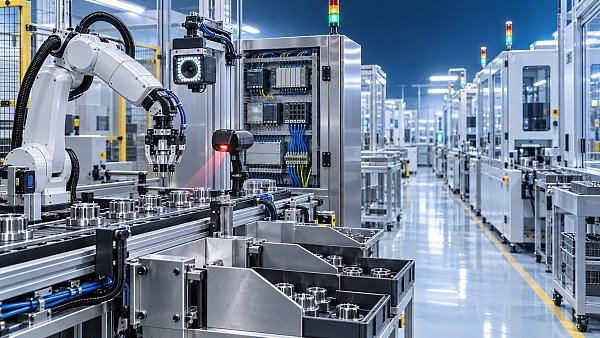
What Makes Industrial Robots Better for Welding Consistency?
Publication Date
author
For quality and safety teams, welding consistency is not just about speed—it is about repeatability, defect control, and traceable process stability. That is why industrial robots for welding applications are becoming essential across modern manufacturing. By delivering precise torch movement, controlled heat input, and reduced operator variability, these systems help manufacturers achieve more uniform weld quality while lowering inspection risks and production uncertainty.
Why Scenario Differences Matter More Than General Claims
Not every welding line has the same quality risk, safety exposure, or process tolerance. A heavy steel fabrication plant faces different challenges than a medical equipment supplier, an automotive Tier 1 plant, or a contract manufacturer handling frequent changeovers. For this reason, the value of industrial robots for welding applications should be judged by scenario, not by generic promises about automation.
For quality control personnel, the main question is whether robotic welding can reduce weld variability, rework, porosity, undercut, burn-through, and dimensional drift. For safety managers, the question is whether robotic systems can reduce fume exposure, arc flash risk, ergonomic strain, and inconsistent manual behaviors in hazardous cells. In both cases, consistency is the outcome that connects product quality and operator protection.
Industrial robots for welding applications perform better when the production environment requires repeatable paths, stable travel speed, controlled torch angle, and reliable process monitoring. However, the exact benefit depends on material type, joint geometry, fixture quality, part variation, and the manufacturer’s willingness to standardize upstream preparation. That is why decision-making should start with business scenarios and acceptance criteria.
Where Welding Consistency Matters Most in Real Production
The strongest use cases for industrial robots for welding applications typically appear where weld quality affects downstream assembly, inspection cost, field reliability, or compliance exposure. The following table helps quality and safety teams compare common scenarios.
In each of these environments, the reason industrial robots for welding applications improve consistency is not simply that machines replace people. It is that robots can execute the same programmed motion repeatedly, maintain more stable process windows, and support digital records that make deviations visible earlier.
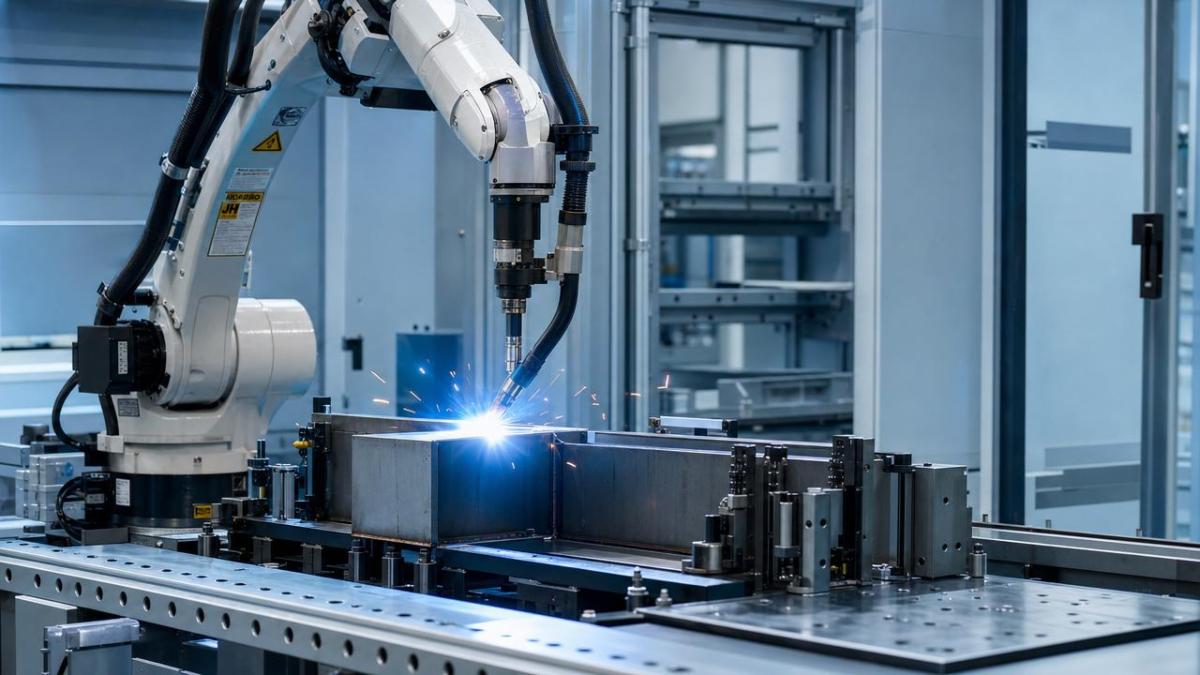
Scenario 1: High-Volume Production Lines Need Statistical Stability
In automotive, appliance, and repetitive component manufacturing, welding consistency is measured across thousands of parts rather than a few sample pieces. Here, quality teams care less about whether a single skilled welder can produce an excellent joint and more about whether every shift, every cell, and every lot performs within a narrow process window.
Industrial robots for welding applications are especially effective in this scenario because they minimize variation in torch angle, standoff distance, travel speed, and weld start-stop positioning. These variables directly influence penetration, bead appearance, spatter generation, and distortion. If fixtures are robust and incoming part dimensions are controlled, robotic welding can make process capability more predictable and easier to audit.
For safety managers, this scenario also supports stronger enclosure design, fume extraction planning, and standardized safeguarding. Unlike dispersed manual stations, robotic cells can centralize risk controls and simplify compliance verification. The practical takeaway is clear: when throughput is high and defect escape costs are significant, robotic consistency produces both measurable quality gains and more controllable safety conditions.
Scenario 2: Heavy Fabrication Values Heat Control and Reduced Rework
In structural steel, agricultural machinery, transport frames, and large fabricated assemblies, weld length and thermal input become major quality drivers. Manual welding in these conditions often suffers from travel speed variation, uneven bead formation, welder fatigue, and position-dependent inconsistency. The result can be warpage, poor fusion, and expensive grinding or repair work.
Industrial robots for welding applications improve consistency here by holding a stable arc path over long seams and by reducing human fatigue from physically demanding work. Consistent movement helps maintain more uniform heat input, which can reduce distortion and improve dimensional repeatability when sequence planning is sound. This matters to quality personnel because less distortion often means easier fit-up downstream and fewer inspection disputes over acceptable deviations.
From a safety perspective, large weldments often require awkward postures, climbing, overhead work, or prolonged proximity to fumes and radiant heat. Robotic welding does not eliminate all hazards, but it can shift people away from direct exposure and into monitoring, setup, and verification roles. For organizations with high injury risk in welding bays, that is a meaningful operational advantage.
Scenario 3: Precision Assemblies Depend on Repeatable Fine Motion
Manufacturers producing thinner materials, tighter assemblies, or visible finished surfaces have a different concern: even small process deviations can create rejects. In this environment, consistency is tied to torch access, arc stability, low spatter, and minimal cosmetic variation. Examples include enclosures, cabinets, instrumentation frames, and specialized equipment housings.
Industrial robots for welding applications help when product quality depends on exact motion repetition. Once the part presentation is controlled, robots can maintain stable approach angles and more repeatable weld timing than many manual operations. This reduces dependence on individual operator style and lowers the chance that one shift produces a visibly different result from another.
Quality teams should still verify whether part-to-part variation is low enough for the robot to succeed. If incoming components are inconsistent, robotic precision may expose upstream problems rather than solve them. In other words, robots improve consistency best when the rest of the manufacturing system is prepared to support repeatability.
Scenario 4: High-Mix, Low-Volume Shops Need Careful Fit Assessment
A common misconception is that industrial robots for welding applications only work in mass production. In reality, they can also support high-mix manufacturing, but the fit depends on how standardized the jobs are. If a shop changes parts constantly without stable fixtures, consistent joint preparation, or repeatable programs, the robot may spend too much time being reconfigured to deliver a quality advantage.
However, if product families share similar geometries, if offline programming is available, and if recipes can be managed systematically, robotic welding may still improve consistency. For contract manufacturers, this is often less about maximum speed and more about reducing dependence on hard-to-replace expert welders for every repeat order.
Safety managers should assess changeover discipline in these shops. Frequent setup changes create opportunities for guarding bypass, parameter errors, and fixture misalignment. In such cases, the success of industrial robots for welding applications depends as much on procedural control as on robot capability.
What Quality and Safety Teams Should Evaluate Before Approval
Before recommending industrial robots for welding applications, quality and safety stakeholders should align on measurable acceptance conditions. A robot is not automatically a consistency solution unless the process inputs can be controlled and validated.
This review approach aligns well with TSV’s data-driven mindset: parameters matter more than claims. For quality and safety teams, the most useful supplier discussion is not “Is the robot advanced?” but “What repeatability, monitoring, and fault-control data can be demonstrated under our actual welding conditions?”
Common Misjudgments That Reduce Consistency Gains
Several implementation mistakes can prevent industrial robots for welding applications from delivering the expected consistency. The first is assuming that robot repeatability alone compensates for poor fit-up, unstable consumables, or inconsistent material condition. Robots repeat exactly; they do not automatically correct every upstream issue.
The second is overlooking maintenance. Worn torch consumables, cable management problems, fixture wear, and sensor contamination can gradually erode quality even in a well-programmed cell. The third is focusing only on cycle time during procurement. For quality control and safety leadership, the stronger business case often comes from defect reduction, lower rework, traceable process data, and safer task allocation rather than raw speed alone.
Another frequent error is underestimating training needs. Robotic welding changes the skill profile from purely manual execution to process setup, parameter management, cell verification, and exception handling. Consistency improves when teams understand both welding fundamentals and robotic process discipline.
How to Decide Whether Your Scenario Is a Good Fit
Industrial robots for welding applications are usually the right choice when three conditions exist together: the weld path is repeatable enough to program, the cost of inconsistency is meaningful, and the organization is ready to control fixtures, parameters, and safety procedures with discipline. If those conditions are weak, robotic welding may still work, but only after upstream standardization improves.
A practical decision path is to map your highest-risk weld families first. Identify where defects recur, where safety exposure is highest, where inspection time is excessive, and where customer complaints or internal rework are concentrated. Then compare those jobs against real robotic suitability factors such as joint accessibility, part repeatability, production frequency, and the need for digital traceability.
For organizations evaluating suppliers, request evidence that reflects your actual scenario: repeatability data, sample weld qualification results, monitoring capabilities, and maintenance assumptions. That is the most reliable way to determine whether industrial robots for welding applications will improve consistency in your specific environment rather than only in a sales presentation.
FAQ for Quality and Safety Decision-Makers
Are industrial robots for welding applications always better than skilled manual welders?
Not in every job. They are usually better when the task is repetitive, quality variation is costly, and process inputs can be standardized. Skilled manual welders still offer flexibility in highly variable or low-repeat work.
Do robotic cells automatically improve weld safety?
They can significantly reduce direct exposure to arc flash, fumes, and ergonomic strain, but only if guarding, extraction, interlocks, and lockout procedures are designed and maintained properly.
What is the biggest hidden requirement for consistent robotic welding?
Stable part presentation. If fixture repeatability and joint consistency are poor, the robot may repeat errors very efficiently instead of preventing them.
Final Takeaway
What makes industrial robots better for welding consistency is not a vague promise of automation. It is their ability to deliver repeatable motion, stable process execution, traceable data, and safer task separation in the right production scenarios. For quality control personnel, that means fewer variables and stronger defect prevention. For safety managers, it means a more controlled welding environment with lower direct exposure risk.
The smartest next step is to evaluate industrial robots for welding applications against your actual weld families, inspection burdens, and safety priorities. When the scenario is matched correctly and the engineering fundamentals are respected, consistency stops being a target and becomes a measurable operating standard.
Search News
Hot Articles
- Carbon Fiber StructuresHow to Specify Aerospace Carbon Fiber Assemblies for Lightweight, Load-Bearing PartsJul 11, 2026
- Machine VisionXiaomi, Alibaba DAMO Academy Drive Open-Source Robotics Model Ecosystem, Lowering Algorithm Development Barriers for Overseas SMEs Adopting Chinese Robotics SolutionsMar 30, 2026
- Cobots & ArmsShanxi 'AI+' Conference Showcases Embodied Intelligence with Multinational Buyer Engagement: Key Industry ImplicationsMar 30, 2026
Popular Tags
Recommended News
 Jul 11, 2026How to Specify Aerospace Carbon Fiber Assemblies for Lightweight, Load-Bearing PartsAerospace carbon fiber assemblies: learn how to specify laminate design, load data, joining methods, and inspection controls for lighter, reliable load-bearing aerospace parts.Elena Rostova (UAV Systems Researcher)
 Mar 30, 2026Xiaomi, Alibaba DAMO Academy Drive Open-Source Robotics Model Ecosystem, Lowering Algorithm Development Barriers for Overseas SMEs Adopting Chinese Robotics SolutionsXiaomi & Alibaba DAMO Academy's open-source robotics models lower algorithm barriers for global SMEs. Boost efficiency in manufacturing, logistics & smart retail with ROS 2 compatible solutions.TSV Data Lab
 Mar 30, 2026Shanxi 'AI+' Conference Showcases Embodied Intelligence with Multinational Buyer Engagement: Key Industry ImplicationsShanxi 'AI+' Conference highlights embodied intelligence with Tesla, Ubtech & Jiantao showcasing multimodal robotics. 40+ global buyers validated tech on-site, creating new B2B channels for industrial automation & AI solutions.Chen Wei (Automation Lead Engineer)
 Mar 30, 2026Zhongguancun Unveils 6G Integrated Sensing-Computing-Intelligence Platform to Empower Embodied Robots for Global Industrial ApplicationsZhongguancun's new 6G platform revolutionizes industrial robotics with <10ms latency, empowering global automotive, logistics & port automation. Discover how this tech boosts China's smart manufacturing exports.TSV Data Lab
 Mar 30, 2026Mech-Mind Tianjin Embodied Intelligence R&D and Production Base Goes Live, Cutting Delivery Time by 20%–30% for Global Customized AMR+Vision SolutionsMech-Mind's Tianjin AMR+Vision production base cuts delivery time by 20%-30% for欧美 & Latin American markets. Discover how this PLd-certified facility accelerates customized robotics solutions for smart manufacturing and logistics.Chen Wei (Automation Lead Engineer)
 Mar 30, 2026Boao Forum Reveals 'Co-evolution of Big and Small Brains' Trend in Humanoid Robots, China's Embodied Intelligence Accelerates Adaptation to Overseas Manufacturing Service ScenariosDiscover how China's humanoid robots, featuring 'Co-evolution of Big and Small Brains,' are revolutionizing global manufacturing. Learn about Embodied Tian Gong 3.0's ISO compliance and overseas deployment at Boao Forum 2026.Chen Wei (Automation Lead Engineer)
 Mar 30, 2026China Railway Industrial Secures Patent for Embodied Robotics in Material Handling, Boosting High-Precision Delivery Capabilities for Overseas Infrastructure and Manufacturing ProjectsChina Railway Industrial's new patent for embodied robotics in material handling boosts high-precision delivery for global infrastructure & manufacturing. Discover how this innovation enhances logistics accuracy in automotive, rail transit & EPC projects.Chen Wei (Automation Lead Engineer)
 Sep 28, 2026Spindle Runout Measurement in Germany: DIN Standards, Methods, and Acceptance LimitsSpindle runout measurement Germany: explore DIN standards, proven methods, acceptance limits, and audit-ready practices for reliable machining quality.Dr. Marcus Vance
 Sep 27, 2026How to Select Wall-Mount Edge Devices for Space-Constrained Factory NetworksWall mount edge devices for space-constrained factories: evaluate workload, thermal design, power resilience, cable access, and network reliability for smarter deployments.TSV Data Lab
 Sep 26, 2026Machining Tolerance Analysis: How to Set Limits That Meet Function and Cost TargetsMachining tolerance analysis: learn how to set functional limits, control tolerance stacks, reduce inspection risk, and balance precision with production cost.Dr. Marcus Vance
 Sep 25, 2026How to Evaluate an Industrial Infrastructure Data Platform for Multi-Site OperationsIndustrial infrastructure data platform evaluation guide for multi-site operations: compare data quality, edge resilience, interoperability, governance, and scalable proof-of-value criteria.Victor Lin (Chief Software Architect)
 Sep 24, 2026How to Select Machine Vision Optics for Accurate Inspection at Different Working DistancesMachine vision optics selection guide for accurate inspection at every working distance. Compare FOV, pixel scale, DOF, distortion, lighting, and telecentric options.TSV Data Lab
 Sep 23, 2026How to Evaluate a Machine Vision System Integrator for High-Speed Inspection LinesChoose a machine vision system integrator with proven expertise in high-speed inspection, reliable reject timing, robust optics, and measurable acceptance criteria.TSV Data Lab
 Sep 28, 2026When is a SCADA API the right choice for connecting plant systems?SCADA API guide: learn when governed plant data integration improves traceability, security, and scalability—without compromising real-time control.Victor Lin (Chief Software Architect)
 Sep 27, 2026How SCADA data integration improves traceability across production linesSCADA data integration connects production-line data to improve traceability, accelerate quality investigations, and strengthen safety decisions.Victor Lin (Chief Software Architect)
 Sep 26, 2026What to define before starting SCADA integration planningSCADA integration planning starts with clear scope, control boundaries, data models, cybersecurity, and testing. Discover the definitions that reduce risk and costly rework.Victor Lin (Chief Software Architect)
 Sep 25, 2026How a smart factory with Industrial IoT reduces production blind spotsDiscover how a smart factory with Industrial IoT turns real-time machine, quality, and workflow data into actionable insights that reduce production blind spots and delivery risks.Victor Lin (Chief Software Architect)
 Sep 24, 2026When does Industrial IoT make smart manufacturing easier to scale?Smart manufacturing Industrial IoT scales when trusted data, interoperable systems, and secure workflows turn connected assets into measurable gains.TSV Data Lab
 Sep 23, 2026What drives ultra-precision machining cost at 1-micron tolerance?Ultra precision machining cost per part at 1 micron tolerance depends on process, material, metrology, and yield. Learn how to compare quotes confidently.Dr. Marcus Vance
 Sep 22, 2026Drone Engine-T550CC Applications: Build the UAV Power System Around the MissionAn application guide for Drone Engine-T550CC integration, covering payload planning, airframe matching, cooling, fuel, vibration, test procedures, documentation, and service preparation.Elena Rostova (UAV Systems Researcher)
 Sep 22, 2026How to Evaluate Industrial Edge Computing Vendors for Factory DeploymentIndustrial edge computing vendor evaluation guide for factories: compare latency, protocol fit, reliability, security, and lifecycle support before deployment.TSV Data Lab
 Sep 21, 2026Drone Payload Integration: Matching Power, Data, and Center of Gravity for Reliable FlightsDrone payload integration made practical: balance power, data, center of gravity, and endurance to build safer, more reliable mission-ready flights.Elena Rostova (UAV Systems Researcher)
 Sep 20, 2026Autonomous Navigation Pricing: Cost Drivers and Budget Benchmarks for AMR ProjectsAutonomous navigation price explained: compare AMR cost drivers, software, sensors, integration, safety, and lifecycle budgets to build a scalable project plan.Chen Wei (Automation Lead Engineer)
 Sep 19, 2026How to Scope Automation Integration Services for Multi-System Factory ProjectsAutomation integration services: learn how to scope multi-system factory projects with clear workflows, interface contracts, safety boundaries, and acceptance criteria.Victor Lin (Chief Software Architect)