When does Industrial IoT make smart manufacturing easier to scale?
Publication Date
author
A factory can connect hundreds of machines and still remain difficult to manage. Dashboards may glow with live status indicators, while planners continue to chase production updates by phone, maintenance teams rely on handwritten notes, and quality engineers discover drift only after a batch is complete. This is the gap between an Industrial IoT pilot and a system that can genuinely grow with the business.
Smart manufacturing Industrial IoT becomes easier to scale when connected data turns into a dependable engineering foundation: consistent enough for operations, traceable enough for quality, secure enough for enterprise risk teams, and useful enough to change a decision on the shop floor. For enterprise leaders, the relevant question is not “How many assets can we connect?” It is “Can every additional connected asset improve a repeatable business process without creating more integration work, cyber risk, or data ambiguity?”
The answer depends less on a single platform than on a set of operating conditions. When those conditions are in place, Industrial IoT can move from a promising proof of concept to a scalable manufacturing capability across plants, product lines, and supplier networks.
Scale begins when the use case is operational, not demonstrational
Many smart manufacturing programs start with an attractive demonstration: a vibration sensor predicts a bearing issue, a vision camera spots a defect, or an edge gateway streams machine data into a cloud dashboard. These demonstrations are valuable, but they do not automatically establish a scalable model.
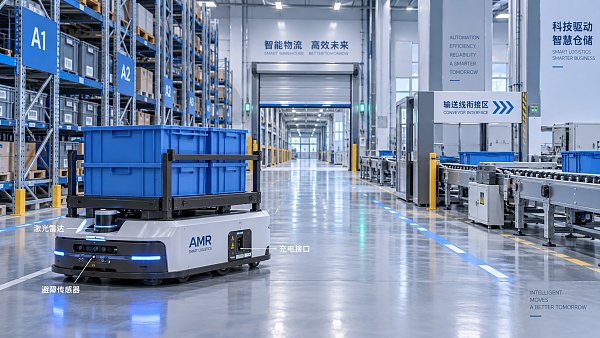
A program becomes easier to expand when the first use case is tied to a decision that already has an owner, a workflow, and a measurable consequence. For example, condition-monitoring data should influence maintenance prioritization and spare-parts planning. Process data from a CNC cell should help determine whether a part remains within tolerance before it reaches final inspection. AGV or AMR fleet data should alter routes, charging schedules, or exception handling rather than simply show vehicle locations.
In other words, the data must have a destination. If a signal enters a dashboard but no person, system, or automated rule acts on it, adding another thousand signals only enlarges the noise.
Decision-makers should ask a practical question before approving a wider rollout: What action will change when this data crosses a defined threshold? If the answer is unclear, the initiative is likely collecting telemetry rather than building a smart manufacturing system.
The architecture must tolerate variation on the factory floor
Factories rarely begin with a clean technology stack. A typical enterprise may operate decades-old programmable logic controllers beside newer robotic cells, proprietary machine interfaces, multiple MES instances, and separate quality or enterprise resource planning systems. A scalable Industrial IoT strategy acknowledges this reality instead of treating every legacy asset as a problem to be replaced.
The most resilient approach usually separates the architecture into distinct layers:
- Device and control layer: machines, sensors, PLCs, drives, cameras, robots, and test equipment generate the original operational signals.
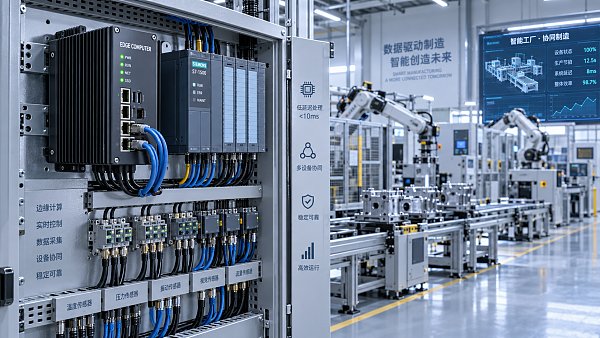
- Edge layer: industrial gateways normalize protocols, filter unnecessary traffic, run time-sensitive logic, and keep critical functions available during network interruptions.
- Data and integration layer: contextualized data is shared with MES, SCADA, CMMS, QMS, ERP, analytics tools, or data platforms through governed interfaces.
- Application layer: teams use the information for maintenance, quality, energy management, scheduling, traceability, engineering analysis, or automated control decisions.
This layered model matters because not every manufacturing decision belongs in the cloud. A machine-vision inspection, a safety-related interlock, or a high-speed motion correction may require local processing and predictable response times. By contrast, cross-site benchmarking, supplier traceability analysis, and long-horizon reliability modeling may benefit from centralized data access.
Industrial IoT is easier to scale when edge and cloud roles are defined by engineering requirements—latency, availability, bandwidth, security, and data retention—not by fashion. “Cloud-first” and “edge-first” are incomplete positions. The useful question is where each workload can meet its operational constraints.
Interoperability is a governance issue as much as a connectivity issue
Connecting equipment through OPC UA, MQTT, Modbus, Ethernet/IP, or other industrial protocols is only the first step. The more difficult challenge is ensuring that data means the same thing across assets and sites.
Consider a simple label such as “machine running.” On one line, it may mean the spindle is active. On another, it may mean the machine is powered on, even while waiting for an operator or material. If these states are merged without a common model, enterprise-level utilization reports can become misleading. Leaders may believe they are comparing performance when they are actually comparing incompatible definitions.
Scalable smart manufacturing Industrial IoT programs create a shared semantic model. They define asset identities, production states, part numbers, work orders, alarm categories, units of measure, timestamp rules, and data ownership. This work can feel less exciting than installing sensors, yet it is often where scale is won or lost.
For multi-site manufacturers, a useful principle is to standardize the minimum common data model while allowing local flexibility where production methods genuinely differ. A precision machining facility working to aerospace tolerances will need different contextual data from a high-volume packaging line. Standardizing every field can become bureaucratic; standardizing none of them makes enterprise comparison impossible.
What makes data trustworthy enough for production decisions?
Manufacturing leaders are right to be cautious about automated recommendations. A maintenance alert based on incomplete sensor history can waste a shutdown window. A quality decision based on poorly synchronized data can create false confidence. Scale requires trust, and trust depends on data discipline.
Before expanding an Industrial IoT solution, teams should verify several conditions:
The principle is straightforward: data that cannot be explained should not be allowed to quietly direct production. For organizations in aerospace, medical devices, advanced robotics, or other high-consequence environments, this discipline is especially important. A connected system should strengthen engineering evidence, not replace it with opaque claims.
Choose metrics that reveal whether scaling is helping
It is tempting to judge an Industrial IoT deployment by the number of connected assets, data points collected, or dashboards launched. Those are implementation metrics. They do not prove operational value.
A stronger measurement framework links the program to a limited set of outcomes that business and engineering leaders both recognize. Depending on the use case, these may include unplanned downtime patterns, mean time between failures, mean time to repair, first-pass yield, scrap and rework causes, cycle-time stability, energy intensity per unit, on-time completion, or supplier-quality traceability.
The exact metric matters less than its connection to a decision loop. For a robot cell, repeatability deviation may be more meaningful than total operating hours. For an industrial vision system, false-positive and false-negative inspection rates may matter more than image volume. For Industrial IoT gateways, throughput, packet loss, data availability, and latency under actual load may be more informative than a brochure-level connectivity claim.
TechStat Vanguard’s approach to hard-tech benchmarking reflects this distinction. Parameters such as servo motor MTBF under defined conditions, industrial gateway latency, LiDAR interference behavior, or machining tolerance consistency become useful only when test conditions and measurement methods are visible. Decision-makers evaluating a digital manufacturing architecture should demand the same clarity from internal projects and external suppliers.
Cybersecurity cannot be postponed until after the pilot
Every added connection changes the manufacturing risk profile. A sensor gateway, remote support channel, machine interface, or cloud connector may be a legitimate operational tool, but it can also introduce an unmanaged path into an operational technology environment.
Security at scale is not achieved by placing a single appliance at the perimeter. It requires asset inventory, network segmentation, identity management, least-privilege access, patching procedures, encrypted communications where appropriate, backup and recovery testing, and a clear process for vendor remote access. Just as important, IT security teams and plant engineering teams need a shared operating model. Security policies that ignore uptime realities will be bypassed; production changes that bypass security review will accumulate hidden exposure.
For executives, the key concern is not whether a solution claims to be “secure.” Ask how it behaves when a connection fails, an account is compromised, a gateway needs replacement, or an external integrator requires access at 2 a.m. Resilience is demonstrated in those ordinary but difficult moments.
Scaling across sites requires a product mindset
A common failure pattern is treating each plant as a separate project. One site selects a gateway, another builds custom dashboards, and a third contracts a different systems integrator. Each local team may solve an immediate problem, yet the enterprise eventually inherits overlapping technologies, inconsistent data models, and costly maintenance obligations.
A more sustainable model treats the Industrial IoT capability as an internal product. There is a roadmap, a reference architecture, reusable deployment patterns, documented interfaces, support ownership, and a process for incorporating plant feedback. Local teams still need room to adapt to their equipment and workflows, but they should not have to reinvent foundational components.
This does not mean forcing a global rollout before one site has proved value. It means designing the first deployment with replication in mind. Can the sensor configuration be reused? Can the asset model be extended? Can an alarm rule be version-controlled? Can a new plant onboard without requiring custom work from the original project team?
A practical readiness test before expanding the Industrial IoT footprint
Before funding the next wave of connected assets, leadership should look for evidence that the initial deployment has crossed from experiment to operating capability. The signs are usually visible: frontline users rely on the data during normal work; exceptions have named owners; maintenance, quality, and production systems share enough context to explain events; data quality is monitored; cyber controls are part of the design; and performance improvements can be evaluated against a defined baseline.
There should also be an honest account of what did not work. Perhaps a sensor placement created unreliable readings. Perhaps Wi-Fi coverage was insufficient near a welding area. Perhaps an algorithm found correlations but did not produce actionable maintenance timing. These are not reasons to abandon smart manufacturing. They are the engineering evidence needed to make the next deployment more credible.
Industrial IoT makes smart manufacturing easier to scale when it reduces uncertainty rather than adding another digital layer to manage. The strongest programs connect machines, people, and systems around verifiable operating facts: what happened, when it happened, under what conditions, and what should happen next. That is where connected manufacturing stops being an abstract transformation agenda and becomes a durable capability for better throughput, quality, resilience, and supply-chain decisions.
Search News
Hot Articles
- Carbon Fiber StructuresHow to Specify Aerospace Carbon Fiber Assemblies for Lightweight, Load-Bearing PartsJul 11, 2026
- Machine VisionXiaomi, Alibaba DAMO Academy Drive Open-Source Robotics Model Ecosystem, Lowering Algorithm Development Barriers for Overseas SMEs Adopting Chinese Robotics SolutionsMar 30, 2026
- Cobots & ArmsShanxi 'AI+' Conference Showcases Embodied Intelligence with Multinational Buyer Engagement: Key Industry ImplicationsMar 30, 2026
Popular Tags
Recommended News
 Jul 11, 2026How to Specify Aerospace Carbon Fiber Assemblies for Lightweight, Load-Bearing PartsAerospace carbon fiber assemblies: learn how to specify laminate design, load data, joining methods, and inspection controls for lighter, reliable load-bearing aerospace parts.Elena Rostova (UAV Systems Researcher)
 Mar 30, 2026Xiaomi, Alibaba DAMO Academy Drive Open-Source Robotics Model Ecosystem, Lowering Algorithm Development Barriers for Overseas SMEs Adopting Chinese Robotics SolutionsXiaomi & Alibaba DAMO Academy's open-source robotics models lower algorithm barriers for global SMEs. Boost efficiency in manufacturing, logistics & smart retail with ROS 2 compatible solutions.TSV Data Lab
 Mar 30, 2026Shanxi 'AI+' Conference Showcases Embodied Intelligence with Multinational Buyer Engagement: Key Industry ImplicationsShanxi 'AI+' Conference highlights embodied intelligence with Tesla, Ubtech & Jiantao showcasing multimodal robotics. 40+ global buyers validated tech on-site, creating new B2B channels for industrial automation & AI solutions.Chen Wei (Automation Lead Engineer)
 Mar 30, 2026Zhongguancun Unveils 6G Integrated Sensing-Computing-Intelligence Platform to Empower Embodied Robots for Global Industrial ApplicationsZhongguancun's new 6G platform revolutionizes industrial robotics with <10ms latency, empowering global automotive, logistics & port automation. Discover how this tech boosts China's smart manufacturing exports.TSV Data Lab
 Mar 30, 2026Mech-Mind Tianjin Embodied Intelligence R&D and Production Base Goes Live, Cutting Delivery Time by 20%–30% for Global Customized AMR+Vision SolutionsMech-Mind's Tianjin AMR+Vision production base cuts delivery time by 20%-30% for欧美 & Latin American markets. Discover how this PLd-certified facility accelerates customized robotics solutions for smart manufacturing and logistics.Chen Wei (Automation Lead Engineer)
 Mar 30, 2026Boao Forum Reveals 'Co-evolution of Big and Small Brains' Trend in Humanoid Robots, China's Embodied Intelligence Accelerates Adaptation to Overseas Manufacturing Service ScenariosDiscover how China's humanoid robots, featuring 'Co-evolution of Big and Small Brains,' are revolutionizing global manufacturing. Learn about Embodied Tian Gong 3.0's ISO compliance and overseas deployment at Boao Forum 2026.Chen Wei (Automation Lead Engineer)
 Mar 30, 2026China Railway Industrial Secures Patent for Embodied Robotics in Material Handling, Boosting High-Precision Delivery Capabilities for Overseas Infrastructure and Manufacturing ProjectsChina Railway Industrial's new patent for embodied robotics in material handling boosts high-precision delivery for global infrastructure & manufacturing. Discover how this innovation enhances logistics accuracy in automotive, rail transit & EPC projects.Chen Wei (Automation Lead Engineer)
 Sep 25, 2026How to Evaluate an Industrial Infrastructure Data Platform for Multi-Site OperationsIndustrial infrastructure data platform evaluation guide for multi-site operations: compare data quality, edge resilience, interoperability, governance, and scalable proof-of-value criteria.Victor Lin (Chief Software Architect)
 Sep 24, 2026How to Select Machine Vision Optics for Accurate Inspection at Different Working DistancesMachine vision optics selection guide for accurate inspection at every working distance. Compare FOV, pixel scale, DOF, distortion, lighting, and telecentric options.TSV Data Lab
 Sep 23, 2026How to Evaluate a Machine Vision System Integrator for High-Speed Inspection LinesChoose a machine vision system integrator with proven expertise in high-speed inspection, reliable reject timing, robust optics, and measurable acceptance criteria.TSV Data Lab
 Sep 24, 2026When does Industrial IoT make smart manufacturing easier to scale?Smart manufacturing Industrial IoT scales when trusted data, interoperable systems, and secure workflows turn connected assets into measurable gains.TSV Data Lab
 Sep 23, 2026What drives ultra-precision machining cost at 1-micron tolerance?Ultra precision machining cost per part at 1 micron tolerance depends on process, material, metrology, and yield. Learn how to compare quotes confidently.Dr. Marcus Vance
 Sep 22, 2026Drone Engine-T550CC Applications: Build the UAV Power System Around the MissionAn application guide for Drone Engine-T550CC integration, covering payload planning, airframe matching, cooling, fuel, vibration, test procedures, documentation, and service preparation.Elena Rostova (UAV Systems Researcher)
 Sep 22, 2026How to Evaluate Industrial Edge Computing Vendors for Factory DeploymentIndustrial edge computing vendor evaluation guide for factories: compare latency, protocol fit, reliability, security, and lifecycle support before deployment.TSV Data Lab
 Sep 21, 2026Drone Payload Integration: Matching Power, Data, and Center of Gravity for Reliable FlightsDrone payload integration made practical: balance power, data, center of gravity, and endurance to build safer, more reliable mission-ready flights.Elena Rostova (UAV Systems Researcher)
 Sep 20, 2026Autonomous Navigation Pricing: Cost Drivers and Budget Benchmarks for AMR ProjectsAutonomous navigation price explained: compare AMR cost drivers, software, sensors, integration, safety, and lifecycle budgets to build a scalable project plan.Chen Wei (Automation Lead Engineer)
 Sep 19, 2026How to Scope Automation Integration Services for Multi-System Factory ProjectsAutomation integration services: learn how to scope multi-system factory projects with clear workflows, interface contracts, safety boundaries, and acceptance criteria.Victor Lin (Chief Software Architect)
 Sep 18, 2026Selecting UAV Aerospace Structural Parts for Strength, Weight, and Fatigue LifeUAV aerospace structural parts guide: compare strength, weight, stiffness, fatigue life, joints, and traceability to select reliable flight-ready components.Elena Rostova (UAV Systems Researcher)
 Sep 17, 2026Selecting Commercial Drone Payloads for European Inspection ProjectsCommercial drone payloads Europe: learn how to select RGB, thermal and LiDAR systems for compliant, reliable inspection data and better project outcomes.Elena Rostova (UAV Systems Researcher)
 Sep 16, 2026Machining Tolerance Validation: How to Verify Critical Dimensions Before Production ReleaseMachining tolerance analysis validation: verify critical dimensions, measurement systems, process capability, and tolerance stacks before production release.Dr. Marcus Vance
 Sep 15, 2026AGV Tape Guidance vs Laser Navigation: Which Fits Your Warehouse Layout?AGV tape guidance comparison: discover how tape and laser navigation fit changing warehouse layouts, docking needs, floor conditions, maintenance, and route flexibility.Chen Wei (Automation Lead Engineer)
 Sep 14, 2026How Point Cloud Analytics Improves Asset Inspection Workflows Across GCC ProjectsPoint cloud analytics GCC helps project leaders improve asset inspections with accurate change detection, safer workflows, and faster maintenance decisions.TSV Data Lab
 Sep 13, 2026How Aerospace Manufacturers Can Build a Digital Thread From Design to Certified ProductionDigital manufacturing for aerospace: learn how to build a traceable digital thread from design through certified production, supplier control, and audit-ready compliance.Victor Lin (Chief Software Architect)
 Sep 12, 2026How to Select a Thermal Sensor for Mapping Drones in Surveying ProjectsMapping drone thermal sensor selection made simple: compare GSD, radiometric data, NETD, calibration, and workflow fit for accurate, survey-ready thermal maps.Elena Rostova (UAV Systems Researcher)