Why Dynamic Navigation Failure Recovery Matters in AMRs
Publication Date
author
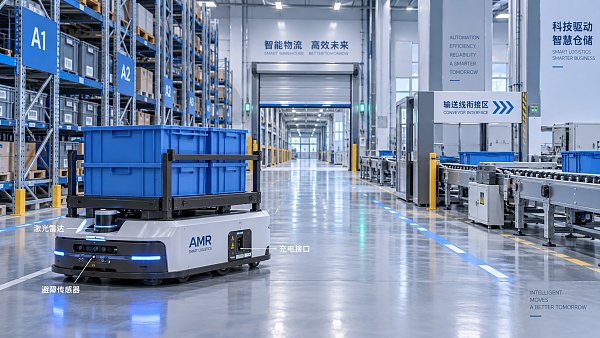
In AMR deployments, navigation failures are not rare exceptions—they are operational risks that can stall workflows, damage trust, and raise total project costs. That is why AGV AMR dynamic navigation fault tolerance has become a critical benchmark for project leaders evaluating automation performance. Beyond speed or payload, recovery capability determines whether autonomous systems can sustain uptime, safety, and decision-grade reliability in complex industrial environments.
Why project leaders now treat AGV AMR dynamic navigation fault tolerance as a first-line KPI

For a project manager, the real question is not whether an AGV or AMR can move under ideal conditions. The real question is what happens when the plant changes, a pallet is misplaced, Wi-Fi drops, a reflective surface confuses perception, or a worker crosses an unexpected path. In those moments, AGV AMR dynamic navigation fault tolerance becomes the difference between a resilient operation and a cascading disruption.
This matters across mixed industrial settings because modern facilities rarely stay static. Warehouses adjust slotting logic. assembly lines add temporary stations. aerospace and precision machining environments introduce narrow aisles, metallic reflections, and strict material flow timing. In each case, dynamic navigation failure recovery is not a software detail; it is an execution risk tied directly to throughput, labor coordination, and delivery commitments.
At TechStat Vanguard, the emphasis is on measurable engineering truth rather than promotional language. That means evaluating recovery behavior through observable parameters: how fast the robot re-localizes, how it degrades under sensor interference, whether it enters a safe stop or reroute mode, and how consistently it resumes task completion without operator intervention.
- A navigation fault that lasts 20 seconds may look small in a demo but can break takt alignment when repeated across dozens of trips.
- A system that needs frequent manual reset shifts labor back to supervision, reducing the promised automation return.
- A platform with poor recovery logic often creates hidden commissioning costs because route redesign and exception handling consume engineering time.
What does dynamic navigation failure recovery actually include?
Many procurement teams evaluate mobility robots through top-level metrics such as speed, payload, battery runtime, or map type. Those metrics matter, but they do not fully explain whether the system can maintain service continuity in a live plant. AGV AMR dynamic navigation fault tolerance is broader. It includes detection, response, safe fallback, rerouting, task preservation, and recovery traceability.
In practical terms, a fault-tolerant navigation stack should identify whether the issue is environmental, sensor-related, localization-related, traffic-related, or network-related. The recovery path should then be proportionate. Some situations require a controlled stop. Others require a local reroute. More serious events may need remote diagnosis or a protected handoff to manual support.
Core recovery functions worth verifying
- Obstacle persistence judgment: can the robot distinguish a temporary pedestrian crossing from a blocked aisle that requires rerouting?
- Re-localization capability: after partial map confusion, can the robot regain position without full mission restart?
- Sensor fusion resilience: if one perception source degrades, can another maintain safe motion or controlled halt logic?
- Task continuity: does the platform preserve mission state, queue priority, and delivery context after interruption?
- Alarm transparency: are failure logs precise enough for root-cause analysis, supplier accountability, and preventive optimization?
The table below helps project leaders separate headline performance from recovery-grade performance during vendor evaluation.
The comparison shows why navigation recovery cannot be treated as a minor software feature. It directly affects labor planning, scheduling confidence, and supplier qualification. For engineering-led organizations, this is a spec-sheet issue, not a marketing issue.
Which plant scenarios expose weak AGV AMR dynamic navigation fault tolerance fastest?
Weak recovery design often remains hidden during controlled demonstrations. It appears under mixed, changing, or noisy operating conditions. Project leaders in cross-sector manufacturing should therefore test fault tolerance against actual disruption patterns, not showroom paths.
High-risk scenarios to include in validation
- Temporary aisle blockage from pallets, carts, or WIP buffers that force route adaptation.
- Reflective floors, metal racks, shrink wrap, or polished machine surfaces that distort LiDAR or vision inputs.
- Cross-traffic involving forklifts, manual tuggers, and pedestrians where right-of-way logic must remain safe and efficient.
- Network interruptions affecting fleet coordination, task dispatch, or cloud-linked map synchronization.
- Layout drift after line changeovers, temporary fencing, or fixture relocation.
In aerospace and precision machining contexts, additional attention is required because material value is high, handling timing is strict, and aisle geometry may be tight. In warehouse and intralogistics settings, throughput pressure is usually higher, meaning repeated micro-failures can quickly become labor and SLA issues.
The following scenario table is useful when building acceptance criteria for AGV AMR dynamic navigation fault tolerance across different operational environments.
If a vendor cannot explain recovery logic for these scenarios in concrete terms, the project risk is usually being deferred to your commissioning team. That may reduce purchase price visibility at first, but it often raises total implementation cost later.
How to compare vendors beyond brochure claims
One of the biggest procurement mistakes is accepting generic phrases such as “adaptive navigation” or “intelligent obstacle avoidance” without asking what the system does when adaptation fails. A project leader needs measurable questions tied to verification methods. This is where a benchmark-driven approach is far more reliable than feature-based selling.
Questions that expose true recovery maturity
- What event taxonomy does the system use? Ask whether faults are categorized by localization loss, obstacle persistence, sensor degradation, traffic deadlock, map mismatch, or communication interruption.
- What is the expected operator intervention rate? A platform that needs frequent rescue may still move quickly in a demo, but it performs poorly in real operations.
- Can the supplier provide event logs with timestamps, trigger details, and recovery actions? Transparent diagnostics are essential for root-cause control.
- How does the robot behave when one sensor source degrades? Fallback logic should be explicit, not implied.
- What are the acceptance test conditions? Strong AGV AMR dynamic navigation fault tolerance should be tested under realistic environmental variation.
TSV’s data-first perspective is especially valuable here because project leaders often receive inconsistent claims from vendors, integrators, and platform resellers. The right approach is to build a qualification framework that prioritizes engineering observables over adjectives. Parameters do not lie; poorly defined recovery claims often do.
Procurement guide: what should go into your RFQ or technical specification?
If AGV AMR dynamic navigation fault tolerance is important to your project, it should be written into procurement documents, FAT criteria, and site acceptance tests. Otherwise, recovery performance remains subjective and disputes emerge only after go-live.
Recommended RFQ checklist
- Define the operating environment, including reflective materials, aisle width variation, pedestrian density, and temporary obstacle frequency.
- Require description of recovery logic for localization loss, blocked routes, sensor degradation, and communication interruption.
- Ask for evidence of event logging granularity, alarm hierarchy, and exportable diagnostics for maintenance teams.
- Specify restart behavior after interruption: automatic resume, assisted recovery, or full mission reset.
- Include measurable acceptance criteria such as safe stop behavior, reroute response, and post-fault task completion requirements.
Project owners should also align procurement with safety and compliance expectations. Depending on the application, this may involve reviewing the supplier’s safety architecture, risk assessment method, and applicable industrial robot or driverless transport safety practices. Even when exact standards vary by region and system design, disciplined documentation reduces downstream ambiguity.
Cost impact: why weak recovery logic raises total project cost
Navigation failure recovery is often underestimated because it does not always appear as a line item in a quote. Yet it affects multiple cost layers: commissioning time, standby labor, production interruption, layout rework, and support dependency. A lower-priced platform with weak fault tolerance can become more expensive within months if intervention frequency is high.
This is particularly true for multi-shift operations. Frequent stops force supervisors or technicians to act as unofficial robot attendants. In capital-intensive environments, a delayed material move can also create machine waiting time, which is usually far costlier than the robot itself. For project leaders measured on delivery and ramp-up stability, these hidden costs matter more than brochure-level efficiency claims.
Common hidden cost sources
- Extra engineering hours spent tuning maps, route rules, and exception policies after installation.
- Operator retraining and manual workaround procedures to keep material flow moving.
- Supplier support escalation costs caused by poor diagnostic transparency.
- Delayed production milestones when recovery behavior proves unstable under real traffic conditions.
Common misconceptions about AGV AMR dynamic navigation fault tolerance
“If the robot can avoid obstacles, recovery is already good enough.”
Obstacle avoidance is only one layer. Good recovery also requires event classification, mission continuity, and predictable return to service. A robot that simply stops safely may still cause significant productivity loss if it cannot recover efficiently.
“AMRs naturally solve all layout changes better than AGVs.”
AMRs generally offer more flexibility, but platform architecture, software maturity, sensor fusion quality, and fleet logic still determine practical fault tolerance. Some guided systems may outperform poorly integrated AMRs in stable routes with strict control needs.
“Recovery issues can be fixed later in software updates.”
Some improvement is possible after deployment, but weak baseline design usually means longer stabilization time, more pilot iterations, and greater dependence on vendor engineering resources. Recovery capability should be validated before scale-up, not assumed after purchase.
FAQ for project managers evaluating recovery performance
How should I test AGV AMR dynamic navigation fault tolerance before final approval?
Build tests around your real exception scenarios. Include blocked aisles, temporary layout changes, reflective interference, network instability, and mixed human traffic. Record how the system stops, reroutes, re-localizes, and resumes. Approval should depend on repeatable behavior, not a single successful demonstration.
Which applications need stronger recovery capability than others?
High-mix factories, shared-traffic intralogistics, aerospace component transport, and machining support usually demand stronger recovery performance because route variability, asset value, and interruption cost are higher. Stable point-to-point routes may tolerate simpler logic, but only if operating conditions remain tightly controlled.
What is the biggest red flag during vendor discussions?
A major red flag is vague language without fault taxonomy, test conditions, or log examples. If a supplier cannot describe how the robot behaves under localization loss, persistent blockage, or partial sensor degradation, your team may be expected to discover the limits during commissioning.
Should recovery metrics be part of the commercial contract?
Yes. While exact wording varies, technical annexes should define acceptance tests, event handling expectations, and support responsibilities. This protects both buyer and supplier by reducing ambiguity around what operational readiness really means.
Why choose a data-driven evaluation partner
For project leaders, the hard part is rarely finding suppliers. The hard part is filtering noise from engineering reality. TechStat Vanguard approaches AGV AMR dynamic navigation fault tolerance through measurable benchmarking, scenario-based analysis, and specification-oriented thinking. That makes it easier to compare platforms, challenge vague claims, and shorten qualification cycles with more confidence.
If your team is evaluating mobile automation for manufacturing, warehousing, aerospace workflows, or precision industrial handling, you can consult TSV on practical decision topics such as parameter confirmation, recovery test design, product selection logic, supplier comparison criteria, expected delivery risk, customization scope, documentation depth, and compliance-oriented specification drafting.
When recovery performance is treated as a measurable requirement rather than a marketing phrase, automation projects become easier to defend, easier to scale, and far more likely to deliver stable operational value.
Search News
Hot Articles
- Carbon Fiber StructuresHow to Specify Aerospace Carbon Fiber Assemblies for Lightweight, Load-Bearing PartsJul 11, 2026
- Machine VisionXiaomi, Alibaba DAMO Academy Drive Open-Source Robotics Model Ecosystem, Lowering Algorithm Development Barriers for Overseas SMEs Adopting Chinese Robotics SolutionsMar 30, 2026
- Cobots & ArmsShanxi 'AI+' Conference Showcases Embodied Intelligence with Multinational Buyer Engagement: Key Industry ImplicationsMar 30, 2026
Popular Tags
Recommended News
 Jul 11, 2026How to Specify Aerospace Carbon Fiber Assemblies for Lightweight, Load-Bearing PartsAerospace carbon fiber assemblies: learn how to specify laminate design, load data, joining methods, and inspection controls for lighter, reliable load-bearing aerospace parts.Elena Rostova (UAV Systems Researcher)
 Mar 30, 2026Xiaomi, Alibaba DAMO Academy Drive Open-Source Robotics Model Ecosystem, Lowering Algorithm Development Barriers for Overseas SMEs Adopting Chinese Robotics SolutionsXiaomi & Alibaba DAMO Academy's open-source robotics models lower algorithm barriers for global SMEs. Boost efficiency in manufacturing, logistics & smart retail with ROS 2 compatible solutions.TSV Data Lab
 Mar 30, 2026Shanxi 'AI+' Conference Showcases Embodied Intelligence with Multinational Buyer Engagement: Key Industry ImplicationsShanxi 'AI+' Conference highlights embodied intelligence with Tesla, Ubtech & Jiantao showcasing multimodal robotics. 40+ global buyers validated tech on-site, creating new B2B channels for industrial automation & AI solutions.Chen Wei (Automation Lead Engineer)
 Mar 30, 2026Zhongguancun Unveils 6G Integrated Sensing-Computing-Intelligence Platform to Empower Embodied Robots for Global Industrial ApplicationsZhongguancun's new 6G platform revolutionizes industrial robotics with <10ms latency, empowering global automotive, logistics & port automation. Discover how this tech boosts China's smart manufacturing exports.TSV Data Lab
 Mar 30, 2026Mech-Mind Tianjin Embodied Intelligence R&D and Production Base Goes Live, Cutting Delivery Time by 20%–30% for Global Customized AMR+Vision SolutionsMech-Mind's Tianjin AMR+Vision production base cuts delivery time by 20%-30% for欧美 & Latin American markets. Discover how this PLd-certified facility accelerates customized robotics solutions for smart manufacturing and logistics.Chen Wei (Automation Lead Engineer)
 Mar 30, 2026Boao Forum Reveals 'Co-evolution of Big and Small Brains' Trend in Humanoid Robots, China's Embodied Intelligence Accelerates Adaptation to Overseas Manufacturing Service ScenariosDiscover how China's humanoid robots, featuring 'Co-evolution of Big and Small Brains,' are revolutionizing global manufacturing. Learn about Embodied Tian Gong 3.0's ISO compliance and overseas deployment at Boao Forum 2026.Chen Wei (Automation Lead Engineer)
 Mar 30, 2026China Railway Industrial Secures Patent for Embodied Robotics in Material Handling, Boosting High-Precision Delivery Capabilities for Overseas Infrastructure and Manufacturing ProjectsChina Railway Industrial's new patent for embodied robotics in material handling boosts high-precision delivery for global infrastructure & manufacturing. Discover how this innovation enhances logistics accuracy in automotive, rail transit & EPC projects.Chen Wei (Automation Lead Engineer)
 Sep 28, 2026Spindle Runout Measurement in Germany: DIN Standards, Methods, and Acceptance LimitsSpindle runout measurement Germany: explore DIN standards, proven methods, acceptance limits, and audit-ready practices for reliable machining quality.Dr. Marcus Vance
 Sep 27, 2026How to Select Wall-Mount Edge Devices for Space-Constrained Factory NetworksWall mount edge devices for space-constrained factories: evaluate workload, thermal design, power resilience, cable access, and network reliability for smarter deployments.TSV Data Lab
 Sep 26, 2026Machining Tolerance Analysis: How to Set Limits That Meet Function and Cost TargetsMachining tolerance analysis: learn how to set functional limits, control tolerance stacks, reduce inspection risk, and balance precision with production cost.Dr. Marcus Vance
 Sep 25, 2026How to Evaluate an Industrial Infrastructure Data Platform for Multi-Site OperationsIndustrial infrastructure data platform evaluation guide for multi-site operations: compare data quality, edge resilience, interoperability, governance, and scalable proof-of-value criteria.Victor Lin (Chief Software Architect)
 Sep 24, 2026How to Select Machine Vision Optics for Accurate Inspection at Different Working DistancesMachine vision optics selection guide for accurate inspection at every working distance. Compare FOV, pixel scale, DOF, distortion, lighting, and telecentric options.TSV Data Lab
 Sep 23, 2026How to Evaluate a Machine Vision System Integrator for High-Speed Inspection LinesChoose a machine vision system integrator with proven expertise in high-speed inspection, reliable reject timing, robust optics, and measurable acceptance criteria.TSV Data Lab
 Sep 28, 2026When is a SCADA API the right choice for connecting plant systems?SCADA API guide: learn when governed plant data integration improves traceability, security, and scalability—without compromising real-time control.Victor Lin (Chief Software Architect)
 Sep 27, 2026How SCADA data integration improves traceability across production linesSCADA data integration connects production-line data to improve traceability, accelerate quality investigations, and strengthen safety decisions.Victor Lin (Chief Software Architect)
 Sep 26, 2026What to define before starting SCADA integration planningSCADA integration planning starts with clear scope, control boundaries, data models, cybersecurity, and testing. Discover the definitions that reduce risk and costly rework.Victor Lin (Chief Software Architect)
 Sep 25, 2026How a smart factory with Industrial IoT reduces production blind spotsDiscover how a smart factory with Industrial IoT turns real-time machine, quality, and workflow data into actionable insights that reduce production blind spots and delivery risks.Victor Lin (Chief Software Architect)
 Sep 24, 2026When does Industrial IoT make smart manufacturing easier to scale?Smart manufacturing Industrial IoT scales when trusted data, interoperable systems, and secure workflows turn connected assets into measurable gains.TSV Data Lab
 Sep 23, 2026What drives ultra-precision machining cost at 1-micron tolerance?Ultra precision machining cost per part at 1 micron tolerance depends on process, material, metrology, and yield. Learn how to compare quotes confidently.Dr. Marcus Vance
 Sep 22, 2026Drone Engine-T550CC Applications: Build the UAV Power System Around the MissionAn application guide for Drone Engine-T550CC integration, covering payload planning, airframe matching, cooling, fuel, vibration, test procedures, documentation, and service preparation.Elena Rostova (UAV Systems Researcher)
 Sep 22, 2026How to Evaluate Industrial Edge Computing Vendors for Factory DeploymentIndustrial edge computing vendor evaluation guide for factories: compare latency, protocol fit, reliability, security, and lifecycle support before deployment.TSV Data Lab
 Sep 21, 2026Drone Payload Integration: Matching Power, Data, and Center of Gravity for Reliable FlightsDrone payload integration made practical: balance power, data, center of gravity, and endurance to build safer, more reliable mission-ready flights.Elena Rostova (UAV Systems Researcher)
 Sep 20, 2026Autonomous Navigation Pricing: Cost Drivers and Budget Benchmarks for AMR ProjectsAutonomous navigation price explained: compare AMR cost drivers, software, sensors, integration, safety, and lifecycle budgets to build a scalable project plan.Chen Wei (Automation Lead Engineer)
 Sep 19, 2026How to Scope Automation Integration Services for Multi-System Factory ProjectsAutomation integration services: learn how to scope multi-system factory projects with clear workflows, interface contracts, safety boundaries, and acceptance criteria.Victor Lin (Chief Software Architect)