Robotics Integration Maintenance Cost Breakdown: What Drives Service Budgets?
Publication Date
author
Robotics Integration Maintenance Cost Breakdown: What Drives Service Budgets?
For finance approvers, robotics integration maintenance cost is more than a line item. It is a long-term risk variable tied to uptime, ROI, and supplier discipline.
That is why service budgets deserve the same scrutiny as the initial capital purchase. A cheaper deployment can become expensive once maintenance realities appear.
In practice, the largest cost swings usually come from labor response time, spare part strategy, software support, and unplanned downtime. The details matter more than the headline quote.
Why Robotics Integration Maintenance Cost Is Often Underestimated
Most project proposals highlight installation scope, cycle time gains, and labor savings. Maintenance appears later, often folded into generic service assumptions.
That creates a blind spot. Robotics integration maintenance cost is not one expense. It is a stack of recurring and event-driven obligations.
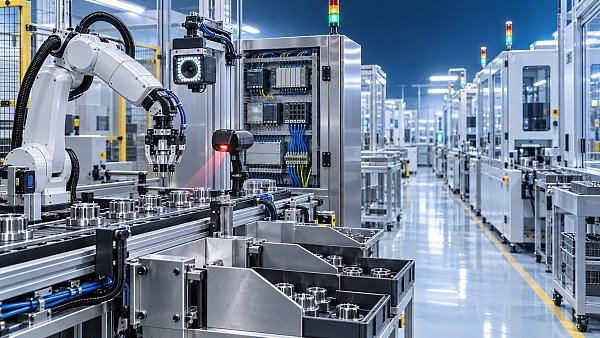
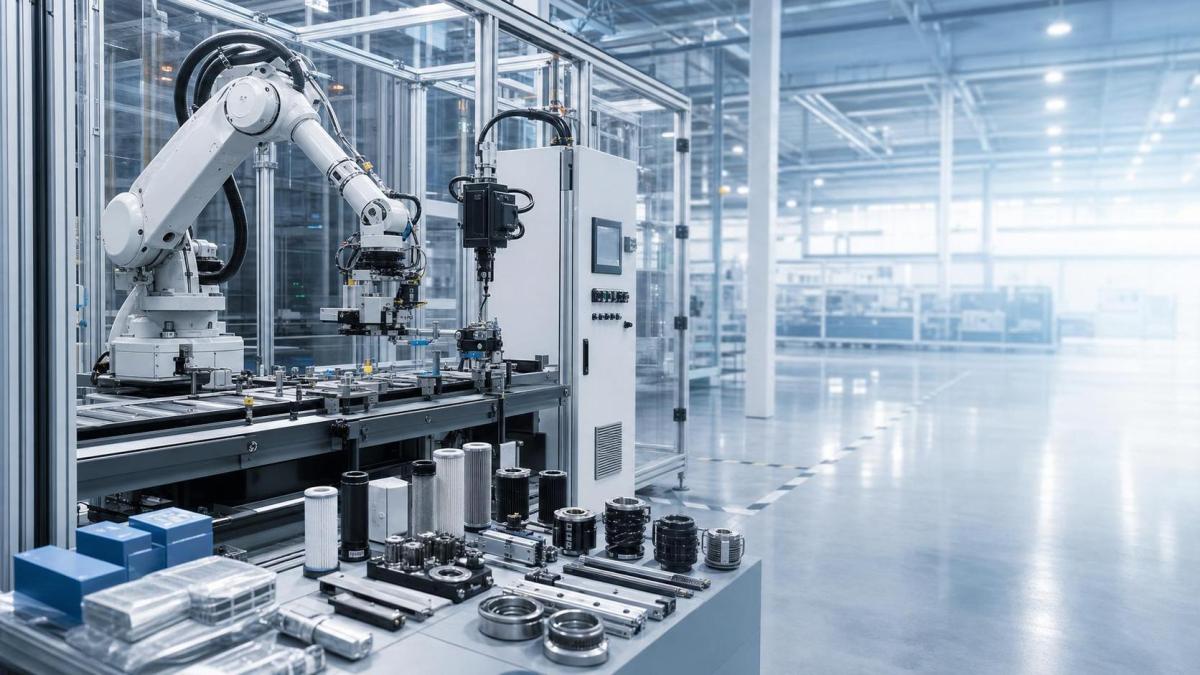
A robotic cell may include arms, end effectors, vision systems, safety devices, conveyors, PLCs, edge controllers, and custom software. Each element adds support exposure.
More importantly, integrated systems fail differently from standalone machines. The issue is often not a broken component, but an interaction failure across hardware and software layers.
This is where service budgets drift. Finance teams approve a machine, but later absorb troubleshooting, code revisions, line stoppages, and premium freight for urgent spares.
The Core Cost Drivers Behind Service Budgets
A useful way to evaluate robotics integration maintenance cost is to separate fixed support from variable disruption. That makes budget pressure easier to model.
1. Preventive maintenance labor
Scheduled inspections, lubrication, calibration, belt checks, sensor cleaning, and safety validation form the baseline. These tasks are predictable, but labor rates vary sharply.
OEM service is usually more expensive than local integration support. However, lower hourly rates mean little if the technician lacks system-level diagnostic experience.
2. Spare parts inventory
Spare parts are one of the biggest hidden drivers of robotics integration maintenance cost. The financial burden is not only purchase price, but stock policy.
Critical items may include servo drives, teach pendants, reducers, vision cameras, power supplies, safety relays, and gripper wear kits. Some fail rarely, but stop production completely.
Holding inventory improves resilience. Yet it also ties up cash, creates obsolescence risk, and can mask weak supplier lead-time commitments.
3. Software support and licensing
Software is now a recurring maintenance category, not a one-time implementation detail. This includes robot programming updates, HMI revisions, cybersecurity patches, and vision retuning.
Some integrators quote low upfront pricing, then monetize support through hourly debugging and annual license renewals. Over time, that raises robotics integration maintenance cost materially.
4. Emergency response and downtime
This is where service budgets can unravel fast. A missed shipment, idle labor, or downstream bottleneck can exceed a full year of planned maintenance spending.
When reviewing robotics integration maintenance cost, always ask for guaranteed response times, remote diagnostics capability, and root-cause reporting standards. Without these, service terms are vague insurance.
A Practical Cost Breakdown for Budget Planning
Every application differs, but a structured cost model helps separate controllable spending from contingent risk. This is especially useful during supplier comparison.
A good rule is to assess robotics integration maintenance cost over three to five years, not at commissioning. Annual service fees rarely tell the full story.
This longer view exposes whether a lower bid is truly efficient or simply deferring service expense into future operating budgets.
Where Hidden Costs Usually Appear
The most expensive maintenance line items are often absent from the original commercial proposal. They appear later as exceptions, change requests, or support escalations.
Custom code dependency
If only the original integrator understands the codebase, support becomes captive. That weakens negotiating leverage and inflates robotics integration maintenance cost over time.
Aging component compatibility
Controllers, cameras, and communication modules can age out faster than the mechanical system. Replacement then triggers revalidation, software changes, and production interruption.
Travel and access charges
Service quotes sometimes exclude travel time, weekend access premiums, and plant-specific compliance costs. These additions can distort the real maintenance budget.
Operator-driven wear
Training gaps cause misuse, collisions, poor changeovers, and skipped inspections. In actual operations, weak training often shows up as higher robotics integration maintenance cost rather than a training problem.
How To Compare Suppliers More Rigorously
A strong maintenance proposal is measurable. If a supplier cannot define service logic in numbers, cost control will likely be weak later.
- Request a three-year robotics integration maintenance cost model by asset category.
- Ask which parts are site-stocked, vendor-stocked, or built to order.
- Require SLA definitions for remote and on-site support.
- Confirm software ownership, backup procedures, and update responsibilities.
- Review MTBF assumptions and failure history for critical components.
- Check whether cybersecurity patching is included or separately billed.
- Measure downtime cost per hour and use it in contract evaluation.
These questions shift procurement discussions away from broad promises. They also force suppliers to reveal whether their maintenance structure is engineered or improvised.
From a budgeting perspective, the best supplier is not always the one with the lowest annual fee. It is often the one with the clearest failure response model.
What Good Budget Control Looks Like
Effective control of robotics integration maintenance cost starts with visibility. Finance teams need more than invoices. They need operational evidence behind every service dollar.
- Track planned versus unplanned maintenance hours.
- Separate parts replacement from diagnostic labor.
- Monitor repeat failures by subsystem.
- Flag service events caused by software changes.
- Review monthly downtime cost against SLA performance.
This level of tracking reveals patterns quickly. It also improves future sourcing by showing which integration architectures generate stable maintenance behavior.
For complex automation environments, that discipline matters. Small service inefficiencies can compound into large lifecycle cost gaps across several cells or plants.
The practical takeaway is straightforward. Treat robotics integration maintenance cost as a design and contract issue from day one. When service assumptions are quantified early, budgets become more predictable, suppliers become more accountable, and the automation business case holds up under real operating pressure.
Search News
Hot Articles
- Carbon Fiber StructuresHow to Specify Aerospace Carbon Fiber Assemblies for Lightweight, Load-Bearing PartsJul 11, 2026
- Machine VisionXiaomi, Alibaba DAMO Academy Drive Open-Source Robotics Model Ecosystem, Lowering Algorithm Development Barriers for Overseas SMEs Adopting Chinese Robotics SolutionsMar 30, 2026
- Cobots & ArmsShanxi 'AI+' Conference Showcases Embodied Intelligence with Multinational Buyer Engagement: Key Industry ImplicationsMar 30, 2026
Popular Tags
Recommended News
 Jul 11, 2026How to Specify Aerospace Carbon Fiber Assemblies for Lightweight, Load-Bearing PartsAerospace carbon fiber assemblies: learn how to specify laminate design, load data, joining methods, and inspection controls for lighter, reliable load-bearing aerospace parts.Elena Rostova (UAV Systems Researcher)
 Mar 30, 2026Xiaomi, Alibaba DAMO Academy Drive Open-Source Robotics Model Ecosystem, Lowering Algorithm Development Barriers for Overseas SMEs Adopting Chinese Robotics SolutionsXiaomi & Alibaba DAMO Academy's open-source robotics models lower algorithm barriers for global SMEs. Boost efficiency in manufacturing, logistics & smart retail with ROS 2 compatible solutions.TSV Data Lab
 Mar 30, 2026Shanxi 'AI+' Conference Showcases Embodied Intelligence with Multinational Buyer Engagement: Key Industry ImplicationsShanxi 'AI+' Conference highlights embodied intelligence with Tesla, Ubtech & Jiantao showcasing multimodal robotics. 40+ global buyers validated tech on-site, creating new B2B channels for industrial automation & AI solutions.Chen Wei (Automation Lead Engineer)
 Mar 30, 2026Zhongguancun Unveils 6G Integrated Sensing-Computing-Intelligence Platform to Empower Embodied Robots for Global Industrial ApplicationsZhongguancun's new 6G platform revolutionizes industrial robotics with <10ms latency, empowering global automotive, logistics & port automation. Discover how this tech boosts China's smart manufacturing exports.TSV Data Lab
 Mar 30, 2026Mech-Mind Tianjin Embodied Intelligence R&D and Production Base Goes Live, Cutting Delivery Time by 20%–30% for Global Customized AMR+Vision SolutionsMech-Mind's Tianjin AMR+Vision production base cuts delivery time by 20%-30% for欧美 & Latin American markets. Discover how this PLd-certified facility accelerates customized robotics solutions for smart manufacturing and logistics.Chen Wei (Automation Lead Engineer)
 Mar 30, 2026Boao Forum Reveals 'Co-evolution of Big and Small Brains' Trend in Humanoid Robots, China's Embodied Intelligence Accelerates Adaptation to Overseas Manufacturing Service ScenariosDiscover how China's humanoid robots, featuring 'Co-evolution of Big and Small Brains,' are revolutionizing global manufacturing. Learn about Embodied Tian Gong 3.0's ISO compliance and overseas deployment at Boao Forum 2026.Chen Wei (Automation Lead Engineer)
 Mar 30, 2026China Railway Industrial Secures Patent for Embodied Robotics in Material Handling, Boosting High-Precision Delivery Capabilities for Overseas Infrastructure and Manufacturing ProjectsChina Railway Industrial's new patent for embodied robotics in material handling boosts high-precision delivery for global infrastructure & manufacturing. Discover how this innovation enhances logistics accuracy in automotive, rail transit & EPC projects.Chen Wei (Automation Lead Engineer)
 Sep 25, 2026How to Evaluate an Industrial Infrastructure Data Platform for Multi-Site OperationsIndustrial infrastructure data platform evaluation guide for multi-site operations: compare data quality, edge resilience, interoperability, governance, and scalable proof-of-value criteria.Victor Lin (Chief Software Architect)
 Sep 24, 2026How to Select Machine Vision Optics for Accurate Inspection at Different Working DistancesMachine vision optics selection guide for accurate inspection at every working distance. Compare FOV, pixel scale, DOF, distortion, lighting, and telecentric options.TSV Data Lab
 Sep 23, 2026How to Evaluate a Machine Vision System Integrator for High-Speed Inspection LinesChoose a machine vision system integrator with proven expertise in high-speed inspection, reliable reject timing, robust optics, and measurable acceptance criteria.TSV Data Lab
 Sep 25, 2026How a smart factory with Industrial IoT reduces production blind spotsDiscover how a smart factory with Industrial IoT turns real-time machine, quality, and workflow data into actionable insights that reduce production blind spots and delivery risks.Victor Lin (Chief Software Architect)
 Sep 24, 2026When does Industrial IoT make smart manufacturing easier to scale?Smart manufacturing Industrial IoT scales when trusted data, interoperable systems, and secure workflows turn connected assets into measurable gains.TSV Data Lab
 Sep 23, 2026What drives ultra-precision machining cost at 1-micron tolerance?Ultra precision machining cost per part at 1 micron tolerance depends on process, material, metrology, and yield. Learn how to compare quotes confidently.Dr. Marcus Vance
 Sep 22, 2026Drone Engine-T550CC Applications: Build the UAV Power System Around the MissionAn application guide for Drone Engine-T550CC integration, covering payload planning, airframe matching, cooling, fuel, vibration, test procedures, documentation, and service preparation.Elena Rostova (UAV Systems Researcher)
 Sep 22, 2026How to Evaluate Industrial Edge Computing Vendors for Factory DeploymentIndustrial edge computing vendor evaluation guide for factories: compare latency, protocol fit, reliability, security, and lifecycle support before deployment.TSV Data Lab
 Sep 21, 2026Drone Payload Integration: Matching Power, Data, and Center of Gravity for Reliable FlightsDrone payload integration made practical: balance power, data, center of gravity, and endurance to build safer, more reliable mission-ready flights.Elena Rostova (UAV Systems Researcher)
 Sep 20, 2026Autonomous Navigation Pricing: Cost Drivers and Budget Benchmarks for AMR ProjectsAutonomous navigation price explained: compare AMR cost drivers, software, sensors, integration, safety, and lifecycle budgets to build a scalable project plan.Chen Wei (Automation Lead Engineer)
 Sep 19, 2026How to Scope Automation Integration Services for Multi-System Factory ProjectsAutomation integration services: learn how to scope multi-system factory projects with clear workflows, interface contracts, safety boundaries, and acceptance criteria.Victor Lin (Chief Software Architect)
 Sep 18, 2026Selecting UAV Aerospace Structural Parts for Strength, Weight, and Fatigue LifeUAV aerospace structural parts guide: compare strength, weight, stiffness, fatigue life, joints, and traceability to select reliable flight-ready components.Elena Rostova (UAV Systems Researcher)
 Sep 17, 2026Selecting Commercial Drone Payloads for European Inspection ProjectsCommercial drone payloads Europe: learn how to select RGB, thermal and LiDAR systems for compliant, reliable inspection data and better project outcomes.Elena Rostova (UAV Systems Researcher)
 Sep 16, 2026Machining Tolerance Validation: How to Verify Critical Dimensions Before Production ReleaseMachining tolerance analysis validation: verify critical dimensions, measurement systems, process capability, and tolerance stacks before production release.Dr. Marcus Vance
 Sep 15, 2026AGV Tape Guidance vs Laser Navigation: Which Fits Your Warehouse Layout?AGV tape guidance comparison: discover how tape and laser navigation fit changing warehouse layouts, docking needs, floor conditions, maintenance, and route flexibility.Chen Wei (Automation Lead Engineer)
 Sep 14, 2026How Point Cloud Analytics Improves Asset Inspection Workflows Across GCC ProjectsPoint cloud analytics GCC helps project leaders improve asset inspections with accurate change detection, safer workflows, and faster maintenance decisions.TSV Data Lab
 Sep 13, 2026How Aerospace Manufacturers Can Build a Digital Thread From Design to Certified ProductionDigital manufacturing for aerospace: learn how to build a traceable digital thread from design through certified production, supplier control, and audit-ready compliance.Victor Lin (Chief Software Architect)