HK Q1 GDP Up 5.9%; Advanced Manufacturing Imports Surge
Publication Date
author
Hong Kong’s first-quarter 2026 GDP grew by 5.9% year-on-year, driven notably by a 17.7% annual increase in local gross fixed capital formation — the highest in five years — with advanced manufacturing equipment imports emerging as a key growth catalyst. This development signals accelerating industrial upgrading across the Asia-Pacific region and carries tangible implications for trade, supply chain, and manufacturing stakeholders engaged with Hong Kong’s re-export ecosystem.
Event Overview
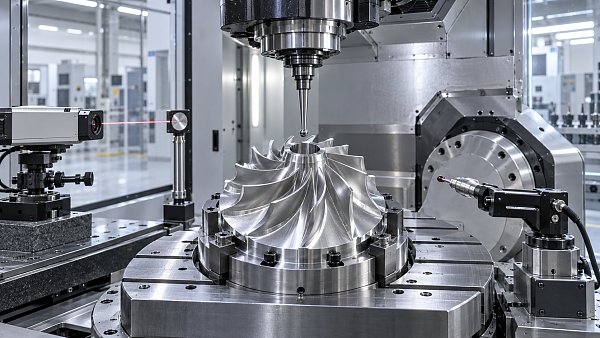
According to data released by the Census and Statistics Department of the Hong Kong Special Administrative Region Government, local gross fixed capital formation totaled HK$128.4 billion in Q1 2026, up 17.7% year-on-year. The rise was primarily attributable to sharp increases in imports of semiconductor fabrication equipment, five-axis CNC machining centers, and industrial-grade 3D printing systems. No further breakdowns on origin countries, importers, or end-use destinations were provided in the official release.
Industries Affected
Direct trading enterprises: Firms specializing in cross-border equipment distribution — particularly those facilitating Hong Kong-based procurement for onward shipment to Southeast Asia and the Middle East — face heightened demand visibility. Their revenue cycles may shorten due to faster order-to-shipment timelines, but margin pressure could intensify if global lead times for high-demand equipment remain constrained.
Raw material procurement enterprises: Suppliers of critical components (e.g., precision motion controllers, high-purity gases, specialty alloys) used in semiconductor tools or multi-axis machine tools may see upstream demand acceleration. However, this effect is indirect and contingent on whether local equipment integrators scale assembly or testing operations in Hong Kong — a factor not confirmed by current data.
Contract manufacturing enterprises: Local firms offering high-precision mechanical assembly, calibration, or system integration services for imported equipment could experience increased project inflow — especially if end users seek localized commissioning support ahead of regional deployment. Yet no evidence yet indicates expansion of such value-added services within Hong Kong’s industrial base.
Supply chain service enterprises: Logistics providers, customs brokers, and equipment certification consultants serving the high-value machinery segment may observe higher transaction volumes and more complex compliance requirements — particularly around dual-use technology classifications and post-import technical verification protocols.
Key Focus Areas and Recommended Actions
Monitor quarterly capital formation composition
Track subsequent releases from the Hong Kong Census and Statistics Department to assess whether the Q1 surge reflects sustained investment momentum or a one-off inventory build-up ahead of anticipated regional demand shifts.
Evaluate re-export documentation workflows
Verify alignment between equipment HS codes, end-user declarations, and destination-specific export control regimes — especially given the sensitivity of semiconductor and CNC technologies in key markets including Vietnam, Malaysia, and the UAE.
Assess local integration capacity
Determine whether domestic engineering support infrastructure (e.g., certified technicians, calibration labs, spare parts warehousing) is expanding in parallel — as its absence could limit long-term service revenue opportunities despite rising import volumes.
Editorial Perspective / Industry Observation
Observably, the Q1 capital formation spike does not yet reflect broad-based manufacturing relocation to Hong Kong. Rather, it aligns with an established regional pattern: Hong Kong functions less as a production hub and more as a trusted, low-friction platform for equipment financing, risk mitigation, and regulatory navigation. Analysis shows that the import surge is better understood as a symptom of intensified regional capex coordination — where Hong Kong serves as a strategic node enabling Chinese OEMs to de-risk technology delivery across politically diverse jurisdictions. Current data does not support interpreting this as a structural shift in Hong Kong’s industrial role.
Conclusion
This episode underscores Hong Kong’s enduring relevance in Asia’s advanced manufacturing value chain — not through onshore production, but through institutional reliability, financial flexibility, and regulatory agility. For stakeholders, the signal is directional rather than transformative: demand for high-precision equipment logistics and compliance services is strengthening, but sustained opportunity depends on follow-through in policy continuity, talent pipeline development, and cross-border interoperability — all of which remain open questions.
Source Attribution
Data sourced from the Census and Statistics Department, Hong Kong Special Administrative Region Government, Q1 2026 Gross Domestic Product and Gross Fixed Capital Formation release (published May 5, 2026). Further details on equipment classification, origin country shares, and end-user sectors are pending. Continuous observation is advised for Q2 2026 updates and the upcoming Annual Industrial Production Survey scheduled for release in late July 2026.
Search News
Hot Articles
- Carbon Fiber StructuresHow to Specify Aerospace Carbon Fiber Assemblies for Lightweight, Load-Bearing PartsJul 11, 2026
- Machine VisionXiaomi, Alibaba DAMO Academy Drive Open-Source Robotics Model Ecosystem, Lowering Algorithm Development Barriers for Overseas SMEs Adopting Chinese Robotics SolutionsMar 30, 2026
- Cobots & ArmsShanxi 'AI+' Conference Showcases Embodied Intelligence with Multinational Buyer Engagement: Key Industry ImplicationsMar 30, 2026
Popular Tags
Recommended News
 Jul 11, 2026How to Specify Aerospace Carbon Fiber Assemblies for Lightweight, Load-Bearing PartsAerospace carbon fiber assemblies: learn how to specify laminate design, load data, joining methods, and inspection controls for lighter, reliable load-bearing aerospace parts.Elena Rostova (UAV Systems Researcher)
 Mar 30, 2026Xiaomi, Alibaba DAMO Academy Drive Open-Source Robotics Model Ecosystem, Lowering Algorithm Development Barriers for Overseas SMEs Adopting Chinese Robotics SolutionsXiaomi & Alibaba DAMO Academy's open-source robotics models lower algorithm barriers for global SMEs. Boost efficiency in manufacturing, logistics & smart retail with ROS 2 compatible solutions.TSV Data Lab
 Mar 30, 2026Shanxi 'AI+' Conference Showcases Embodied Intelligence with Multinational Buyer Engagement: Key Industry ImplicationsShanxi 'AI+' Conference highlights embodied intelligence with Tesla, Ubtech & Jiantao showcasing multimodal robotics. 40+ global buyers validated tech on-site, creating new B2B channels for industrial automation & AI solutions.Chen Wei (Automation Lead Engineer)
 Mar 30, 2026Zhongguancun Unveils 6G Integrated Sensing-Computing-Intelligence Platform to Empower Embodied Robots for Global Industrial ApplicationsZhongguancun's new 6G platform revolutionizes industrial robotics with <10ms latency, empowering global automotive, logistics & port automation. Discover how this tech boosts China's smart manufacturing exports.TSV Data Lab
 Mar 30, 2026Mech-Mind Tianjin Embodied Intelligence R&D and Production Base Goes Live, Cutting Delivery Time by 20%–30% for Global Customized AMR+Vision SolutionsMech-Mind's Tianjin AMR+Vision production base cuts delivery time by 20%-30% for欧美 & Latin American markets. Discover how this PLd-certified facility accelerates customized robotics solutions for smart manufacturing and logistics.Chen Wei (Automation Lead Engineer)
 Mar 30, 2026Boao Forum Reveals 'Co-evolution of Big and Small Brains' Trend in Humanoid Robots, China's Embodied Intelligence Accelerates Adaptation to Overseas Manufacturing Service ScenariosDiscover how China's humanoid robots, featuring 'Co-evolution of Big and Small Brains,' are revolutionizing global manufacturing. Learn about Embodied Tian Gong 3.0's ISO compliance and overseas deployment at Boao Forum 2026.Chen Wei (Automation Lead Engineer)
 Mar 30, 2026China Railway Industrial Secures Patent for Embodied Robotics in Material Handling, Boosting High-Precision Delivery Capabilities for Overseas Infrastructure and Manufacturing ProjectsChina Railway Industrial's new patent for embodied robotics in material handling boosts high-precision delivery for global infrastructure & manufacturing. Discover how this innovation enhances logistics accuracy in automotive, rail transit & EPC projects.Chen Wei (Automation Lead Engineer)
 Oct 04, 2026CAD/CAM Benchmarking in the GCC: What Manufacturers Should Ask a ConsultantCAD CAM benchmark consultant GCC guide: learn the key questions manufacturers should ask to validate post-processors, workflows, machine performance, and production risk.Victor Lin (Chief Software Architect)
 Oct 03, 2026Selecting Automotive Radar Sensor Modules for ADAS Range, Resolution, and IntegrationAutomotive radar sensor module selection guide for ADAS: compare range, resolution, field of view, latency, and integration to build safer, reliable vehicle systems.TSV Data Lab
 Oct 02, 2026How to Qualify Machined Parts Suppliers for Hard Tech ProgramsHard tech supply chain machined parts demand rigorous supplier qualification. Learn how to assess capability, traceability, quality controls, and delivery resilience.Dr. Marcus Vance
 Oct 01, 2026How to Select an Outdoor Security Radar Sensor for Perimeter Detection?Outdoor security radar sensor selection guide: compare range, accuracy, false-alarm control, integration, and field testing for reliable perimeter detection.TSV Data Lab
 Sep 30, 2026How to Evaluate Solid-State LiDAR Hardware for Outdoor Autonomous VehiclesSolid state LiDAR hardware evaluation guide for outdoor autonomous vehicles—compare range, point-cloud quality, environmental resilience, integration, and safety.TSV Data Lab
 Sep 29, 2026ISO 9283 Repeatability: How to Evaluate Cobot Positioning PerformanceISO 9283 cobot repeatability explained: learn how payload, reach, approach direction, and test conditions affect positioning performance and cell capability.Chen Wei (Automation Lead Engineer)
 Oct 04, 2026How Should You Compare 5-Axis CNC Machine Accuracy Claims?How do I compare 5-axis CNC machine accuracy claims? Learn how to assess standards, thermal stability, TCP accuracy, and real-world test evidence.Dr. Marcus Vance
 Oct 03, 2026Is Edge Computing Necessary for Real-Time Quality Inspection?Is industrial edge computing necessary for real-time quality inspection? Explore how latency, data volume, reliability, and control integration shape the right architecture.TSV Data Lab
 Oct 02, 2026What Documents Prove a Precision Machining Supplier Can Hold Tolerance?What documents prove a precision machining supplier can hold tolerance? Explore certificates, FAI reports, calibration, SPC, and traceability evidence to qualify suppliers with confidence.Dr. Marcus Vance
 Oct 01, 2026Can a Machining Supplier Meet Aerospace Fatigue Testing Requirements?Can a machining supplier meet aerospace fatigue testing requirements? Learn the traceability, process control, and test evidence needed for reliable aerospace parts.Dr. Marcus Vance
 Sep 30, 2026Which Industrial Robot Specifications Matter for High-Precision Assembly?Which industrial robot specifications matter most for high-precision assembly? Explore repeatability, accuracy, stiffness, vibration, calibration, and force control for reliable yields.Chen Wei (Automation Lead Engineer)
 Sep 29, 2026How Do You Verify Servo Motor Torque Under Continuous Load?How do I verify servo motor torque under continuous load? Learn RMS torque checks, torque-speed limits, thermal derating, and real-machine testing.Chen Wei (Automation Lead Engineer)
 Oct 02, 2026ZD330 Software Configuration: Verifying Cut-List Import Before PurchaseZD330 software and machine configuration: verify cut-list imports, data mapping, labels, and workflow before purchase to reduce errors and choose with confidence.Victor Lin (Chief Software Architect)
 Sep 28, 2026Spindle Runout Measurement in Germany: DIN Standards, Methods, and Acceptance LimitsSpindle runout measurement Germany: explore DIN standards, proven methods, acceptance limits, and audit-ready practices for reliable machining quality.Dr. Marcus Vance
 Sep 27, 2026How to Select Wall-Mount Edge Devices for Space-Constrained Factory NetworksWall mount edge devices for space-constrained factories: evaluate workload, thermal design, power resilience, cable access, and network reliability for smarter deployments.TSV Data Lab
 Sep 26, 2026Machining Tolerance Analysis: How to Set Limits That Meet Function and Cost TargetsMachining tolerance analysis: learn how to set functional limits, control tolerance stacks, reduce inspection risk, and balance precision with production cost.Dr. Marcus Vance
 Sep 25, 2026How to Evaluate an Industrial Infrastructure Data Platform for Multi-Site OperationsIndustrial infrastructure data platform evaluation guide for multi-site operations: compare data quality, edge resilience, interoperability, governance, and scalable proof-of-value criteria.Victor Lin (Chief Software Architect)