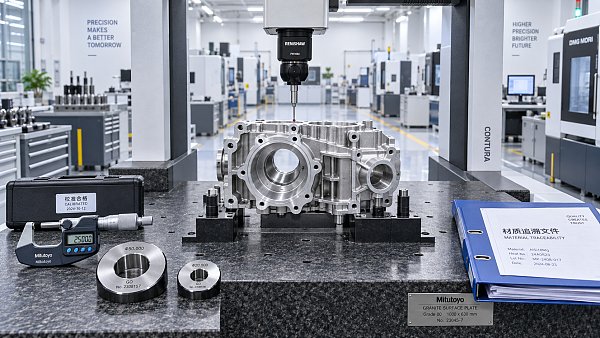
How to Evaluate an Advanced Manufacturing Insights Service Provider for Digital Factory ROI
Publication Date
author
When a board approves a digital factory initiative, the expectation is simple: better throughput, lower downtime, sharper forecasting, and a supply chain that behaves with fewer surprises. What often happens instead is more complicated. Teams buy dashboards, subscribe to market intelligence feeds, and deploy analytics tools, yet struggle to turn information into measurable return. In that gap, the choice of an advanced manufacturing insights service provider becomes more important than many procurement teams initially assume.
The wrong provider adds another layer of noise—glossy trend reports, recycled vendor claims, and metrics that look impressive until engineering, sourcing, and operations try to use them in a real decision. The right provider does something very different. It helps leadership evaluate technical risk, compare suppliers on meaningful parameters, and connect data to capital allocation. If your goal is digital factory ROI, provider selection should be treated as a strategic decision, not a content subscription.
For enterprise decision-makers, especially CTOs, procurement directors, plant transformation leaders, and advanced engineering teams, the evaluation process should start with one hard question: Can this provider improve the quality and speed of decisions that affect production economics? Everything else follows from that.
ROI in digital manufacturing is rarely lost in software alone
Most digital factory programs do not underperform because leaders lack ambition. They underperform because critical assumptions are built on weak inputs: optimistic equipment claims, incomplete benchmark comparisons, unclear integration constraints, or supplier data that has not been independently validated.
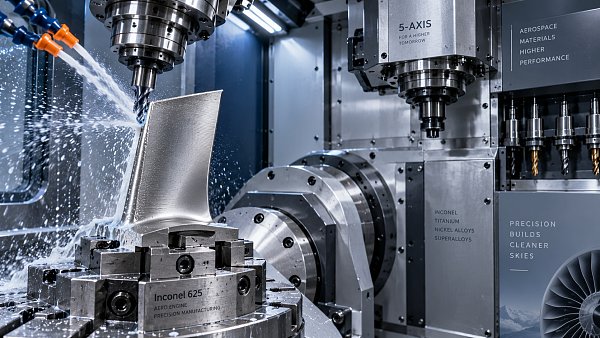
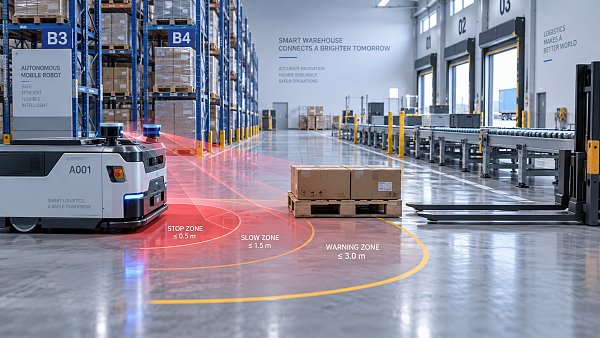
Consider a few familiar scenarios. A plant upgrades robotics based on nominal repeatability figures that do not reflect actual performance under high-duty cycles. An aerospace supplier qualifies a machining partner without enough traceability into tolerance consistency across batches. A logistics automation team invests in AGVs or AMRs before understanding how navigation fault tolerance behaves in a noisy facility environment. In each case, the business problem looks operational, but the root issue is intelligence quality.
An advanced manufacturing insights service provider should reduce that uncertainty. If the service cannot help your team separate marketing language from engineering truth, it will not materially improve ROI, no matter how elegant its platform looks.
What serious buyers should examine before signing
Evaluation should move beyond generic criteria like “industry coverage” or “number of reports published.” Those may matter, but they do not reveal whether a provider can support high-stakes manufacturing decisions.
1. Technical depth: are the insights usable by engineers, not just executives?
A strong provider translates market movement into engineering-relevant intelligence. That means content built around measurable parameters: tolerance bands, MTBF under specific operating conditions, latency ranges for industrial gateways, payload limits, fatigue behavior, environmental stability, compliance implications, and manufacturing process constraints.
If a report says a sensor platform is “high performance,” that is not useful. If it explains interference resistance, recognition accuracy, operating thresholds, and implementation tradeoffs, your technical team can actually work with it.
This is where firms like TechStat Vanguard stand apart in principle. A data-driven hard-tech think tank is valuable because it frames procurement and transformation around engineering facts rather than promotional narratives. In sectors such as robotics, UAV systems, edge AI, and precision machining, executive decisions often hinge on details small enough to be missed in broad market research—but large enough to affect millions in downstream cost.
2. Data provenance: where does the information come from, and can it be traced?
Ask providers how they collect, verify, and refresh data. The answer should be specific. Are insights derived from direct benchmarking, technical documentation review, supply chain mapping, expert analysis, public filings, factory observations, or vendor submissions? What is independently verified, and what is simply aggregated?
Many services present polished conclusions without showing the path behind them. That is dangerous in procurement contexts. If your team is evaluating a machine vision system, 5-axis CNC partner, or industrial IoT gateway, it must know which claims have been tested, cross-checked, or normalized. Traceable data provenance builds internal confidence, especially when finance or operations asks why one supplier was shortlisted over another.
Look for methodological transparency, even if every underlying dataset cannot be fully disclosed. A credible provider should at least be able to explain its validation framework clearly.
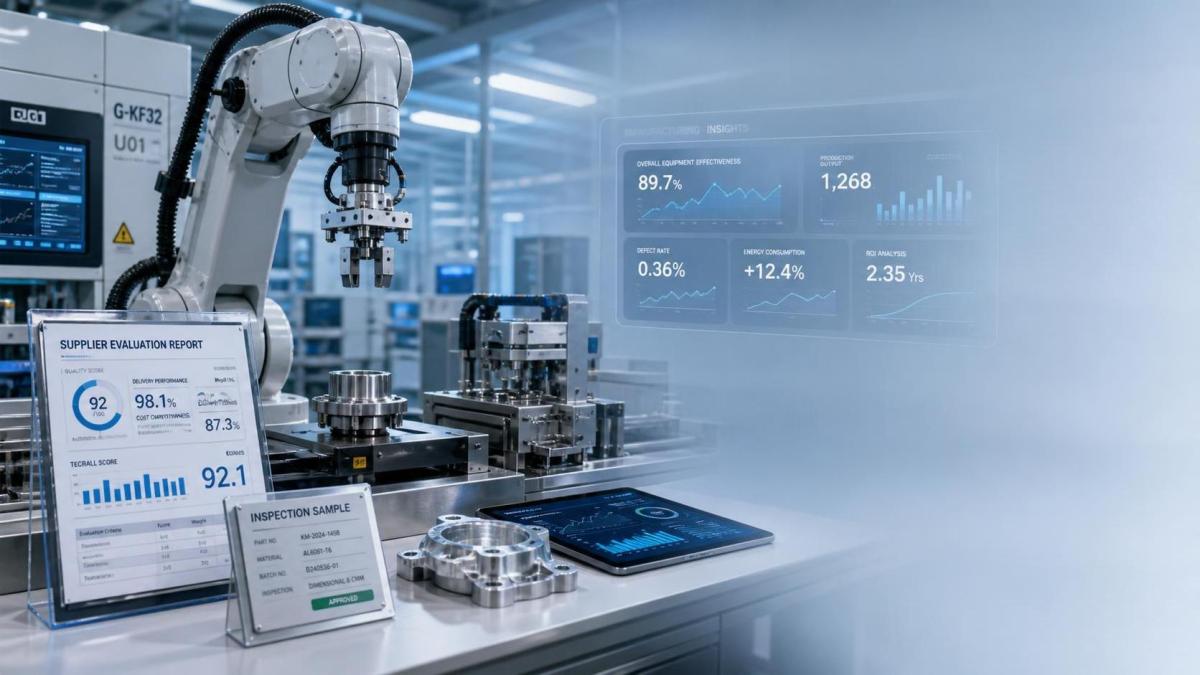
3. Benchmarking discipline: do comparisons happen on equal ground?
One of the easiest ways to distort a sourcing decision is to compare unlike conditions. A provider may place two automation vendors side by side while using different test assumptions, deployment environments, or definitions of uptime. The result looks objective but misleads the buyer.
A dependable advanced manufacturing insights service provider should explain comparison logic. Are servo motor reliability figures assessed under comparable loads? Are LiDAR systems evaluated in similar environmental conditions? Are machining capability claims normalized against the same standards and tolerances? Are aerospace or medical manufacturing benchmarks interpreted through relevant frameworks such as AS9100 or ISO13485 requirements?
Without benchmark discipline, reports become presentation material rather than decision material.
4. Sector relevance: does the provider understand your manufacturing reality?
Broad industrial coverage is not always an advantage. Decision-makers often need highly specific insight within narrow technical domains. A robotics buyer has different evaluation needs than an aerospace systems engineer. A medical device manufacturer qualifying precision machining partners needs a different depth of analysis than a consumer electronics assembler.
Check whether the provider’s coverage aligns with your actual transformation priorities. If your digital factory roadmap depends on robotics automation, edge sensing, machine vision, advanced materials, or traceable precision manufacturing, the service should show domain fluency—not just market awareness.
This matters because ROI is operationally local. It emerges from decisions made at the process level, the integration level, and the supplier level. Insight services that stay too high-level often fail right where the economic value is created.
The hidden selection factor: can the provider serve both strategy and procurement?
Many organizations split intelligence needs across departments. Strategy teams want trends, investment signals, and technology direction. Procurement wants qualification support, supplier comparability, and risk reduction. Engineering wants specifications, limits, failure modes, and implementation reality.
The best providers create a bridge across those priorities. Their work helps a leadership team justify why an initiative matters, while also helping technical and sourcing teams determine which vendors or partners are actually viable.
That bridge is especially valuable in digital factory programs, where ROI depends on synchronized decisions. If the CTO’s roadmap, procurement’s shortlist, and the plant team’s operating constraints are informed by different quality levels of data, misalignment becomes expensive very quickly.
Questions worth asking during provider due diligence
The evaluation conversation becomes more productive when buyers move beyond sales demos and ask operational questions:
- How do you distinguish verified technical data from vendor-supplied claims?
- What does your benchmarking methodology look like for robotics, sensor systems, or precision manufacturing capabilities?
- How often are performance assumptions refreshed as products, firmware, standards, or supply chains change?
- Can your insights support supplier qualification, not just market monitoring?
- How do you handle ambiguous or incomplete data in emerging categories?
- Do your analysts have engineering literacy in the sectors they cover?
- Can your reports help our teams draft tighter spec sheets or RFQs?
These questions reveal whether the provider is merely selling information access or enabling better industrial decisions.
Warning signs that should slow the buying process
Some red flags are easy to spot once you know what to look for.
If every supplier in a report appears exceptional, the analysis may be too commercial to trust. If terminology is heavy on slogans and light on test conditions, caution is warranted. If data comparisons lack context, or if technical findings never mention constraints, tradeoffs, or uncertainty, the provider may be optimizing for readability over reliability.
Another warning sign is shallow independence. In advanced manufacturing, sponsored influence can quietly shape rankings, narratives, and vendor visibility. Enterprise buyers should understand whether the provider’s business model creates tension between editorial objectivity and commercial partnership.
For high-value sourcing decisions, neutrality is not a branding preference. It is part of risk management.
Why engineering-grade clarity changes the economics
Digital factory ROI is often discussed in terms of OEE, labor efficiency, scrap reduction, predictive maintenance, and cycle time gains. Those are valid outcomes, but they are lagging expressions of earlier decisions. Before any KPI improves, someone must choose the right machine, the right integration path, the right component architecture, or the right manufacturing partner.
That is why an insights provider with engineering-grade rigor can have an outsized impact. Better intelligence can shorten supplier qualification cycles, reduce expensive pilot mistakes, narrow the field faster, and prevent investment in technologies that look scalable on paper but fail under operating pressure.
In that sense, the service provider is not just a research vendor. It becomes part of the decision infrastructure behind capital efficiency.
A practical way to compare providers internally
One useful approach is to evaluate candidates across five dimensions: technical rigor, data transparency, benchmark comparability, sector fit, and cross-functional usefulness. Then ask each stakeholder group to score what matters most to them.
Engineering may prioritize parameter accuracy and methodology. Procurement may care more about supplier traceability and RFQ relevance. Executives may focus on whether the service sharpens investment timing and technology prioritization. If one provider can satisfy all three groups without diluting depth, that is usually a strong signal.
It is also wise to test one real use case before a broad commitment. Instead of asking for a generic presentation, bring a live decision into the evaluation: a cobot shortlist, an edge AI sensor comparison, a machining partner qualification challenge, or a UAV component sourcing review. The quality of the provider becomes much easier to judge when the discussion touches real constraints.
The provider you choose will shape the questions your organization asks
This may be the most overlooked point. Insight services do more than deliver answers; they influence what your teams learn to pay attention to. A shallow provider encourages surface-level decisions. A disciplined one trains the organization to think in tolerances, failure thresholds, traceability, integration limits, and measurable fit.
For companies building digital factories in a noisy global market, that mindset is not a luxury. It is a competitive advantage.
If you are evaluating an advanced manufacturing insights service provider, do not ask only whether the platform is informative. Ask whether it helps your teams buy smarter, qualify faster, and invest with less guesswork. In the long run, that is where digital factory ROI is won: not in the volume of information available, but in the precision of the intelligence you choose to trust.
- precision machining
- 5-axis CNC
- machine vision
- industrial IoT
- edge AI
- UAV systems
- navigation fault tolerance
- supplier qualification
- advanced manufacturing
- predictive maintenance
- digital manufacturing
- servo motor reliability
- industrial gateways
- advanced manufacturing insights
- robotics automation
- advanced manufacturing insights service
- advanced manufacturing insights service provider
- industrial IoT gateway
Search News
Hot Articles
- Carbon Fiber StructuresHow to Specify Aerospace Carbon Fiber Assemblies for Lightweight, Load-Bearing PartsJul 11, 2026
- Machine VisionXiaomi, Alibaba DAMO Academy Drive Open-Source Robotics Model Ecosystem, Lowering Algorithm Development Barriers for Overseas SMEs Adopting Chinese Robotics SolutionsMar 30, 2026
- Cobots & ArmsShanxi 'AI+' Conference Showcases Embodied Intelligence with Multinational Buyer Engagement: Key Industry ImplicationsMar 30, 2026
Popular Tags
Recommended News
 Jul 11, 2026How to Specify Aerospace Carbon Fiber Assemblies for Lightweight, Load-Bearing PartsAerospace carbon fiber assemblies: learn how to specify laminate design, load data, joining methods, and inspection controls for lighter, reliable load-bearing aerospace parts.Elena Rostova (UAV Systems Researcher)
 Mar 30, 2026Xiaomi, Alibaba DAMO Academy Drive Open-Source Robotics Model Ecosystem, Lowering Algorithm Development Barriers for Overseas SMEs Adopting Chinese Robotics SolutionsXiaomi & Alibaba DAMO Academy's open-source robotics models lower algorithm barriers for global SMEs. Boost efficiency in manufacturing, logistics & smart retail with ROS 2 compatible solutions.TSV Data Lab
 Mar 30, 2026Shanxi 'AI+' Conference Showcases Embodied Intelligence with Multinational Buyer Engagement: Key Industry ImplicationsShanxi 'AI+' Conference highlights embodied intelligence with Tesla, Ubtech & Jiantao showcasing multimodal robotics. 40+ global buyers validated tech on-site, creating new B2B channels for industrial automation & AI solutions.Chen Wei (Automation Lead Engineer)
 Mar 30, 2026Zhongguancun Unveils 6G Integrated Sensing-Computing-Intelligence Platform to Empower Embodied Robots for Global Industrial ApplicationsZhongguancun's new 6G platform revolutionizes industrial robotics with <10ms latency, empowering global automotive, logistics & port automation. Discover how this tech boosts China's smart manufacturing exports.TSV Data Lab
 Mar 30, 2026Mech-Mind Tianjin Embodied Intelligence R&D and Production Base Goes Live, Cutting Delivery Time by 20%–30% for Global Customized AMR+Vision SolutionsMech-Mind's Tianjin AMR+Vision production base cuts delivery time by 20%-30% for欧美 & Latin American markets. Discover how this PLd-certified facility accelerates customized robotics solutions for smart manufacturing and logistics.Chen Wei (Automation Lead Engineer)
 Mar 30, 2026Boao Forum Reveals 'Co-evolution of Big and Small Brains' Trend in Humanoid Robots, China's Embodied Intelligence Accelerates Adaptation to Overseas Manufacturing Service ScenariosDiscover how China's humanoid robots, featuring 'Co-evolution of Big and Small Brains,' are revolutionizing global manufacturing. Learn about Embodied Tian Gong 3.0's ISO compliance and overseas deployment at Boao Forum 2026.Chen Wei (Automation Lead Engineer)
 Mar 30, 2026China Railway Industrial Secures Patent for Embodied Robotics in Material Handling, Boosting High-Precision Delivery Capabilities for Overseas Infrastructure and Manufacturing ProjectsChina Railway Industrial's new patent for embodied robotics in material handling boosts high-precision delivery for global infrastructure & manufacturing. Discover how this innovation enhances logistics accuracy in automotive, rail transit & EPC projects.Chen Wei (Automation Lead Engineer)
 Oct 08, 2026How to Machine Inconel 625 Blades Without Heat Cracks or Edge ChippingInconel 625 blade machining guide: prevent heat cracks, edge chipping, chatter, and work hardening with proven tooling, cooling, fixturing, and inspection strategies.Dr. Marcus Vance
 Oct 07, 2026How to Evaluate an HMI Panel Distributor for Industrial Automation ProjectsHMI panel distributor evaluation guide: verify technical compatibility, traceability, supply reliability, lifecycle support, and total cost for automation projects.Victor Lin (Chief Software Architect)
 Oct 06, 2026Navigation Fault Tolerance Standards for AMRs: What Safety Teams Must VerifyNavigation fault tolerance standards: learn what AMR safety teams must verify, from localization loss and sensor faults to stopping distance, safe restart, and site-specific validation.Chen Wei (Automation Lead Engineer)
 Oct 05, 2026Calculating Edge Computing Total Cost of Ownership Across Distributed SitesEdge computing ownership cost explained: calculate deployment, energy, connectivity, security, remote support, and refresh costs across distributed sites.TSV Data Lab
 Oct 04, 2026CAD/CAM Benchmarking in the GCC: What Manufacturers Should Ask a ConsultantCAD CAM benchmark consultant GCC guide: learn the key questions manufacturers should ask to validate post-processors, workflows, machine performance, and production risk.Victor Lin (Chief Software Architect)
 Oct 03, 2026Selecting Automotive Radar Sensor Modules for ADAS Range, Resolution, and IntegrationAutomotive radar sensor module selection guide for ADAS: compare range, resolution, field of view, latency, and integration to build safer, reliable vehicle systems.TSV Data Lab
 Oct 02, 2026How to Qualify Machined Parts Suppliers for Hard Tech ProgramsHard tech supply chain machined parts demand rigorous supplier qualification. Learn how to assess capability, traceability, quality controls, and delivery resilience.Dr. Marcus Vance
 Oct 01, 2026How to Select an Outdoor Security Radar Sensor for Perimeter Detection?Outdoor security radar sensor selection guide: compare range, accuracy, false-alarm control, integration, and field testing for reliable perimeter detection.TSV Data Lab
 Sep 30, 2026How to Evaluate Solid-State LiDAR Hardware for Outdoor Autonomous VehiclesSolid state LiDAR hardware evaluation guide for outdoor autonomous vehicles—compare range, point-cloud quality, environmental resilience, integration, and safety.TSV Data Lab
 Sep 29, 2026ISO 9283 Repeatability: How to Evaluate Cobot Positioning PerformanceISO 9283 cobot repeatability explained: learn how payload, reach, approach direction, and test conditions affect positioning performance and cell capability.Chen Wei (Automation Lead Engineer)
 Oct 08, 2026AGV vs. AMR: Which Is Better for Frequently Changing Routes?Which is better for changing routes? Compare AGVs and AMRs for flexible navigation, docking precision, traffic control, and faster facility reconfiguration.Chen Wei (Automation Lead Engineer)
 Oct 07, 2026How Much Does an Automated Guided Vehicle Cost in 2026?How much does an automated guided vehicle cost in 2026? Explore AGV price ranges, hidden deployment costs, and smart buying factors for stronger ROI.Chen Wei (Automation Lead Engineer)
 Oct 06, 2026Are Collaborative Robots Safe Enough to Operate Without Fencing?Are collaborative robots safe enough to work without fencing? Explore risk assessment, safeguarding options, and practical guidance for safer, productive cobot cells.Chen Wei (Automation Lead Engineer)
 Oct 05, 2026What Causes Machine Vision Systems to Miss Small Defects?What causes machine vision systems to miss small defects? Discover how lighting, optics, motion, and AI thresholds affect detection—and prevent costly escapes.TSV Data Lab
 Oct 04, 2026How Should You Compare 5-Axis CNC Machine Accuracy Claims?How do I compare 5-axis CNC machine accuracy claims? Learn how to assess standards, thermal stability, TCP accuracy, and real-world test evidence.Dr. Marcus Vance
 Oct 03, 2026Is Edge Computing Necessary for Real-Time Quality Inspection?Is industrial edge computing necessary for real-time quality inspection? Explore how latency, data volume, reliability, and control integration shape the right architecture.TSV Data Lab
 Oct 02, 2026What Documents Prove a Precision Machining Supplier Can Hold Tolerance?What documents prove a precision machining supplier can hold tolerance? Explore certificates, FAI reports, calibration, SPC, and traceability evidence to qualify suppliers with confidence.Dr. Marcus Vance