Heavy duty CNC machining supplier red flags before quoting starts
Publication Date
author
Before requesting a quote from a heavy duty CNC machining supplier, smart buyers should look past polished claims and verify hard data: micro machining tolerance limits, 5 axis CNC surface finish Ra, EDM surface integrity analysis, and Inconel 718 tool wear rate. For procurement teams, engineers, and decision-makers, these early red flags often reveal whether a supplier can truly support aerospace, medical, and high-load industrial programs.
If you are evaluating a heavy duty CNC machining supplier, the real question is not who replies fastest or offers the lowest preliminary price. The real question is whether the supplier can consistently produce critical parts under demanding material, tolerance, and documentation requirements without creating hidden cost, schedule risk, or field failure exposure later.
For most buyers, the core search intent behind this topic is practical supplier screening before RFQ submission. They want to know which warning signs appear early, what evidence to request before wasting time on quoting, and how to distinguish a capable manufacturing partner from a sales-driven shop with limited process control. That matters even more in aerospace, medical, defense-adjacent, energy, robotics, and other high-load applications where one weak supplier can derail an entire program.
The most useful approach is simple: verify capability before price comparison. If a supplier cannot clearly prove its machining window, inspection system, material control discipline, and process understanding before quoting starts, the quote itself is already low-confidence.
What buyers are really trying to avoid before they send drawings
Procurement teams, manufacturing engineers, operators, and decision-makers are usually trying to avoid five specific failures:
- False capability claims that sound impressive but are not tied to measured data
- Underquoted technical risk that later becomes NCRs, ECOs, delays, or cost increases
- Poor process stability on heavy duty alloys, thin-wall geometries, or tight-tolerance parts
- Weak quality systems that cannot support traceability, first article inspection, or regulated programs
- Communication gaps between sales staff and actual manufacturing teams
That is why the best supplier assessment starts before RFQ release. A capable shop should be able to discuss technical limits in a concrete way, not just promise to “review after quote.” When a supplier avoids specifics too early, that is often the first red flag.
Red flag #1: They talk about quality in slogans, not in measurable capability
One of the clearest warning signs is vague language such as “high precision,” “tight tolerance,” “advanced 5 axis machining,” or “excellent finish” without numbers, conditions, and verification method.
A reliable heavy duty CNC machining supplier should be able to state:
- Typical and best-case tolerance ranges by feature type
- Material-specific process limits for titanium, stainless, Inconel 718, hardened steels, or aluminum
- Achievable 5 axis CNC surface finish Ra under defined cutting conditions
- Flatness, cylindricity, concentricity, and position capability by part size range
- Inspection method used to validate those values
If the supplier claims micro machining tolerance capability, ask whether that applies to small features on lab samples or to production parts with real fixturing, real cycle time, and real material variability. Many shops borrow precision language from niche capability pages but cannot repeat that performance on heavy duty components.
What good looks like is not perfection. It is clarity. Strong suppliers define tolerance capability by geometry, material, machine platform, and inspection plan.
Red flag #2: They cannot explain how they machine difficult materials at production scale
Heavy duty CNC work often involves difficult materials and aggressive service environments. Quoting confidence means very little if the supplier does not understand machining physics, tool life economics, and process drift in challenging alloys.
For example, if your project includes Inconel 718, ask about:
- Typical spindle strategy and cutting approach
- Inconel 718 tool wear rate under roughing and finishing conditions
- Tool change logic and wear monitoring method
- Heat management and coolant approach
- How they prevent work hardening and surface damage
If the answer stays at the level of “we machine superalloys all the time,” be cautious. Skilled suppliers can usually discuss tool degradation behavior, cycle-time tradeoffs, burr control, recast avoidance in EDM steps, and which features create the highest scrap risk.
The same principle applies to titanium, duplex stainless, high-strength steels, and hybrid parts with turning, milling, grinding, or EDM. If the shop cannot translate material difficulty into a stable production method, the quote is likely based on optimism rather than control.
Red flag #3: Their EDM capability is described as a machine list, not a process outcome
Many suppliers advertise wire EDM or sinker EDM, but advanced buyers should care less about machine ownership and more about surface integrity and downstream performance.
For critical applications, ask for evidence related to EDM surface integrity analysis, including:
- Recast layer control
- Heat-affected zone behavior
- Microcrack mitigation
- Surface roughness after final skim strategy
- Post-EDM inspection or metallographic validation where required
This is especially important for fatigue-sensitive parts, sealing features, aerospace hardware, and medical components. A supplier that only says “our EDM is precise” but cannot discuss recast, skim pass planning, or integrity verification may create hidden failure risk even if dimensional results initially look acceptable.
In regulated and performance-critical sectors, dimensional compliance alone is not enough. Process-induced surface damage can become the real cost driver later.
Red flag #4: They do not separate prototype capability from repeatable production capability
A shop may produce an impressive sample part, but quoting for ongoing supply requires evidence of repeatability. Buyers should be careful when suppliers use single-piece success to imply process maturity.
Before quoting starts, ask:
- What changes between prototype routing and production routing?
- How is fixture strategy adapted for repeatability?
- What dimensions are statistically monitored in serial production?
- What is the expected Cp/Cpk approach for critical features?
- How are first article, in-process, and final inspection linked?
This matters because some suppliers quote production work using prototype assumptions: extra manual intervention, selective operator assignment, reduced documentation, or unscalable setup time. The result is often delayed PPAP, unstable lead time, or price correction after order award.
A trustworthy supplier explains where the control plan changes as volume increases and what that means for quality, cost, and lead time.
Red flag #5: They cannot show how surface finish is achieved on complex 5 axis geometry
Many buyers now specifically evaluate 5 axis CNC surface finish Ra because cosmetic quality, sealing performance, coating adhesion, and fatigue behavior may all depend on it. Yet surface finish claims are often generic.
Ask for context around any Ra value:
- Which material was used?
- Was the surface milled, ground, polished, or blended?
- Was the geometry freeform, planar, internal, or hard-to-reach?
- What cutter type, step-over, and finishing strategy were used?
- How was Ra measured and at which location?
A supplier that quotes an excellent Ra figure without geometry context may be presenting a favorable test case, not representative production performance. On heavy duty parts, especially larger components, actual finish stability depends on machine rigidity, thermal control, toolpath quality, and fixture behavior.
For engineering teams, this is not a cosmetic detail. It affects assembly fit, sealing, tribology, and rework cost.
Red flag #6: Their quality documentation system is weak, slow, or disconnected from the shop floor
For buyers in aerospace, medical, industrial automation, and other controlled sectors, documentation discipline is often as important as machining capability.
Warning signs include:
- Unclear material traceability process
- No structured nonconformance workflow
- Slow response when asked about FAI, CoC, inspection records, or calibration status
- Uncertain familiarity with AS9100, ISO 13485, or customer-specific documentation requirements
- Sales teams answering quality questions without involving quality engineers
A strong supplier does not need to be over-bureaucratic, but it should be able to show that process records, inspection records, revision control, and lot traceability are connected. If this foundation is weak before quoting, qualification cycles usually become longer, not shorter.
For enterprise decision-makers, this directly impacts supplier onboarding risk, internal audit burden, and total procurement cost.
Red flag #7: They avoid difficult questions about inspection strategy
Inspection is where capability claims become verifiable. If a supplier is uncomfortable discussing metrology, buyers should take that seriously.
Useful questions include:
- How are complex GD&T features measured?
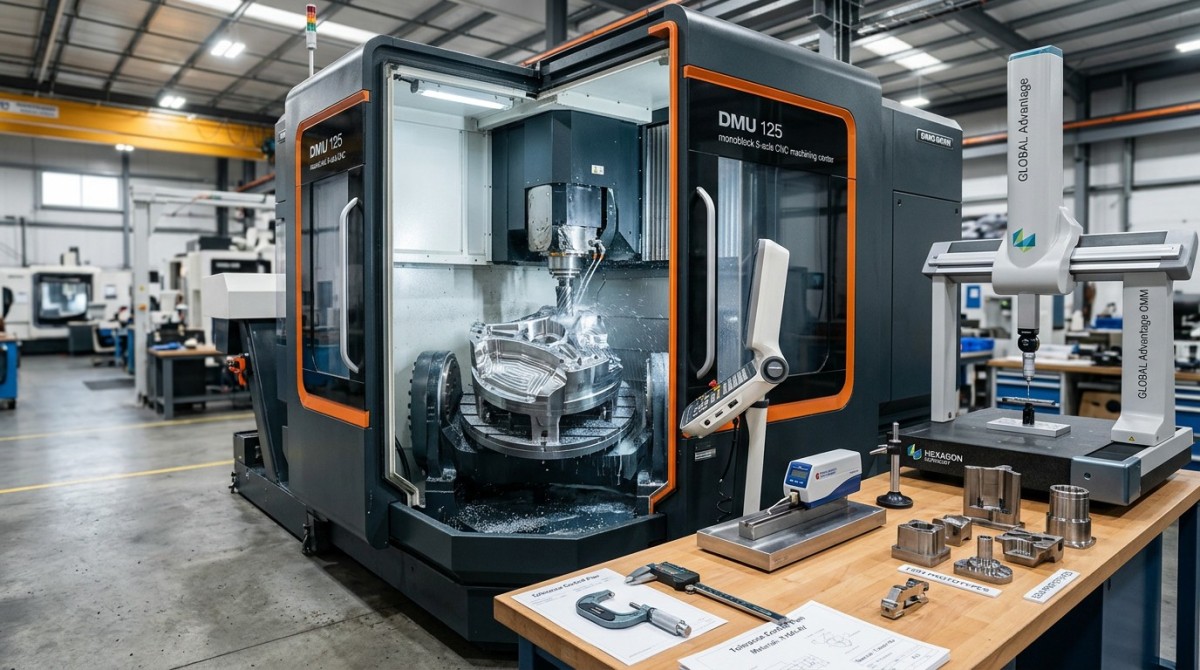
- Do they use CMM, on-machine probing, optical systems, profilometers, or roundness testers where needed?
- How do they inspect deep features, freeform surfaces, or thin-wall distortion?
- How often are critical dimensions checked during long cycle jobs?
- How do they manage measurement uncertainty?
If the answers are generic, there may be a disconnect between machining and validation. This is especially risky in heavy duty CNC machining where part size, fixturing force, and thermal effects can create subtle deviations not visible in a basic final inspection routine.
The best suppliers explain inspection as part of process control, not as an end-of-line activity.
Red flag #8: Their quoting process starts with price, not manufacturability review
When a supplier immediately focuses on lead time and unit price before clarifying critical features, revision status, datum strategy, material condition, or acceptance criteria, that is a major warning sign.
A disciplined quoting process should review:
- Part function and critical-to-quality features
- Material specification and stock condition
- Tolerance stack and GD&T hotspots
- Secondary processes such as heat treatment, coating, grinding, or EDM
- Inspection, documentation, and packaging requirements
- Volume assumptions and release pattern
Suppliers that skip this stage may still win business on headline price, but they often recover margin later through change requests, delays, or silent quality degradation. Serious buyers should prefer suppliers that challenge the RFQ package early and intelligently.
What evidence should you ask for before requesting a formal quote?
If you want to filter suppliers efficiently, request evidence that reveals process truth without forcing a full qualification audit too early.
Useful pre-quote evidence may include:
- Representative part examples by material and industry
- Capability statements tied to measurable tolerance and finish ranges
- Sample inspection reports or redacted first article packages
- Machine and metrology list with relevant capacity details
- Material traceability and quality certification overview
- Case-specific discussion of hard materials, thin walls, or fatigue-sensitive surfaces
- Lead engineer participation in technical review calls
You do not need every document at once. The goal is to see whether the supplier can substantiate claims with engineering evidence. A credible supplier usually welcomes this level of discussion because it reduces ambiguity on both sides.
How procurement, engineering, and leadership should divide the evaluation work
Supplier screening works best when each stakeholder checks different risk layers.
- Procurement should assess responsiveness, documentation discipline, commercial transparency, and supply continuity risk.
- Engineers should challenge process capability, tolerances, surface integrity, manufacturability, and inspection logic.
- Operators or technical users should review practical usability issues such as repeatability, maintenance implications, and fit-for-use concerns.
- Business leaders should focus on cost of poor quality, qualification time, dependency risk, and long-term program fit.
This cross-functional view is important because many supplier failures happen in the gaps between departments. A shop may look commercially attractive to procurement and technically impressive to sales contacts, yet still be operationally weak in documentation or process repeatability.
A practical pre-quote checklist for heavy duty CNC machining supplier selection
Before sending out your RFQ, use this short decision filter:
- Can the supplier state measurable tolerance capability, not just “high precision” language?
- Can they explain material-specific process behavior, including difficult alloys like Inconel 718?
- Can they discuss 5 axis CNC surface finish Ra with geometry and measurement context?
- Can they provide EDM surface integrity analysis where relevant?
- Can they distinguish prototype success from stable production control?
- Can they show a credible inspection and traceability system?
- Do technical staff participate before quoting starts?
- Do they ask smart questions about your drawing package and application risk?
If several answers are no, treat the supplier as a high-effort qualification candidate rather than a ready quoting partner.
Conclusion: the best quotes come after capability is proven, not assumed
The biggest red flags from a heavy duty CNC machining supplier usually appear before pricing is ever discussed. Vague capability claims, weak process explanations, unclear inspection methods, shallow material knowledge, and documentation gaps all suggest the same problem: the supplier may be quoting work it cannot reliably control.
For buyers in advanced manufacturing, the smartest move is to screen for engineering truth first. Ask for measurable tolerance data, realistic 5 axis CNC surface finish Ra context, evidence of EDM surface integrity analysis, and candid discussion of Inconel 718 tool wear rate or other difficult machining variables. Those details reveal whether a supplier is prepared for demanding industrial, aerospace, or medical work.
In the end, a useful quote is not just a number. It is a signal of process maturity, technical honesty, and delivery confidence. The earlier you detect red flags, the less expensive they become.
Search News
Hot Articles
- Carbon Fiber StructuresHow to Specify Aerospace Carbon Fiber Assemblies for Lightweight, Load-Bearing PartsJul 11, 2026
- Machine VisionXiaomi, Alibaba DAMO Academy Drive Open-Source Robotics Model Ecosystem, Lowering Algorithm Development Barriers for Overseas SMEs Adopting Chinese Robotics SolutionsMar 30, 2026
- Cobots & ArmsShanxi 'AI+' Conference Showcases Embodied Intelligence with Multinational Buyer Engagement: Key Industry ImplicationsMar 30, 2026
Popular Tags
Recommended News
 Jul 11, 2026How to Specify Aerospace Carbon Fiber Assemblies for Lightweight, Load-Bearing PartsAerospace carbon fiber assemblies: learn how to specify laminate design, load data, joining methods, and inspection controls for lighter, reliable load-bearing aerospace parts.Elena Rostova (UAV Systems Researcher)
 Mar 30, 2026Xiaomi, Alibaba DAMO Academy Drive Open-Source Robotics Model Ecosystem, Lowering Algorithm Development Barriers for Overseas SMEs Adopting Chinese Robotics SolutionsXiaomi & Alibaba DAMO Academy's open-source robotics models lower algorithm barriers for global SMEs. Boost efficiency in manufacturing, logistics & smart retail with ROS 2 compatible solutions.TSV Data Lab
 Mar 30, 2026Shanxi 'AI+' Conference Showcases Embodied Intelligence with Multinational Buyer Engagement: Key Industry ImplicationsShanxi 'AI+' Conference highlights embodied intelligence with Tesla, Ubtech & Jiantao showcasing multimodal robotics. 40+ global buyers validated tech on-site, creating new B2B channels for industrial automation & AI solutions.Chen Wei (Automation Lead Engineer)
 Mar 30, 2026Zhongguancun Unveils 6G Integrated Sensing-Computing-Intelligence Platform to Empower Embodied Robots for Global Industrial ApplicationsZhongguancun's new 6G platform revolutionizes industrial robotics with <10ms latency, empowering global automotive, logistics & port automation. Discover how this tech boosts China's smart manufacturing exports.TSV Data Lab
 Mar 30, 2026Mech-Mind Tianjin Embodied Intelligence R&D and Production Base Goes Live, Cutting Delivery Time by 20%–30% for Global Customized AMR+Vision SolutionsMech-Mind's Tianjin AMR+Vision production base cuts delivery time by 20%-30% for欧美 & Latin American markets. Discover how this PLd-certified facility accelerates customized robotics solutions for smart manufacturing and logistics.Chen Wei (Automation Lead Engineer)
 Mar 30, 2026Boao Forum Reveals 'Co-evolution of Big and Small Brains' Trend in Humanoid Robots, China's Embodied Intelligence Accelerates Adaptation to Overseas Manufacturing Service ScenariosDiscover how China's humanoid robots, featuring 'Co-evolution of Big and Small Brains,' are revolutionizing global manufacturing. Learn about Embodied Tian Gong 3.0's ISO compliance and overseas deployment at Boao Forum 2026.Chen Wei (Automation Lead Engineer)
 Mar 30, 2026China Railway Industrial Secures Patent for Embodied Robotics in Material Handling, Boosting High-Precision Delivery Capabilities for Overseas Infrastructure and Manufacturing ProjectsChina Railway Industrial's new patent for embodied robotics in material handling boosts high-precision delivery for global infrastructure & manufacturing. Discover how this innovation enhances logistics accuracy in automotive, rail transit & EPC projects.Chen Wei (Automation Lead Engineer)
 Oct 20, 2026KUKA Launches iiQKA.AI Vision to Simplify Industrial Image ProcessingKUKA iiQKA.AI Vision simplifies industrial image processing with controller-based 2D and 3D vision. Explore drag-and-drop setup for vision-guided automation.TSV Data Lab
 Oct 20, 2026Smart Industrial Edge Devices: Key Criteria for Legacy PLC IntegrationChoose smart industrial edge devices for legacy PLC integration. Discover key criteria for compatibility, data quality, security, and reliable collection without disrupting control.TSV Data Lab
 Oct 19, 2026Choosing a Radar Sensor by Application: Range, Resolution, and Field of ViewSimplify radar sensor application based product selection. Compare range, resolution, and field of view to avoid blind spots and choose with confidence. Explore the guide.TSV Data Lab
 Oct 18, 2026Comparing Material Options for Procurement: Specs, Costs, and Supply RisksExplore procurement oriented technical content on material options, specs, costs, and supply risks. Compare alternatives to cut hidden expenses and make confident sourcing decisions.Dr. Marcus Vance
 Oct 17, 20265-Axis CNC Positioning Accuracy: How to Interpret ISO 230-2 Test ResultsAssess 5 axis CNC machining positioning accuracy with ISO 230-2. Learn to interpret repeatability, reversal error, and test conditions to compare suppliers and make confident acceptance decisions.Dr. Marcus Vance
 Oct 16, 2026Choosing a Rugged Edge AI Box Supplier: Thermal Tests and Lifecycle SupportChoose a rugged edge AI box supplier with proven thermal performance and reliable lifecycle support. Discover the tests and commitments to verify before you buy.TSV Data Lab
 Oct 15, 2026R&D Cost Reduction Services: How to Evaluate Fees, Savings, and ROIEvaluate R&D cost reduction services with confidence. Compare fees, verify savings, and calculate ROI without compromising performance. Discover how to choose a provider that delivers real value.Chen Wei (Automation Lead Engineer)
 Oct 20, 2026How Do You Measure Industrial IoT Gateway Latency Under Load?Measure industrial IoT gateway latency under load with reliable timestamps, realistic traffic, and tail-latency analysis. Discover how to expose bottlenecks and choose the right gateway.TSV Data Lab
 Oct 19, 2026How Do You Verify That Precision Machined Parts Meet Tolerances?Master precision machining tolerance verification with the right tools, datum setups, and acceptance rules. Learn how to validate parts confidently and reduce costly inspection errors.Dr. Marcus Vance
 Oct 18, 2026What Should an AS9100 Machining Supplier Checklist Include?Build an AS9100 machining supplier checklist that verifies capability, traceability, inspection, and outsourced processes. Discover what to check before approving your next aerospace supplier.Dr. Marcus Vance
 Oct 17, 2026How Should You Interpret Industrial Robot Repeatability Specs?Decode industrial robot repeatability specifications, understand ISO 9283 test conditions, and avoid costly selection mistakes. Learn how to verify performance for your process.Chen Wei (Automation Lead Engineer)
 Oct 16, 2026How Can You Fairly Compare MTBF Across Industrial Servo Motors?Make a fair industrial servo motor MTBF comparison with matched operating profiles, failure criteria, and confidence bounds. Discover how to assess reliability beyond advertised numbers.Chen Wei (Automation Lead Engineer)
 Oct 15, 2026How Should You Compare TechStat Vanguard 5-Axis CNC Tolerances?TechStat Vanguard 5-axis CNC tolerance comparison: learn how to verify part accuracy, assess inspection evidence, and choose suppliers that reliably meet your drawing requirements.Dr. Marcus Vance
 Oct 14, 2026Drone Frame Composites: Carbon Fiber vs. Fiberglass for Weight and StiffnessExplore drone structural materials composites: compare carbon fiber and fiberglass for weight, stiffness, cost, and antenna compatibility. Find the right material for your drone frame.Elena Rostova (UAV Systems Researcher)
 Oct 13, 2026Smart Cameras vs. PC-Based Machine Vision: Which Fits High-Speed Inspection?This industrial product comparison for machine vision weighs smart cameras vs. PC-based systems on latency, throughput, and cost. Discover your best fit for high-speed inspection.TSV Data Lab
 Oct 12, 2026How to Verify RoHS Compliance in Industrial Sensing Systems Before DeploymentRoHS compliant sensing systems: learn how to verify materials, supplier declarations, testing, and configuration controls before industrial deployment.TSV Data Lab
 Oct 11, 2026How Procurement-Oriented Content Taxonomy Improves B2B Buying JourneysProcurement-oriented content taxonomy streamlines B2B buying journeys with clearer evidence, supplier comparisons, risk visibility, and faster approvals.TSV Data Lab