
What affects lead time in EDM wire cutting service China
Publication Date
author
In edm wire cutting service China, lead time is shaped by more than machine availability: micro machining tolerance limits, edm surface integrity analysis, material choice such as titanium grade 5 machinability or Inconel 718 tool wear rate, and downstream quality demands all affect delivery speed. For buyers, engineers, and sourcing leaders, understanding these variables is essential to balancing precision, risk, and procurement timelines.
Why does lead time in EDM wire cutting service China vary so much?
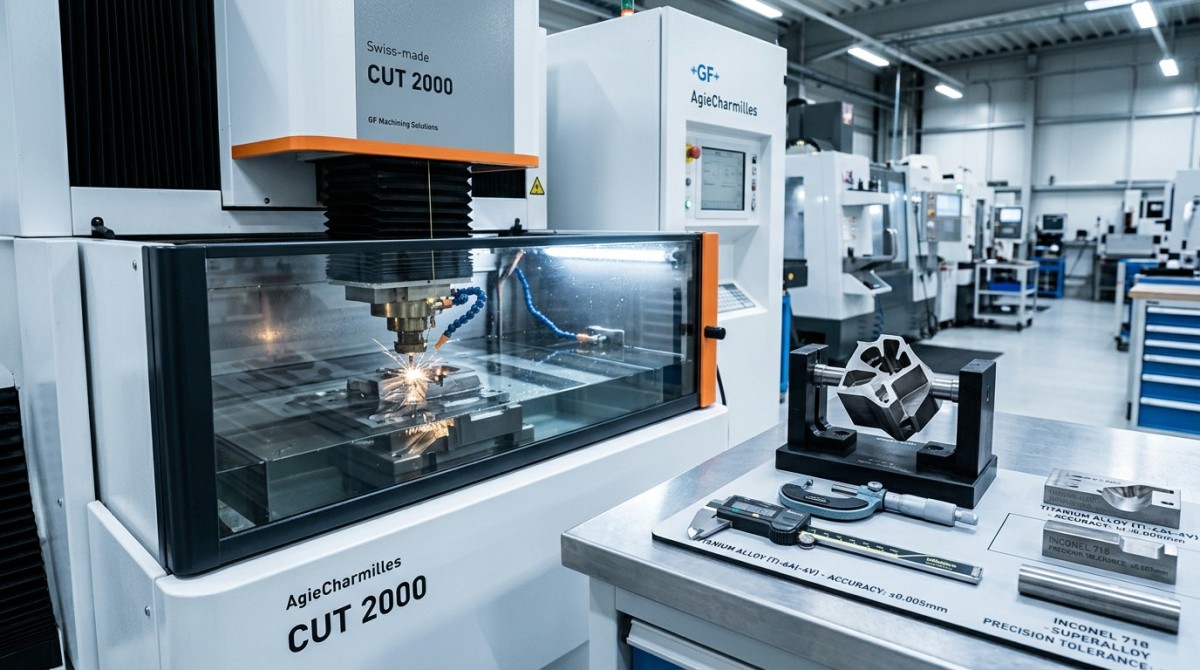
For many sourcing teams, the first assumption is simple: if a supplier has open machine capacity, the job should move fast. In practice, edm wire cutting service China follows a multi-stage path that usually includes drawing review, process planning, fixture preparation, machining, inspection, and sometimes secondary finishing. A part quoted at 3–7 working days can extend to 2–3 weeks when tolerances tighten, materials become more difficult, or inspection documents grow more demanding.
Wire EDM is often selected because it can produce narrow slots, sharp internal corners, burr-free profiles, and highly controlled dimensional results on conductive materials. That advantage also explains why lead time is sensitive. A shop cutting carbon steel at standard tolerance may run a faster program, while a job in titanium grade 5 or Inconel 718 may require slower settings, more skim cuts, and stricter control of recast layer risk. The same outline can therefore have very different delivery windows.
From a procurement perspective, lead time is not just a production number. It is a chain response involving quotation accuracy, technical communication quality, schedule discipline, and final acceptance criteria. If the buyer submits only a 2D file with incomplete notes, the supplier may need 1–2 additional clarification rounds before programming starts. If the project includes first article inspection, special packaging, or export documentation, each node adds time even when machine cutting hours remain unchanged.
At TechStat Vanguard, we view lead time through a data-first lens. Parameters do not lie; tolerances dictate success. That means evaluating delivery speed through measurable variables rather than broad claims like “fast turnaround.” Engineers, operators, and enterprise decision-makers get better outcomes when they break the schedule into discrete technical drivers instead of treating edm wire cutting service China as a generic commodity purchase.
The 4-stage timeline most buyers should expect
A realistic schedule is easier to manage when broken into stages. While exact timing depends on part geometry and supplier load, the structure below reflects common execution logic in precision machining environments.
- Technical review and quoting: typically 0.5–2 working days for standard drawings, longer if GD&T, material substitutions, or surface integrity notes require clarification.
- Programming and setup: often 0.5–1.5 days, depending on fixture design, wire path complexity, and whether previous process libraries already exist.
- Cutting and in-process verification: this can range from several hours to multiple days, especially when 2–4 skim passes are needed.
- Inspection, reporting, packaging, and dispatch: usually 0.5–2 days, but can increase with CMM reporting, PPAP-style documentation, or special export packing.
When buyers map these stages before placing an order, delays become easier to predict and control. This is especially important for aerospace-adjacent, robotics, medical-support, and advanced automation components where late-stage documentation often affects shipment dates as much as machining itself.
Which technical variables add the most days to delivery?
Not all parts consume lead time in the same way. In edm wire cutting service China, the largest schedule differences usually come from four technical factors: tolerance band, material behavior, geometry complexity, and surface integrity requirements. A profile that looks simple on paper may still require extended machining time if the edge condition, taper precision, or heat-affected zone control is tightly specified.
Tolerance is usually the first major schedule driver. A shop can often process general industrial profiles faster when dimensional expectations are moderate. Once the requirement moves into fine precision territory, shops may slow feed rates, increase skim passes, tighten thermal compensation, and conduct more frequent measurements. Even a shift from a standard profile tolerance to a tighter micromachining tolerance can move delivery from a short 3–5 day window toward 7–10 days or more depending on queue load.
Material behavior is the second major variable. Conductive but demanding alloys like titanium grade 5 and Inconel 718 are common examples because they introduce process tradeoffs. Wire EDM avoids conventional cutting forces, but cutting stability, flushing efficiency, material thickness, and surface integrity targets still influence cycle time. Difficult alloys often need more conservative parameters to control edge quality, recast layer thickness, and dimensional consistency across the full profile.
Geometry complexity is the third factor. Tiny radii, narrow ribs, deep slots, tall thickness-to-feature ratios, and multiple internal contours can require slower movement, additional threading events, or special fixture planning. Finally, quality demands create the fourth time burden. If the order requires CMM reports, electrode traceability records, controlled packing, or lot segregation, the total lead time can increase even when pure cutting hours stay within the expected range.
A practical view of what changes the schedule
The table below helps procurement and engineering teams identify which specifications are most likely to extend lead time before purchase order release.
This framework is useful because it turns a vague delivery promise into a spec-based discussion. For sourcing leaders, that is the difference between reactive expediting and controlled procurement. The more clearly these four variables are addressed up front, the lower the risk of hidden schedule expansion later in the project.
Why surface integrity analysis can quietly extend lead time
Many buyers focus on dimensions and overlook edm surface integrity analysis. Yet in high-value components, edge condition can be as important as nominal size. Requirements related to recast layer control, microcrack avoidance, or downstream fatigue behavior often push suppliers to use additional skim passes and slower settings. That may not be visible in a simple quote, but it has direct impact on the promised ship date.
This becomes especially relevant in aerospace fixtures, sensor housings, medical-support components, automation tooling, and high-cycle wear parts. If the part will later undergo coating, assembly fit checks, or fatigue-sensitive use, buyers should ask whether the quote includes only shape generation or also process conditions compatible with the final application. A 1-day faster quote can become more expensive if it causes rework or qualification failure.
How do material and part design influence EDM lead time?
Material selection affects not only manufacturability but also queue priority, process planning, and post-cut verification. In edm wire cutting service China, the same supplier may quote very different lead times for aluminum, tool steel, titanium grade 5, and Inconel 718. The reason is not only cutting speed. Shops also consider wire consumption, flushing stability, expected skim-pass count, fixture robustness, and the risk of distortion in thin-wall or high-aspect-ratio areas.
Part thickness is another practical factor. Thicker sections usually need more time due to longer cut path exposure and tighter control of process stability through the full depth. Thin parts can also be slow when they are flexible, fragile, or packed with micro features. A 2 mm sheet with multiple micro slots can be harder to run predictably than a much thicker but simpler contour. For operators and process engineers, stable fixturing and flushing access often determine whether the job runs once or requires repeated adjustment.
Design details also matter. Very small internal radii, tapered walls, narrow bridges, and multiple start holes can add setup and cutting complexity. If the drawing allows design optimization, even small changes can reduce lead time. For example, widening a slot slightly, consolidating internal corners, or revising inspection datums can shorten both machining and verification. That is why early design-for-manufacturability discussion often saves more time than late production expediting.
For enterprise decision-makers, the main lesson is this: lead time in edm wire cutting service China is often engineered at the drawing stage. If engineering teams release incomplete or over-constrained designs, the procurement team inherits schedule risk that is difficult to remove later. Better front-end data creates shorter and more predictable delivery cycles.
Material and design comparison for schedule planning
The following comparison helps teams estimate where schedule pressure usually comes from when evaluating material choice and part geometry.
This table also highlights a common misconception: thicker is not always slower and thinner is not always faster. Schedule risk comes from the interaction of material, thickness, geometry, and quality criteria. Teams that benchmark all four variables usually make better supplier comparisons and reduce emergency rescheduling later.
Three design checks that can shorten turnaround
- Review whether every tight tolerance is function-critical. Reducing non-essential tight zones can remove extra skim passes and inspection time.
- Check access for wire path and flushing. Congested internal geometry often causes unstable processing and queue delays.
- Align drawing notes with actual application risk. If edge integrity matters, specify it clearly at RFQ stage instead of raising it during final inspection.
These checks are simple, but they often save 1–3 days in communication and rework on custom orders. For globally distributed engineering teams, this can be more valuable than pressing for an unrealistically short ship date.
What should buyers, engineers, and procurement teams evaluate before placing an order?
A fast quote is not the same as a dependable delivery plan. In edm wire cutting service China, buyers should evaluate at least five procurement dimensions before selecting a supplier: drawing clarity, material readiness, process capability, inspection scope, and logistics alignment. Skipping any of these can create late-stage surprises. For example, a supplier may offer an attractive timeline but not account for customer-requested reports, source material lead time, or extra handling for fragile micro parts.
Engineers and operators should pay close attention to manufacturability language in the RFQ package. If the drawing includes critical dimensions, datum logic, edge-condition notes, and intended function, the supplier can make a realistic process plan quickly. If these items are missing, the schedule often expands through 2–3 rounds of clarification. That delay rarely appears in headline turnaround promises, but it is one of the most common reasons actual delivery slips.
Procurement teams should also ask whether the quoted lead time starts from PO receipt, drawing approval, material arrival, or final technical clarification. These are not the same. In advanced manufacturing supply chains, one supplier may define lead time from payment confirmation while another defines it from complete data package release. Unless this is aligned, internal planning systems will produce unreliable milestones.
TSV recommends a benchmark mindset: compare suppliers by process transparency, not slogans. Ask how many stages are included, what assumptions are built into the quotation, and which variables could shift the ship date by 1 day, 3 days, or a full week. That is how enterprise buyers reduce qualification cycles and avoid costly expediting fees.
A 6-point RFQ checklist for more accurate lead time
- Provide 2D drawings plus relevant 3D data when available, especially for parts with multiple contours, start-hole locations, or assembly-critical datums.
- State material grade clearly, including whether the supplier procures it or you provide free-issue stock. Material sourcing alone can add several days.
- Define tolerance priorities. Mark which dimensions are critical-to-function and which can remain at general tolerance to prevent unnecessary process slowdowns.
- Confirm inspection requirements before quoting. First article, CMM output, or lot traceability should never be assumed after production begins.
- Clarify downstream operations such as heat treatment, coating, or assembly fit checks, because these can influence edge and surface integrity requirements.
- Align shipment terms, packaging expectations, and destination timelines. A part finished in 5 days but packed late still misses the project milestone.
This checklist is especially useful for cross-border projects where time zone gaps and fragmented communication can stretch a nominal 1-week order into a 2-week execution. Clear inputs reduce both technical ambiguity and administrative lag.
Common decision errors that increase schedule risk
One frequent mistake is choosing only by unit price. Another is assuming all EDM suppliers handle micro features, superalloys, and documentation-heavy work equally well. A third is waiting to discuss acceptance criteria until after samples are complete. Each of these errors creates hidden lead time because the supplier must re-evaluate the process after the order is already live.
A stronger approach is to compare suppliers using three categories: technical fit, schedule realism, and communication discipline. If one vendor can explain skim-pass logic, inspection sequence, and lead-time assumptions in a structured way, that usually indicates better schedule control than a generic promise of “rapid production.”
FAQ: common questions about EDM wire cutting lead time
Search intent around edm wire cutting service China often centers on delivery predictability. The questions below address the issues buyers and engineers most often raise during supplier screening and project planning.
How long does EDM wire cutting usually take in China?
For straightforward parts with standard material, complete drawings, and moderate tolerances, a common production window is around 3–7 working days. For tighter tolerances, difficult alloys, micro features, or extensive inspection paperwork, the schedule often shifts to 7–15 working days. If material procurement, engineering clarification, or special documentation is involved, total project time may extend beyond that range.
Does tighter tolerance always mean a much longer lead time?
Not always, but it often adds time. The key issue is how the tolerance affects process strategy. A small increase in accuracy demand may be manageable if geometry is open and the material is stable. However, when tight tolerance combines with small internal features, thick sections, or strict surface integrity requirements, the supplier may need extra passes, slower cutting, and more inspection points. That combination is what usually drives the largest delay.
Why do titanium grade 5 and Inconel 718 often receive longer quotations?
Because the quote reflects more than nominal cutability. These materials are often used in demanding applications where edge condition, dimensional stability, and downstream performance matter. Suppliers may therefore build in more conservative settings, more verification, and greater schedule buffer. In projects where edm surface integrity analysis matters, this caution is usually justified and can reduce downstream risk.
Can buyers shorten lead time without sacrificing quality?
Yes, if the improvement comes from better inputs rather than pressure alone. The most effective actions are to submit complete drawings, prioritize critical tolerances, confirm material source, define inspection needs early, and review whether all design features are necessary. In many cases, these actions save 1–4 working days without compromising part function. Pushing only for a shorter promise, by contrast, can increase the chance of rework or shipment slippage.
Why work with a data-driven technical partner for supplier evaluation and project planning?
When lead time matters, the real challenge is not finding a low headline number. It is identifying which number is technically credible. That is where TechStat Vanguard adds value. We do not approach advanced manufacturing through generic marketing language. We focus on engineering truth: measurable tolerances, process assumptions, surface integrity implications, and supply-chain traceability logic that serious buyers can actually use.
For information researchers, we help separate broad claims from parameter-based evaluation. For operators and engineers, we translate supplier language into manufacturability and process-risk terms. For procurement teams, we support faster comparison of quotation logic, hidden schedule variables, and specification gaps. For business decision-makers, we reduce the cost of uncertainty by turning complex technical inputs into procurement-ready benchmarks.
If you are assessing edm wire cutting service China for prototypes, low-volume precision parts, or qualification-sensitive components, the most productive next step is a structured technical review. That review should cover at least 5 items: material grade, tolerance map, geometry risk, inspection scope, and delivery definition. Once those are clear, lead time becomes far more predictable.
Contact TechStat Vanguard if you need support with parameter confirmation, supplier comparison, lead time risk analysis, drawing review, sample planning, certification-related expectations, or quote communication strategy. We help engineering teams and sourcing leaders build decisions on traceable technical logic, not marketing noise.
What you can discuss with us now
- Tolerance and surface integrity requirements before RFQ release
- Material-specific lead time expectations for titanium grade 5, Inconel 718, tool steel, and other conductive alloys
- Supplier comparison criteria for prototype, pilot, and repeat-batch production
- Inspection scope, documentation planning, and shipment timing alignment
- Sample support, quotation review, and custom schedule planning for high-precision parts
In hard-tech sourcing, speed without definition creates risk. A parameter-driven review creates control. That is the basis on which better EDM procurement decisions are made.
Search News
Hot Articles
- Carbon Fiber StructuresHow to Specify Aerospace Carbon Fiber Assemblies for Lightweight, Load-Bearing PartsJul 11, 2026
- Machine VisionXiaomi, Alibaba DAMO Academy Drive Open-Source Robotics Model Ecosystem, Lowering Algorithm Development Barriers for Overseas SMEs Adopting Chinese Robotics SolutionsMar 30, 2026
- Cobots & ArmsShanxi 'AI+' Conference Showcases Embodied Intelligence with Multinational Buyer Engagement: Key Industry ImplicationsMar 30, 2026
Popular Tags
Recommended News
 Jul 11, 2026How to Specify Aerospace Carbon Fiber Assemblies for Lightweight, Load-Bearing PartsAerospace carbon fiber assemblies: learn how to specify laminate design, load data, joining methods, and inspection controls for lighter, reliable load-bearing aerospace parts.Elena Rostova (UAV Systems Researcher)
 Mar 30, 2026Xiaomi, Alibaba DAMO Academy Drive Open-Source Robotics Model Ecosystem, Lowering Algorithm Development Barriers for Overseas SMEs Adopting Chinese Robotics SolutionsXiaomi & Alibaba DAMO Academy's open-source robotics models lower algorithm barriers for global SMEs. Boost efficiency in manufacturing, logistics & smart retail with ROS 2 compatible solutions.TSV Data Lab
 Mar 30, 2026Shanxi 'AI+' Conference Showcases Embodied Intelligence with Multinational Buyer Engagement: Key Industry ImplicationsShanxi 'AI+' Conference highlights embodied intelligence with Tesla, Ubtech & Jiantao showcasing multimodal robotics. 40+ global buyers validated tech on-site, creating new B2B channels for industrial automation & AI solutions.Chen Wei (Automation Lead Engineer)
 Mar 30, 2026Zhongguancun Unveils 6G Integrated Sensing-Computing-Intelligence Platform to Empower Embodied Robots for Global Industrial ApplicationsZhongguancun's new 6G platform revolutionizes industrial robotics with <10ms latency, empowering global automotive, logistics & port automation. Discover how this tech boosts China's smart manufacturing exports.TSV Data Lab
 Mar 30, 2026Mech-Mind Tianjin Embodied Intelligence R&D and Production Base Goes Live, Cutting Delivery Time by 20%–30% for Global Customized AMR+Vision SolutionsMech-Mind's Tianjin AMR+Vision production base cuts delivery time by 20%-30% for欧美 & Latin American markets. Discover how this PLd-certified facility accelerates customized robotics solutions for smart manufacturing and logistics.Chen Wei (Automation Lead Engineer)
 Mar 30, 2026Boao Forum Reveals 'Co-evolution of Big and Small Brains' Trend in Humanoid Robots, China's Embodied Intelligence Accelerates Adaptation to Overseas Manufacturing Service ScenariosDiscover how China's humanoid robots, featuring 'Co-evolution of Big and Small Brains,' are revolutionizing global manufacturing. Learn about Embodied Tian Gong 3.0's ISO compliance and overseas deployment at Boao Forum 2026.Chen Wei (Automation Lead Engineer)
 Mar 30, 2026China Railway Industrial Secures Patent for Embodied Robotics in Material Handling, Boosting High-Precision Delivery Capabilities for Overseas Infrastructure and Manufacturing ProjectsChina Railway Industrial's new patent for embodied robotics in material handling boosts high-precision delivery for global infrastructure & manufacturing. Discover how this innovation enhances logistics accuracy in automotive, rail transit & EPC projects.Chen Wei (Automation Lead Engineer)
 Oct 27, 2026GXO and Agility Robotics Expand Partnership to Accelerate US Humanoid Robot DeploymentGXO and Agility Robotics plan to expand US humanoid robot deployment with Digit 4 in early 2027. Explore warehouse automation plans, service terms and future Digit 5 upgrades.Chen Wei (Automation Lead Engineer)
 Oct 27, 2026Robotic Automation Costs: Budgeting for Equipment, Integration, and MaintenancePlan your robotics automation cost with confidence. Explore equipment, integration, and maintenance expenses, compare quotes, and build a realistic budget for better ROI.Chen Wei (Automation Lead Engineer)
 Oct 26, 2026AMAXiMAL Releases Open-Source TopMod 3D v3 With Claude AIExplore AMAXiMAL’s free, open-source TopMod 3D v3 with Claude AI assistance, topology-based modeling and plywood fabrication tools that connect complex designs to physical builds.Dr. Marcus Vance
 Oct 26, 2026Choosing a SCADA System Integrator Company: PLC Compatibility and Long-Term SupportChoose a scada system integrator company with proven PLC compatibility and reliable long-term support. Discover what to test, compare, and require before investing.Victor Lin (Chief Software Architect)
 Oct 25, 2026Hesai Leads Global ADAS Main Lidar Shipments in Yole’s 2026 ReportHesai led global ADAS main lidar shipments with a 43% share in 2025, according to Yole’s 2026 report. Explore what this ranking reveals about its automotive market position.TSV Data Lab
 Oct 25, 2026Choosing an Aerospace Materials Manufacturer: Quality and Traceability ChecksChoosing an aerospace materials manufacturer? Learn how to verify certifications, test reports, and lot traceability to qualify suppliers confidently and reduce costly sourcing risks.Dr. Marcus Vance
 Oct 24, 2026Guotai Haitong: Global Entry-Level 3D Printer Shipments Rose 39% in Q1 2026Entry-level 3D printer shipments rose 39% in Q1 2026, Guotai Haitong reports. Explore how AI, multicolor printing and print farms are shaping market growth.Dr. Marcus Vance
 Oct 24, 2026Choosing an Industrial Vision Inspection Supplier: Acceptance Tests That MatterChoose an industrial vision inspection supplier with confidence. Discover acceptance tests for defect detection, false rejects, production speed, and reliable part rejection before you buy.TSV Data Lab
 Oct 23, 2026US Navy Raises Gecko Robotics Contract Ceiling to $300M for Robotic Fleet MaintenanceUS Navy raises Gecko Robotics’ contract ceiling to $300M for Pacific Fleet robotic inspections. Explore potential opportunities for maintenance suppliers and key procurement considerations.Chen Wei (Automation Lead Engineer)
 Oct 23, 2026Choosing Industrial Sensing Systems for Global Plants: Protocol CompatibilityCompare industrial sensing systems international buyers can trust. Explore protocol compatibility, reduce integration risks, and select proven configurations for reliable global plant deployments.TSV Data Lab
 Oct 22, 2026KUKA Showcases Physical AI and iiQKA.AI Vision at NVIDIA GTC BerlinExplore KUKA’s Physical AI showcase at NVIDIA GTC Berlin and discover how iiQKA.AI Vision aims to simplify robotic vision integration and improve 2D and 3D scene recognition.TSV Data Lab
 Oct 22, 2026Robotic Machining of Advanced Composites: What Tolerances Are Achievable?Explore advanced materials machining robotics: discover what drives achievable composite tolerances and how to validate accuracy before investing in your next machining system.Dr. Marcus Vance
 Oct 21, 2026China’s Industrial Robot Exports Near RMB 10 Billion in First Nine Months of 2026China’s industrial robot exports neared RMB 10 billion in January–September 2026, with value rising faster than volume. Explore the data and what it could mean for suppliers.Chen Wei (Automation Lead Engineer)
 Oct 21, 2026Low-Latency Industrial Data Processing: Pricing and Key Cost DriversExplore industrial data latency price drivers, from edge hardware to integration and support. Learn how to compare quotes, verify performance, and avoid unnecessary costs.TSV Data Lab
 Oct 20, 2026KUKA Launches iiQKA.AI Vision to Simplify Industrial Image ProcessingKUKA iiQKA.AI Vision simplifies industrial image processing with controller-based 2D and 3D vision. Explore drag-and-drop setup for vision-guided automation.TSV Data Lab
 Oct 20, 2026Smart Industrial Edge Devices: Key Criteria for Legacy PLC IntegrationChoose smart industrial edge devices for legacy PLC integration. Discover key criteria for compatibility, data quality, security, and reliable collection without disrupting control.TSV Data Lab
 Oct 19, 2026Choosing a Radar Sensor by Application: Range, Resolution, and Field of ViewSimplify radar sensor application based product selection. Compare range, resolution, and field of view to avoid blind spots and choose with confidence. Explore the guide.TSV Data Lab























