How to judge a heavy duty CNC machining supplier beyond capacity
Publication Date
author
Choosing a heavy duty CNC machining supplier should go far beyond machine count or nominal capacity. For engineers and procurement teams, the real test lies in measurable performance: micro machining tolerance limits, 5 axis CNC surface finish Ra, Inconel 718 tool wear rate, EDM surface integrity analysis, and documented ISO 13485 quality control checklist compliance. This guide shows how to evaluate suppliers through hard data, process stability, and application-specific risk.
When buyers search for how to judge a heavy duty CNC machining supplier beyond capacity, they are usually not asking whether a shop owns enough machines. They want to know whether that supplier can deliver difficult parts repeatedly, control quality under pressure, communicate risk early, and protect program timelines when materials, geometry, or compliance demands get hard. In practical terms, the best supplier is not the one with the biggest workshop. It is the one with the most reliable process evidence.
For procurement leaders, operators, and technical evaluators, the decision should rest on a few core questions: Can the supplier hold the required tolerances consistently? Do they understand the material behavior of hard-to-machine alloys? Can they prove process stability with data rather than sales claims? And do they have the quality discipline to support regulated or high-consequence industries? Those are the factors that separate true heavy duty CNC machining capability from simple advertised capacity.
What matters more than machine count when selecting a heavy duty CNC machining supplier
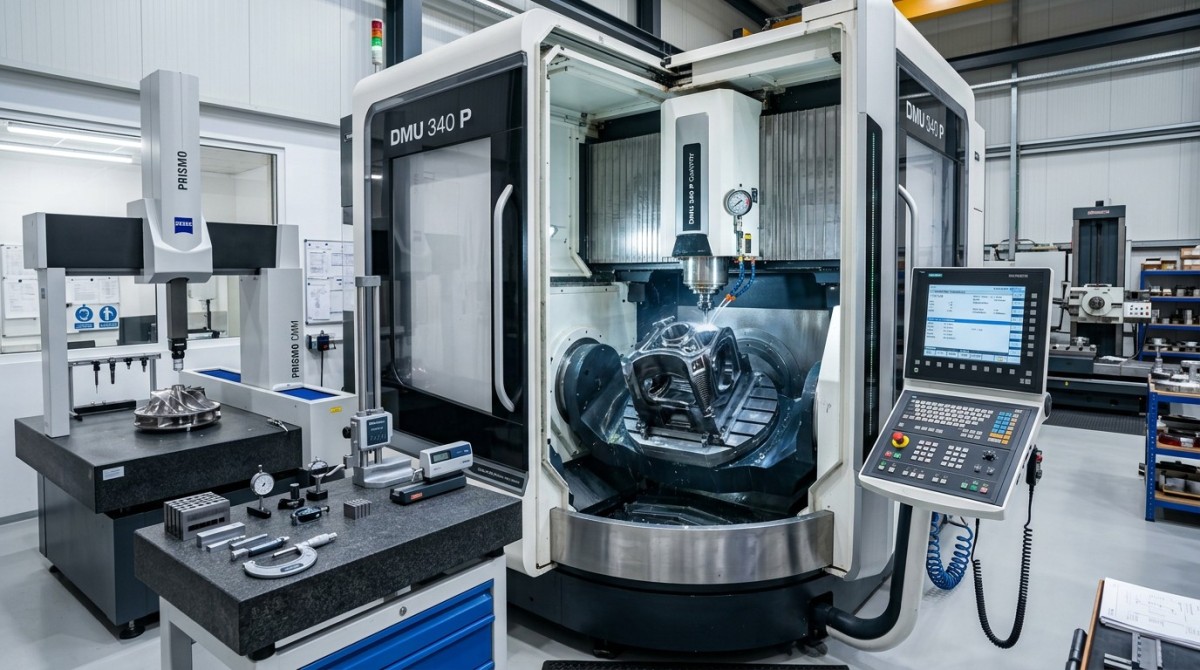
A large machine park may indicate throughput potential, but it does not prove machining competence. A supplier can own multiple heavy duty CNC machines and still struggle with repeatability, thermal stability, tool life management, fixture strategy, or surface integrity on demanding parts. Capacity answers only one question: how much work they might accept. It does not answer whether they can produce your parts correctly, economically, and on schedule.
For most serious buyers, the core search intent behind this topic is supplier qualification. They want a practical evaluation framework that reduces sourcing risk. That means looking beyond brochure claims and asking for evidence in five areas:
- Capability under load: performance on large, heavy, or structurally demanding parts
- Precision under complexity: ability to hold tolerance across difficult geometries and multi-axis operations
- Material-specific process control: proven methods for titanium, Inconel, hardened steel, aluminum castings, or specialty alloys
- Quality system maturity: documented controls, traceability, inspection discipline, and corrective action effectiveness
- Operational reliability: schedule discipline, engineering responsiveness, and risk escalation procedures
In other words, a qualified heavy duty CNC machining supplier should be judged as a manufacturing system, not a machine inventory.
How to verify real machining capability with measurable technical data
Technical buyers should ask for hard evidence tied to actual parts, materials, and process windows. This is where many supplier evaluations become too superficial. Generic statements like “high precision” or “strict quality control” have little value unless they are supported by measurable benchmarks.
Start with tolerance capability. If your application requires fine features, sealing surfaces, bearing seats, or critical alignment interfaces, ask the supplier to define their demonstrated micro machining tolerance limits by feature type, material, and machine platform. A meaningful answer should distinguish between short-run best-case achievement and normal production capability. A supplier that can occasionally hit an extreme tolerance in a controlled trial is not the same as one that can maintain it across batches.
Surface quality is equally important, especially on 5-axis parts with complex contours. Ask for documented 5 axis CNC surface finish Ra results on comparable materials and geometries. Surface finish should not be treated as a cosmetic number alone. It affects fatigue resistance, sealing performance, coating adhesion, and downstream inspection acceptance. A serious supplier should explain how toolpath strategy, cutter selection, spindle condition, and workholding influence Ra consistency.
For heat-resistant superalloys, material behavior becomes a major differentiator. If your program includes aerospace, energy, or extreme-duty components, ask for data on Inconel 718 tool wear rate. This is one of the clearest ways to judge whether a supplier actually understands difficult machining. Tool wear rate affects part consistency, dimensional drift, cycle time, scrap risk, and cost predictability. A capable supplier should be able to discuss cutting parameter optimization, insert life monitoring, coolant strategy, and when they change tools to protect part quality rather than simply maximize tool utilization.
If the process includes wire EDM or sinker EDM, surface quality must be evaluated differently. Request an EDM surface integrity analysis, especially for fatigue-sensitive or high-reliability parts. Buyers should look for evidence covering recast layer control, microcrack prevention, heat-affected zone behavior, and post-process finishing requirements. For critical components, this analysis may matter more than nominal dimensional conformance.
The central point is simple: do not ask only what a supplier can machine. Ask what they can prove.
Why process stability and quality discipline matter more than one-time sample success
Many suppliers can produce a good first article. Fewer can maintain the same result over months of production, material lot variation, staffing changes, or urgent schedule compression. That is why process stability is often a better predictor of supplier value than a single impressive sample part.
To assess stability, ask about:
- In-process inspection frequency and trigger points
- Statistical process control use on critical dimensions
- Machine calibration and preventive maintenance schedules
- Fixture repeatability validation
- Tool offset management and wear compensation methods
- Nonconformance handling and root-cause closure time
For regulated or high-consequence sectors, documented system discipline is especially important. If medical or similarly controlled manufacturing is involved, buyers should review evidence of ISO 13485 quality control checklist compliance where relevant. Even outside medical applications, the presence of structured document control, traceability, inspection records, operator training, and corrective action workflows is a strong sign of supplier maturity.
A disciplined supplier should also distinguish between detection and prevention. Detecting defects through final inspection is necessary, but preventing them through stable process design is far more valuable. From a business perspective, prevention reduces rework, scrap, delivery misses, and warranty exposure. From an engineering perspective, it reduces uncertainty.
Questions procurement teams and engineers should ask during supplier evaluation
The most useful supplier conversations are specific. Broad questions produce broad answers. If you want to judge a heavy duty CNC machining supplier beyond capacity, your questions should force the supplier to reveal process thinking, not just sales language.
Useful qualification questions include:
- What is your demonstrated tolerance capability on parts similar in size, weight, and material to ours?
- How do you manage thermal growth, distortion, and workholding on large or heavy components?
- Can you share real production data for surface finish, Cpk, or dimensional repeatability?
- What is your standard response when tool wear begins to affect critical dimensions?
- How do you handle first article approval, revision control, and engineering change communication?
- What traceability do you maintain for material lots, inspection records, and process steps?
- How do you escalate schedule risk, quality risk, or subcontractor risk before it affects delivery?
- Which parts do you consider poor fit for your process, and why?
That last question is especially revealing. Credible suppliers usually know their limits and communicate them clearly. Overpromising is often a stronger warning sign than admitting a constraint.
Warning signs that a supplier has capacity but not dependable execution
Some suppliers look strong at first glance because they have large machines, broad service lists, and fast quotation response. But if their execution model is weak, those visible strengths can hide major risk. Common warning signs include:
- They cannot provide part-specific quality data
- They speak in generic quality claims with no measurable benchmarks
- They avoid discussing scrap causes, corrective actions, or past failures
- They treat difficult materials as routine without showing process data
- They have inspection equipment but no clear inspection strategy
- They quote aggressively without reviewing tolerances, datum structure, or finishing requirements
- They rely heavily on hero operators rather than documented process control
- They present certifications as substitutes for manufacturing evidence
None of these signs alone is conclusive, but together they indicate a supplier that may win work on visibility or price while lacking the process control needed for critical production.
How to match supplier evaluation to business risk, not just technical specs
Different projects justify different levels of scrutiny. A simple structural bracket and a flight-critical machined housing should not be evaluated the same way. The right supplier assessment depends on the cost of failure.
For lower-risk parts, you may prioritize delivery reliability, basic dimensional conformance, and competitive cost. For high-risk programs, you should weigh repeatability, traceability, material expertise, and failure prevention far more heavily. This is where enterprise decision-makers should align engineering and procurement around total cost, not piece price alone.
A supplier with stronger process control may quote higher initially but save money through lower defect rates, fewer line stoppages, shorter approval cycles, reduced incoming inspection burden, and less engineering firefighting. In many advanced manufacturing environments, those hidden savings exceed the visible unit-price delta.
That is why supplier selection should connect technical capability to business outcomes. Better machining discipline means lower qualification risk, more stable launches, and fewer disruptions across the supply chain.
A practical framework for choosing the right heavy duty CNC machining supplier
If you need a simple decision model, evaluate suppliers in this order:
- Fit: Do they regularly make parts like yours in similar materials, sizes, and tolerances?
- Evidence: Can they provide real data on tolerance, surface finish, wear behavior, and quality control?
- Stability: Do they show repeatable processes rather than one-off successes?
- System maturity: Are traceability, inspection, change control, and corrective action clearly managed?
- Communication: Do they identify risks early and respond with engineering clarity?
- Commercial reliability: Can they support your timeline, documentation needs, and long-term scaling plan?
This framework helps both technical teams and business stakeholders make better sourcing decisions. It also moves the conversation from “How many machines do you have?” to “How reliably can you manufacture this part under real production conditions?” That is the more important question.
Conclusion
To judge a heavy duty CNC machining supplier beyond capacity, focus on proof, not presentation. Machine count, floor space, and claimed throughput may matter, but they are not the most reliable indicators of success. What matters more is demonstrated control over tolerance, surface finish, difficult materials, EDM quality, documented inspection, and process stability over time.
For engineers, the best supplier is the one that understands failure modes before they happen. For procurement teams, it is the one that reduces supply risk with verifiable data. For business leaders, it is the partner that protects launch schedules, lowers hidden quality costs, and supports long-term program confidence.
In short, real heavy duty CNC machining capability is not defined by capacity alone. It is defined by repeatable engineering truth.
Search News
Hot Articles
- Carbon Fiber StructuresHow to Specify Aerospace Carbon Fiber Assemblies for Lightweight, Load-Bearing PartsJul 11, 2026
- Machine VisionXiaomi, Alibaba DAMO Academy Drive Open-Source Robotics Model Ecosystem, Lowering Algorithm Development Barriers for Overseas SMEs Adopting Chinese Robotics SolutionsMar 30, 2026
- Cobots & ArmsShanxi 'AI+' Conference Showcases Embodied Intelligence with Multinational Buyer Engagement: Key Industry ImplicationsMar 30, 2026
Popular Tags
Recommended News
 Jul 11, 2026How to Specify Aerospace Carbon Fiber Assemblies for Lightweight, Load-Bearing PartsAerospace carbon fiber assemblies: learn how to specify laminate design, load data, joining methods, and inspection controls for lighter, reliable load-bearing aerospace parts.Elena Rostova (UAV Systems Researcher)
 Mar 30, 2026Xiaomi, Alibaba DAMO Academy Drive Open-Source Robotics Model Ecosystem, Lowering Algorithm Development Barriers for Overseas SMEs Adopting Chinese Robotics SolutionsXiaomi & Alibaba DAMO Academy's open-source robotics models lower algorithm barriers for global SMEs. Boost efficiency in manufacturing, logistics & smart retail with ROS 2 compatible solutions.TSV Data Lab
 Mar 30, 2026Shanxi 'AI+' Conference Showcases Embodied Intelligence with Multinational Buyer Engagement: Key Industry ImplicationsShanxi 'AI+' Conference highlights embodied intelligence with Tesla, Ubtech & Jiantao showcasing multimodal robotics. 40+ global buyers validated tech on-site, creating new B2B channels for industrial automation & AI solutions.Chen Wei (Automation Lead Engineer)
 Mar 30, 2026Zhongguancun Unveils 6G Integrated Sensing-Computing-Intelligence Platform to Empower Embodied Robots for Global Industrial ApplicationsZhongguancun's new 6G platform revolutionizes industrial robotics with <10ms latency, empowering global automotive, logistics & port automation. Discover how this tech boosts China's smart manufacturing exports.TSV Data Lab
 Mar 30, 2026Mech-Mind Tianjin Embodied Intelligence R&D and Production Base Goes Live, Cutting Delivery Time by 20%–30% for Global Customized AMR+Vision SolutionsMech-Mind's Tianjin AMR+Vision production base cuts delivery time by 20%-30% for欧美 & Latin American markets. Discover how this PLd-certified facility accelerates customized robotics solutions for smart manufacturing and logistics.Chen Wei (Automation Lead Engineer)
 Mar 30, 2026Boao Forum Reveals 'Co-evolution of Big and Small Brains' Trend in Humanoid Robots, China's Embodied Intelligence Accelerates Adaptation to Overseas Manufacturing Service ScenariosDiscover how China's humanoid robots, featuring 'Co-evolution of Big and Small Brains,' are revolutionizing global manufacturing. Learn about Embodied Tian Gong 3.0's ISO compliance and overseas deployment at Boao Forum 2026.Chen Wei (Automation Lead Engineer)
 Mar 30, 2026China Railway Industrial Secures Patent for Embodied Robotics in Material Handling, Boosting High-Precision Delivery Capabilities for Overseas Infrastructure and Manufacturing ProjectsChina Railway Industrial's new patent for embodied robotics in material handling boosts high-precision delivery for global infrastructure & manufacturing. Discover how this innovation enhances logistics accuracy in automotive, rail transit & EPC projects.Chen Wei (Automation Lead Engineer)
 Oct 27, 2026GXO and Agility Robotics Expand Partnership to Accelerate US Humanoid Robot DeploymentGXO and Agility Robotics plan to expand US humanoid robot deployment with Digit 4 in early 2027. Explore warehouse automation plans, service terms and future Digit 5 upgrades.Chen Wei (Automation Lead Engineer)
 Oct 27, 2026Robotic Automation Costs: Budgeting for Equipment, Integration, and MaintenancePlan your robotics automation cost with confidence. Explore equipment, integration, and maintenance expenses, compare quotes, and build a realistic budget for better ROI.Chen Wei (Automation Lead Engineer)
 Oct 26, 2026AMAXiMAL Releases Open-Source TopMod 3D v3 With Claude AIExplore AMAXiMAL’s free, open-source TopMod 3D v3 with Claude AI assistance, topology-based modeling and plywood fabrication tools that connect complex designs to physical builds.Dr. Marcus Vance
 Oct 26, 2026Choosing a SCADA System Integrator Company: PLC Compatibility and Long-Term SupportChoose a scada system integrator company with proven PLC compatibility and reliable long-term support. Discover what to test, compare, and require before investing.Victor Lin (Chief Software Architect)
 Oct 25, 2026Hesai Leads Global ADAS Main Lidar Shipments in Yole’s 2026 ReportHesai led global ADAS main lidar shipments with a 43% share in 2025, according to Yole’s 2026 report. Explore what this ranking reveals about its automotive market position.TSV Data Lab
 Oct 25, 2026Choosing an Aerospace Materials Manufacturer: Quality and Traceability ChecksChoosing an aerospace materials manufacturer? Learn how to verify certifications, test reports, and lot traceability to qualify suppliers confidently and reduce costly sourcing risks.Dr. Marcus Vance
 Oct 24, 2026Guotai Haitong: Global Entry-Level 3D Printer Shipments Rose 39% in Q1 2026Entry-level 3D printer shipments rose 39% in Q1 2026, Guotai Haitong reports. Explore how AI, multicolor printing and print farms are shaping market growth.Dr. Marcus Vance
 Oct 24, 2026Choosing an Industrial Vision Inspection Supplier: Acceptance Tests That MatterChoose an industrial vision inspection supplier with confidence. Discover acceptance tests for defect detection, false rejects, production speed, and reliable part rejection before you buy.TSV Data Lab
 Oct 23, 2026US Navy Raises Gecko Robotics Contract Ceiling to $300M for Robotic Fleet MaintenanceUS Navy raises Gecko Robotics’ contract ceiling to $300M for Pacific Fleet robotic inspections. Explore potential opportunities for maintenance suppliers and key procurement considerations.Chen Wei (Automation Lead Engineer)
 Oct 23, 2026Choosing Industrial Sensing Systems for Global Plants: Protocol CompatibilityCompare industrial sensing systems international buyers can trust. Explore protocol compatibility, reduce integration risks, and select proven configurations for reliable global plant deployments.TSV Data Lab
 Oct 22, 2026KUKA Showcases Physical AI and iiQKA.AI Vision at NVIDIA GTC BerlinExplore KUKA’s Physical AI showcase at NVIDIA GTC Berlin and discover how iiQKA.AI Vision aims to simplify robotic vision integration and improve 2D and 3D scene recognition.TSV Data Lab
 Oct 22, 2026Robotic Machining of Advanced Composites: What Tolerances Are Achievable?Explore advanced materials machining robotics: discover what drives achievable composite tolerances and how to validate accuracy before investing in your next machining system.Dr. Marcus Vance
 Oct 21, 2026China’s Industrial Robot Exports Near RMB 10 Billion in First Nine Months of 2026China’s industrial robot exports neared RMB 10 billion in January–September 2026, with value rising faster than volume. Explore the data and what it could mean for suppliers.Chen Wei (Automation Lead Engineer)
 Oct 21, 2026Low-Latency Industrial Data Processing: Pricing and Key Cost DriversExplore industrial data latency price drivers, from edge hardware to integration and support. Learn how to compare quotes, verify performance, and avoid unnecessary costs.TSV Data Lab
 Oct 20, 2026KUKA Launches iiQKA.AI Vision to Simplify Industrial Image ProcessingKUKA iiQKA.AI Vision simplifies industrial image processing with controller-based 2D and 3D vision. Explore drag-and-drop setup for vision-guided automation.TSV Data Lab
 Oct 20, 2026Smart Industrial Edge Devices: Key Criteria for Legacy PLC IntegrationChoose smart industrial edge devices for legacy PLC integration. Discover key criteria for compatibility, data quality, security, and reliable collection without disrupting control.TSV Data Lab
 Oct 19, 2026Choosing a Radar Sensor by Application: Range, Resolution, and Field of ViewSimplify radar sensor application based product selection. Compare range, resolution, and field of view to avoid blind spots and choose with confidence. Explore the guide.TSV Data Lab