Why trampoline park prices vary more than expected
Publication Date
author
At first glance, trampoline park price differences can seem random, making budget approval harder than it should be. In reality, pricing often reflects factors such as insurance exposure, equipment standards, staffing models, location costs, and safety compliance. For financial decision-makers, understanding why rates vary is essential to separating real operational value from inflated markups and making more defensible spending decisions.
What a trampoline park price really represents
A trampoline park price is not simply the cost of admission for an hour of jumping. In most cases, it is a bundled reflection of an operator’s risk profile, capital investment, staffing intensity, maintenance discipline, and local cost structure. That is why two venues that look similar in advertising can charge noticeably different rates while delivering very different levels of operational quality.
For finance approvers, this matters because entertainment spending, employee engagement budgets, school activity funds, and family attraction reimbursements are often evaluated under cost-control pressure. If the review only compares headline ticket rates, it may miss the deeper drivers behind the trampoline park price, including safety systems, capacity management, and liability control. A lower sticker price can be efficient, but it can also indicate thinner staffing, deferred upkeep, or limited inclusions.
From an analytical perspective, price variation is best understood as a market signal. It tells you how the operator balances throughput, compliance, customer experience, and profitability. Just as technical industries rely on parameters instead of slogans, budget reviewers benefit from examining measurable components behind the listed rate.
Why the market pays attention to price variation
The trampoline park industry sits at the intersection of recreation, real estate, safety regulation, and service operations. That makes pricing more dynamic than many people expect. Unlike a standard movie ticket or a simple fixed-fee venue rental, a trampoline park price must absorb fluctuating costs tied to insurance, labor, lease obligations, and equipment lifecycle management.
This becomes especially relevant for organizations that approve repeat visits, private events, youth programs, seasonal outings, or corporate wellness activities. Financial reviewers are not only asking, “How much does this cost?” They are asking, “What exactly is included, how stable is the operator, and does the price align with the risk level?”
The broader concern is predictability. In any spending environment, unexplained variance creates friction. A clear understanding of trampoline park pricing improves forecasting, reduces approval delays, and strengthens internal documentation. It also helps decision-makers explain why one venue is approved over another without relying on vague impressions.
Core factors that make trampoline park prices differ
Several operational variables shape the final trampoline park price. Some are visible to customers, while others remain embedded in the operator’s cost base.
- Insurance and liability exposure: High-risk recreational businesses face significant insurance premiums. Operators with broader coverage, stronger incident protocols, and stricter supervision often carry higher costs.
- Equipment quality and replacement cycles: Commercial-grade trampolines, padding systems, frame structures, foam pits, and attraction upgrades require large capital expenditure and regular inspection.
- Staffing model: Facilities with more floor monitors, trained supervisors, front-desk personnel, and event coordinators typically charge more because labor is one of the largest recurring expenses.
- Location economics: Rent, utilities, taxes, and wages differ sharply between metro areas, suburban retail zones, and secondary markets.
- Facility size and attraction mix: Venues that include dodgeball courts, ninja zones, climbing areas, toddler sections, or party rooms usually price above basic jump-only centers.
- Maintenance and compliance discipline: Frequent inspections, sanitized surfaces, documented repairs, and safety training add cost but reduce operational risk.
In short, a trampoline park price often reflects the hidden architecture of the business. What appears expensive may actually be the cost of better controls. What appears cheap may simply exclude services that will later be billed separately.
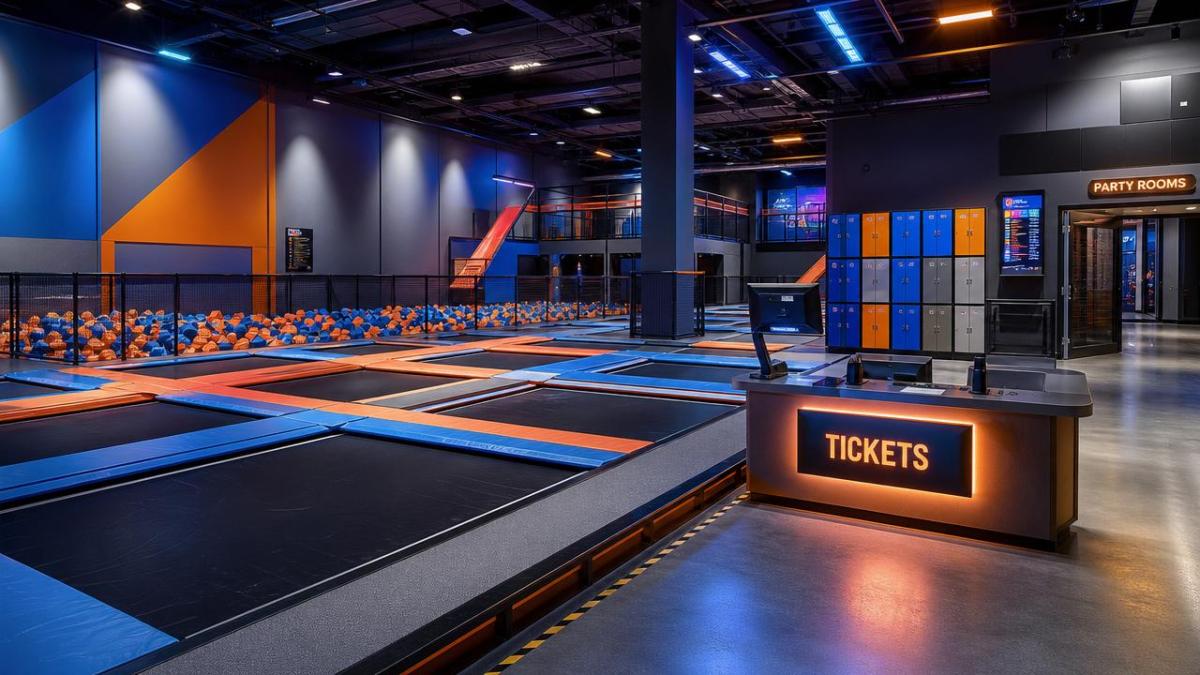
A practical industry overview of major pricing drivers
The table below summarizes the most common pricing drivers and how they affect financial evaluation.
Business value of understanding trampoline park price variance
For financial approvers, the value of understanding trampoline park price differences goes beyond saving money on one outing. It improves decision quality in three important ways.
First, it supports more accurate cost benchmarking. A venue charging a higher hourly rate may include grip socks, party-host labor, reserved rooms, or broader access zones. Without normalizing these line items, comparisons are incomplete. Finance teams that evaluate total delivered value rather than the headline rate avoid false savings.
Second, it helps with risk-adjusted budgeting. When children’s groups, school programs, or company-sponsored events are involved, safety is not a soft factor. It has direct financial implications through liability, reputation, and event continuity. A slightly higher trampoline park price may be justified if it materially lowers exposure.
Third, it improves vendor accountability. Operators that can clearly explain pricing usually also tend to have stronger internal controls. Transparent pricing structures, documented waivers, clear supervision ratios, and visible maintenance processes are all indicators that the business is run with discipline rather than reactive improvisation.
Common pricing models and what they mean for approval decisions
Not every trampoline park price is built the same way. Understanding the pricing model helps finance teams compare options on a like-for-like basis.
A common source of confusion is comparing a basic per-hour rate with a bundled event package. The visible trampoline park price may look higher, but the effective cost per participant may actually be lower once hosts, food, room access, and setup time are included.
Typical scenarios where price differences are justified
There are several situations where a higher trampoline park price is not only understandable but economically rational.
A downtown venue, for example, may serve customers who value convenience, transit access, and premium amenities. Higher lease and labor costs are built into the rate. A suburban park with lower overhead may charge less while still delivering solid value. Neither model is inherently better; they simply serve different cost environments.
Another example is age-specific design. Parks with toddler-safe areas, stricter supervision rules, and more controlled traffic flows may have different staffing and layout requirements than teen-focused, high-throughput venues. Pricing reflects that operational design choice.
Event complexity also matters. A basic walk-in visit and a managed private group event are very different products. Once dedicated coordinators, reserved areas, food service timing, and liability paperwork are involved, the trampoline park price becomes a service-management fee as much as an entertainment fee.
How finance approvers can evaluate price with more confidence
A disciplined review process helps separate justified pricing from weak value. Start by requesting an all-in breakdown: admission, socks, taxes, food minimums, room fees, supervision extras, and cancellation terms. A low advertised trampoline park price can become a high final invoice if add-ons are not visible early.
Next, assess operational indicators. Ask about staff-to-guest supervision, inspection routines, waiver procedures, and incident response. These details are practical proxies for whether pricing is backed by real operating standards. This is the same logic used in more technical sectors: measurable controls matter more than promotional language.
It is also useful to compare price per effective participant rather than price per listed package. If a package assumes a minimum headcount that your group will not meet, the apparent discount may not be real. Likewise, if one park includes broad attraction access while another requires upgrades, the base comparison is misleading.
Finally, document the non-price rationale behind approval. Convenience, lower risk, better supervision, and fewer hidden charges are all legitimate financial considerations. A good approval record explains why the selected trampoline park price delivered better total value, not just a lower visible number.
Frequently overlooked cost signals
Several signals are easy to overlook when reviewing options. Limited-time discounts may shift usage into crowded periods, affecting the experience and supervision quality. Deeply discounted admission may exclude the most popular attractions. In some cases, low prices are designed to recover margin through food, merchandise, or compulsory gear purchases.
Another hidden factor is maintenance timing. Operators that close sections for preventive upkeep may seem less convenient, but that discipline often reflects stronger asset management. A slightly higher trampoline park price may be paying for fewer surprises, safer operations, and more consistent service delivery over time.
A measured conclusion for budget planning
Trampoline park pricing varies more than expected because the business itself is more complex than it first appears. Insurance, labor, compliance, real estate, attraction mix, and service bundling all shape the final rate. For budget owners and approval teams, the most useful question is not whether one trampoline park price is simply high or low, but whether the price is coherent, transparent, and supported by real operational value.
When decisions are made with that framework, approvals become easier to justify and less vulnerable to hindsight criticism. In a market crowded with promotional claims, disciplined evaluation wins. Focus on documented inclusions, measurable operating practices, and total cost clarity. That approach turns trampoline park price comparison from a guessing exercise into a defensible financial decision.
If your team regularly reviews leisure, event, or family-oriented venue spending, build a standard checklist for comparing trampoline park price structures. A repeatable, data-minded review method reduces noise, supports accountability, and leads to stronger budget outcomes over time.
Search News
Hot Articles
- Carbon Fiber StructuresHow to Specify Aerospace Carbon Fiber Assemblies for Lightweight, Load-Bearing PartsJul 11, 2026
- Machine VisionXiaomi, Alibaba DAMO Academy Drive Open-Source Robotics Model Ecosystem, Lowering Algorithm Development Barriers for Overseas SMEs Adopting Chinese Robotics SolutionsMar 30, 2026
- Cobots & ArmsShanxi 'AI+' Conference Showcases Embodied Intelligence with Multinational Buyer Engagement: Key Industry ImplicationsMar 30, 2026
Popular Tags
Recommended News
 Jul 11, 2026How to Specify Aerospace Carbon Fiber Assemblies for Lightweight, Load-Bearing PartsAerospace carbon fiber assemblies: learn how to specify laminate design, load data, joining methods, and inspection controls for lighter, reliable load-bearing aerospace parts.Elena Rostova (UAV Systems Researcher)
 Mar 30, 2026Xiaomi, Alibaba DAMO Academy Drive Open-Source Robotics Model Ecosystem, Lowering Algorithm Development Barriers for Overseas SMEs Adopting Chinese Robotics SolutionsXiaomi & Alibaba DAMO Academy's open-source robotics models lower algorithm barriers for global SMEs. Boost efficiency in manufacturing, logistics & smart retail with ROS 2 compatible solutions.TSV Data Lab
 Mar 30, 2026Shanxi 'AI+' Conference Showcases Embodied Intelligence with Multinational Buyer Engagement: Key Industry ImplicationsShanxi 'AI+' Conference highlights embodied intelligence with Tesla, Ubtech & Jiantao showcasing multimodal robotics. 40+ global buyers validated tech on-site, creating new B2B channels for industrial automation & AI solutions.Chen Wei (Automation Lead Engineer)
 Mar 30, 2026Zhongguancun Unveils 6G Integrated Sensing-Computing-Intelligence Platform to Empower Embodied Robots for Global Industrial ApplicationsZhongguancun's new 6G platform revolutionizes industrial robotics with <10ms latency, empowering global automotive, logistics & port automation. Discover how this tech boosts China's smart manufacturing exports.TSV Data Lab
 Mar 30, 2026Mech-Mind Tianjin Embodied Intelligence R&D and Production Base Goes Live, Cutting Delivery Time by 20%–30% for Global Customized AMR+Vision SolutionsMech-Mind's Tianjin AMR+Vision production base cuts delivery time by 20%-30% for欧美 & Latin American markets. Discover how this PLd-certified facility accelerates customized robotics solutions for smart manufacturing and logistics.Chen Wei (Automation Lead Engineer)
 Mar 30, 2026Boao Forum Reveals 'Co-evolution of Big and Small Brains' Trend in Humanoid Robots, China's Embodied Intelligence Accelerates Adaptation to Overseas Manufacturing Service ScenariosDiscover how China's humanoid robots, featuring 'Co-evolution of Big and Small Brains,' are revolutionizing global manufacturing. Learn about Embodied Tian Gong 3.0's ISO compliance and overseas deployment at Boao Forum 2026.Chen Wei (Automation Lead Engineer)
 Mar 30, 2026China Railway Industrial Secures Patent for Embodied Robotics in Material Handling, Boosting High-Precision Delivery Capabilities for Overseas Infrastructure and Manufacturing ProjectsChina Railway Industrial's new patent for embodied robotics in material handling boosts high-precision delivery for global infrastructure & manufacturing. Discover how this innovation enhances logistics accuracy in automotive, rail transit & EPC projects.Chen Wei (Automation Lead Engineer)
 Sep 29, 2026ISO 9283 Repeatability: How to Evaluate Cobot Positioning PerformanceISO 9283 cobot repeatability explained: learn how payload, reach, approach direction, and test conditions affect positioning performance and cell capability.Chen Wei (Automation Lead Engineer)
 Sep 29, 2026How Do You Verify Servo Motor Torque Under Continuous Load?How do I verify servo motor torque under continuous load? Learn RMS torque checks, torque-speed limits, thermal derating, and real-machine testing.Chen Wei (Automation Lead Engineer)
 Sep 28, 2026Spindle Runout Measurement in Germany: DIN Standards, Methods, and Acceptance LimitsSpindle runout measurement Germany: explore DIN standards, proven methods, acceptance limits, and audit-ready practices for reliable machining quality.Dr. Marcus Vance
 Sep 27, 2026How to Select Wall-Mount Edge Devices for Space-Constrained Factory NetworksWall mount edge devices for space-constrained factories: evaluate workload, thermal design, power resilience, cable access, and network reliability for smarter deployments.TSV Data Lab
 Sep 26, 2026Machining Tolerance Analysis: How to Set Limits That Meet Function and Cost TargetsMachining tolerance analysis: learn how to set functional limits, control tolerance stacks, reduce inspection risk, and balance precision with production cost.Dr. Marcus Vance
 Sep 25, 2026How to Evaluate an Industrial Infrastructure Data Platform for Multi-Site OperationsIndustrial infrastructure data platform evaluation guide for multi-site operations: compare data quality, edge resilience, interoperability, governance, and scalable proof-of-value criteria.Victor Lin (Chief Software Architect)
 Sep 24, 2026How to Select Machine Vision Optics for Accurate Inspection at Different Working DistancesMachine vision optics selection guide for accurate inspection at every working distance. Compare FOV, pixel scale, DOF, distortion, lighting, and telecentric options.TSV Data Lab
 Sep 23, 2026How to Evaluate a Machine Vision System Integrator for High-Speed Inspection LinesChoose a machine vision system integrator with proven expertise in high-speed inspection, reliable reject timing, robust optics, and measurable acceptance criteria.TSV Data Lab
 Sep 29, 2026How MES and OEE work together to identify production lossesMES and OEE work together to uncover hidden production losses, connect downtime, speed, and quality data, and drive smarter shop-floor improvements.Victor Lin (Chief Software Architect)
 Sep 28, 2026When is a SCADA API the right choice for connecting plant systems?SCADA API guide: learn when governed plant data integration improves traceability, security, and scalability—without compromising real-time control.Victor Lin (Chief Software Architect)
 Sep 27, 2026How SCADA data integration improves traceability across production linesSCADA data integration connects production-line data to improve traceability, accelerate quality investigations, and strengthen safety decisions.Victor Lin (Chief Software Architect)
 Sep 26, 2026What to define before starting SCADA integration planningSCADA integration planning starts with clear scope, control boundaries, data models, cybersecurity, and testing. Discover the definitions that reduce risk and costly rework.Victor Lin (Chief Software Architect)
 Sep 25, 2026How a smart factory with Industrial IoT reduces production blind spotsDiscover how a smart factory with Industrial IoT turns real-time machine, quality, and workflow data into actionable insights that reduce production blind spots and delivery risks.Victor Lin (Chief Software Architect)
 Sep 24, 2026When does Industrial IoT make smart manufacturing easier to scale?Smart manufacturing Industrial IoT scales when trusted data, interoperable systems, and secure workflows turn connected assets into measurable gains.TSV Data Lab
 Sep 23, 2026What drives ultra-precision machining cost at 1-micron tolerance?Ultra precision machining cost per part at 1 micron tolerance depends on process, material, metrology, and yield. Learn how to compare quotes confidently.Dr. Marcus Vance
 Sep 22, 2026Drone Engine-T550CC Applications: Build the UAV Power System Around the MissionAn application guide for Drone Engine-T550CC integration, covering payload planning, airframe matching, cooling, fuel, vibration, test procedures, documentation, and service preparation.Elena Rostova (UAV Systems Researcher)
 Sep 22, 2026How to Evaluate Industrial Edge Computing Vendors for Factory DeploymentIndustrial edge computing vendor evaluation guide for factories: compare latency, protocol fit, reliability, security, and lifecycle support before deployment.TSV Data Lab