Why trampoline park price comparisons can be misleading
Publication Date
author
At first glance, trampoline park price comparisons seem like a simple shortcut to better purchasing decisions. For procurement teams, however, headline pricing often hides critical variables such as safety standards, equipment durability, maintenance scope, warranty terms, and long-term operating costs. This article explains why a lower quoted rate can distort true value assessment and why data-driven evaluation matters more than surface-level price gaps.
Why procurement teams need a checklist before trusting trampoline park price data
For buyers, a trampoline park price quote is rarely a complete commercial picture. A supplier may present an attractive number, but that number can reflect only the frame package, only selected jumping zones, or only a basic installation scope. In practice, procurement decisions depend on far more than the initial quote. Safety engineering, materials traceability, compliance documentation, freight conditions, and after-sales obligations all affect lifecycle value.
This is why trampoline park price comparisons can be misleading: they often compare unlike-for-unlike offers. One vendor may include reinforced padding, fire-retardant foam, design support, and maintenance training, while another excludes those items and appears cheaper on paper. Without a structured review method, procurement teams risk selecting a lower bid that later generates higher total cost, slower opening timelines, or elevated operational risk.
A checklist-driven approach improves decision quality. It helps buyers isolate measurable parameters, normalize quote content, and distinguish marketing claims from verifiable deliverables. For organizations that follow a data-first sourcing philosophy, this method also reduces supplier qualification noise and supports a cleaner apples-to-apples comparison.
Priority checklist: what to verify before comparing any trampoline park price
Before ranking suppliers by price, procurement teams should first standardize the scope of comparison. The following checklist can prevent false savings and expose hidden cost drivers.
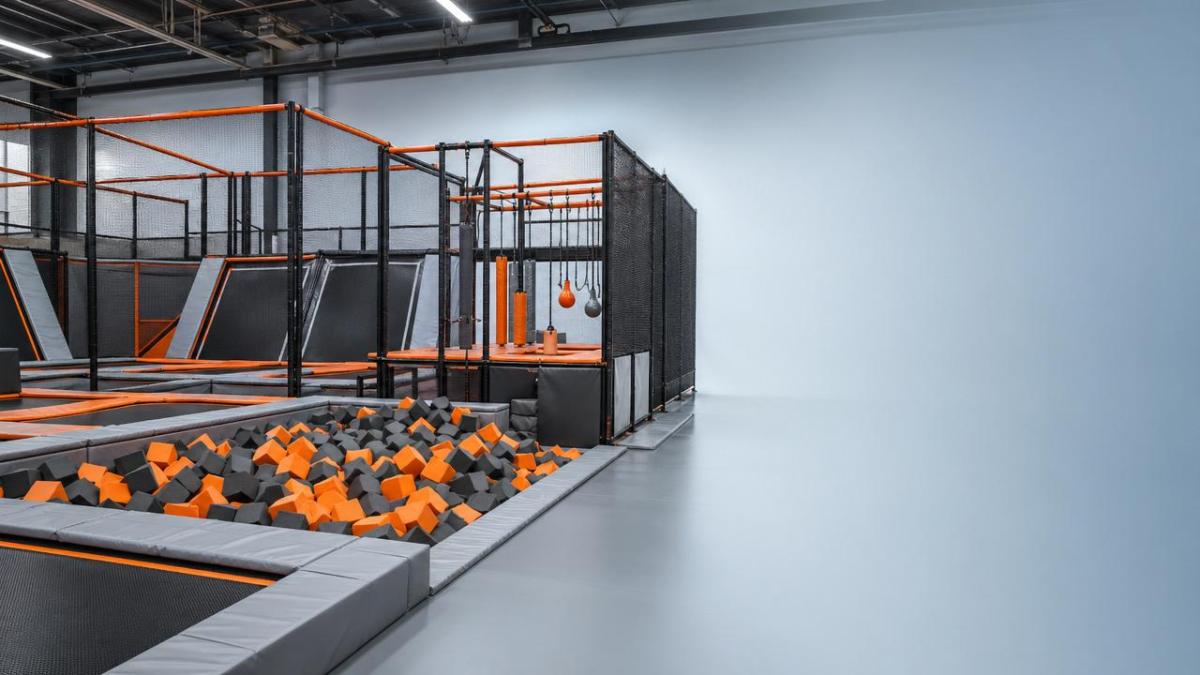
- Confirm the exact equipment scope. Verify whether the quote covers trampolines only, or also dodgeball zones, foam pits, climbing features, ninja courses, airbags, safety nets, and barrier systems.
- Check compliance standards. Ask which safety standards, testing reports, and quality control documents are included, and whether third-party verification is available.
- Review material specifications. Frame steel grade, spring type, pad density, fabric tensile strength, and anti-wear surface treatment can materially affect service life.
- Separate design from manufacturing. Some suppliers include layout engineering, load planning, and site adaptation; others charge extra after contract signature.
- Clarify installation responsibilities. Determine whether assembly labor, supervision, travel, local compliance coordination, and commissioning are included.
- Verify warranty scope. A longer warranty is not automatically better if key wear parts are excluded.
- Estimate spare parts and maintenance cost. A low initial trampoline park price can hide expensive replacement pads, springs, or proprietary components.
- Check lead time and logistics terms. Freight, customs, packaging method, insurance, and delivery schedule can significantly change the landed cost.
- Assess supplier support capacity. Training, inspection manuals, response time, and technical assistance matter for long-term operation.
If even one of these items is unclear, the trampoline park price being compared is incomplete. Procurement teams should freeze the technical baseline before discussing savings.
Use this comparison framework instead of headline trampoline park price quotes
A more reliable sourcing method is to convert each quote into comparable evaluation dimensions. Rather than asking only “Which supplier is cheapest?”, ask “Which supplier delivers the best risk-adjusted value at the required performance level?”
This framework allows a procurement team to score each offer on both price and technical completeness. In many cases, the supplier with the second-lowest trampoline park price becomes the strongest commercial choice once support, safety, and service life are measured properly.
The most common reasons trampoline park price comparisons become misleading
1. Quotes are based on different design assumptions
One supplier may quote against a conceptual drawing, while another uses a finalized site layout with exact dimensions and circulation requirements. That difference alone can distort trampoline park price analysis. A concept-stage quote may look efficient but can rise sharply after engineering adjustments.
2. Safety components are included unevenly
Padding thickness, netting quality, fall protection, fire resistance, and access control are not always quoted consistently. If one offer includes higher-grade safety systems, direct trampoline park price comparison becomes misleading unless the scope is normalized.
3. Durability is difficult to see in marketing documents
Two suppliers may describe their products as premium, but underlying materials can differ significantly. Lower-cost springs, weaker fabric stitching, or reduced frame treatment may shorten asset life. Procurement teams should request test data, expected maintenance intervals, and recommended replacement cycles rather than relying on sales language.
4. Freight and installation are often underestimated
The quoted trampoline park price may exclude overseas shipping, destination charges, customs duties, installation supervision, or local labor coordination. For international projects, these omissions can erase the apparent savings of the lowest supplier.
5. Warranty language can be commercially weak
Some warranties cover structural defects only, leaving high-wear items outside the support package. Others provide parts but not labor, or require long approval cycles before shipment. Procurement professionals should compare not only warranty duration but also claim conditions and fulfillment practicality.
Scenario-based checks: what different buyers should prioritize
Not every buying scenario evaluates trampoline park price in the same way. Procurement priorities change depending on business model, site maturity, and operating goals.
For new venue development
Focus on total project readiness. Buyers should confirm design support, local code awareness, installation planning, phased delivery capability, and startup training. A slightly higher trampoline park price may be justified if it reduces opening delays and contractor coordination risk.
For expansion of an existing park
Compatibility matters most. Check whether new modules align with existing dimensions, traffic flow, branding, maintenance routines, and spare parts inventory. In this scenario, the cheapest trampoline park price may create operational inconsistency and higher maintenance complexity.
For distributor or multi-site procurement
Standardization becomes critical. Compare supplier documentation quality, repeatability of manufacturing, batch consistency, export packaging, and support responsiveness across multiple deployments. Procurement teams should also examine whether volume discounts are tied to technical compromises.
Hidden cost items that should be added to every trampoline park price review
A disciplined sourcing process should expand beyond capital expenditure. The true cost of ownership often includes multiple downstream items that are absent from the initial offer.
- Site preparation adjustments, including floor leveling, anchoring requirements, and utility coordination.
- Inspection and recertification costs during operation.
- Periodic replacement of pads, springs, nets, foam blocks, or soft-play components.
- Operational downtime caused by delayed spare parts supply.
- Training needs for maintenance staff and frontline operators.
- Insurance implications if certification or documentation is incomplete.
- Brand risk and customer safety exposure if equipment quality is inconsistent.
When these elements are included, a low trampoline park price may no longer represent the best commercial outcome. Procurement teams should build a simple total-cost model covering acquisition, installation, operation, replacement, and support.
Practical execution guide: how to run a cleaner trampoline park price comparison process
To improve sourcing accuracy, procurement teams can follow a straightforward execution sequence.
- Issue a standardized RFQ with the same layout, performance requirements, accessories, compliance expectations, and delivery terms for all bidders.
- Require a line-by-line cost breakdown instead of a single bundled trampoline park price.
- Request technical data sheets, material descriptions, and reference projects with similar scale and use intensity.
- Score suppliers using weighted criteria such as safety, durability, service, lead time, and total cost of ownership.
- Identify exclusions explicitly and convert them into quantified adjustment costs.
- Validate post-installation support capacity before award, especially for cross-border sourcing.
This process aligns well with data-driven procurement practice. It reduces subjective judgment, exposes commercial gaps early, and creates an audit trail for why one supplier was selected over another.
FAQ: quick answers buyers ask about trampoline park price evaluation
Is the lowest trampoline park price ever the right choice?
Yes, but only when the quote is technically complete, safety-compliant, and supported by verifiable durability and service commitments. The lowest number alone is not enough.
What is the first document a buyer should request?
Start with a detailed scope matrix showing what is included, excluded, optional, and conditional. Without that, trampoline park price analysis lacks commercial precision.
How can procurement reduce misleading supplier comparisons?
Use a standardized specification package, demand comparable technical submissions, and calculate total ownership cost rather than purchase cost alone.
Final procurement recommendation
Trampoline park price should be treated as one decision variable, not the decision itself. For procurement professionals, the safer approach is to compare engineering scope, compliance, durability, installation responsibility, support depth, and expected operating cost side by side. That is how misleading price gaps are filtered out.
If your organization is moving to the next sourcing stage, prioritize collecting these inputs before supplier negotiation: finalized site dimensions, required attractions, target safety standard, expected visitor intensity, installation timeline, warranty expectations, spare parts strategy, and landed budget assumptions. With those parameters clearly defined, trampoline park price becomes a useful benchmark instead of a misleading shortcut.
Search News
Hot Articles
- Carbon Fiber StructuresHow to Specify Aerospace Carbon Fiber Assemblies for Lightweight, Load-Bearing PartsJul 11, 2026
- Machine VisionXiaomi, Alibaba DAMO Academy Drive Open-Source Robotics Model Ecosystem, Lowering Algorithm Development Barriers for Overseas SMEs Adopting Chinese Robotics SolutionsMar 30, 2026
- Cobots & ArmsShanxi 'AI+' Conference Showcases Embodied Intelligence with Multinational Buyer Engagement: Key Industry ImplicationsMar 30, 2026
Popular Tags
Recommended News
 Jul 11, 2026How to Specify Aerospace Carbon Fiber Assemblies for Lightweight, Load-Bearing PartsAerospace carbon fiber assemblies: learn how to specify laminate design, load data, joining methods, and inspection controls for lighter, reliable load-bearing aerospace parts.Elena Rostova (UAV Systems Researcher)
 Mar 30, 2026Xiaomi, Alibaba DAMO Academy Drive Open-Source Robotics Model Ecosystem, Lowering Algorithm Development Barriers for Overseas SMEs Adopting Chinese Robotics SolutionsXiaomi & Alibaba DAMO Academy's open-source robotics models lower algorithm barriers for global SMEs. Boost efficiency in manufacturing, logistics & smart retail with ROS 2 compatible solutions.TSV Data Lab
 Mar 30, 2026Shanxi 'AI+' Conference Showcases Embodied Intelligence with Multinational Buyer Engagement: Key Industry ImplicationsShanxi 'AI+' Conference highlights embodied intelligence with Tesla, Ubtech & Jiantao showcasing multimodal robotics. 40+ global buyers validated tech on-site, creating new B2B channels for industrial automation & AI solutions.Chen Wei (Automation Lead Engineer)
 Mar 30, 2026Zhongguancun Unveils 6G Integrated Sensing-Computing-Intelligence Platform to Empower Embodied Robots for Global Industrial ApplicationsZhongguancun's new 6G platform revolutionizes industrial robotics with <10ms latency, empowering global automotive, logistics & port automation. Discover how this tech boosts China's smart manufacturing exports.TSV Data Lab
 Mar 30, 2026Mech-Mind Tianjin Embodied Intelligence R&D and Production Base Goes Live, Cutting Delivery Time by 20%–30% for Global Customized AMR+Vision SolutionsMech-Mind's Tianjin AMR+Vision production base cuts delivery time by 20%-30% for欧美 & Latin American markets. Discover how this PLd-certified facility accelerates customized robotics solutions for smart manufacturing and logistics.Chen Wei (Automation Lead Engineer)
 Mar 30, 2026Boao Forum Reveals 'Co-evolution of Big and Small Brains' Trend in Humanoid Robots, China's Embodied Intelligence Accelerates Adaptation to Overseas Manufacturing Service ScenariosDiscover how China's humanoid robots, featuring 'Co-evolution of Big and Small Brains,' are revolutionizing global manufacturing. Learn about Embodied Tian Gong 3.0's ISO compliance and overseas deployment at Boao Forum 2026.Chen Wei (Automation Lead Engineer)
 Mar 30, 2026China Railway Industrial Secures Patent for Embodied Robotics in Material Handling, Boosting High-Precision Delivery Capabilities for Overseas Infrastructure and Manufacturing ProjectsChina Railway Industrial's new patent for embodied robotics in material handling boosts high-precision delivery for global infrastructure & manufacturing. Discover how this innovation enhances logistics accuracy in automotive, rail transit & EPC projects.Chen Wei (Automation Lead Engineer)
 Sep 28, 2026Spindle Runout Measurement in Germany: DIN Standards, Methods, and Acceptance LimitsSpindle runout measurement Germany: explore DIN standards, proven methods, acceptance limits, and audit-ready practices for reliable machining quality.Dr. Marcus Vance
 Sep 27, 2026How to Select Wall-Mount Edge Devices for Space-Constrained Factory NetworksWall mount edge devices for space-constrained factories: evaluate workload, thermal design, power resilience, cable access, and network reliability for smarter deployments.TSV Data Lab
 Sep 26, 2026Machining Tolerance Analysis: How to Set Limits That Meet Function and Cost TargetsMachining tolerance analysis: learn how to set functional limits, control tolerance stacks, reduce inspection risk, and balance precision with production cost.Dr. Marcus Vance
 Sep 25, 2026How to Evaluate an Industrial Infrastructure Data Platform for Multi-Site OperationsIndustrial infrastructure data platform evaluation guide for multi-site operations: compare data quality, edge resilience, interoperability, governance, and scalable proof-of-value criteria.Victor Lin (Chief Software Architect)
 Sep 24, 2026How to Select Machine Vision Optics for Accurate Inspection at Different Working DistancesMachine vision optics selection guide for accurate inspection at every working distance. Compare FOV, pixel scale, DOF, distortion, lighting, and telecentric options.TSV Data Lab
 Sep 23, 2026How to Evaluate a Machine Vision System Integrator for High-Speed Inspection LinesChoose a machine vision system integrator with proven expertise in high-speed inspection, reliable reject timing, robust optics, and measurable acceptance criteria.TSV Data Lab
 Sep 28, 2026When is a SCADA API the right choice for connecting plant systems?SCADA API guide: learn when governed plant data integration improves traceability, security, and scalability—without compromising real-time control.Victor Lin (Chief Software Architect)
 Sep 27, 2026How SCADA data integration improves traceability across production linesSCADA data integration connects production-line data to improve traceability, accelerate quality investigations, and strengthen safety decisions.Victor Lin (Chief Software Architect)
 Sep 26, 2026What to define before starting SCADA integration planningSCADA integration planning starts with clear scope, control boundaries, data models, cybersecurity, and testing. Discover the definitions that reduce risk and costly rework.Victor Lin (Chief Software Architect)
 Sep 25, 2026How a smart factory with Industrial IoT reduces production blind spotsDiscover how a smart factory with Industrial IoT turns real-time machine, quality, and workflow data into actionable insights that reduce production blind spots and delivery risks.Victor Lin (Chief Software Architect)
 Sep 24, 2026When does Industrial IoT make smart manufacturing easier to scale?Smart manufacturing Industrial IoT scales when trusted data, interoperable systems, and secure workflows turn connected assets into measurable gains.TSV Data Lab
 Sep 23, 2026What drives ultra-precision machining cost at 1-micron tolerance?Ultra precision machining cost per part at 1 micron tolerance depends on process, material, metrology, and yield. Learn how to compare quotes confidently.Dr. Marcus Vance
 Sep 22, 2026Drone Engine-T550CC Applications: Build the UAV Power System Around the MissionAn application guide for Drone Engine-T550CC integration, covering payload planning, airframe matching, cooling, fuel, vibration, test procedures, documentation, and service preparation.Elena Rostova (UAV Systems Researcher)
 Sep 22, 2026How to Evaluate Industrial Edge Computing Vendors for Factory DeploymentIndustrial edge computing vendor evaluation guide for factories: compare latency, protocol fit, reliability, security, and lifecycle support before deployment.TSV Data Lab
 Sep 21, 2026Drone Payload Integration: Matching Power, Data, and Center of Gravity for Reliable FlightsDrone payload integration made practical: balance power, data, center of gravity, and endurance to build safer, more reliable mission-ready flights.Elena Rostova (UAV Systems Researcher)
 Sep 20, 2026Autonomous Navigation Pricing: Cost Drivers and Budget Benchmarks for AMR ProjectsAutonomous navigation price explained: compare AMR cost drivers, software, sensors, integration, safety, and lifecycle budgets to build a scalable project plan.Chen Wei (Automation Lead Engineer)
 Sep 19, 2026How to Scope Automation Integration Services for Multi-System Factory ProjectsAutomation integration services: learn how to scope multi-system factory projects with clear workflows, interface contracts, safety boundaries, and acceptance criteria.Victor Lin (Chief Software Architect)