Why Cheap Trampoline Park Parts Raise Long-Term Costs
Publication Date
author
Choosing cheap trampoline park parts may look like a smart way to reduce upfront spending, but for financial approvers, the real question is total cost over time. Lower-grade components often lead to more frequent repairs, safety liabilities, operational downtime, and faster replacement cycles. This article examines why cost-focused sourcing decisions can quietly erode margins and why data-backed procurement standards matter for long-term financial control.
Understanding the Real Scope of Trampoline Park Parts
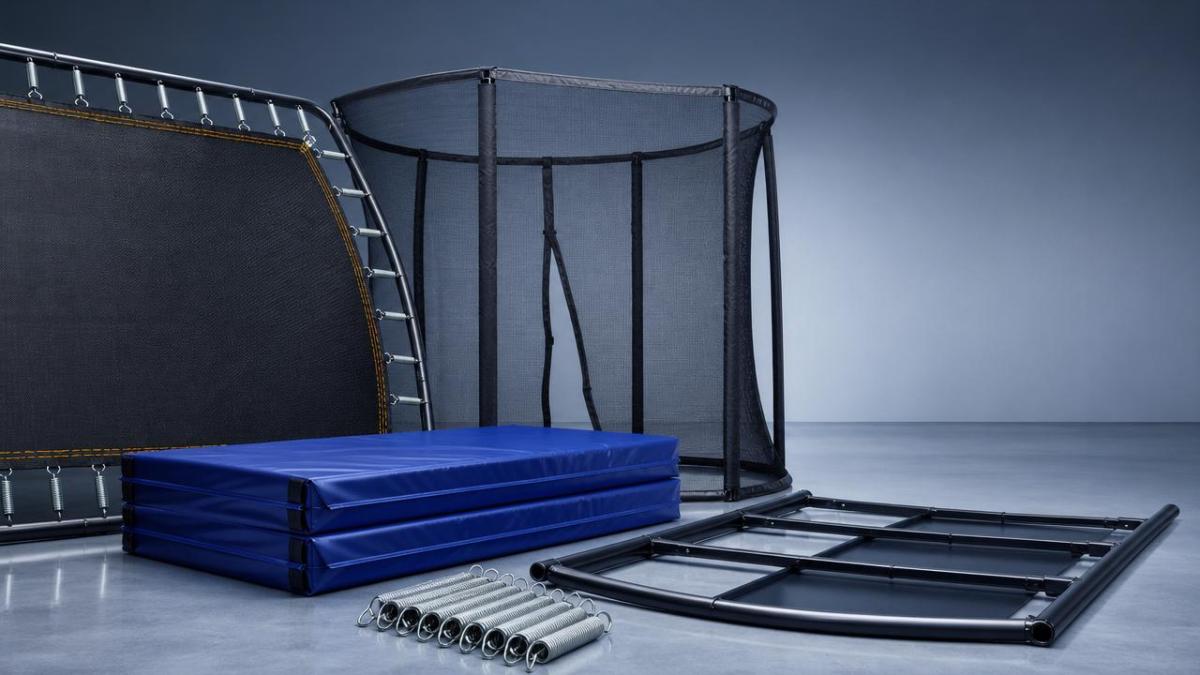
For budget holders, trampoline park parts are not just replacement items such as springs, pads, jump mats, foam pit elements, frame connectors, or netting. They are operating assets tied directly to uptime, insurance exposure, customer safety, labor efficiency, and brand reputation. A trampoline park may seem like a leisure venue, but from a finance perspective it functions like a high-cycle mechanical environment where repetitive stress, impact absorption, and wear patterns must be monitored with discipline.
This is why the conversation cannot stop at purchase price. Two parts can appear similar in catalog photos yet perform very differently under daily load. Material density, stitching quality, spring fatigue resistance, weld consistency, surface coating, and dimensional accuracy all influence service life. When low-cost parts enter the system, they often create hidden downstream costs that do not appear on the initial invoice but surface later in maintenance budgets, claims management, and revenue interruptions.
For financial approvers, the practical issue is straightforward: whether cheap trampoline park parts reduce total expenditure or simply delay larger expenses into future quarters. In most cases, the latter is true.
Why the Industry Pays Attention to Quality Benchmarks
Across facility-based entertainment, procurement decisions are under pressure from inflation, competitive pricing, and seasonal cash flow swings. That environment encourages managers to search for lower-cost trampoline park parts. However, the operating context of a trampoline park is unusually unforgiving. Components face constant dynamic loading from users of different weights, jump styles, and usage frequencies. Unlike decorative items or low-touch consumables, these parts absorb force repeatedly and must maintain predictable performance over time.
Data-driven organizations such as TechStat Vanguard emphasize a simple principle that also applies here: parameters matter more than marketing claims. In a category where suppliers may describe products as “heavy duty” or “premium” without clear evidence, financial decision-makers need measurable inputs. What is the tested fatigue cycle of the springs? What is the foam density? How does the pad material respond to abrasion, UV exposure, sweat, and cleaning chemicals? What tolerance variation exists across attachment points? Without these answers, the finance team is not buying value; it is buying uncertainty.
Cheap parts become expensive when they introduce volatility into a business model that depends on safe, continuous operation. The shorter the performance window, the faster maintenance costs compound.
Where Long-Term Costs Usually Appear
The hidden cost profile of low-grade trampoline park parts usually develops in five areas. First, there is accelerated replacement frequency. A lower-cost mat or spring assembly may need replacement far earlier than a properly engineered alternative, creating recurring purchasing and installation labor.
Second, there is preventive and corrective maintenance overhead. When part consistency is poor, technicians spend more time inspecting, adjusting, and responding to minor failures. That labor burden is often underestimated because it is dispersed across routine operations rather than captured as a single major expense.
Third, downtime damages revenue. If a court, foam pit lane, or performance zone is closed for repair, the park loses capacity during peak demand periods. The cost is not limited to the repair ticket; it includes missed admissions, dissatisfied guests, and reduced repeat visits.
Fourth, weaker components increase risk exposure. Inadequate padding, stretched netting, unstable connectors, or inconsistent spring performance can raise incident probability. Even when incidents are minor, reporting, staff response, guest compensation, and insurer scrutiny all create financial drag.
Fifth, procurement inconsistency creates system inefficiency. When operators buy whatever is cheapest each time, they often end up with mixed specifications across the venue. That complicates maintenance inventory, technician training, and inspection procedures.
Industry Overview: Cost Drivers Behind Trampoline Park Parts
A useful way to evaluate trampoline park parts is to connect each part category to its main financial impact. This helps financial approvers move beyond unit pricing and focus on cost behavior across the asset lifecycle.
This overview shows why the cheapest visible price often masks the most expensive performance profile. In high-traffic facilities, every weak component increases the total cost of ownership.
The Business Meaning for Financial Approvers
Financial approvers are typically evaluated on budget control, return on capital, compliance support, and risk reduction. Seen through that lens, trampoline park parts should be assessed like revenue-protecting infrastructure rather than discretionary spending. A durable part preserves operating continuity. A poorly specified part creates recurring budget noise.
The most important concept is lifecycle cost. If a lower-priced component lasts half as long, needs more technician hours, and creates more closures, its accounting value collapses quickly. Even small quality gaps become meaningful because usage frequency is high. In parks with strong visitor flow, one extra replacement cycle across multiple zones can eliminate the apparent savings of bargain sourcing.
There is also an audit and governance angle. Procurement decisions backed by technical specifications, test documentation, and vendor traceability are easier to defend internally than decisions based only on low quotes. When incidents, warranty disputes, or insurance reviews occur, documented procurement discipline matters.
Typical Scenarios Where Cheap Parts Create Compounding Losses
Not every venue experiences the same risk pattern. The impact of low-cost trampoline park parts depends on park size, traffic intensity, maintenance maturity, and customer expectations. Still, several common scenarios appear repeatedly.
In each case, the part itself is only the starting point. The true cost comes from the chain reaction around it.
What to Evaluate Before Approving Trampoline Park Parts
A strong approval process does not require engineering complexity for its own sake. It requires a short list of measurable standards. Before approving trampoline park parts, finance teams should request evidence in several areas.
Start with material and performance data. Ask for test results related to fatigue life, tensile behavior, density, abrasion resistance, and corrosion protection where relevant. Continue with dimensional consistency and compatibility. Parts that do not fit precisely can create installation delays, uneven wear, or unsafe loading patterns. Then verify traceability: batch identification, manufacturing controls, and warranty terms should be clear enough to support future claims.
It is also wise to compare projected cost per service month rather than cost per unit. This simple shift changes the decision framework. A part that costs more initially but delivers longer operating life and fewer closures is often the financially superior choice. In line with TSV’s broader philosophy, decisions improve when parameters replace vague claims.
Practical Procurement Guidance for Better Long-Term Control
For organizations that want tighter financial control, a practical sourcing model for trampoline park parts should include three layers. First, define a minimum technical standard for each critical part family. This prevents low-spec substitutions during price negotiations. Second, track field performance after installation. Maintenance records, failure rates, and replacement intervals should feed future purchasing decisions. Third, consolidate approved suppliers where possible to improve consistency, accountability, and forecasting accuracy.
Another useful practice is to classify parts by operational criticality. Components tied directly to user impact and structural safety deserve stricter review than low-risk accessories. This approach helps finance teams allocate scrutiny where the cost of failure is highest.
Finally, budget owners should resist false savings created by quarter-end pressure. Cheap sourcing can make a monthly report look efficient while pushing much larger liabilities into later periods. Good procurement protects earnings quality, not just purchase price optics.
Conclusion: Lower Unit Cost Is Not Lower Total Cost
The financial case is clear: cheap trampoline park parts often raise long-term costs through faster wear, higher labor input, more downtime, and greater risk exposure. For financial approvers, the right question is not “What is the lowest quote?” but “Which specification delivers the most reliable cost outcome over time?”
When procurement decisions are grounded in verified performance data, lifecycle thinking, and operational traceability, businesses gain stronger margin protection and fewer unpleasant surprises. If your organization is reviewing replacement strategies, vendor standards, or capital planning for park infrastructure, now is the time to build a data-backed framework for evaluating trampoline park parts. Better standards today usually mean lower total cost tomorrow.
Search News
Hot Articles
- Carbon Fiber StructuresHow to Specify Aerospace Carbon Fiber Assemblies for Lightweight, Load-Bearing PartsJul 11, 2026
- Machine VisionXiaomi, Alibaba DAMO Academy Drive Open-Source Robotics Model Ecosystem, Lowering Algorithm Development Barriers for Overseas SMEs Adopting Chinese Robotics SolutionsMar 30, 2026
- Cobots & ArmsShanxi 'AI+' Conference Showcases Embodied Intelligence with Multinational Buyer Engagement: Key Industry ImplicationsMar 30, 2026
Popular Tags
Recommended News
 Jul 11, 2026How to Specify Aerospace Carbon Fiber Assemblies for Lightweight, Load-Bearing PartsAerospace carbon fiber assemblies: learn how to specify laminate design, load data, joining methods, and inspection controls for lighter, reliable load-bearing aerospace parts.Elena Rostova (UAV Systems Researcher)
 Mar 30, 2026Xiaomi, Alibaba DAMO Academy Drive Open-Source Robotics Model Ecosystem, Lowering Algorithm Development Barriers for Overseas SMEs Adopting Chinese Robotics SolutionsXiaomi & Alibaba DAMO Academy's open-source robotics models lower algorithm barriers for global SMEs. Boost efficiency in manufacturing, logistics & smart retail with ROS 2 compatible solutions.TSV Data Lab
 Mar 30, 2026Shanxi 'AI+' Conference Showcases Embodied Intelligence with Multinational Buyer Engagement: Key Industry ImplicationsShanxi 'AI+' Conference highlights embodied intelligence with Tesla, Ubtech & Jiantao showcasing multimodal robotics. 40+ global buyers validated tech on-site, creating new B2B channels for industrial automation & AI solutions.Chen Wei (Automation Lead Engineer)
 Mar 30, 2026Zhongguancun Unveils 6G Integrated Sensing-Computing-Intelligence Platform to Empower Embodied Robots for Global Industrial ApplicationsZhongguancun's new 6G platform revolutionizes industrial robotics with <10ms latency, empowering global automotive, logistics & port automation. Discover how this tech boosts China's smart manufacturing exports.TSV Data Lab
 Mar 30, 2026Mech-Mind Tianjin Embodied Intelligence R&D and Production Base Goes Live, Cutting Delivery Time by 20%–30% for Global Customized AMR+Vision SolutionsMech-Mind's Tianjin AMR+Vision production base cuts delivery time by 20%-30% for欧美 & Latin American markets. Discover how this PLd-certified facility accelerates customized robotics solutions for smart manufacturing and logistics.Chen Wei (Automation Lead Engineer)
 Mar 30, 2026Boao Forum Reveals 'Co-evolution of Big and Small Brains' Trend in Humanoid Robots, China's Embodied Intelligence Accelerates Adaptation to Overseas Manufacturing Service ScenariosDiscover how China's humanoid robots, featuring 'Co-evolution of Big and Small Brains,' are revolutionizing global manufacturing. Learn about Embodied Tian Gong 3.0's ISO compliance and overseas deployment at Boao Forum 2026.Chen Wei (Automation Lead Engineer)
 Mar 30, 2026China Railway Industrial Secures Patent for Embodied Robotics in Material Handling, Boosting High-Precision Delivery Capabilities for Overseas Infrastructure and Manufacturing ProjectsChina Railway Industrial's new patent for embodied robotics in material handling boosts high-precision delivery for global infrastructure & manufacturing. Discover how this innovation enhances logistics accuracy in automotive, rail transit & EPC projects.Chen Wei (Automation Lead Engineer)
 Sep 28, 2026Spindle Runout Measurement in Germany: DIN Standards, Methods, and Acceptance LimitsSpindle runout measurement Germany: explore DIN standards, proven methods, acceptance limits, and audit-ready practices for reliable machining quality.Dr. Marcus Vance
 Sep 27, 2026How to Select Wall-Mount Edge Devices for Space-Constrained Factory NetworksWall mount edge devices for space-constrained factories: evaluate workload, thermal design, power resilience, cable access, and network reliability for smarter deployments.TSV Data Lab
 Sep 26, 2026Machining Tolerance Analysis: How to Set Limits That Meet Function and Cost TargetsMachining tolerance analysis: learn how to set functional limits, control tolerance stacks, reduce inspection risk, and balance precision with production cost.Dr. Marcus Vance
 Sep 25, 2026How to Evaluate an Industrial Infrastructure Data Platform for Multi-Site OperationsIndustrial infrastructure data platform evaluation guide for multi-site operations: compare data quality, edge resilience, interoperability, governance, and scalable proof-of-value criteria.Victor Lin (Chief Software Architect)
 Sep 24, 2026How to Select Machine Vision Optics for Accurate Inspection at Different Working DistancesMachine vision optics selection guide for accurate inspection at every working distance. Compare FOV, pixel scale, DOF, distortion, lighting, and telecentric options.TSV Data Lab
 Sep 23, 2026How to Evaluate a Machine Vision System Integrator for High-Speed Inspection LinesChoose a machine vision system integrator with proven expertise in high-speed inspection, reliable reject timing, robust optics, and measurable acceptance criteria.TSV Data Lab
 Sep 28, 2026When is a SCADA API the right choice for connecting plant systems?SCADA API guide: learn when governed plant data integration improves traceability, security, and scalability—without compromising real-time control.Victor Lin (Chief Software Architect)
 Sep 27, 2026How SCADA data integration improves traceability across production linesSCADA data integration connects production-line data to improve traceability, accelerate quality investigations, and strengthen safety decisions.Victor Lin (Chief Software Architect)
 Sep 26, 2026What to define before starting SCADA integration planningSCADA integration planning starts with clear scope, control boundaries, data models, cybersecurity, and testing. Discover the definitions that reduce risk and costly rework.Victor Lin (Chief Software Architect)
 Sep 25, 2026How a smart factory with Industrial IoT reduces production blind spotsDiscover how a smart factory with Industrial IoT turns real-time machine, quality, and workflow data into actionable insights that reduce production blind spots and delivery risks.Victor Lin (Chief Software Architect)
 Sep 24, 2026When does Industrial IoT make smart manufacturing easier to scale?Smart manufacturing Industrial IoT scales when trusted data, interoperable systems, and secure workflows turn connected assets into measurable gains.TSV Data Lab
 Sep 23, 2026What drives ultra-precision machining cost at 1-micron tolerance?Ultra precision machining cost per part at 1 micron tolerance depends on process, material, metrology, and yield. Learn how to compare quotes confidently.Dr. Marcus Vance
 Sep 22, 2026Drone Engine-T550CC Applications: Build the UAV Power System Around the MissionAn application guide for Drone Engine-T550CC integration, covering payload planning, airframe matching, cooling, fuel, vibration, test procedures, documentation, and service preparation.Elena Rostova (UAV Systems Researcher)
 Sep 22, 2026How to Evaluate Industrial Edge Computing Vendors for Factory DeploymentIndustrial edge computing vendor evaluation guide for factories: compare latency, protocol fit, reliability, security, and lifecycle support before deployment.TSV Data Lab
 Sep 21, 2026Drone Payload Integration: Matching Power, Data, and Center of Gravity for Reliable FlightsDrone payload integration made practical: balance power, data, center of gravity, and endurance to build safer, more reliable mission-ready flights.Elena Rostova (UAV Systems Researcher)
 Sep 20, 2026Autonomous Navigation Pricing: Cost Drivers and Budget Benchmarks for AMR ProjectsAutonomous navigation price explained: compare AMR cost drivers, software, sensors, integration, safety, and lifecycle budgets to build a scalable project plan.Chen Wei (Automation Lead Engineer)
 Sep 19, 2026How to Scope Automation Integration Services for Multi-System Factory ProjectsAutomation integration services: learn how to scope multi-system factory projects with clear workflows, interface contracts, safety boundaries, and acceptance criteria.Victor Lin (Chief Software Architect)