Trampoline Park Equipment Features That Affect Daily Revenue
Publication Date
author
For business evaluators, trampoline park equipment is not just a capital expense—it directly shapes daily revenue, guest flow, safety perception, and repeat visits. From layout efficiency and attraction mix to durability and maintenance intervals, the right equipment features can influence how many customers you serve and how profitably you operate. This article examines the key factors that turn equipment decisions into measurable financial performance.
In practical B2B assessment, revenue is rarely determined by ticket price alone. It is driven by throughput per hour, utilization of floor area, downtime frequency, staffing burden, and the ability of trampoline park equipment to support multiple age groups without creating safety bottlenecks. For evaluators comparing suppliers or investment models, the question is not simply which setup looks attractive, but which equipment features convert square meters, labor hours, and maintenance budgets into stable daily cash flow.
A data-first review is especially important in an environment where marketing claims often blur the real procurement picture. Following the logic of engineering-based evaluation, decision-makers should look at measurable variables: frame durability, spring or elastic component replacement cycles, queue distribution, modular expansion options, inspection access, and the ratio between active play capacity and supervision requirements. These details have a direct effect on revenue per guest and revenue per operating hour.
How Trampoline Park Equipment Influences Daily Revenue Mechanics
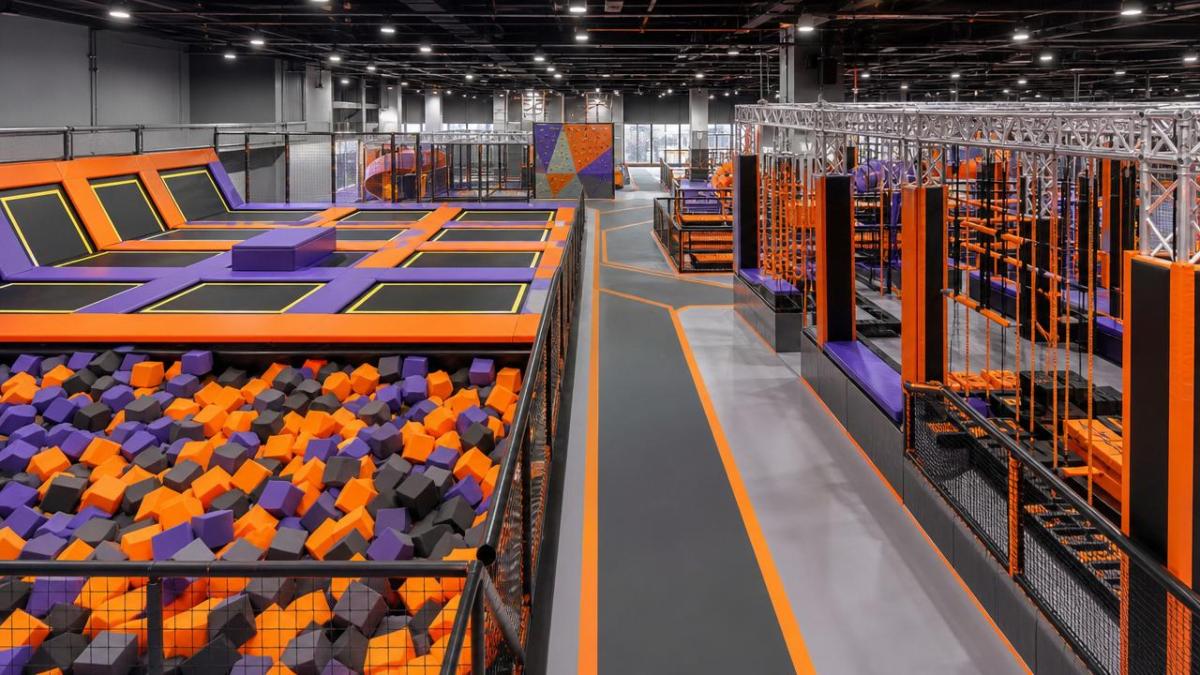
When investors review trampoline park equipment, the first revenue lens should be operating mechanics. An indoor park may run 8–14 hours per day, but only a portion of that time produces peak revenue. Equipment that supports faster guest turnover, balanced traffic distribution, and broad demographic appeal can lift usable capacity by 15%–30% without increasing rent. That is why hardware selection is a revenue model decision, not only a construction decision.
Throughput Capacity and Guest Flow
Daily revenue depends heavily on how many guests can use the space safely within each 30-minute or 60-minute session. Standard open jump zones create volume, but they often produce lower per-square-meter monetization than mixed layouts that combine free jump, dodgeball, foam pit, climbing, and ninja-style elements. A balanced attraction mix reduces crowd concentration and improves circulation, which can lower queue time by 10–20 minutes during peak periods.
For business evaluators, one useful benchmark is active participation density. If trampoline park equipment allows only 1 user per 4–5 square meters in core zones, revenue potential can plateau quickly. By contrast, integrated layouts with staggered attractions, angled transitions, and peripheral challenge zones can support more distributed engagement without visibly overcrowding the park. This improves guest satisfaction and lowers refund or complaint risk during high-demand weekends.
Key throughput indicators to review
- Average guest capacity per session block, such as 40, 80, or 120 users
- Peak queue time at anchor attractions, ideally under 8–12 minutes
- Session turnover interval between groups, often 5–10 minutes
- Share of floor area generating premium experience versus basic jump use
- Staff-to-zone ratio required for safe supervision during full occupancy
Attraction Mix and Revenue Layering
Not all trampoline park equipment contributes equally to monetization. Core trampoline beds support basic admission, but add-on zones often drive higher average ticket value, party bookings, and repeat visits. Equipment that supports three revenue layers—general admission, event packages, and premium challenges—typically performs better than a single-function layout. For example, foam pits and interactive walls may extend average dwell time, while battle beams and performance zones improve social media visibility and group participation.
The strongest layouts usually serve at least 3 customer segments: children under 10, family groups, and teens or young adults seeking higher-intensity activity. If trampoline park equipment only appeals to one segment, utilization becomes uneven across weekdays, weekends, and school holiday periods. Multi-segment appeal stabilizes occupancy and can improve booking resilience during off-peak hours.
The table below shows how common equipment features can affect revenue logic from an evaluator’s perspective.
The key conclusion is that trampoline park equipment should be reviewed as a system rather than isolated components. A park with fewer but better-distributed attractions may outperform a larger park with congested anchor zones. Revenue grows when equipment supports capacity, circulation, and segment diversity at the same time.
Equipment Features That Reduce Downtime and Protect Margin
High revenue days can be undermined by avoidable maintenance events. For business evaluators, the durability profile of trampoline park equipment is just as important as its guest appeal. If frame joints loosen too often, pads degrade within 6–12 months, or springs require frequent replacement under standard usage, operating margin can erode quickly through closures, emergency labor, and lost session capacity.
Material Durability and Replacement Cycles
A serious assessment should compare wear components across expected maintenance intervals. Typical review points include frame steel thickness, anti-corrosion treatment, padding density, stitching strength, jump mat wear resistance, and the replacement accessibility of springs or elastic assemblies. Even a 2-hour unscheduled closure on a weekend can represent a meaningful loss if the facility operates near full booking.
Evaluators should ask for practical service-life ranges under standard commercial use. For example, some surface pads may require inspection every 1–2 weeks and replacement every 9–18 months depending on traffic intensity. Jump mats may have longer cycles, often 18–36 months, but only if cleaning, tension balance, and load distribution are properly managed. The procurement focus should be predictable lifecycle cost, not just lower initial purchase price.
Common margin pressure points
- High-frequency wear parts with difficult access for replacement
- Poor pad fastening systems that increase daily inspection time
- Frame designs that complicate zone isolation during repair
- Attractions that require specialized labor for routine maintenance
- Equipment layouts that force full-zone shutdown instead of partial service
Maintenance Accessibility and Inspection Efficiency
The best trampoline park equipment is not only strong; it is maintainable. Inspection efficiency matters because commercial parks often conduct daily visual checks, weekly functional checks, and deeper monthly reviews. If access panels, fastening points, or under-structure inspection routes are poorly designed, labor time expands. Across a month, an extra 20–30 minutes per day can become a significant overhead burden.
For operators running 25–31 days per month, maintenance-friendly construction has measurable financial value. Quick-access design can shorten inspection routines, reduce technician fatigue, and support more reliable preventive maintenance. That lowers the probability of unplanned closures and protects both brand perception and revenue continuity.
The following table helps evaluators compare lifecycle-oriented equipment characteristics rather than only headline pricing.
A lower upfront quote can become more expensive over a 3–5 year operating period if replacement cycles are short or maintenance access is poor. Evaluators should convert technical design details into lifecycle cost assumptions before approving a supplier shortlist.
Layout Efficiency, Safety Perception, and Conversion Outcomes
Trampoline park equipment affects revenue not only through capacity and durability, but also through customer confidence. Parents, school groups, and event organizers often make fast judgments based on visual order, separation between age groups, visibility for supervisors, and the apparent condition of pads and barriers. Equipment design therefore influences conversion before the first jump even begins.
Safety-Oriented Design as a Sales Variable
In commercial evaluation, safety should be treated as a revenue enabler rather than a compliance cost. Clear lane definition, impact absorption features, protected transition edges, and sightline-friendly layouts make staff intervention faster and customer hesitation lower. If adult visitors or parents perceive the venue as chaotic, repeat purchase rates can decline regardless of attraction variety.
Good trampoline park equipment supports visual trust. Examples include consistent padding coverage, well-marked entry and exit points, soft-containment around high-energy zones, and separation between novice and advanced activity areas. These features can improve group sales performance because schools and corporate organizers typically assess controllability and supervision practicality before they assess entertainment value.
Conversion-sensitive layout questions
- Can staff monitor 3–5 active zones without blind spots?
- Are toddler, family, and advanced-user areas clearly separated?
- Do queues form outside high-impact landing paths?
- Can spectators observe key areas without blocking traffic?
- Does the layout support party groups without disrupting public sessions?
Floor Area Productivity and Revenue Per Zone
Another core issue is floor productivity. A park may have 800, 1,500, or 3,000 square meters, but revenue depends on how effectively trampoline park equipment converts that area into sellable experiences. Business evaluators should estimate which zones generate base admission, which support premium packages, and which mainly serve visual or traffic-balancing roles. Not every square meter must monetize equally, but too much low-yield space can weaken daily returns.
A practical review method is to classify equipment into four groups: high-capacity zones, high-margin zones, family retention zones, and operational support zones. This helps evaluators avoid overinvesting in visually impressive attractions that generate low repeat usage. In many cases, the best financial outcome comes from combining 1 or 2 anchor attractions with 4–6 supporting elements that maintain motion across the venue.
What Business Evaluators Should Ask Suppliers Before Approval
Supplier evaluation should move beyond catalog images and general assurances. The commercial strength of trampoline park equipment becomes clearer when procurement teams request operationally relevant details. The goal is to compare not just attraction design, but inspectability, replacement logic, staffing implications, and installation sequencing. This is where disciplined technical questioning filters out weak proposals.
Five Procurement Questions That Matter
- What are the expected inspection intervals and typical wear-part replacement windows for high-traffic commercial use?
- Which zones can remain open during localized maintenance, and which repairs require full shutdown?
- How many installation stages are required, and what is the common delivery-to-opening timeline, such as 4–8 weeks or longer for custom builds?
- What staff training is recommended for daily checks, incident response, and basic component replacement?
- How does the supplier support future expansion if the operator wants to add 1–3 attractions after the first operating year?
Common Evaluation Mistakes
One frequent mistake is ranking trampoline park equipment mainly by purchase price per square meter. This can distort decision quality because low-cost systems may require more labor, produce more downtime, or attract fewer premium bookings. Another mistake is overemphasizing novelty without assessing throughput. A visually striking feature that handles only a small number of users per hour may create long queues and low monetization.
A third mistake is ignoring the operator’s actual customer mix. Equipment optimized for teens may underperform in a family-heavy catchment area, while a child-focused layout may leave corporate and youth event revenue underdeveloped. Procurement should always connect equipment features to the forecast demand profile across weekdays, weekends, holidays, and private events.
Recommended evaluator checklist
- Review 3 cost layers: acquisition, maintenance, and downtime exposure
- Test 4 layout outcomes: capacity, flow, supervision, and upsell potential
- Verify 3 support areas: installation, training, and spare-part responsiveness
- Compare at least 2 lifecycle scenarios: standard traffic and peak traffic stress
- Map each attraction to one revenue role before final approval
For business evaluators, the best trampoline park equipment is the equipment that performs financially under real operating conditions. It should support steady throughput, balanced attraction usage, efficient maintenance, and visible safety control while fitting the target customer mix. Those features protect both daily revenue and long-term margin, especially in facilities where occupancy patterns fluctuate across seasons and event types.
If you are comparing suppliers, planning a new venue, or reviewing an upgrade strategy, a parameter-based assessment will lead to better results than marketing-led selection. Focus on measurable operating impacts, lifecycle demands, and revenue fit. To discuss equipment evaluation criteria, request a tailored procurement framework, or explore more solution-oriented analysis, contact us today and get a more actionable view of trampoline park equipment investment decisions.
Search News
Hot Articles
- Carbon Fiber StructuresHow to Specify Aerospace Carbon Fiber Assemblies for Lightweight, Load-Bearing PartsJul 11, 2026
- Machine VisionXiaomi, Alibaba DAMO Academy Drive Open-Source Robotics Model Ecosystem, Lowering Algorithm Development Barriers for Overseas SMEs Adopting Chinese Robotics SolutionsMar 30, 2026
- Cobots & ArmsShanxi 'AI+' Conference Showcases Embodied Intelligence with Multinational Buyer Engagement: Key Industry ImplicationsMar 30, 2026
Popular Tags
Recommended News
 Jul 11, 2026How to Specify Aerospace Carbon Fiber Assemblies for Lightweight, Load-Bearing PartsAerospace carbon fiber assemblies: learn how to specify laminate design, load data, joining methods, and inspection controls for lighter, reliable load-bearing aerospace parts.Elena Rostova (UAV Systems Researcher)
 Mar 30, 2026Xiaomi, Alibaba DAMO Academy Drive Open-Source Robotics Model Ecosystem, Lowering Algorithm Development Barriers for Overseas SMEs Adopting Chinese Robotics SolutionsXiaomi & Alibaba DAMO Academy's open-source robotics models lower algorithm barriers for global SMEs. Boost efficiency in manufacturing, logistics & smart retail with ROS 2 compatible solutions.TSV Data Lab
 Mar 30, 2026Shanxi 'AI+' Conference Showcases Embodied Intelligence with Multinational Buyer Engagement: Key Industry ImplicationsShanxi 'AI+' Conference highlights embodied intelligence with Tesla, Ubtech & Jiantao showcasing multimodal robotics. 40+ global buyers validated tech on-site, creating new B2B channels for industrial automation & AI solutions.Chen Wei (Automation Lead Engineer)
 Mar 30, 2026Zhongguancun Unveils 6G Integrated Sensing-Computing-Intelligence Platform to Empower Embodied Robots for Global Industrial ApplicationsZhongguancun's new 6G platform revolutionizes industrial robotics with <10ms latency, empowering global automotive, logistics & port automation. Discover how this tech boosts China's smart manufacturing exports.TSV Data Lab
 Mar 30, 2026Mech-Mind Tianjin Embodied Intelligence R&D and Production Base Goes Live, Cutting Delivery Time by 20%–30% for Global Customized AMR+Vision SolutionsMech-Mind's Tianjin AMR+Vision production base cuts delivery time by 20%-30% for欧美 & Latin American markets. Discover how this PLd-certified facility accelerates customized robotics solutions for smart manufacturing and logistics.Chen Wei (Automation Lead Engineer)
 Mar 30, 2026Boao Forum Reveals 'Co-evolution of Big and Small Brains' Trend in Humanoid Robots, China's Embodied Intelligence Accelerates Adaptation to Overseas Manufacturing Service ScenariosDiscover how China's humanoid robots, featuring 'Co-evolution of Big and Small Brains,' are revolutionizing global manufacturing. Learn about Embodied Tian Gong 3.0's ISO compliance and overseas deployment at Boao Forum 2026.Chen Wei (Automation Lead Engineer)
 Mar 30, 2026China Railway Industrial Secures Patent for Embodied Robotics in Material Handling, Boosting High-Precision Delivery Capabilities for Overseas Infrastructure and Manufacturing ProjectsChina Railway Industrial's new patent for embodied robotics in material handling boosts high-precision delivery for global infrastructure & manufacturing. Discover how this innovation enhances logistics accuracy in automotive, rail transit & EPC projects.Chen Wei (Automation Lead Engineer)
 Sep 28, 2026Spindle Runout Measurement in Germany: DIN Standards, Methods, and Acceptance LimitsSpindle runout measurement Germany: explore DIN standards, proven methods, acceptance limits, and audit-ready practices for reliable machining quality.Dr. Marcus Vance
 Sep 27, 2026How to Select Wall-Mount Edge Devices for Space-Constrained Factory NetworksWall mount edge devices for space-constrained factories: evaluate workload, thermal design, power resilience, cable access, and network reliability for smarter deployments.TSV Data Lab
 Sep 26, 2026Machining Tolerance Analysis: How to Set Limits That Meet Function and Cost TargetsMachining tolerance analysis: learn how to set functional limits, control tolerance stacks, reduce inspection risk, and balance precision with production cost.Dr. Marcus Vance
 Sep 25, 2026How to Evaluate an Industrial Infrastructure Data Platform for Multi-Site OperationsIndustrial infrastructure data platform evaluation guide for multi-site operations: compare data quality, edge resilience, interoperability, governance, and scalable proof-of-value criteria.Victor Lin (Chief Software Architect)
 Sep 24, 2026How to Select Machine Vision Optics for Accurate Inspection at Different Working DistancesMachine vision optics selection guide for accurate inspection at every working distance. Compare FOV, pixel scale, DOF, distortion, lighting, and telecentric options.TSV Data Lab
 Sep 23, 2026How to Evaluate a Machine Vision System Integrator for High-Speed Inspection LinesChoose a machine vision system integrator with proven expertise in high-speed inspection, reliable reject timing, robust optics, and measurable acceptance criteria.TSV Data Lab
 Sep 28, 2026When is a SCADA API the right choice for connecting plant systems?SCADA API guide: learn when governed plant data integration improves traceability, security, and scalability—without compromising real-time control.Victor Lin (Chief Software Architect)
 Sep 27, 2026How SCADA data integration improves traceability across production linesSCADA data integration connects production-line data to improve traceability, accelerate quality investigations, and strengthen safety decisions.Victor Lin (Chief Software Architect)
 Sep 26, 2026What to define before starting SCADA integration planningSCADA integration planning starts with clear scope, control boundaries, data models, cybersecurity, and testing. Discover the definitions that reduce risk and costly rework.Victor Lin (Chief Software Architect)
 Sep 25, 2026How a smart factory with Industrial IoT reduces production blind spotsDiscover how a smart factory with Industrial IoT turns real-time machine, quality, and workflow data into actionable insights that reduce production blind spots and delivery risks.Victor Lin (Chief Software Architect)
 Sep 24, 2026When does Industrial IoT make smart manufacturing easier to scale?Smart manufacturing Industrial IoT scales when trusted data, interoperable systems, and secure workflows turn connected assets into measurable gains.TSV Data Lab
 Sep 23, 2026What drives ultra-precision machining cost at 1-micron tolerance?Ultra precision machining cost per part at 1 micron tolerance depends on process, material, metrology, and yield. Learn how to compare quotes confidently.Dr. Marcus Vance
 Sep 22, 2026Drone Engine-T550CC Applications: Build the UAV Power System Around the MissionAn application guide for Drone Engine-T550CC integration, covering payload planning, airframe matching, cooling, fuel, vibration, test procedures, documentation, and service preparation.Elena Rostova (UAV Systems Researcher)
 Sep 22, 2026How to Evaluate Industrial Edge Computing Vendors for Factory DeploymentIndustrial edge computing vendor evaluation guide for factories: compare latency, protocol fit, reliability, security, and lifecycle support before deployment.TSV Data Lab
 Sep 21, 2026Drone Payload Integration: Matching Power, Data, and Center of Gravity for Reliable FlightsDrone payload integration made practical: balance power, data, center of gravity, and endurance to build safer, more reliable mission-ready flights.Elena Rostova (UAV Systems Researcher)
 Sep 20, 2026Autonomous Navigation Pricing: Cost Drivers and Budget Benchmarks for AMR ProjectsAutonomous navigation price explained: compare AMR cost drivers, software, sensors, integration, safety, and lifecycle budgets to build a scalable project plan.Chen Wei (Automation Lead Engineer)
 Sep 19, 2026How to Scope Automation Integration Services for Multi-System Factory ProjectsAutomation integration services: learn how to scope multi-system factory projects with clear workflows, interface contracts, safety boundaries, and acceptance criteria.Victor Lin (Chief Software Architect)