Which Solid-State LiDAR Specs Matter in Harsh Light?
Publication Date
author
In harsh sunlight, glare, reflections, and ambient radiation can distort LiDAR performance far beyond headline range claims. For technical evaluators, the real decision point lies in verifying solid-state LiDAR anti-interference parameters alongside signal-to-noise ratio, dynamic range, false alarm control, and point cloud stability. This article examines which specifications truly indicate reliable sensing performance when optical environments become unpredictable.
What harsh-light performance really means in solid-state LiDAR
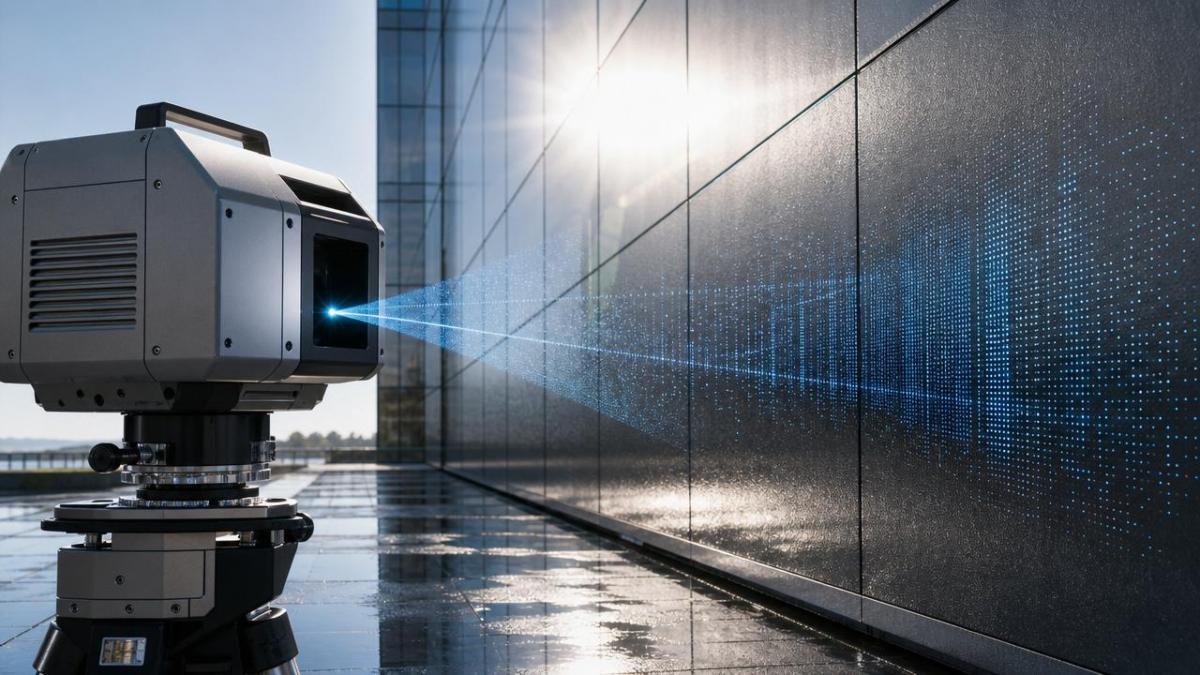
Solid-state LiDAR is often promoted with maximum range, field of view, and resolution figures, yet harsh-light performance is a different engineering question. It asks whether the sensor can preserve distance accuracy, object continuity, and detection confidence when strong ambient light competes with the return signal. In practice, this means the quality of sensing under direct sun, low-angle sun, reflective metal, wet pavement, glass façades, dust haze, and other optically unstable environments.
For technical assessment teams, the keyword solid-state LiDAR anti-interference parameters should not be treated as a marketing phrase. It is a measurable performance domain that combines optical filtering, receiver sensitivity, timing precision, signal processing, and false target suppression. A unit that performs well in a controlled indoor demo may still degrade sharply in field deployment if these parameters are weak.
This matters across robotics, UAV payloads, industrial automation, perimeter monitoring, and smart infrastructure. In all of these sectors, poor anti-interference behavior increases downstream costs: perception software tuning takes longer, validation cycles expand, and safety margins become harder to prove. From TSV’s engineering-first perspective, harsh-light testing is not an accessory benchmark. It is a direct indicator of whether a sensing stack can be trusted outside ideal laboratory conditions.
Why the industry is paying closer attention now
Several trends are pushing harsh-light evaluation higher on the checklist. First, more autonomous systems now operate at the edge, where they encounter open-sky sunlight, reflective surfaces, and complex mixed scenes rather than fixed indoor lighting. Second, system integrators increasingly combine LiDAR with cameras, radar, and edge AI, which means the LiDAR output must remain stable enough to support fusion logic. Third, global procurement teams are under pressure to shorten qualification cycles without accepting hidden field risk.
That is why solid-state LiDAR anti-interference parameters have become central to engineering reviews. A sensor can look competitive on paper yet create unstable point clouds in bright noon light, or trigger excess false detections when specular reflections overlap with real objects. These issues rarely appear in a single headline metric. They emerge only when evaluators study the sensor’s behavior as a system.
For CTOs, R&D engineers, and senior sourcing teams, the practical question is simple: which specifications are predictive of robust deployment, and which ones are too abstract to compare across vendors? The answer begins with understanding the measurements behind harsh-light resilience rather than relying on “sunlight resistant” claims.
Core specifications that matter more than headline range
The most useful harsh-light indicators are not isolated numbers. They form a linked set of measurements that reveal whether the LiDAR can separate weak returns from strong ambient noise and preserve object integrity over time.
1. Signal-to-noise ratio under specified ambient lux
Signal-to-noise ratio, or SNR, is one of the most practical anti-interference measures. Evaluators should ask for SNR performance at defined sunlight conditions, not only in dark-room testing. A strong SNR margin under high ambient illumination indicates that the receiver and processing chain can still distinguish real echoes from background optical noise. Without this context, a general SNR figure is incomplete.
2. Dynamic range
Dynamic range describes how well the sensor handles both strong and weak returns in the same scene. In harsh light, this becomes critical because highly reflective surfaces can saturate parts of the signal while darker objects remain low-return. Insufficient dynamic range leads to clipping, missing points, or unstable object edges. For warehouses with open doors, outdoor AMRs, and UAV mapping near bright roofs or water, dynamic range often predicts usability better than nominal maximum range.
3. False alarm rate and ghost point suppression
False alarms are expensive because they degrade trust in the entire perception stack. In sunlight-heavy scenes, multipath reflections, lens flare, and noise bursts can create ghost points or phantom objects. Evaluators should request measurable false detection rates under outdoor brightness and reflective target conditions. Strong solid-state LiDAR anti-interference parameters should include clear methods for suppressing these artifacts without over-filtering genuine targets.
4. Point cloud stability over time
A single frame can look acceptable while time-series behavior remains poor. Point cloud stability refers to the consistency of point density, object outline, and range repeatability across repeated scans. Under harsh light, instability appears as flicker, intermittent dropout, or drifting object boundaries. This is especially important for tracking, classification, and motion planning algorithms that assume temporal continuity.
5. Ambient light rejection method
Vendors should be able to explain how ambient light is rejected. This may involve narrow optical bandpass filtering, pulse coding, time-gating, modulation design, detector architecture, or digital background subtraction. Technical evaluators do not need every proprietary detail, but they do need enough information to understand whether the anti-interference claim rests on physics, firmware, or post-processing assumptions.
6. Range accuracy and precision under glare conditions
Distance accuracy quoted under standard conditions can hide harsh-light degradation. Ask for range error and repeatability with direct or reflected sunlight present. A LiDAR that holds acceptable error bands in these conditions is usually easier to calibrate and validate in real deployments.
Industry overview table for harsh-light evaluation
The table below summarizes how technical teams can interpret solid-state LiDAR anti-interference parameters in a practical review framework.
Where these parameters create practical value
The business value of strong anti-interference performance is broad. In mobile robotics, it reduces navigation uncertainty near loading docks, polished floors, windows, and mixed indoor-outdoor transitions. In UAV and aerospace-adjacent sensing tasks, it helps maintain terrain, obstacle, or structure awareness in elevated light exposure. In industrial safety monitoring, it supports dependable detection around metal equipment, reflective barriers, and skylit production zones.
For edge AI teams, stable LiDAR input improves sensor fusion confidence. Camera systems may struggle with overexposure, while radar may lack the spatial detail needed for fine geometry. If the LiDAR itself becomes unstable in glare, the fusion stack inherits ambiguity rather than resolving it. This is why solid-state LiDAR anti-interference parameters matter not only to hardware buyers but also to perception software teams and validation engineers.
At the supply-chain level, better harsh-light characterization shortens the path from sample evaluation to qualification. Engineering teams can reject unsuitable devices earlier, benchmark vendors more fairly, and write tighter spec sheets. This aligns with TSV’s position that parameters, tolerances, and test methods are more useful than generic claims of ruggedness or intelligence.
Typical application categories and what to prioritize
Practical evaluation advice for technical teams
A strong review process starts by defining scene conditions before comparing data sheets. Ask vendors to specify test illumination levels, target reflectivity, target distance, incidence angle, and whether the result represents raw sensor output or processed output. Without those details, even legitimate numbers are hard to compare.
Next, evaluate the sensor in mixed scenes rather than single-target setups. Harsh light rarely appears in isolation. A useful trial includes dark objects beside bright reflective surfaces, moving targets, and repeated runs at different sun angles. This reveals whether the published solid-state LiDAR anti-interference parameters hold under realistic optical conflict.
Also separate recoverable issues from structural limitations. Software filtering can reduce visible noise, but if raw returns collapse under light stress, downstream tuning will only mask the problem temporarily. Technical evaluators should therefore ask for both pre-filter and post-filter evidence whenever possible.
Finally, link harsh-light results to system-level acceptance criteria. If the application depends on object tracking, focus on temporal stability. If it depends on emergency detection, false negative and false positive behavior may matter more than dense point clouds. If the device will operate across geographies, include seasonal and angle-of-sun variation in the validation plan.
A more reliable way to read vendor claims
When reviewing vendor literature, treat broad claims such as “sunlight immunity” or “all-weather robustness” as starting points, not conclusions. Reliable engineering evidence usually includes quantified ambient limits, repeatability data, target definitions, and edge-case behavior. If a vendor cannot explain how the sensor maintains SNR, avoids saturation, or limits false returns under strong light, the claim is incomplete.
The most credible suppliers usually provide test methodology, parameter boundaries, and scenario context. That is the level of detail advanced manufacturing, UAV, robotics, and sensor fusion teams need to reduce trial-and-error costs. In that sense, solid-state LiDAR anti-interference parameters are not just sensor specs. They are risk-control tools for engineering programs.
Conclusion and next-step perspective
In harsh optical environments, the best solid-state LiDAR is not necessarily the one with the longest advertised range. It is the one that preserves trustworthy perception when sunlight, glare, and reflections disrupt the scene. For technical evaluators, the most meaningful indicators are SNR under defined ambient light, dynamic range, false alarm control, point cloud stability, and range accuracy under interference.
Organizations that evaluate these metrics rigorously can build stronger spec sheets, shorten supplier qualification, and avoid expensive field surprises. That approach reflects TSV’s core principle: engineering truth is revealed by measurable parameters, not by adjectives. If your team is assessing sensors for robotics, UAVs, industrial automation, or edge AI platforms, start by making solid-state LiDAR anti-interference parameters a formal part of your validation framework.
Search News
Hot Articles
- Carbon Fiber StructuresHow to Specify Aerospace Carbon Fiber Assemblies for Lightweight, Load-Bearing PartsJul 11, 2026
- Machine VisionXiaomi, Alibaba DAMO Academy Drive Open-Source Robotics Model Ecosystem, Lowering Algorithm Development Barriers for Overseas SMEs Adopting Chinese Robotics SolutionsMar 30, 2026
- Cobots & ArmsShanxi 'AI+' Conference Showcases Embodied Intelligence with Multinational Buyer Engagement: Key Industry ImplicationsMar 30, 2026
Popular Tags
Recommended News
 Jul 11, 2026How to Specify Aerospace Carbon Fiber Assemblies for Lightweight, Load-Bearing PartsAerospace carbon fiber assemblies: learn how to specify laminate design, load data, joining methods, and inspection controls for lighter, reliable load-bearing aerospace parts.Elena Rostova (UAV Systems Researcher)
 Mar 30, 2026Xiaomi, Alibaba DAMO Academy Drive Open-Source Robotics Model Ecosystem, Lowering Algorithm Development Barriers for Overseas SMEs Adopting Chinese Robotics SolutionsXiaomi & Alibaba DAMO Academy's open-source robotics models lower algorithm barriers for global SMEs. Boost efficiency in manufacturing, logistics & smart retail with ROS 2 compatible solutions.TSV Data Lab
 Mar 30, 2026Shanxi 'AI+' Conference Showcases Embodied Intelligence with Multinational Buyer Engagement: Key Industry ImplicationsShanxi 'AI+' Conference highlights embodied intelligence with Tesla, Ubtech & Jiantao showcasing multimodal robotics. 40+ global buyers validated tech on-site, creating new B2B channels for industrial automation & AI solutions.Chen Wei (Automation Lead Engineer)
 Mar 30, 2026Zhongguancun Unveils 6G Integrated Sensing-Computing-Intelligence Platform to Empower Embodied Robots for Global Industrial ApplicationsZhongguancun's new 6G platform revolutionizes industrial robotics with <10ms latency, empowering global automotive, logistics & port automation. Discover how this tech boosts China's smart manufacturing exports.TSV Data Lab
 Mar 30, 2026Mech-Mind Tianjin Embodied Intelligence R&D and Production Base Goes Live, Cutting Delivery Time by 20%–30% for Global Customized AMR+Vision SolutionsMech-Mind's Tianjin AMR+Vision production base cuts delivery time by 20%-30% for欧美 & Latin American markets. Discover how this PLd-certified facility accelerates customized robotics solutions for smart manufacturing and logistics.Chen Wei (Automation Lead Engineer)
 Mar 30, 2026Boao Forum Reveals 'Co-evolution of Big and Small Brains' Trend in Humanoid Robots, China's Embodied Intelligence Accelerates Adaptation to Overseas Manufacturing Service ScenariosDiscover how China's humanoid robots, featuring 'Co-evolution of Big and Small Brains,' are revolutionizing global manufacturing. Learn about Embodied Tian Gong 3.0's ISO compliance and overseas deployment at Boao Forum 2026.Chen Wei (Automation Lead Engineer)
 Mar 30, 2026China Railway Industrial Secures Patent for Embodied Robotics in Material Handling, Boosting High-Precision Delivery Capabilities for Overseas Infrastructure and Manufacturing ProjectsChina Railway Industrial's new patent for embodied robotics in material handling boosts high-precision delivery for global infrastructure & manufacturing. Discover how this innovation enhances logistics accuracy in automotive, rail transit & EPC projects.Chen Wei (Automation Lead Engineer)
 Sep 28, 2026Spindle Runout Measurement in Germany: DIN Standards, Methods, and Acceptance LimitsSpindle runout measurement Germany: explore DIN standards, proven methods, acceptance limits, and audit-ready practices for reliable machining quality.Dr. Marcus Vance
 Sep 27, 2026How to Select Wall-Mount Edge Devices for Space-Constrained Factory NetworksWall mount edge devices for space-constrained factories: evaluate workload, thermal design, power resilience, cable access, and network reliability for smarter deployments.TSV Data Lab
 Sep 26, 2026Machining Tolerance Analysis: How to Set Limits That Meet Function and Cost TargetsMachining tolerance analysis: learn how to set functional limits, control tolerance stacks, reduce inspection risk, and balance precision with production cost.Dr. Marcus Vance
 Sep 25, 2026How to Evaluate an Industrial Infrastructure Data Platform for Multi-Site OperationsIndustrial infrastructure data platform evaluation guide for multi-site operations: compare data quality, edge resilience, interoperability, governance, and scalable proof-of-value criteria.Victor Lin (Chief Software Architect)
 Sep 24, 2026How to Select Machine Vision Optics for Accurate Inspection at Different Working DistancesMachine vision optics selection guide for accurate inspection at every working distance. Compare FOV, pixel scale, DOF, distortion, lighting, and telecentric options.TSV Data Lab
 Sep 23, 2026How to Evaluate a Machine Vision System Integrator for High-Speed Inspection LinesChoose a machine vision system integrator with proven expertise in high-speed inspection, reliable reject timing, robust optics, and measurable acceptance criteria.TSV Data Lab
 Sep 28, 2026When is a SCADA API the right choice for connecting plant systems?SCADA API guide: learn when governed plant data integration improves traceability, security, and scalability—without compromising real-time control.Victor Lin (Chief Software Architect)
 Sep 27, 2026How SCADA data integration improves traceability across production linesSCADA data integration connects production-line data to improve traceability, accelerate quality investigations, and strengthen safety decisions.Victor Lin (Chief Software Architect)
 Sep 26, 2026What to define before starting SCADA integration planningSCADA integration planning starts with clear scope, control boundaries, data models, cybersecurity, and testing. Discover the definitions that reduce risk and costly rework.Victor Lin (Chief Software Architect)
 Sep 25, 2026How a smart factory with Industrial IoT reduces production blind spotsDiscover how a smart factory with Industrial IoT turns real-time machine, quality, and workflow data into actionable insights that reduce production blind spots and delivery risks.Victor Lin (Chief Software Architect)
 Sep 24, 2026When does Industrial IoT make smart manufacturing easier to scale?Smart manufacturing Industrial IoT scales when trusted data, interoperable systems, and secure workflows turn connected assets into measurable gains.TSV Data Lab
 Sep 23, 2026What drives ultra-precision machining cost at 1-micron tolerance?Ultra precision machining cost per part at 1 micron tolerance depends on process, material, metrology, and yield. Learn how to compare quotes confidently.Dr. Marcus Vance
 Sep 22, 2026Drone Engine-T550CC Applications: Build the UAV Power System Around the MissionAn application guide for Drone Engine-T550CC integration, covering payload planning, airframe matching, cooling, fuel, vibration, test procedures, documentation, and service preparation.Elena Rostova (UAV Systems Researcher)
 Sep 22, 2026How to Evaluate Industrial Edge Computing Vendors for Factory DeploymentIndustrial edge computing vendor evaluation guide for factories: compare latency, protocol fit, reliability, security, and lifecycle support before deployment.TSV Data Lab
 Sep 21, 2026Drone Payload Integration: Matching Power, Data, and Center of Gravity for Reliable FlightsDrone payload integration made practical: balance power, data, center of gravity, and endurance to build safer, more reliable mission-ready flights.Elena Rostova (UAV Systems Researcher)
 Sep 20, 2026Autonomous Navigation Pricing: Cost Drivers and Budget Benchmarks for AMR ProjectsAutonomous navigation price explained: compare AMR cost drivers, software, sensors, integration, safety, and lifecycle budgets to build a scalable project plan.Chen Wei (Automation Lead Engineer)
 Sep 19, 2026How to Scope Automation Integration Services for Multi-System Factory ProjectsAutomation integration services: learn how to scope multi-system factory projects with clear workflows, interface contracts, safety boundaries, and acceptance criteria.Victor Lin (Chief Software Architect)