Drone Parachute Recovery System and the Weight Penalty
Publication Date
author
For finance approvers evaluating UAV risk, a drone parachute recovery system is not just a safety add-on—it is a cost, compliance, and liability decision. The real question is whether the weight penalty reduces mission efficiency more than it lowers crash exposure, insurance risk, and replacement costs. This article examines that trade-off through an engineering and procurement lens, helping decision-makers compare safety value against payload loss, endurance impact, and total lifecycle economics.
Why the weight penalty matters in a drone parachute recovery system purchase
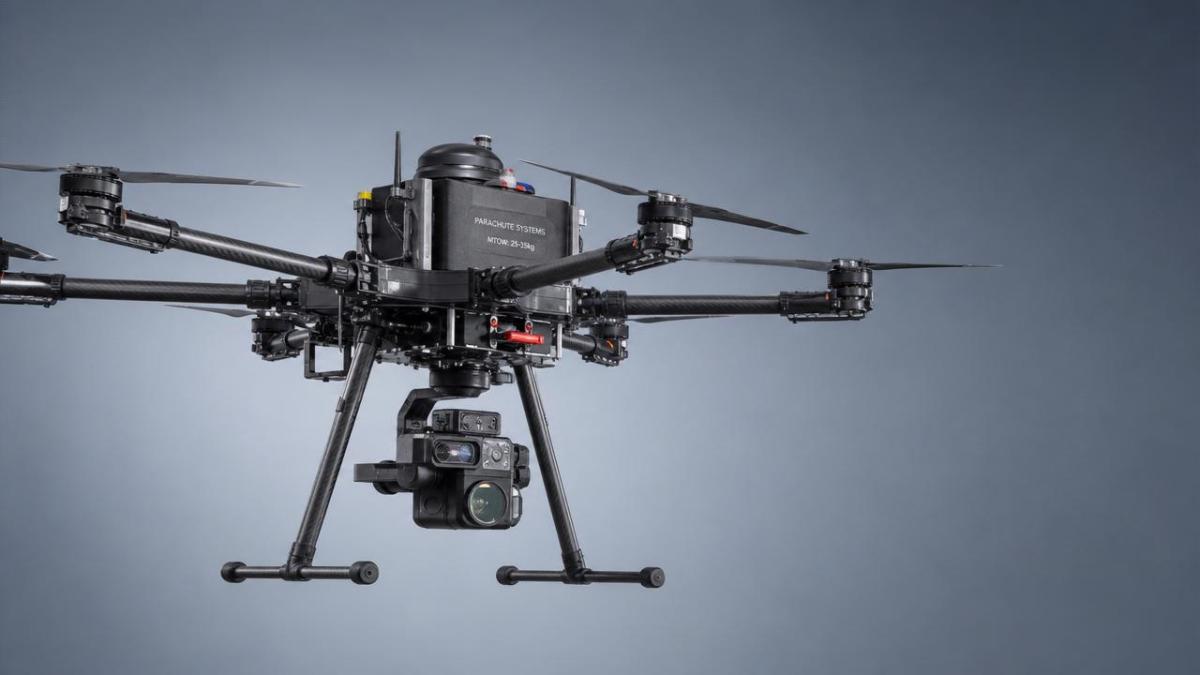
A drone parachute recovery system is designed to reduce impact energy during an uncontrolled descent, protect people and property on the ground, and support safer operations in higher-risk environments. For engineering teams, that sounds straightforward. For finance approvers, the issue is more complex. Added hardware mass affects payload, flight endurance, center of gravity, power draw, maintenance burden, and possibly aircraft classification or mission economics.
In practical procurement, the weight penalty should never be judged in isolation. A lighter aircraft without recovery capability may appear cheaper on a unit-cost basis, yet become more expensive once crash replacement, mission interruption, third-party liability, and internal compliance overhead are considered. TSV’s data-first approach is useful here because it filters out vague marketing claims and forces comparison at the parameter level: grams added, minutes lost, payload reduced, descent rate achieved, reset time required, and operating scenario exposure.
This is especially relevant across commercial UAV use in surveying, inspection, agriculture, public safety support, and industrial logistics. In these environments, a drone parachute recovery system may shift the financial model from simple capex control to risk-adjusted asset management. That is the real decision frame for approvers.
- If the aircraft flies over people, roads, facilities, or expensive crop zones, the liability cost of a single failure can exceed the savings from skipping recovery equipment.
- If the mission is payload-limited, every added gram may reduce data collection efficiency or require a larger airframe.
- If regulatory approval depends on mitigations, a drone parachute recovery system can unlock operations that would otherwise be delayed or denied.
What finance teams should quantify before approving the budget
A procurement file is often weakened by incomplete measurement. Many proposals state that the drone parachute recovery system “improves safety” but fail to show how much it changes total cost of ownership. Finance teams should require a baseline mission model and a risk model. The baseline mission model measures operational efficiency. The risk model measures what the organization is exposed to without the system.
The table below gives a practical framework for evaluating the weight penalty of a drone parachute recovery system in procurement review. It translates technical effects into finance-friendly decision variables.
The key insight is that the financial burden of added weight is continuous, while the value of a drone parachute recovery system is event-driven. That means approvers should look at expected annual exposure, not only daily efficiency loss. In low-risk, low-value operations, the penalty may dominate. In urban, industrial, or regulated missions, the avoided-loss value can be decisive.
How much mission efficiency can weight reduce?
Three technical effects that usually change the budget case
The weight penalty of a drone parachute recovery system is not just a matter of gross takeoff mass. It changes aircraft behavior in several linked ways. Finance approvers do not need to become flight-control engineers, but they should understand the cost consequences of those linked effects.
- Battery drain increases because more thrust is required to sustain hover and maneuver. This can shorten endurance and increase the number of batteries, charging cycles, and field swaps needed per project day.
- Payload flexibility decreases. A mapping drone may need to downgrade camera or LiDAR configuration, while a delivery platform may lose usable cargo mass. That can affect billable output per flight.
- Structural and dynamic margins can tighten. Added hardware changes mounting loads and the center of gravity, which may require validation work, revised maintenance checks, or airframe reinforcement.
A rigorous review should ask suppliers for data under mission-representative conditions: loaded aircraft, typical wind, normal batteries, and actual payload. Bench tests on stripped aircraft can hide the real endurance cost. TSV repeatedly emphasizes this distinction across hard-tech sourcing: parameters only matter when measured in the state you actually buy and operate.
When the weight penalty is acceptable
A drone parachute recovery system often makes financial sense when flights occur above infrastructure, near public zones, around energy assets, or in contracts where downtime penalties are high. In these cases, a 5% to 15% efficiency loss may be acceptable if it materially lowers the probability of a costly incident escalating into legal, reputational, or contractual damage.
Scenario comparison: where a drone parachute recovery system pays back faster
Different UAV missions absorb the weight penalty differently. The next table compares common commercial situations where finance teams must decide whether the drone parachute recovery system improves the business case.
The pattern is clear. Where third-party exposure is low and endurance is the profit driver, the weight penalty can be harder to justify. Where liability severity is high, the drone parachute recovery system often becomes part of the economic permission to operate, not merely a safety accessory.
Procurement checklist: what to ask suppliers before approval
Finance approvers should not sign off based on advertised safety language alone. A strong procurement review combines engineering evidence, operational fit, and commercial clarity. Use the checklist below to pressure-test proposals for a drone parachute recovery system.
- What is the all-in installed mass, including brackets, cables, sensors, and any dedicated control module?
- How much endurance is lost under normal mission payload, not under empty test conditions?
- What deployment logic is used, and what false-deployment prevention measures are documented?
- Does the system require recurring consumables, repacking, cartridge replacement, or certified service intervals?
- How does installation affect center of gravity, vibration environment, and compatibility with existing sensors or gimbals?
- What regulatory or insurer-facing documentation can the supplier provide for risk mitigation review?
- What is the lead time for spare components and how quickly can an aircraft return to service after activation?
This is where TSV’s position as a data-driven hard-tech think tank becomes operationally valuable. The biggest hidden procurement cost is not always the hardware price. It is the qualification delay caused by unclear specifications, incomplete traceability, or supplier claims that cannot be validated against actual use conditions.
Cost versus alternatives: is a drone parachute recovery system always the right answer?
Not every mission requires a drone parachute recovery system. Some organizations can lower risk through route redesign, geo-fencing, operational separation from people, reduced overflight of assets, or selection of a lighter airframe class. Others may prefer redundancy investments such as improved propulsion reliability, battery health monitoring, or stricter maintenance controls. The financially correct answer depends on the source of risk.
The table below compares common mitigation routes so approvers can see whether the weight penalty is the best trade-off for their risk profile.
This comparison helps prevent a common budgeting mistake: buying mitigation without identifying the dominant risk driver. A drone parachute recovery system addresses uncontrolled descent severity. It does not replace poor maintenance, weak operating procedures, or bad route planning. The best financial outcome often comes from combining a recovery system with operational controls rather than expecting one device to solve the entire risk picture.
Standards, compliance, and insurer conversations
Why compliance can outweigh the weight penalty
For some programs, the value of a drone parachute recovery system is not measured only in avoided crash cost. It can also support safety cases, operating approvals, and insurer discussions. Finance approvers should ask whether the equipment contributes to documented risk mitigation for operational authorization, especially in missions near people, critical infrastructure, or controlled work environments.
Relevant conversations may include operational risk assessments, maintenance records, deployment test documentation, and compatibility with organizational safety management procedures. Depending on jurisdiction and mission type, teams may also reference common aviation and quality frameworks such as ASTM-related UAV practices, ISO-aligned quality systems, or internal aviation safety procedures. The exact requirement varies, but the commercial principle is stable: better-documented mitigation can shorten approval friction and reduce procurement uncertainty.
Common misconceptions finance teams should avoid
“Safety hardware always lowers total risk cost”
Only if it matches the mission profile. If the aircraft operates in isolated areas and revenue depends on maximum endurance, the weight penalty may erode project economics more than the recovery system saves.
“Weight impact is just the published mass”
Published mass can exclude brackets, interfaces, power integration, and protective installation changes. Finance teams should approve based on installed mass and validated mission impact.
“Any parachute system is equivalent”
Deployment logic, reset process, descent characteristics, integration complexity, and supplier documentation quality vary materially. Those differences affect both field reliability and cost of ownership.
FAQ: procurement questions about drone parachute recovery system decisions
How should we calculate ROI for a drone parachute recovery system?
Start with annual sortie volume, average aircraft value, payload value, and estimated third-party exposure. Then compare the yearly efficiency loss from reduced endurance or payload against the expected-loss reduction from fewer severe crashes, lower downtime, and improved insurability. ROI is strongest where failure severity is high, even if failure probability is low.
What weight penalty is usually too high?
There is no universal threshold. The real limit is the point where the drone parachute recovery system forces a sensor downgrade, pushes the aircraft into a different regulatory or battery class, or materially cuts route productivity. A finance review should focus on mission output per hour, not mass alone.
Which operations benefit most from adding a recovery system?
Urban mapping, corridor inspection near roads or utilities, industrial site work, and any operation over sensitive assets tend to benefit most. In these cases, the avoided impact of a single incident may justify the recurring efficiency penalty.
What documents should suppliers provide for approval?
Request installed mass, mission endurance impact, integration guidance, maintenance intervals, deployment testing information, spare-part lead times, and any compliance-supporting documentation used in operational risk reviews. If a supplier cannot provide concrete numbers, approval risk rises.
Why choose us for data-driven UAV procurement guidance
TechStat Vanguard supports hard-tech decision-makers who need engineering truth rather than promotional claims. When your team is evaluating a drone parachute recovery system, we help translate supplier specifications into a procurement decision framework grounded in measurable trade-offs: installed mass, endurance loss, payload displacement, maintenance burden, and risk mitigation value.
You can contact us to discuss parameter confirmation, scenario-based product selection, supplier comparison logic, delivery-cycle questions, integration constraints, compliance documentation expectations, and quote-side evaluation criteria. If your approval process needs a clearer benchmark between safety benefit and weight penalty, TSV can help structure that analysis so engineering, procurement, and finance are working from the same numbers.
Search News
Hot Articles
- Carbon Fiber StructuresHow to Specify Aerospace Carbon Fiber Assemblies for Lightweight, Load-Bearing PartsJul 11, 2026
- Machine VisionXiaomi, Alibaba DAMO Academy Drive Open-Source Robotics Model Ecosystem, Lowering Algorithm Development Barriers for Overseas SMEs Adopting Chinese Robotics SolutionsMar 30, 2026
- Cobots & ArmsShanxi 'AI+' Conference Showcases Embodied Intelligence with Multinational Buyer Engagement: Key Industry ImplicationsMar 30, 2026
Popular Tags
Recommended News
 Jul 11, 2026How to Specify Aerospace Carbon Fiber Assemblies for Lightweight, Load-Bearing PartsAerospace carbon fiber assemblies: learn how to specify laminate design, load data, joining methods, and inspection controls for lighter, reliable load-bearing aerospace parts.Elena Rostova (UAV Systems Researcher)
 Mar 30, 2026Xiaomi, Alibaba DAMO Academy Drive Open-Source Robotics Model Ecosystem, Lowering Algorithm Development Barriers for Overseas SMEs Adopting Chinese Robotics SolutionsXiaomi & Alibaba DAMO Academy's open-source robotics models lower algorithm barriers for global SMEs. Boost efficiency in manufacturing, logistics & smart retail with ROS 2 compatible solutions.TSV Data Lab
 Mar 30, 2026Shanxi 'AI+' Conference Showcases Embodied Intelligence with Multinational Buyer Engagement: Key Industry ImplicationsShanxi 'AI+' Conference highlights embodied intelligence with Tesla, Ubtech & Jiantao showcasing multimodal robotics. 40+ global buyers validated tech on-site, creating new B2B channels for industrial automation & AI solutions.Chen Wei (Automation Lead Engineer)
 Mar 30, 2026Zhongguancun Unveils 6G Integrated Sensing-Computing-Intelligence Platform to Empower Embodied Robots for Global Industrial ApplicationsZhongguancun's new 6G platform revolutionizes industrial robotics with <10ms latency, empowering global automotive, logistics & port automation. Discover how this tech boosts China's smart manufacturing exports.TSV Data Lab
 Mar 30, 2026Mech-Mind Tianjin Embodied Intelligence R&D and Production Base Goes Live, Cutting Delivery Time by 20%–30% for Global Customized AMR+Vision SolutionsMech-Mind's Tianjin AMR+Vision production base cuts delivery time by 20%-30% for欧美 & Latin American markets. Discover how this PLd-certified facility accelerates customized robotics solutions for smart manufacturing and logistics.Chen Wei (Automation Lead Engineer)
 Mar 30, 2026Boao Forum Reveals 'Co-evolution of Big and Small Brains' Trend in Humanoid Robots, China's Embodied Intelligence Accelerates Adaptation to Overseas Manufacturing Service ScenariosDiscover how China's humanoid robots, featuring 'Co-evolution of Big and Small Brains,' are revolutionizing global manufacturing. Learn about Embodied Tian Gong 3.0's ISO compliance and overseas deployment at Boao Forum 2026.Chen Wei (Automation Lead Engineer)
 Mar 30, 2026China Railway Industrial Secures Patent for Embodied Robotics in Material Handling, Boosting High-Precision Delivery Capabilities for Overseas Infrastructure and Manufacturing ProjectsChina Railway Industrial's new patent for embodied robotics in material handling boosts high-precision delivery for global infrastructure & manufacturing. Discover how this innovation enhances logistics accuracy in automotive, rail transit & EPC projects.Chen Wei (Automation Lead Engineer)
 Sep 28, 2026Spindle Runout Measurement in Germany: DIN Standards, Methods, and Acceptance LimitsSpindle runout measurement Germany: explore DIN standards, proven methods, acceptance limits, and audit-ready practices for reliable machining quality.Dr. Marcus Vance
 Sep 27, 2026How to Select Wall-Mount Edge Devices for Space-Constrained Factory NetworksWall mount edge devices for space-constrained factories: evaluate workload, thermal design, power resilience, cable access, and network reliability for smarter deployments.TSV Data Lab
 Sep 26, 2026Machining Tolerance Analysis: How to Set Limits That Meet Function and Cost TargetsMachining tolerance analysis: learn how to set functional limits, control tolerance stacks, reduce inspection risk, and balance precision with production cost.Dr. Marcus Vance
 Sep 25, 2026How to Evaluate an Industrial Infrastructure Data Platform for Multi-Site OperationsIndustrial infrastructure data platform evaluation guide for multi-site operations: compare data quality, edge resilience, interoperability, governance, and scalable proof-of-value criteria.Victor Lin (Chief Software Architect)
 Sep 24, 2026How to Select Machine Vision Optics for Accurate Inspection at Different Working DistancesMachine vision optics selection guide for accurate inspection at every working distance. Compare FOV, pixel scale, DOF, distortion, lighting, and telecentric options.TSV Data Lab
 Sep 23, 2026How to Evaluate a Machine Vision System Integrator for High-Speed Inspection LinesChoose a machine vision system integrator with proven expertise in high-speed inspection, reliable reject timing, robust optics, and measurable acceptance criteria.TSV Data Lab
 Sep 28, 2026When is a SCADA API the right choice for connecting plant systems?SCADA API guide: learn when governed plant data integration improves traceability, security, and scalability—without compromising real-time control.Victor Lin (Chief Software Architect)
 Sep 27, 2026How SCADA data integration improves traceability across production linesSCADA data integration connects production-line data to improve traceability, accelerate quality investigations, and strengthen safety decisions.Victor Lin (Chief Software Architect)
 Sep 26, 2026What to define before starting SCADA integration planningSCADA integration planning starts with clear scope, control boundaries, data models, cybersecurity, and testing. Discover the definitions that reduce risk and costly rework.Victor Lin (Chief Software Architect)
 Sep 25, 2026How a smart factory with Industrial IoT reduces production blind spotsDiscover how a smart factory with Industrial IoT turns real-time machine, quality, and workflow data into actionable insights that reduce production blind spots and delivery risks.Victor Lin (Chief Software Architect)
 Sep 24, 2026When does Industrial IoT make smart manufacturing easier to scale?Smart manufacturing Industrial IoT scales when trusted data, interoperable systems, and secure workflows turn connected assets into measurable gains.TSV Data Lab
 Sep 23, 2026What drives ultra-precision machining cost at 1-micron tolerance?Ultra precision machining cost per part at 1 micron tolerance depends on process, material, metrology, and yield. Learn how to compare quotes confidently.Dr. Marcus Vance
 Sep 22, 2026Drone Engine-T550CC Applications: Build the UAV Power System Around the MissionAn application guide for Drone Engine-T550CC integration, covering payload planning, airframe matching, cooling, fuel, vibration, test procedures, documentation, and service preparation.Elena Rostova (UAV Systems Researcher)
 Sep 22, 2026How to Evaluate Industrial Edge Computing Vendors for Factory DeploymentIndustrial edge computing vendor evaluation guide for factories: compare latency, protocol fit, reliability, security, and lifecycle support before deployment.TSV Data Lab
 Sep 21, 2026Drone Payload Integration: Matching Power, Data, and Center of Gravity for Reliable FlightsDrone payload integration made practical: balance power, data, center of gravity, and endurance to build safer, more reliable mission-ready flights.Elena Rostova (UAV Systems Researcher)
 Sep 20, 2026Autonomous Navigation Pricing: Cost Drivers and Budget Benchmarks for AMR ProjectsAutonomous navigation price explained: compare AMR cost drivers, software, sensors, integration, safety, and lifecycle budgets to build a scalable project plan.Chen Wei (Automation Lead Engineer)
 Sep 19, 2026How to Scope Automation Integration Services for Multi-System Factory ProjectsAutomation integration services: learn how to scope multi-system factory projects with clear workflows, interface contracts, safety boundaries, and acceptance criteria.Victor Lin (Chief Software Architect)