Automotive radar sensor wholesale margins depend on this
Publication Date
author
In automotive distribution, automotive radar sensor wholesale margins are shaped less by headline pricing and more by engineering-grade factors: detection accuracy, false-alarm control, certification status, supply consistency, and after-sales traceability. For distributors, agents, and channel partners, understanding these technical and sourcing variables is the key to protecting margin, reducing risk, and choosing radar sensor suppliers that deliver long-term commercial value.
For most channel businesses, the central question is simple: why do two radar sensors with similar advertised specifications produce very different wholesale margins in the real market? The answer usually lies in what happens after the quotation sheet. Return rates, firmware stability, homologation readiness, warranty burden, and customer support costs often matter more than the initial purchase discount.
If you distribute ADAS components, supply automotive electronics integrators, or act as a regional agent for sensing systems, margin should be evaluated as a system outcome rather than a unit-price spread. The suppliers that look cheapest at the start can become the most expensive once field failures, certification delays, or inconsistent lot quality begin to affect your customers.
What actually determines automotive radar sensor wholesale margins?
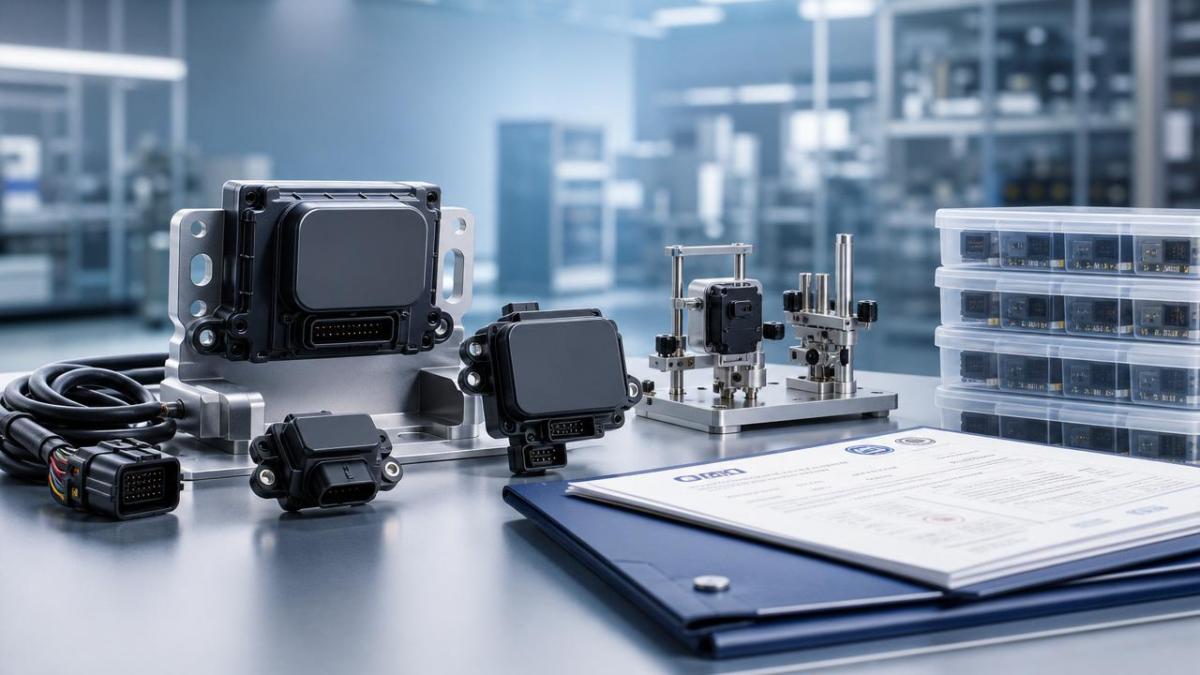
The biggest mistake in automotive radar sensor wholesale is treating margin as a pure buy-low, sell-high calculation. In reality, your gross margin is influenced by at least five layers: technical performance, compliance readiness, supply chain reliability, support workload, and channel positioning. These layers directly affect resale price, sell-through speed, and total cost-to-serve.
At the technical level, distributors can command better margins when the radar sensor delivers measurable value in the end application. This includes stable detection range, angular resolution, object discrimination, low false-trigger behavior, and performance under rain, fog, vibration, and electromagnetic interference. Buyers in automotive markets are not just purchasing a sensor module; they are purchasing predictable system behavior.
At the commercial level, margin improves when your product creates fewer hidden costs. A sensor with stronger validation data, cleaner documentation, and lower integration friction reduces the pre-sales engineering burden. That means fewer support calls, shorter qualification cycles, and less channel resource consumption before revenue is realized.
This is why higher-performing sensors often support better wholesale profitability even if invoice cost is higher. Customers are willing to pay more for components that help them reduce redesign risk, warranty claims, and compliance uncertainty. For the distributor, that pricing resilience protects margin in a way that low-cost products usually cannot.
Why headline pricing is the least reliable indicator of profit
Many distributors first compare 77 GHz radar modules by piece price, MOQ, and advertised detection distance. Those data points matter, but they rarely explain actual profit quality. A low-priced SKU may look attractive on a spreadsheet while quietly creating costs through delayed deliveries, unstable firmware, unclear environmental specifications, or a weak RMA process.
In practical terms, a product with a 12% apparent margin can become less profitable than one with an 8% apparent margin if the first product requires extensive troubleshooting, replacement stock, or repeated customer reassurance. In automotive channels, every return or integration dispute consumes engineering time, sales effort, and reputation.
There is also the issue of price erosion. If a radar sensor is broadly available, poorly differentiated, and marketed mainly on low cost, channel conflict becomes more likely. Competing resellers can undercut each other quickly. By contrast, products with strong validation data, vertical application fit, or exclusive support arrangements tend to preserve healthier margins for longer periods.
So the real margin question is not, “What is my initial percentage?” It is, “How much of that percentage survives after qualification support, warranty exposure, inventory carrying cost, and market price compression?” That is the more realistic lens for evaluating automotive radar sensor wholesale opportunities.
Performance metrics that directly influence resale value
For distributors serving OEM-adjacent customers, Tier 1 and Tier 2 integrators, retrofit system providers, or industrial vehicle platforms, technical credibility strongly affects resale value. Not every buyer will ask for the same engineering detail, but sophisticated customers increasingly want evidence, not claims.
Detection range is one obvious metric, but it should never be viewed in isolation. A long-range radar that struggles with object classification or produces unstable readings in cluttered environments may perform worse commercially than a shorter-range sensor with consistent output. Buyers care about usable performance, not just maximum values under ideal laboratory conditions.
Angular resolution and multi-target tracking are also critical. In dense traffic or complex roadside scenarios, the sensor’s ability to separate adjacent objects can influence braking logic, adaptive cruise behavior, and collision warning quality. Better resolution can justify premium pricing because it supports safer and more reliable system integration.
False-alarm control is one of the most overlooked margin drivers. If customers experience too many false positives, the commercial consequences are immediate: loss of confidence, increased technical support tickets, and delayed reorders. A radar sensor with better signal processing and better anti-interference characteristics often protects downstream customer relationships and therefore preserves distributor margin.
Environmental robustness matters just as much. Temperature tolerance, ingress protection, vibration endurance, and EMC behavior can determine whether a sensor remains stable in real vehicle conditions. For channel partners, every documented proof point in these areas makes sales conversations easier and reduces post-sale friction.
Certification and compliance: where many margin assumptions fail
In automotive electronics, certification status is not a side issue. It can completely reshape the economics of a wholesale deal. Sensors intended for road-vehicle applications may need to align with regional regulatory expectations, functional safety processes, RF requirements, EMC standards, and customer-specific validation protocols.
When a supplier’s compliance documentation is incomplete, outdated, or difficult to verify, distributors inherit risk. Sales cycles become longer because buyers need additional evidence. Some projects stall entirely during sample evaluation. Others proceed and later face approval problems, which can lead to rework, delayed launches, or contract disputes.
This is why a sensor with clear test reports, traceable manufacturing records, and transparent certification support can command stronger commercial value. It reduces buyer hesitation and accelerates qualification. Faster qualification usually means faster inventory turnover, which is an important but often underappreciated contributor to margin health.
Distributors should also check whether certification applies to the exact hardware revision being quoted. In fast-moving sensor markets, suppliers sometimes update chipsets, antennas, housings, or firmware without making the downstream impact sufficiently clear. If the approved version differs from the shipped version, your margin can disappear in administrative and technical fallout.
Supply consistency is a margin factor, not just an operations issue
For channel businesses, unstable supply can quietly destroy profitability. Late shipments, sudden lead-time extensions, and inconsistent lot quality affect more than logistics. They force you to hold larger safety stock, make emergency sourcing decisions, and spend more time managing customer expectations.
Reliable supply supports healthier margins because it improves planning accuracy. When lead times are credible and batch consistency is strong, distributors can manage inventory more efficiently, reduce expedite costs, and negotiate from a position of confidence. Predictability is commercially valuable, especially for customers running synchronized production schedules.
Batch-to-batch consistency deserves close attention in automotive radar sensor wholesale. Even if unit specifications look unchanged, subtle variation in calibration, connector quality, housing tolerances, or firmware loading can create field issues. These issues do not always appear during bench testing, but they often emerge after deployment, where the cost to correct them is much higher.
Ask suppliers how they manage component substitutions, EOL notices, firmware version control, and manufacturing traceability. A supplier with disciplined change management can protect your margin better than a lower-cost supplier with less process control. In automotive channels, undocumented changes are not a minor inconvenience; they are a profit risk.
After-sales burden often decides whether a radar sensor line is worth carrying
Many distributors underestimate the impact of after-sales support on product-line profitability. A radar sensor may have attractive market demand, but if it generates constant troubleshooting, installation confusion, or warranty disputes, the apparent margin can become operationally unattractive.
Strong suppliers reduce this burden by providing complete technical documentation, integration guides, pinout clarity, firmware notes, diagnostic tools, and responsive field application support. These resources lower the support cost per account and allow your team to serve more customers without scaling service overhead at the same rate.
RMA structure is another crucial indicator. You should know the failure analysis workflow, replacement turnaround, dispute resolution process, and root-cause reporting discipline before taking on a line. If the supplier treats every failure as an isolated event rather than a traceable engineering issue, your team will absorb the commercial damage.
For agents and regional distributors, traceability also strengthens trust with larger accounts. If you can identify production lot, firmware revision, test status, and shipment history quickly, your customer sees you as a competent supply partner rather than a simple reseller. That reputation supports repeat business and better pricing power.
How distributors should evaluate suppliers before negotiating margin
Margin negotiation should come after technical and operational screening, not before it. If you negotiate aggressively with the wrong supplier, you may win a favorable price and still lose money later. A better process is to qualify the supplier’s engineering maturity first and then build the commercial model around that reality.
Start with documentation quality. Review specification sheets for precision, not marketing language. Look for defined range conditions, target assumptions, field-of-view parameters, interference behavior, operating temperature, ingress rating, EMC information, and interface details. Vague documents usually signal future support friction.
Next, test communication discipline. Ask direct questions about validation data, lot traceability, firmware management, PPAP-style documentation if relevant, and customer support escalation. Suppliers who answer clearly and consistently are more likely to be manageable channel partners. Confused or contradictory answers often indicate process immaturity.
Then assess supply resilience. Where are key components sourced? What is the policy on substitutions? How are shortages handled? What are standard and worst-case lead times? In sensor markets influenced by semiconductors, RF components, and automotive-grade electronics constraints, supply resilience is central to sustainable wholesale economics.
Finally, evaluate channel fit. Some suppliers are technically strong but commercially unsuitable because they lack regional support, protect no territory, or actively sell direct into distributor accounts. If your role in the chain is not protected, even a good product may not deliver acceptable long-term margin.
Practical margin levers beyond purchase price
Distributors often have more margin levers than they think. Purchase price matters, but several additional tools can improve profitability without forcing a race to the bottom. One is application specialization. If you position radar sensors for defined use cases such as ADAS retrofits, commercial fleet safety, off-highway vehicles, or intelligent parking systems, you can sell expertise instead of commodity inventory.
Another lever is technical packaging. Customers are often willing to pay more for a solution bundle that includes interface guidance, harness options, mounting recommendations, software support, and first-stage troubleshooting. When you reduce customer integration effort, you create value beyond the component itself.
Forecast collaboration can also improve economics. Suppliers may offer better pricing, allocation priority, or service commitments when demand visibility is credible. For distributors, disciplined forecasting can reduce stockouts and emergency purchases while strengthening your negotiating position.
Exclusivity or semi-exclusivity in a region or vertical market can help defend margins as well. Even limited protections, such as opportunity registration or protected named accounts, can reduce destructive price competition. This is especially useful in automotive radar sensor wholesale, where technically similar products may otherwise become highly interchangeable in the market.
Red flags that usually lead to weak margins later
Several warning signs deserve immediate attention. The first is overreliance on generic claims such as “high precision,” “automotive grade,” or “industry leading” without published testing context. In hard-tech distribution, missing measurement conditions are often more revealing than impressive adjectives.
The second red flag is inconsistent documentation between sales material, specification sheets, and sample behavior. If the sample performs differently from the stated specification, or if firmware changes are poorly explained, downstream commercial risk rises sharply.
A third red flag is weak post-sale infrastructure. If there is no clear RMA process, no local technical contact, or no structured response path for field issues, the distributor effectively becomes the support department. That can erode margins even when initial demand is strong.
Finally, watch for suppliers that compete with their own channel partners or quote the same accounts directly without transparency. Channel conflict suppresses pricing discipline and makes long-term margin planning difficult.
What a healthy wholesale decision looks like
A strong wholesale decision usually combines adequate unit margin with low support burden, credible compliance documentation, stable supply, and clear technical differentiation. In other words, the best sensor line is not always the cheapest, the newest, or the one with the boldest claims. It is the one that allows you to win business repeatedly without creating hidden operational drag.
For distributors, agents, and channel partners, the goal should be durable margin rather than theoretical margin. Durable margin survives qualification scrutiny, market comparison, real-world deployment, and after-sales service. That kind of profitability is built on engineering truth, supply discipline, and customer trust.
When evaluating automotive radar sensor wholesale opportunities, focus on the full chain of value: measurable sensing performance, documented compliance, traceable production, dependable delivery, and manageable support obligations. Those are the factors that separate profitable radar lines from expensive distractions.
In the end, wholesale margins depend on what the sensor helps your customer avoid as much as what it helps them achieve. If a radar supplier reduces integration risk, field failures, compliance delays, and support uncertainty, it creates room for healthier pricing and stronger channel loyalty. That is where real margin is made.
Search News
Hot Articles
- Carbon Fiber StructuresHow to Specify Aerospace Carbon Fiber Assemblies for Lightweight, Load-Bearing PartsJul 11, 2026
- Machine VisionXiaomi, Alibaba DAMO Academy Drive Open-Source Robotics Model Ecosystem, Lowering Algorithm Development Barriers for Overseas SMEs Adopting Chinese Robotics SolutionsMar 30, 2026
- Cobots & ArmsShanxi 'AI+' Conference Showcases Embodied Intelligence with Multinational Buyer Engagement: Key Industry ImplicationsMar 30, 2026
Popular Tags
Recommended News
 Jul 11, 2026How to Specify Aerospace Carbon Fiber Assemblies for Lightweight, Load-Bearing PartsAerospace carbon fiber assemblies: learn how to specify laminate design, load data, joining methods, and inspection controls for lighter, reliable load-bearing aerospace parts.Elena Rostova (UAV Systems Researcher)
 Mar 30, 2026Xiaomi, Alibaba DAMO Academy Drive Open-Source Robotics Model Ecosystem, Lowering Algorithm Development Barriers for Overseas SMEs Adopting Chinese Robotics SolutionsXiaomi & Alibaba DAMO Academy's open-source robotics models lower algorithm barriers for global SMEs. Boost efficiency in manufacturing, logistics & smart retail with ROS 2 compatible solutions.TSV Data Lab
 Mar 30, 2026Shanxi 'AI+' Conference Showcases Embodied Intelligence with Multinational Buyer Engagement: Key Industry ImplicationsShanxi 'AI+' Conference highlights embodied intelligence with Tesla, Ubtech & Jiantao showcasing multimodal robotics. 40+ global buyers validated tech on-site, creating new B2B channels for industrial automation & AI solutions.Chen Wei (Automation Lead Engineer)
 Mar 30, 2026Zhongguancun Unveils 6G Integrated Sensing-Computing-Intelligence Platform to Empower Embodied Robots for Global Industrial ApplicationsZhongguancun's new 6G platform revolutionizes industrial robotics with <10ms latency, empowering global automotive, logistics & port automation. Discover how this tech boosts China's smart manufacturing exports.TSV Data Lab
 Mar 30, 2026Mech-Mind Tianjin Embodied Intelligence R&D and Production Base Goes Live, Cutting Delivery Time by 20%–30% for Global Customized AMR+Vision SolutionsMech-Mind's Tianjin AMR+Vision production base cuts delivery time by 20%-30% for欧美 & Latin American markets. Discover how this PLd-certified facility accelerates customized robotics solutions for smart manufacturing and logistics.Chen Wei (Automation Lead Engineer)
 Mar 30, 2026Boao Forum Reveals 'Co-evolution of Big and Small Brains' Trend in Humanoid Robots, China's Embodied Intelligence Accelerates Adaptation to Overseas Manufacturing Service ScenariosDiscover how China's humanoid robots, featuring 'Co-evolution of Big and Small Brains,' are revolutionizing global manufacturing. Learn about Embodied Tian Gong 3.0's ISO compliance and overseas deployment at Boao Forum 2026.Chen Wei (Automation Lead Engineer)
 Mar 30, 2026China Railway Industrial Secures Patent for Embodied Robotics in Material Handling, Boosting High-Precision Delivery Capabilities for Overseas Infrastructure and Manufacturing ProjectsChina Railway Industrial's new patent for embodied robotics in material handling boosts high-precision delivery for global infrastructure & manufacturing. Discover how this innovation enhances logistics accuracy in automotive, rail transit & EPC projects.Chen Wei (Automation Lead Engineer)
 Sep 29, 2026ISO 9283 Repeatability: How to Evaluate Cobot Positioning PerformanceISO 9283 cobot repeatability explained: learn how payload, reach, approach direction, and test conditions affect positioning performance and cell capability.Chen Wei (Automation Lead Engineer)
 Sep 28, 2026Spindle Runout Measurement in Germany: DIN Standards, Methods, and Acceptance LimitsSpindle runout measurement Germany: explore DIN standards, proven methods, acceptance limits, and audit-ready practices for reliable machining quality.Dr. Marcus Vance
 Sep 27, 2026How to Select Wall-Mount Edge Devices for Space-Constrained Factory NetworksWall mount edge devices for space-constrained factories: evaluate workload, thermal design, power resilience, cable access, and network reliability for smarter deployments.TSV Data Lab
 Sep 26, 2026Machining Tolerance Analysis: How to Set Limits That Meet Function and Cost TargetsMachining tolerance analysis: learn how to set functional limits, control tolerance stacks, reduce inspection risk, and balance precision with production cost.Dr. Marcus Vance
 Sep 25, 2026How to Evaluate an Industrial Infrastructure Data Platform for Multi-Site OperationsIndustrial infrastructure data platform evaluation guide for multi-site operations: compare data quality, edge resilience, interoperability, governance, and scalable proof-of-value criteria.Victor Lin (Chief Software Architect)
 Sep 24, 2026How to Select Machine Vision Optics for Accurate Inspection at Different Working DistancesMachine vision optics selection guide for accurate inspection at every working distance. Compare FOV, pixel scale, DOF, distortion, lighting, and telecentric options.TSV Data Lab
 Sep 23, 2026How to Evaluate a Machine Vision System Integrator for High-Speed Inspection LinesChoose a machine vision system integrator with proven expertise in high-speed inspection, reliable reject timing, robust optics, and measurable acceptance criteria.TSV Data Lab
 Sep 28, 2026When is a SCADA API the right choice for connecting plant systems?SCADA API guide: learn when governed plant data integration improves traceability, security, and scalability—without compromising real-time control.Victor Lin (Chief Software Architect)
 Sep 27, 2026How SCADA data integration improves traceability across production linesSCADA data integration connects production-line data to improve traceability, accelerate quality investigations, and strengthen safety decisions.Victor Lin (Chief Software Architect)
 Sep 26, 2026What to define before starting SCADA integration planningSCADA integration planning starts with clear scope, control boundaries, data models, cybersecurity, and testing. Discover the definitions that reduce risk and costly rework.Victor Lin (Chief Software Architect)
 Sep 25, 2026How a smart factory with Industrial IoT reduces production blind spotsDiscover how a smart factory with Industrial IoT turns real-time machine, quality, and workflow data into actionable insights that reduce production blind spots and delivery risks.Victor Lin (Chief Software Architect)
 Sep 24, 2026When does Industrial IoT make smart manufacturing easier to scale?Smart manufacturing Industrial IoT scales when trusted data, interoperable systems, and secure workflows turn connected assets into measurable gains.TSV Data Lab
 Sep 23, 2026What drives ultra-precision machining cost at 1-micron tolerance?Ultra precision machining cost per part at 1 micron tolerance depends on process, material, metrology, and yield. Learn how to compare quotes confidently.Dr. Marcus Vance
 Sep 22, 2026Drone Engine-T550CC Applications: Build the UAV Power System Around the MissionAn application guide for Drone Engine-T550CC integration, covering payload planning, airframe matching, cooling, fuel, vibration, test procedures, documentation, and service preparation.Elena Rostova (UAV Systems Researcher)
 Sep 22, 2026How to Evaluate Industrial Edge Computing Vendors for Factory DeploymentIndustrial edge computing vendor evaluation guide for factories: compare latency, protocol fit, reliability, security, and lifecycle support before deployment.TSV Data Lab
 Sep 21, 2026Drone Payload Integration: Matching Power, Data, and Center of Gravity for Reliable FlightsDrone payload integration made practical: balance power, data, center of gravity, and endurance to build safer, more reliable mission-ready flights.Elena Rostova (UAV Systems Researcher)
 Sep 20, 2026Autonomous Navigation Pricing: Cost Drivers and Budget Benchmarks for AMR ProjectsAutonomous navigation price explained: compare AMR cost drivers, software, sensors, integration, safety, and lifecycle budgets to build a scalable project plan.Chen Wei (Automation Lead Engineer)