Is embedded Linux industrial PC wholesale worth the risk
Publication Date
author
For business evaluators, the question is not simply whether embedded Linux industrial PC wholesale offers lower unit costs, but whether the commercial upside outweighs the risks hidden in lifecycle support, hardware consistency, compliance, and long-term supply stability. In hard-tech procurement, decisions must be grounded in verifiable specifications and sourcing discipline—not sales language—making a structured risk-value assessment essential before committing at scale.
Why embedded Linux industrial PC wholesale needs a checklist-based decision
Embedded Linux industrial PC wholesale can look attractive because the unit price often drops quickly as volumes rise. That first impression is incomplete.
In industrial environments, the real cost appears later. Failures emerge through firmware incompatibility, thermal instability, component revision drift, and weak long-term availability planning.
A checklist prevents decisions from being driven by brochure claims. It converts embedded Linux industrial PC wholesale evaluation into measurable checkpoints tied to uptime, maintainability, and deployment risk.
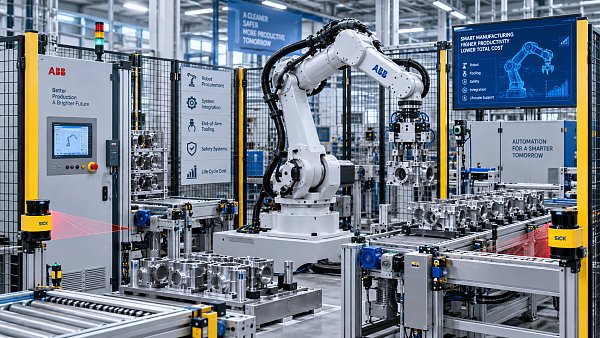
This matters across automation, transport, energy, edge AI, and machine integration projects, where replacement cycles and software continuity can affect operational economics more than initial purchase price.
Core checklist for evaluating embedded Linux industrial PC wholesale
- Verify CPU, RAM, storage, and I/O bill-of-materials stability across production batches, then request revision control rules in writing before approving embedded Linux industrial PC wholesale volume orders.
- Confirm Linux kernel version, BSP maturity, driver support, and patch policy, then test whether peripherals remain stable after security updates and application-layer changes.
- Check thermal design under real duty cycles, not open-bench demos, by measuring throttling behavior, enclosure temperatures, and sustained processing stability in sealed conditions.
- Inspect power input tolerance, surge protection, grounding behavior, and restart recovery, especially where brownouts, inverter noise, or unstable field wiring are common.
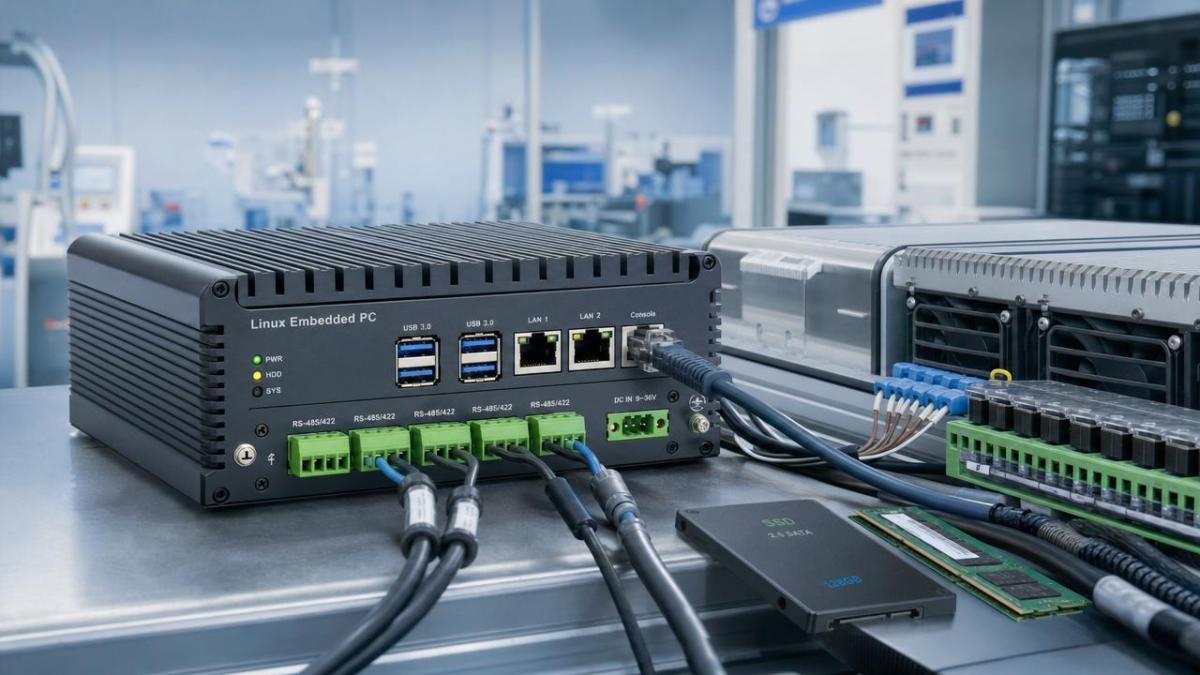
- Review industrial interfaces such as RS-232, RS-485, CAN, GPIO, LAN, USB, and isolated I/O, then match them to actual machine communication maps.
- Request compliance evidence for EMC, vibration, shock, operating temperature, and safety certifications, rather than accepting generic declarations attached to similar product families.
- Audit storage endurance and data integrity strategy by checking eMMC or SSD write cycles, wear-leveling behavior, and failure recovery during sudden power loss.
- Validate remote management capability, including secure OTA updates, watchdog timers, rollback functions, and fleet monitoring for distributed embedded Linux industrial PC wholesale deployments.
- Examine lifecycle commitments, last-time-buy policies, and second-source component plans to reduce redesign risk during multi-year product or infrastructure programs.
- Calculate total landed cost by combining unit price, accessories, customs, spare parts, validation effort, failure replacement, and engineering integration time.
What the checklist reveals beyond price
A low quote may hide unstable NIC chipsets, undocumented BIOS changes, or weak image maintenance. Those issues can erase any advantage from embedded Linux industrial PC wholesale.
A stronger supplier profile usually includes traceable test records, controlled firmware baselines, documented revision notices, and a practical roadmap for five-year or seven-year continuity.
Application scenarios where the risk-reward balance changes
Factory automation and machine control
For machine HMIs, protocol gateways, and light edge control, embedded Linux industrial PC wholesale may be worth the risk if deterministic behavior is not pushed beyond platform limits.
The priority here is interface reliability, boot stability, and resistance to electrical noise. Minor component variation can break field compatibility with legacy PLC networks.
Edge AI and vision analytics
In AI inference nodes, embedded Linux industrial PC wholesale becomes more attractive when GPU, NPU, or accelerator support is proven with the intended framework stack.
The risk rises if compute modules change silently. Kernel mismatch, camera driver instability, and thermal throttling can degrade inference speed and model consistency in production.
Transport, energy, and outdoor infrastructure
Here, embedded Linux industrial PC wholesale only works when environmental hardening is substantiated. Wide temperature claims must be checked against continuous load, not idle operation.
Ingress protection, vibration endurance, connector retention, and remote diagnostics matter more than slight savings on base hardware in these installations.
OEM product integration
For OEM systems, embedded Linux industrial PC wholesale can support margin control and faster scaling, especially when private labeling or enclosure customization is required.
However, OEM integration magnifies lifecycle risk. A board revision change can trigger recertification, software retesting, and field service complexity across every shipped unit.
Commonly overlooked risks in embedded Linux industrial PC wholesale
Kernel support is shorter than hardware availability
Some suppliers promise long hardware supply but do not maintain BSP updates for the same duration. That creates security exposure and integration dead ends.
Component substitutions are treated as minor changes
A substituted Ethernet controller, storage chip, or PMIC may seem equivalent. In reality, it can alter boot timing, driver behavior, and EMI performance.
Compliance documents are generic, not unit-specific
Test reports sometimes cover a related chassis, different CPU option, or preproduction sample. That gap matters in regulated or export-sensitive deployments.
Field service assumptions are unrealistic
If the design lacks image backup, remote recovery, and modular replacement logic, every failure becomes a manual intervention cost rather than a predictable maintenance event.
Lead time resilience is unproven
Embedded Linux industrial PC wholesale depends on more than the assembler. Upstream chip allocation, storage supply, and connector availability can disrupt continuity unexpectedly.
Practical execution steps before placing a wholesale order
- Run a pilot batch using final firmware, target peripherals, and real environmental loads rather than lab-only benchmarks.
- Freeze a golden hardware and software baseline, then define written approval rules for any electrical, mechanical, or firmware revision.
- Demand a documented lifecycle roadmap covering CPU family, storage options, EOL notice timing, and replacement planning.
- Create acceptance tests for boot time, thermal stability, network behavior, I/O integrity, and power interruption recovery.
- Separate sample validation from mass-production approval, because many embedded Linux industrial PC wholesale issues appear only at scale.
- Negotiate spare ratio, failure analysis turnaround, and firmware support scope before the first production release.
Is embedded Linux industrial PC wholesale worth the risk?
Yes, embedded Linux industrial PC wholesale can be worth the risk when the platform is technically mature, lifecycle-controlled, and validated against the exact workload.
No, it is not worth the risk when the decision relies mainly on unit price, vague compliance claims, or informal promises about long-term support.
The decisive factor is not wholesale pricing alone. It is whether the supplier can prove stability, revision discipline, and service continuity with engineering-grade evidence.
For TSV-style evaluation, the next step is simple: convert every sales claim into a measurable acceptance item, validate a pilot under real conditions, and approve embedded Linux industrial PC wholesale only after the risk profile is quantified.
Search News
Hot Articles
- Carbon Fiber StructuresHow to Specify Aerospace Carbon Fiber Assemblies for Lightweight, Load-Bearing PartsJul 11, 2026
- Machine VisionXiaomi, Alibaba DAMO Academy Drive Open-Source Robotics Model Ecosystem, Lowering Algorithm Development Barriers for Overseas SMEs Adopting Chinese Robotics SolutionsMar 30, 2026
- Cobots & ArmsShanxi 'AI+' Conference Showcases Embodied Intelligence with Multinational Buyer Engagement: Key Industry ImplicationsMar 30, 2026
Popular Tags
Recommended News
 Jul 11, 2026How to Specify Aerospace Carbon Fiber Assemblies for Lightweight, Load-Bearing PartsAerospace carbon fiber assemblies: learn how to specify laminate design, load data, joining methods, and inspection controls for lighter, reliable load-bearing aerospace parts.Elena Rostova (UAV Systems Researcher)
 Mar 30, 2026Xiaomi, Alibaba DAMO Academy Drive Open-Source Robotics Model Ecosystem, Lowering Algorithm Development Barriers for Overseas SMEs Adopting Chinese Robotics SolutionsXiaomi & Alibaba DAMO Academy's open-source robotics models lower algorithm barriers for global SMEs. Boost efficiency in manufacturing, logistics & smart retail with ROS 2 compatible solutions.TSV Data Lab
 Mar 30, 2026Shanxi 'AI+' Conference Showcases Embodied Intelligence with Multinational Buyer Engagement: Key Industry ImplicationsShanxi 'AI+' Conference highlights embodied intelligence with Tesla, Ubtech & Jiantao showcasing multimodal robotics. 40+ global buyers validated tech on-site, creating new B2B channels for industrial automation & AI solutions.Chen Wei (Automation Lead Engineer)
 Mar 30, 2026Zhongguancun Unveils 6G Integrated Sensing-Computing-Intelligence Platform to Empower Embodied Robots for Global Industrial ApplicationsZhongguancun's new 6G platform revolutionizes industrial robotics with <10ms latency, empowering global automotive, logistics & port automation. Discover how this tech boosts China's smart manufacturing exports.TSV Data Lab
 Mar 30, 2026Mech-Mind Tianjin Embodied Intelligence R&D and Production Base Goes Live, Cutting Delivery Time by 20%–30% for Global Customized AMR+Vision SolutionsMech-Mind's Tianjin AMR+Vision production base cuts delivery time by 20%-30% for欧美 & Latin American markets. Discover how this PLd-certified facility accelerates customized robotics solutions for smart manufacturing and logistics.Chen Wei (Automation Lead Engineer)
 Mar 30, 2026Boao Forum Reveals 'Co-evolution of Big and Small Brains' Trend in Humanoid Robots, China's Embodied Intelligence Accelerates Adaptation to Overseas Manufacturing Service ScenariosDiscover how China's humanoid robots, featuring 'Co-evolution of Big and Small Brains,' are revolutionizing global manufacturing. Learn about Embodied Tian Gong 3.0's ISO compliance and overseas deployment at Boao Forum 2026.Chen Wei (Automation Lead Engineer)
 Mar 30, 2026China Railway Industrial Secures Patent for Embodied Robotics in Material Handling, Boosting High-Precision Delivery Capabilities for Overseas Infrastructure and Manufacturing ProjectsChina Railway Industrial's new patent for embodied robotics in material handling boosts high-precision delivery for global infrastructure & manufacturing. Discover how this innovation enhances logistics accuracy in automotive, rail transit & EPC projects.Chen Wei (Automation Lead Engineer)
 Oct 10, 2026How to Select a Machine Performance Monitoring Platform for OEE and Downtime ReductionMachine performance monitoring platform selection guide: validate machine states, OEE data, downtime reasons, integrations, and scalability to reduce losses with confidence.TSV Data Lab
 Oct 08, 2026How to Machine Inconel 625 Blades Without Heat Cracks or Edge ChippingInconel 625 blade machining guide: prevent heat cracks, edge chipping, chatter, and work hardening with proven tooling, cooling, fixturing, and inspection strategies.Dr. Marcus Vance
 Oct 07, 2026How to Evaluate an HMI Panel Distributor for Industrial Automation ProjectsHMI panel distributor evaluation guide: verify technical compatibility, traceability, supply reliability, lifecycle support, and total cost for automation projects.Victor Lin (Chief Software Architect)
 Oct 06, 2026Navigation Fault Tolerance Standards for AMRs: What Safety Teams Must VerifyNavigation fault tolerance standards: learn what AMR safety teams must verify, from localization loss and sensor faults to stopping distance, safe restart, and site-specific validation.Chen Wei (Automation Lead Engineer)
 Oct 05, 2026Calculating Edge Computing Total Cost of Ownership Across Distributed SitesEdge computing ownership cost explained: calculate deployment, energy, connectivity, security, remote support, and refresh costs across distributed sites.TSV Data Lab
 Oct 04, 2026CAD/CAM Benchmarking in the GCC: What Manufacturers Should Ask a ConsultantCAD CAM benchmark consultant GCC guide: learn the key questions manufacturers should ask to validate post-processors, workflows, machine performance, and production risk.Victor Lin (Chief Software Architect)
 Oct 03, 2026Selecting Automotive Radar Sensor Modules for ADAS Range, Resolution, and IntegrationAutomotive radar sensor module selection guide for ADAS: compare range, resolution, field of view, latency, and integration to build safer, reliable vehicle systems.TSV Data Lab
 Oct 02, 2026How to Qualify Machined Parts Suppliers for Hard Tech ProgramsHard tech supply chain machined parts demand rigorous supplier qualification. Learn how to assess capability, traceability, quality controls, and delivery resilience.Dr. Marcus Vance
 Oct 01, 2026How to Select an Outdoor Security Radar Sensor for Perimeter Detection?Outdoor security radar sensor selection guide: compare range, accuracy, false-alarm control, integration, and field testing for reliable perimeter detection.TSV Data Lab
 Sep 30, 2026How to Evaluate Solid-State LiDAR Hardware for Outdoor Autonomous VehiclesSolid state LiDAR hardware evaluation guide for outdoor autonomous vehicles—compare range, point-cloud quality, environmental resilience, integration, and safety.TSV Data Lab
 Sep 29, 2026ISO 9283 Repeatability: How to Evaluate Cobot Positioning PerformanceISO 9283 cobot repeatability explained: learn how payload, reach, approach direction, and test conditions affect positioning performance and cell capability.Chen Wei (Automation Lead Engineer)
 Oct 10, 2026When does the cost of industrial robots pay back in high-volume production?Cost of industrial robots: discover how high-volume manufacturers calculate payback through uptime, cycle time, labor, quality, and integration before investing.Chen Wei (Automation Lead Engineer)
 Oct 09, 2026What does a manufacturing robot really cost beyond the purchase price?Manufacturing robot cost goes far beyond the purchase price. Explore integration, tooling, safety, uptime, and total ownership factors for smarter automation investments.Chen Wei (Automation Lead Engineer)
 Oct 08, 2026AGV vs. AMR: Which Is Better for Frequently Changing Routes?Which is better for changing routes? Compare AGVs and AMRs for flexible navigation, docking precision, traffic control, and faster facility reconfiguration.Chen Wei (Automation Lead Engineer)
 Oct 07, 2026How Much Does an Automated Guided Vehicle Cost in 2026?How much does an automated guided vehicle cost in 2026? Explore AGV price ranges, hidden deployment costs, and smart buying factors for stronger ROI.Chen Wei (Automation Lead Engineer)
 Oct 06, 2026Are Collaborative Robots Safe Enough to Operate Without Fencing?Are collaborative robots safe enough to work without fencing? Explore risk assessment, safeguarding options, and practical guidance for safer, productive cobot cells.Chen Wei (Automation Lead Engineer)
 Oct 05, 2026What Causes Machine Vision Systems to Miss Small Defects?What causes machine vision systems to miss small defects? Discover how lighting, optics, motion, and AI thresholds affect detection—and prevent costly escapes.TSV Data Lab