Is Embedded Linux Industrial PC Wholesale Worth the MOQ Risk
Publication Date
author
For procurement teams evaluating embedded linux industrial pc wholesale, the short answer is this: MOQ risk is worth taking only when the platform fits a stable deployment plan, the supplier can support lifecycle requirements, and the commercial terms protect you from inventory, compatibility, and support failure. If those conditions are weak, a low wholesale price can become a high-cost mistake. This article explains how buyers should evaluate MOQ exposure using technical, operational, and sourcing logic rather than headline discounts.
When Is Embedded Linux Industrial PC Wholesale Actually Worth the MOQ Risk?
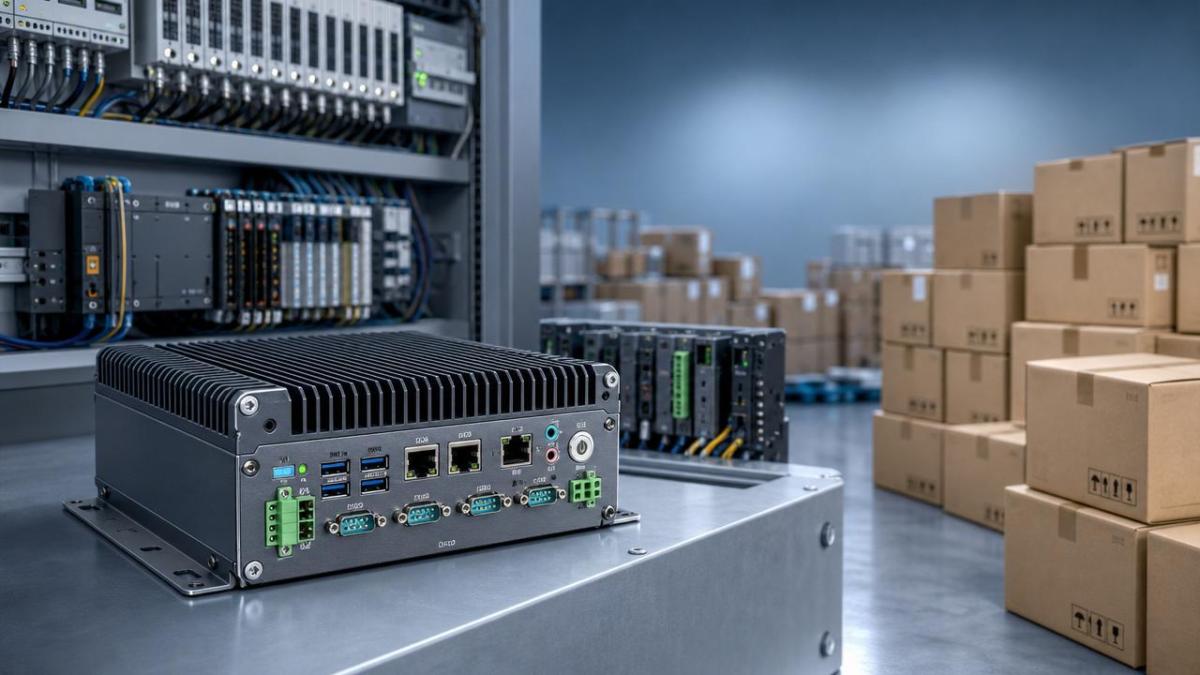
Most buyers do not search for wholesale options because they want more boxes in storage. They search because they need lower per-unit cost, configuration consistency, and a scalable supply model.
That makes MOQ risk a procurement decision, not just a pricing decision. The key issue is whether volume commitment matches the real deployment horizon, product life cycle, and support obligations.
For industrial applications, the answer is often yes, but only in defined cases. Wholesale purchasing is usually justified when the application is fixed, validation is complete, and future replenishment must stay consistent.
It is usually a bad idea when system requirements are still moving, software integration is incomplete, or the end customer may change I/O, form factor, or certification requirements after pilot deployment.
In other words, MOQ becomes reasonable when uncertainty is low. If uncertainty is still high, procurement should protect flexibility first and price second.
What Procurement Teams Are Really Trying to Avoid
Procurement managers rarely worry about MOQ in isolation. They worry about what MOQ can lock them into: unusable inventory, supplier dependence, delayed launches, and expensive engineering rework.
With embedded Linux industrial systems, these risks are more serious than in general electronics because compatibility extends beyond hardware. Kernel support, BSP maintenance, driver stability, and long-term patchability all matter.
A low-cost bulk purchase can fail financially if the board revision changes, a peripheral loses driver support, or the CPU platform reaches end-of-life sooner than expected.
Buyers also worry about hidden asymmetry. Suppliers often know much more than the customer about component longevity, lead-time volatility, and the practical limits of customization.
That is why wholesale evaluation should focus on information quality. Before approving MOQ, buyers need evidence on platform maturity, revision control, component roadmap, and field support response capability.
Start with the Most Important Question: Is the Deployment Stable Enough for Volume?
The first decision gate is not price. It is deployment stability. If the target application is already standardized across machines, sites, or customer programs, wholesale buying becomes much safer.
Examples include HMI control cabinets, machine vision gateways, AGV controllers, CNC edge nodes, and ruggedized data acquisition terminals with fixed environmental and I/O requirements.
In these cases, procurement benefits from repeatability. The same enclosure, same processor family, same interface map, and same Linux stack can support scale purchasing with lower qualification burden.
But if the project is still in pilot stage, the system architecture may change after field testing. That creates a classic MOQ trap: the units are discounted, yet a portion becomes operationally obsolete.
Procurement should ask engineering for one clear signal before wholesale approval: are interface, thermal, mounting, power input, and software dependency requirements unlikely to change over the next twelve to eighteen months?
If the answer is uncertain, negotiate for staged releases instead of immediate full-volume intake. MOQ exposure should track design maturity.
Unit Price Is Not the Main Number to Watch
Many wholesale offers look attractive because the unit price drops sharply after a threshold. For buyers, however, the meaningful number is total landed risk-adjusted cost.
That includes freight, duties, storage, quality inspection, failure replacement, software adaptation, support overhead, and the cost of carrying inventory that may not ship on time to downstream projects.
It also includes lifecycle cost. If an industrial PC needs early redesign because a key module changes, the initial discount can disappear through engineering labor and field maintenance exposure.
A practical way to compare offers is to calculate three layers. First, nominal unit cost. Second, deployed unit cost. Third, cost under failure scenarios such as delay, compatibility issue, or partial dead stock.
Procurement teams that only compare the first layer often overestimate the benefit of embedded linux industrial pc wholesale deals. Teams that model all three layers usually make better decisions.
Why Lifecycle Support Often Matters More Than MOQ Price Breaks
Industrial buyers are not purchasing a consumer mini PC. They are buying a platform expected to remain serviceable for years under operational constraints and maintenance obligations.
That makes longevity one of the strongest tests of whether MOQ risk is worth taking. A supplier should be able to explain processor roadmap, memory availability, storage options, and expected product continuity.
Ask whether the unit is built from stable industrial-grade components or from mixed commercial parts that may face frequent substitution. The answer changes your long-term inventory risk.
Linux support also needs scrutiny. Embedded Linux reliability depends on BSP quality, kernel version strategy, driver maintenance, and how the vendor handles security updates over time.
If a supplier cannot explain its update policy, revision history, and long-term technical support process, wholesale volume becomes much riskier regardless of the discount offered.
For procurement, a slightly higher price from a lifecycle-transparent vendor is often cheaper than a low-MOQ deal from a vendor with poor roadmap visibility.
MOQ Risk Increases Fast When Customization Is Involved
Customization can make embedded Linux industrial PCs more suitable for a specific deployment, but it also changes the economics of wholesale sourcing.
Custom I/O layouts, BIOS settings, enclosure changes, branding, preinstalled images, and mounting modifications can all improve fit. They can also reduce interchangeability and resale flexibility.
This matters because unused standard units may still be repurposed elsewhere. Unused custom units often cannot. That means every MOQ decision on a custom configuration carries higher dead-stock risk.
Procurement should divide customization into two categories. Soft customization includes labels, packaging, software image, and accessories. Hard customization includes PCB, enclosure, connector, and thermal design changes.
Soft customization usually carries manageable MOQ risk if the core platform remains standard. Hard customization requires stronger demand certainty, better contract terms, and tighter engineering sign-off.
If the supplier pushes aggressive MOQ on a heavily customized design before pilot validation is complete, buyers should treat that as a warning sign rather than a bargain.
How to Assess Supplier Quality Beyond the Sales Pitch
In wholesale industrial procurement, supplier evaluation should not stop at price sheets, catalogs, or generic test claims. Buyers need to verify process discipline.
Start with revision control. Ask how hardware changes are communicated, how firmware versions are tracked, and whether there is a formal product change notification process.
Next, assess manufacturing consistency. Can the supplier document incoming quality control, burn-in testing, functional validation, and traceability at serial-number level?
Then review support structure. Who handles Linux image issues, peripheral compatibility, and field failures? Is support local, regional, or remote-only? What are response and replacement expectations?
Also ask for examples of long-cycle industrial deployments. A supplier experienced in factory automation, transportation, or energy systems usually understands the implications of lifecycle and uptime better than a generic box seller.
For embedded linux industrial pc wholesale, procurement confidence should come from process evidence, not from marketing adjectives.
Contract Terms Can Reduce MOQ Risk More Than Further Price Negotiation
Buyers often spend too much effort chasing the last few points of unit discount and too little effort negotiating structural risk protection.
Several terms can materially improve wholesale safety. One is phased delivery against a blanket order, allowing the buyer to secure pricing without taking all inventory at once.
Another is a last-time-buy notification commitment, giving the customer enough time to plan buffers or redesign. This is especially important for CPU, storage, and wireless module changes.
Procurement should also negotiate acceptable substitution rules. No component change that affects thermal behavior, driver support, certification, or fit should occur without approval.
For custom builds, include ownership and reuse terms for tooling, software images, and documentation. Clarify warranty process, DOA threshold, and turnaround times for failure analysis.
In many cases, good terms transform MOQ from a gamble into a manageable planning tool. Poor terms do the opposite even when pricing appears excellent.
A Practical Decision Framework for Buyers
To decide whether MOQ exposure is justified, procurement teams can use a simple five-part filter before approving any wholesale commitment.
First, demand confidence. Is the consumption forecast backed by signed projects, standard machine platforms, or repeat customer programs rather than assumptions?
Second, design stability. Has engineering frozen the key requirements for interfaces, compute performance, thermal envelope, operating system, and mounting constraints?
Third, lifecycle visibility. Can the supplier provide credible continuity information for major components and Linux support over the expected service window?
Fourth, supplier discipline. Is there evidence of quality control, traceability, change management, and industrial support capability?
Fifth, contract protection. Do purchase terms allow staged shipment, controlled substitutions, warranty clarity, and predictable support escalation?
If four or five of these conditions are strong, MOQ risk may be commercially justified. If two or more are weak, buyers should slow down and preserve flexibility.
When Wholesale Makes Strategic Sense
There are clear situations where embedded linux industrial pc wholesale is not only justified but strategically smart. One is multi-site standardization across a single automation architecture.
Another is OEM manufacturing where the same controller is embedded into a repeatable equipment platform with validated software and predictable replenishment cycles.
Wholesale also makes sense when a buyer wants to lock in continuity before broader market shortages affect availability or pricing of industrial compute components.
In those scenarios, MOQ can support both cost control and operational resilience. The value comes from consistency, not just discount.
By contrast, if the industrial PC is being considered for mixed projects with uncertain peripheral combinations and evolving software requirements, wholesale commitment may reduce agility more than it saves money.
Final Verdict: Worth It, but Only with Evidence
Is embedded linux industrial pc wholesale worth the MOQ risk? Yes, when the deployment is stable, the supplier is lifecycle-transparent, the Linux support path is credible, and contract terms reduce inventory and change risk.
No, when buyers are still validating requirements, relying on vague support promises, or committing to customized volume before technical and commercial controls are in place.
For procurement teams, the correct mindset is simple. Do not buy MOQ because the price is low. Buy MOQ because the platform is qualified, the demand is real, and the supply relationship is engineered for continuity.
That is the difference between a smart wholesale strategy and an expensive stock problem. In industrial sourcing, disciplined evidence beats attractive unit pricing every time.
Search News
Hot Articles
- Carbon Fiber StructuresHow to Specify Aerospace Carbon Fiber Assemblies for Lightweight, Load-Bearing PartsJul 11, 2026
- Machine VisionXiaomi, Alibaba DAMO Academy Drive Open-Source Robotics Model Ecosystem, Lowering Algorithm Development Barriers for Overseas SMEs Adopting Chinese Robotics SolutionsMar 30, 2026
- Cobots & ArmsShanxi 'AI+' Conference Showcases Embodied Intelligence with Multinational Buyer Engagement: Key Industry ImplicationsMar 30, 2026
Popular Tags
Recommended News
 Jul 11, 2026How to Specify Aerospace Carbon Fiber Assemblies for Lightweight, Load-Bearing PartsAerospace carbon fiber assemblies: learn how to specify laminate design, load data, joining methods, and inspection controls for lighter, reliable load-bearing aerospace parts.Elena Rostova (UAV Systems Researcher)
 Mar 30, 2026Xiaomi, Alibaba DAMO Academy Drive Open-Source Robotics Model Ecosystem, Lowering Algorithm Development Barriers for Overseas SMEs Adopting Chinese Robotics SolutionsXiaomi & Alibaba DAMO Academy's open-source robotics models lower algorithm barriers for global SMEs. Boost efficiency in manufacturing, logistics & smart retail with ROS 2 compatible solutions.TSV Data Lab
 Mar 30, 2026Shanxi 'AI+' Conference Showcases Embodied Intelligence with Multinational Buyer Engagement: Key Industry ImplicationsShanxi 'AI+' Conference highlights embodied intelligence with Tesla, Ubtech & Jiantao showcasing multimodal robotics. 40+ global buyers validated tech on-site, creating new B2B channels for industrial automation & AI solutions.Chen Wei (Automation Lead Engineer)
 Mar 30, 2026Zhongguancun Unveils 6G Integrated Sensing-Computing-Intelligence Platform to Empower Embodied Robots for Global Industrial ApplicationsZhongguancun's new 6G platform revolutionizes industrial robotics with <10ms latency, empowering global automotive, logistics & port automation. Discover how this tech boosts China's smart manufacturing exports.TSV Data Lab
 Mar 30, 2026Mech-Mind Tianjin Embodied Intelligence R&D and Production Base Goes Live, Cutting Delivery Time by 20%–30% for Global Customized AMR+Vision SolutionsMech-Mind's Tianjin AMR+Vision production base cuts delivery time by 20%-30% for欧美 & Latin American markets. Discover how this PLd-certified facility accelerates customized robotics solutions for smart manufacturing and logistics.Chen Wei (Automation Lead Engineer)
 Mar 30, 2026Boao Forum Reveals 'Co-evolution of Big and Small Brains' Trend in Humanoid Robots, China's Embodied Intelligence Accelerates Adaptation to Overseas Manufacturing Service ScenariosDiscover how China's humanoid robots, featuring 'Co-evolution of Big and Small Brains,' are revolutionizing global manufacturing. Learn about Embodied Tian Gong 3.0's ISO compliance and overseas deployment at Boao Forum 2026.Chen Wei (Automation Lead Engineer)
 Mar 30, 2026China Railway Industrial Secures Patent for Embodied Robotics in Material Handling, Boosting High-Precision Delivery Capabilities for Overseas Infrastructure and Manufacturing ProjectsChina Railway Industrial's new patent for embodied robotics in material handling boosts high-precision delivery for global infrastructure & manufacturing. Discover how this innovation enhances logistics accuracy in automotive, rail transit & EPC projects.Chen Wei (Automation Lead Engineer)
 Sep 29, 2026ISO 9283 Repeatability: How to Evaluate Cobot Positioning PerformanceISO 9283 cobot repeatability explained: learn how payload, reach, approach direction, and test conditions affect positioning performance and cell capability.Chen Wei (Automation Lead Engineer)
 Sep 29, 2026How Do You Verify Servo Motor Torque Under Continuous Load?How do I verify servo motor torque under continuous load? Learn RMS torque checks, torque-speed limits, thermal derating, and real-machine testing.Chen Wei (Automation Lead Engineer)
 Sep 28, 2026Spindle Runout Measurement in Germany: DIN Standards, Methods, and Acceptance LimitsSpindle runout measurement Germany: explore DIN standards, proven methods, acceptance limits, and audit-ready practices for reliable machining quality.Dr. Marcus Vance
 Sep 27, 2026How to Select Wall-Mount Edge Devices for Space-Constrained Factory NetworksWall mount edge devices for space-constrained factories: evaluate workload, thermal design, power resilience, cable access, and network reliability for smarter deployments.TSV Data Lab
 Sep 26, 2026Machining Tolerance Analysis: How to Set Limits That Meet Function and Cost TargetsMachining tolerance analysis: learn how to set functional limits, control tolerance stacks, reduce inspection risk, and balance precision with production cost.Dr. Marcus Vance
 Sep 25, 2026How to Evaluate an Industrial Infrastructure Data Platform for Multi-Site OperationsIndustrial infrastructure data platform evaluation guide for multi-site operations: compare data quality, edge resilience, interoperability, governance, and scalable proof-of-value criteria.Victor Lin (Chief Software Architect)
 Sep 24, 2026How to Select Machine Vision Optics for Accurate Inspection at Different Working DistancesMachine vision optics selection guide for accurate inspection at every working distance. Compare FOV, pixel scale, DOF, distortion, lighting, and telecentric options.TSV Data Lab
 Sep 23, 2026How to Evaluate a Machine Vision System Integrator for High-Speed Inspection LinesChoose a machine vision system integrator with proven expertise in high-speed inspection, reliable reject timing, robust optics, and measurable acceptance criteria.TSV Data Lab
 Sep 29, 2026How MES and OEE work together to identify production lossesMES and OEE work together to uncover hidden production losses, connect downtime, speed, and quality data, and drive smarter shop-floor improvements.Victor Lin (Chief Software Architect)
 Sep 28, 2026When is a SCADA API the right choice for connecting plant systems?SCADA API guide: learn when governed plant data integration improves traceability, security, and scalability—without compromising real-time control.Victor Lin (Chief Software Architect)
 Sep 27, 2026How SCADA data integration improves traceability across production linesSCADA data integration connects production-line data to improve traceability, accelerate quality investigations, and strengthen safety decisions.Victor Lin (Chief Software Architect)
 Sep 26, 2026What to define before starting SCADA integration planningSCADA integration planning starts with clear scope, control boundaries, data models, cybersecurity, and testing. Discover the definitions that reduce risk and costly rework.Victor Lin (Chief Software Architect)
 Sep 25, 2026How a smart factory with Industrial IoT reduces production blind spotsDiscover how a smart factory with Industrial IoT turns real-time machine, quality, and workflow data into actionable insights that reduce production blind spots and delivery risks.Victor Lin (Chief Software Architect)
 Sep 24, 2026When does Industrial IoT make smart manufacturing easier to scale?Smart manufacturing Industrial IoT scales when trusted data, interoperable systems, and secure workflows turn connected assets into measurable gains.TSV Data Lab
 Sep 23, 2026What drives ultra-precision machining cost at 1-micron tolerance?Ultra precision machining cost per part at 1 micron tolerance depends on process, material, metrology, and yield. Learn how to compare quotes confidently.Dr. Marcus Vance
 Sep 22, 2026Drone Engine-T550CC Applications: Build the UAV Power System Around the MissionAn application guide for Drone Engine-T550CC integration, covering payload planning, airframe matching, cooling, fuel, vibration, test procedures, documentation, and service preparation.Elena Rostova (UAV Systems Researcher)
 Sep 22, 2026How to Evaluate Industrial Edge Computing Vendors for Factory DeploymentIndustrial edge computing vendor evaluation guide for factories: compare latency, protocol fit, reliability, security, and lifecycle support before deployment.TSV Data Lab