Industrial pressure transmitter wholesale: which costs get missed?
Publication Date
author
When evaluating industrial pressure transmitter wholesale options, many buyers focus on unit price but overlook calibration, certification, integration, and lifetime maintenance costs. For procurement teams, operators, and decision-makers, hidden expenses can quietly erode ROI just as much as poor specs in an iot gateway throughput benchmark or industrial iot gateway latency review. This article breaks down the most commonly missed cost factors so you can compare suppliers with engineering-level clarity.
Why does industrial pressure transmitter wholesale pricing often look simpler than it really is?
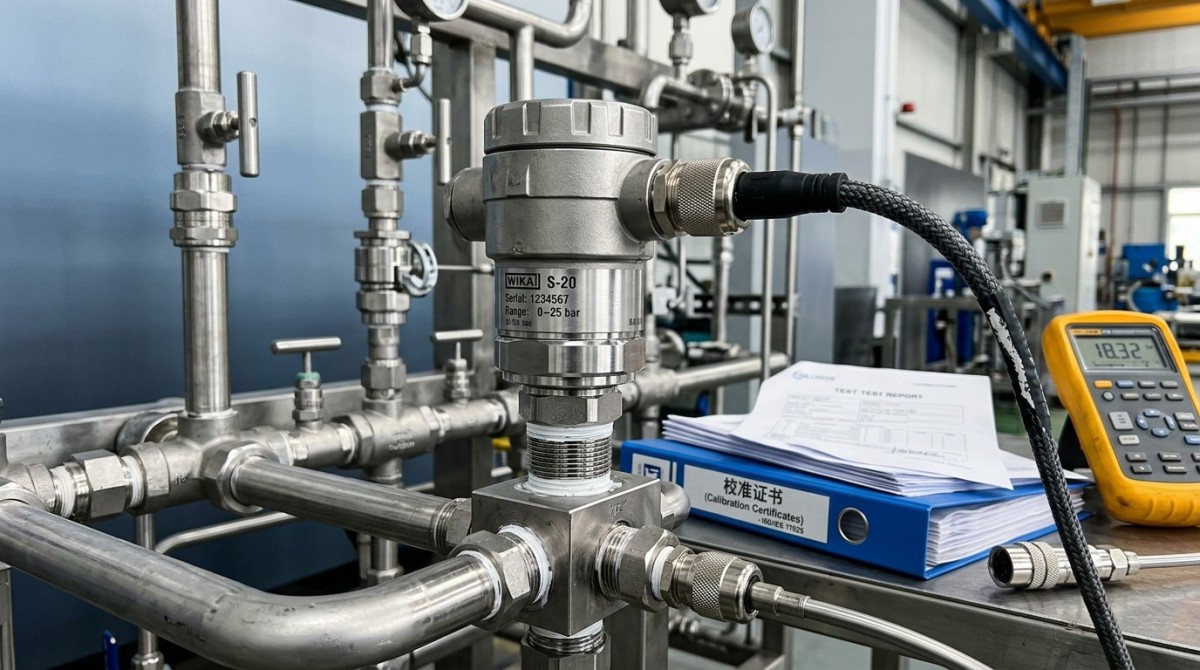
In industrial pressure transmitter wholesale, the quoted unit price is only the visible layer of total cost. Many offers look comparable on paper because suppliers present the sensor body, output type, and nominal pressure range, but omit the downstream expenses that appear during commissioning, compliance review, and field operation. This creates a gap between purchasing price and actual lifecycle cost.
For information researchers and procurement teams, the challenge is not simply finding a low quote. It is filtering signal from noise. A transmitter for 0–10 bar water service, a 4–20 mA output model for chemical dosing, and a stainless steel unit for 25 bar hydraulic pressure can all appear inexpensive until calibration protocol, cable compatibility, ingress protection, and documentation requirements are added.
Operators feel the impact later. If an industrial pressure transmitter arrives with unclear zero drift limits, incomplete installation instructions, or no traceable calibration record, troubleshooting time increases. A device that is cheap to buy can become expensive within 7–30 days of startup if it causes repeated signal instability, false alarms, or PLC scaling errors.
At TechStat Vanguard, the practical rule is straightforward: parameters do not lie, and tolerances dictate success. In wholesale sourcing, that means comparing not only pressure range and connector style, but also the full engineering chain from factory test conditions to maintenance interval, spare part availability, and supplier response time.
What buyers usually assume versus what they should verify
A common assumption is that transmitters with the same range and output are interchangeable. In reality, application environment matters. Temperature fluctuation, vibration, media compatibility, EMI exposure, and installation orientation can all shift performance. Two units with identical 4–20 mA output may behave differently after 3–6 months in a compressor skid or outdoor tank farm.
Another assumption is that factory calibration always matches site requirements. It often does not. If your process control loop expects a tighter operating band, you may need additional bench calibration, loop testing, or signal mapping before the transmitter is accepted into production.
- Quoted price may exclude accessories such as connectors, mounting brackets, display heads, or mating cables.
- Documentation may not include calibration certificates, material traceability, or installation drawings.
- Lead time may cover production only, not final testing, export packing, or customs-ready paperwork.
- Technical support may stop after shipment, leaving your team to resolve scaling, wiring, or interference issues.
Which hidden costs get missed most often in pressure transmitter procurement?
The most missed costs usually appear in five areas: calibration, certification, integration, environmental suitability, and after-sales service. These are not secondary details. In many B2B projects, especially when buying in batches of 20, 50, or 200 units, these cost layers can change supplier ranking more than the base quotation itself.
Calibration is one of the first gaps. A basic factory check is not the same as a calibration package aligned with your acceptance workflow. If your quality team requires traceable records, point-by-point testing, or verification at 0%, 50%, and 100% span, the true cost per unit rises. If this is discovered after delivery, the project may lose another 1–2 weeks.
Certification is another overlooked area. Depending on the site, buyers may need declarations linked to material compatibility, ingress protection, hazardous area use, electromagnetic compatibility, or process industry documentation. Even when the transmitter itself is suitable, incomplete paperwork can delay installation and final acceptance.
Integration cost is less visible but often larger. If the transmitter output does not map cleanly into the PLC, DCS, SCADA, or industrial IoT layer, engineering hours multiply. This is especially important for plants already tracking signal quality across broader automation architecture, where a weak field instrument can distort analytics just as much as poor edge-device latency can affect control visibility.
A practical cost breakdown for wholesale evaluation
The table below helps procurement teams compare visible and hidden cost items in industrial pressure transmitter wholesale. It is designed for RFQ review, supplier meetings, and cross-functional budget approval.
The key point is that these cost items rarely appear as one large line item. They accumulate in small increments: one extra service visit, one delayed batch, one failed acceptance test, one operator shift spent tracing a noisy signal. In wholesale projects, small hidden costs repeated across dozens of units quickly become strategic costs.
Three hidden expenses that affect ROI fastest
First, re-calibration after delivery. If your plant receives 50 units and 10% need adjustment, labor and downtime can exceed the original price gap between suppliers. Second, field wiring correction. Connector or pinout mismatch can add hours per cabinet or skid. Third, premature replacement. A transmitter unsuited for media pulsation or washdown cycles can fail well before the expected maintenance window.
How should engineers and buyers compare suppliers beyond the quoted unit price?
A useful wholesale comparison framework starts with three layers: specification fit, compliance fit, and operating fit. Specification fit asks whether the instrument matches pressure range, output, power supply, process connection, and accuracy needs. Compliance fit asks whether the package satisfies your internal QA and project documentation rules. Operating fit asks whether the transmitter will remain stable under actual site conditions for 12–36 months.
This comparison method matters in mixed industrial environments. A transmitter for water treatment, food equipment, OEM compressors, and process skids may need different material, sealing, and enclosure choices even when pressure ranges overlap. In wholesale sourcing, standardization helps, but over-standardization can increase hidden cost if one model is forced into unsuitable conditions.
Procurement teams should also ask whether the supplier supports batch consistency. A sample unit performing well does not guarantee that the next 100 pieces will have the same response behavior, labeling quality, and documentation completeness. This is where disciplined data review matters more than marketing language.
TSV’s approach is to evaluate devices as part of a broader instrumentation chain. In the same way that sensor integrity shapes edge analytics quality, field pressure data quality shapes maintenance decisions, alarm logic, and process stability. Cheap uncertainty in the field often becomes expensive uncertainty at the management level.
Supplier comparison checklist for industrial pressure transmitter wholesale
Before approving a supplier, use a structured review with at least 6 key checkpoints. This reduces the risk of choosing based on incomplete quotations or inconsistent technical files.
- Confirm pressure range, overload tolerance, output type, and power requirements against the actual process loop.
- Check wetted materials and sealing compatibility with water, air, oil, steam, or chemical media.
- Review calibration scope, certificate format, and acceptance criteria before mass order release.
- Verify ingress protection, operating temperature range, and vibration exposure suitability.
- Assess lead time in full, including testing, packaging, paperwork, and shipping readiness.
- Ask about failure handling, replacement turnaround, and support response within the first 30–90 days.
A comparison table for sourcing decisions
The following table is useful when comparing two or three shortlisted suppliers during technical-commercial review. It keeps engineering, procurement, and management aligned on the same decision factors.
When teams use this comparison method, the conversation changes from “Who is cheapest today?” to “Who creates the lowest total risk over the next 12 months?” That is usually the more accurate purchasing question in industrial pressure transmitter wholesale.
Which standards, certification, and integration details deserve closer attention?
Not every project needs the same certification depth, but nearly every project needs documentation discipline. For OEMs, system integrators, and plant operators, the absence of clear specification sheets, material information, or test records often causes more delay than a moderate price increase. A transmitter cannot be evaluated by enclosure appearance alone.
Start with application-specific requirements. Indoor utility service may accept a simpler documentation package, while process lines, washdown environments, export projects, or regulated production areas usually demand stronger document control. Typical review items include ingress protection, media-contact materials, electrical output verification, and installation temperature range such as -20°C to 80°C or another project-defined band.
Integration should be checked early, not after arrival. Confirm whether the transmitter will connect to PLC analog cards, remote I/O, or an industrial IoT node. Even for standard 4–20 mA or 0–10 V outputs, cable length, grounding method, shielding, and power stability can affect signal quality. These are familiar issues in broader sensor and edge architectures, where weak field discipline undermines system-level trust.
For cross-border or multi-site procurement, ask suppliers to clarify what is included in the technical package before PO release. If your team needs 4 document types and the supplier routinely provides only 2, the difference will surface later as an engineering burden rather than a line-item cost.
Common compliance and documentation checkpoints
- Datasheet consistency: pressure range, output type, process connection, electrical connection, and environmental limits must match the purchase specification.
- Calibration records: confirm whether each unit, each batch, or only sampled units receive documented verification.
- Material and sealing details: especially important for corrosive media, washdown systems, and sanitary-adjacent processes.
- Installation guidance: torque limits, mounting orientation, wiring notes, and protection against surge or vibration should be clear.
Why incomplete certification becomes a cost issue
If a transmitter reaches site without the expected compliance file, three things often happen. First, QA holds acceptance. Second, engineering must request clarification or replacement documents. Third, the installation window slips. In projects with fixed shutdown periods of 2–5 days, this can force rescheduling and increase labor coordination costs far beyond the price of the instrument itself.
What mistakes do buyers make when balancing low price, lead time, and long-term reliability?
The first mistake is treating all pressure transmitters as commodities. They are standard products in some respects, but their field behavior is highly contextual. Choosing only on price can work for stable, low-risk utility applications, yet it becomes costly in installations with pulsing pressure, outdoor exposure, washdown cycles, or strict control accuracy requirements.
The second mistake is ignoring the total installation package. A fast lead time on the transmitter body is not enough if connectors, displays, seals, or cables arrive separately 1–2 weeks later. Procurement sees an on-time shipment, but operations sees a delayed commissioning schedule.
The third mistake is underestimating serviceability. If replacement parts, technical contact windows, or troubleshooting guidance are weak, each failure event becomes longer and more expensive. For plants running continuous or semi-continuous operations, even a single unresolved pressure signal issue can affect quality tracking, alarm management, and preventive maintenance planning.
A better approach is to rank suppliers by total decision quality. That means balancing 4 factors at once: technical fit, documentation depth, delivery reliability, and support responsiveness. If one supplier is 8% cheaper but creates a 2-week delay or a higher replacement rate over 12 months, the cheaper option may not be cheaper at all.
FAQ: practical questions buyers ask before placing wholesale orders
How many sample units should be tested before a bulk order?
For a new supplier, many teams start with 2–5 samples for bench review and one limited field trial. If the order size is larger, such as 50–200 units, request confirmation of batch consistency, not just sample acceptance. Sample success is useful, but process consistency is what protects wholesale ROI.
What lead time should buyers really ask about?
Do not ask only for production time. Ask for total ready-to-ship time, including calibration, final inspection, document preparation, and packaging. In practice, the difference between “7 days production” and “12 days shipment ready” can decide whether your installation plan holds.
Is a higher-accuracy model always worth the extra cost?
Not always. The right answer depends on control loop sensitivity, process stability, and maintenance strategy. Paying for tighter accuracy than the application can use may increase budget without improving operational outcomes. But under-specifying accuracy can create scaling errors, nuisance alarms, or product quality variation.
What is the safest way to compare industrial pressure transmitter wholesale quotations?
Standardize your RFQ around 5 items: operating range, output type, process connection, document package, and acceptance test requirement. Then compare supplier responses line by line. This reduces ambiguity and makes hidden cost items easier to surface before purchase approval.
Why work with a data-driven technical partner before you finalize a bulk purchase?
In industrial pressure transmitter wholesale, the highest-value support often happens before the order is placed. Teams need help translating process needs into a clean specification, filtering vague claims, and identifying cost drivers that do not appear in first-round quotations. That is where a data-driven technical review delivers measurable value.
TechStat Vanguard works from an engineering-first perspective. We focus on parameter clarity, tolerance logic, and supply-side transparency rather than marketing adjectives. For buyers comparing multiple pressure transmitter options, this means clearer specification sheets, sharper supplier evaluation, and fewer surprises during qualification and commissioning.
If your team is reviewing pressure range options, calibration scope, document requirements, or integration risk with PLC and industrial IoT systems, we can help structure the comparison. If you are balancing cost against delivery time, or deciding whether a standard model is enough for a more demanding environment, we can help define the technical decision points before budget is locked.
Contact us to discuss parameter confirmation, product selection, delivery cycle review, customization feasibility, certification requirements, sample evaluation, or quotation comparison. For procurement teams, operators, and decision-makers who need more than a price list, TSV provides an engineering-level filter so your next wholesale decision is grounded in usable data, not sales noise.
Search News
Hot Articles
- Carbon Fiber StructuresHow to Specify Aerospace Carbon Fiber Assemblies for Lightweight, Load-Bearing PartsJul 11, 2026
- Machine VisionXiaomi, Alibaba DAMO Academy Drive Open-Source Robotics Model Ecosystem, Lowering Algorithm Development Barriers for Overseas SMEs Adopting Chinese Robotics SolutionsMar 30, 2026
- Cobots & ArmsShanxi 'AI+' Conference Showcases Embodied Intelligence with Multinational Buyer Engagement: Key Industry ImplicationsMar 30, 2026
Popular Tags
Recommended News
 Jul 11, 2026How to Specify Aerospace Carbon Fiber Assemblies for Lightweight, Load-Bearing PartsAerospace carbon fiber assemblies: learn how to specify laminate design, load data, joining methods, and inspection controls for lighter, reliable load-bearing aerospace parts.Elena Rostova (UAV Systems Researcher)
 Mar 30, 2026Xiaomi, Alibaba DAMO Academy Drive Open-Source Robotics Model Ecosystem, Lowering Algorithm Development Barriers for Overseas SMEs Adopting Chinese Robotics SolutionsXiaomi & Alibaba DAMO Academy's open-source robotics models lower algorithm barriers for global SMEs. Boost efficiency in manufacturing, logistics & smart retail with ROS 2 compatible solutions.TSV Data Lab
 Mar 30, 2026Shanxi 'AI+' Conference Showcases Embodied Intelligence with Multinational Buyer Engagement: Key Industry ImplicationsShanxi 'AI+' Conference highlights embodied intelligence with Tesla, Ubtech & Jiantao showcasing multimodal robotics. 40+ global buyers validated tech on-site, creating new B2B channels for industrial automation & AI solutions.Chen Wei (Automation Lead Engineer)
 Mar 30, 2026Zhongguancun Unveils 6G Integrated Sensing-Computing-Intelligence Platform to Empower Embodied Robots for Global Industrial ApplicationsZhongguancun's new 6G platform revolutionizes industrial robotics with <10ms latency, empowering global automotive, logistics & port automation. Discover how this tech boosts China's smart manufacturing exports.TSV Data Lab
 Mar 30, 2026Mech-Mind Tianjin Embodied Intelligence R&D and Production Base Goes Live, Cutting Delivery Time by 20%–30% for Global Customized AMR+Vision SolutionsMech-Mind's Tianjin AMR+Vision production base cuts delivery time by 20%-30% for欧美 & Latin American markets. Discover how this PLd-certified facility accelerates customized robotics solutions for smart manufacturing and logistics.Chen Wei (Automation Lead Engineer)
 Mar 30, 2026Boao Forum Reveals 'Co-evolution of Big and Small Brains' Trend in Humanoid Robots, China's Embodied Intelligence Accelerates Adaptation to Overseas Manufacturing Service ScenariosDiscover how China's humanoid robots, featuring 'Co-evolution of Big and Small Brains,' are revolutionizing global manufacturing. Learn about Embodied Tian Gong 3.0's ISO compliance and overseas deployment at Boao Forum 2026.Chen Wei (Automation Lead Engineer)
 Mar 30, 2026China Railway Industrial Secures Patent for Embodied Robotics in Material Handling, Boosting High-Precision Delivery Capabilities for Overseas Infrastructure and Manufacturing ProjectsChina Railway Industrial's new patent for embodied robotics in material handling boosts high-precision delivery for global infrastructure & manufacturing. Discover how this innovation enhances logistics accuracy in automotive, rail transit & EPC projects.Chen Wei (Automation Lead Engineer)
 Oct 23, 2026Choosing Industrial Sensing Systems for Global Plants: Protocol CompatibilityCompare industrial sensing systems international buyers can trust. Explore protocol compatibility, reduce integration risks, and select proven configurations for reliable global plant deployments.TSV Data Lab
 Oct 22, 2026KUKA Showcases Physical AI and iiQKA.AI Vision at NVIDIA GTC BerlinExplore KUKA’s Physical AI showcase at NVIDIA GTC Berlin and discover how iiQKA.AI Vision aims to simplify robotic vision integration and improve 2D and 3D scene recognition.TSV Data Lab
 Oct 22, 2026Robotic Machining of Advanced Composites: What Tolerances Are Achievable?Explore advanced materials machining robotics: discover what drives achievable composite tolerances and how to validate accuracy before investing in your next machining system.Dr. Marcus Vance
 Oct 21, 2026China’s Industrial Robot Exports Near RMB 10 Billion in First Nine Months of 2026China’s industrial robot exports neared RMB 10 billion in January–September 2026, with value rising faster than volume. Explore the data and what it could mean for suppliers.Chen Wei (Automation Lead Engineer)
 Oct 21, 2026Low-Latency Industrial Data Processing: Pricing and Key Cost DriversExplore industrial data latency price drivers, from edge hardware to integration and support. Learn how to compare quotes, verify performance, and avoid unnecessary costs.TSV Data Lab
 Oct 20, 2026KUKA Launches iiQKA.AI Vision to Simplify Industrial Image ProcessingKUKA iiQKA.AI Vision simplifies industrial image processing with controller-based 2D and 3D vision. Explore drag-and-drop setup for vision-guided automation.TSV Data Lab
 Oct 20, 2026Smart Industrial Edge Devices: Key Criteria for Legacy PLC IntegrationChoose smart industrial edge devices for legacy PLC integration. Discover key criteria for compatibility, data quality, security, and reliable collection without disrupting control.TSV Data Lab
 Oct 19, 2026Choosing a Radar Sensor by Application: Range, Resolution, and Field of ViewSimplify radar sensor application based product selection. Compare range, resolution, and field of view to avoid blind spots and choose with confidence. Explore the guide.TSV Data Lab
 Oct 18, 2026Comparing Material Options for Procurement: Specs, Costs, and Supply RisksExplore procurement oriented technical content on material options, specs, costs, and supply risks. Compare alternatives to cut hidden expenses and make confident sourcing decisions.Dr. Marcus Vance
 Oct 17, 20265-Axis CNC Positioning Accuracy: How to Interpret ISO 230-2 Test ResultsAssess 5 axis CNC machining positioning accuracy with ISO 230-2. Learn to interpret repeatability, reversal error, and test conditions to compare suppliers and make confident acceptance decisions.Dr. Marcus Vance
 Oct 16, 2026Choosing a Rugged Edge AI Box Supplier: Thermal Tests and Lifecycle SupportChoose a rugged edge AI box supplier with proven thermal performance and reliable lifecycle support. Discover the tests and commitments to verify before you buy.TSV Data Lab
 Oct 15, 2026R&D Cost Reduction Services: How to Evaluate Fees, Savings, and ROIEvaluate R&D cost reduction services with confidence. Compare fees, verify savings, and calculate ROI without compromising performance. Discover how to choose a provider that delivers real value.Chen Wei (Automation Lead Engineer)
 Oct 22, 2026How Do You Test AMR Navigation Accuracy in a Warehouse?Test AMR navigation accuracy in warehouses with practical methods for localization, path tracking, and docking. Learn to set tolerances and compare robots before deployment.Chen Wei (Automation Lead Engineer)
 Oct 21, 2026How Should You Balance Cobot Payload Against Reach?Explore cobot payload versus reach to choose the right robot. Learn how tooling, load limits, workspace, and cycle time affect performance—and avoid costly selection mistakes.Chen Wei (Automation Lead Engineer)
 Oct 20, 2026How Do You Measure Industrial IoT Gateway Latency Under Load?Measure industrial IoT gateway latency under load with reliable timestamps, realistic traffic, and tail-latency analysis. Discover how to expose bottlenecks and choose the right gateway.TSV Data Lab
 Oct 19, 2026How Do You Verify That Precision Machined Parts Meet Tolerances?Master precision machining tolerance verification with the right tools, datum setups, and acceptance rules. Learn how to validate parts confidently and reduce costly inspection errors.Dr. Marcus Vance
 Oct 18, 2026What Should an AS9100 Machining Supplier Checklist Include?Build an AS9100 machining supplier checklist that verifies capability, traceability, inspection, and outsourced processes. Discover what to check before approving your next aerospace supplier.Dr. Marcus Vance