Choosing Industrial Sensing Systems for Global Plants: Protocol Compatibility
Publication Date
author
Choosing Industrial Sensing Systems for Global Plants: Protocol Compatibility
Searching for “industrial sensing systems international” reveals countless suppliers, but protocol compatibility determines whether their devices will integrate reliably across global plants. Matching an Ethernet interface is not enough: PROFINET, EtherNet/IP, IO-Link, and OPC UA serve different integration needs and require scrutiny of device profiles, update rates, diagnostics, and gateway dependencies. A sensor can deliver accurate measurements yet still create commissioning delays, inconsistent alarm behavior, or an expensive maintenance dependency.
The useful question is not simply, “Which protocols does this supplier support?” It is, “Can this exact device, firmware version, and integration package deliver the required behavior on each plant’s installed architecture?” That distinction reflects TechStat Vanguard’s engineering-first approach: replace broad compatibility claims with evidence that can be checked before procurement.
Start with the measurement path, not the connector
A proximity sensor feeding a machine interlock, a pressure transmitter regulating a process, and a vibration sensor supporting condition monitoring have different communication requirements. Selecting one networking approach for all three can create unnecessary complexity or inadequate performance.
Map the complete path from physical measurement to decision. Identify where sampling occurs, where filtering is applied, which controller consumes the value, and whether an edge platform also needs access. Separate the local control requirement from the supervisory reporting requirement. A dashboard refresh interval is not a suitable basis for specifying a machine-control update rate.
Compatibility has several layers: electrical connection, network communication, device configuration, data interpretation, and operational behavior. An RJ45 connector establishes none of the last four by itself. Likewise, a successful connection does not prove that units, quality flags, timestamps, or fault states will be interpreted correctly.
Four protocols, different integration decisions
PROFINET and EtherNet/IP: fit the installed control architecture
PROFINET and EtherNet/IP both support industrial Ethernet communication, but they are not interchangeable. A device supporting one cannot normally exchange native cyclic control data with a controller expecting the other without an appropriate interface or gateway.
For PROFINET, request the applicable GSDML file and verify compatibility with the controller’s engineering software. Confirm supported modules, process-data layout, diagnostics, and the real-time capabilities required by the application. A general PROFINET claim does not establish support for every synchronization, redundancy, or motion-related function.
For EtherNet/IP, review the EDS file where applicable, connection requirements, assembly instances, data sizes, and supported requested packet intervals. Check controller connection capacity when many devices are involved. Depending on the implementation, integration may also require vendor instructions or software components beyond the EDS file.
In both cases, ask for evidence covering the specific product revision. Protocol conformance documentation is useful, but it does not replace testing with the intended PLC, engineering software, network topology, and application settings.
IO-Link: useful sensor standardization below the field network
IO-Link is a point-to-point communication technology between a device and an IO-Link master, standardized within IEC 61131-9. It is not an Ethernet fieldbus. The master connects the sensor layer to the plant’s higher-level network.
This architecture can support a common sensor family across plants using different controller networks. However, the master still needs the correct upstream protocol, and the complete path needs validation. Review the IODD, process-data structure, available parameters, diagnostic events, and parameter storage behavior. Confirm that a replacement sensor can actually recover its intended settings under the chosen master’s configuration.
Do not infer application response time from the IO-Link communication speed alone. Device processing, port configuration, master behavior, and upstream network scheduling all affect when the PLC receives a usable measurement.
OPC UA: assess the information model as well as connectivity
OPC UA is often suitable for moving structured sensing information to supervisory systems, historians, and edge applications. Its value depends partly on how consistently information is represented. Two OPC UA servers may both connect successfully while exposing different naming structures, units, quality information, or diagnostic models.
Request the supported profiles, security policies, authentication methods, and information-model documentation. Where a relevant companion specification exists, verify whether it is implemented and which version applies. Do not assume ordinary OPC UA client-server connectivity meets a tightly bounded control deadline; that requires an explicitly designed and validated architecture.
Choose where global consistency should stop
A global sensing standard does not have to mean one protocol everywhere. Existing PLC estates, machine-builder packages, maintenance skills, and local spare-parts availability may justify different field networks. Forcing every plant to change can cost more than the standardization saves.
A more practical boundary may be a common measurement specification and sensor family, with locally approved masters or interfaces. Another option is to retain plant-specific control networks while standardizing the upstream information model. The right boundary is the one that preserves required behavior without hiding excessive translation work.
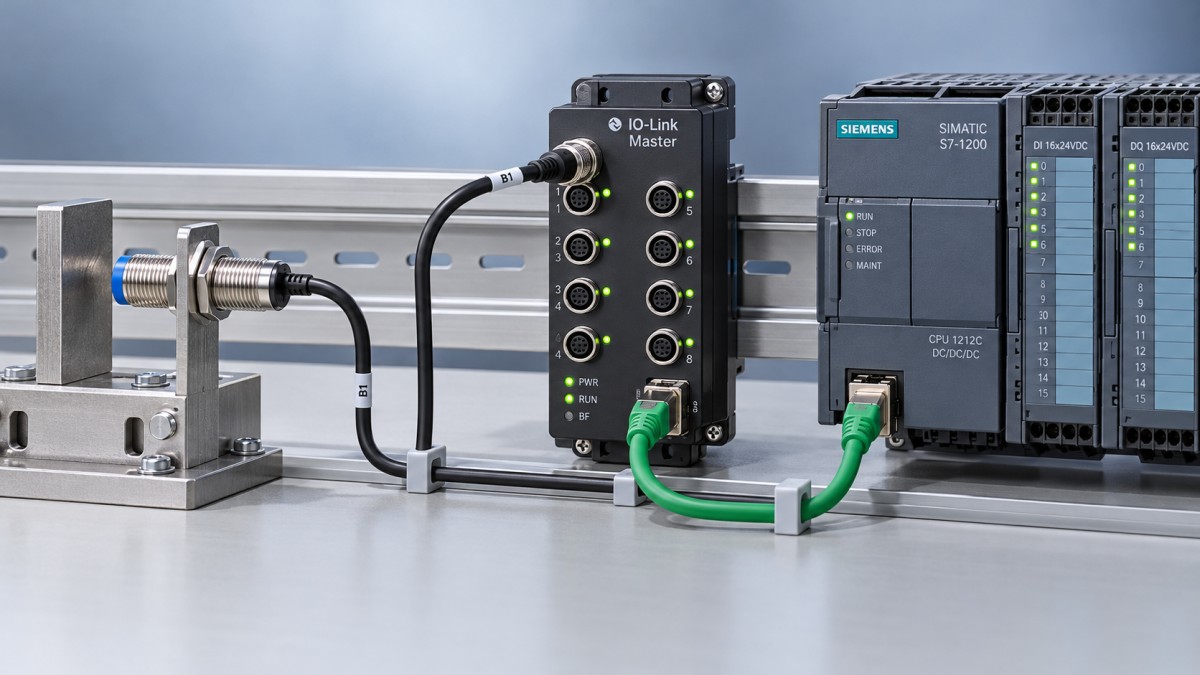
Consider an architecture in which sensors connect through IO-Link masters, each master communicates over its plant’s control network, and an edge service exposes selected measurements to enterprise systems. This is an architectural option, not proof of universal compatibility. Each transition introduces configuration ownership, possible buffering, and a new place where diagnostic meaning can be lost.
Also distinguish a multi-protocol product family from a single device supporting selectable protocols. Separate ordering codes may have different firmware, certifications, delivery times, or spare-parts requirements. Those differences belong in the approved equipment list.
Make gateways disclose their costs
Gateways can be the sensible way to integrate legacy assets. The mistake is treating them as transparent adapters. A gateway may preserve the measurement value while dropping device-specific alarms, timestamps, parameter access, or replacement functions.
Require a mapping document showing how source values and states become destination tags. Check scaling, signedness, byte order, engineering units, invalid-value handling, and behavior when communication fails. If the gateway holds the last value, the controller must be able to distinguish stale data from a valid, unchanged measurement.
Account for licensing, configuration backups, replacement availability, firmware maintenance, and troubleshooting ownership. A low-cost sensor can become an expensive standard if every deployment depends on a specialist maintaining a proprietary translation project.
Turn supplier claims into acceptance tests
A compatibility matrix is useful only when each entry has evidence behind it. List the sensor model, firmware, master or gateway, PLC firmware, engineering software version, and device-description file revision. Record tested combinations separately from combinations supported only by supplier statements.
Bench testing should reproduce the planned architecture closely enough to expose integration limits. Define pass criteria before the demonstration rather than accepting whatever the supplier’s setup happens to show.
- Measurement interpretation: compare the received value with a suitable reference across the relevant range. Verify units, scaling, resolution, and invalid-data indicators.
- Timing under load: measure end-to-end data age and variability with representative traffic and device counts. Include sensor filtering and controller scan behavior.
- Fault recovery: disconnect a link, interrupt device power, and restart the controller. Observe fault detection, retained values, reconnection, and whether recovery needs manual intervention.
- Replacement workflow: install an approved spare and verify identity checks, parameter restoration, and measurement behavior before returning it to operation.
- Diagnostic usability: confirm that maintenance staff can distinguish a sensor fault from a network fault without relying solely on supplier software.
Keep measurement accuracy and communication performance separate in the test report. Fast transmission cannot correct a slowly filtered measurement. Similarly, an accurate sensor is unsuitable for the task if its data reaches the controller too late.
Security, safety, and serviceability need separate approval
Protocol compatibility does not establish cybersecurity suitability. Check whether engineering access can be restricted, unnecessary services disabled, firmware updates controlled, and configuration changes audited. For OPC UA deployments, certificate provisioning and renewal need an owner; an encrypted connection is not a complete security operating model.
Ordinary network compatibility also does not qualify a sensing chain for functional safety. Where measurements participate in a safety function, assess the complete safety architecture, applicable requirements, device suitability, and validation evidence. A standard process-data connection should never be assumed to provide safety-rated communication.
International deployment adds practical constraints beyond protocols. Confirm relevant local approvals, environmental ratings, cable and connector availability, documentation language, and regional replacement support. Ask what happens when a firmware revision becomes unavailable or a product reaches end of life. These are continuity questions, not administrative details.
Approve a tested configuration, not a protocol logo
For shortlisted systems, use mandatory acceptance gates before weighted scoring. A device that cannot meet the required response time, preserve fault status, or integrate with the installed controller should not recover its position through a lower purchase price. Compare lifecycle cost only after technical suitability is established.
TSV’s “Engineering Truth Through Data” principle translates into a concrete procurement discipline: retain versioned configuration files, test records, diagnostic mappings, and clearly assigned support responsibilities. The deliverable is a reproducible integration package, not merely a sensor specification.
Before extending approval across plants, identify which differences require retesting: controller changes, gateway firmware, revised process-data layouts, or different sensor variants. Global consistency becomes credible when another site can reproduce the expected behavior—and knows exactly which changes could invalidate it.
Search News
Hot Articles
- Carbon Fiber StructuresHow to Specify Aerospace Carbon Fiber Assemblies for Lightweight, Load-Bearing PartsJul 11, 2026
- Machine VisionXiaomi, Alibaba DAMO Academy Drive Open-Source Robotics Model Ecosystem, Lowering Algorithm Development Barriers for Overseas SMEs Adopting Chinese Robotics SolutionsMar 30, 2026
- Cobots & ArmsShanxi 'AI+' Conference Showcases Embodied Intelligence with Multinational Buyer Engagement: Key Industry ImplicationsMar 30, 2026
Popular Tags
Recommended News
 Jul 11, 2026How to Specify Aerospace Carbon Fiber Assemblies for Lightweight, Load-Bearing PartsAerospace carbon fiber assemblies: learn how to specify laminate design, load data, joining methods, and inspection controls for lighter, reliable load-bearing aerospace parts.Elena Rostova (UAV Systems Researcher)
 Mar 30, 2026Xiaomi, Alibaba DAMO Academy Drive Open-Source Robotics Model Ecosystem, Lowering Algorithm Development Barriers for Overseas SMEs Adopting Chinese Robotics SolutionsXiaomi & Alibaba DAMO Academy's open-source robotics models lower algorithm barriers for global SMEs. Boost efficiency in manufacturing, logistics & smart retail with ROS 2 compatible solutions.TSV Data Lab
 Mar 30, 2026Shanxi 'AI+' Conference Showcases Embodied Intelligence with Multinational Buyer Engagement: Key Industry ImplicationsShanxi 'AI+' Conference highlights embodied intelligence with Tesla, Ubtech & Jiantao showcasing multimodal robotics. 40+ global buyers validated tech on-site, creating new B2B channels for industrial automation & AI solutions.Chen Wei (Automation Lead Engineer)
 Mar 30, 2026Zhongguancun Unveils 6G Integrated Sensing-Computing-Intelligence Platform to Empower Embodied Robots for Global Industrial ApplicationsZhongguancun's new 6G platform revolutionizes industrial robotics with <10ms latency, empowering global automotive, logistics & port automation. Discover how this tech boosts China's smart manufacturing exports.TSV Data Lab
 Mar 30, 2026Mech-Mind Tianjin Embodied Intelligence R&D and Production Base Goes Live, Cutting Delivery Time by 20%–30% for Global Customized AMR+Vision SolutionsMech-Mind's Tianjin AMR+Vision production base cuts delivery time by 20%-30% for欧美 & Latin American markets. Discover how this PLd-certified facility accelerates customized robotics solutions for smart manufacturing and logistics.Chen Wei (Automation Lead Engineer)
 Mar 30, 2026Boao Forum Reveals 'Co-evolution of Big and Small Brains' Trend in Humanoid Robots, China's Embodied Intelligence Accelerates Adaptation to Overseas Manufacturing Service ScenariosDiscover how China's humanoid robots, featuring 'Co-evolution of Big and Small Brains,' are revolutionizing global manufacturing. Learn about Embodied Tian Gong 3.0's ISO compliance and overseas deployment at Boao Forum 2026.Chen Wei (Automation Lead Engineer)
 Mar 30, 2026China Railway Industrial Secures Patent for Embodied Robotics in Material Handling, Boosting High-Precision Delivery Capabilities for Overseas Infrastructure and Manufacturing ProjectsChina Railway Industrial's new patent for embodied robotics in material handling boosts high-precision delivery for global infrastructure & manufacturing. Discover how this innovation enhances logistics accuracy in automotive, rail transit & EPC projects.Chen Wei (Automation Lead Engineer)
 Oct 23, 2026Choosing Industrial Sensing Systems for Global Plants: Protocol CompatibilityCompare industrial sensing systems international buyers can trust. Explore protocol compatibility, reduce integration risks, and select proven configurations for reliable global plant deployments.TSV Data Lab
 Oct 22, 2026KUKA Showcases Physical AI and iiQKA.AI Vision at NVIDIA GTC BerlinExplore KUKA’s Physical AI showcase at NVIDIA GTC Berlin and discover how iiQKA.AI Vision aims to simplify robotic vision integration and improve 2D and 3D scene recognition.TSV Data Lab
 Oct 22, 2026Robotic Machining of Advanced Composites: What Tolerances Are Achievable?Explore advanced materials machining robotics: discover what drives achievable composite tolerances and how to validate accuracy before investing in your next machining system.Dr. Marcus Vance
 Oct 21, 2026China’s Industrial Robot Exports Near RMB 10 Billion in First Nine Months of 2026China’s industrial robot exports neared RMB 10 billion in January–September 2026, with value rising faster than volume. Explore the data and what it could mean for suppliers.Chen Wei (Automation Lead Engineer)
 Oct 21, 2026Low-Latency Industrial Data Processing: Pricing and Key Cost DriversExplore industrial data latency price drivers, from edge hardware to integration and support. Learn how to compare quotes, verify performance, and avoid unnecessary costs.TSV Data Lab
 Oct 20, 2026KUKA Launches iiQKA.AI Vision to Simplify Industrial Image ProcessingKUKA iiQKA.AI Vision simplifies industrial image processing with controller-based 2D and 3D vision. Explore drag-and-drop setup for vision-guided automation.TSV Data Lab
 Oct 20, 2026Smart Industrial Edge Devices: Key Criteria for Legacy PLC IntegrationChoose smart industrial edge devices for legacy PLC integration. Discover key criteria for compatibility, data quality, security, and reliable collection without disrupting control.TSV Data Lab
 Oct 19, 2026Choosing a Radar Sensor by Application: Range, Resolution, and Field of ViewSimplify radar sensor application based product selection. Compare range, resolution, and field of view to avoid blind spots and choose with confidence. Explore the guide.TSV Data Lab
 Oct 18, 2026Comparing Material Options for Procurement: Specs, Costs, and Supply RisksExplore procurement oriented technical content on material options, specs, costs, and supply risks. Compare alternatives to cut hidden expenses and make confident sourcing decisions.Dr. Marcus Vance
 Oct 17, 20265-Axis CNC Positioning Accuracy: How to Interpret ISO 230-2 Test ResultsAssess 5 axis CNC machining positioning accuracy with ISO 230-2. Learn to interpret repeatability, reversal error, and test conditions to compare suppliers and make confident acceptance decisions.Dr. Marcus Vance
 Oct 16, 2026Choosing a Rugged Edge AI Box Supplier: Thermal Tests and Lifecycle SupportChoose a rugged edge AI box supplier with proven thermal performance and reliable lifecycle support. Discover the tests and commitments to verify before you buy.TSV Data Lab
 Oct 15, 2026R&D Cost Reduction Services: How to Evaluate Fees, Savings, and ROIEvaluate R&D cost reduction services with confidence. Compare fees, verify savings, and calculate ROI without compromising performance. Discover how to choose a provider that delivers real value.Chen Wei (Automation Lead Engineer)
 Oct 22, 2026How Do You Test AMR Navigation Accuracy in a Warehouse?Test AMR navigation accuracy in warehouses with practical methods for localization, path tracking, and docking. Learn to set tolerances and compare robots before deployment.Chen Wei (Automation Lead Engineer)
 Oct 21, 2026How Should You Balance Cobot Payload Against Reach?Explore cobot payload versus reach to choose the right robot. Learn how tooling, load limits, workspace, and cycle time affect performance—and avoid costly selection mistakes.Chen Wei (Automation Lead Engineer)
 Oct 20, 2026How Do You Measure Industrial IoT Gateway Latency Under Load?Measure industrial IoT gateway latency under load with reliable timestamps, realistic traffic, and tail-latency analysis. Discover how to expose bottlenecks and choose the right gateway.TSV Data Lab
 Oct 19, 2026How Do You Verify That Precision Machined Parts Meet Tolerances?Master precision machining tolerance verification with the right tools, datum setups, and acceptance rules. Learn how to validate parts confidently and reduce costly inspection errors.Dr. Marcus Vance
 Oct 18, 2026What Should an AS9100 Machining Supplier Checklist Include?Build an AS9100 machining supplier checklist that verifies capability, traceability, inspection, and outsourced processes. Discover what to check before approving your next aerospace supplier.Dr. Marcus Vance