How to compare embedded AI module suppliers without spec traps
Publication Date
author
Choosing the right embedded AI module supplier is not about headline TOPS alone. Buyers comparing edge AI inference speed in fps, edge computing power consumption, and industrial IoT gateway latency often fall into spec traps hidden behind selective benchmarks. This guide shows engineers, operators, procurement teams, and decision-makers how to compare suppliers with verifiable test conditions, workload realism, and integration risk in mind.
Why embedded AI module comparisons go wrong in real procurement
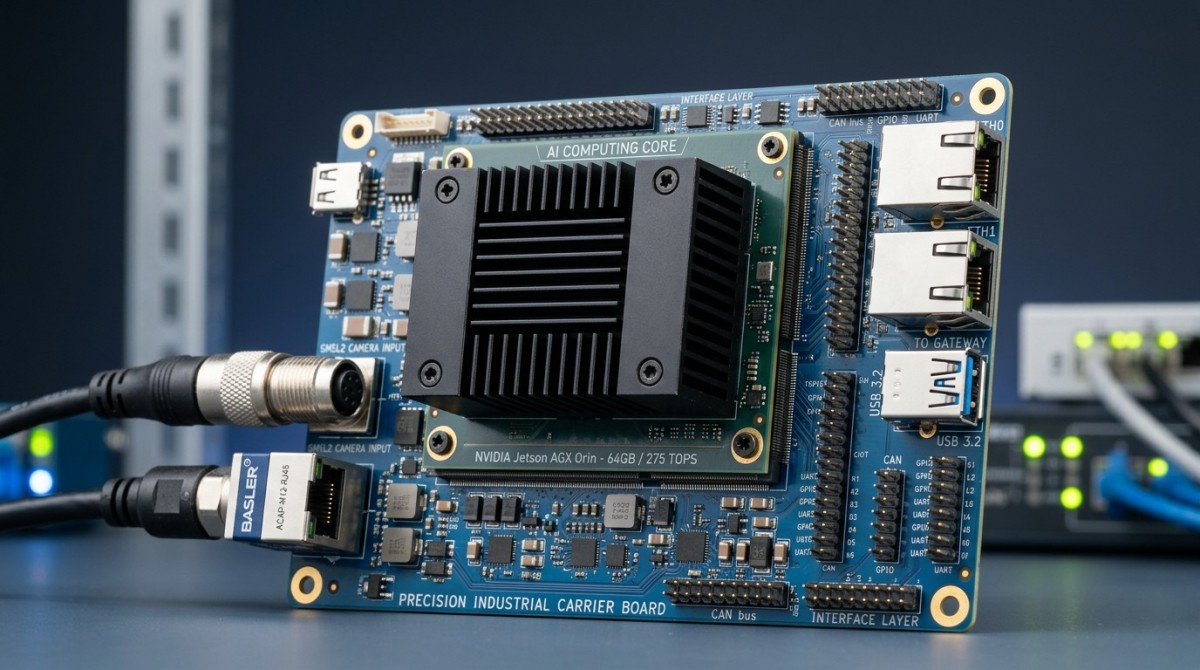
In hard-tech sourcing, the biggest risk is not a visibly weak supplier. It is a supplier that looks strong on paper because the spec sheet highlights one benchmark, one temperature point, one power mode, or one neural network that flatters the module. For embedded AI module suppliers, this often means quoting peak TOPS under ideal conditions while leaving out sustained performance after 30–60 minutes of operation, memory bottlenecks, or thermal throttling.
This matters across robotics, machine vision, UAV payload computing, smart sensors, and industrial gateways. An operator wants stable frame rates. A procurement team wants fewer field failures. A CTO wants predictable integration effort. A decision-maker wants to reduce qualification cycles from several months to a shorter and better-controlled path. None of these goals is served by isolated headline numbers without test context.
At TechStat Vanguard, the working principle is simple: parameters do not lie, but incomplete parameters mislead. When comparing suppliers, you should treat every attractive number as the start of a question, not the end of one. Ask what model was run, what precision was used, what camera resolution was fed, what ambient range was tested, and whether the result reflects burst performance, steady-state performance, or a vendor-optimized demo.
A useful comparison begins with three filters: workload realism, operating condition transparency, and integration completeness. If one supplier quotes 120 fps on a compressed demo stream and another quotes 65 fps on a full production pipeline with preprocessing, postprocessing, and network transfer included, the lower number may actually be more valuable for procurement. The goal is not to buy a benchmark. The goal is to buy a deployable system component.
- Workload realism: compare the same model family, input resolution, batch size, precision mode, and pipeline scope.
- Operating transparency: verify ambient temperature, cooling method, power profile, and test duration.
- Integration completeness: check SDK maturity, driver support, carrier board availability, and long-term supply planning.
Which specifications should you trust when comparing embedded AI module suppliers?
The most reliable approach is to compare supplier data in layers. Start with compute, then memory, then I/O, then thermal behavior, then software and lifecycle support. In many edge AI deployments, a module with lower stated TOPS but stronger memory bandwidth, better video interfaces, and steadier thermal output delivers better real-world edge AI inference speed. This is common in machine vision inspection, mobile robots, and industrial IoT gateway deployments where end-to-end latency matters more than peak arithmetic throughput.
You should also separate raw silicon capability from module-level deliverability. The chip may support a certain feature, but the final module, BSP, and carrier integration may limit that feature in practice. A supplier may publish interface support, but the real issue is whether those lanes remain available under your chosen storage, camera, Ethernet, and accelerator configuration. This is where many spec traps appear.
The table below summarizes the most important dimensions for an apples-to-apples embedded AI module supplier comparison. It is designed for R&D teams drafting a qualification matrix and for procurement managers building a weighted scoring sheet over a 2–4 week evaluation cycle.
This comparison framework helps teams avoid the most expensive mismatch: selecting a module that passes lab demos but fails under enclosure heat, vibration, multiple camera streams, or gateway traffic load. It also improves supplier discussions because the conversation shifts from marketing adjectives to test conditions, data paths, and measurable constraints.
Why TOPS alone is a weak decision metric
TOPS can be useful, but only as a rough indicator. It says little about unsupported layers, quantization effort, model conversion friction, or the penalty of preprocessing and output decoding. In industrial vision, a module may show excellent tensor throughput yet lose overall productivity because image transfer, resize operations, and CPU-side business logic create a bottleneck. For a buyer, this means that 20% more advertised compute may deliver 0% more line throughput.
When comparing embedded AI module suppliers, ask for three numbers together: sustained fps on the target model, average power draw in the tested mode, and end-to-end latency from sensor input to actionable output. If the supplier cannot provide all three under documented conditions, the comparison is incomplete.
A strong supplier should also distinguish between single-stream and multi-stream performance. For example, one-camera demos may look stable, but performance can drop materially when moving to 2–4 concurrent streams, which is common in inspection cells, smart retail, and security analytics gateways. Multi-stream stability is often more important than maximum single-stream fps.
A practical shortlist of trustworthy metrics
- Sustained inference speed measured over at least 30 minutes, not a short demo clip.
- Power consumption range under realistic load, such as 8W–25W depending on profile and cooling.
- Sensor-to-output latency in milliseconds, especially for robotics and industrial control loops.
- Software support window, update cadence, and carrier board or reference design maturity.
How to evaluate real-world performance, integration risk, and total project cost
A supplier comparison should not stop at performance claims. In B2B deployment, integration risk often drives total cost more than module price. A lower-cost module can become the more expensive choice if your team spends 6–10 additional engineering weeks on driver adaptation, thermal redesign, model conversion, or interface debugging. This is especially relevant in cross-industry environments where modules are embedded into robots, UAVs, inspection units, kiosks, gateways, or medical-adjacent devices with strict reliability expectations.
To evaluate this properly, build a procurement matrix across five categories: hardware fit, software maturity, environmental robustness, supply continuity, and commercial responsiveness. Each category should include 3–5 check items. This approach helps information researchers gather structured evidence, gives operators a channel to flag usability risks, and allows leadership to compare not only unit economics but also qualification effort and deployment certainty.
The following table is useful when your team is down-selecting between two or three embedded AI module suppliers. It combines performance, selection, and cost logic in one procurement view.
This table shows why embedded AI module supplier evaluation should be multidisciplinary. Engineering verifies technical truth. Operations tests maintainability. Procurement checks commercial resilience. Leadership decides based on deployment risk, not only module cost. In many projects, the faster path to production comes from choosing the supplier with stronger documentation, clearer lifecycle policy, and better reference integration support.
A 4-step qualification process that reduces spec traps
A practical process helps teams compare suppliers without losing time in open-ended testing. Use a 4-step path: define workload, request normalized data, run a pilot, and lock the commercial plan. This can often be executed in 2–6 weeks depending on hardware availability and software readiness.
- Define workload: specify model type, resolution, stream count, target fps, latency ceiling, and acceptable power range.
- Request normalized data: require all suppliers to test under the same precision mode, ambient assumptions, and pipeline scope.
- Run a pilot: validate one reference use case such as 1-camera inspection, 2-camera analytics, or low-latency robot vision.
- Lock commercial terms: confirm delivery windows, support response path, lifecycle planning, and change notification handling.
This process is especially valuable for companies trying to shorten supplier qualification cycles. Instead of asking broad questions, the team creates a controlled comparison where mismatched claims become visible quickly. It also protects against a common trap: using vendor demo kits as a proxy for final product behavior without checking enclosure and workload differences.
What standards, documentation, and support signals indicate a dependable supplier?
Not every embedded AI module project requires the same certification depth, but every serious project needs documentation discipline. For industrial, robotics, aerospace-adjacent, and regulated environments, it is not enough for a supplier to claim compatibility. Buyers should look for versioned hardware documentation, published software support boundaries, traceable release notes, and clear statements on operating conditions. These are practical trust signals because they reduce integration ambiguity.
Depending on the end system, you may also need to assess EMC planning, environmental test alignment, or process consistency related to sectors such as industrial automation, UAV systems, and medical-adjacent equipment. The embedded module itself may not carry every final product approval, but the supplier should be able to explain what evidence they provide to support downstream compliance work. A vague answer here usually predicts more engineering burden later.
From a TSV-style engineering benchmarking view, supplier credibility improves when documentation matches measured behavior. If a vendor says the module supports continuous high-load operation, the evidence should include thermal assumptions, cooling guidance, power profile details, and perhaps reference carrier notes. If they say the software stack is production-ready, they should show supported framework versions, update practice, and issue escalation routes.
For procurement teams, four support signals are especially useful during vendor comparison because they indicate operational maturity, not just technical ambition.
- Structured documentation set: hardware guide, thermal guide, BSP release notes, and migration notes for at least the current and previous versions.
- Defined support route: technical contact model, expected response windows, and escalation ownership during pilot and production phases.
- Lifecycle visibility: lead-time communication, product change notice process, and reasonable forward planning for 12–24 months.
- Integration assets: reference carrier boards, sample code, validated interfaces, and known limitation notes.
Common misconceptions that distort supplier selection
One misconception is that the lowest module price lowers project cost. In reality, poor documentation, unstable SDKs, and limited thermal guidance can add substantial engineering overhead. Another misconception is that compatibility with popular frameworks automatically means smooth deployment. The real question is whether your exact model, operators, quantization path, and deployment container are supported and documented.
A third misconception is that a supplier with more interfaces is always a safer choice. More interfaces can help, but they do not guarantee lane availability, validated coexistence, or stable drivers in your exact configuration. Finally, buyers sometimes assume that lab pass results equal field readiness. Yet shock, dust, heat, and continuous duty behavior frequently reveal the gap between specification and operation.
For cross-industry buyers, the stronger selection habit is to ask what has been verified, under what conditions, for how long, and with which limits. That language moves the conversation from promise to evidence.
FAQ: how should teams compare suppliers, timelines, and deployment fit?
The questions below reflect what engineering teams, operators, procurement specialists, and executives commonly ask when comparing embedded AI module suppliers for edge AI, industrial IoT, machine vision, and intelligent device projects.
How many suppliers should be included in a serious comparison?
For most B2B projects, 2–4 suppliers are enough for an efficient evaluation. Fewer than 2 limits negotiation leverage and benchmarking context. More than 4 often creates noise unless the project is large and highly strategic. Use the same evaluation matrix for all candidates and insist on comparable test conditions. That keeps the review focused on evidence instead of presentation quality.
What is a reasonable pilot timeline before supplier selection?
A common pilot window is 2–6 weeks. The shorter end is possible when reference hardware, SDK access, and the target model are already available. The longer end is more realistic when custom carrier integration, multiple camera streams, or industrial gateway latency testing is involved. Teams should define acceptance criteria in advance, such as target fps, maximum latency, power envelope, and environmental assumptions.
What should operators and maintenance teams ask that engineers sometimes miss?
Operators should ask about thermal alarms, field update procedures, boot recovery behavior, connector robustness, and diagnostic visibility. These issues directly affect uptime. A module that benchmarks well but is hard to monitor or recover in the field can raise service cost significantly. In 24/7 deployments, maintainability is a selection factor, not an afterthought.
How can procurement identify supplier risk early?
Procurement should request a structured answer on four points: lead-time guidance, lifecycle planning, issue escalation, and document completeness. If responses remain vague after two review rounds, that is a meaningful signal. Strong suppliers can usually discuss standard delivery windows, change notification practice, and reference support boundaries with clarity even before final pricing is negotiated.
Why work with TechStat Vanguard when comparing embedded AI module suppliers
TechStat Vanguard is built for teams that need engineering truth instead of marketing comfort. In embedded AI module supplier evaluation, that means focusing on measurable workload conditions, documented interfaces, realistic thermal constraints, and procurement-ready comparison logic. Our perspective is shaped by hard-tech benchmarking across sensors, edge AI, robotics, UAV ecosystems, and precision industrial applications where ambiguous specifications create real cost.
We help teams translate broad sourcing questions into decision-grade technical filters. That can include parameter confirmation for edge AI inference speed, power and thermal comparison under enclosure constraints, industrial IoT gateway latency review, interface and memory bottleneck checks, and supplier shortlist frameworks that reduce R&D trial-and-error. For procurement, the benefit is a cleaner qualification path. For leadership, it is a better basis for supplier confidence and budget approval.
If you are comparing embedded AI module suppliers, you can contact TSV to discuss six concrete topics: target model and fps confirmation, realistic power range and thermal assumptions, interface mapping, pilot test design, lifecycle and delivery questions, and documentation gaps that may increase integration cost. These discussions are especially useful when your team is balancing performance targets with schedule pressure and limited qualification bandwidth.
Bring your current spec sheet, candidate shortlist, expected delivery window, and any certification or operating constraints. We can help you turn scattered supplier claims into a structured comparison matrix that supports product selection, sample planning, quote discussions, and a more confident path to deployment.
Search News
Hot Articles
- Carbon Fiber StructuresHow to Specify Aerospace Carbon Fiber Assemblies for Lightweight, Load-Bearing PartsJul 11, 2026
- Machine VisionXiaomi, Alibaba DAMO Academy Drive Open-Source Robotics Model Ecosystem, Lowering Algorithm Development Barriers for Overseas SMEs Adopting Chinese Robotics SolutionsMar 30, 2026
- Cobots & ArmsShanxi 'AI+' Conference Showcases Embodied Intelligence with Multinational Buyer Engagement: Key Industry ImplicationsMar 30, 2026
Popular Tags
Recommended News
 Jul 11, 2026How to Specify Aerospace Carbon Fiber Assemblies for Lightweight, Load-Bearing PartsAerospace carbon fiber assemblies: learn how to specify laminate design, load data, joining methods, and inspection controls for lighter, reliable load-bearing aerospace parts.Elena Rostova (UAV Systems Researcher)
 Mar 30, 2026Xiaomi, Alibaba DAMO Academy Drive Open-Source Robotics Model Ecosystem, Lowering Algorithm Development Barriers for Overseas SMEs Adopting Chinese Robotics SolutionsXiaomi & Alibaba DAMO Academy's open-source robotics models lower algorithm barriers for global SMEs. Boost efficiency in manufacturing, logistics & smart retail with ROS 2 compatible solutions.TSV Data Lab
 Mar 30, 2026Shanxi 'AI+' Conference Showcases Embodied Intelligence with Multinational Buyer Engagement: Key Industry ImplicationsShanxi 'AI+' Conference highlights embodied intelligence with Tesla, Ubtech & Jiantao showcasing multimodal robotics. 40+ global buyers validated tech on-site, creating new B2B channels for industrial automation & AI solutions.Chen Wei (Automation Lead Engineer)
 Mar 30, 2026Zhongguancun Unveils 6G Integrated Sensing-Computing-Intelligence Platform to Empower Embodied Robots for Global Industrial ApplicationsZhongguancun's new 6G platform revolutionizes industrial robotics with <10ms latency, empowering global automotive, logistics & port automation. Discover how this tech boosts China's smart manufacturing exports.TSV Data Lab
 Mar 30, 2026Mech-Mind Tianjin Embodied Intelligence R&D and Production Base Goes Live, Cutting Delivery Time by 20%–30% for Global Customized AMR+Vision SolutionsMech-Mind's Tianjin AMR+Vision production base cuts delivery time by 20%-30% for欧美 & Latin American markets. Discover how this PLd-certified facility accelerates customized robotics solutions for smart manufacturing and logistics.Chen Wei (Automation Lead Engineer)
 Mar 30, 2026Boao Forum Reveals 'Co-evolution of Big and Small Brains' Trend in Humanoid Robots, China's Embodied Intelligence Accelerates Adaptation to Overseas Manufacturing Service ScenariosDiscover how China's humanoid robots, featuring 'Co-evolution of Big and Small Brains,' are revolutionizing global manufacturing. Learn about Embodied Tian Gong 3.0's ISO compliance and overseas deployment at Boao Forum 2026.Chen Wei (Automation Lead Engineer)
 Mar 30, 2026China Railway Industrial Secures Patent for Embodied Robotics in Material Handling, Boosting High-Precision Delivery Capabilities for Overseas Infrastructure and Manufacturing ProjectsChina Railway Industrial's new patent for embodied robotics in material handling boosts high-precision delivery for global infrastructure & manufacturing. Discover how this innovation enhances logistics accuracy in automotive, rail transit & EPC projects.Chen Wei (Automation Lead Engineer)
 Oct 21, 2026China’s Industrial Robot Exports Near RMB 10 Billion in First Nine Months of 2026China’s industrial robot exports neared RMB 10 billion in January–September 2026, with value rising faster than volume. Explore the data and what it could mean for suppliers.Chen Wei (Automation Lead Engineer)
 Oct 21, 2026Low-Latency Industrial Data Processing: Pricing and Key Cost DriversExplore industrial data latency price drivers, from edge hardware to integration and support. Learn how to compare quotes, verify performance, and avoid unnecessary costs.TSV Data Lab
 Oct 20, 2026KUKA Launches iiQKA.AI Vision to Simplify Industrial Image ProcessingKUKA iiQKA.AI Vision simplifies industrial image processing with controller-based 2D and 3D vision. Explore drag-and-drop setup for vision-guided automation.TSV Data Lab
 Oct 20, 2026Smart Industrial Edge Devices: Key Criteria for Legacy PLC IntegrationChoose smart industrial edge devices for legacy PLC integration. Discover key criteria for compatibility, data quality, security, and reliable collection without disrupting control.TSV Data Lab
 Oct 19, 2026Choosing a Radar Sensor by Application: Range, Resolution, and Field of ViewSimplify radar sensor application based product selection. Compare range, resolution, and field of view to avoid blind spots and choose with confidence. Explore the guide.TSV Data Lab
 Oct 18, 2026Comparing Material Options for Procurement: Specs, Costs, and Supply RisksExplore procurement oriented technical content on material options, specs, costs, and supply risks. Compare alternatives to cut hidden expenses and make confident sourcing decisions.Dr. Marcus Vance
 Oct 17, 20265-Axis CNC Positioning Accuracy: How to Interpret ISO 230-2 Test ResultsAssess 5 axis CNC machining positioning accuracy with ISO 230-2. Learn to interpret repeatability, reversal error, and test conditions to compare suppliers and make confident acceptance decisions.Dr. Marcus Vance
 Oct 16, 2026Choosing a Rugged Edge AI Box Supplier: Thermal Tests and Lifecycle SupportChoose a rugged edge AI box supplier with proven thermal performance and reliable lifecycle support. Discover the tests and commitments to verify before you buy.TSV Data Lab
 Oct 15, 2026R&D Cost Reduction Services: How to Evaluate Fees, Savings, and ROIEvaluate R&D cost reduction services with confidence. Compare fees, verify savings, and calculate ROI without compromising performance. Discover how to choose a provider that delivers real value.Chen Wei (Automation Lead Engineer)
 Oct 21, 2026How Should You Balance Cobot Payload Against Reach?Explore cobot payload versus reach to choose the right robot. Learn how tooling, load limits, workspace, and cycle time affect performance—and avoid costly selection mistakes.Chen Wei (Automation Lead Engineer)
 Oct 20, 2026How Do You Measure Industrial IoT Gateway Latency Under Load?Measure industrial IoT gateway latency under load with reliable timestamps, realistic traffic, and tail-latency analysis. Discover how to expose bottlenecks and choose the right gateway.TSV Data Lab
 Oct 19, 2026How Do You Verify That Precision Machined Parts Meet Tolerances?Master precision machining tolerance verification with the right tools, datum setups, and acceptance rules. Learn how to validate parts confidently and reduce costly inspection errors.Dr. Marcus Vance
 Oct 18, 2026What Should an AS9100 Machining Supplier Checklist Include?Build an AS9100 machining supplier checklist that verifies capability, traceability, inspection, and outsourced processes. Discover what to check before approving your next aerospace supplier.Dr. Marcus Vance
 Oct 17, 2026How Should You Interpret Industrial Robot Repeatability Specs?Decode industrial robot repeatability specifications, understand ISO 9283 test conditions, and avoid costly selection mistakes. Learn how to verify performance for your process.Chen Wei (Automation Lead Engineer)
 Oct 16, 2026How Can You Fairly Compare MTBF Across Industrial Servo Motors?Make a fair industrial servo motor MTBF comparison with matched operating profiles, failure criteria, and confidence bounds. Discover how to assess reliability beyond advertised numbers.Chen Wei (Automation Lead Engineer)
 Oct 15, 2026How Should You Compare TechStat Vanguard 5-Axis CNC Tolerances?TechStat Vanguard 5-axis CNC tolerance comparison: learn how to verify part accuracy, assess inspection evidence, and choose suppliers that reliably meet your drawing requirements.Dr. Marcus Vance
 Oct 14, 2026Drone Frame Composites: Carbon Fiber vs. Fiberglass for Weight and StiffnessExplore drone structural materials composites: compare carbon fiber and fiberglass for weight, stiffness, cost, and antenna compatibility. Find the right material for your drone frame.Elena Rostova (UAV Systems Researcher)