Modbus RTU to MQTT gateway stability problems in noisy factories
Publication Date
author
In noisy factories, a Modbus RTU to MQTT gateway can fail long before alarms make the problem visible. For engineers, operators, buyers, and decision-makers, stability depends on verified industrial IoT gateway latency, reliable IoT gateway throughput benchmark data, and real anti-interference performance under harsh EMI conditions. This article examines why communication drops happen, how to diagnose root causes, and what specifications truly matter when selecting a resilient modbus rtu to mqtt gateway.
Why do Modbus RTU to MQTT gateways become unstable in noisy factories?
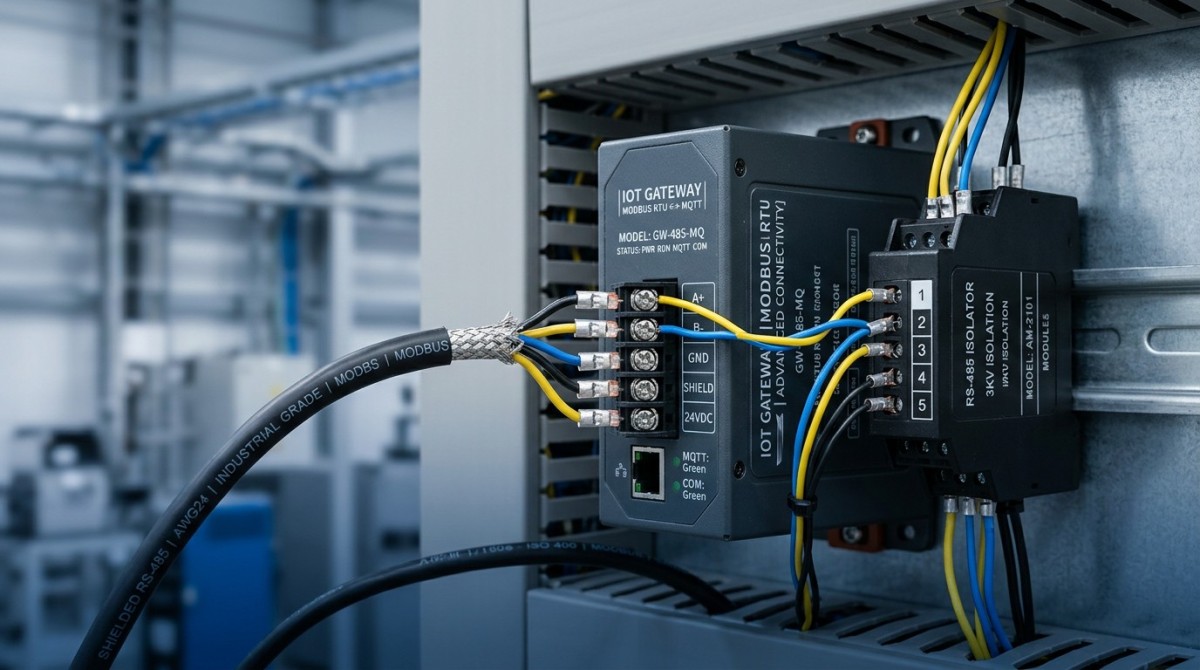
The short answer is that most “gateway instability” is not caused by MQTT itself. In factory environments, the more common root causes are physical-layer noise, weak RS-485 design, grounding problems, baud-rate mismatch, polling overload, poor serial isolation, power quality issues, and firmware behavior under communication stress.
For search users trying to solve Modbus RTU to MQTT gateway stability problems in noisy factories, the key point is this: if the gateway is installed in a high-EMI environment, stability is determined by the entire signal chain, not just by the protocol conversion function. A gateway may work perfectly in a lab yet drop frames, delay telemetry, or lock up intermittently beside VFDs, welders, large motors, switching power supplies, and long cable runs.
In practical terms, most failures fall into several recognizable patterns:
- Intermittent Modbus CRC errors: often linked to electromagnetic interference, reflections, or poor shielding.
- Random device timeouts: commonly caused by bus loading, unstable slave behavior, or aggressive polling cycles.
- MQTT publishing delays: usually a symptom of queue congestion, weak gateway CPU resources, or poor network backhaul.
- Complete gateway resets or freezes: often related to power dips, inadequate thermal design, or firmware limitations under exception conditions.
- Works during commissioning, fails during production: a classic sign of EMI rising when heavy machinery starts operating.
For operators and maintenance teams, this means troubleshooting should begin with the operating environment rather than assuming a software configuration error. For procurement and management teams, it means vendor claims such as “industrial grade” are not enough unless supported by test conditions, serial isolation ratings, surge immunity data, and throughput under load.
What problems matter most to engineers, operators, buyers, and decision-makers?
Although different stakeholders ask different questions, their concerns converge around one business issue: can the gateway deliver reliable data continuously in a harsh factory environment without creating hidden maintenance costs?
Engineers and system integrators usually care about:
- How many Modbus registers can be polled reliably at a given scan interval
- How the gateway behaves under line noise, retries, and malformed frames
- Actual industrial IoT gateway latency from serial acquisition to MQTT publish
- Isolation, surge protection, watchdog recovery, and buffer handling
- Compatibility with mixed-vendor PLCs, meters, drives, and sensors
Operators and maintenance personnel usually care about:
- Whether failures are easy to detect and diagnose
- Whether the device can recover automatically after communication loss
- How often they need to reboot, rewire, or replace hardware
- Whether logs clearly show timeouts, CRC errors, broker disconnects, or power anomalies
Procurement teams usually care about:
- Which specifications actually predict field reliability
- Whether the supplier provides benchmark data instead of vague marketing claims
- Total lifecycle cost, including installation risk and downtime exposure
- Certification, support responsiveness, and firmware update policy
Business decision-makers usually care about:
- Whether unstable edge connectivity will compromise OEE, traceability, or energy monitoring
- How to reduce integration risk across multiple sites
- Whether paying more for a robust gateway lowers downtime and maintenance costs
- How to standardize selection criteria for future IIoT rollouts
That is why a useful article on this topic should not spend too much time explaining what Modbus or MQTT is. Most readers searching this topic already know the basics. What they need is a practical framework to identify instability sources and evaluate gateway resilience realistically.
How to diagnose the real cause of communication drops
If a modbus rtu to mqtt gateway is unstable in a noisy factory, diagnosis should move from the lowest layer upward. This avoids wasting time changing MQTT settings when the real problem is on the serial bus or power line.
1. Check the RS-485 physical layer first
Start with wiring quality, topology, and grounding:
- Confirm proper RS-485 A/B polarity
- Verify end-of-line termination where required
- Check biasing resistors and whether multiple devices are over-biasing the line
- Avoid star topologies on long multi-drop runs
- Inspect shield termination strategy and ground potential differences
- Review cable routing near VFD output cables, motor feeders, contactors, and welding lines
Many “gateway faults” are actually bus integrity problems. In harsh EMI conditions, even a technically functional network can become marginal, meaning it works until machine duty cycles increase.
2. Look at CRC errors, timeout patterns, and retry behavior
A good industrial gateway should expose communication diagnostics. If CRC errors spike when nearby equipment starts, that points strongly to interference. If timeouts occur only on one slave, that may indicate a device-specific response delay or address conflict. If all slaves fail together, suspect power, grounding, or gateway firmware stability.
Useful diagnostic counters include:
- CRC error count
- Frame timeout count
- Exception response count
- MQTT reconnect count
- Internal buffer overflow events
- Watchdog resets
3. Compare polling load with gateway capacity
One of the most overlooked causes of instability is unrealistic polling design. A gateway may support many devices on paper, but not at the scan rate required in production. If hundreds or thousands of registers are being read too frequently, serial bus congestion can cascade into delayed MQTT publishing and stale data.
This is where IoT gateway throughput benchmark data matters. Buyers should ask:
- How many registers per second were tested?
- At what baud rate?
- With how many slaves?
- Under what MQTT publish rate and payload size?
- Were retries and network disruptions included in the test?
Without these details, throughput claims are often meaningless.
4. Validate power quality and environmental resilience
Gateways deployed in cabinets with unstable DC supplies may reboot silently during voltage dips or switching transients. Also check ambient temperature, enclosure ventilation, and proximity to high-heat equipment. A gateway that passes protocol tests but operates near thermal limits may exhibit random instability that looks like communication failure.
5. Isolate MQTT-side issues from serial-side issues
If serial polling remains healthy but cloud or broker updates are delayed, the bottleneck may be Ethernet quality, broker session settings, DNS issues, TLS overhead, or insufficient internal buffering. This is why logging should distinguish between:
- Modbus poll success/failure
- Data transformation status
- MQTT connection state
- Publish acknowledgment timing
Clear separation of these layers dramatically reduces troubleshooting time.
Which specifications actually predict stability in harsh industrial environments?
When comparing products, many datasheets hide the most important information. The best way to select a reliable gateway is to focus on parameters that correlate directly with field performance.
1. Serial isolation and surge immunity
Look for robust isolation between RS-485, Ethernet, power input, and chassis domains. In noisy factories, isolation is not a premium extra; it is a stability requirement. Also ask for surge and EFT immunity levels, not just broad statements like “anti-interference design.”
2. Verified anti-interference performance
If a supplier claims strong EMI resistance, ask how it was tested. Relevant questions include:
- Was the device tested near VFD-heavy systems?
- Were burst and surge events injected?
- Was communication error rate measured during interference exposure?
- Did the gateway self-recover after induced faults?
For TSV-style engineering evaluation, “anti-interference” should be tied to measured error behavior, not adjectives.
3. Industrial IoT gateway latency under load
Low latency in an idle demo is not enough. What matters is industrial IoT gateway latency under realistic polling and publishing conditions. A useful benchmark should show end-to-end timing from Modbus query cycle to MQTT payload delivery, ideally across multiple load conditions.
This is especially important in applications such as:
- Equipment condition monitoring
- Energy management dashboards
- Alarm forwarding
- Edge analytics that depend on timely sensor streams
4. Throughput with retry behavior included
Some gateways look fast only because tests ignore error handling. In real factories, retries happen. Stable devices are not just those with high nominal throughput, but those that degrade gracefully when line quality worsens. Ask vendors for IoT gateway throughput benchmark data that includes packet loss, timeouts, and recovery behavior.
5. Logging, watchdogs, and recovery design
A gateway used in production should provide:
- Persistent event logs
- Remote diagnostics
- Automatic reconnection logic
- Watchdog-based self-recovery
- Config backup and rollback
These features do not eliminate interference, but they reduce downtime and service cost significantly.
What practical steps improve stability before replacing the gateway?
Before assuming the hardware must be changed, it is worth applying a structured field correction plan. In many cases, stability improves substantially with better installation and communication design.
- Reduce unnecessary polling frequency for slow-changing registers
- Group critical and non-critical data into different scan schedules
- Shorten or reroute serial cables away from high-noise sources
- Use proper shielded twisted-pair cable suitable for RS-485
- Verify single-point grounding strategy where appropriate
- Separate gateway power from noisy loads or add conditioned supply protection
- Increase serial timeout margins when some slaves respond slowly
- Update firmware only after reviewing release notes for communication fixes
- Use local buffering if WAN or broker connectivity is intermittent
These actions are especially useful for plants retrofitting legacy Modbus assets into newer MQTT-based architectures. In retrofit scenarios, instability often comes from inherited wiring and undocumented device behavior rather than from the protocol bridge itself.
How should buyers and decision-makers evaluate suppliers?
For procurement teams and technical leaders, the goal is not to buy the gateway with the longest feature list. The goal is to reduce failure risk in real operating conditions. A strong supplier evaluation process should include both datasheet review and evidence-based questioning.
Ask vendors for the following:
- Measured latency and throughput under defined loads
- EMI, surge, and EFT test conditions
- Maximum recommended Modbus polling load for stable operation
- Recovery behavior after serial bus interruption and network outage
- Field case references in noisy industrial environments
- Diagnostic visibility available to users
- Firmware maintenance policy and long-term support commitment
If a vendor cannot explain how their gateway behaves when interference increases, retries accumulate, or power dips occur, that is a warning sign. In industrial connectivity, predictable failure behavior is almost as important as normal-operation performance.
From a business perspective, the cheapest unit may become the most expensive if it causes hidden data loss, recurring maintenance dispatches, or mistrust in the plant’s digitalization program. A slightly higher-cost but well-validated gateway often delivers better ROI through reduced troubleshooting hours and fewer production interruptions.
Conclusion: stable gateway performance depends on tested resilience, not marketing language
In noisy factories, Modbus RTU to MQTT gateway stability problems are rarely solved by protocol theory alone. The real determinants are RS-485 signal integrity, EMI resistance, power stability, realistic polling design, firmware recovery logic, and validated performance under load.
For engineers and operators, the right approach is systematic diagnosis: physical layer first, then device behavior, then throughput, then MQTT transport. For buyers and decision-makers, the right approach is evidence-based selection: demand hard data on industrial IoT gateway latency, request meaningful IoT gateway throughput benchmark results, and verify anti-interference performance in conditions that resemble the actual plant.
The most reliable gateway is not the one with the strongest marketing claim. It is the one that continues delivering trustworthy data when the factory becomes electrically noisy, operationally busy, and commercially unforgiving.
Search News
Hot Articles
- Carbon Fiber StructuresHow to Specify Aerospace Carbon Fiber Assemblies for Lightweight, Load-Bearing PartsJul 11, 2026
- Machine VisionXiaomi, Alibaba DAMO Academy Drive Open-Source Robotics Model Ecosystem, Lowering Algorithm Development Barriers for Overseas SMEs Adopting Chinese Robotics SolutionsMar 30, 2026
- Cobots & ArmsShanxi 'AI+' Conference Showcases Embodied Intelligence with Multinational Buyer Engagement: Key Industry ImplicationsMar 30, 2026
Popular Tags
Recommended News
 Jul 11, 2026How to Specify Aerospace Carbon Fiber Assemblies for Lightweight, Load-Bearing PartsAerospace carbon fiber assemblies: learn how to specify laminate design, load data, joining methods, and inspection controls for lighter, reliable load-bearing aerospace parts.Elena Rostova (UAV Systems Researcher)
 Mar 30, 2026Xiaomi, Alibaba DAMO Academy Drive Open-Source Robotics Model Ecosystem, Lowering Algorithm Development Barriers for Overseas SMEs Adopting Chinese Robotics SolutionsXiaomi & Alibaba DAMO Academy's open-source robotics models lower algorithm barriers for global SMEs. Boost efficiency in manufacturing, logistics & smart retail with ROS 2 compatible solutions.TSV Data Lab
 Mar 30, 2026Shanxi 'AI+' Conference Showcases Embodied Intelligence with Multinational Buyer Engagement: Key Industry ImplicationsShanxi 'AI+' Conference highlights embodied intelligence with Tesla, Ubtech & Jiantao showcasing multimodal robotics. 40+ global buyers validated tech on-site, creating new B2B channels for industrial automation & AI solutions.Chen Wei (Automation Lead Engineer)
 Mar 30, 2026Zhongguancun Unveils 6G Integrated Sensing-Computing-Intelligence Platform to Empower Embodied Robots for Global Industrial ApplicationsZhongguancun's new 6G platform revolutionizes industrial robotics with <10ms latency, empowering global automotive, logistics & port automation. Discover how this tech boosts China's smart manufacturing exports.TSV Data Lab
 Mar 30, 2026Mech-Mind Tianjin Embodied Intelligence R&D and Production Base Goes Live, Cutting Delivery Time by 20%–30% for Global Customized AMR+Vision SolutionsMech-Mind's Tianjin AMR+Vision production base cuts delivery time by 20%-30% for欧美 & Latin American markets. Discover how this PLd-certified facility accelerates customized robotics solutions for smart manufacturing and logistics.Chen Wei (Automation Lead Engineer)
 Mar 30, 2026Boao Forum Reveals 'Co-evolution of Big and Small Brains' Trend in Humanoid Robots, China's Embodied Intelligence Accelerates Adaptation to Overseas Manufacturing Service ScenariosDiscover how China's humanoid robots, featuring 'Co-evolution of Big and Small Brains,' are revolutionizing global manufacturing. Learn about Embodied Tian Gong 3.0's ISO compliance and overseas deployment at Boao Forum 2026.Chen Wei (Automation Lead Engineer)
 Mar 30, 2026China Railway Industrial Secures Patent for Embodied Robotics in Material Handling, Boosting High-Precision Delivery Capabilities for Overseas Infrastructure and Manufacturing ProjectsChina Railway Industrial's new patent for embodied robotics in material handling boosts high-precision delivery for global infrastructure & manufacturing. Discover how this innovation enhances logistics accuracy in automotive, rail transit & EPC projects.Chen Wei (Automation Lead Engineer)
 Oct 21, 2026China’s Industrial Robot Exports Near RMB 10 Billion in First Nine Months of 2026China’s industrial robot exports neared RMB 10 billion in January–September 2026, with value rising faster than volume. Explore the data and what it could mean for suppliers.Chen Wei (Automation Lead Engineer)
 Oct 21, 2026Low-Latency Industrial Data Processing: Pricing and Key Cost DriversExplore industrial data latency price drivers, from edge hardware to integration and support. Learn how to compare quotes, verify performance, and avoid unnecessary costs.TSV Data Lab
 Oct 20, 2026KUKA Launches iiQKA.AI Vision to Simplify Industrial Image ProcessingKUKA iiQKA.AI Vision simplifies industrial image processing with controller-based 2D and 3D vision. Explore drag-and-drop setup for vision-guided automation.TSV Data Lab
 Oct 20, 2026Smart Industrial Edge Devices: Key Criteria for Legacy PLC IntegrationChoose smart industrial edge devices for legacy PLC integration. Discover key criteria for compatibility, data quality, security, and reliable collection without disrupting control.TSV Data Lab
 Oct 19, 2026Choosing a Radar Sensor by Application: Range, Resolution, and Field of ViewSimplify radar sensor application based product selection. Compare range, resolution, and field of view to avoid blind spots and choose with confidence. Explore the guide.TSV Data Lab
 Oct 18, 2026Comparing Material Options for Procurement: Specs, Costs, and Supply RisksExplore procurement oriented technical content on material options, specs, costs, and supply risks. Compare alternatives to cut hidden expenses and make confident sourcing decisions.Dr. Marcus Vance
 Oct 17, 20265-Axis CNC Positioning Accuracy: How to Interpret ISO 230-2 Test ResultsAssess 5 axis CNC machining positioning accuracy with ISO 230-2. Learn to interpret repeatability, reversal error, and test conditions to compare suppliers and make confident acceptance decisions.Dr. Marcus Vance
 Oct 16, 2026Choosing a Rugged Edge AI Box Supplier: Thermal Tests and Lifecycle SupportChoose a rugged edge AI box supplier with proven thermal performance and reliable lifecycle support. Discover the tests and commitments to verify before you buy.TSV Data Lab
 Oct 15, 2026R&D Cost Reduction Services: How to Evaluate Fees, Savings, and ROIEvaluate R&D cost reduction services with confidence. Compare fees, verify savings, and calculate ROI without compromising performance. Discover how to choose a provider that delivers real value.Chen Wei (Automation Lead Engineer)
 Oct 21, 2026How Should You Balance Cobot Payload Against Reach?Explore cobot payload versus reach to choose the right robot. Learn how tooling, load limits, workspace, and cycle time affect performance—and avoid costly selection mistakes.Chen Wei (Automation Lead Engineer)
 Oct 20, 2026How Do You Measure Industrial IoT Gateway Latency Under Load?Measure industrial IoT gateway latency under load with reliable timestamps, realistic traffic, and tail-latency analysis. Discover how to expose bottlenecks and choose the right gateway.TSV Data Lab
 Oct 19, 2026How Do You Verify That Precision Machined Parts Meet Tolerances?Master precision machining tolerance verification with the right tools, datum setups, and acceptance rules. Learn how to validate parts confidently and reduce costly inspection errors.Dr. Marcus Vance
 Oct 18, 2026What Should an AS9100 Machining Supplier Checklist Include?Build an AS9100 machining supplier checklist that verifies capability, traceability, inspection, and outsourced processes. Discover what to check before approving your next aerospace supplier.Dr. Marcus Vance
 Oct 17, 2026How Should You Interpret Industrial Robot Repeatability Specs?Decode industrial robot repeatability specifications, understand ISO 9283 test conditions, and avoid costly selection mistakes. Learn how to verify performance for your process.Chen Wei (Automation Lead Engineer)
 Oct 16, 2026How Can You Fairly Compare MTBF Across Industrial Servo Motors?Make a fair industrial servo motor MTBF comparison with matched operating profiles, failure criteria, and confidence bounds. Discover how to assess reliability beyond advertised numbers.Chen Wei (Automation Lead Engineer)
 Oct 15, 2026How Should You Compare TechStat Vanguard 5-Axis CNC Tolerances?TechStat Vanguard 5-axis CNC tolerance comparison: learn how to verify part accuracy, assess inspection evidence, and choose suppliers that reliably meet your drawing requirements.Dr. Marcus Vance
 Oct 14, 2026Drone Frame Composites: Carbon Fiber vs. Fiberglass for Weight and StiffnessExplore drone structural materials composites: compare carbon fiber and fiberglass for weight, stiffness, cost, and antenna compatibility. Find the right material for your drone frame.Elena Rostova (UAV Systems Researcher)